Does Creatine Build Muscle? How It Works and How Fast
By The Creatine Canada Research Team — Evidence-based supplement analysts
To build muscle, most people should take 3 to 5 grams of creatine monohydrate per day, every day, while following a progressive resistance-training plan. Creatine does help build muscle, but it works by increasing intramuscular phosphocreatine, improving training quality, cell hydration, and over time the amount of hard work you can recover from and adapt to.
Evidence-based · Cites 4 sources · Editorial standards
Key Takeaways
- For muscle growth, the standard creatine dose is 3-5 g of creatine monohydrate daily.
- A loading phase of 20 g/day split into 4 doses for 5-7 days is optional, not required.
- Creatine helps build muscle indirectly by improving strength, power, training volume, and recovery between hard efforts.
- Expect water-weight gain first; measurable strength and muscle benefits usually build over 2-8 weeks.
- Creatine monohydrate is the best-studied, most effective, and most cost-effective form for muscle gain.
- Take creatine every day, including rest days; timing matters far less than consistent daily intake.
- If you stop taking creatine, you do not lose all your muscle, but the extra water retention and some performance benefit fade as stores return to baseline.
How much creatine per day to build muscle? The short answer is 3 to 5 grams daily
To build muscle, most adults should take 3 to 5 grams of creatine monohydrate per day, every day, regardless of whether they train that day. That is the evidence-based maintenance dose that keeps muscle creatine stores elevated after saturation and is the simplest answer to how much creatine per day to build muscle.
If you want faster saturation, you can do an optional loading phase of 20 grams per day for 5 to 7 days, split into four 5-gram doses, and then continue with 3 to 5 grams daily. The loading phase does not make creatine work better in the long run; it simply helps your muscles reach saturation faster. The 2017 ISSN position stand concluded that creatine monohydrate is the most effective ergogenic nutritional supplement currently available for increasing high-intensity exercise capacity and lean body mass in training, and it remains the benchmark form for muscle growth according to the ISSN.
For beginners, the simplest plan is:
- Buy a plain creatine monohydrate powder.
- Measure 5 grams once daily.
- Mix it with water, a shake, or a meal.
- Take it every day for at least 4 to 8 weeks.
- Keep lifting with progressive overload.
That daily consistency matters more than fancy timing, cycling, or branded forms. If you want help calculating a more tailored amount, use a creatine dosage calculator or read our full guide on how much creatine per day.
One important clarification: creatine does not build muscle in the way anabolic steroids do. Creatine helps you train harder, repeat high-effort contractions more effectively, and maintain better training quality over time, which then supports greater muscle gain when your nutrition and programming are in place. So if you are asking, does creatine help build muscle, the honest answer is yes, but mostly by improving the conditions that drive hypertrophy rather than by directly forcing muscle tissue to grow on its own.
Does creatine build muscle? Yes, but it works by improving the engine, not by acting like a hormone
Yes, creatine does help build muscle, but it does so by increasing the muscle’s ability to produce rapid energy during hard training rather than by directly raising muscle-building hormones. That distinction explains both why creatine works so well and why it is often misunderstood.
Creatine is stored in muscle partly as phosphocreatine, a high-energy compound that helps regenerate ATP, or adenosine triphosphate, the immediate energy currency your muscles use for explosive contractions. During short, intense efforts such as heavy sets, sprints, jumps, or repeated intervals, ATP is used quickly. Higher phosphocreatine stores help restore ATP faster, which can improve performance from rep to rep and set to set.
In practical terms, creatine helps you squeeze out more quality work. That may mean one extra rep at a given weight, slightly better bar speed, less drop-off across sets, or a bit more total volume over a session or a block of training. Over weeks and months, those small improvements accumulate into more strength and often more lean mass.
Creatine may also support muscle growth through a few additional mechanisms:
- Cell hydration: Creatine draws water into muscle cells, which can increase cell volume and make muscles feel fuller.
- Training recovery between efforts: Faster phosphocreatine resynthesis can improve repeated high-intensity performance.
- Satellite cell and anabolic signalling support: Some research suggests creatine may enhance the training response, though this is not the main reason it works.
- Reduced effective fatigue in hard sessions: Better energy availability can help preserve output during demanding training.
So, how does creatine help muscle growth? The simplest complete answer is this: creatine increases intramuscular phosphocreatine, which improves high-intensity training capacity and total quality work, and that improved training stimulus supports greater gains in muscle and strength over time.
If you want a broader primer, see what is creatine and our evidence roundup on creatine benefits. For an independent overview of the evidence base, Examine.com’s creatine summary is a useful reference.
How fast does creatine work for muscle growth? Expect water first, then performance, then visible size
Creatine starts changing muscle creatine stores within days, but visible muscle growth usually takes weeks, not days. If you are wondering how much does creatine boost muscle growth or how fast it works, the realistic answer is that the first thing most people notice is body-weight and muscle fullness, followed by better training performance, with actual new muscle tissue accumulating more gradually.
Here is a practical timeline most lifters can use:
- Days 1-7 with loading: Muscle stores rise quickly; some people gain roughly 0.5 to 2.0 kg from increased intracellular water.
- Weeks 2-4: Work capacity often improves; you may notice slightly better rep performance, strength endurance, or bar speed.
- Weeks 4-8: Differences in training quality begin to translate into measurable strength gains and potentially more lean mass versus training without creatine.
- 2-6 months: This is where creatine’s real hypertrophy value shows up, because repeated marginal gains in output compound over a full training block.
Without loading, the same end point is reached more slowly. Taking 3 to 5 grams daily without loading typically saturates muscles in about 3 to 4 weeks. That means a no-loading plan works fine if you are patient and consistent. Our guide on how long creatine takes to work goes deeper on the timeline.
It is also important to know what counts as “working.” Creatine working does not always mean you suddenly look bigger in a mirror after a week. Better signs include:
- More reps at the same weight
- Less performance drop-off across sets
- Improved sprint or interval repeatability
- A slightly fuller muscle look
- More stable performance during hard training weeks
If you stop taking creatine, muscle creatine stores gradually return toward baseline over several weeks. That means you may lose some of the extra water retention and a bit of the performance edge, but you do not suddenly lose all the muscle you built. The training adaptations you earned remain, while the creatine-specific advantage fades unless you continue supplementation.
Exactly how to take creatine for muscle gain, step by step
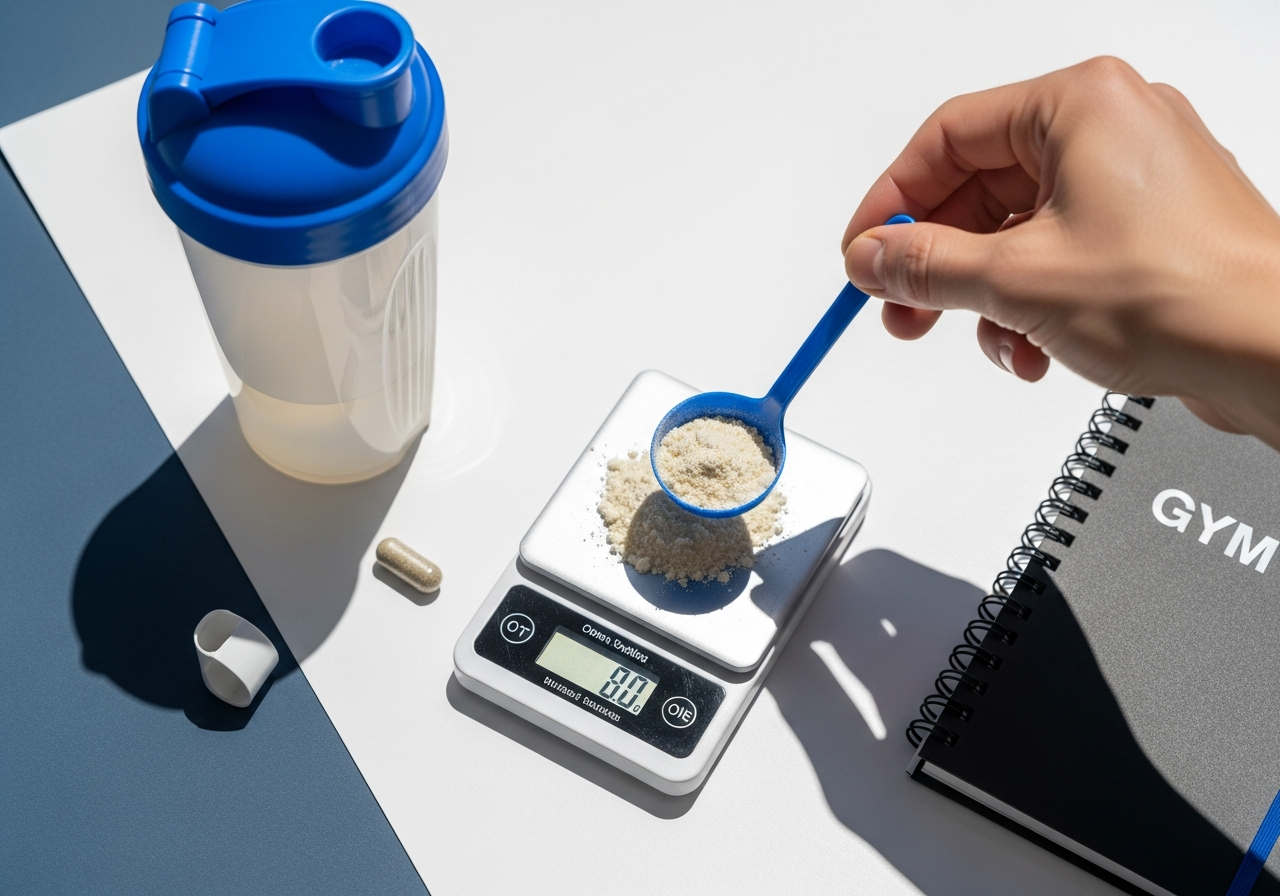
The best way to take creatine for muscle growth is simple: take a measured daily dose of creatine monohydrate, keep training hard, and do not skip rest days. A simple plan beats a perfect-but-inconsistent one.
- Choose creatine monohydrate. Monohydrate is the most studied form and the default recommendation for muscle gain. If you are comparing products, start with our best creatine rankings and creatine brand reviews.
- Decide whether to load. If you want faster saturation, take 5 grams four times daily for 5 to 7 days. If you prefer a gentler approach, skip loading and take 3 to 5 grams once daily.
- Use the right maintenance dose. For most people, 3 to 5 grams daily is enough after loading or as a standalone daily plan.
- Mix it in a way you will actually stick to. Water, juice, a protein shake, or yogurt all work. See how to mix creatine if it clumps or feels gritty.
- Take it every day. Rest days count. Muscle saturation matters more than workout-day timing.
- Pair it with resistance training. Creatine helps most when you are doing progressive overload: more load, more reps, more sets, or better performance quality over time.
- Support it with sufficient protein and calories. Creatine is not a replacement for energy intake or adequate protein.
If you want the easiest beginner routine, do this:
- Breakfast or post-workout: 5 grams creatine monohydrate
- Drink your normal fluids through the day
- Lift 3 to 5 times weekly
- Track body weight, reps, and gym performance for 8 weeks
Should you take creatine before or after a workout? The short answer is that timing is secondary to daily adherence. Some people prefer taking it post-workout simply because it is easier to remember when mixed into a shake. For more on that nuance, see when to take creatine and whether to take creatine with or without food.
If a scoop is not labelled clearly, weigh it or check our guide on how to measure creatine. Many “one scoop” servings are close to 5 grams, but not all are exact.
Creatine dose by body weight and goal: when 3 g is enough and when 5 g makes more sense
For muscle growth, 3 to 5 grams per day works for most adults, but body size, diet, and training demands can help you choose the smarter end of that range. Bigger athletes and hard-training lifters generally do better at the higher end, while smaller individuals may do fine with 3 grams once fully saturated.
A practical way to think about it:
- Smaller adults under about 60 kg: 3 grams daily is often sufficient.
- Most adults around 60 to 90 kg: 5 grams daily is the standard, simple choice.
- Larger athletes over about 90 kg: 5 grams daily is still common, though some coaches use slightly more based on body mass and training volume.
- Vegetarians and vegans: Often respond especially well because baseline muscle creatine stores may be lower.
If you want a body-mass formula, loading is often expressed as about 0.3 g/kg/day for 5 to 7 days, followed by maintenance around 0.03 g/kg/day. That formula aligns closely with the familiar 20 g loading and 3 to 5 g maintenance approach.
| Body weight | Optional loading phase | Maintenance for muscle gain | Best fit |
|---|---|---|---|
| 50-59 kg | 15-18 g/day split into 3-4 doses | 3 g/day | Smaller beginners, lighter athletes |
| 60-79 kg | 18-24 g/day split into 4 doses | 4-5 g/day | Most gym-goers |
| 80-99 kg | 24-30 g/day split into 4-5 doses | 5 g/day | Larger lifters, field-sport athletes |
| 100+ kg | 30 g/day split into 4-5 doses | 5 g/day, occasionally more individually | Very large strength athletes |
Your goal matters too. If you want a faster physique or performance change before a training block, use loading. If you care more about comfort and simplicity, skip loading and just take 3 to 5 grams daily.
This also answers common variants like which creatine is best for muscle gain and which type of creatine is best for muscle growth: the best form for almost everyone is still creatine monohydrate. For a deeper comparison, see best type of creatine and creatine maintenance dose.
Which type of creatine is best for muscle growth? Monohydrate still wins
The best creatine for muscle growth is creatine monohydrate, because it has the strongest evidence, the best track record, and usually the best value per gram. If a product claims better absorption, no water retention, or superior muscle gain versus monohydrate, the burden of proof is on that product, and most alternatives still have less convincing evidence.
Monohydrate works because it reliably raises muscle creatine stores when used at the standard doses above. It is also the form most often used in the research that shows improvements in high-intensity performance and lean mass. The 2021 JISSN paper on common creatine questions and misconceptions reinforces that many popular concerns and marketing claims around creatine forms are overstated according to Antonio et al. (2021).
Here is the practical comparison:
| Form | Evidence for muscle gain | Typical cost/value | Bottom line |
|---|---|---|---|
| Creatine monohydrate | Strongest by far | Usually best value | Best default choice |
| Micronized monohydrate | Same active ingredient | Often slightly pricier | Good if you want better mixability |
| Creatine HCl | Less evidence | Usually pricier | May be fine, not proven superior |
| Buffered/alkaline forms | Weak comparative support | Usually pricier | Marketing often outruns data |
| Gummies/capsules/liquids | Depends on delivered dose and stability | Often poorest value per gram | Use for convenience only |
For Canadians, look for products with a clear ingredient panel, a sensible serving size, and a valid NPN, or Natural Product Number, where applicable under Health Canada rules. Third-party testing is also a plus, especially if you compete in sport. If you are shopping now, compare formats in our creatine product catalog, and if you want a deeper monohydrate-specific guide see best creatine monohydrate in Canada.
The shortest honest answer to can creatine build muscle is yes, and the form most likely to do it reliably is monohydrate.
Who benefits most from creatine for muscle gain: beginners, women, older adults, and athletes
Creatine can help most people who do high-quality training, but some groups often benefit especially clearly: beginners starting resistance training, women, older adults, vegetarians or vegans, and athletes in sports requiring repeated high-intensity effort. The supplement is not only for bodybuilders.
Beginners: New lifters often ask, will creatine build muscle if I am just starting? Yes, it can help, provided you are actually training. Beginners are often improving quickly anyway, and creatine can support better training output during that early adaptation phase. A simple 3 to 5 grams daily is enough.
Women: Creatine works in women too. Women do not need a separate “pink” creatine formula; the same monohydrate and the same evidence-based dosing principles apply. If you want more on this, see creatine for women.
Older adults: Creatine can be useful for preserving or improving lean mass and strength when combined with resistance training. This matters because ageing is associated with reduced muscle mass and power, and training quality becomes even more valuable. See creatine for older adults for a full breakdown.
Vegetarians and vegans: Since dietary creatine intake from meat and fish is lower or absent, baseline stores may be lower, which can make the response more noticeable. Our guide on creatine for vegetarians covers this in more detail.
Athletes: Team-sport athletes, sprinters, CrossFit athletes, and strength athletes often benefit because repeated bouts of near-maximal effort rely heavily on the phosphocreatine system. The International Olympic Committee consensus on dietary supplements recognises creatine as one of the few sports supplements with strong evidence in the right settings.
Who may need extra caution? People with relevant medical conditions, those taking medications affecting kidney function, or anyone advised by a clinician to monitor kidney-related labs should speak with a healthcare professional first. For most healthy people, though, the question is not is creatine important for muscle growth so much as whether they are training in a way that lets creatine’s benefits actually matter.
Does timing matter, and what should you take creatine with?
Timing matters far less than consistency, so the best time to take creatine is the time you will remember every day. If you are asking whether pre-workout, post-workout, morning, or night is best for muscle gain, the evidence-based answer is that daily saturation is the main driver, not the exact minute you take it.
That said, there are a few practical tips:
- Post-workout is convenient: Many people mix 3 to 5 grams into a protein shake after training simply because the habit sticks.
- With meals can be easier on the stomach: If plain water gives you mild GI discomfort, try taking creatine with food.
- Rest days still count: Take your normal daily dose even when you do not train.
You can take creatine with:
- Water
- Protein powder
- Carbohydrate-containing drinks or meals
- Coffee, if you tolerate the combination well
For deeper guidance, see mixing creatine with protein powder, mixing creatine with coffee, and how much water to drink with creatine.
Should you cycle creatine? For most people, no. Creatine does not need to be cycled, and there is no known performance advantage to doing months on and months off if you tolerate it well. Our guide on whether you need to cycle creatine explains the logic.
Can creatine replace protein, calories, or smart programming? Absolutely not. Creatine works best when paired with:
- A resistance-training plan with progressive overload
- Adequate protein intake
- Enough calories to support your goal, especially if bulking
- Regular sleep and recovery
So yes, does taking creatine increase muscle growth? It can, but only meaningfully when the rest of the muscle-building system is in place. Creatine amplifies a good plan; it does not rescue a bad one.
Is creatine safe, and what side effects should you actually expect?
Creatine monohydrate is generally considered safe for healthy people at recommended doses, and the most common “side effect” is mild weight gain from increased water inside muscle, not fat gain. That is one of the most important facts for anyone worried that creatine will make them look puffy or gain body fat.
The 2017 ISSN position stand and the 2021 JISSN review both support the safety of creatine monohydrate in healthy populations when used appropriately. Mayo Clinic also notes that creatine seems to be generally safe when used as directed according to Mayo Clinic.
What you may notice:
- Water-weight gain: Often within the first 1 to 2 weeks, especially with loading.
- Muscle fullness: Usually a desirable effect for lifters.
- Mild stomach upset: More likely with large single doses or poor mixing.
What usually helps:
- Split larger doses during loading
- Take it with food if your stomach is sensitive
- Use monohydrate powder and measure accurately
- Stay reasonably hydrated, though you do not need to force extreme water intake
Common fears that are often overstated or misunderstood include:
- Kidney damage in healthy people: Current evidence does not support this at recommended doses, though people with kidney disease or related medical concerns should get medical advice first.
- Dehydration and cramps: Research does not support the old claim that creatine inherently causes dehydration or cramping.
- Fat gain: Early scale increases are usually water in muscle, not body fat.
If kidney lab work is ever part of your care, remember that creatinine, a breakdown product measured on blood tests, is not the same thing as creatine itself. This is a major source of confusion. Our guides on is creatine safe, creatine and kidneys, and does creatine make you gain weight cover those issues in detail.
The bottom line: for healthy lifters using evidence-based doses, creatine’s risk profile is favourable, especially relative to how well it is studied.
Why creatine may not seem to work: common mistakes and the biggest myths debunked
If creatine seems like it is not working, the problem is usually dosage, patience, training quality, or expectations, not that creatine “doesn’t work.” Most failures are really execution problems.
The most common mistakes are:
- Not taking it daily: Skipping rest days slows or prevents full saturation.
- Underdosing: Tiny proprietary servings or half-scoops can leave you below the effective range.
- Expecting instant muscle tissue gain: Creatine often first shows up as better performance and muscle fullness.
- Using a poor training plan: Creatine cannot build much muscle if your workouts lack progressive overload.
- Stopping after a week: Especially without loading, you may need several weeks before benefits are obvious.
Now the myths:
Myth 1: Creatine builds muscle without training.
Creatine can increase muscle creatine stores without training, but meaningful hypertrophy requires a training stimulus.
Myth 2: You need exotic forms for better results.
Monohydrate remains the gold standard; expensive alternatives are not proven better for muscle gain.
Myth 3: Creatine is a steroid.
It is not a steroid and does not work through anabolic hormone pathways. See is creatine a steroid.
Myth 4: If you stop, all your gains disappear.
You may lose some water retention and a little performance support as stores decline, but you do not lose all the muscle you built from months of training.
Myth 5: Some people are complete non-responders, so it is pointless to try.
Response varies, but “non-response” often reflects already-high baseline stores, inadequate measurement, or poor training. Learn more in creatine non-responders.
If you want a myth-by-myth teardown, read creatine myths debunked or our deeper guide on creatine myths vs. facts. For many people asking do creatine help build muscle or do creatine build muscle, the answer is yes, but only when the basics are done correctly and long enough to matter.
How to buy creatine in Canada without overpaying for hype
In Canada, the smartest buy is usually a plain creatine monohydrate powder with clear labelling, sensible dosing, and good quality control. You do not need a flashy “muscle matrix” to get the proven benefits.
When comparing products, look for:
- Creatine monohydrate as the main and ideally only active ingredient
- Serving size clearly stated in grams, not vague scoop claims only
- NPN information where applicable, because an NPN is a Natural Product Number issued under Health Canada’s regulatory framework for natural health products
- Third-party testing or transparent manufacturing standards, especially if you compete
- Good cost per 100 grams or per 5-gram serving
Powder is usually the best value. Capsules, gummies, and RTDs can work, but they often cost more per effective dose and sometimes make it harder to consistently reach 3 to 5 grams daily.
Use this quick buying checklist:
- Check the form: monohydrate first.
- Check the dose per serving: ideally 3 to 5 grams or easy multiples.
- Check the ingredient list: fewer extras is usually better.
- Check the quality signals: NPN, testing, manufacturer transparency.
- Check the math: compare cost per gram, not just tub price.
If you are browsing options, our creatine product catalog can help you compare formats, and our best creatine rankings and creatine brand reviews are useful for narrowing down choices.
One final buying tip: if a product promises better muscle gain than monohydrate with a smaller dose and a much higher price, be sceptical. In 2026, the evidence-based answer has not changed: for building muscle, plain creatine monohydrate still gives most Canadians the best balance of results, safety, and value.
Bottom line: will creatine build muscle, and what should you do next?
Yes, creatine can help build muscle, and the standard daily dose for that goal is 3 to 5 grams of creatine monohydrate per day. That is the direct answer to the primary question and the recommendation that fits most healthy adults.
If you want the fastest practical route, do this:
- Buy a reputable creatine monohydrate powder.
- Take 5 grams daily, every day.
- Optional: load with 20 grams daily split into 4 doses for 5 to 7 days first.
- Train with progressive overload 3 to 5 times per week.
- Eat enough protein and total calories to support muscle growth.
- Stay consistent for at least 8 weeks before judging results.
Creatine helps because it raises intramuscular phosphocreatine, improving rapid energy availability for hard sets and repeated high-intensity efforts. That means better training quality, which is the real bridge between taking creatine and gaining more muscle.
What should you expect? Usually a bit of water weight and muscle fullness first, then stronger sessions, and over time better lean-mass progress than you would likely get from the same training without creatine. What should you not expect? Overnight transformation, steroid-like effects, or meaningful muscle gain without proper training.
If you are ready to start, use our creatine dosage calculator for a tailored number, or continue with how to take creatine, creatine for beginners, and the creatine loading phase depending on where you are in the process.
The simplest expert recommendation remains the best one: take 3 to 5 grams of creatine monohydrate daily, keep lifting hard, and let the compound effect of better training build the muscle.
Creatine for Muscle Growth: The Numbers That Matter
- 3-5 g/day Standard daily dose for muscle gain — Evidence-based maintenance range for most adults using creatine monohydrate.
- 20 g/day Optional loading dose — Typically split into 4 doses for 5-7 days to saturate muscles faster.
- 5-7 days Time to saturate with loading — Without loading, saturation usually takes roughly 3-4 weeks.
- 2-8 weeks Typical window to notice benefits — Water and fullness often appear first; performance and muscle gains build after that.
Frequently Asked Questions
Does creatine help build muscle?
Yes, creatine helps build muscle when combined with resistance training. It works mainly by increasing muscle phosphocreatine stores, which helps you perform more high-quality work in the gym, and that stronger training stimulus supports greater muscle and strength gains over time.
How much creatine per day to build muscle?
Most people should take 3 to 5 grams of creatine monohydrate per day to build muscle. A loading phase of 20 grams per day split into four doses for 5 to 7 days is optional if you want faster saturation, but it is not required for long-term results.
Does creatine build muscle mass or just water weight?
Creatine does both, but in different time frames. It usually increases intracellular water first, which can raise body weight quickly, and then helps support actual muscle mass gain over time by improving training performance, work capacity, and adaptation.
Which type of creatine is best for muscle growth?
Creatine monohydrate is the best type of creatine for muscle growth. It is the most studied, most consistently effective, and usually the most cost-effective form, while alternative forms are not proven superior for building muscle.
How does creatine help muscle growth?
Creatine helps muscle growth by increasing phosphocreatine in muscle, which speeds ATP regeneration during short, hard efforts. In practice, that can mean more reps, better repeated effort performance, and more total training volume, all of which support hypertrophy over time.
Will creatine build muscle if I do not work out?
No, creatine will not meaningfully build muscle by itself if you do not train. It can raise muscle creatine stores and increase water content in muscle, but the actual growth of new muscle tissue still requires a training stimulus and adequate nutrition.
Will I lose strength if I stop taking creatine?
You may lose a small performance edge and some water-related muscle fullness if you stop taking creatine, but you do not lose all your strength or muscle overnight. As muscle creatine stores return toward baseline over several weeks, the supplementation benefit fades, while your underlying training adaptations remain.
Should I take creatine every day or only on workout days?
You should take creatine every day, including rest days. Daily intake keeps muscle creatine stores elevated, and that ongoing saturation is what supports performance and muscle-building benefits better than taking it only before workouts.
How long does creatine take to work for muscle gain?
Creatine can start affecting muscle stores within days, but noticeable muscle-building benefits usually take a few weeks. With loading, some people notice fuller muscles and small performance changes in the first week, while clearer strength and lean-mass benefits more often emerge over 2 to 8 weeks.
Is creatine important for muscle growth?
Creatine is helpful for muscle growth, but it is not more important than training, protein, calories, and recovery. Think of creatine as a well-proven performance aid that can make a good muscle-building plan work a bit better, not as the foundation of the plan itself.