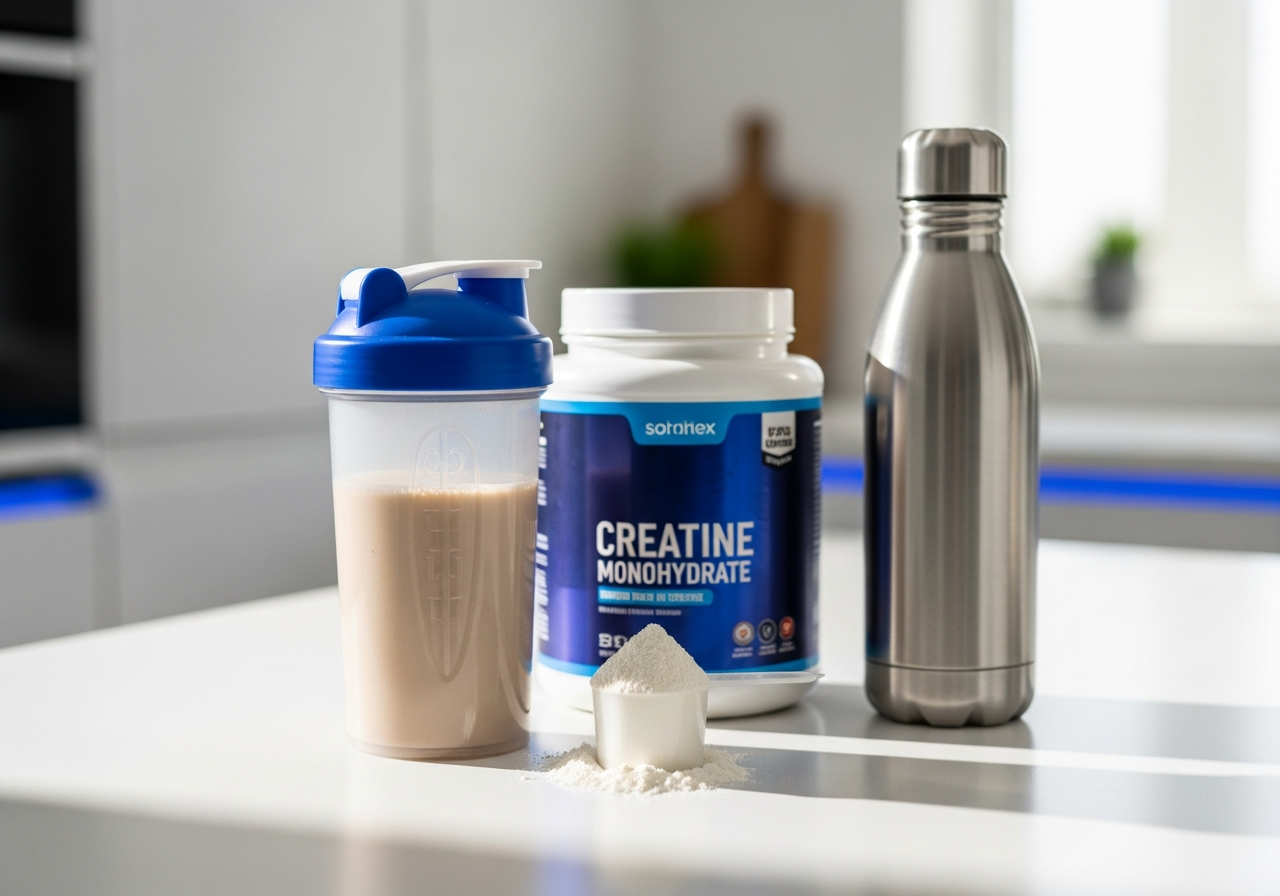
Can You Mix Creatine With Protein Powder? Stacking the Two Safely
By The Creatine Canada Research Team — Evidence-based supplement analysts
Yes, you can mix creatine with protein powder, and for most healthy adults it is a simple, safe, and effective way to take both in one shake. Creatine monohydrate and whey or plant protein do different jobs, so combining them does not “cancel out” absorption; it mainly improves convenience and helps you stay consistent with your daily dose.
Evidence-based · Cites 4 sources · Editorial standards
Key Takeaways
- Yes — creatine and protein powder can be mixed in the same shake without reducing creatine’s effectiveness in any meaningful way.
- The evidence-based creatine dose for most adults is 3-5 g per day, whether you take it with whey, casein, plant protein, water, or milk.
- Protein helps you hit daily protein targets; creatine helps saturate muscle creatine stores and improve repeated high-intensity performance.
- Timing matters less than daily consistency, but many people find a post-workout protein shake the easiest place to add creatine.
- You can also mix creatine with pre-workout, but check the label first because some pre-workouts already include creatine.
- Most stomach issues come from taking too much at once, poor mixing, or low fluid intake — not from combining creatine with protein itself.
- In Canada, choose a creatine monohydrate product with a Natural Product Number when applicable and preferably third-party testing.
Yes, you can mix creatine with protein powder — and it is one of the easiest ways to take it
Yes, you can mix creatine and protein powder in the same drink, and for most people it is a practical, evidence-based way to take both supplements. If your main question is “can I mix creatine with a protein shake?” the short answer is yes: creatine monohydrate is stable enough for normal use, protein does not block it, and the combination is common in both recreational lifters and serious athletes.
Creatine and protein do different jobs in the body. Creatine helps increase muscle phosphocreatine stores, which means your muscles can regenerate adenosine triphosphate, or ATP, faster during short, hard efforts like lifting, sprinting, and repeated intervals. Protein powder supplies amino acids, especially leucine and other essential amino acids, that support muscle protein synthesis, which is the process of building and repairing muscle tissue. Because they work through different mechanisms, stacking the two is logical rather than redundant.
The best-supported form is creatine monohydrate. The 2017 ISSN position stand concluded that creatine monohydrate is the most effective ergogenic nutritional supplement currently available for increasing high-intensity exercise capacity and lean mass during training. That conclusion is about creatine itself, not about taking it alone versus with protein, which is exactly why mixing it into a shake is fine: the key is getting the right daily amount consistently.
For most adults, the simplest plan is:
- Put your usual protein powder in a shaker or blender.
- Add 3-5 g creatine monohydrate.
- Add water or milk.
- Shake well and drink it the same day.
If you are brand new to supplementation, read creatine for beginners and use a creatine dosage calculator so your dose matches your body size and goal. If you want a deeper explanation of forms, check the best creatine rankings or browse creatine brand reviews.
The practical bottom line is simple: if mixing creatine with protein makes you more likely to remember it every day, it is a very good strategy.
Why creatine and protein work well together: different mechanisms, complementary benefits
Creatine and protein pair well because they support performance and muscle gain through separate but complementary pathways. Creatine improves rapid energy availability inside muscle cells, while protein provides the raw materials needed to repair and build tissue after training.
Here is the mechanism in plain English. Your muscles store a small pool of phosphocreatine, a high-energy compound that helps recycle ATP during very short, intense efforts. When you supplement with creatine, your muscles gradually become more saturated with creatine and phosphocreatine. That higher saturation can improve repeated bursts of power, allow a few extra reps, or help maintain force output across hard sets. Over weeks and months, that performance edge can translate into better training quality and, often, more lean mass gains.
Protein powder does not raise muscle creatine stores. Instead, it increases your intake of amino acids that support recovery and muscle protein synthesis. In other words, creatine helps you train better; protein helps you recover and adapt. Those are not the same job.
Another common concern is absorption. There is no solid evidence that mixing creatine with whey protein, casein, or a typical plant protein impairs creatine uptake in a meaningful real-world way. What matters far more is whether you take enough creatine daily for long enough to reach saturation. If you want the full background on how saturation works, see what is creatine and does creatine build muscle.
Some people ask whether carbs or insulin are required for creatine to work. Insulin can influence nutrient transport, but you do not need to chase a high-sugar “transport system” for creatine to be effective. As explained in Antonio et al. (2021), many common creatine marketing claims overstate the need for special stacks or delivery systems. Normal daily dosing works.
So if you are asking “should you mix creatine with protein?” the best answer is this: you do not need to, but it makes sense because it combines a performance supplement with a nutrition supplement in one easy habit.
- Creatine: supports ATP regeneration for repeated high-intensity work.
- Protein: supports muscle repair, recovery, and growth.
- Together: can support better training quality plus better recovery nutrition.
Exactly how to mix creatine with a protein shake so it tastes fine and goes down easily
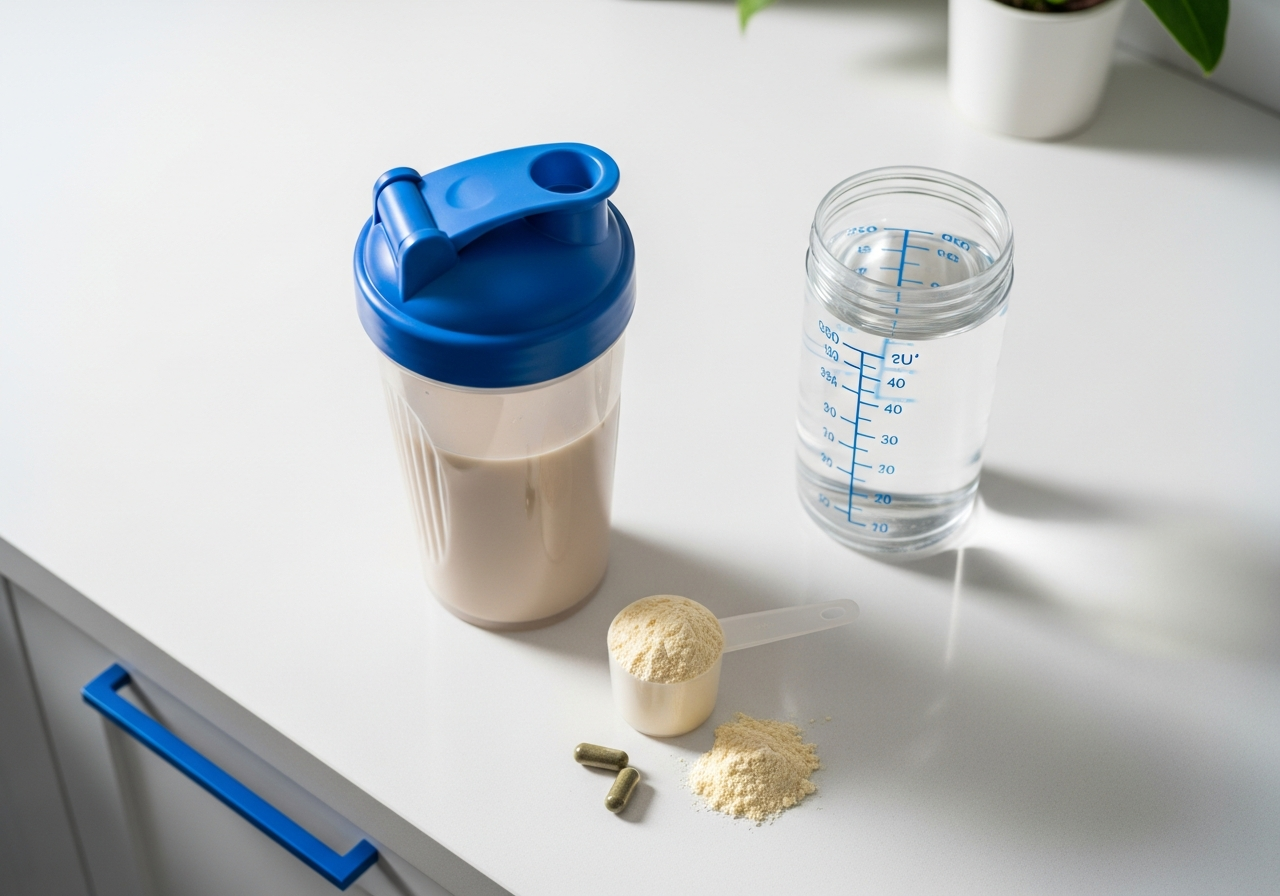
The best way to mix creatine with protein powder is to add 3-5 g of creatine monohydrate to your usual shake, use enough liquid, and shake or blend thoroughly. Most complaints about gritty texture come from too little liquid, cold thick shakes, or under-mixing rather than from the combination itself.
- Measure your creatine accurately. Use a scale if possible, or the scoop provided. Many creatine scoops are about 5 g, but not all are exact. If you are unsure, see how to measure creatine.
- Add protein first. Put 20-40 g of whey, casein, or plant protein into a shaker or blender.
- Add creatine monohydrate. Use 3-5 g for maintenance, or one of your split loading doses if you are loading.
- Choose your liquid. Add 300-500 mL of water, milk, or a milk alternative. More liquid usually means less grittiness.
- Shake hard for 20-30 seconds. If you use thick ingredients like oats, yogurt, peanut butter, or frozen fruit, a blender works better.
- Drink it within a reasonable time. Normal same-day use is fine. You do not need to panic if it sits for 30-60 minutes, but there is no advantage to premixing days ahead.
If you prefer simplicity, a post-workout shake is often the easiest routine: protein powder, creatine, water, shake, drink. If you train early and do not want a full shake, you can take creatine separately in water and have protein later. Convenience is the deciding factor, not a magic interaction.
Good flavour pairings include vanilla whey with milk, chocolate whey with water or milk, and unflavoured creatine in nearly any shake. Micronized creatine often mixes a bit more smoothly. For more practical mixing tips, see how to mix creatine.
Three troubleshooting fixes that usually work:
- If it feels chalky, use more liquid or blend instead of shake.
- If it upsets your stomach, split the dose into smaller servings.
- If you forget it often, leave creatine beside your protein tub so the habit is automatic.
The routine that works best is the one you can repeat every day.
Creatine dosing with protein: the right grams by body size, goal, and whether you load
The correct creatine dose does not change just because you mix it with protein powder. For most adults, take 3-5 g of creatine monohydrate per day; larger athletes and people with more lean mass often do well at the upper end of that range.
You have two standard options. Loading means about 20 g per day, usually split into 4 doses of 5 g, for 5-7 days, followed by 3-5 g per day. No loading means taking 3-5 g daily from the start; this reaches full saturation more gradually, usually over about 3-4 weeks. If you want a detailed timeline, read how long creatine takes to work and creatine loading phase.
| Body weight | Goal | Simple daily creatine dose | Protein per shake example |
|---|---|---|---|
| Under 60 kg | General fitness | 3 g/day | 20-25 g protein |
| 60-90 kg | Muscle and strength | 3-5 g/day | 25-35 g protein |
| Over 90 kg | Strength, size, team sport | 5 g/day | 30-40 g protein |
| Any body weight | Fast saturation | 20 g/day for 5-7 days, then 3-5 g/day | Split across meals or shakes |
Examples help. A 55 kg beginner who trains three times per week could simply take 3 g creatine in a 25 g whey shake daily. A 78 kg lifter trying to add strength and size could take 5 g daily in a 30 g post-workout shake. A 102 kg rugby player might use 5 g daily, and possibly load first if quick saturation matters before a block of intense training.
Do not confuse protein dose with creatine dose. More protein does not replace creatine, and more creatine does not replace protein. If you need help dialing in your number, use the creatine dosage calculator or read how much creatine per day.
Consistency beats perfection. Missing exact timing occasionally matters very little; missing days repeatedly matters much more.
Best timing: can you take creatine with a protein shake before or after a workout?
Yes, you can take creatine with a protein shake before or after a workout, but daily consistency matters more than precise timing. If one meal or shake makes adherence easier, that is the best time for you.
This is one of the biggest points of confusion in supplement routines. Creatine does not act like a stimulant and it is not a classic acute-performance pre-workout ingredient. Creatine works by gradually increasing intramuscular stores over days and weeks. That means you do not need to “feel” it immediately before a session for it to be working. If you are asking “is creatine pre workout?” the correct answer is no: creatine is not defined by timing, and it is not the same category as caffeine-based pre-workout.
Post-workout is popular for practical reasons. Many lifters already have a shake after training, so adding creatine creates one dependable habit. Pre-workout is also fine if that is when you reliably remember it. Rest days still count, because saturation is maintained by regular intake, not just workout-day use. For a full timing breakdown, see when to take creatine and creatine on rest days.
Reasonable timing options include:
- After training: easiest for people who already use whey post-workout.
- Before training: fine if you prefer a pre-lift shake.
- With breakfast: ideal for people who train later or want a daily anchor habit.
- Split through the day: useful during loading or if large doses upset your stomach.
What should you expect? If you loaded, you may notice better training volume, fuller muscles, or a small water-weight increase within a week. If you did not load, noticeable effects usually take a few weeks. Creatine is a saturation supplement, not a jolt-in-20-minutes supplement.
The practical answer is simple: the best time to mix creatine with protein powder is the time you will actually repeat every day.
Pre-workout, milk, glutamine, fibre: what else can you safely mix with creatine?
Yes, creatine can be mixed with pre-workout, milk, whey protein, and many other common supplements, but the right question is whether the full combination is useful, tolerated, and correctly dosed. Most stack problems come from overlapping ingredients or digestive load, not from creatine itself.
If you are wondering “can you mix creatine with pre workout?” the answer is usually yes. Creatine monohydrate combines fine with caffeine-based pre-workouts in practical use. The main caution is label overlap: many pre-workouts already contain 2-5 g creatine, while others contain none. If you add extra creatine without checking, you might take more than intended. That is not usually dangerous for a healthy adult in the short term, but it can increase the chance of stomach upset and wastes money. If this topic is relevant to your stack, compare ingredients carefully or read creatine vs pre-workout and creatine and caffeine.
If you are asking “can you mix creatine and milk?” yes, absolutely. Milk is simply another liquid base. It can improve taste and calories if you are trying to gain weight. Water is lighter if you prefer faster digestion. Milk does not make creatine ineffective.
Creatine can also be mixed with:
- Whey or plant protein: yes, and this is one of the most common uses.
- L-glutamine: yes, though glutamine is not essential for most lifters with adequate protein intake.
- Electrolytes: yes, especially if you train hard and sweat heavily.
- Carbohydrates: yes, if they fit your nutrition plan.
A more cautious note applies to fibre products such as Metamucil. If you are asking “can I mix creatine and Metamucil?” the answer is that you probably can, but it is not ideal for most people. Thick fibre drinks can be unpleasant, may change texture significantly, and may slow gastric emptying enough to make the experience worse. There is no strong evidence that the combo is harmful for healthy adults, but from a practical standpoint it is smarter to take fibre separately and use creatine in a simpler liquid.
When stacking multiple powders, watch for caffeine dose, sodium, sweeteners, and total volume. More ingredients is not automatically better.
Who this stack is best for: beginners, women, older adults, athletes, and people cutting or bulking
Mixing creatine with protein powder is useful for almost any healthy adult who wants a simpler supplement routine, but the reasons can differ by training status and goal. The combination is not just for bodybuilders.
Beginners often benefit the most from simplification. If you are new to the gym, combining creatine with a daily shake removes friction and makes it easier to stay consistent. A beginner does not need a fancy stack; a quality protein powder and creatine monohydrate cover the basics very well.
Women can mix creatine with protein exactly the same way men do. Creatine is not a steroid and does not cause automatic “bulking.” The same evidence-based dose of 3-5 g per day is commonly used. If this applies to you, see creatine for women.
Older adults may use this stack for convenience and muscle support, especially when resistance training is part of the plan. Protein helps meet daily intake targets that are often missed in older populations, while creatine may support training quality and lean mass retention. For more, read creatine for older adults.
Athletes in power, sprint, team-sport, and repeated-effort events are classic good candidates for creatine. The International Olympic Committee’s 2018 consensus on supplements recognizes creatine as one of the better-supported performance supplements for specific use cases. If you compete, third-party testing matters because contamination risk matters more in sport than in general fitness.
People bulking often like protein-plus-creatine shakes because they are efficient and calorie-flexible. People cutting also benefit because creatine can help preserve training performance while protein supports satiety and lean mass retention. The stack works in both phases because the goal is not the same as the mechanism.
Vegetarians and vegans may respond especially well to creatine because baseline dietary creatine intake is often lower. Pairing creatine with a plant protein shake can be an excellent approach.
Who may need extra caution? Anyone with kidney disease, major medical conditions, pregnancy or breastfeeding, or who takes medications that affect kidney function should speak with a qualified clinician first. For a fuller safety review, see is creatine safe and who should not take creatine.
Safety, side effects, and myths: what combining creatine and protein does not do
Mixing creatine with protein powder does not make creatine unsafe, and for healthy adults the combination is generally well tolerated at standard doses. The main side effects people notice are minor digestive issues or small increases in body water, especially during loading.
The evidence base on creatine safety is stronger than many people realize. The ISSN position stand and the Mayo Clinic overview both reflect that creatine monohydrate is widely considered safe for healthy individuals when used appropriately. That does not mean zero side effects; it means the common worries are often misunderstood.
What combining creatine and protein does not do:
- It does not “overload” healthy kidneys by default. Creatinine, a breakdown product measured on blood tests, can rise without kidney damage, which is one reason this topic causes confusion.
- It does not turn creatine into a steroid. Creatine is not hormonal and does not work like anabolic drugs.
- It does not automatically cause fat gain. Early weight gain is usually from increased intracellular water, not body fat.
- It does not require cycling. Most people do not need on-off phases.
- It does not need sugar to “activate.” Regular daily use is enough.
Possible side effects that are real and manageable include:
- Stomach discomfort if you take too much at once
- Diarrhea from large single doses, especially above 5 g in one hit for sensitive users
- Temporary bloating sensation in some people, often improved by smaller doses and better mixing
- Small scale-weight increase from water stored in muscle
If you experience issues, the first fixes are simple: reduce to 3 g per day, split the dose, take it with food, and use more liquid. For more myth-busting, visit creatine myths debunked, does creatine cause bloating, and is creatine bad for your kidneys.
The bottom line is that the combination is usually only as problematic as the dose and the product quality make it.
The most common mixing mistakes — and how to fix them fast
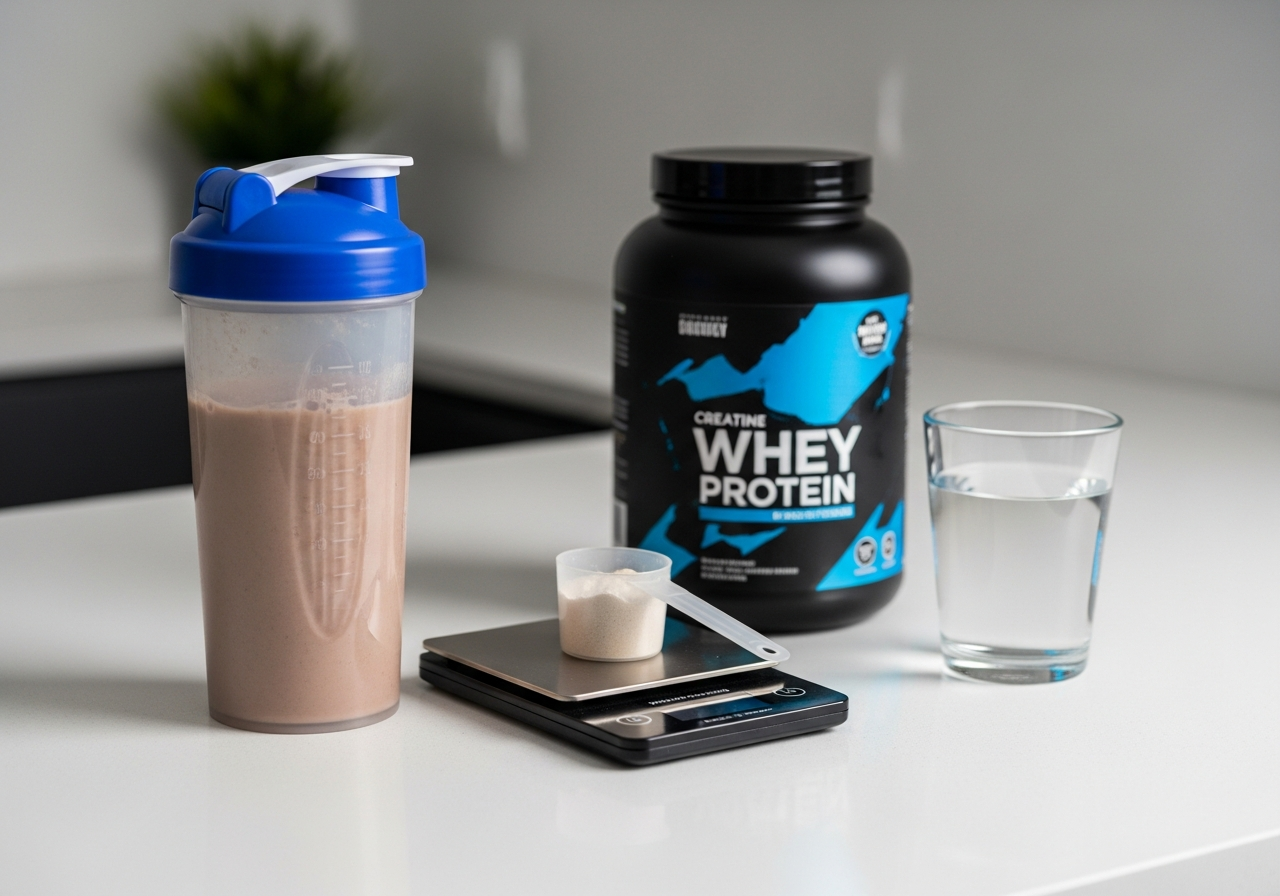
The most common mistakes with creatine and protein shakes are not about the combo itself; they are about poor dosing, inconsistent use, and choosing products based on marketing instead of evidence. Most problems are easy to fix once you know what to look for.
Mistake 1: Taking random scoop sizes. One protein scoop is not a creatine scoop, and one creatine scoop is not always 5 g. Read the label and measure properly.
Mistake 2: Expecting a stimulant feeling. Creatine is not pre-workout caffeine. If you ask “is creatine pre workout?” the answer is no in effect, even if you happen to take it pre-workout in timing.
Mistake 3: Only taking it on training days. Saturation depends on regular use. Skipping all rest days slows or reduces the benefit.
Mistake 4: Buying exotic creatine forms first. Monohydrate remains the reference standard. If you are comparing products, start with best type of creatine and why monohydrate still wins.
Mistake 5: Using too little liquid. Thick shakes plus dry powder are a recipe for grittiness and stomach complaints.
Mistake 6: Blaming creatine for every digestive issue. Sometimes the real culprit is lactose, sugar alcohols, gums, fibre, or a giant high-calorie shake. If digestion is the issue, simplify your shake ingredients first. You may also find creatine digestive side effects helpful.
Mistake 7: Doubling up with pre-workout. Check whether your pre already contains creatine before adding more.
How to tell if it is working:
- After 1 week with loading, you may notice a small increase in body weight or muscle fullness.
- After 2-4 weeks, many users notice better training volume, stronger repeat sets, or slightly improved sprint or interval quality.
- After 6-12 weeks, the real win is often better progress in strength and lean mass compared with training alone.
If you suspect you are not responding, first check dose, daily consistency, product quality, and training quality before assuming you are a non-responder. In practice, adherence explains a lot.
What to buy in Canada: creatine form, labels, testing, and whether combo products are worth it
If you are buying creatine in Canada, the best default choice is plain creatine monohydrate from a reputable brand, then add it to the protein powder you already like. Separate products usually give you better dosing control, better value, and easier troubleshooting than all-in-one blends.
Many Canadians also want to know what labels matter. For supplements sold in Canada, a Natural Product Number, or NPN, indicates the product has been authorized for sale under Health Canada’s natural health product framework. An NPN is useful, but it is not the only quality signal. Third-party testing, transparent ingredient lists, and sensible dosing matter too.
| Option | Best for | Pros | Cons |
|---|---|---|---|
| Plain creatine monohydrate powder | Most people | Best studied, cost-effective, easy to dose 3-5 g | Needs mixing, can feel slightly gritty |
| Protein powder plus separate creatine | People who already use shakes | Flexible, easy stacking, simple routine | Two tubs instead of one |
| All-in-one mass gainer or recovery blend with creatine | Convenience-focused users | One product, one scoop routine | Often underdosed creatine or excess calories |
| Pre-workout with creatine included | People who train consistently at one time | Convenient if dose is clearly listed | May not suit rest days; caffeine may limit timing |
When comparing products, check:
- Creatine form: monohydrate first
- Dose per serving: ideally 3-5 g if included in a blend
- Added ingredients: caffeine, stimulants, sugar alcohols, proprietary blends
- Quality signals: NPN where applicable, third-party testing, reputable manufacturer
If you want product help, explore the creatine product catalog, best creatine rankings, and creatine brand reviews. If you are specifically shopping domestically, compare Canadian availability and label compliance rather than chasing flashy imported formulas.
The smartest buy for most people is boring in the best way: a clean creatine monohydrate plus a protein powder you tolerate and enjoy drinking.
Bottom line: the simplest stack is often the best one
Yes, you can mix creatine with protein powder, and for most healthy adults it is one of the simplest, safest, and most effective ways to use creatine consistently. The evidence-based approach is straightforward: take 3-5 g creatine monohydrate per day, mix it into your usual protein shake if that is convenient, and keep doing it long enough to maintain muscle saturation.
If you prefer a short action plan, use this:
- Buy plain creatine monohydrate from a reputable brand.
- Add 3-5 g to your daily whey or plant protein shake.
- Take it every day, including rest days.
- Use loading only if you want faster saturation.
- Adjust liquid volume or split doses if digestion is an issue.
You can also mix creatine with pre-workout, milk, or water, but none of those options is inherently superior to a protein shake. The deciding factors are convenience, tolerance, and whether the total stack is dosed correctly. Creatine is not a pre-workout stimulant, protein is not a substitute for creatine, and combining them does not make either one ineffective.
If you want to keep learning, the best follow-up reads are how to take creatine, creatine with or without food, creatine maintenance dose, and best creatine monohydrate in Canada.
The best creatine routine is the one you can repeat daily for months, not the one with the most complicated timing rules.
For most people, that means putting creatine in the shake they were already going to drink.
Creatine + Protein Shake: The Numbers That Matter
- 3-5 g/day Standard creatine maintenance dose — The evidence-based daily amount for most adults using creatine monohydrate.
- 20 g/day Typical loading dose — Usually split into 4 x 5 g servings for 5-7 days.
- 5-7 days Loading phase timeline — Fastest common way to saturate muscle creatine stores.
- 3-4 weeks Time to saturate without loading — Typical timeline when taking 3-5 g daily from the start.
Frequently Asked Questions
Can you mix creatine and protein powder in the same shaker bottle?
Yes, you can mix creatine and protein powder in the same shaker bottle. For most people, adding 3-5 g of creatine monohydrate to a whey or plant protein shake is a convenient way to take both without reducing creatine’s effectiveness in any meaningful way.
Can I mix creatine with a protein shake after my workout?
Yes, mixing creatine with a post-workout protein shake is one of the easiest and most common ways to take it. Post-workout is not mandatory, but it works well because many people already have a shake then, which improves daily consistency.
Should you mix creatine with protein, or take them separately?
You can do either, but mixing them is often more practical. Creatine and protein do different jobs, so taking them together is not required for better absorption; it is mainly a convenience strategy that helps you hit your daily creatine dose and protein target.
Can you mix creatine with whey protein specifically?
Yes, creatine can be mixed with whey protein without any major issue. Whey is one of the most common partners for creatine because it mixes easily, is widely available, and fits naturally into a post-workout or breakfast shake.
Can you mix creatine with pre-workout?
Yes, you can mix creatine with pre-workout, but check the label first. Some pre-workouts already contain 2-5 g of creatine, so adding more may be unnecessary and can increase the chance of stomach upset without adding meaningful benefit.
Is creatine a pre-workout supplement?
No, creatine is not really a pre-workout supplement in the same way caffeine is. Creatine works by saturating muscle stores over days and weeks, so it does not need to be taken immediately before training to be effective.
Can you mix creatine and milk?
Yes, creatine mixes fine with milk. Milk can make the shake taste better and add calories and protein, which is helpful for bulking, while water may feel lighter and digest faster if you prefer a simpler drink.
Can I mix creatine and L-glutamine?
Yes, you can mix creatine and L-glutamine in the same drink. There is no major interaction concern for healthy adults, but glutamine is often less essential than good protein intake and creatine monohydrate for typical gym goals.
Can I mix creatine and Metamucil?
Probably, but it is not the most practical combination. Fibre drinks like Metamucil can become thick and unpleasant when extra powders are added, so most people will tolerate creatine better when it is mixed separately in water, milk, or a protein shake.
Does mixing creatine with protein powder cause kidney problems?
Not in healthy adults at standard doses, based on the current evidence. People with kidney disease, major medical conditions, or medications that affect kidney function should speak with a clinician first, but the combination itself is not known to harm healthy kidneys.