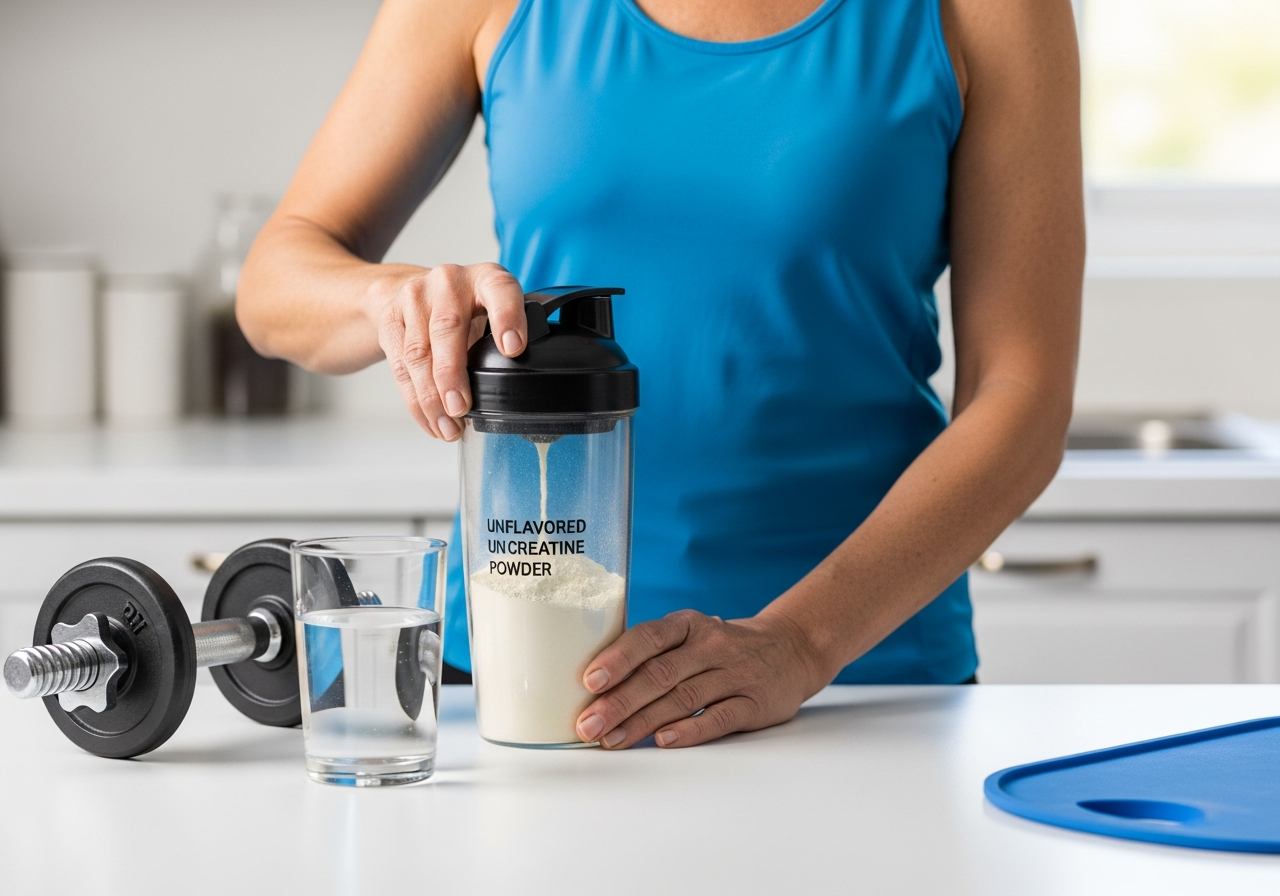
Creatine for Older Adults: Muscle, Bone, and Brain After 50
By The Creatine Canada Research Team — Evidence-based supplement analysts
Yes—creatine for older adults is generally safe and often useful, especially for supporting muscle strength, training capacity, and healthy aging when paired with resistance exercise. For most healthy adults over 50, the evidence-based approach is simple: take creatine monohydrate daily, usually 3 to 5 grams, and expect the biggest benefits in muscle function rather than miracle anti-aging effects.
Evidence-based · Cites 4 sources · Editorial standards
Key Takeaways
- Creatine monohydrate is the best-studied form for older adults and the usual daily dose is 3 to 5 g.
- Older adults tend to benefit most when creatine is combined with resistance training, not used as a stand-alone fix.
- A loading phase of 20 g/day for 5 to 7 days can work faster, but it is optional.
- Creatine is generally safe for healthy seniors, but anyone with kidney disease or complex medical conditions should ask their clinician first.
- The most noticeable benefits are usually better training performance, strength, and lean mass over weeks to months.
- Creatine may support brain energy metabolism, but cognitive and anti-aging claims are still less established than muscle benefits.
Is creatine safe and worthwhile after 50? The short answer is yes for most healthy adults
Yes, creatine is generally safe for most healthy older adults, and it can be worthwhile if your goal is to maintain muscle, strength, and physical function as you age. That direct answer matters because many people searching is creatine ok for seniors, can seniors take creatine, or should the elderly take creatine are really asking two separate questions: is it safe and does it actually help.
On safety, the strongest consensus is reassuring. The 2017 ISSN position stand concluded that creatine monohydrate is both effective and safe for healthy people when used in recommended amounts. The later review by Antonio et al. (2021) also addressed many common misconceptions, including concerns about kidneys, dehydration, cramps, and hair loss, and found that many popular fears are not supported by the totality of evidence.
On usefulness, creatine is not a magic anti-aging powder, but it is one of the few sports supplements with solid evidence behind it. In older adults, the clearest benefits are improved high-intensity energy availability, better training quality, and in many studies greater gains in lean mass and strength when combined with resistance training. In plain language, creatine helps your muscles do a bit more quality work, and that extra work adds up over time.
If you are over 50 and want the simplest evidence-based plan, use creatine monohydrate, not a trendy alternative form. Take 3 to 5 grams daily, every day, and keep lifting or doing some kind of progressive strength training. If you want a tailored estimate, use our creatine dosage calculator or read the basics in what creatine is and what it does.
The main exceptions are straightforward. If you have diagnosed kidney disease, are being investigated for kidney problems, take medications that affect kidney function, or have a complicated medical history, speak with your physician or pharmacist before starting. That caution is about good clinical screening, not because creatine has been shown to damage healthy kidneys at standard doses.
How creatine helps older adults: the muscle mechanism is clear, while brain and bone benefits are more nuanced
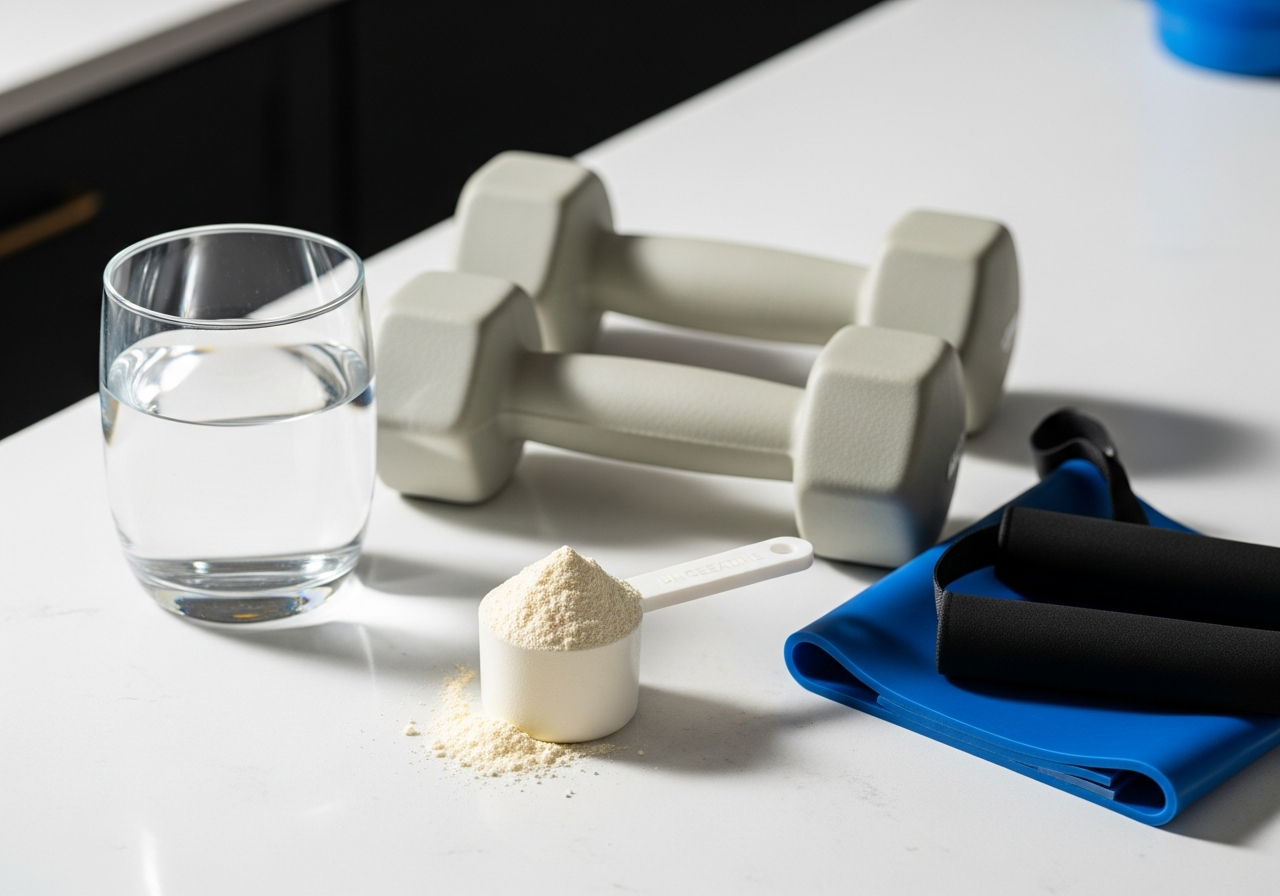
Creatine helps older adults primarily by increasing phosphocreatine stores in muscle, which improves the rapid recycling of ATP, the cell's immediate energy currency. That one mechanism explains why creatine reliably matters most for short, hard efforts such as lifting, climbing stairs, repeated sit-to-stands, and any training that depends on force and power.
Phosphocreatine is the stored form of creatine in muscle that donates a phosphate group to help remake ATP during intense effort. As people age, muscle mass, type II muscle fibres, and power output often decline, a process linked to sarcopenia and reduced functional independence. Creatine does not stop aging itself, but it can support the energy system that helps older muscle perform better under load.
That matters because better performance in training tends to create better long-term adaptation. If creatine lets you complete an extra rep, use slightly more load, or maintain quality across sets, it can indirectly improve strength and lean mass gains over time. This is why creatine plus resistance training outperforms either one alone in many older-adult studies and reviews.
Brain and bone are more complicated. Creatine is also present in the brain, and its role there is still about energy buffering. Some research suggests creatine may help certain aspects of cognition, especially under conditions of sleep deprivation, mental fatigue, or low dietary creatine intake, but the evidence is less consistent than it is for muscle. If brain support interests you, see our guide on creatine and the brain.
Bone claims should also be framed carefully. Creatine does not appear to act like a bone-building drug. Instead, any bone benefit is more likely indirect: stronger muscles can support better resistance training, and resistance training is one of the best lifestyle tools for maintaining bone. So if you ask, does creatine help with aging, the best answer is yes for some aging-related physical declines, especially muscle function, but it is not a proven way to slow aging in a broad biological sense.
The practical takeaway is simple: creatine is best viewed as a training support supplement for healthy aging, with possible but less certain upside for cognition and other outcomes.
What the evidence actually shows in older adults after 50, 60, and beyond
The evidence for creatine in older adults is strongest for strength, lean mass, and training capacity, especially when combined with resistance exercise. That is the most honest answer to is creatine recommended for seniors and can creatine help seniors: it is often a reasonable option when the goal is preserving function and muscle quality.
Across the broader creatine literature, including the Examine evidence summary and the ISSN position stand, creatine consistently improves performance in repeated high-intensity efforts and supports lean mass gains over time. In older adults specifically, the size of benefit varies from study to study because participants differ in age, diet, training status, dose, and whether they lifted weights. But the direction of effect is generally most favourable when three things are present:
- Creatine monohydrate is used instead of less-studied alternative forms.
- Daily supplementation is consistent.
- Progressive resistance training is done at least 2 to 3 times per week.
What can you realistically expect? Many older adults will notice improved gym performance first: an extra rep, less drop-off between sets, slightly better recovery between efforts, or a stronger feeling during compound lifts. Visible body-composition changes take longer and depend heavily on training and protein intake. If you are sedentary and take creatine without changing activity, the effect is usually much smaller.
Claims about balance, bone density, memory, mood, or disease prevention are more mixed. Some studies are promising, but those outcomes are not as settled as the muscle-and-performance data. So if you are asking whether elderly people can take creatine to stay younger overall, the precise answer is: creatine can support healthy aging, but it is not an all-purpose longevity supplement.
For beginners, this is good news. You do not need an advanced plan to benefit. A basic full-body resistance program, adequate protein, and 3 to 5 grams of creatine monohydrate daily cover the fundamentals. For a broader practical overview, see creatine for beginners and the evidence-based benefits of creatine.
Best creatine dose for older adults: simple daily dosing beats complicated protocols
The best creatine dose for most older adults is 3 to 5 grams of creatine monohydrate per day, taken every day. That recommendation is well established, practical, and consistent with mainstream creatine science.
You have two valid ways to start:
- No loading phase: take 3 to 5 g daily. This saturates muscle more gradually, usually over about 3 to 4 weeks.
- Loading phase: take 20 g/day split into 4 doses of 5 g for 5 to 7 days, then continue with 3 to 5 g/day. This saturates muscle faster.
Loading is optional, not necessary. Older adults who are sensitive to stomach upset often do better skipping the loading phase and simply taking a steady daily dose.
| Body weight | Goal | Practical daily dose | Notes |
|---|---|---|---|
| 50-65 kg | General healthy aging | 3 g/day | Good starting point if smaller-bodied or cautious |
| 65-90 kg | Strength and muscle maintenance | 3-5 g/day | Most common range |
| 90 kg+ | Large body size or heavy training | 5 g/day | Useful upper end for most non-loading users |
| Any body weight | Faster saturation | 20 g/day for 5-7 days, then 3-5 g/day | Split into 4 smaller doses |
If you prefer a body-weight-based framework, some sports nutrition texts use roughly 0.3 g/kg/day for loading and around 0.03 g/kg/day for maintenance, but most older adults do not need to calculate that precisely. In practice, 3 to 5 grams daily covers the vast majority of users well. If you want help converting body weight to grams, our creatine dosage calculator and daily dosing guide make it easy.
One more point matters for older adults: consistency beats perfection. Missing a single day will not erase your progress, but taking creatine only on workout days is a common mistake. Creatine works by building and maintaining tissue saturation, so daily intake matters more than pre-workout drama.
If you ever feel bloated or get loose stools, reduce the dose per serving rather than quitting altogether. Smaller doses, better mixing, and taking it with a meal often solve the problem.
Exactly how to take creatine after 50: a beginner-friendly step-by-step plan
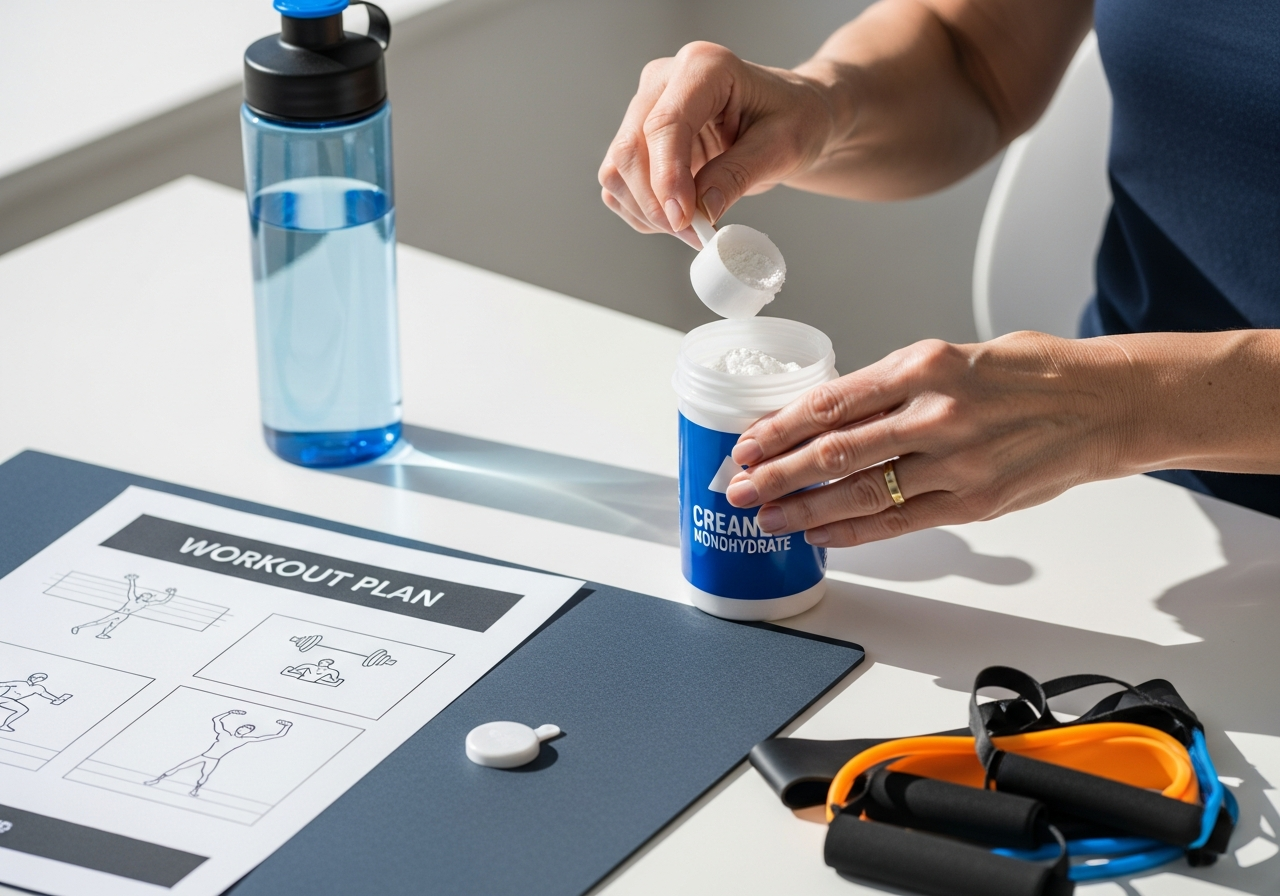
The easiest way for an older adult to take creatine is to mix 3 to 5 grams of creatine monohydrate in water or a protein shake once per day and keep doing it consistently. If you want the simplest possible routine, tie it to a habit you already do every day, such as breakfast or your post-walk meal.
- Choose the right form. Buy plain creatine monohydrate powder. It is the most studied, most reliable, and usually the best value. Our best creatine rankings and creatine brand reviews can help if you are comparing options.
- Measure accurately. Use the scoop if it clearly lists grams, or better yet use a small kitchen scale. For practical measuring help, see how to measure creatine.
- Mix it well. Stir into water, juice, or a shake. Slight grittiness is normal. Warm liquid can improve dissolving, but it is not required. For troubleshooting, see how to mix creatine.
- Take it daily. Workout day, rest day, travel day—it all counts. Creatine works through saturation, so consistency matters more than exact timing.
- Pair it with strength training. Aim for 2 to 4 resistance sessions per week. This is where older adults usually see the best payoff.
- Support it with basics. Get enough protein, drink normal fluids, and sleep well. Creatine is a helper, not a substitute for the fundamentals.
A realistic week-by-week timeline looks like this:
- Week 1: If loading, muscle saturation rises quickly; if not loading, little may be noticeable yet.
- Weeks 2-4: Workouts may feel stronger or more repeatable, especially on repeated sets.
- Weeks 4-8: Strength progress often becomes more noticeable if training is consistent.
- Weeks 8-12+: Lean mass and functional improvements are more likely to show up in measurable ways.
How do you know it is working? Track objective markers: extra reps at the same weight, slightly heavier dumbbells, easier chair rises, or better performance on stairs and carries. Those matter more than whether you feel a dramatic sensation.
If you want a full walkthrough, read how to take creatine and how long creatine takes to work.
When to take creatine, with or without food, and how much water you really need
For older adults, the best time to take creatine is the time you will remember to take it every day. That is the direct answer because timing has far less impact than consistency.
Some people like creatine after training because it is easy to attach it to a protein shake. Others prefer breakfast because it becomes automatic. Current evidence does not show that older adults need a special clock-based dosing strategy. If you train in the morning, taking it then is fine. If you train in the evening, taking it then is fine too. The main rule is simple: get your daily dose in.
Taking creatine with food can help some people tolerate it better, especially if they have a sensitive stomach. A meal or shake may also make compliance easier. If you already use protein powder, mixing the two is perfectly reasonable; see mixing creatine with protein powder. Coffee is also generally fine if you prefer that route, though many people find plain water or a shake easier on the stomach; see creatine with coffee.
Hydration advice is often overblown. Creatine does not dehydrate you in normal use, and it is not a diuretic. What it does do is increase intracellular water, meaning more water is drawn into muscle cells. That is not a bad thing; it is part of why muscles may feel fuller. You do not need to force huge amounts of water, but you should maintain normal good hydration habits.
A practical hydration checklist for older adults:
- Take creatine with a full glass of water or another beverage.
- Drink regularly through the day rather than chugging all at once.
- Pay extra attention to fluids in hot weather or during long exercise sessions.
- If creatine upsets your stomach, try more fluid, a meal, or a smaller split dose.
For deeper guidance, see when to take creatine, whether to take it with food, and how much water to drink with creatine. For most healthy seniors, the boring answer is the right answer: take it whenever it best fits your routine, and stay normally hydrated.
Who should consider creatine most after 50: beginners, women, vegetarians, and active seniors
Creatine is especially worth considering for older adults who want to preserve muscle, improve strength training results, or maintain physical independence. That includes complete beginners, active retirees, older women, and people who eat little or no meat.
Beginners often do well because they have lots of room to improve training quality. If you are just starting resistance exercise after 50, creatine can support the process, but the supplement is still second to the habit of training itself.
Older women may find creatine particularly useful because aging, lower muscle mass, and menopause-related changes can all make strength retention more challenging. Creatine does not make women bulky, and it is not a hormone supplement or steroid. If that is a concern, see our guide on creatine for women and is creatine a steroid.
Vegetarians and vegans may respond especially well because dietary creatine intake is lower when you do not eat meat or fish. Lower baseline stores can mean more room to benefit from supplementation. If that applies to you, see is creatine vegan and foods that naturally contain creatine.
Active older adults and masters athletes often use creatine for a different reason: preserving power output. Sprinting for a tennis ball, climbing hills, recovering between sets, or repeating efforts in a circuit all rely on rapid ATP regeneration. Creatine directly supports that system.
Who may care less? If an older adult does no resistance training and has no intention of starting, the payoff from creatine is likely smaller. Some benefits may still exist, but the evidence and real-world effect are strongest when exercise is part of the plan.
So, can elderly people take creatine? Yes, many can. Should every senior take it automatically? Not necessarily. The best candidates are those who want a low-cost, well-studied supplement that supports training and muscle function, and who are willing to use it consistently.
Safety, side effects, kidneys, and blood tests: what older adults should know before starting
Creatine is generally safe for healthy older adults at recommended doses, but medical context matters more after 50 because other conditions and medications become more common. That is the balanced answer to is it safe for seniors to take creatine.
The most common side effects are mild and manageable: stomach upset, loose stools, and temporary water-weight gain from increased intracellular water. These effects are more likely with large single doses, poor mixing, or loading too aggressively. They are usually solved by taking smaller servings, using monohydrate powder, and taking it with food.
The kidney issue needs careful wording. Creatine itself is not the same thing as creatinine, the blood marker often used to assess kidney function. Because creatine metabolism can affect creatinine levels, supplementation may sometimes change a lab value without indicating kidney damage. That confusion is a major reason this myth persists. For a deeper explanation, read creatine vs. creatinine and is creatine bad for your kidneys.
For healthy people, the available evidence does not show that standard creatine supplementation harms kidney function. The Mayo Clinic overview is cautious but acknowledges creatine appears safe when used appropriately, while the ISSN position stand is more explicit in supporting safety in healthy users.
Still, older adults should be sensible. Talk to a clinician before using creatine if you:
- Have diagnosed kidney disease or reduced kidney function
- Have only one kidney or a history of significant renal issues
- Take nephrotoxic medications or multiple prescription drugs
- Have uncontrolled hypertension, serious cardiovascular disease, or a complex medical history under active management
- Are being monitored for unexplained abnormal kidney labs
Other myths are weaker than people think. Creatine is not proven to cause cramps, dehydration, acne, or hair loss in the average user. If those topics worry you, our creatine myths debunked hub and creatine safety guide go deeper.
The sensible conclusion is this: if you are a healthy senior, standard-dose creatine monohydrate is usually a reasonable supplement. If you have significant medical issues, get individual advice first.
Common mistakes and myths: creatine is not a miracle anti-aging supplement, and that is fine
The biggest mistake older adults make with creatine is expecting it to work like a drug for aging rather than a supplement that supports training and muscle energetics. Creatine can help with aging-related physical decline, but it does not reverse aging or replace exercise, protein, sleep, or medical care.
Here are the most common errors:
- Taking it only on workout days. Creatine works best when muscle stores stay saturated, so daily use matters.
- Buying exotic forms. HCL, buffered, gummy, liquid, and other versions are heavily marketed, but monohydrate remains the reference standard. See best type of creatine and monohydrate vs. HCL.
- Stopping because of minor scale gain. Early weight gain is usually water inside muscle, not fat. See creatine weight gain explained.
- Expecting instant visible change. Performance improvements can come first; body composition changes take longer.
- Ignoring resistance training. The best evidence in seniors is for creatine plus training, not creatine alone.
Now the myths:
Myth: creatine is only for young male bodybuilders. False. Creatine has broad relevance because the phosphocreatine system powers all humans, and preserving muscle function may matter more with age, not less.
Myth: creatine is a steroid. False. Creatine is a naturally occurring compound stored in muscle, not an anabolic steroid or hormone.
Myth: creatine slows aging. Overstated. Creatine may support aspects of healthy aging, especially muscle and possibly brain energy metabolism, but there is no strong basis to market it as a proven longevity intervention.
Myth: if you do not feel anything, it is not working. False. Creatine often works quietly through better training output and gradual adaptation. Objective tracking beats sensation.
The right expectation is modest but powerful: creatine is one of the most evidence-based, low-cost supplements available, and in older adults its value comes from helping you train and function better over time.
What to buy in Canada: monohydrate, third-party testing, and what labels actually matter
The best creatine for older adults in Canada is usually a plain creatine monohydrate powder from a reputable brand with transparent testing and clear dosing. Fancy branding matters less than ingredient quality, label clarity, and trustworthiness.
When buying in Canada, start with a short checklist:
- Look for creatine monohydrate as the main and ideally only active ingredient.
- Check the grams per serving. You want an easy path to 3 to 5 g/day without guessing.
- Prefer third-party testing or a strong quality-control reputation.
- Watch for unnecessary blends. Added stimulants, proprietary mixes, or underdosed formulas are not helpful if your goal is healthy aging.
- Check for an NPN when applicable. In Canada, an NPN is a Natural Product Number issued under Health Canada regulation for licensed natural health products. It is not the only marker of quality, but it does indicate the product has gone through a Canadian regulatory pathway.
| Option | Best for | Pros | Cons |
|---|---|---|---|
| Unflavoured monohydrate powder | Most older adults | Best evidence, best value, flexible dosing | Needs mixing, can feel slightly gritty |
| Micronized monohydrate | People who dislike texture | Often mixes a bit better, same core ingredient | Sometimes pricier |
| Capsules | Travel or convenience | Easy to carry, no mixing | Usually more expensive per gram, many pills needed |
| Gummies or flavoured blends | Taste-first users | Convenient or pleasant flavour | Often pricier, sometimes less efficient dosing |
If you are comparison shopping, browse our creatine product catalog, best creatine rankings, and brand reviews. If you want more on Canadian buying considerations, related guides such as best creatine monohydrate in Canada and where to buy creatine in Canada are also useful.
The bottom line on buying is refreshingly simple: monohydrate first, trustworthy brand second, fancy format last.
Bottom line: should older adults take creatine?
Yes, many older adults should at least consider creatine, especially if they want to maintain muscle, improve strength training results, and support physical function with age. That is the clearest evidence-based answer to can elderly take creatine, is creatine recommended for seniors, and does creatine help with aging.
The strongest case for creatine after 50 is not hype about reversing age. It is the practical reality that muscle mass, strength, and power tend to decline with time, and creatine monohydrate is one of the best-studied tools to support the training response that helps fight that decline. The evidence is strongest when creatine is paired with resistance exercise.
If you are a healthy adult over 50, the simplest plan is this:
- Buy plain creatine monohydrate.
- Take 3 to 5 grams daily.
- Use a loading phase only if you want faster saturation.
- Strength train 2 to 4 times per week.
- Keep expectations realistic and track strength and function, not just scale weight.
Be more cautious if you have kidney disease, significant medical complexity, or medication concerns. In that case, a quick conversation with your clinician is the right move.
So, does creatine slow aging? Not in the sweeping, biological-age sense implied by marketing. But can creatine help seniors age better by supporting muscle function, training capacity, and possibly some aspects of brain energy metabolism? Yes, that is a fair and evidence-based conclusion.
If you want to start today, keep it boring: monohydrate, 3 to 5 grams, every day. In sports nutrition, boring often wins.
Creatine for Older Adults: The Numbers That Matter
- 3-5 g/day Typical maintenance dose — Standard evidence-based daily intake for most healthy older adults
- 20 g/day Optional loading dose — Usually split into 4 doses for 5-7 days to saturate faster
- 3-4 weeks Time to full effect without loading — Approximate timeline to reach muscle saturation with daily maintenance dosing
- 2-4x/week Ideal resistance-training frequency — Creatine works best for older adults when paired with progressive strength training
Frequently Asked Questions
Is it safe for seniors to take creatine every day?
Yes, creatine is generally safe for healthy seniors when taken daily at recommended doses, usually 3 to 5 grams of creatine monohydrate. Daily use is actually the standard approach because creatine works by maintaining tissue saturation. Seniors with kidney disease, unusual kidney labs, or complex medication regimens should check with a clinician first.
Is creatine OK for seniors who do not work out?
Yes, creatine is usually still OK for seniors who do not work out, but the benefits are often smaller without resistance training. The best evidence in older adults is for creatine combined with progressive exercise, especially strength training. If you are sedentary, creatine is not harmful for most healthy people, but it is less likely to produce noticeable results on its own.
Can elderly people take creatine if they have kidney concerns?
Creatine should be approached more cautiously if an elderly person has known kidney disease or ongoing kidney concerns. In healthy people, standard-dose creatine has not been shown to damage kidneys, but medical supervision makes sense when kidney function is already impaired or being monitored. Creatine can also affect creatinine lab interpretation, which adds confusion if no clinician is involved.
Is creatine recommended for seniors trying to preserve muscle?
Yes, creatine is often a reasonable supplement for seniors trying to preserve muscle, particularly if they also do resistance training. The evidence is strongest for improved training capacity, strength, and lean mass over time rather than dramatic stand-alone muscle gain. It is best viewed as a support tool for an overall healthy aging plan.
Does creatine help with aging or slow aging?
Creatine can help with some aging-related issues, especially declining muscle performance, but it is not proven to broadly slow aging. The clearest benefits are physical: better high-intensity energy availability, support for strength training, and in many cases better lean-mass retention. Brain and anti-aging claims are more promising than proven at this point.
Can seniors take creatine if they are beginners in the gym?
Yes, beginners over 50 can absolutely take creatine, and they may benefit because even small improvements in training quality can add up quickly. A simple plan is 3 to 5 grams of creatine monohydrate daily plus a basic full-body strength program 2 to 3 times per week. Consistency matters more than advanced timing or stacking.
What is the best creatine dose for older adults?
The best creatine dose for most older adults is 3 to 5 grams of creatine monohydrate per day. An optional loading phase of 20 grams per day, split into four 5-gram doses for 5 to 7 days, can speed up saturation but is not required. Smaller or cautious users often start with 3 grams daily and increase only if needed.
Should the elderly take creatine with food?
Yes, taking creatine with food is often a good idea for elderly users, especially if they have a sensitive stomach. Food is not required for absorption, but it can improve comfort and make the habit easier to remember. Many older adults simply add it to breakfast or a post-exercise protein shake.
Can creatine help seniors with brain health?
Creatine may help some aspects of brain energy metabolism in seniors, but the evidence is less consistent than it is for muscle and exercise performance. Research is most promising for mental fatigue, energy-demanding conditions, or people with lower baseline creatine intake. It is fair to see cognitive support as a possible bonus, not the main reason to take it.
What kind of creatine should older adults buy?
Older adults should usually buy plain creatine monohydrate from a reputable brand. Monohydrate is the most studied, most cost-effective, and most consistently supported form in the evidence. In Canada, it is also smart to look for clear dosing, solid manufacturing standards, and an NPN when applicable.