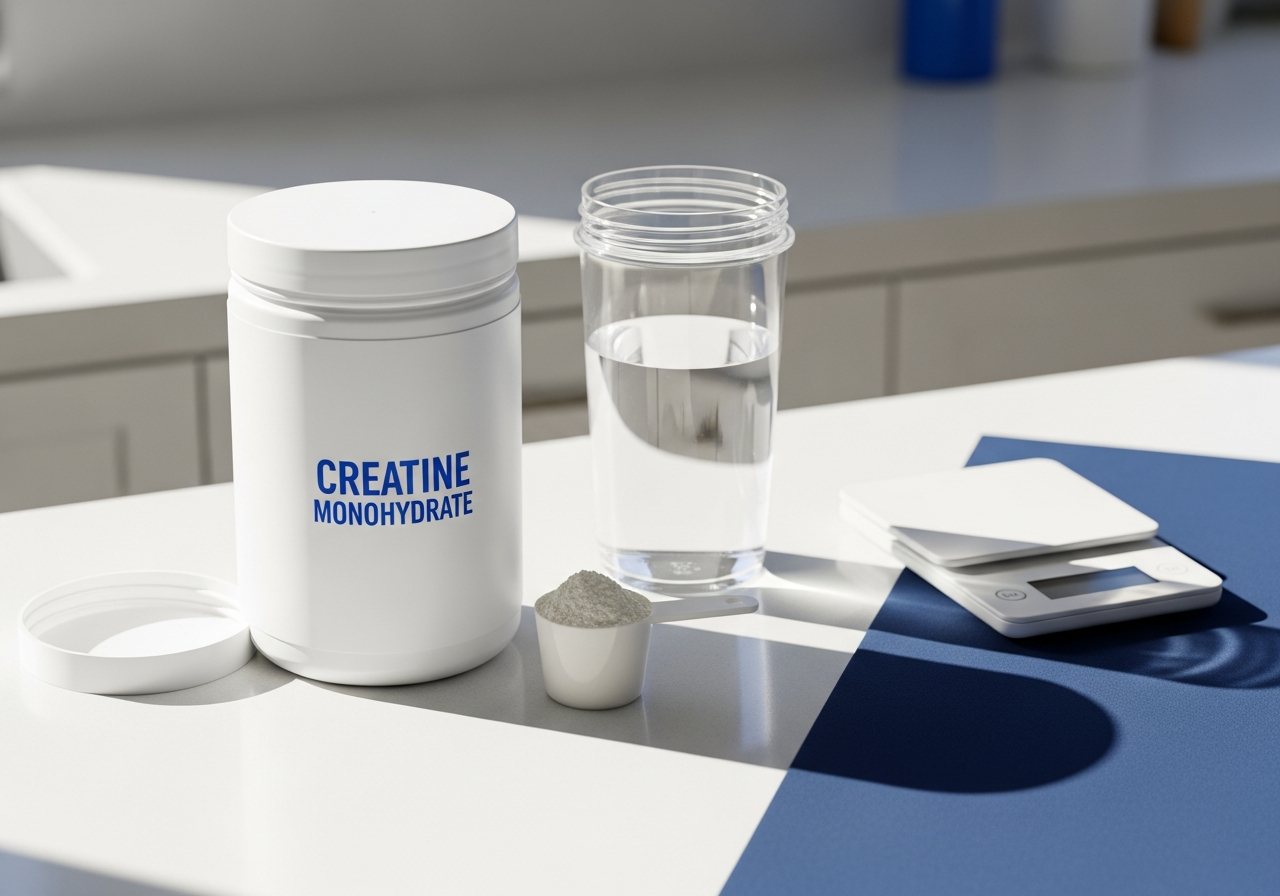
Best Creatine Monohydrate in Canada: How to Choose
By The Creatine Canada Research Team — Evidence-based supplement analysts
The best creatine monohydrate in Canada is a plain creatine monohydrate powder from a reputable brand that clearly lists the dose, carries a Natural Product Number when required, and ideally uses third-party testing; you do not need a fancy form to get the proven benefits. For most Canadians, the winning choice is simple: unblended monohydrate, 3–5 g per day, bought from a trusted retailer with transparent labelling.
Evidence-based · Cites 4 sources · Editorial standards
Key Takeaways
- Creatine monohydrate is still the best creatine form for most people because it is the most studied, most effective, and usually the most affordable.
- The practical dose for most adults is 3–5 g daily; a loading phase of 20 g daily split into 4 doses for 5–7 days is optional, not required.
- A good Canadian creatine product should have clear ingredient labelling, lot information, and ideally third-party testing or strong brand transparency.
- Micronized monohydrate can mix a bit better, but it is not meaningfully more effective than regular monohydrate gram for gram.
- You can buy creatine online, at supplement stores, and often at major retailers like Walmart, but product quality matters more than store type.
- It is fine to switch creatine brands or stop creatine for a week; you will not lose all benefits immediately, but muscle creatine stores will gradually decline.
- If creatine seems not to work, the usual issues are underdosing, inconsistency, poor training, unrealistic expectations, or buying a weakly formulated product.
The direct answer: the best creatine monohydrate in Canada is plain, tested monohydrate
The best creatine monohydrate in Canada is a straightforward creatine monohydrate powder from a reputable company, not a proprietary blend, not a flashy “advanced” form, and not a product hiding the dose. If you want the short version, choose unflavoured creatine monohydrate that provides a full 3–5 g serving, has clean labelling, and comes from a brand that is transparent about testing and manufacturing.
This recommendation is not based on marketing; it is based on the research base behind creatine monohydrate itself. The 2017 ISSN position stand concluded that creatine monohydrate is the most effective ergogenic nutritional supplement currently available for increasing high-intensity exercise capacity and lean body mass during training. That matters because “best” should mean best-supported by evidence, not most novel.
For Canadian buyers, the best product usually has these traits:
- One active ingredient: creatine monohydrate.
- A clear dose: usually 5 g per scoop or instructions that make 3–5 g easy to measure.
- Minimal extras: no unnecessary stimulants, sugars, or underdosed add-ons.
- Strong quality signals: lot number, expiry, manufacturer details, and ideally third-party testing.
- Canadian-compliant labelling: where applicable, a Natural Product Number, or NPN, which is Health Canada’s product licence identifier for many natural health products sold in Canada.
If you are wondering what is the best creatine, which is the best creatine, or what is the best creatine to take, the answer for almost everyone is the same: monohydrate first. Fancy forms such as HCl, buffered creatine, nitrate, ethyl ester, or gummies can be convenient in specific cases, but none has displaced monohydrate as the evidence-based default. If you want form-specific comparisons, see our guides on best creatine rankings and creatine brand reviews.
The important distinction is between the ingredient and the brand. Creatine monohydrate is the best ingredient. The best brand is the one that sells that ingredient honestly, at the right dose, with trustworthy quality control, at a reasonable price in Canada.
Why creatine monohydrate still wins in 2026 over HCl, gummies, and other forms
Creatine monohydrate still wins because it has the strongest evidence for performance, muscle gain, safety, and value, while alternative forms have not shown superior real-world results. In plain English, other forms may sound more advanced, but monohydrate remains the benchmark they are supposed to beat.
Creatine works by increasing your muscle stores of phosphocreatine, which is stored creatine linked to phosphate that helps rapidly regenerate ATP, the cell’s immediate energy currency, during short, hard efforts. More phosphocreatine means better support for repeated high-output work such as heavy sets, sprints, jumps, and hard intervals. Over time, that can translate into more training quality and therefore better strength and muscle gains.
Monohydrate has repeatedly shown that it can raise intramuscular creatine stores effectively when taken consistently. The same cannot be said, with the same confidence, for every newer form marketed in Canada. The 2021 JISSN review on common questions and misconceptions about creatine notes that creatine monohydrate is the most extensively studied form and that there is little evidence that newer formulations are more effective.
Here is the practical comparison that matters most:
| Form | What the evidence says | Best use case |
|---|---|---|
| Creatine monohydrate | Most studied, proven effective, usually lowest cost per gram | Best choice for almost everyone |
| Micronized monohydrate | Same molecule, finer powder, may mix better | If you dislike gritty texture |
| Creatine HCl | Often marketed as easier on the stomach, but not proven superior for results | Only if monohydrate truly does not agree with you |
| Buffered or pH-adjusted creatine | No consistent evidence of better absorption or performance | Usually not worth paying extra |
| Gummies or RTD formats | Convenient, but often more expensive per effective dose | If convenience outweighs cost |
If you are asking what’s the best creatine you can buy, the evidence-based answer is still unblended monohydrate. If you are asking are all creatine brands the same, the answer is no: the ingredient can be the same while purity, dosing accuracy, flavour systems, and testing standards differ meaningfully.
For a deeper ingredient comparison, our guides on creatine product catalog and creatine myths debunked cover where marketing often outruns evidence.
How creatine works in your body, and what results you should realistically expect
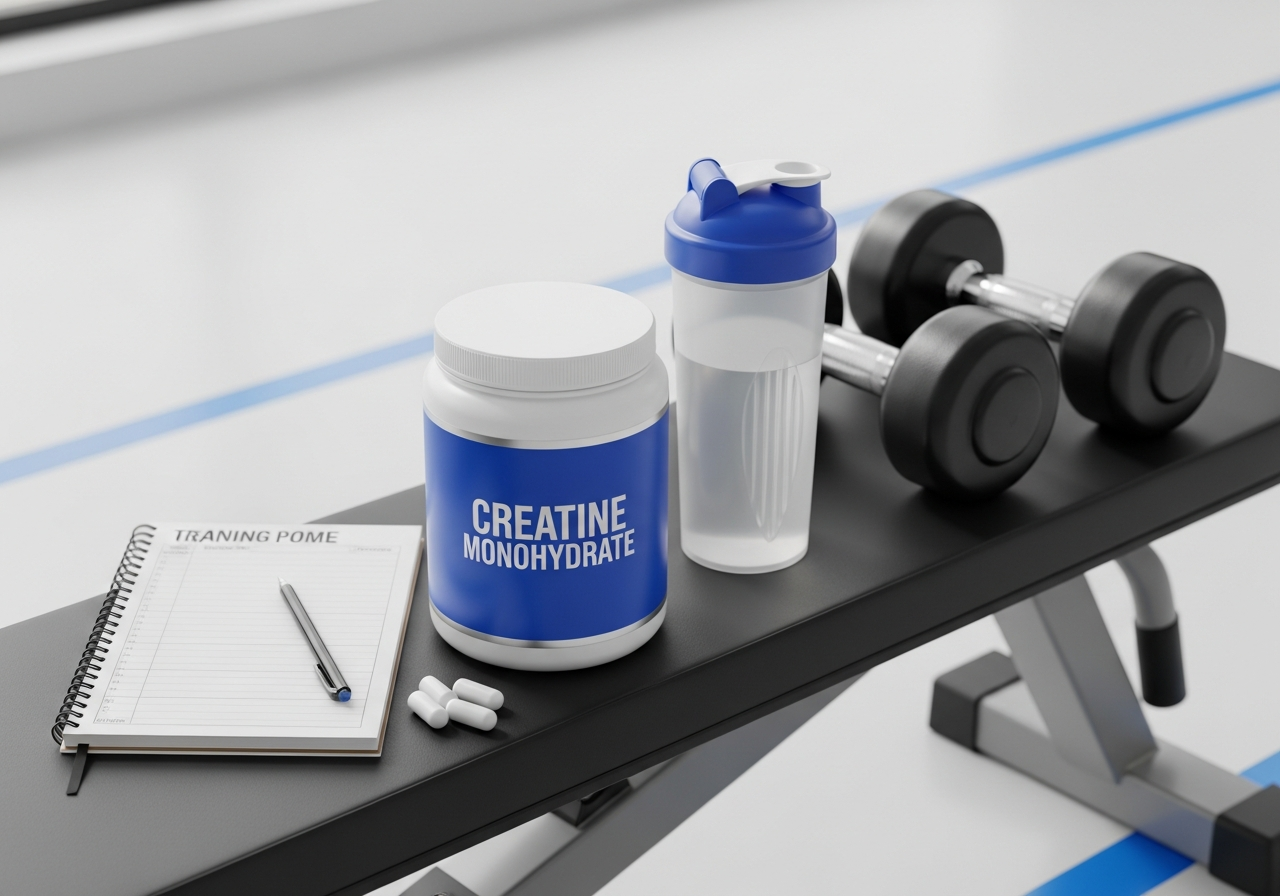
Creatine works by increasing the amount of phosphocreatine stored in muscle, which helps you regenerate ATP faster during brief, intense exercise. That mechanism is why creatine tends to help most with strength training, sprinting, jumping, repeated hard intervals, and sports with frequent bursts of effort.
Your body already makes creatine from amino acids, and you also get some from foods such as meat and fish, but supplementation raises stores further. Once muscle creatine stores become saturated, you may notice:
- an extra rep or two on hard sets
- slightly better repeat sprint or interval performance
- better training volume across a session
- modest body mass gain from intracellular water, followed later by more lean mass if training and protein are in place
The key phrase is training effect amplifier. Creatine does not build muscle magically in the background. It improves the energy system that supports better work. Better work, repeated over weeks and months, is what drives visible results.
What should you expect on a realistic timeline?
- With loading: some people notice fuller muscles and better gym performance within 5–7 days.
- Without loading: benefits usually become more noticeable after roughly 2–4 weeks of daily use.
- By 4–8 weeks: many users can clearly tell they are recovering better between sets or maintaining output deeper into sessions.
Water retention confuses many beginners. Creatine can increase water inside muscle cells, which often shows up as 0.5–2.0 kg of body mass gain in the early phase. That is not fat gain, and it is one reason muscles may look a bit fuller. If this topic concerns you, see related guides like creatine dosage calculator for dosing precision and the broader guidance in our rankings at best creatine rankings.
Not everyone feels creatine in a dramatic way. Some people respond more strongly than others, partly because baseline muscle creatine stores differ. Vegetarians and vegans often respond well because their starting stores may be lower. People who already eat a lot of meat and have naturally higher stores may notice subtler changes. That does not mean the supplement is “not working”; it often means the effect is smaller or only obvious when training numbers are tracked carefully.
Bottom line: creatine is not a stimulant, so do not expect a buzz. Expect a gradual improvement in high-intensity performance capacity and, with consistent training, better long-term strength and lean mass outcomes.
How to choose a good creatine in Canada: the label checks that actually matter
The best way to choose a good creatine in Canada is to evaluate the label and the seller before you evaluate the flavour. The safest shortcut is to buy a plain monohydrate product whose quality signals are easy to verify.
Use this label-check process:
- Confirm the ingredient line. It should say creatine monohydrate, ideally as the only medicinal or active ingredient.
- Check the dose per serving. Look for 3–5 g per serving, or clear scoop guidance that gets you there reliably.
- Look for Canadian-compliant packaging. In Canada, many natural health products carry an NPN, which indicates Health Canada has issued a product licence for that category and label claim set.
- Assess transparency. A good brand lists the manufacturer or distributor, lot number, best-before or expiry information, and full ingredient disclosure.
- Prioritize testing. Third-party testing, certificates of analysis, or strong manufacturing standards are better quality signals than influencer marketing.
- Watch for blends. Pre-workouts and “muscle builders” often include underdosed creatine mixed with caffeine or proprietary blends. If the exact creatine dose is unclear, skip it.
Canadian buyers should also think about seller legitimacy. If you are searching where to buy creatine, where can you buy creatine, or where do I buy creatine, prioritize established supplement retailers, reputable pharmacies, trusted fitness stores, or direct-from-brand websites over anonymous marketplace listings. Counterfeit or mishandled supplements are more likely in grey-market channels.
One subtle but important quality point is cost per effective dose. A cheap tub is not cheap if a serving contains only 2 g and you need multiple scoops. Compare products by how many full 5 g servings they provide, not just the sticker price.
If you want a quick shortlist, browse our creatine product catalog and creatine brand reviews to compare labels side by side. If you are newer to the supplement, our creatine dosage calculator also helps you translate the label into your actual daily plan.
The biggest buying mistake in Canada is overpaying for a product that is less proven than basic monohydrate. The smartest buying habit is to treat creatine like a staple, not a novelty: simple formula, right dose, trustworthy seller, repeatable daily use.
Where to buy creatine in Canada, including Walmart, supplement shops, and online
You can buy creatine in Canada from supplement stores, major retailers, pharmacies, gyms, and online shops, but online specialist retailers and direct brand sites usually offer the best combination of selection, freshness, and price transparency. If your question is simply where can I buy creatine near me, the local answer is often a supplement store or a large retailer; if your question is where to buy good creatine, the better answer is a trusted seller with clear product information.
Yes, in many areas you can buy creatine at Walmart, though in-store selection varies by location and stock changes often. The same is true for other big-box stores and some pharmacies. The convenience is good, but the downside is a narrower range and less specialist support.
Here is the practical Canadian buying breakdown:
| Where to buy | Pros | Cons |
|---|---|---|
| Specialty supplement stores | Better selection, staff familiar with formats and dosing | Prices can be higher in-store |
| Major retailers like Walmart | Convenient, easy returns, accessible near many Canadians | Limited selection, frequent stock variation |
| Pharmacies | Trusted retail environment, simple buying process | Usually fewer sports-nutrition options |
| Brand websites | Fresh stock, full label info, bundle options | Shipping thresholds may matter |
| Online supplement retailers | Best selection and easy price-per-serving comparison | Need to vet seller reputation carefully |
If you are searching where buy creatine, where to buy creatine near me, or where can you buy creatine, use this simple filter:
- Check whether the seller is authorized or well-established.
- Read the full label before buying.
- Compare cost per 5 g serving.
- Check shipping time if you need it quickly.
- Avoid marketplace listings with vague photos or unclear origin.
For many Canadians, the best approach is to buy online from a reputable Canadian retailer or direct brand site, especially if you care about stock consistency or want to compare multiple monohydrate products. If you are narrowing options, our best creatine rankings and creatine product catalog can save time.
The bottom line is simple: yes, you can buy creatine in Canada quite easily. The real job is not finding any creatine; it is finding monohydrate from a seller and brand you would trust to get the dose and quality right every time.
Exact creatine monohydrate dosing by body weight, training goal, and timeline
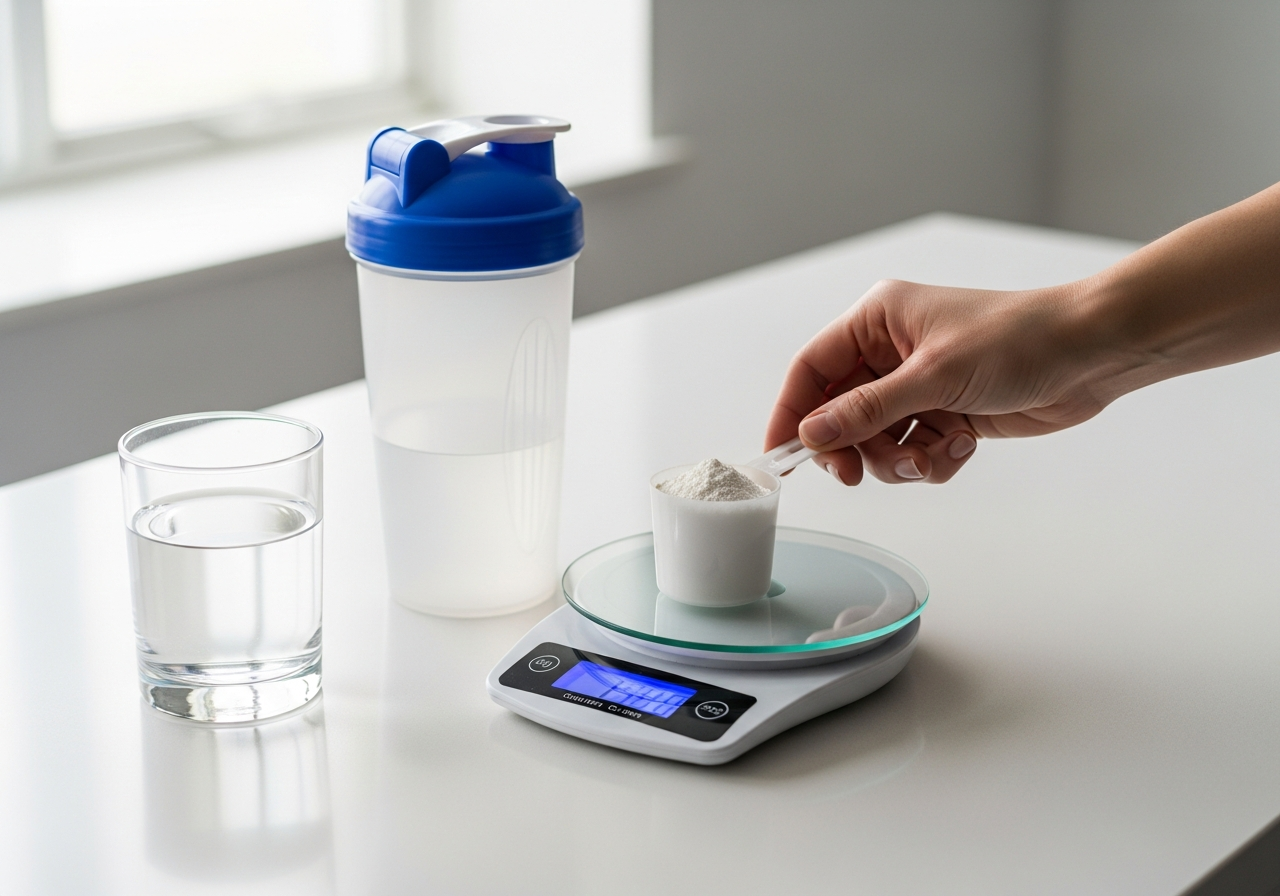
The evidence-based maintenance dose for most adults is 3–5 g of creatine monohydrate per day, and a loading phase of 20 g per day split into four 5 g doses for 5–7 days is optional if you want faster saturation. Those numbers are the practical standard because they reliably raise and maintain muscle creatine stores in most users.
Here is the simplest way to dose by goal:
| Goal | Recommended approach | What to expect |
|---|---|---|
| General fitness / beginner | 3–5 g daily | Steady saturation over 2–4 weeks |
| Fast start for strength block | 20 g daily split into 4 doses for 5–7 days, then 3–5 g daily | Faster saturation, often noticeable within a week |
| Smaller body size or stomach sensitivity | 3 g daily, or 1.5–2.5 g twice daily | Slower but still effective |
| Larger athletes with high lean mass | 5 g daily, sometimes slightly more depending on body size and intake pattern | Maintenance with less risk of underdosing |
Practical body-weight examples:
- 60 kg person: 3 g daily is often sufficient; 5 g is also acceptable.
- 75 kg person: 3–5 g daily is the standard sweet spot.
- 90 kg person: 5 g daily is a practical default.
- 100 kg+ athlete: 5 g daily is a sensible starting point; larger, leaner athletes may choose the top end consistently.
If you want precision, the classic loading formula used in the literature is about 0.3 g per kg per day for 5–7 days, followed by roughly 0.03 g per kg per day as maintenance. For example, an 80 kg person could load at about 24 g daily for 5–7 days, then maintain at about 2.4 g daily, though in practice most people simply use 3–5 g for maintenance because it is easy and effective.
If you miss a day, do not double up in panic. Resume your usual dose the next day. Creatine works through saturation over time, not because one specific single dose is magical. For help with personal calculations, use our creatine dosage calculator and see detailed guidance in related articles like /how-much-creatine-per-day and /creatine-loading-phase.
The most common dosing mistake is inconsistency, not choosing 4 g versus 5 g. If you want creatine to work, the priority order is simple: take enough, take it daily, and keep training hard enough to benefit from it.
When to take creatine, what to mix it with, and the simplest daily routine that works
The best time to take creatine is the time you will remember to take it every day, because total daily intake matters far more than exact timing. If you train, taking creatine close to your workout is fine; if you do not train that day, take it with any regular meal or drink.
This is where many people overcomplicate a simple supplement. Creatine is not like caffeine, which has an acute performance effect shortly after you consume it. Creatine works by gradually increasing muscle stores. Once your muscles are saturated, whether you take it at breakfast, after training, or before bed matters much less than whether you take it consistently.
Here is the easiest routine for most Canadians:
- Pick a fixed daily trigger: breakfast, post-workout shake, lunch, or evening meal.
- Measure 3–5 g of creatine monohydrate.
- Mix it in water, a protein shake, juice, or another cold or room-temperature drink.
- Drink it once daily, including rest days.
- Continue for at least 4 weeks before judging the result if you skip loading.
Good mixing options include water, whey shakes, smoothies, and juice. Warm liquid can help dissolving, but you do not need a special transport system. Food is optional, though some people find taking creatine with a meal easier on the stomach.
Practical tips:
- If regular powder feels gritty, choose micronized monohydrate.
- If you get mild stomach upset, split the dose into two smaller servings.
- On rest days, still take your normal amount to maintain saturation.
- Dry scooping is unnecessary and can irritate your throat; just mix it properly.
If you want more detail on timing and mixing, see our guides on creatine dosage calculator, and related reading such as /when-to-take-creatine, /how-to-take-creatine, and /how-to-mix-creatine.
The bottom line is refreshingly boring: the best routine is the repeatable one. Creatine is a long-game supplement, so building it into a habit beats chasing “perfect” timing every single time.
Who creatine monohydrate is best for: beginners, men, women, older adults, and athletes
Creatine monohydrate is a good fit for most healthy adults who want better high-intensity performance, strength, lean mass support, or training quality. The supplement is not just “for bodybuilders”; it is relevant for a surprisingly broad range of people when the goal involves muscle function or repeated hard effort.
Beginners: Creatine is one of the few supplements that genuinely makes sense early, because it is simple, well studied, and useful while you learn training basics. Beginners often benefit from keeping everything else simple: monohydrate, one daily dose, no stack required.
Men: If you are asking what is the best creatine for men, the answer is still monohydrate. Men do not need a special male-specific form. What matters is body size, training goal, and consistency, not gendered branding.
Women: Women benefit from creatine too. Creatine does not automatically make women “bulky”; it helps support training performance and lean mass retention. Many women prefer unflavoured monohydrate because it is easy to add to a protein shake or smoothie without extra stimulants or sugars.
Older adults: Creatine can be especially relevant after 50 because maintaining muscle mass, strength, and function becomes more important with age. In older adults, creatine is usually most useful when paired with resistance training rather than treated as a standalone fix.
Athletes: Creatine is particularly relevant for strength athletes, team-sport athletes, sprinters, jumpers, combat-sport athletes in some phases, and CrossFit-style training. The International Olympic Committee consensus on dietary supplements recognizes creatine among the evidence-based supplements with practical performance relevance in sport.
Vegetarians and vegans: Creatine can be especially worthwhile because dietary creatine intake is lower when you do not eat meat or fish. Some plant-based athletes report a more noticeable response for that reason.
Who should pause and ask a clinician first? People with known kidney disease, those under active medical treatment affecting kidney function, and anyone with a condition where a clinician wants to monitor bloodwork closely. For the average healthy person, the mainstream evidence base is reassuring, but medical nuance still matters at the individual level.
If you want audience-specific guidance, related articles such as /creatine-for-women, /creatine-for-men, /creatine-for-older-adults, and /creatine-for-athletes are the next logical reads.
Safety, side effects, switching brands, and whether it is okay to stop for a week
Creatine monohydrate is generally considered safe for healthy adults when used at recommended doses, and the most common side effects are mild digestive issues or temporary water-weight gain rather than anything dramatic. The best concise summary is that creatine has one of the stronger safety profiles in sports nutrition when the product is legitimate and the user is otherwise healthy.
The Mayo Clinic overview and the 2017 ISSN position stand both reflect the broad view that creatine is safe for healthy users at standard intakes. The frequent source of confusion is creatinine, a breakdown product measured on blood tests. Creatine supplementation can influence creatinine readings without meaning kidney damage is occurring, which is why context matters if you are having lab work interpreted.
Common side effects and fixes:
- Mild stomach upset: reduce the dose per serving, split it through the day, or take it with food.
- Early weight gain: usually intracellular water, not fat.
- Grittiness: use micronized monohydrate or stir longer.
Now to the common questions directly:
Is it okay to stop creatine for a week? Yes. Stopping creatine for a week is fine, and you will not instantly lose your gains; muscle creatine stores decline gradually over time rather than disappearing overnight.
Can I stop creatine for a week? Yes, especially for travel, stomach reset, or simple convenience. When you restart, just return to your normal daily dose. A new loading phase is optional, not mandatory.
Can I switch creatine brands? Yes. If both products provide genuine creatine monohydrate at an equivalent dose, switching brands is usually seamless. The ingredient matters more than the logo on the tub.
Do you need to cycle creatine? No. Routine cycling is not required for most healthy users.
If you want deeper dives on kidneys, bloating, digestion, or missed days, explore our creatine myths debunked and creatine brand reviews, plus related guides like /is-creatine-safe, /missing-a-day-of-creatine, and /is-creatine-bad-for-your-kidneys.
The biggest creatine buying mistakes and myths that make people choose the wrong product
The biggest creatine mistake is buying based on hype instead of choosing plain monohydrate at an effective dose from a trustworthy source. Most bad creatine decisions come from overcomplication, not from lack of options.
Here are the most common mistakes:
- Paying extra for “better absorption” claims without better evidence. Monohydrate already absorbs and works well enough to saturate muscle stores in most people.
- Using underdosed blends. Many pre-workouts sprinkle in creatine but do not deliver the full 3–5 g daily amount.
- Judging by flavour first. Taste matters less than dose accuracy, purity, and price per effective serving.
- Expecting instant stimulant-like effects. Creatine does not feel like pre-workout; it works through saturation and training output over time.
- Taking it inconsistently. The best product in Canada still fails if you only remember it three times a week.
And here are the myths worth clearing up:
- “All creatine brands are the same.” Not exactly. The core ingredient may be the same, but purity, testing, scoop accuracy, and label honesty differ.
- “Creatine is only for men.” False. Women, older adults, and many non-bodybuilders can benefit.
- “Creatine damages healthy kidneys.” Mainstream evidence does not support this claim in healthy users taking recommended doses, though people with kidney disease should get medical guidance.
- “You need a loading phase or it will not work.” False. Loading works faster, but daily use without loading works too.
- “You must cycle creatine.” False for most healthy users.
If you are searching what are the best creatine or what the best creatine, the useful answer is not a giant list of gimmicks. It is a short filter: monohydrate, right dose, honest label, trustworthy brand, fair cost per serving.
To dig deeper into exaggerated claims and common fears, our creatine myths debunked page is the best companion read. It pairs well with our best creatine rankings if you want to separate strong products from strong marketing.
How to tell if your creatine is working, and what to do if you think it is not
You can tell creatine is working by tracking training performance, body weight trends, and how well you maintain output across repeated hard efforts, not by waiting for a dramatic sensation. The first sign is often slightly better gym performance, not a visible physique transformation in the mirror.
Use this four-week check:
- Track body weight three to four mornings per week.
- Track performance on key lifts or intervals: reps at a fixed load, total volume, sprint repeatability, or average power.
- Track recovery between sets subjectively: do later sets fall off less?
- Stay consistent with dose and training for at least 28 days if you did not load.
Signs it is probably working:
- a small early bump in scale weight from water inside muscle
- one more rep at a given weight
- better ability to repeat hard sets with less drop-off
- a “fuller” muscle feel during training
If you think it is not working, troubleshoot in this order:
- Check your dose. Are you actually getting 3–5 g per day?
- Check consistency. Daily use matters.
- Check your product. Is it really creatine monohydrate from a legitimate source?
- Check your training. Creatine helps repeated hard effort; if training is too easy, the effect may be hard to notice.
- Check your expectations. Creatine is powerful, but it is not dramatic like a stimulant.
A smaller subgroup of people are sometimes described as low responders or non-responders, often because their baseline muscle creatine stores were already relatively high. Even then, “no visible effect” does not always mean no physiological effect; it may just be subtler. For more on this topic, our creatine brand reviews and related guides such as /creatine-non-responder and /how-long-does-creatine-take-to-work can help you judge progress more accurately.
The best mindset is to treat creatine like a support tool for your training block. If your logbook improves over several weeks, that is the signal that counts most.
Bottom line: how to pick the best creatine monohydrate in Canada without overthinking it
The best creatine monohydrate in Canada is a plain monohydrate powder from a reputable, transparent brand sold by a trustworthy retailer at a sensible cost per effective daily dose. If you remember nothing else from this guide, remember that statement.
For most people, the ideal buying and usage plan looks like this:
- Buy plain creatine monohydrate, preferably unflavoured.
- Choose a brand with clean labelling, lot details, and ideally third-party testing.
- Prefer Canadian-compliant packaging and reputable sellers.
- Take 3–5 g daily.
- Use a 5–7 day loading phase only if you want faster saturation.
- Stay consistent for at least a month before judging results.
If you are asking what is best creatine, which is best creatine, or what’s the best creatine, monohydrate is the evidence-based answer. If you are asking where do you buy creatine, the answer is from a legitimate Canadian retailer, direct brand site, or trusted store that makes the label and source easy to verify. If you are asking can you buy creatine, yes, absolutely; the more important question is whether you are buying a good one.
Creatine is one of the rare supplements that earns its reputation. The trick is not finding a magical version of it. The trick is choosing a boring, well-made monohydrate product and actually taking it every day.
For product comparisons and next steps, start with our best creatine rankings, browse the creatine product catalog, and use the creatine dosage calculator to turn a good purchase into a good routine.
Creatine monohydrate in Canada: the numbers that matter
- 3–5 g/day Standard maintenance dose — Effective for most healthy adults after saturation
- 20 g/day Typical loading dose — Usually split into 4 doses for 5–7 days
- 5–7 days Time to saturate with loading — Without loading, saturation usually takes longer
- 2–4 weeks Typical timeline without loading — Many people begin noticing benefits during this period
Frequently Asked Questions
What is the best creatine monohydrate in Canada?
The best creatine monohydrate in Canada is a plain monohydrate powder from a reputable brand with clear dosing, transparent labelling, and ideally third-party testing. You do not need a premium “advanced” form to get the proven benefits; simple monohydrate remains the gold standard for effectiveness, safety, and value.
Are all creatine brands the same?
No, all creatine brands are not the same, even when they use the same core ingredient. The actual creatine molecule may be identical, but purity, scoop accuracy, flavour additives, testing practices, manufacturing quality, and label transparency can differ enough to affect trust and buying value.
Where can I buy creatine in Canada?
You can buy creatine in Canada from supplement stores, major retailers, pharmacies, direct brand websites, and online supplement retailers. The best place depends on your priorities, but reputable online Canadian sellers and direct brand sites often provide the easiest way to compare monohydrate products, labels, and price per serving.
Can I buy creatine at Walmart?
Yes, you can often buy creatine at Walmart in Canada, though product selection varies by store and region. Walmart can be convenient for a quick purchase, but specialist supplement retailers and trusted online stores usually offer more creatine monohydrate options and better product-detail transparency.
What is the best creatine to take for men?
The best creatine for men is usually the same as for everyone else: creatine monohydrate. Men do not need a special male-targeted creatine formula, because the main factors that matter are dose, consistency, training goal, and product quality rather than gender-specific branding.
Can I switch creatine brands?
Yes, you can switch creatine brands without any special protocol as long as both products provide genuine creatine monohydrate at an equivalent dose. In most cases, switching brands does not change the effect meaningfully because the important factor is consistent daily intake of the same well-studied ingredient.
Is it okay to stop creatine for a week?
Yes, it is okay to stop creatine for a week, and you will not instantly lose your benefits. Muscle creatine stores fall gradually, so a short break for travel or convenience is not a big problem; when you restart, simply resume your usual daily dose, with loading optional rather than required.
What is the best creatine you can buy if you are a beginner?
The best creatine a beginner can buy is an unflavoured creatine monohydrate powder with a clear 3–5 g serving and a straightforward label. Beginners usually do best with the simplest option because it is easy to dose, easy to assess, and backed by the strongest research.
Where can I buy creatine near me?
You can often buy creatine near you at supplement stores, some pharmacies, big-box retailers, and occasionally gym pro shops. If local stock is inconsistent, ordering online from a reputable Canadian retailer is often the better option because it gives you more control over brand choice, labelling, and cost per serving.
What is the best type of creatine overall?
The best type of creatine overall is creatine monohydrate because it is the most researched, the most consistently effective, and usually the most cost-effective form. Other types may be marketed as more advanced, but they have not clearly outperformed monohydrate in the ways that matter most to everyday users.