Creatine Myths vs. Facts: The Biggest Misconceptions Debunked
By The Creatine Canada Research Team — Evidence-based supplement analysts
Most creatine myths are false: creatine monohydrate is one of the most studied sports supplements, it is not a steroid, it does not directly cause fat gain, and healthy adults can usually take 3 to 5 g daily safely. The real nuance is simpler than the internet makes it sound: dose it correctly, buy a reputable product, and judge it by performance and consistency, not bro-science.
Evidence-based · Cites 4 sources · Editorial standards
Key Takeaways
- Creatine monohydrate is the best-studied, most cost-effective form, and 3 to 5 g daily is the standard maintenance dose.
- A loading phase of 20 g per day split into 4 doses for 5 to 7 days is optional, not required.
- Creatine can increase scale weight early, but that is usually intracellular water in muscle, not body fat.
- For healthy people, research does not support the claim that creatine damages kidneys when used at recommended doses.
- Timing matters far less than daily consistency; taking creatine every day is the main priority.
- Stomach upset, bloating, or loose stools are usually dosing or mixing problems, not proof that creatine is unsafe.
- In Canada, prioritize products with clear dosing, an NPN when applicable, and reputable third-party testing.
What most creatine myths get wrong in one sentence
Most creatine myths fall apart once you understand one basic fact: creatine is a naturally occurring compound stored in muscle that helps regenerate ATP, the body’s rapid-use energy currency for short, intense efforts. That is why creatine is relevant to lifting, sprinting, repeated intervals, and training quality, not because it behaves like a hormone or a stimulant.
Creatine is not a steroid, not a testosterone booster, and not a magic muscle powder. It works by increasing intramuscular phosphocreatine, which is stored creatine bound to phosphate and used to quickly rebuild ATP during hard contractions. When muscle phosphocreatine stores are higher, you can often squeeze out a few more reps, sustain power a bit longer, or recover better between repeated bouts. Over weeks and months, those small training advantages can add up to better strength and lean mass gains.
The broad evidence base is why expert summaries continue to treat creatine differently from flashy supplement fads. The 2017 ISSN position stand concluded that creatine monohydrate is the most effective ergogenic nutritional supplement currently available for increasing high-intensity exercise capacity and lean body mass during training. The 2021 JISSN review on common questions and misconceptions further addressed many persistent fears, including water retention, kidney concerns, cramping, and hair loss claims.
So what are the biggest myths? Usually these:
- Creatine is a steroid.
- Creatine ruins your kidneys.
- Creatine makes you fat or puffy.
- You must load, cycle, or time it perfectly.
- Women should avoid it because it causes “bulk”.
- Newer forms are clearly better than monohydrate.
If you want the practical version, start with 3 to 5 g of creatine monohydrate daily, keep taking it on rest days, and evaluate it by improved training output over several weeks. If you are brand new, our creatine myths debunked page pairs well with a foundation guide on creatine dosage calculator use so you can match the dose to your body size and goal.
How creatine actually works, and why the mechanism matters
Creatine works by increasing phosphocreatine availability in muscle, which helps your body regenerate ATP faster during short, repeated, high-intensity effort. That mechanism matters because it explains both the benefits and the common misconceptions.
Your body makes some creatine from amino acids, and you also get some from foods like meat and fish. Roughly speaking, most creatine is stored in skeletal muscle. During hard exercise, ATP is broken down rapidly for energy. Phosphocreatine acts like a backup battery that donates a phosphate group to help rebuild ATP quickly. More stored phosphocreatine means a better buffer for intense work.
This is why creatine tends to help most with:
- Strength training sets lasting seconds, not minutes
- Sprints and repeated sprint ability
- Explosive movements like jumps and throws
- Training volume, especially total reps or quality work completed
It is also why creatine is not primarily a “pump” supplement, not a caffeine replacement, and not a direct fat burner. Any body-composition improvement usually happens indirectly: you train harder, preserve more performance while dieting, and accumulate more quality work over time. If you need a beginner primer, see creatine product catalog for format options and pair it with a broader explainer like creatine brand reviews when choosing a product.
Mechanism also explains the early scale change people misinterpret. When muscle creatine stores rise, water is drawn into the muscle cell. That is intracellular water, meaning water inside muscle, not necessarily subcutaneous water under the skin. This is the main reason some people gain about 1 to 2 kg in the first week or two, especially after loading. That change is not the same thing as fat gain.
Finally, creatine’s mechanism explains why daily consistency beats obsessive timing. Creatine is not about a single acute hit before one workout. It is about saturating muscle stores over time. Once saturated, you maintain those higher stores with a modest daily dose. That is why the question is usually not “What is the perfect minute to take creatine?” but “Have I taken it every day this week?” For deeper timing guidance, the companion guide on when to take creatine covers the details.
Myth: creatine is basically a steroid, hormone, or kidney risk waiting to happen
Creatine is not a steroid, and in healthy people the evidence does not support the idea that recommended creatine use damages the kidneys. Those are two of the biggest myths, and they persist because people confuse unrelated terms and lab markers.
First, creatine is not an anabolic steroid. Steroids are hormone-like drugs that act through endocrine pathways and can directly alter testosterone-related signalling. Creatine does not work that way. It helps energy availability inside muscle cells. That distinction is central, not semantic.
Second, creatine is often confused with creatinine, which is a breakdown product measured on blood tests. When someone starts taking creatine, creatinine may rise slightly because more creatine is available in the system, but that does not automatically mean kidney injury. This is a classic lab-interpretation trap. A clinician needs context, including dose, training status, hydration, symptoms, and other kidney markers, not one number in isolation. If this topic worries you, the dedicated guide on is creatine bad for your kidneys goes deeper.
The strongest reviews remain reassuring for healthy users. The ISSN position stand and the 2021 JISSN misconceptions paper both note that recommended creatine supplementation has not been shown to impair kidney function in healthy individuals. The Mayo Clinic overview similarly notes that creatine appears safe when used for up to several years at appropriate doses in healthy adults.
What about hormones and hair loss? Evidence does not support the claim that creatine meaningfully increases testosterone. Hair-loss fears largely trace back to a single often-cited DHT-related study, and that result has not established that creatine causes hair loss in the real world. That means the internet certainty exceeds the evidence.
Important nuance: “safe for healthy people” is not the same as “ignore your medical history.” If you have known kidney disease, are being investigated for kidney issues, take nephrotoxic medications, or have a clinician telling you to limit specific supplements, ask first. That is caution, not fearmongering. For everyone else, creatine’s reputation is far worse than the data justify.
Myth: creatine makes you fat, bloated, dehydrated, or cramp-prone
Creatine can increase body weight early, but that is usually water drawn into muscle cells, not fat gain. This myth survives because many people treat the scale as if it tells them what kind of tissue changed.
The early weight effect is commonest when you use a loading phase. When muscle stores rise quickly, water follows. For some people that means a fuller look and a modest bump in body weight over 1 to 2 weeks. For athletes in weight-class or endurance sports, that tradeoff matters; for most lifters, it is simply part of the mechanism. If your goal is to minimize rapid scale change, skip loading and use a steady 3 to 5 g per day.
“Bloating” is often described imprecisely. True GI bloating or stomach fullness is usually a dosing problem, such as taking too much at once, dry scooping, or using a poorly dissolved serving. Many people tolerate creatine better when they split doses, dissolve it fully, and take it with a meal or post-workout shake. For troubleshooting, see how to mix creatine and creatine digestive side effects.
Dehydration and cramping fears are also overstated. The idea was popular for years, especially in hot-weather sport, but broader evidence has not supported the claim that creatine inherently causes dehydration or cramps when used properly. In fact, because creatine increases intracellular water and may support training tolerance, the simplistic “creatine dries you out” story does not hold up well.
Here is the practical breakdown:
- Fat gain: creatine itself does not contain the calories needed to create fat gain.
- Water weight: yes, often possible, especially with loading.
- Stomach upset: possible, usually from too-large single doses.
- Cramps or dehydration: not supported as an inherent effect in healthy users following normal hydration habits.
If you are cutting, do not automatically dismiss creatine because of a temporary scale increase. Many people perform better and preserve lean mass better during a calorie deficit with creatine on board. The right question is not “Did the scale go up this week?” but “Am I stronger, recovering well, and maintaining muscle while dieting?”
How to take creatine correctly so the myths never become your experience
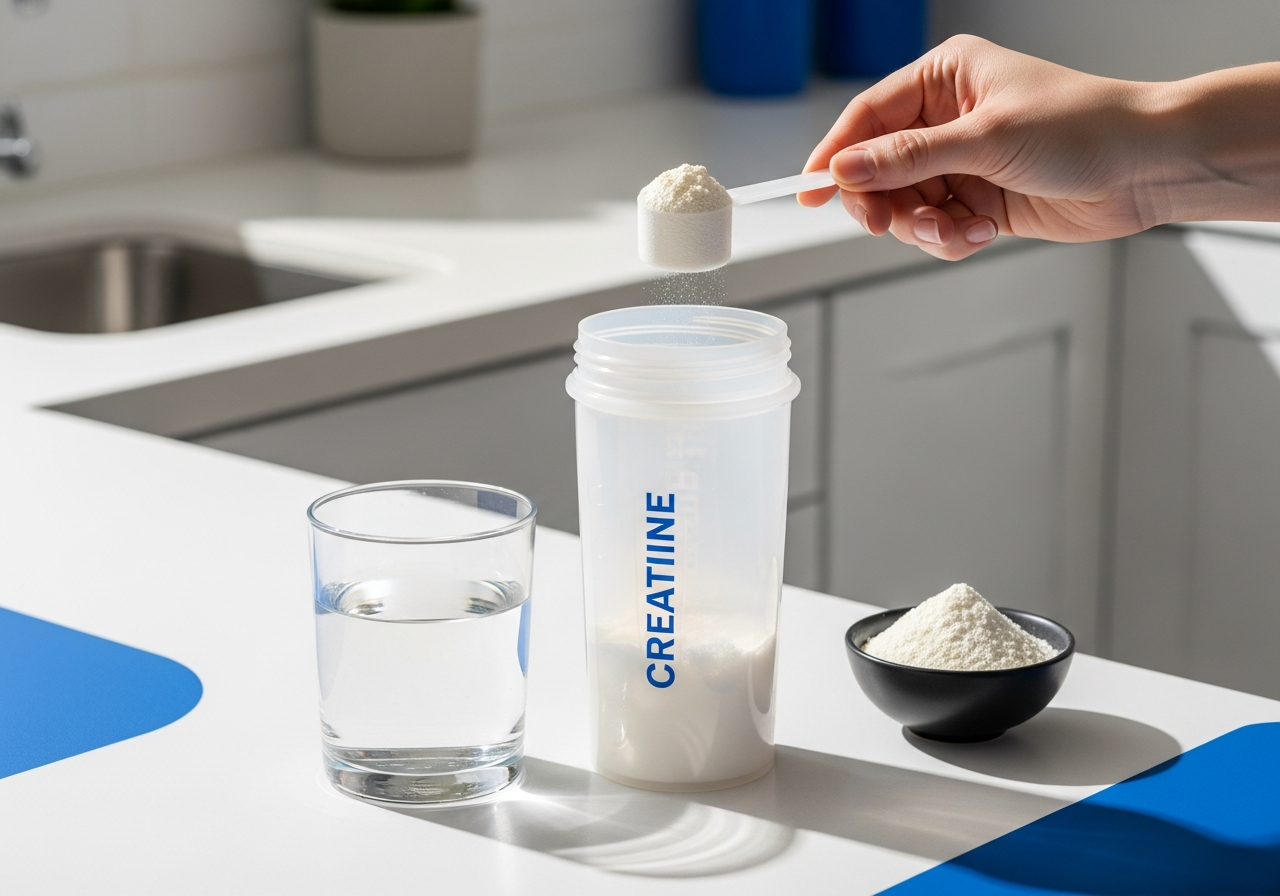
The simplest way to take creatine correctly is to use 3 to 5 g of creatine monohydrate every day, with or without food, and keep doing it for weeks rather than chasing perfect timing. When people have bad experiences, the cause is usually poor execution, not creatine itself.
- Choose creatine monohydrate. It is the most studied form and usually the best value. If you are comparison shopping, start with best creatine rankings and creatine brand reviews.
- Decide whether to load. Loading means 20 g per day for 5 to 7 days, split into 4 servings of 5 g. It saturates stores faster, but it is optional.
- Use a maintenance dose. After loading, or from day one if you skip loading, take 3 to 5 g daily.
- Take it with enough fluid. Mix it into water, a shake, or another beverage you tolerate well. Full dissolution can improve comfort, especially if your stomach is sensitive.
- Take it every day. Training day and rest day both count because muscle saturation is the goal.
- Stay patient. Without loading, noticeable benefits often take 2 to 4 weeks as stores rise gradually.
Good timing options include after training with a shake, with breakfast, or any daily routine that you will actually remember. The best time is the time you are most consistent. If you want precision, our creatine dosage calculator and guides on how to take creatine and how much creatine per day walk through grams, measuring, and practical routines.
What should you expect? In week 1 with loading, some people notice body weight rise and workouts feel slightly better by the end of the week. Without loading, weeks 2 to 4 are when many users start noticing better repeat effort, an extra rep here and there, or improved top-end training quality. The effect is subtle but useful. Creatine is not meant to feel like caffeine.
The real dosing rules: by body weight, by goal, and by sport
For most adults, 3 to 5 g of creatine monohydrate per day is enough to maintain high muscle creatine stores, while larger athletes or those using body-weight formulas may use slightly more. The main mistake is assuming everyone needs a giant scoop because someone on social media does.
A common evidence-based loading approach is about 0.3 g per kg of body weight per day for 5 to 7 days, followed by a maintenance intake around 0.03 g per kg per day. In plain English, that usually works out close to 20 g per day during loading and 3 to 5 g per day for maintenance.
| Body weight | Loading option | Daily maintenance | Best for |
|---|---|---|---|
| 60 kg | 18 g/day for 5-7 days, split doses | 3 g/day | Smaller athletes, beginners wanting lower GI risk |
| 75 kg | 20-22 g/day for 5-7 days, split doses | 3-5 g/day | Most gym-goers |
| 90 kg | 25-27 g/day for 5-7 days, split doses | 5 g/day | Larger lifters and power athletes |
| 100 kg+ | 30 g/day for 5-7 days, split doses | 5 g/day, sometimes a bit more by formula | Very large athletes using kg-based dosing |
Goal matters too:
- Strength and hypertrophy: 3 to 5 g daily is the standard play.
- Fastest possible saturation: use loading, then maintenance.
- Minimizing water-weight swings: skip loading and stay at 3 to 5 g daily.
- Vegetarians or vegans: response may be especially noticeable because baseline stores can be lower.
- Older adults: the same daily range is commonly used, ideally alongside resistance training.
Women do not need a separate “pink creatine” formula. Older adults do not need a mystery “senior blend.” Beginners do not need a pre-workout stack just to use creatine properly. Usually the best plan is boring: monohydrate, correct grams, daily adherence.
If you want personalized numbers rather than generic scoop advice, use the creatine dosage calculator. It is especially helpful if you are heavier, using a loading phase, or comparing how weight-class sport goals differ from general muscle-building goals.
Who creatine is actually for: beginners, women, older adults, and athletes
Creatine is not just for bodybuilders; it can be useful for beginners, women, older adults, team-sport athletes, and many recreational lifters who want better training quality. The old stereotype that creatine is only for huge men in the weights room is simply outdated.
Beginners: Creatine is often worth considering early because it is simple, affordable, and well studied. A beginner does not need to “earn the right” to use it. If you are starting a lifting routine, the ability to do slightly more quality work can help build momentum. The companion guide on creatine for beginners is a useful next step.
Women: Women benefit from the same core mechanism as men: better phosphocreatine availability and potentially better training output. Creatine does not somehow create male-pattern “bulk.” Women who lift often use the same 3 to 5 g daily maintenance dose. For women, the marketing is often worse than the science; the physiology is straightforward.
Older adults: Creatine can be relevant beyond aesthetics because muscle and strength matter for function, falls risk, and healthy ageing. It is not a substitute for resistance training, but it may support training adaptations when paired with it. The brain-health conversation is also growing, though evidence there is still more mixed and context-dependent than the strength evidence.
Athletes: Creatine is especially relevant to sports involving repeated high-intensity efforts, acceleration, contact, jumping, or sprinting. The IOC consensus on dietary supplements includes creatine among the few supplements with strong enough evidence to merit serious consideration in performance settings. That does not mean every endurance athlete should rush to use it, but it does mean creatine has legitimate sport-performance credibility.
Vegetarians and vegans: Because dietary creatine intake is lower in plant-based diets, some users may respond particularly well to supplementation. That does not make creatine “non-vegan” in use; most supplemental creatine is synthetically produced rather than extracted from meat.
Who should be cautious? People with known kidney disease, unresolved kidney-related symptoms, or complex medical issues should speak with a clinician before starting. For most healthy adults, though, creatine is less niche than people think and more broadly useful than its old gym-bro reputation suggests.
Myth: timing, cycling, and rest-day rules make or break your results
Timing is a minor detail compared with total daily intake, and most people do not need to cycle creatine at all. This is one of the most liberating facts about creatine because it replaces supplement anxiety with a simple habit.
The reason is straightforward: creatine works through tissue saturation, not through a short-lived acute boost like caffeine. Once muscle stores are elevated, they stay elevated when you keep taking a maintenance dose. That is why a dose with breakfast, after training, or before bed can all work if they help you stay consistent. If you want the longer version, see when to take creatine and creatine on rest days.
Here is the myth-by-myth reality:
- “You must take creatine pre-workout.” False. Pre-workout is fine, but not necessary.
- “Post-workout is the only effective time.” Overstated. Post-workout is practical, not magical.
- “You need to cycle off after 8 to 12 weeks.” No strong evidence says healthy users need to cycle creatine.
- “If you miss one day, you lose your gains.” False. One missed day is not a crisis.
What should you do instead? Attach creatine to a routine you already have. Good options include:
- Mix 3 to 5 g into your post-workout shake.
- Add it to your breakfast drink on rest days.
- Keep it beside a toothbrush, coffee setup, or shaker station so you do not forget it.
If you miss a day, simply resume your usual dose the next day. Do not double up to “catch up” unless you are intentionally following a structured loading protocol. Doubling randomly is a common reason people get stomach discomfort and then blame the supplement.
In practice, the best creatine timing strategy is the one that removes friction. If your plan requires perfect workout timing, exact carb ratios, or fancy stacks to “activate” creatine, you are probably listening to marketing, not physiology.
Monohydrate vs fancy forms: what to buy, what to skip, and what Canadians should check
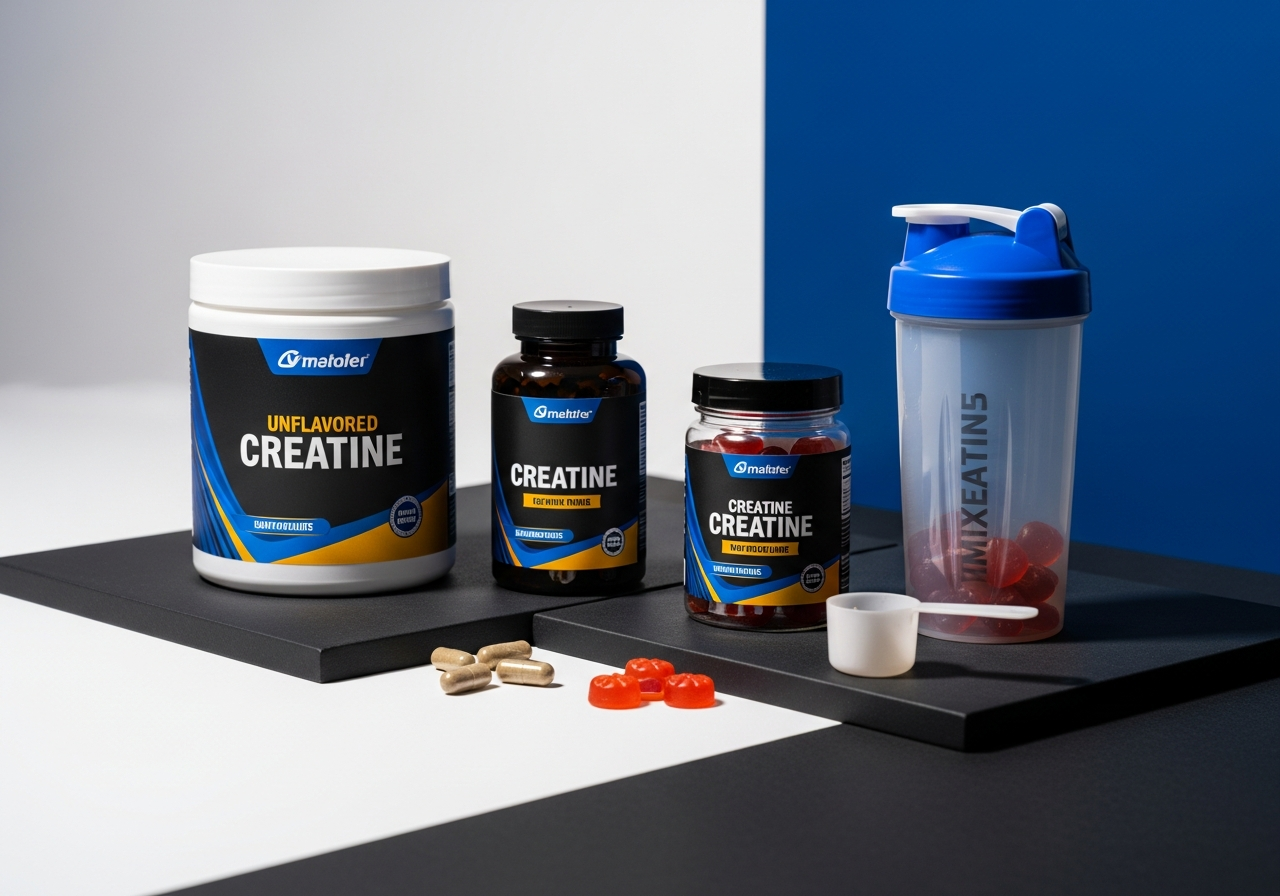
For almost everyone, creatine monohydrate is the form to buy because it has the strongest evidence, the most predictable dosing, and usually the best cost per effective gram. Most “advanced” creatine products are sold on convenience or marketing differentiation, not clearly superior outcomes.
| Form | Evidence for performance | Typical pros | Main downside |
|---|---|---|---|
| Creatine monohydrate | Strongest by far | Best studied, effective, affordable | Can cause GI issues if overdosed at once |
| Micronized monohydrate | Essentially same active form | May mix a bit easier | Often marketed as more different than it is |
| Creatine HCl | Less robust overall | Smaller serving size, may feel easier on stomach for some | Usually costs more per effective dose |
| Buffered, ethyl ester, nitrate, blends | Not better established than monohydrate | Marketing claims, flavoured options | Higher cost, weaker evidence, confusing labels |
If monohydrate upsets your stomach, first fix the basics before switching forms: reduce the single dose, split servings, mix thoroughly, and take it with food. Many people who think they “need HCl” are simply taking too much monohydrate at once.
For Canadians, there are a few practical buying checks that matter:
- Look for a clear ingredient panel and serving size in grams, not proprietary blends.
- Check for an NPN, which is a Natural Product Number used on many Health Canada-regulated supplements.
- Prefer brands that mention third-party testing or batch testing for purity.
- Compare cost per 100 g or per 5 g serving, not just tub price.
Use best creatine rankings, best creatine monohydrate in Canada, and buying creatine online in Canada if you want to compare reputable options. If you are deciding between formats such as powder, capsules, or gummies, convenience can matter, but only after dose accuracy and cost-effectiveness are handled.
The buying myth to avoid is this: if a creatine product sounds dramatically more advanced than monohydrate, it is usually dramatically more expensive before it is dramatically more effective.
If creatine is bothering your stomach, here is the fix most people need
If creatine causes stomach upset, loose stools, or a heavy feeling, the fix is usually to lower the single dose, dissolve it better, and take it more consistently rather than abandon it. Most side effects blamed on creatine are administration errors.
The most common mistakes are:
- Taking 10 to 20 g in one hit instead of split doses during loading
- Dry scooping
- Using too little fluid
- Taking it on an empty stomach when you know you are sensitive
- Using a heaping scoop instead of measuring grams accurately
Troubleshooting is simple:
- Drop to 3 g daily for a week.
- Mix it thoroughly in water or a shake.
- Take it with a meal.
- If loading, stop loading and use steady daily dosing instead.
- Check that the product is plain creatine monohydrate and not a blend with stimulants, sugar alcohols, or other ingredients causing the issue.
Constipation, diarrhea, and “bloating” often have more to do with the total supplement stack and hydration habits than with creatine alone. A flavoured pre-workout, lots of caffeine, sugar alcohols, and poor fluid intake can make creatine the easy scapegoat. That is why clean single-ingredient creatine is often the easiest place to start.
Another practical issue is false expectations. Creatine does not feel like a stimulant, so some people over-dose trying to “feel it.” That backfires. The sign it is working is not a rush; it is better repeat performance, improved training quality, or a modest lean-mass advantage over time.
Finally, do not ignore the basics. Training, sleep, protein intake, and progressive overload matter more than creatine. A well-dosed creatine supplement can support a good plan, but it cannot rescue a poor one. If you want fewer side effects and better results, keep the supplement boring and the habits consistent.
The 10 biggest creatine myths, debunked quickly and accurately
Here are the biggest creatine myths with the short, evidence-based answer first. If you only skim one section, make it this one.
- Myth 1: Creatine is a steroid. False. Creatine is an energy-support compound, not an anabolic hormone or steroid.
- Myth 2: Creatine damages healthy kidneys. Not supported at recommended doses in healthy users, though medical conditions warrant individual advice.
- Myth 3: Creatine makes you gain fat. False. It can raise body weight via water in muscle, not via direct fat gain.
- Myth 4: Women should avoid creatine. False. Women can use the same evidence-based doses and benefit from the same mechanism.
- Myth 5: You need a loading phase. False. Loading is optional; it only speeds saturation.
- Myth 6: You need to cycle creatine. False for most healthy users. Daily ongoing use is common.
- Myth 7: Creatine dehydrates you. Not supported as an inherent effect when hydration is otherwise normal.
- Myth 8: Creatine causes cramps. This is not well supported by the broader evidence.
- Myth 9: Expensive forms are clearly better than monohydrate. False. Monohydrate remains the benchmark.
- Myth 10: If you do not feel it, it is not working. False. Creatine is judged by training output over time, not by an acute sensation.
The best way to think about creatine is as a low-drama performance support supplement. It is not glamorous. It is not instant. But if you train hard, recover reasonably well, and use the right dose, it is one of the few supplements that repeatedly earns its reputation.
If you want to go deeper into related misconceptions, useful follow-up reads include is creatine safe, does creatine make you gain weight, and do you need to cycle creatine.
Bottom line: the myth-free way to use creatine starting today
The bottom line is simple: most creatine myths are false, and the evidence-based approach is to use creatine monohydrate at 3 to 5 g daily, keep taking it consistently, and expect gradual performance benefits rather than dramatic sensations. That one sentence will serve most people better than hours of social media scrolling.
If you want a myth-free starting plan, do this today:
- Buy a plain creatine monohydrate from a reputable brand.
- Check that the label clearly lists grams per serving.
- Take 3 to 5 g daily for at least 4 weeks.
- Skip loading if you want fewer GI issues or less rapid scale fluctuation.
- Track a few indicators: reps at a fixed weight, body weight, and how your training feels across sets.
- Keep hydration normal, not obsessive.
What should you expect? With loading, benefits may begin within a week. Without loading, expect more of a 2 to 4 week ramp. Early scale changes are often water in muscle, not fat. Better workout quality, one extra rep on key lifts, slightly improved repeated sprint output, and steadier training during a cut are realistic outcomes. Instant visible transformation is not.
The reason creatine remains relevant in 2026 is not because the myths are interesting. It is because the evidence is unusually durable. In a supplement industry full of novelty, creatine monohydrate keeps winning by being effective, affordable, and hard to beat on data.
If you are ready for the practical next step, use the creatine dosage calculator, compare reputable products in the creatine product catalog, and keep your expectations grounded in physiology rather than marketing. That is how you get the benefits without inheriting the nonsense.
Creatine myths vs facts at a glance
- 3-5 g/day Standard daily maintenance dose — The most common evidence-based daily range for creatine monohydrate.
- 20 g/day Typical loading dose — Usually split into 4 doses for 5-7 days to saturate muscle faster.
- 5-7 days Loading phase timeline — Optional strategy for faster saturation; not required for results.
- 2-4 weeks Common no-loading timeline — A realistic window to notice effects when using steady daily dosing.
Frequently Asked Questions
Is creatine a steroid?
No, creatine is not a steroid. Creatine is a naturally occurring compound involved in rapid energy production, while anabolic steroids are hormone-like drugs that alter endocrine signalling and muscle growth through entirely different mechanisms.
Does creatine make you gain weight?
Yes, creatine can make body weight go up, but early changes are usually water inside muscle cells rather than fat gain. This is especially common during a loading phase and does not mean creatine is making you gain body fat.
Does creatine cause bloating?
Creatine can cause a bloated feeling in some people, but that is usually from taking too much at once or mixing it poorly. Most users do better when they use 3 to 5 g daily, dissolve it fully, and take it with food or enough fluid.
Is creatine bad for your kidneys?
For healthy adults using recommended doses, research does not support the claim that creatine harms the kidneys. People with known kidney disease, abnormal kidney-related symptoms, or medical advice to avoid certain supplements should still speak with a clinician first.
Do you need to load creatine?
No, you do not need to load creatine. Loading at about 20 g per day for 5 to 7 days saturates muscle faster, but taking 3 to 5 g daily without loading also works and is often easier on the stomach.
Do you need to cycle creatine?
No, most healthy users do not need to cycle creatine. Creatine works by maintaining elevated muscle stores over time, so daily ongoing use is a normal and evidence-based approach.
When should you take creatine?
The best time to take creatine is whenever you will remember to take it every day. Timing around workouts may be convenient, but consistency matters far more than whether you take it before, after, or away from training.
Is creatine safe for women?
Yes, creatine is generally considered safe for healthy women at standard doses, and women can benefit from it for the same reasons men do. The idea that creatine makes women unnaturally bulky is a myth, not a physiology fact.
What is the best type of creatine?
Creatine monohydrate is the best type of creatine for most people because it has the strongest evidence, the most predictable dosing, and usually the best value. Newer forms may be convenient in some cases, but they are not clearly superior overall.
How long does creatine take to work?
Creatine can start working within about a week if you use a loading phase, while steady daily dosing without loading often takes around 2 to 4 weeks to become noticeable. The effects are usually gradual improvements in training performance, not a sudden feeling.