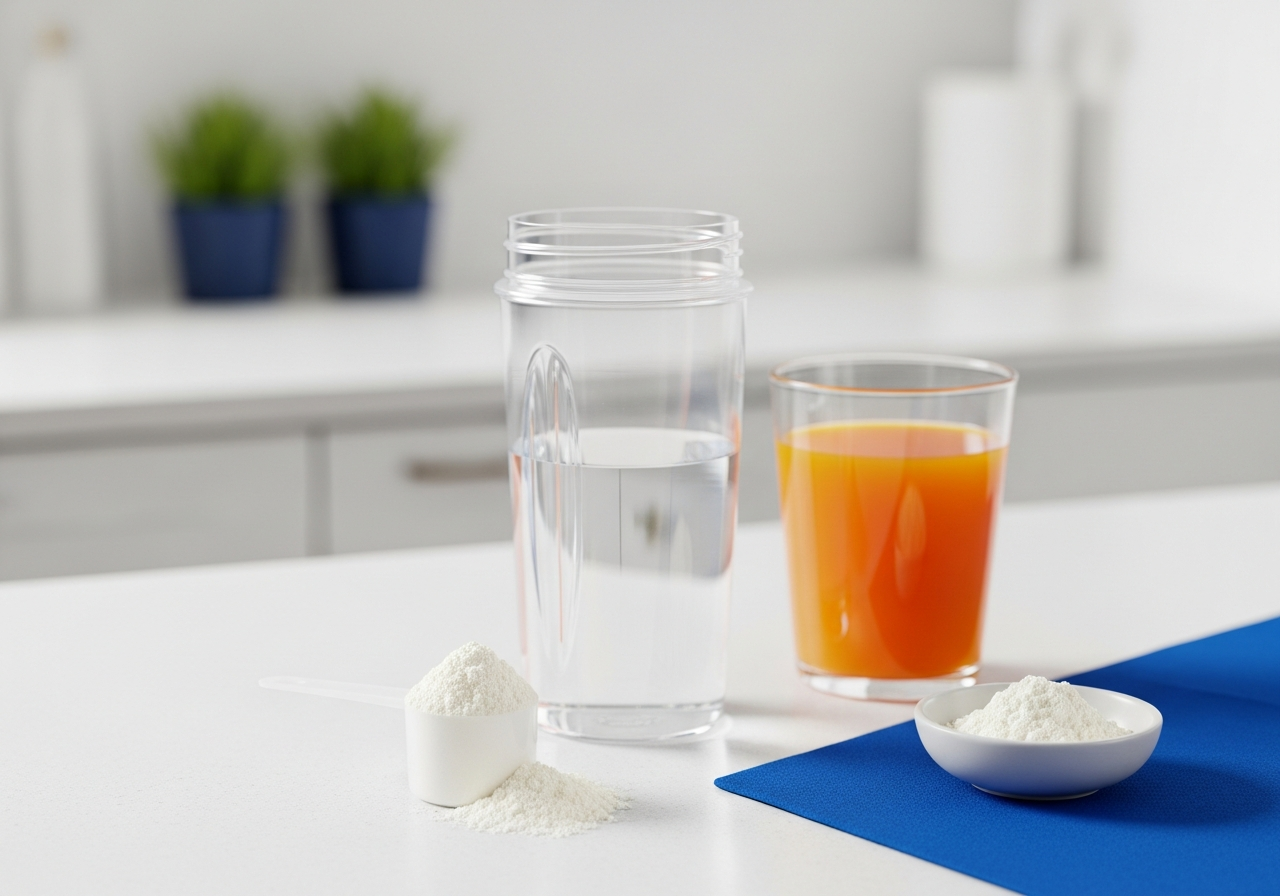
How to Mix Creatine: Best Liquids, Dissolving Tips, and Clumping Fixes
By The Creatine Canada Research Team — Evidence-based supplement analysts
To mix creatine properly, stir 3 to 5 g of creatine monohydrate into water, juice, milk, or a shake and drink it right away, even if a little powder settles at the bottom. Creatine does dissolve in water, but not perfectly at room temperature, so warm liquid, more stirring, and micronized powder make it mix better without changing how it works.
Evidence-based · Cites 4 sources · Editorial standards
Key Takeaways
- The simplest method is 3 to 5 g creatine monohydrate in 250 to 500 mL of liquid, stirred or shaken for 20 to 30 seconds.
- Creatine dissolves better in warm water than cold water, but room-temperature water works fine if you drink the residue too.
- You can mix creatine with water, juice, milk, protein shakes, electrolytes, or sugar-free sports drinks like Gatorade Zero.
- A little settling or grit does not mean the creatine is bad; monohydrate often remains partly suspended rather than fully dissolved.
- Micronized creatine usually mixes more smoothly than regular monohydrate, though both work similarly once ingested.
- If your creatine is clumped but dry, odourless, and within date, it is usually still safe; break up the clumps and store it sealed in a cool, dry place.
- Avoid dry scooping, and split larger loading doses into smaller servings to reduce stomach upset.
How to mix creatine properly in 60 seconds
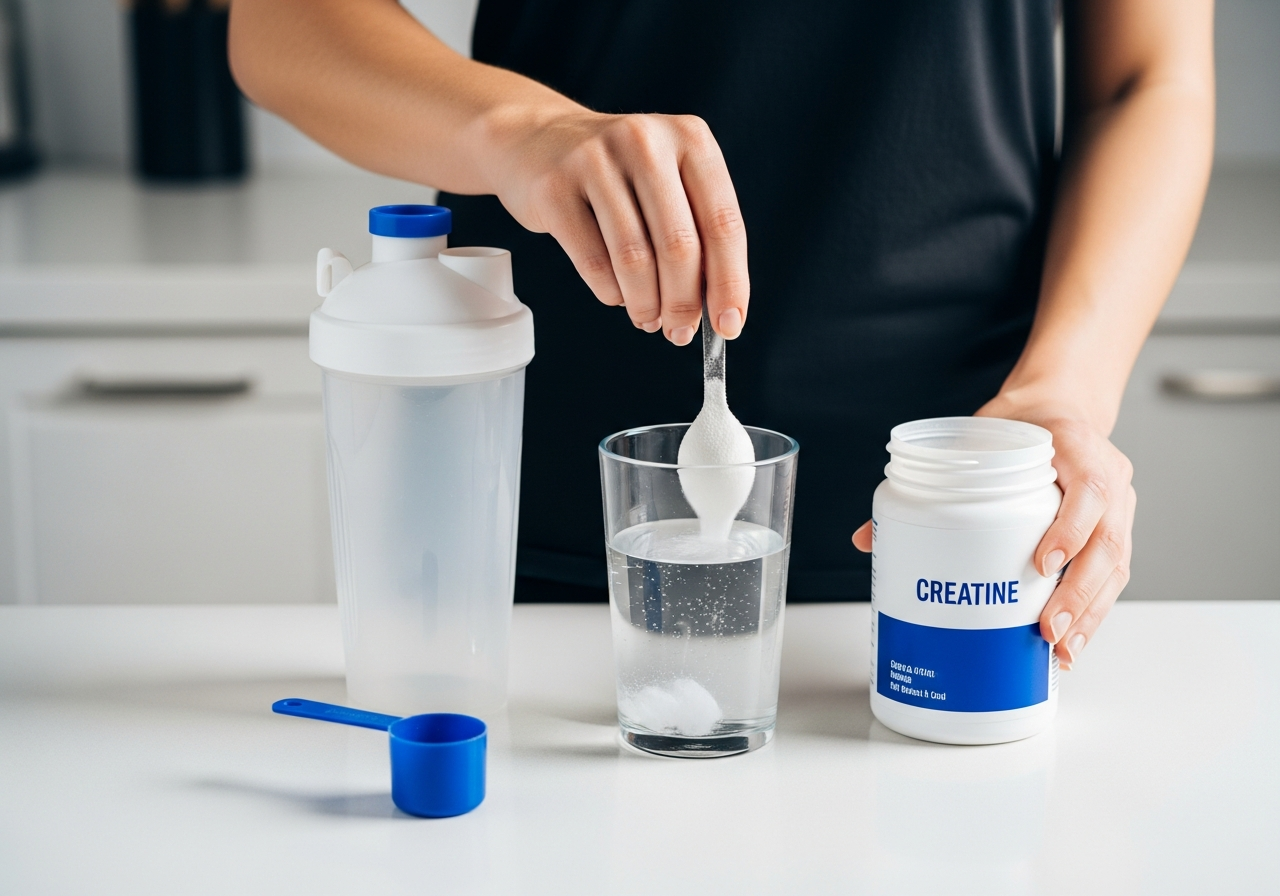
The best way to mix creatine is to add 3 to 5 g of creatine monohydrate to 250 to 500 mL of liquid, stir or shake for 20 to 30 seconds, and drink all of it, including any powder that settles. For most people, that is the entire answer to how to mix creatine.
If you are using plain monohydrate, do not expect it to vanish like sugar. Creatine monohydrate is only moderately soluble in water, especially when the liquid is cold, so a small amount of grit at the bottom is normal. That does not mean your dose failed. It means some creatine stayed suspended or settled before you finished drinking.
- Measure your dose. Use a scale if possible. If not, use the scoop provided and confirm the serving size on the label. If you need help, see our creatine dosage calculator.
- Pick your liquid. Water is the default, but juice, milk, a protein shake, or an electrolyte drink all work.
- Use enough volume. About 250 mL is the minimum most people find comfortable. Using 350 to 500 mL usually improves mixing.
- Stir or shake thoroughly. A spoon works, but a shaker bottle mixes better and faster.
- Drink promptly. Swirl the last mouthful to catch any settled powder.
- Rinse and finish. Add a splash more liquid to the glass or shaker if needed so you do not leave a gram behind.
If you are in a loading phase, the standard evidence-based approach is roughly 20 g per day split into 4 doses of 5 g for 5 to 7 days, followed by 3 to 5 g per day for maintenance. The 2017 ISSN position stand concluded that creatine monohydrate is the most effective ergogenic nutritional supplement for increasing high-intensity exercise capacity and lean mass, and it remains the most studied form today. You can read that directly in Kreider et al. (2017), ISSN Position Stand.
For beginners, the key point is simple: you do not need a fancy stack, special transporter, or perfect dissolution for creatine to work. Consistent daily intake matters far more than whether the drink looks crystal clear.
Does creatine dissolve in water, and why doesn’t it disappear completely?
Yes, creatine does dissolve in water, but creatine monohydrate does not usually fully dissolve in room-temperature water before you drink it. That is why so many people ask, does creatine dissolve in water, does creatine fully dissolve in water, or why doesn’t creatine dissolve.
The reason is chemistry, not product failure. Solubility means how much of a substance can dissolve into a liquid under specific conditions. Creatine monohydrate has limited solubility in plain water, and temperature matters: warmer liquid holds more dissolved creatine than colder liquid. Particle size matters too. Micronized creatine has smaller particles, so it disperses more easily and often feels smoother, even though the active ingredient is the same.
In practice, creatine in a glass usually exists in two forms at once:
- Dissolved creatine, which is fully mixed into the liquid
- Suspended or settled creatine, which remains as tiny particles
Both still count if you drink them. Your stomach and intestines do not require the powder to be visually dissolved to absorb it. Creatine works by increasing intramuscular phosphocreatine, which is the stored form of creatine that helps rapidly regenerate ATP, the body’s immediate energy currency during short, hard efforts. The mechanism is about daily intake and muscle saturation, not about achieving a perfectly clear drink.
How long does it take for creatine to dissolve? In room-temperature water, partial mixing usually happens within seconds, but complete visual dissolution may not happen at all with standard monohydrate in a typical serving volume. In warm water, it often disperses much better within 30 to 60 seconds. In cold water, some grit may remain even after vigorous shaking.
This is one reason many lifters prefer micronized monohydrate. If mixability matters to you, compare options in our best creatine rankings or browse current formats in the creatine product catalog. But from a results standpoint, ordinary monohydrate is still the benchmark. As Antonio et al. (2021) noted, many common creatine concerns come down to misunderstanding rather than evidence.
What to mix creatine with: water, juice, milk, shakes, and sports drinks
You can mix creatine with almost any non-alcoholic drink you tolerate well, and the best liquid is usually the one you will use consistently every day. For most people asking what to mix creatine with or what to mix with creatine, the shortlist is water, juice, milk, protein shakes, and electrolyte or sports drinks.
Here is the practical breakdown:
- Water: Cheapest, simplest, and perfectly effective. This is the default if you want no extra calories or flavour.
- Juice: Mixes well and may mask the chalky texture. Carbohydrate is not required for creatine to work, but some people find juice easier to drink.
- Milk: Yes, you can mix creatine with milk, and it is okay to mix creatine with milk if you digest milk well. It can feel smoother than water because the thicker texture hides grit.
- Protein shakes: One of the most convenient options because it folds creatine into an existing routine. If you want details, see can you mix creatine with protein powder.
- Electrolyte drinks: Yes, you can mix creatine with electrolytes. Sugar-free options like Gatorade Zero also work fine if you like the taste and already use them.
- Lemon water: Yes, it is okay to mix creatine with lemon water and drink it promptly. Mild acidity is not a problem in normal use.
The main caveat is not the liquid itself but whether you leave the mixture sitting for very long periods. Creatine can slowly degrade to creatinine when left dissolved for extended periods, especially in acidic liquid and warmer conditions, so the practical rule is simple: mix it and drink it within a reasonable time rather than making a bottle days in advance.
If you are wondering do you just mix creatine with water, the answer is yes, you absolutely can. Water is enough. Anything beyond that is about convenience, flavour, texture, calories, and how likely you are to stick with the habit.
| Liquid | Mixes well? | Best for | Main downside |
|---|---|---|---|
| Water | Fair to good | Daily simplicity | More noticeable grit |
| Warm water | Good | Better dissolving | Less refreshing |
| Juice | Good | Taste and easy drinking | Extra sugar/calories |
| Milk | Good | Smoother mouthfeel | Not ideal if dairy bothers you |
| Protein shake | Very good | Convenience after training | Thicker texture |
| Electrolyte drink | Good | Hydration routines | Can be unnecessary for light training |
How to make creatine dissolve better and get rid of grit
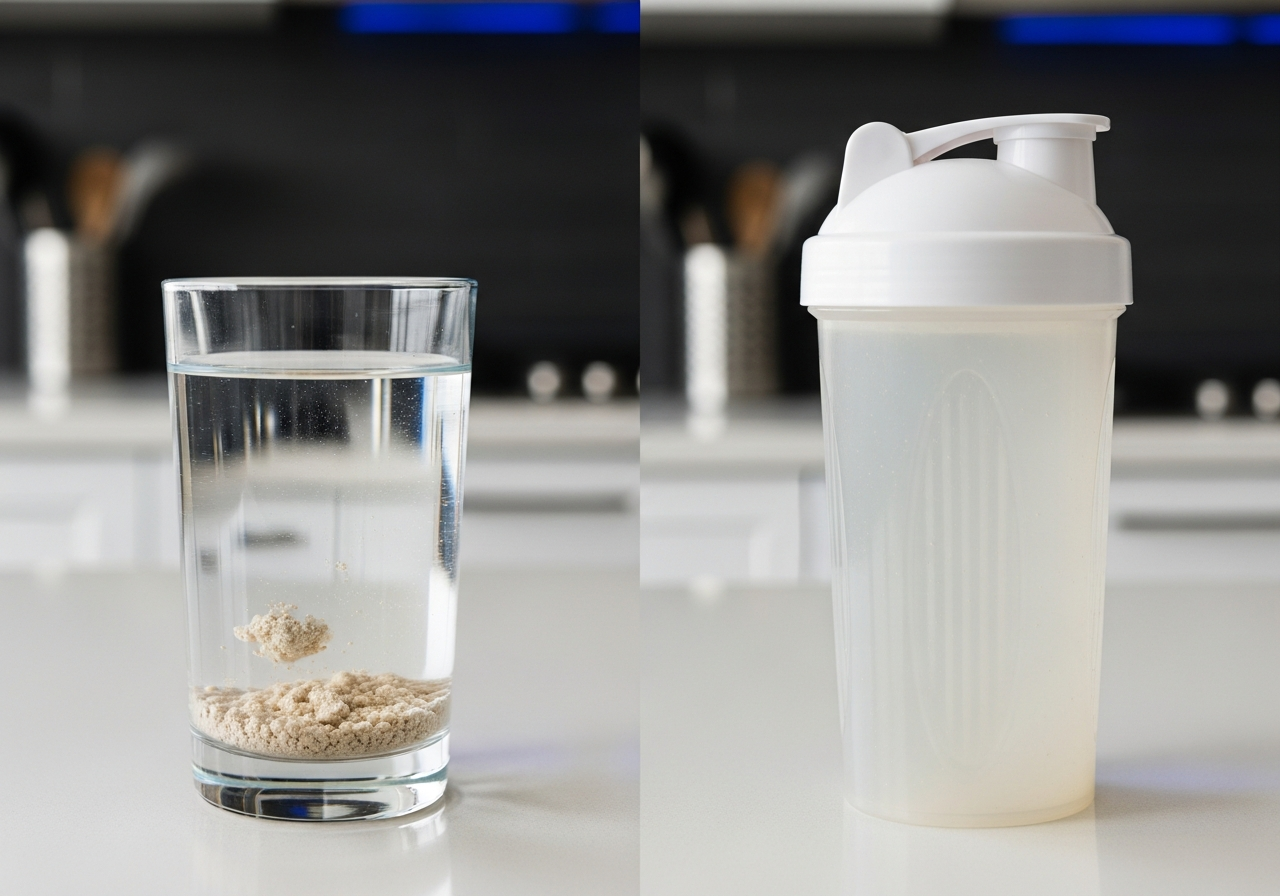
If you want to know how to make creatine dissolve better, the fastest fixes are warmer liquid, more fluid volume, longer shaking, and a micronized powder. These changes improve mixability without changing the basic effectiveness of creatine monohydrate.
Use this troubleshooting ladder, from easiest to most effective:
- Use room-temperature or warm water. Warm liquid improves solubility noticeably compared with cold water.
- Increase the liquid volume. Try 350 to 500 mL instead of a tiny shot glass amount.
- Shake instead of stir. A shaker bottle disperses fine particles more effectively than a spoon.
- Let it sit for 30 to 60 seconds, then shake again. This helps wet all the powder.
- Switch to micronized creatine. Smaller particles generally mix more smoothly.
- Split a large dose. If you are taking 10 g or more at once, mix two smaller servings instead.
One common mistake is assuming poor mixability means poor quality. It usually does not. Standard monohydrate is famous for leaving sediment, yet it remains the reference form used in most of the evidence supporting creatine’s performance and body-composition benefits. If your powder is plain, unflavoured monohydrate, a bit of texture is normal.
Another common mistake is using too little liquid. People often dump 5 g into a few sips of ice-cold water and then wonder why it clumps. That setup makes full mixing less likely. Even a small adjustment to temperature and volume usually helps.
Can you mix creatine with hot drinks? Yes, you can mix creatine into warm or hot drinks if the drink is consumed soon after mixing. Heat can improve dissolution. For coffee-specific questions, see can you mix creatine with coffee. The concern is not that heat instantly destroys creatine; the more practical issue is leaving creatine dissolved for long stretches rather than drinking it promptly.
If texture matters a lot to you, flavoured products or micronized formats may be worth the premium. Compare labels, testing, and ingredient quality through our creatine brand reviews. In Canada, also look for a Natural Product Number, or NPN, on the label, which shows the product is licensed by Health Canada as a natural health product.
Can you mix creatine with electrolytes, Gatorade Zero, glutamine, psyllium husk, or baking soda?
Yes, you can mix creatine with electrolytes, sugar-free sports drinks like Gatorade Zero, and many common supplements, but some combinations are more comfortable and practical than others. If your question is can I mix creatine with electrolyte powder, can you mix creatine with electrolytes, or can I mix creatine with Gatorade Zero, the answer is yes.
Here is the evidence-based and experience-based breakdown:
- Electrolytes: Fine to combine. Electrolytes do not block creatine absorption. This can be convenient if you already use an electrolyte mix during hard training, hot weather, or long sessions.
- Gatorade Zero or other sugar-free sports drinks: Fine to combine. Creatine does not require sugar to work.
- L-glutamine: Fine to combine. There is no known issue with taking creatine and L-glutamine together in typical supplemental doses.
- Protein powder: Fine to combine and very common.
- Psyllium husk: Technically possible, but usually not ideal. Psyllium thickens fast and can make the drink unpleasant or harder to finish completely. High-fibre mixes can also slow gastric emptying and may worsen bloating in sensitive people.
- Baking soda: Not usually recommended unless you are intentionally using sodium bicarbonate as a separate performance strategy and know your tolerance. Both creatine loading and sodium bicarbonate can cause gastrointestinal upset, so stacking them casually is a bad beginner move.
The safest general rule is this: if the added ingredient is a normal food or standard supplement you already tolerate, mixing it with creatine is usually fine. The main concerns are taste, texture, sodium load, fibre thickness, and stomach comfort, not some hidden chemical conflict.
For athletes, combining creatine with an electrolyte drink can be useful from a routine standpoint because it ties supplementation to training hydration. But that convenience should not be confused with necessity. Creatine and electrolytes do different jobs. Creatine helps replenish phosphocreatine for repeated high-intensity efforts, while electrolytes mainly support fluid balance and nerve-muscle function. If you want a deeper comparison, see the related guide on creatine vs electrolytes in our learning hub.
When in doubt, keep it simple: plain creatine monohydrate plus a drink you already use consistently is still the gold-standard approach.
How much creatine to mix: exact doses by body weight, goal, and loading vs maintenance
The right amount of creatine to mix depends more on your dosing strategy than on the liquid itself, and most adults do well with 3 to 5 g per day. If you want the fastest route to saturation, use a loading phase of about 20 g per day split into 4 doses for 5 to 7 days, then switch to 3 to 5 g daily.
Creatine works by saturating muscle stores over time. A loading phase fills those stores faster, while a steady maintenance dose gets you to the same destination more gradually. Without loading, most people reach near-full saturation in roughly 3 to 4 weeks of daily use. With loading, you may notice performance and muscle-fullness effects within about 1 week.
| Body weight | Conservative daily dose | Typical daily dose | Loading option |
|---|---|---|---|
| Under 60 kg | 3 g | 3 to 5 g | 20 g/day split into 4 x 5 g for 5 to 7 days |
| 60 to 90 kg | 3 g | 5 g | 20 g/day split into 4 x 5 g for 5 to 7 days |
| Over 90 kg | 5 g | 5 g | 20 g/day split into 4 x 5 g for 5 to 7 days |
For specific goals:
- General fitness or beginners: 3 to 5 g daily, no loading required.
- Strength and hypertrophy: 5 g daily is the common practical target.
- Vegetarians or vegans: Often respond very well to standard dosing because baseline creatine stores may be lower.
- Older adults: 3 to 5 g daily is commonly used, especially alongside resistance training.
- Larger athletes: 5 g daily is a reasonable default, though some use weight-based strategies.
Women do not need a special “pink creatine” formula. The same monohydrate and same 3 to 5 g daily range generally apply. Older adults can use the same evidence-based dose range, though individual medical context matters. For more detail, read creatine for women or creatine for older adults.
If you are not sure how much your scoop actually contains, do not guess. Scoop sizes vary, and some heaped scoops overshoot the label dose. Use our creatine dosage calculator and, if possible, a kitchen scale for accuracy. Consistent dosing matters more than trying to “eyeball” a huge amount and hoping for faster results.
When should you mix and drink creatine, and how long can it sit?
The best time to take creatine is the time you will remember every day, because consistency matters far more than precise timing. If you are asking whether you should mix creatine before or after training, the practical answer is that either can work as long as total daily intake is consistent.
The reason timing matters less than people think is that creatine is not an acute stimulant. It does not work like caffeine, where a single dose creates an obvious same-day effect. Creatine works by gradually increasing muscle phosphocreatine stores over days and weeks. Once your stores are saturated, the benefit comes from keeping them topped up with a daily maintenance dose.
That said, there are smart timing choices:
- After training: Convenient if you already have a shake or meal routine.
- Before training: Fine if that is easier for you to remember.
- With a meal: Often easier on the stomach for sensitive users.
- On rest days: Still take it. Saturation is maintained by daily intake, not just workout-day intake.
How long can creatine sit once mixed? The practical best practice is to mix it and drink it the same day, ideally soon after mixing. Leaving creatine dissolved for extended periods is not ideal, especially in acidic drinks. If you mix a shaker in the morning and drink it later that day, that is generally a practical real-world compromise. But making a bottle days in advance is unnecessary and not recommended.
If you are trying to build a durable habit, attach creatine to an existing cue. Good examples include your breakfast, post-workout shake, lunch, or evening water bottle. The right system is the one that survives busy days, travel, and missed workouts. If you want a deeper dive on timing, read when to take creatine and creatine on rest days.
The 2018 International Olympic Committee consensus on dietary supplements supports creatine as one of the few supplements with strong evidence for performance in specific exercise contexts. That strength of evidence is about regular use, not magic timing windows. Read the consensus here: IOC consensus on dietary supplements.
What to expect week by week after you start mixing creatine daily
If you mix and take creatine daily, you should expect subtle early changes followed by clearer gym performance benefits over the next few weeks. The biggest beginner mistake is expecting a stimulant-like feeling on day one.
Here is a realistic timeline:
- Days 1 to 7 with loading: You may notice a small increase in body weight from intracellular water, a fuller muscle look, and slightly better repeated effort performance.
- Weeks 2 to 4 without loading: Muscle creatine stores move toward saturation, and training quality may improve through better reps, sets, sprint repeatability, or recovery between hard efforts.
- Weeks 4 to 8: The performance advantage can translate into better strength and lean-mass progress if your training and nutrition are solid.
How do you tell if it is working? Look for these signs:
- You can squeeze out an extra rep on hard sets more often
- Your sprint or interval performance drops off less across repeated rounds
- Your muscles feel slightly fuller
- Your body weight rises modestly early on without an increase in body fat
Creatine does not build muscle by itself in the absence of a training stimulus, but it can help you train harder and recover better between repeated high-intensity efforts. Over time, that can improve strength and lean mass. The ISSN position stand and broader evidence summaries consistently support creatine monohydrate for high-intensity performance and lean-mass gains when paired with training.
If you feel nothing after a week, that is not unusual, especially without loading. Give it at least 3 to 4 weeks of consistent daily use before judging it. Also check the basics: are you actually taking 3 to 5 g every day, finishing the full drink, and training hard enough to notice a performance effect? If needed, review how long creatine takes to work or why creatine may not seem to work.
In short, creatine is less about feeling different in the moment and more about doing more quality work over time. That is exactly why daily consistency beats obsessing over the perfect mixer.
Is clumped creatine safe, and what clumping really means
Clumped creatine is usually safe if it has simply absorbed a bit of moisture, still smells normal, and is within its shelf life. When people ask is clumped creatine safe, the answer is usually yes, provided the powder is otherwise normal and dry enough to break apart.
Creatine powder clumps because it is hygroscopic, meaning it can pull moisture from the air. That is especially common in humid kitchens, garages, or gym bags. Clumping does not automatically mean the product is spoiled. It usually means storage conditions were not ideal.
Use this checklist:
- Probably fine: Small or moderate clumps, normal white colour, normal smell, no visible mould, sealed container, within date.
- Use caution: Hard brick-like mass after major moisture exposure, strong off odour, discoloration, signs of contamination, or water actually getting into the tub.
- Discard it: Visible mould, foul smell, repeated wetting, or anything that clearly looks contaminated.
To fix minor clumping, break the powder apart with a dry utensil or by shaking the sealed tub. The creatine usually still works. If the powder also mixes poorly, remember that clumping and low solubility are separate issues. Monohydrate can be a little gritty even when fresh and high-quality.
Storage matters more than most users realize:
- Keep the lid tightly closed
- Store it in a cool, dry place
- Avoid bathroom cabinets and steamy kitchens
- Do not use a wet scoop
- Keep the desiccant packet if included
If you are buying in Canada, look for an NPN on the label and favour brands that disclose third-party testing or strong quality-control standards. If you want help choosing, start with our best creatine rankings, compare specific companies in creatine brand reviews, or explore the creatine product catalog. For longer-term storage questions, see does creatine expire.
Clumping is annoying, not automatically dangerous. Most of the time, the real solution is better storage, not throwing out every tub that forms a few lumps.
Who should use creatine, who should be cautious, and the mixing mistakes that cause side effects
Creatine monohydrate is appropriate for many healthy adults, including beginners, women, older adults, and athletes, but the most common side effects come from dosing and mixing habits rather than from creatine itself. According to the 2017 ISSN position stand and later reviews, creatine monohydrate is well-supported for efficacy and has a strong safety profile in healthy populations when used as directed.
Who it is commonly for:
- Beginners: A simple 3 to 5 g daily habit is enough.
- Women: The same evidence-based product and dose range generally apply.
- Older adults: Can benefit, particularly alongside resistance training.
- Athletes: Especially useful for repeated high-intensity efforts such as sprinting, lifting, team sports, and interval work.
Who should be cautious:
- People with kidney disease or significant renal impairment should speak with a physician before use.
- Anyone under medical care for a chronic condition should confirm supplementation is appropriate.
- Pregnant or breastfeeding individuals should defer to their healthcare professional because evidence is more limited for these groups.
The most common side effects are mild gastrointestinal issues, and they are usually self-inflicted by bad mixing or dosing habits:
- Taking too much at once: Large single doses are more likely to cause stomach upset.
- Using too little liquid: Thick slurries are harder on the stomach.
- Dry scooping: Pointless for creatine and increases choking risk.
- Loading too aggressively: Splitting doses is easier on the gut.
If creatine upsets your stomach, try these fixes:
- Drop back to 3 to 5 g once daily
- Take it with a meal or shake
- Use more water
- Choose micronized monohydrate
- Avoid stacking it with fibre-heavy or bicarbonate-heavy drinks
Many myths still persist, including dehydration, kidney damage in healthy users, cramping, and “bad weight gain.” Those claims are often overstated or unsupported in healthy populations. For a fuller myth check, visit creatine myths debunked and is creatine safe. If digestive issues are your main concern, our guide on creatine digestive side effects goes deeper.
The bottom line on safety is straightforward: use the right dose, mix it with enough fluid, take it consistently, and keep the process boring. That is usually exactly what works best.
Common mixing myths debunked, plus the bottom line for real-world use
The biggest myth about mixing creatine is that it must fully dissolve to work, and that is false. Creatine monohydrate does not need to form a perfectly clear drink for your body to absorb and use it effectively.
Here are the most common myths and the direct answers:
- “If it settles, it doesn’t work.” False. Settling is normal with monohydrate. Drink the residue.
- “You need juice or sugar for absorption.” False. Sugar is optional, not required.
- “Milk ruins creatine.” False. Creatine mixes fine with milk if you tolerate dairy.
- “Hot drinks destroy creatine immediately.” False. Warm or hot drinks are fine if consumed soon after mixing.
- “Clumped creatine is automatically bad.” False. Minor clumping usually reflects moisture exposure, not spoilage.
- “Fancy forms mix better, so they must work better.” False. Better mixability does not equal better muscle saturation or better outcomes.
- “Alcohol is a good mixer.” Not a good idea. While a small amount of alcohol is not a special chemical disaster, alcohol is not a useful creatine vehicle and may work against training quality, hydration habits, and recovery. For more, see creatine and alcohol.
So what is the best real-world method?
- Buy a plain, well-tested creatine monohydrate product
- Measure 3 to 5 g
- Mix it into 250 to 500 mL of water, juice, milk, or a shake
- Use warm liquid if you care about smoother mixing
- Shake or stir for 20 to 30 seconds
- Drink the whole serving, including the last bit at the bottom
- Repeat every day
If you want the shortest possible answer to how to mix creatine, it is this: put 3 to 5 g of creatine monohydrate in a drink you already enjoy, mix it well enough to swallow comfortably, and take it every day. That is what matters for results.
If you are still choosing a product, compare trusted options in our best creatine rankings. If you want the next step after mixing, read how to take creatine and how much water to drink with creatine. Keep it simple, keep it consistent, and let the science do the work.
Creatine Mixing: The Numbers That Actually Matter
- 3-5 g/day Standard maintenance dose — Suitable for most healthy adults using creatine monohydrate
- 20 g/day Typical loading dose — Usually split into 4 doses for 5-7 days
- 5-7 days Time to saturate with loading — Loading speeds muscle creatine saturation compared with maintenance-only use
- 3-4 weeks Time to saturate without loading — Daily 3-5 g use reaches near-full saturation more gradually
Frequently Asked Questions
Do you just mix creatine with water?
Yes, you can just mix creatine with water, and that is the simplest effective method. Use 3 to 5 g in roughly 250 to 500 mL, stir or shake, and drink the residue if some settles. Water is not inferior to juice or milk for creatine’s main benefits.
Does creatine fully dissolve in water?
No, creatine monohydrate often does not fully dissolve in room-temperature water before you drink it. Partial settling is normal, especially in cold water. That does not make it ineffective, because suspended creatine still counts if you drink the full serving.
How long does it take for creatine to dissolve?
Creatine usually disperses within seconds, but standard monohydrate may never look completely dissolved in a typical glass of water. In warm water, mixability improves and it often looks smoother within 30 to 60 seconds. In cold water, visible grit can remain even after shaking.
Can you mix creatine with milk?
Yes, you can mix creatine with milk, and it is okay if dairy agrees with you. Milk often makes creatine feel smoother than water because the thicker texture masks grit. The main consideration is digestive comfort, not effectiveness.
Can you mix creatine with electrolytes?
Yes, you can mix creatine with electrolytes, including electrolyte powder and sports drinks. Electrolytes do not block creatine absorption, so the combination is fine if it helps you stay consistent. Just keep the total drink comfortable on your stomach.
Can I mix creatine with Gatorade Zero?
Yes, you can mix creatine with Gatorade Zero. Creatine does not need sugar to work, so sugar-free sports drinks are perfectly acceptable as a mixing liquid if you like the taste and use them regularly.
Can you mix creatine with hot drinks?
Yes, you can mix creatine with hot drinks, and warmer liquid often improves dissolving. The practical rule is to drink it soon after mixing rather than leaving it sitting for long periods, especially in acidic beverages.
Why doesn’t my creatine dissolve?
Your creatine usually does not dissolve fully because creatine monohydrate has limited solubility in water, especially when the liquid is cold or the serving is concentrated. Use more liquid, warmer liquid, or a shaker bottle, and consider micronized creatine if texture bothers you.
Is clumped creatine safe?
Yes, clumped creatine is usually safe if it only absorbed a bit of moisture and still looks, smells, and tastes normal. Minor clumping is common in humid conditions. Discard it only if there is mould, a strong off odour, discoloration, or obvious contamination.
Can I mix creatine with lemon water or alcohol?
Yes, lemon water is fine for mixing creatine if you drink it soon after mixing. Alcohol is not an ideal mixer because it adds no benefit and may undermine hydration habits, training quality, and recovery, so a non-alcoholic drink is the better choice.