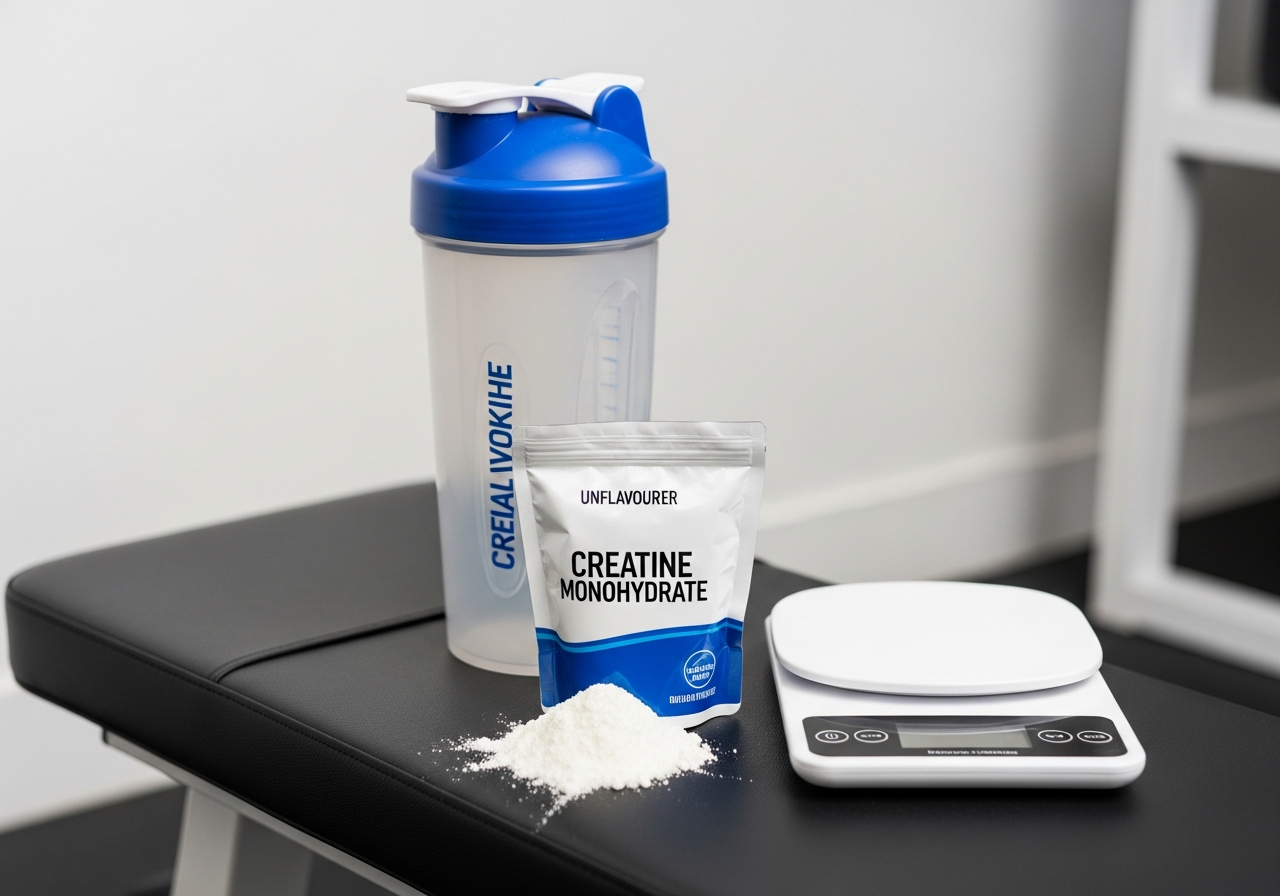
Is Creatine Safe? A Complete Look at Side Effects and Long-Term Use
By The Creatine Canada Research Team — Evidence-based supplement analysts
Yes—creatine is safe for most healthy people when taken at evidence-based doses, and creatine monohydrate is one of the most studied sports supplements in the world. The main downsides are usually mild and manageable, such as temporary water-weight gain or stomach upset, while serious safety concerns mostly involve pre-existing medical issues, poor product quality, or confusion with unrelated lab markers like creatinine and creatine kinase.
Evidence-based · Cites 4 sources · Editorial standards
Key Takeaways
- Creatine monohydrate is considered safe for healthy adults at 3–5 g/day, with or without a loading phase.
- The most common creatine side effects are mild: water retention, scale-weight gain, and occasional stomach upset from large single doses.
- Creatine is not a steroid, does not appear to dehydrate you, and has not been shown to damage healthy kidneys at recommended doses.
- Women, older adults, vegetarians, and many athletes can use creatine safely; teens need extra caution, supervision, and a strong training/nutrition foundation first.
- Pregnancy, kidney disease, and unexplained abnormal lab results are situations where you should speak with a physician before using creatine.
- Creatine kinase is a blood marker of muscle damage, not the supplement itself, so a ‘dangerous’ CK level is a medical question that depends on symptoms and context.
- In Canada, choose plain creatine monohydrate from reputable brands with an NPN and preferably third-party testing.
Is creatine safe? The direct answer most people need first
Yes, creatine is safe for most healthy adults when used in standard doses, and that is the mainstream evidence-based position as of 2026. The best-supported form is creatine monohydrate, and the strongest consensus statements continue to conclude that it is both effective and well tolerated for healthy people when taken appropriately.
The clearest summary comes from the 2017 ISSN position stand, which concluded that creatine monohydrate is the most effective ergogenic nutritional supplement currently available for increasing high-intensity exercise capacity and lean mass during training, and that it is safe when used within recommended guidelines. A later review, Antonio et al. (2021), also addressed common fears directly and found that many popular warnings about dehydration, cramping, kidney damage in healthy users, or hair loss are either unsupported or overstated.
That does not mean creatine is risk-free in every person or every situation. Creatine is not a good candidate for self-experimentation if you have known kidney disease, are pregnant, are under specialist care for a chronic illness, or have unexplained abnormal blood work. In those cases, the sensible answer is medical clearance first. Creatine is also only as good as the product you buy, which matters in Canada because quality control varies between brands and formulas.
If your real question is “is creatine bad for you?” the practical answer is usually no for a healthy adult using plain monohydrate. If your question is “is creatine dangerous?” the answer is that standard use is not considered dangerous for healthy users, but misuse, contaminated products, or ignoring a real medical issue can create avoidable problems.
For beginners, the simplest safe plan is boring on purpose: buy plain monohydrate, take 3–5 g daily, drink to thirst, keep training, and avoid megadoses. If you want help choosing a product first, see our best creatine rankings and creatine brand reviews.
How creatine works—and why so many safety fears start with misunderstanding
Creatine is generally safe because it is a naturally occurring compound your body already makes and stores, mainly in muscle, where it helps recycle energy during short, hard efforts. Creatine is formed from amino acid precursors and stored partly as phosphocreatine, which is the rapid energy reserve that helps regenerate ATP, the cell’s immediate energy currency, during efforts like sprinting, lifting, jumping, and repeated intervals.
The key safety concept is saturation. When you supplement with creatine, you are not forcing a foreign drug pathway; you are increasing muscle creatine stores toward a fuller state. That fuller state helps you do slightly more high-quality work over time, which is why creatine’s benefits show up as better training output, improved repeated-effort performance, and, over weeks to months, greater gains in strength and lean mass.
Many safety fears come from mixing up three different terms:
- Creatine: the supplement and naturally occurring compound in muscle.
- Creatinine: a breakdown product measured on blood tests, which can rise slightly with creatine use or more muscle mass without meaning kidney damage on its own.
- Creatine kinase (CK): an enzyme released when muscle is damaged or highly stressed; it is not the same thing as creatine and is often elevated after hard training.
That distinction matters. A slightly higher creatinine in a muscular person taking creatine does not automatically mean harmed kidneys, and a high CK after a brutal workout does not mean creatine is unsafe. This is why context matters so much on lab work. If you want the deeper lab explanation, our guide on creatine vs creatinine pairs well with creatine kinase levels.
Creatine also tends to increase intracellular water, meaning water held inside muscle cells. That is why the scale may go up quickly without body-fat gain. This is a normal effect, not proof that creatine is “bad” or causing harmful bloating in every user. For a fuller beginner explanation, see what creatine is and our creatine myths debunked page.
What are the side effects of creatine? The real list, from common to rare
The real side effects of creatine are usually mild, predictable, and dose-related, with water-weight gain and stomach upset topping the list. Most people asking “what are the side effects of creatine?” are really asking whether anything serious is likely to happen, and in healthy users following standard dosing, serious adverse effects are not what the evidence typically shows.
Here is the practical side-effect list most people should know:
- Temporary scale-weight gain: often noticeable in the first 1–2 weeks, especially with a loading phase, because muscle stores hold more water.
- Stomach discomfort, nausea, or loose stools: most often caused by taking too much at once, dry scooping, or mixing poorly.
- Feeling “puffy” or bloated: more common with large loading doses or sugary blends than with plain 3–5 g/day monohydrate.
- Mild cramping concerns: commonly feared, but not well supported as a creatine effect in hydrated users.
- Lab confusion: creatinine may read higher, which can confuse interpretation if the clinician does not know you supplement.
What is not well supported as a typical creatine side effect in healthy users includes kidney damage, dehydration, heat illness, or muscle cramps caused by creatine itself. The 2021 JISSN review specifically tackled these misconceptions, and major summaries like Mayo Clinic’s creatine overview also note that standard short- to medium-term use appears safe for healthy people.
Two important nuances: first, side effects are more likely with aggressive loading, cheap flavoured blends, or stacked formulas that include caffeine, stimulants, sugar alcohols, or other ingredients. Second, “I felt bad on creatine” does not always mean creatine was the cause; poor hydration habits, hard training, under-eating, and pre-workout ingredients often muddy the picture.
If digestion is your main concern, switch to smaller divided doses, take it with a meal, and use plain monohydrate. Our detailed guides on creatine digestive side effects, whether creatine causes bloating, and creatine weight gain explain exactly what to expect.
How to take creatine safely: the simplest step-by-step plan that works
The safest effective way to take creatine is to use plain creatine monohydrate consistently at 3–5 g per day, every day, without overcomplicating timing. You can load if you want faster saturation, but loading is optional, not required.
- Choose the right form. Buy plain creatine monohydrate rather than a flashy proprietary blend. Monohydrate is the most studied, most cost-effective form, and usually the best first choice.
- Pick one dosing strategy. Either take 3–5 g daily from day one, or load with 20 g/day split into 4 doses for 5–7 days, then continue with 3–5 g/day.
- Measure accurately. Use the scoop only if it clearly states grams, or better, use a kitchen scale. A “heaping scoop” is how people accidentally turn 5 g into 8–10 g.
- Mix it properly. Stir it into water, juice, or a protein shake. Warm water often dissolves it better. Avoid dry scooping because it increases the chance of coughing, waste, and stomach upset.
- Take it daily. Consistency matters far more than clock timing. Training day or rest day, the goal is to keep muscle stores saturated.
- Adjust if your stomach complains. Split the dose into 2–3 smaller servings, take it with food, or stop loading and return to 3–5 g/day.
- Track what matters. Over 2–6 weeks, look for better training volume, one or two extra reps, slightly better repeated sprint output, and gradual improvements in strength or lean mass.
Most healthy beginners do best with the non-loading route because it is simpler and causes fewer digestive complaints. If you want faster effects before a competition block or new training phase, loading is reasonable.
Timing is mostly a convenience issue, not a make-or-break variable. If you like detail, read how to take creatine, when to take creatine, and try the creatine dosage calculator for a precise daily target.
The right creatine dose by body weight, training goal, and tolerance
Most people can safely use 3–5 g of creatine monohydrate per day, but body size, training volume, and whether you load can slightly change the best plan. The classic loading protocol is about 0.3 g/kg/day for 5–7 days, followed by a maintenance dose around 3–5 g/day, while many experts also use roughly 0.03 g/kg/day as a body-weight-based maintenance estimate.
| Body weight | Simple daily dose | Optional loading phase | Best for |
|---|---|---|---|
| 50–65 kg | 3 g/day | 15–20 g/day split into 4 doses for 5–7 days | Smaller adults, many women, beginners prioritizing tolerance |
| 66–85 kg | 3–5 g/day | 20 g/day split into 4 doses for 5–7 days | Most gym-goers and field/court athletes |
| 86–105 kg | 5 g/day | 20–25 g/day split into 4–5 doses for 5–7 days | Larger strength athletes and high-volume trainers |
| 105+ kg | 5 g/day, sometimes slightly more under guidance | 25–30 g/day split into multiple doses for 5–7 days | Very large athletes who want faster saturation |
Goal matters too:
- General fitness or beginners: 3–5 g/day, no loading, simplest and safest.
- Strength, power, sprint sports: loading can be useful if you want full stores quickly.
- Older adults: 3–5 g/day is a common practical range, ideally paired with resistance training.
- Vegetarians or vegans: standard dosing still works, but response can be especially noticeable because baseline stores may be lower.
Week-by-week expectations are realistic, not dramatic. With loading, some people notice body-mass changes and better gym output within a week. Without loading, benefits usually become more obvious after 2–4 weeks and continue building through 6–8 weeks as training quality accumulates. That is why consistency beats chasing hacks.
If you want a more detailed weight-based plan, see how much creatine per day and creatine maintenance dose.
Who creatine is usually safe for—and who should pause and ask a clinician first
Creatine is usually safe for healthy adults, including women, older adults, recreational lifters, and many competitive athletes, but it is not equally straightforward for every group. The best answer depends on age, medical history, training status, and whether there is a special situation like pregnancy or kidney disease.
Women: Yes, creatine is generally safe for women at standard doses. Women do not need a “pink” or sex-specific version, and the usual 3–5 g/day monohydrate approach works well. It is also a myth that creatine automatically makes women bulky; any early gain is mostly water in muscle, not sudden fat gain. See creatine for women.
Older adults: Yes, creatine is often a sensible option for adults over 50, particularly when paired with resistance training. Evidence supports benefits for muscle function and training capacity, and brain-health questions are promising but still less settled than the exercise data.
Teens and adolescents: This is where nuance matters. Creatine is not clearly shown to be dangerous in adolescent athletes, but routine use in minors should be more conservative than in adults. A teen should already have solid food habits, proper coaching, consistent training, and parent/guardian awareness before considering creatine. Product quality and dosing discipline matter even more under 18. If you are asking “is creatine safe for 13, 14, 15, or 16 year olds?” the cautious answer is that it may be appropriate in some well-supervised athletic settings, but it should not be casual or unsupervised. Our guide on creatine for teenagers goes deeper.
Pregnancy and breastfeeding: Human guidance is still too limited for routine self-directed supplementation, so creatine during pregnancy is a physician-led conversation, not a default recommendation.
Who should ask a clinician first:
- Anyone with known kidney disease or reduced kidney function
- Anyone who is pregnant or breastfeeding
- Anyone taking medications that affect kidney function
- Anyone with unexplained muscle symptoms, swelling, or abnormal labs
- Anyone with a history of recurrent rhabdomyolysis or significant metabolic disease
For a broader exclusion list, read who should not take creatine.
Kidneys, liver, dehydration, cramps, hair loss: what the evidence actually says
For healthy users taking recommended doses, the major creatine fears people hear online are mostly either unsupported, overstated, or based on confusion rather than direct evidence of harm. That does not mean every claim is impossible; it means the standard warnings are far stronger than the evidence behind them.
Kidneys: Creatine has not been shown to damage healthy kidneys at recommended doses in healthy people, but people with existing kidney disease should not self-prescribe it. The biggest source of fear is creatinine, which can increase without indicating injury. This is exactly why a lab result must be interpreted in context. See is creatine bad for your kidneys.
Liver: Evidence does not support the idea that creatine harms the liver in healthy users at normal doses. If someone has known liver disease or complex medication use, physician input is still sensible.
Dehydration and cramps: Creatine does not appear to dehydrate users when taken normally, despite the persistent gym myth. The IOC’s supplement consensus and later reviews do not support the claim that creatine inherently causes dehydration, heat illness, or cramping in properly hydrated athletes.
Hair loss: The evidence does not prove that creatine causes hair loss. One often-cited study raised concern about DHT, but there is no direct clinical evidence that standard creatine supplementation causes hair shedding or male-pattern baldness progression in the average user. If this is your concern, read our DHT and hair-loss guide.
Blood pressure and arthritis: Creatine is not generally considered “bad for arthritis,” and there is no standard evidence-based warning that creatine worsens arthritis itself. Blood pressure concerns are also often overstated. Still, arthritis is a broad umbrella, and individual medication plans matter.
The safest mindset is this: if you are healthy, use plain monohydrate and standard doses. If you have a diagnosed medical condition, use your clinician’s judgement rather than online reassurance.
What level of creatine kinase is dangerous? First, know that CK is not creatine
A dangerous creatine kinase level cannot be defined by one universal number alone because CK must be interpreted with symptoms, timing, exercise history, medications, and kidney status. This question matters because many people search “what level of creatine kinase is dangerous” after seeing a blood test and wrongly assume it reflects the supplement creatine.
Creatine kinase, or CK, is an enzyme released from muscle when muscle fibres are stressed or damaged. Hard resistance training, sprinting, contact sports, falls, injections, viral illness, statin use, and true muscle injury can all raise CK. In trained athletes, CK can be elevated after heavy sessions without it meaning a medical emergency.
What makes CK potentially dangerous is not merely that it is high, but that it is high with concerning context, such as:
- Severe muscle pain or swelling
- Profound weakness
- Dark cola-coloured urine
- Fever, illness, confusion, or dehydration
- Reduced urine output
- Known kidney disease or a rise in kidney injury markers
Those features can point to rhabdomyolysis, which is a serious breakdown of muscle tissue that needs medical evaluation. In contrast, an athlete who trained legs brutally yesterday and has a high CK but feels otherwise fine is a very different scenario. That is why no responsible article should promise a single cut-off that applies to everyone.
Creatine supplementation itself does not equal a dangerous CK level. If CK is elevated, the first questions are what training you did, what symptoms you have, what medicines you take, and whether your clinician thinks repeat testing or urgent assessment is needed. If you want a consumer-friendly explainer, read creatine kinase levels.
If you have severe symptoms, stop reading supplement content and seek urgent medical care.
Is creatine good for you? Performance benefits are well established; brain benefits are promising but more nuanced
Creatine is good for many people because it reliably supports high-intensity exercise performance and helps many users gain more strength and lean mass over time, but the strongest evidence is for muscles, not miracle whole-body effects. If you are asking “is creatine healthy?” or “is creatine good for you?” the honest answer is yes for many healthy active people, especially if your goals include strength, power, repeated efforts, or preserving muscle.
What is strongly supported:
- Improved high-intensity performance: better repeated sprint ability, power output, and training quality in many users.
- Greater strength and lean mass gains over time: largely because you can perform more quality work and recover your short-burst energy system more effectively.
- Useful support for vegetarians and some older adults: lower baseline stores can make the practical response more noticeable.
What is promising but less settled:
- Brain and cognition support: there is growing interest in creatine for memory, mental fatigue, sleep deprivation, and healthy ageing, but this area is not as settled as the sports-performance literature.
- Mood or neurological applications: intriguing research exists, but it is still not a blanket recommendation for self-treatment.
So, is creatine good for your brain? Possibly in some contexts, and the mechanistic idea makes sense because the brain also uses creatine in cellular energy metabolism, but the practical certainty is still lower than it is for gym performance. That is why brain claims should be described as emerging, not sold as guaranteed. For a balanced deep dive, see creatine and the brain.
One final perspective: creatine is a supplement, not a shortcut. It works best when your sleep, protein intake, calories, and training are already in place. If those basics are poor, creatine is still safe for most healthy users, but its upside will be smaller than the marketing suggests.
How to buy safe creatine in Canada: labels, NPNs, testing, and what to avoid
The safest creatine to buy in Canada is plain creatine monohydrate from a reputable brand with transparent labelling, a Natural Product Number, and preferably third-party testing. In practice, product quality is one of the few safety variables you can control completely, so buying well matters.
Start with the label. In Canada, many legitimate supplements carry an NPN, or Natural Product Number, which means the product has been licensed under Health Canada’s natural health product framework. An NPN does not mean “best,” but it is a useful legitimacy signal. Also check that the ingredient panel says exactly what you want: creatine monohydrate, ideally with no unnecessary stimulants, “pump” additives, or proprietary blends.
Use this quick comparison:
| What to look for | Why it matters | Safer choice |
|---|---|---|
| Form | Monohydrate has the strongest evidence | Plain creatine monohydrate |
| Canadian compliance | Improves traceability and legitimacy | NPN on label when applicable |
| Testing | Reduces contamination risk | Third-party tested products |
| Ingredients | Extra ingredients often cause the side effects people blame on creatine | Single-ingredient formula |
| Serving size clarity | Prevents accidental overdosing | Clearly stated grams per scoop |
| Seller reputation | Lowers counterfeit or stale product risk | Established Canadian retailer or brand |
Red flags include “proprietary matrix” labels, giant servings, stimulant-heavy blends, and products that make drug-like promises. If a formula combines creatine with pre-workout ingredients, it becomes harder to know what caused any side effect.
For Canadian shoppers, our creatine product catalog, best creatine rankings, and brand reviews are the best next steps. If you want the regulation background, the related guide on Canadian supplement regulations is also worth reading.
The biggest creatine safety mistakes and myths to stop believing
Most creatine problems come from bad habits and bad information, not from creatine monohydrate itself. If you want creatine to feel safe and boring—in the best way—avoid the common mistakes below.
- Taking too much at once: A huge single dose is the fastest way to create stomach upset and then blame creatine unfairly.
- Dry scooping: It does not improve absorption and can increase coughing, throat irritation, and poor dose accuracy.
- Judging it after three days: Without loading, creatine often needs 2–4 weeks to feel obvious.
- Thinking weight gain means fat gain: Early scale changes are usually water held in muscle, not body fat.
- Using flashy forms because marketing says they are “safer”: Monohydrate still has the best evidence base.
- Confusing creatine with anabolic steroids: Creatine is not a steroid and does not work through steroid-like hormone effects.
- Ignoring the product label: Many side effects blamed on creatine come from blends containing caffeine, niacin, sugar alcohols, or other extras.
- Hiding supplement use from your clinician before lab work: Always mention creatine so blood markers are interpreted properly.
Here are the short myth corrections people search most often:
- “Is creatine bad?” Usually no, not for a healthy adult using standard doses.
- “Does creatine have side effects?” Yes, but they are usually mild and manageable.
- “Is creatine healthy for you?” Often yes if it supports your training goals and you tolerate it well.
- “Do you need to cycle it?” No, routine cycling is not required for safety in healthy users.
If you want the full myth-by-myth treatment, start with creatine myths vs facts, is creatine a steroid, and do you need to cycle creatine.
Bottom line: when creatine is safe, when to be cautious, and what to do next
Creatine is safe for most healthy people when taken as creatine monohydrate at standard doses, and for the average gym-goer it is far more likely to be helpful or neutral than harmful. That is the cleanest answer to “is creatine safe,” “is creatine bad for you,” and “is creatine dangerous?”
The practical bottom line is simple:
- If you are a healthy adult, plain monohydrate at 3–5 g/day is the default safe plan.
- If you want faster saturation, loading with about 20 g/day split into 4 doses for 5–7 days is effective but more likely to cause stomach upset.
- If you get digestive issues, reduce the dose per serving, take it with food, and stop overcomplicating the formula.
- If you are pregnant, have kidney disease, take kidney-affecting medication, or have unexplained abnormal labs, ask a clinician before using it.
- If you are under 18, the decision should be conservative, supervised, and secondary to proper training, food, and recovery habits.
If you are ready to start, use a simple checklist: choose a reputable Canadian monohydrate product, confirm the serving size in grams, take it daily, and track your gym performance for 4–8 weeks. If you are still deciding whether it fits your goals, read creatine benefits, creatine for beginners, and how long creatine takes to work.
Safe supplements should feel boring. When creatine is used properly, that is exactly what it usually is: effective, well studied, and uneventful.
Creatine Safety: The numbers that matter most
- 3–5 g/day Standard maintenance dose — The evidence-based daily amount most healthy adults use safely.
- 20 g/day Typical loading dose — Usually split into 4 doses for 5–7 days to saturate stores faster.
- 5–7 days Loading-phase timeline — Often enough to raise muscle creatine stores quickly.
- 2–4 weeks Typical time to notice benefits without loading — Daily consistency matters more than exact timing.
Frequently Asked Questions
Is creatine safe for long-term use?
Yes, creatine appears safe for long-term use in healthy people when taken at standard doses such as 3–5 g/day. The important caveat is that most reassurance applies to healthy users taking creatine monohydrate, not people with kidney disease, pregnancy, or poorly understood medical issues.
Is creatine bad for you if you do not work out?
No, creatine is not automatically bad for you if you do not work out, but its benefits are usually smaller without training. It can still raise muscle creatine stores, yet most people take it because it works best alongside resistance training or repeated high-intensity activity.
Is creatine safe for women and females?
Yes, creatine is generally safe for women at the same evidence-based doses used in men. Women do not need a special sex-specific formula, and the usual concerns are the same: mild water-weight gain, occasional stomach upset, and choosing a reputable monohydrate product.
Is creatine safe for teens, 15 year olds, or 16 year olds?
Creatine may be appropriate for some supervised teen athletes, but it should be approached more cautiously than adult use. A teenager should already have consistent training, solid nutrition, parent or guardian awareness, and ideally input from a qualified coach or clinician before using it.
Is creatine safe for 13 or 14 year olds?
Creatine for 13- or 14-year-olds should not be casual or unsupervised. The issue is less that creatine is proven dangerous at those ages and more that younger teens need tighter oversight, better dosing discipline, and a stronger focus on food, sleep, and training basics first.
Does creatine have side effects?
Yes, creatine can have side effects, but they are usually mild and manageable in healthy users. The most common are temporary water-weight gain, a fuller feeling in the muscles, and stomach upset if you take too much at once or use a poorly formulated product.
Is creatine safe for pregnancy?
Routine self-directed creatine use during pregnancy is not the standard default because human guidance remains limited. If you are pregnant or trying to conceive, the safest move is to discuss creatine with your physician rather than relying on general fitness advice.
What level of creatine kinase is dangerous?
A dangerous creatine kinase level cannot be judged by one number alone because symptoms and context matter. CK can rise after hard training, but severe muscle pain, weakness, dark urine, swelling, illness, or kidney concerns alongside a high CK warrant urgent medical assessment.
Is creatine good for your brain?
Creatine may support aspects of brain energy metabolism, and research on cognition, fatigue, and healthy ageing is promising, but the evidence is not as established as it is for sports performance. It is fair to say brain benefits are plausible and interesting, not guaranteed.
Is creatine dangerous if I gain weight on it?
No, early weight gain on creatine is usually not dangerous and is often just extra water stored inside muscle. That is a normal part of creatine saturation and is very different from gaining body fat.