Is Creatine Bad for Your Kidneys? The Creatinine Confusion Explained
By The Creatine Canada Research Team — Evidence-based supplement analysts
For healthy adults, standard creatine monohydrate use is not considered bad for the kidneys, and the usual safe intake is 3 to 5 g per day or a short loading phase of 20 g per day split into 4 doses for 5 to 7 days. The confusion starts because creatine can raise creatinine on a lab test without causing kidney damage, which is why context matters.
Evidence-based · Cites 4 sources · Editorial standards
Key Takeaways
- For most healthy adults, 3 to 5 g of creatine monohydrate daily is the evidence-based maintenance dose and is not known to harm healthy kidneys.
- A temporary loading phase of 20 g per day split into 4 doses for 5 to 7 days is commonly used and has not been shown to damage healthy kidneys.
- Creatine and creatinine are not the same: creatinine is a breakdown product that can rise on bloodwork even when kidney function is normal.
- People with known kidney disease, a single kidney, unexplained abnormal kidney labs, or nephrotoxic medications should speak to a physician before using creatine.
- Creatine has not been shown to cause kidney stones in healthy people, but hydration and total diet still matter for stone risk.
- If you want the safest, best-studied option, choose plain creatine monohydrate with an NPN in Canada and ideally third-party testing.
Is creatine bad for your kidneys? Here’s the direct answer
No, creatine is not considered bad for your kidneys in healthy adults when used at standard evidence-based doses. The best-supported dose is 3 to 5 g of creatine monohydrate per day, with an optional loading phase of 20 g per day split into 4 doses for 5 to 7 days if you want faster saturation.
This answer is not guesswork. The 2017 ISSN position stand concluded that creatine monohydrate is the most effective ergogenic supplement for increasing high-intensity exercise capacity and lean mass, and that short- and long-term supplementation is safe in healthy people. The 2021 JISSN review on common creatine questions and misconceptions also addressed the kidney concern directly: normal creatine use can increase creatinine on a lab panel without meaning the kidneys were harmed.
That distinction matters because many searches like does creatine affect kidneys, can creatine hurt kidneys, and does creatine damage the kidneys are really asking two different questions:
- Does creatine change kidney-related lab markers? Yes, it can change creatinine.
- Does creatine cause kidney damage in healthy users? Current evidence does not support that claim at standard doses.
There is important nuance. If you already have chronic kidney disease, reduced kidney function, a history of serious renal issues, or unexplained abnormal bloodwork, you should not self-prescribe creatine based on internet reassurance alone. In that situation, creatine may still be discussed with a clinician, but the starting point is medical review, not a supplement scoop.
For beginners, the practical takeaway is simple: if you are healthy, buy plain monohydrate, take it consistently, and stay within standard dosing. If you want a broader overview first, see our guides on what creatine is, whether creatine is safe overall, and the creatine dosage calculator to estimate your daily amount.
In one sentence: standard creatine monohydrate use is not known to damage healthy kidneys, but people with kidney disease or abnormal renal labs should get personalised medical advice before using it.
Creatine vs creatinine: the lab-test confusion that scares people unnecessarily
No, creatine and creatinine are not the same thing. Creatine is the compound you supplement with to increase muscle phosphocreatine stores, while creatinine is a breakdown product measured on blood or urine tests and often used as a marker in kidney assessment.
This is the single biggest reason people ask is creatine the same as creatinine, is creatinine the same as creatine, or assume a higher creatinine result means kidney damage from creatine. It does not automatically mean that.
Here is the mechanism in plain English:
- Creatine is stored mainly in muscle.
- Some creatine and phosphocreatine naturally convert into creatinine every day.
- When you supplement creatine, you may increase the pool available for normal turnover.
- That can nudge serum creatinine upward even if your kidneys are filtering normally.
Serum creatinine is useful, but it is not a perfect stand-alone kidney test in lifters, muscular people, or creatine users. A clinician interpreting kidney function often looks at the full picture: estimated glomerular filtration rate (eGFR), cystatin C where available, blood urea nitrogen, urinalysis, symptoms, blood pressure, medication use, and repeat trends over time.
In other words, a creatinine rise after starting creatine can reflect altered creatinine production rather than kidney injury. That is why context matters. It is also why people sometimes panic after routine bloodwork even though nothing harmful is happening.
If you have blood tests coming up, tell your healthcare provider you use creatine. That one sentence can prevent misinterpretation. If your doctor is evaluating kidney function and wants the cleanest possible baseline, they may ask you to stop creatine before repeat labs, or they may use additional markers instead of relying on serum creatinine alone.
We cover this distinction more fully in creatine vs creatinine and related testing topics such as creatine kinase levels. For most healthy gym-goers, the key point is straightforward: creatine can affect creatinine labs without being harmful to the kidneys.
How creatine actually works, and why the kidneys get dragged into the conversation
Creatine works by increasing stored phosphocreatine, a high-energy compound in muscle that helps rapidly regenerate ATP, the immediate energy currency your cells use for short, intense effort. The kidneys get mentioned because creatine metabolism produces creatinine, not because creatine’s main job is to stress the kidneys.
About 95% of the body’s creatine is stored in skeletal muscle. When you supplement creatine monohydrate consistently, muscle creatine and phosphocreatine stores rise over time until they approach saturation. That is why creatine tends to help with strength, power, repeated sprint work, and training volume, especially in high-intensity efforts lasting seconds rather than long steady-state endurance.
The usual safety misunderstanding goes like this: creatine enters the body, kidneys filter wastes, creatinine is measured, therefore creatine must be taxing the kidneys. That chain is too simplistic. Kidneys process many normal metabolites every day. The more relevant question is whether standard creatine supplementation causes harmful structural or functional kidney changes in healthy people. Current evidence does not support that at standard intakes.
The International Olympic Committee consensus on dietary supplements recognises creatine as one of the more evidence-based sports supplements for performance. That consensus focus is performance, but it also reflects how extensively creatine has been studied compared with most supplements sold to athletes.
Mechanistically, creatine is not a steroid, not a hormone, and not a stimulant. It is a naturally occurring nitrogen-containing compound synthesised from amino acids and also found in foods such as red meat and fish. If you want a full primer, our beginner’s guide to creatine explains what it is and what it does, while creatine benefits covers where it helps most.
The short version is this: creatine helps muscles recycle energy quickly, and the kidney concern mostly comes from misunderstanding blood markers rather than evidence of kidney damage in healthy users.
How much creatine is safe for kidneys? Practical dosing by goal and body size
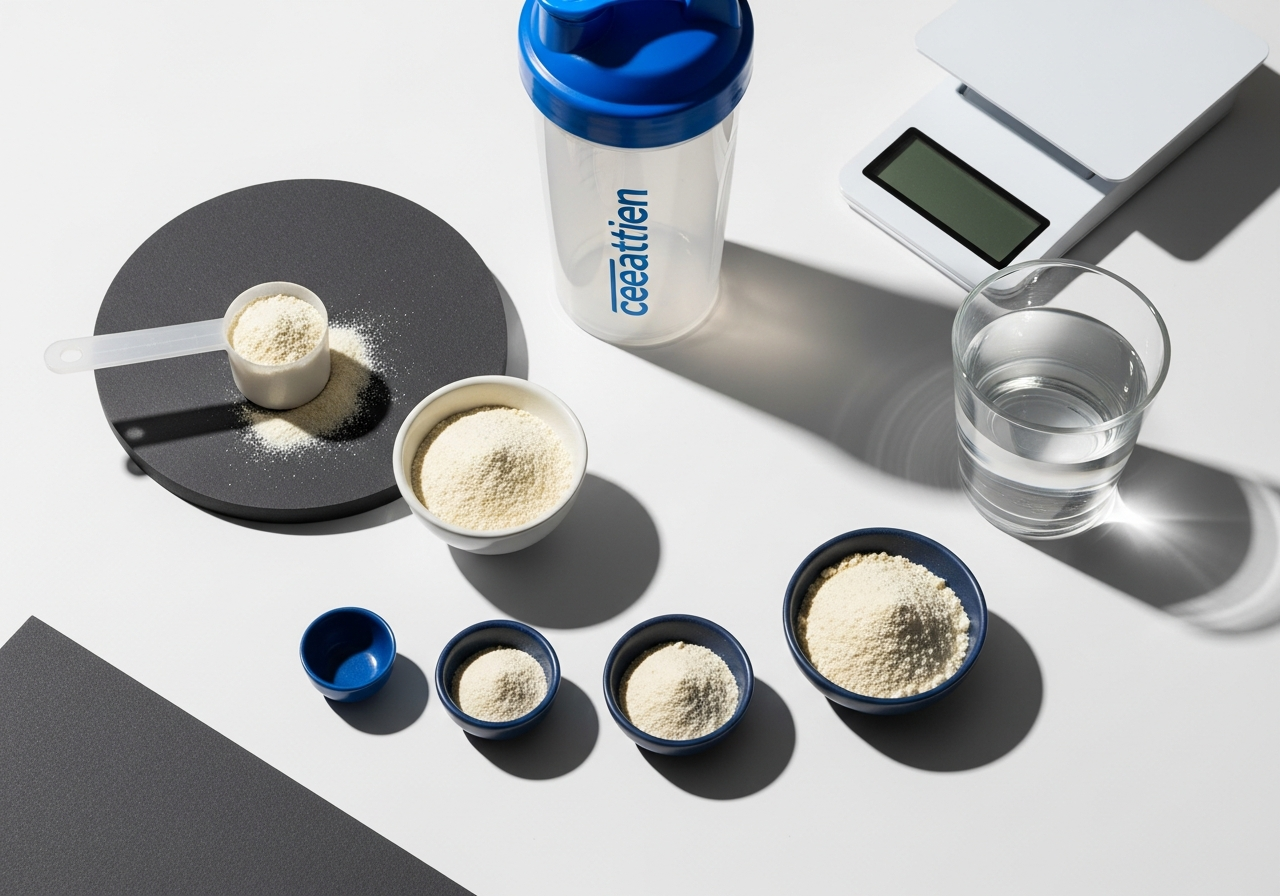
For healthy adults, the evidence-based amount of creatine that is generally considered safe for kidneys is 3 to 5 g per day of creatine monohydrate, with an optional 20 g per day loading phase split into 4 doses for 5 to 7 days. More is not usually better once muscle stores are saturated.
The simplest approach is to choose one of these two dosing methods:
- No-loading approach: take 3 to 5 g once daily. Expect saturation in roughly 3 to 4 weeks.
- Loading approach: take 5 g, 4 times daily for 5 to 7 days, then continue with 3 to 5 g daily. Expect faster saturation within about a week.
Body size can help you choose within that range. Smaller people often do well on 3 g daily, while larger athletes typically use 5 g daily. Many protocols also use about 0.3 g/kg/day for loading and 0.03 g/kg/day for maintenance.
| Body weight | Maintenance dose | Optional loading dose | Practical example |
|---|---|---|---|
| 50-65 kg | 3 g/day | ~15-20 g/day for 5-7 days | 3 g daily, or 4 x 4-5 g while loading |
| 66-85 kg | 4-5 g/day | ~20 g/day for 5-7 days | 5 g daily, or 4 x 5 g while loading |
| 86-110 kg | 5 g/day | ~25-30 g/day for 5-7 days | 5 g daily, or split 5-6 g across 4-5 doses |
What should you avoid? Avoid the common mistake of assuming that double the dose means double the result. Once your muscles are saturated, extra creatine is simply unnecessary for performance and more likely to cause stomach upset than extra benefits. If you are worried about kidney safety, there is no reason to megadose.
Use plain monohydrate unless you have a specific reason not to. It is the most studied form and usually the best value. If you want help tailoring dose precisely, use our creatine dosage calculator and our full guide on how much creatine per day.
One-sentence answer: the kidney-safe evidence-based dose for healthy adults is standard creatine monohydrate at 3 to 5 g daily, or a short loading phase followed by that same maintenance dose.
A step-by-step plan to use creatine safely if kidney health is your concern
If you want to use creatine while being conservative about kidney safety, the best plan is to start with plain monohydrate, use a standard dose, and keep your routine boringly consistent. Safe creatine use is usually more about discipline and context than fancy stacks.
- Confirm you are an appropriate candidate. If you have diagnosed kidney disease, one kidney, recurrent unexplained abnormal creatinine, or take medications known to affect kidney function, talk to your physician first.
- Choose creatine monohydrate. Monohydrate has the strongest evidence for both effectiveness and safety. In Canada, look for an NPN, which stands for Natural Product Number, indicating the product is licensed by Health Canada as a natural health product.
- Pick your dose. Use 3 to 5 g daily, or do a loading phase only if you want faster results.
- Take it with fluid. Mix it in water, a shake, or a meal. You do not need a special transport formula.
- Take it every day. Creatine works through saturation, so regular use matters more than exact timing. Our guide on when to take creatine explains why timing is a minor factor compared with consistency.
- Hydrate normally. You do not need absurd water intake, but you should not be chronically underhydrated. If you want specifics, read how much water to drink with creatine.
- Watch for side effects, not internet myths. The most common real issue is digestive discomfort from taking too much at once.
What should you expect?
- Week 1 with loading: possible small bodyweight increase from intracellular water and early training improvements.
- Weeks 2-4 without loading: more gradual performance effects as saturation builds.
- By weeks 4-8: better repeat-effort performance, possibly more reps at a given weight, and over time better strength and lean-mass gains from improved training quality.
How do you know it is working? The best signs are practical: one more rep on hard sets, slightly better sprint repeatability, improved training volume, or feeling less flat during repeated high-intensity efforts. Creatine is not a stimulant, so you should not expect a dramatic buzz.
If you want a beginner-friendly walkthrough, see how to take creatine and creatine for beginners. The safest successful users are usually the least dramatic ones: standard dose, standard product, standard expectations.
Who should be cautious with creatine, even though it’s safe for most healthy people
Creatine is safe for most healthy adults, but not everyone should treat it as an automatic yes. The group that needs caution is small, but it matters.
You should speak with a physician before using creatine if any of the following apply:
- Known kidney disease, including chronic kidney disease or impaired renal function
- Past kidney transplant or a medically significant structural kidney issue
- One kidney, whether congenital or surgical
- Unexplained elevated creatinine or low eGFR on prior bloodwork
- Use of nephrotoxic medications, meaning drugs that can affect kidney function
- Medical conditions affecting hydration or electrolyte balance
That does not mean creatine is definitely harmful in those situations. It means the decision should be personalised because baseline risk is already different. People often search can creatine affect kidneys or is creatine harmful to kidneys as if the answer must be universal. It is not. In healthy people, the answer is reassuring. In people with renal disease or abnormal renal markers, the answer becomes medical.
For specific populations, here is the practical view:
- Beginners: fine to use if otherwise healthy; keep the dose simple.
- Women: kidney safety guidance is the same as for men; sex does not create a special kidney risk from standard creatine use. See creatine for women.
- Older adults: often good candidates because creatine can support resistance training and function, but medication lists and lab history matter more. See creatine for older adults.
- Athletes: generally appropriate if healthy; choose products with strong quality control. See creatine for athletes.
- Vegetarians and vegans: often respond well because baseline creatine stores may be lower; kidney guidance is otherwise the same.
The honest rule is this: creatine is not a kidney toxin for healthy users, but pre-existing kidney issues change the risk conversation enough that self-experimentation is not the smart move.
Kidney stones, liver damage, and other organ fears: what the evidence actually says
Creatine has not been shown to cause kidney stones in healthy people, and standard creatine monohydrate use is not established as a cause of liver damage in healthy users. These fears are common online, but the evidence behind them is much weaker than the myth suggests.
Let’s separate the claims:
- Can creatine cause kidney stones? Current evidence does not show that standard creatine supplementation causes kidney stones in healthy adults.
- Will creatine cause kidney stones if you are dehydrated? Dehydration can increase stone risk in general, but that is not the same as proving creatine itself causes stones.
- Is creatine bad for your liver? In healthy people using standard doses, creatine is not known to damage the liver.
- Can creatine cause liver damage? The evidence does not support routine liver damage from normal monohydrate use in healthy users.
Stone risk is multifactorial. Total fluid intake, dietary sodium, calcium handling, oxalate exposure, genetics, prior stone history, and certain medical conditions all matter. If someone gets a kidney stone while taking creatine, that does not prove creatine caused it. The same logic applies to liver concerns: a supplement may be blamed when the real issue could be alcohol use, medications, non-alcoholic fatty liver disease, contaminated products, or unrelated disease.
This is another reason product quality matters. A plain, single-ingredient monohydrate is easier to evaluate than a flashy “performance matrix” containing multiple compounds. If you want a deeper review of liver-specific concerns, see creatine and liver health. For broader myth-busting, visit creatine myths debunked and creatine myths vs facts.
The balanced conclusion is simple: for healthy adults, normal creatine use is not known to cause kidney stones or liver damage, but hydration, medical history, and product quality still matter.
What side effects are real, what bloodwork changes to expect, and when to stop
The most common real side effects of creatine are digestive, not kidney-related. If creatine causes problems, they are usually things like stomach upset, loose stools, or feeling overly full after taking too much at once.
Here is what is normal versus what deserves attention:
- Normal: a mild increase in bodyweight from increased intracellular water, especially in the first 1 to 2 weeks
- Normal: a possible rise in serum creatinine on bloodwork
- Common but fixable: bloating or GI discomfort from large single doses
- Not normal: persistent swelling, severe dehydration symptoms, flank pain, bloody urine, major drops in urination, or other concerning symptoms
If you get stomach issues, try these fixes:
- Drop to 3 g daily for a week.
- Split the dose into 2 smaller servings.
- Take it with a meal.
- Use micronized monohydrate if texture is the issue.
- Stop dry scooping.
If you have bloodwork scheduled and are worried about confusion, tell your clinician you use creatine before the test. If an isolated creatinine increase appears after starting creatine, ask whether the full clinical picture suggests true kidney dysfunction or simply expected marker change. In some cases, a repeat test or different renal marker can clarify things.
When should you stop and seek medical input? Stop creatine and get assessed if you develop unexplained urinary symptoms, persistent flank pain, significant oedema, repeated abnormal renal labs, or any symptom your physician considers concerning. Supplements should never override symptoms.
For help with common tolerability issues, see creatine digestive side effects, does creatine cause bloating, and how to mix creatine. The practical lesson is that most creatine problems are dosing or digestion problems, not kidney problems.
The safest creatine to buy in Canada: monohydrate, labels, and what matters most
If kidney safety is your concern, the best creatine to buy is plain creatine monohydrate from a reputable brand with clear dosing, a Canadian NPN, and ideally third-party testing. Safety starts with choosing the form that has the strongest evidence and the fewest unnecessary extras.
Many forms are marketed as gentler or cleaner, but monohydrate remains the reference standard because it is the most studied, the most cost-effective, and the easiest to dose accurately. Fancy forms often cost more without better kidney-safety evidence.
| Option | Kidney-safety confidence | Evidence quality | Best use case |
|---|---|---|---|
| Creatine monohydrate | Highest confidence at standard doses in healthy adults | Strongest | Best default choice for nearly everyone |
| Micronized monohydrate | Similar to monohydrate | Good, but mainly a texture variation | People who want easier mixing |
| HCl and other novel forms | Likely fine, but less established | Weaker than monohydrate | Only if monohydrate truly disagrees with you |
| Multi-ingredient blends | Harder to evaluate | Variable | Usually avoid if safety clarity matters |
For Canadian buyers, check:
- NPN on the label, showing Health Canada licensing as a natural health product
- Single-ingredient formula, preferably just creatine monohydrate
- Third-party testing or strong manufacturing standards
- Clear serving size in grams, not vague scoop language only
If you are comparing options, use our best creatine rankings, browse creatine brand reviews, or see the creatine product catalog. For more on why plain monohydrate still wins, our related guide on the best type of creatine is worth reading.
One sentence summary: the safest creatine for kidney-conscious buyers is a reputable Canadian-licensed creatine monohydrate product with simple ingredients and transparent quality control.
Myths debunked: does creatine damage kidneys, dehydrate you, or need cycling?
Most creatine kidney fears come from repeated myths, not from the best human evidence. If you want the short answers: standard creatine use does not appear to damage healthy kidneys, it does not inherently dehydrate you, and it does not need to be cycled.
Myth 1: “Creatine damages the kidneys.”
Fact: In healthy adults using standard doses, evidence does not support routine kidney damage from creatine monohydrate. The confusion often comes from serum creatinine changes rather than actual renal injury.
Myth 2: “Creatine and creatinine are the same.”
Fact: They are different compounds. Creatinine is a breakdown marker, while creatine is the supplement itself.
Myth 3: “Creatine causes kidney stones.”
Fact: Evidence does not show that standard creatine use causes kidney stones in healthy users.
Myth 4: “Creatine dehydrates you or makes you pee out all your water.”
Fact: Creatine draws water into muscle cells, but normal use does not make it a diuretic. Read creatine and dehydration and does creatine make you pee more for the details.
Myth 5: “You need to cycle off to protect your kidneys.”
Fact: There is no established need to cycle creatine in healthy users. Consistent daily use is the standard approach. See do you need to cycle creatine.
Myth 6: “More creatine means more gains.”
Fact: Once muscle stores are saturated, extra intake mostly increases the chance of GI issues, not extra results.
The reason these myths survive is simple: lab terms sound scary, anecdotes spread faster than physiology, and supplement marketing often muddies the basics. That is exactly why monohydrate remains the smart choice: it is the least mysterious option in a category full of unnecessary complexity.
If you want a broader fact-check, see is creatine safe and can you take too much creatine. The bottom line is that creatine’s reputation for kidney harm is much stronger on social media than in the evidence.
Bottom line: how much creatine is safe for kidneys, and when to get medical advice
For healthy adults, 3 to 5 g of creatine monohydrate per day is the standard evidence-based amount considered safe for kidneys, and an optional short loading phase of 20 g per day split into 4 doses for 5 to 7 days is also widely used without evidence of kidney damage in healthy users.
If you want the simplest possible recommendation, follow this checklist:
- Buy plain creatine monohydrate.
- Use 3 to 5 g daily.
- Take it consistently every day.
- Hydrate normally.
- Do not panic if creatinine changes on labs; tell your clinician you use creatine.
- Get medical advice first if you have kidney disease, abnormal renal labs, or kidney-affecting medications.
This article has answered the major search questions directly:
- Is creatine bad for your kidneys? Not in healthy adults at standard doses.
- Does creatine affect kidneys? It can affect kidney-related lab interpretation, especially creatinine, without causing damage.
- Does creatine cause kidney stones? Evidence does not support that in healthy users.
- Is creatine bad for your liver? Standard use is not known to damage the liver in healthy people.
- Is creatine the same as creatinine? No.
If you want to act today, start with a reputable monohydrate product, use a measured dose, and judge success by better training output over the next few weeks, not by hype. If you have a medical condition, let your doctor individualise the advice.
Bottom line: creatine monohydrate is one of the best-studied supplements in sports nutrition, and for healthy people using standard doses, the evidence does not show that it is harmful to the kidneys.
Creatine and kidney safety at a glance
- 3-5 g/day Standard maintenance dose — Evidence-based daily amount for most healthy adults
- 20 g/day Typical loading dose — Usually split into 4 doses for 5-7 days
- 5-7 days Loading phase length — Used to raise muscle creatine stores faster
- 3-4 weeks Time to saturate without loading — Typical timeline at standard daily maintenance dosing
Frequently Asked Questions
How much creatine is safe for kidneys?
For healthy adults, 3 to 5 g of creatine monohydrate per day is the standard evidence-based amount considered safe for kidneys. A loading phase of 20 g per day split into 4 doses for 5 to 7 days is also commonly used, but there is usually no benefit to taking more than standard dosing once muscles are saturated.
Is creatine bad for your kidneys?
No, creatine is not considered bad for your kidneys if you are healthy and use standard doses. The main source of confusion is that creatine can raise creatinine on a blood test, but that does not automatically mean it caused kidney damage or impaired kidney function.
Does creatine affect the kidneys on blood tests?
Yes, creatine can affect kidney-related bloodwork by increasing serum creatinine, but that is not the same as proving kidney harm. Because creatinine is a breakdown product of creatine metabolism, clinicians should interpret the result in context with other markers, symptoms, and your supplement use.
Is creatine and creatinine the same?
No, creatine and creatinine are not the same. Creatine is the supplement and natural energy compound stored mostly in muscle, while creatinine is a waste product formed from creatine breakdown and commonly measured as part of kidney function assessment.
Can creatine cause kidney stones?
Current evidence does not show that standard creatine supplementation causes kidney stones in healthy people. Kidney stone risk depends more on overall hydration, diet, genetics, sodium intake, and prior stone history than on creatine alone.
Can creatine hurt kidneys if you already have kidney disease?
Possibly, or it may simply be inappropriate without supervision, which is why people with kidney disease should not self-prescribe creatine. If you have chronic kidney disease, a single kidney, prior transplant, or unexplained abnormal renal labs, discuss creatine with your physician before use.
Is creatine bad for your liver too?
No, standard creatine monohydrate use is not known to be bad for the liver in healthy adults. If liver enzymes are abnormal, the cause is often something else such as medication use, alcohol, fatty liver disease, illness, or a contaminated multi-ingredient supplement rather than plain creatine itself.
Do you need to cycle creatine to protect your kidneys?
No, healthy users do not need to cycle creatine to protect their kidneys. The standard practice is steady daily use because creatine works by maintaining saturated muscle stores, and there is no established kidney-protection benefit to cycling on and off.
What is the safest type of creatine for kidney-conscious users?
Plain creatine monohydrate is the safest bet for kidney-conscious users because it is the most studied form and the easiest to evaluate. In Canada, look for a product with an NPN, clear gram dosing, and preferably third-party testing rather than a flashy proprietary blend.
Should I stop creatine before a kidney blood test?
Maybe, but only if your clinician wants a supplement-free baseline or is trying to clarify an elevated creatinine result. The most important step is to tell your healthcare provider that you take creatine, because that can change how kidney-related lab results are interpreted.