Creatine for Women: Benefits, Dosage, and the Bulking Myth
By The Creatine Canada Research Team — Evidence-based supplement analysts
Yes—creatine for women is safe for most healthy adults, does not “bulk” you up with fat, and is one of the best-studied supplements for improving strength, training performance, and lean mass when paired with exercise. For most women, the right approach is simple: take 3–5 g of creatine monohydrate daily, stay consistent, and judge it by better workouts and gradual performance gains over several weeks.
Evidence-based · Cites 4 sources · Editorial standards
Key Takeaways
- Women can take creatine, and creatine monohydrate is the most studied, most effective, and most cost-effective form.
- A standard maintenance dose is 3–5 g per day; loading at 20 g per day split into 4 doses for 5–7 days is optional, not required.
- Creatine helps by increasing muscle phosphocreatine stores, which supports faster ATP regeneration during short, hard efforts.
- Creatine does not act like a steroid and does not reliably increase testosterone in women.
- Any early weight gain is usually water pulled into muscle cells, not body fat gain.
- Timing matters far less than daily consistency; take it any time you will actually remember.
- Pregnancy and breastfeeding require medical guidance because direct evidence is limited, even though creatine itself is naturally present in food and the body.
Is creatine good for women? Yes—and the benefits are more practical than most people think
Yes, creatine is good for women who want better training performance, more strength, and support for lean mass, and it is also one of the most researched sports supplements available. The short version is simple: if you are a healthy adult woman, creatine monohydrate is generally an evidence-based, low-friction supplement worth considering.
Creatine is a compound your body makes from amino acids and stores mostly in muscle, where it helps regenerate ATP, the cell’s immediate energy currency. In practical terms, that means creatine is most useful for short, intense efforts such as lifting, sprinting, jumping, repeated intervals, and hard sets that last only a few seconds. The 2017 ISSN position stand concluded that creatine monohydrate is the most effective ergogenic nutritional supplement currently available for increasing high-intensity exercise capacity and lean body mass during training.
For women specifically, the appeal is often misunderstood. Many women do not want “mass at any cost”; they want to feel stronger, train harder, recover better between hard efforts, preserve muscle while dieting, and improve body composition without looking puffy. Creatine can support those goals because it improves the quality of training. Better training quality over time is what drives better results.
Women may also have slightly lower dietary creatine intake than men on average, especially if they eat little red meat or follow a vegetarian or mostly plant-based diet. That can make supplementation particularly relevant. Older women may also benefit because maintaining muscle and strength becomes more important with age, especially through perimenopause and menopause.
If you are brand new to the topic, start with 3–5 g of creatine monohydrate daily, take it consistently for several weeks, and track a few simple markers: reps at a given weight, how many hard sets you can complete, and whether you recover better between efforts. If you want help choosing a product, see our best creatine rankings or browse the creatine product catalog.
The honest nuance is that creatine is not magic. It will not replace training, protein, sleep, or calories. But for women who do resistance training or repeated high-intensity exercise, it is one of the few supplements with a genuinely strong evidence base.
How creatine works in women: the real mechanism behind strength, performance, and muscle support
Creatine works in women the same way it works in men: it increases muscle phosphocreatine stores so your body can regenerate ATP faster during short, intense exercise. That mechanism matters because ATP, or adenosine triphosphate, is the immediate fuel your muscles use for explosive work, but your stored ATP supply is very small.
When you do a heavy set of squats, a sprint, or repeated intervals, your muscles burn through ATP rapidly. Phosphocreatine is a stored high-energy phosphate in muscle that helps remake ATP quickly. More phosphocreatine available means you can often squeeze out an extra rep, hold power output slightly better, or recover a little faster between bouts. Those small advantages compound across sessions and months of training.
This is why creatine is better thought of as a training quality supplement than a stimulant. It does not give the jittery feeling of a pre-workout. Instead, it helps support the energy system most responsible for repeated high-output efforts. Over time, that can translate into better strength progress, higher training volume, and more lean mass when paired with resistance training.
Women sometimes ask whether hormones change the response. Research interest in sex differences has grown, but the core mechanism remains the same. What may differ is context: women are often under-consuming protein, under-fuelling training, or avoiding supplements because of fear of “bulking,” so creatine can be overlooked despite being highly relevant.
There is also interest in whether creatine may be especially useful during times of increased physiological demand, including ageing and hormonal transitions. The evidence is stronger for muscle and performance than for broader hormone-specific claims, but the logic is clear: preserving muscle, power, and function matters enormously for women across the lifespan.
For a deeper beginner-friendly primer, read what creatine is and what it does. If your goal is performance, also see creatine for strength and how long creatine takes to work.
The practical takeaway is this: creatine does not “change your hormones” to force muscle gain. It saturates muscle creatine stores, improves rapid energy availability, and helps you get more from training you are already doing.
Why take creatine as a woman? Benefits by goal, age, and training style
Women take creatine for one main reason: it can help them perform better in training, which can improve strength, lean mass, and physical function over time. The exact benefit depends on your goal.
- For beginners: Creatine can help support faster progress in the gym by improving the quality of hard sets and repeated efforts. If you are just starting resistance training, that can mean more reps before fatigue and steadier progression.
- For women focused on body composition: Creatine can help you keep training quality higher while dieting, which can support lean mass retention. It does not directly burn fat, but it can make a fat-loss phase more productive when paired with lifting and adequate protein.
- For athletes: Creatine is most useful in sports requiring repeated bursts of power, speed, or force. That includes CrossFit, team sports, sprint events, swimming, racquet sports, and strength sports.
- For vegetarians and vegans: People who eat little or no meat often start with lower creatine stores, so supplementation may matter even more. If that is you, see is creatine vegan and creatine for vegetarians.
- For older women: Creatine may support resistance-training efforts aimed at preserving muscle, strength, and function with age. This is especially relevant because age-related muscle loss can affect mobility, balance, and independence.
- For menopause and perimenopause: Creatine is not a hormone therapy, but it may be useful because strength, muscle retention, and physical function become higher priorities during this life stage.
There is also growing interest in creatine and cognition, especially under sleep deprivation, ageing, or high mental demand. That evidence is promising but less settled than the exercise evidence. If that angle interests you, see creatine and the brain.
What should women realistically expect? Most notice the clearest benefits in the gym: slightly better repeat performance, more total reps over time, and gradual strength gains over weeks. You may also notice a fuller muscle look because water is stored inside muscle cells, not because you suddenly gained fat.
The strongest evidence remains for high-intensity exercise performance and lean mass support. Claims that creatine dramatically transforms hormones, melts fat on its own, or acts differently for women than basic physiology would predict are not supported nearly as well.
The right creatine dosage for women: exact grams by goal, body size, and speed
For most women, the right creatine dose is 3–5 g of creatine monohydrate per day, every day. That dose is enough to maintain saturated muscle creatine stores in most adults, and it is the simplest starting point.
You have two evidence-based ways to begin:
- No loading: Take 3–5 g daily. Full saturation typically takes around 3–4 weeks.
- Loading phase: Take 20 g daily split into 4 doses of 5 g for 5–7 days, then continue with 3–5 g daily. This reaches saturation faster but is not necessary.
A body-weight-based method sometimes used in research is about 0.3 g/kg/day for loading and about 0.03 g/kg/day for maintenance. In real life, most women do perfectly well with the simpler fixed-dose approach.
| Body weight | Simple daily maintenance | Optional loading phase | Best for |
|---|---|---|---|
| 50–60 kg | 3 g/day | 20 g/day split into 4 x 5 g for 5–7 days | Smaller body size, beginners, low GI tolerance |
| 61–75 kg | 3–5 g/day | 20 g/day split into 4 x 5 g for 5–7 days | Most active women |
| 76 kg+ | 5 g/day | 20 g/day split into 4 x 5 g for 5–7 days | Larger athletes, higher lean mass, convenience |
Here is the practical version by goal:
- General fitness: 3 g/day is enough for many women.
- Strength, muscle, or CrossFit-style training: 5 g/day is a sensible default.
- Want faster results: Load first, then maintain.
- Prone to stomach upset: Skip loading and use 3 g/day.
If you are unsure, use our creatine dosage calculator, then compare with our detailed guide on how much creatine per day. If you choose powder, measure accurately rather than guessing with a heaped scoop; our how to measure creatine guide can help.
The biggest dosing mistake is inconsistency. Creatine works by saturating muscle stores over time, so a perfect dose taken sporadically is less effective than a basic dose taken daily.
When should women take creatine? Timing matters less than daily consistency
Women can take creatine at any time of day, and the best time is the one they will remember consistently. Creatine is not an acute stimulant, so its benefits come from maintaining saturated muscle stores rather than from taking it at a precise minute before exercise.
If you like routines, attach creatine to a habit you already have:
- With breakfast
- In a post-workout shake
- With lunch at work
- Before bed if that is easiest
Some people prefer taking it after training because that is when they already have a shake or meal. That is fine, but the difference between pre-workout and post-workout timing appears much smaller than the effect of simply taking it every day. On rest days, still take it. Muscle creatine levels stay elevated because of regular intake, not because every serving is tied to a workout.
If you train fasted, creatine is still okay. If you use coffee, you can mix creatine with it if that is convenient, although many people find cold or room-temperature liquids dissolve powder more predictably. For deeper timing and mixing guidance, see when to take creatine, with or without food, and mixing creatine with coffee.
A simple daily setup looks like this:
- Keep creatine visible near your shaker, kettle, or toothbrush.
- Take 3–5 g once daily.
- Mix it in water, juice, or a protein shake.
- Continue on training days and rest days.
- Do not cycle unless a clinician tells you otherwise.
The 2021 JISSN review on common questions and misconceptions about creatine reinforces a key point: many worries around complicated timing, cycling, or exotic protocols are overstated. Creatine is one of the simplest supplements to use well.
If you miss one day, do not panic or double up. Just resume your normal dose the next day. Saturation is built over weeks, so a single missed serving will not undo your progress.
What is the best creatine for women? Monohydrate still wins over trendy alternatives
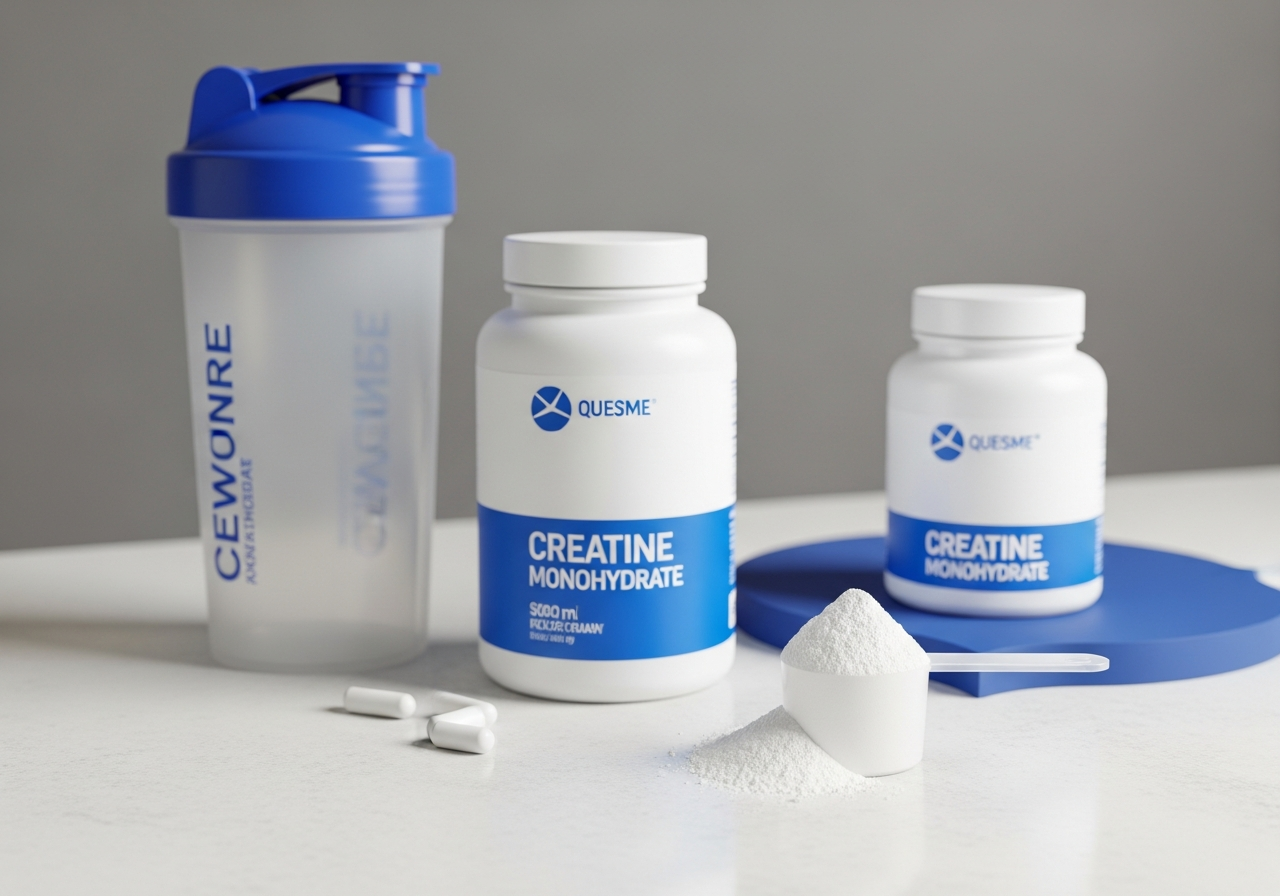
The best creatine for women is creatine monohydrate because it is the most studied, most effective, and usually the best value. Women do not need a special “female creatine” formula to get results.
This is where marketing often outruns evidence. You will see products sold as creatine HCl, buffered creatine, gummies, capsules, blends, and pink-labelled “women’s” formulas with collagen, biotin, electrolytes, or fat-burning ingredients added. Those products are not automatically bad, but the creatine component itself is rarely proven superior to plain monohydrate.
| Form | Evidence quality | Typical pros | Typical cons | Best choice? |
|---|---|---|---|---|
| Creatine monohydrate | Strongest | Most studied, effective, affordable | May settle slowly in liquid | Yes |
| Micronized monohydrate | Strong, same active form | Mixes a bit easier | Sometimes costs more | Good option |
| Creatine HCl | More limited | Smaller serving size, some find it convenient | Usually pricier, not proven better | Usually no advantage |
| Gummies | Depends on dose delivered | Convenient, portable | Often expensive, may require many pieces | Only if dose and price make sense |
| Capsules | Works if dose is adequate | No mixing | Many capsules needed for 3–5 g | Convenience option |
When buying in Canada, look for a product with a clear ingredient panel, an NPN, which is a Natural Product Number issued under Health Canada’s natural health product framework, and ideally third-party testing or transparent quality control. Plain unflavoured creatine monohydrate with nothing unnecessary added is often the smartest buy. Our creatine brand reviews and best creatine rankings can help you compare options.
If you want the shortest buying checklist, use this:
- Choose creatine monohydrate.
- Check the serving gives a real 3–5 g dose.
- Prefer minimal ingredients.
- Look for Canadian-compliant labelling and an NPN.
- Be sceptical of “women-specific” claims that do not change the actual creatine dose or form.
The bottom line is straightforward: the best form of creatine for women is the same best form for almost everyone else—monohydrate.
Will creatine make women bulky? The water-weight, bloating, and scale-gain truth
No, creatine does not make women bulky in the way most people fear, and it does not cause fat gain by itself. The most common early change is a small increase in body weight from water being drawn into muscle cells, which is very different from gaining body fat.
This distinction matters. Creatine increases intracellular water, meaning water stored inside muscle tissue. That can make muscles look slightly fuller, especially once your stores are saturated. It is not the same as becoming soft, puffy, or visibly “fat.” If scale weight goes up early, that usually reflects muscle water content, not a sudden change in body fat.
Not everyone notices this equally. Some women see little to no scale change. Others may notice a modest increase during the first week if they load, or over the first few weeks if they do not. Loading tends to create quicker and more noticeable water shifts, which is one reason some women prefer to skip it.
If bloating is your concern, the problem is often protocol rather than creatine itself. These fixes usually help:
- Use 3 g/day instead of loading.
- Split the dose into 2 smaller servings if needed.
- Take it with a meal or shake.
- Choose plain monohydrate from a reputable brand.
- Give it time before judging by day-to-day fluctuations.
Creatine also does not make women look muscular overnight. Muscle gain is a slow process that requires progressive training, enough protein, and time. If you do gain lean mass with creatine, that is generally because you trained better for months, not because creatine forcibly “bulked” you. For more detail, see does creatine make you gain weight and does creatine cause bloating.
A helpful mindset shift is to judge creatine by performance markers, not just the scale. Are you getting more reps at the same weight? Recovering better between hard sets? Feeling stronger across the month? Those are the meaningful signs it is working.
If your sport has strict weight classes or weight-sensitive performance demands, you may need a more individualized plan. But for most women training for health, strength, or body composition, the “bulking” fear is far larger than the real-world effect.
Does creatine affect female hormones, testosterone, or menopause? Here is what the evidence actually says
Creatine does not appear to act like a hormone supplement, and it does not reliably increase testosterone in women. If you are asking whether creatine will “mess with hormones,” the evidence does not support that fear.
This is a common confusion because creatine helps with muscle performance, and people assume anything that supports strength must work by boosting anabolic hormones. That is not how creatine works. Its primary mechanism is energy metabolism through phosphocreatine and ATP regeneration, not direct hormone manipulation.
One reason the testosterone myth persists is that creatine is often grouped with bodybuilding supplements, or even confused with steroids. Creatine is not a steroid. It is a naturally occurring compound found in the body and in foods such as meat and fish. If you want a fuller breakdown, read does creatine affect testosterone and is creatine a steroid.
What about menopause? Creatine is not a treatment for menopausal symptoms in the same way hormone therapy is, but it may be useful during menopause because it can support resistance training goals tied to muscle, strength, and function. That distinction is important. The stronger case is indirect: creatine helps women train harder and preserve lean tissue, and that may be especially valuable when age-related losses in muscle and power become more relevant.
Older women are a group worth highlighting. The exercise literature suggests creatine combined with resistance training can be helpful for maintaining or improving lean mass and strength-related outcomes. That is why it is often discussed alongside healthy ageing rather than only sports performance. See creatine for older adults for a focused guide.
The best evidence-based summary is this: creatine for women is useful because of muscle energy support and training benefits, not because it raises testosterone. Claims that it dramatically alters female hormones are much weaker than the established evidence for exercise performance and lean mass support.
Is creatine okay for women? Safety, side effects, kidneys, and pregnancy cautions
Yes, creatine is okay for most healthy women when used at standard doses, and the research base on creatine monohydrate is extensive. The main caveat is that specific situations such as kidney disease, pregnancy, breastfeeding, or certain medical conditions require medical guidance.
The broad safety picture is strong. The ISSN position stand and later reviews have consistently described creatine monohydrate as well-supported for safety in healthy people when used appropriately. The 2021 JISSN review specifically addressed persistent misconceptions around kidney damage, dehydration, cramps, and other common fears. The Mayo Clinic overview also notes that creatine appears safe for many people when used as directed.
Common side effects are usually mild and avoidable:
- Water-weight increase: common, especially with loading.
- Stomach upset or loose stools: more likely with large single doses.
- Feeling “bloated”: often improved by using a lower daily dose and giving it time.
Kidney concerns deserve a precise explanation. Creatine supplementation can increase creatinine, which is a breakdown product often measured on blood tests, without meaning kidney damage has occurred. That is one reason lab interpretation matters. Still, if you have known kidney disease, reduced kidney function, or are under renal monitoring, speak with your physician before using creatine. For more, see is creatine bad for your kidneys and creatine vs creatinine.
Pregnancy and breastfeeding are where caution is most important. Direct human evidence for routine supplementation during pregnancy remains limited, so women who are pregnant, trying to conceive, or breastfeeding should not start creatine casually based on fitness content alone. This is a clinician conversation, not a Reddit conversation. The right answer to “can you take creatine while pregnant?” is: only with individual medical guidance because evidence is still limited for routine use in pregnancy.
If you are a healthy adult and want to minimise side effects, choose monohydrate, use 3–5 g/day, skip loading if your stomach is sensitive, and drink to thirst as you normally would rather than forcing extreme amounts of water.
How to take creatine as a woman: a beginner-friendly step-by-step plan that actually works
The easiest way for a woman to start creatine is to buy plain creatine monohydrate, take 3–5 g daily, and stick with it for at least 4 weeks before judging results. Done properly, creatine is one of the lowest-maintenance supplements you can use.
- Pick the right product. Choose plain creatine monohydrate, ideally with straightforward labelling, an NPN in Canada, and no unnecessary stimulant blend.
- Choose your dose. Start with 3 g/day if you are smaller-framed, cautious, or have a sensitive stomach. Use 5 g/day if you are larger, train hard, or just want a simple one-scoop routine.
- Decide whether to load. If you want faster saturation, use 20 g/day split into 4 servings of 5 g for 5–7 days. If you prefer simplicity and fewer GI issues, skip loading.
- Mix it in something easy. Water, juice, or a protein shake all work. If it settles, stir and drink; perfect dissolution is not required for effectiveness. See how to mix creatine.
- Take it every day. Training day or rest day, keep the dose the same.
- Track the right outcomes. Look for better repeat performance, more reps, slightly higher training loads, or better recovery between hard sets over 2–6 weeks.
- Troubleshoot if needed. If you get stomach upset, lower the dose, split it, or take it with food.
Here is a realistic timeline:
- Days 1–7: If loading, you may notice a small weight bump and fuller muscles quickly. If not loading, you may notice nothing yet.
- Weeks 2–4: Work capacity and repeat efforts may start to feel better.
- Weeks 4–8: Strength progression and training volume changes become easier to spot if your programme is consistent.
If you are new to supplements altogether, pair creatine with basics that matter more: enough protein, progressive training, sleep, and total calories matched to your goal. Our how to take creatine and creatine for beginners guides go deeper.
The best creatine plan is boring, repeatable, and sustainable. Consistency beats perfection.
Common creatine mistakes women make—and the myths that keep them from benefiting
The most common mistake women make with creatine is avoiding it for the wrong reasons. The supplement itself is simple; the confusion around it is what causes problems.
- Myth: Creatine is only for men. False. Creatine’s mechanism is based on muscle energy metabolism, not sex-specific marketing. Women can benefit from it just as men can.
- Myth: Creatine will make you bulky. False. Any early scale change is usually muscle water, not fat gain.
- Myth: You need a pink “women’s creatine.” False. Women do not need a different active ingredient. Plain monohydrate is usually the best choice.
- Myth: You must cycle on and off. False. Healthy adults generally do not need to cycle creatine. Daily use is standard. See do you need to cycle creatine.
- Myth: If you do not feel anything, it is not working. False. Creatine is not a stimulant, so the result is often seen in training logs, not felt like a buzz.
- Myth: More is better. False. Taking extra after saturation does not create extra benefit and can increase digestive issues.
There are also practical errors:
- Skipping days constantly: this slows saturation and makes results harder to judge.
- Using under-dosed formats: some gummies or blends make it hard to reach 3–5 g affordably.
- Blaming creatine for everything: if you feel puffy, tired, or heavy, it may be your menstrual cycle, sodium intake, poor sleep, or training fatigue rather than creatine alone.
- Expecting it to replace training: creatine supports good programming; it does not substitute for it.
If you want a myth-by-myth breakdown, visit creatine myths debunked or our broader guide to creatine myths vs facts.
A good rule is to treat creatine like a useful tool, not a personality. Use the evidence-based form, dose it correctly, and assess it in the context of your actual training and goals. That is how you get the upside without being distracted by internet noise.
Bottom line: should women take creatine?
Yes, many women should consider taking creatine if their goals include getting stronger, improving gym performance, supporting lean mass, or maintaining muscle and function with age. The best overall choice is creatine monohydrate at 3–5 g per day, taken consistently.
If you want the shortest possible recommendation, here it is:
- Buy plain creatine monohydrate from a reputable Canadian seller.
- Take 3–5 g daily.
- Use loading only if you want faster saturation.
- Ignore the “bulking” myth and judge progress by training performance first.
- Check with your doctor if you are pregnant, breastfeeding, or have kidney disease or another relevant medical condition.
Creatine is especially worth considering if you lift weights, do repeated high-intensity exercise, eat little meat, are in a fat-loss phase and want to preserve training quality, or are an older woman focused on strength and healthy ageing. It is not a miracle supplement, but it is one of the rare ones that reliably earns its place.
For next steps, compare products in our creatine product catalog, review our creatine brand reviews, or get a personalised starting point from the creatine dosage calculator.
The clearest evidence-based answer to “should women take creatine?” is this: if you are a healthy adult woman and want a safe, well-studied supplement that can improve high-intensity training performance and support lean mass goals, creatine monohydrate is a smart option.
Creatine for Women: The Numbers That Matter
- 3–5 g/day Standard daily dose — Appropriate maintenance range for most women using creatine monohydrate.
- 20 g/day Optional loading dose — Usually split into 4 doses of 5 g for 5–7 days.
- 5–7 days Fast saturation timeline — Typical timeline when using a loading phase.
- 3–4 weeks Saturation without loading — Typical time to reach near-full muscle creatine saturation with daily maintenance dosing.
Frequently Asked Questions
Can women take creatine?
Yes, women can take creatine, and creatine monohydrate is generally considered safe and effective for healthy adult women at standard doses. It works by increasing muscle phosphocreatine stores to support high-intensity exercise performance, not by altering sex hormones in a steroid-like way.
Should women take creatine if they only want to tone, not bulk?
Yes, women who want to look more toned can still benefit from creatine because it supports better training quality, not uncontrolled bulking. The “toned” look usually comes from building or preserving some lean mass while reducing body fat, and creatine can help the training side of that equation.
What is the best creatine for women to take?
The best creatine for women to take is plain creatine monohydrate. It has the strongest research base, is usually the most affordable option per effective dose, and has not been convincingly beaten by newer forms like HCl or heavily marketed women-specific blends.
When should women take creatine?
Women can take creatine at any time of day because daily consistency matters more than precise timing. A once-daily 3–5 g dose taken with breakfast, after training, or with another routine habit is usually the easiest and most effective strategy.
Does creatine increase testosterone in women?
No, creatine does not reliably increase testosterone in women according to the way it is commonly marketed online. Its main effect is to improve rapid ATP regeneration in muscle through increased phosphocreatine stores, which supports performance without acting like a hormone supplement.
Is creatine good for elderly women?
Yes, creatine can be a useful supplement for older women, especially when combined with resistance training aimed at preserving muscle and strength. The strongest case is for supporting training outcomes and physical function rather than serving as a stand-alone anti-ageing supplement.
Is creatine good for menopause?
Creatine may be helpful during menopause because it can support resistance training, lean mass retention, and strength-related goals, all of which become more important with age. It is not a hormone therapy or a direct treatment for menopausal symptoms, so it should be viewed as a training support tool.
Can you take creatine while pregnant?
Creatine during pregnancy should only be considered with medical guidance because routine supplementation in pregnancy is not supported by enough direct evidence for casual self-prescribing. If you are pregnant, trying to conceive, or breastfeeding, discuss your individual situation with your physician or obstetric care team first.
Will creatine make a woman gain weight?
Creatine can make a woman gain some scale weight, but that early change is usually due to water being stored inside muscle cells rather than fat gain. This effect is often more noticeable with a loading phase and may be minimal or absent in some women using a steady daily dose.
Can females take creatine without working out?
Yes, females can take creatine without working out, but the most noticeable benefits are usually smaller without resistance training or repeated high-intensity exercise. Creatine still raises body stores, yet its biggest real-world value comes from helping you perform better during training.