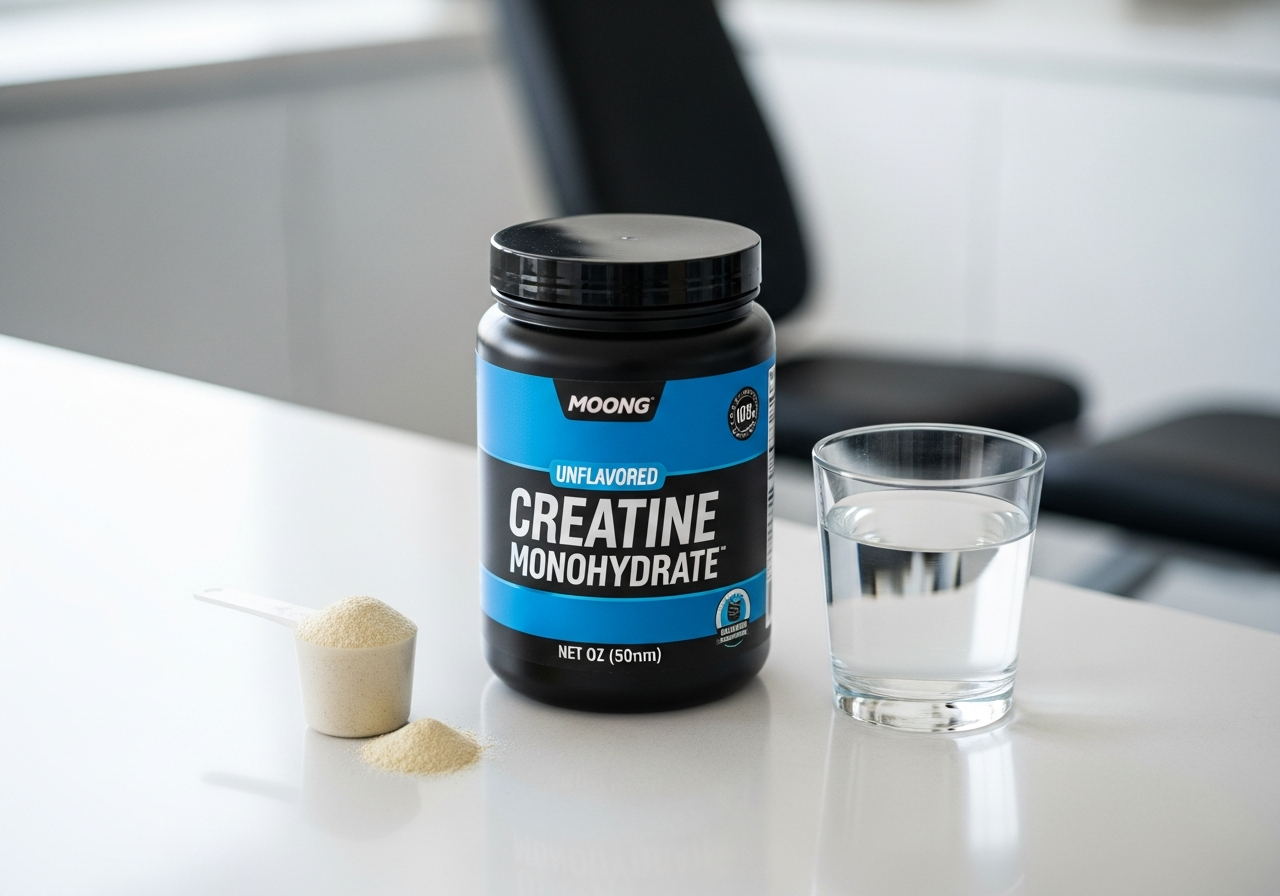
Does Creatine Have Calories, Carbs, or Sugar?
By The Creatine Canada Research Team — Evidence-based supplement analysts
Pure creatine monohydrate has effectively no meaningful calories, carbs, or sugar, so a standard 3 to 5 gram serving does not materially add energy to your diet. If a creatine product does list calories or sugar, those almost always come from added flavouring, sweeteners, gummies, juice powder, or a blend ingredient rather than the creatine itself.
Evidence-based · Cites 4 sources · Editorial standards
Key Takeaways
- Pure creatine powder is not a meaningful source of calories, carbohydrates, or sugar.
- A 5 g serving of plain creatine monohydrate does not materially affect daily calorie intake.
- Flavoured creatine, gummies, and all-in-one blends can contain calories or sugar from added ingredients.
- Creatine can still work in a calorie deficit because it improves muscle phosphocreatine stores, not calorie intake.
- Creatine does not directly burn calories, but it can support harder training and better muscle retention.
- For most adults, 3 to 5 g of creatine monohydrate daily is the evidence-based maintenance dose.
- In Canada, check the Supplement Facts or Natural Product Number labelling to see whether a product is plain creatine or a sweetened blend.
Does creatine have calories, carbs, or sugar? Here is the direct answer
Pure creatine monohydrate has essentially no meaningful calories, no carbohydrates, and no sugar in a standard serving. If you are asking does creatine have calories, how many calories in creatine, or how many calories in 5g creatine, the practical answer for plain creatine powder is none that matter for tracking.
That answer confuses people because creatine is a compound your body uses for energy transfer, but that does not mean it works like dietary calories. Calories are a measure of energy released from food when metabolized. Creatine does not serve as a significant fuel source the way carbohydrate, fat, alcohol, or protein do in the diet. Instead, it helps recycle adenosine triphosphate, or ATP, the cell's immediate energy currency, during short, intense muscular efforts.
So if you are wondering are there calories in creatine powder, does creatine powder have calories, does pure creatine have calories, or does creatine contain calories, the answer depends on the product type:
- Plain creatine monohydrate powder: effectively no meaningful calories, carbs, or sugar.
- Micronized plain creatine: same answer, because micronizing changes particle size, not calorie content.
- Flavoured creatine: may contain small amounts of calories or sugar if flavour systems include juice powders, dextrose, or other carbohydrate ingredients.
- Creatine gummies: usually contain calories and sugar or sugar alcohols because gummies need a delivery base.
- Pre-workout or recovery blends with creatine: calories can come from carbs, amino acids, or other additives, not the creatine itself.
This is why the label matters more than the ingredient name. One scoop of plain creatine monohydrate is nutritionally very different from one scoop of a flavoured "creatine plus" product. If you want a deeper primer on what creatine is before getting into labels, see what creatine is and what it does.
The simplest rule is this: if the ingredient list says only creatine monohydrate, treat it as calorie-free for practical nutrition planning. If the product is sweet, chewy, coloured, or blended, check the Nutrition Facts or Supplement Facts panel for the true calorie, carb, and sugar count.
Why creatine is not counted like protein, carbs, or fat
Creatine does not meaningfully contribute dietary calories because its main job is to support rapid ATP regeneration, not to be oxidized as a major fuel. That is the key reason plain creatine is treated differently from protein powder, carbohydrate powder, or fats.
Your muscles store creatine mostly as phosphocreatine, which is creatine bound to a phosphate group. During very short, high-intensity efforts such as a heavy set of squats, a sprint, or repeated explosive movements, phosphocreatine donates that phosphate to help remake ATP quickly. This energy-buffering system matters most over seconds, not over the longer time frames where carbohydrate and fat dominate as fuels.
That distinction answers a lot of common searches at once. Is there any calories in creatine? In plain supplemental form, not in a way that matters nutritionally. Are there carbs in creatine? Not in pure creatine monohydrate. Does creatine have sugar in it? Not if the ingredient is just creatine monohydrate.
The evidence base on creatine's effectiveness is strong. The 2017 International Society of Sports Nutrition position stand concluded that creatine monohydrate is the most effective ergogenic nutritional supplement currently available for increasing high-intensity exercise capacity and lean mass gains during training. That same body of literature supports creatine's role in muscle energetics, not as a calorie source. You can review the position stand here: Kreider et al. (2017), ISSN Position Stand.
Another practical point: plain creatine also does not behave like a hidden carbohydrate source. Many people on low-carb diets, cutting phases, or intermittent fasting worry that creatine might quietly add sugar or break nutrition targets. Pure creatine does not do that. What can change the equation is the delivery format, especially gummies, flavoured drink mixes, and pre-workout blends.
If you are trying to separate mechanism from marketing, remember this sentence: creatine helps your muscles use energy better during short, intense work, but it is not itself a meaningful source of dietary energy. For a broader myth check, our creatine myths debunked page covers many of the same misunderstandings from a different angle.
How many calories are in 5 g of creatine? The practical tracking answer
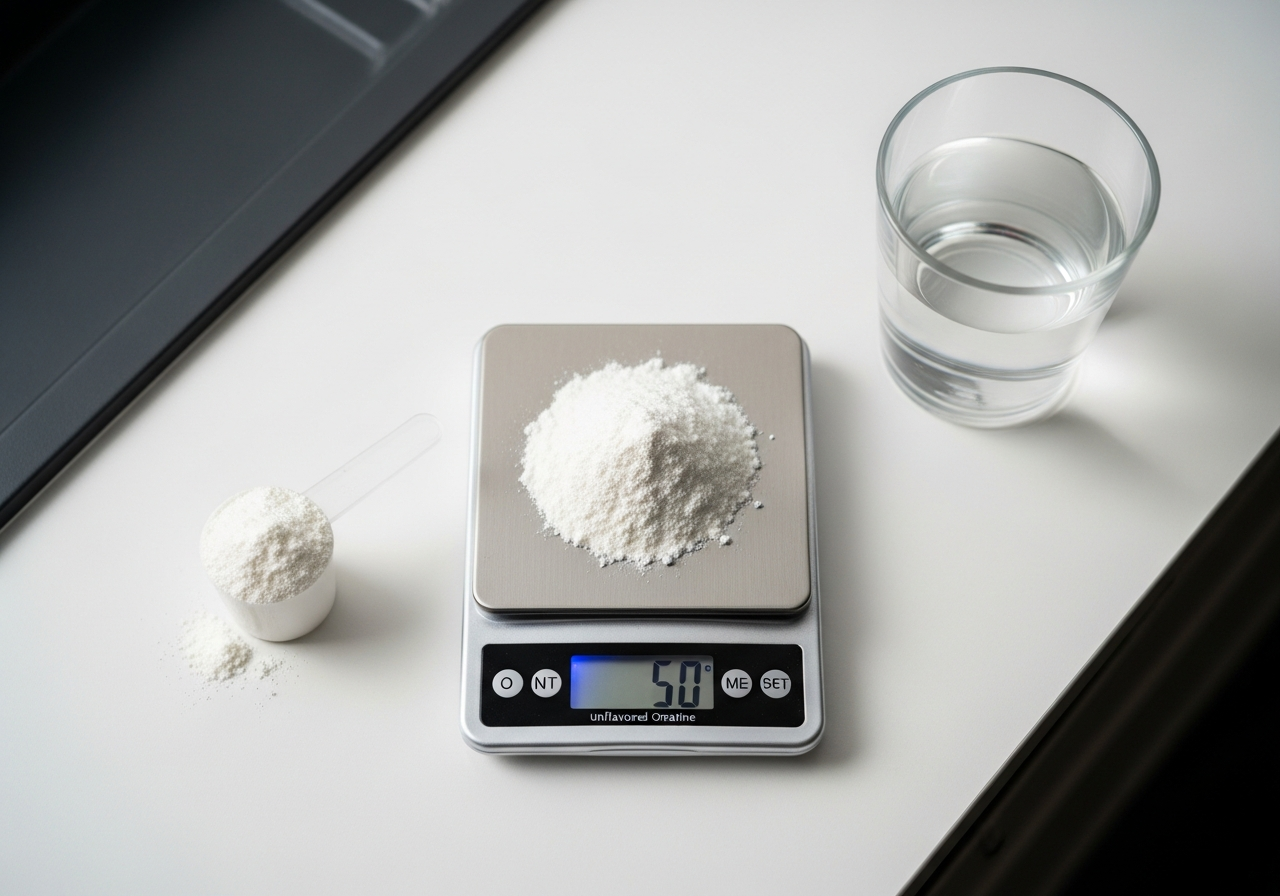
A 5 gram serving of plain creatine monohydrate has no meaningful calories for real-world diet tracking. If you log macros closely and are asking how many calories does creatine have or how many calories are in creatine, plain creatine is typically treated as zero.
That is the practical answer most people need, but there is a useful nuance. Supplement labels are regulated by serving and rounding rules, and some products may still show zeros even when tiny trace amounts of non-creatine ingredients are present. That is why plain, unflavoured creatine is the cleanest choice if you want certainty.
Use this quick interpretation guide:
- Plain creatine monohydrate powder: log as 0 calories.
- 5 g mixed into water: still 0 meaningful calories.
- 5 g mixed into juice: the calories come from the juice, not the creatine.
- Flavoured creatine scoop: check the label because the flavour system may add calories or carbs.
- Creatine gummies: count the stated calories because the gummy base contains energy.
This matters most for people dieting aggressively, bodybuilders in prep, people with diabetes watching sugar, and anyone who likes precise calorie accounting. In those situations, the safest habit is simple: buy a product with one ingredient, then the answer to are there any calories in creatine stays straightforward.
If you want exact dosing without overthinking scoop sizes, use our creatine dosage calculator or read how to measure creatine. A lot of confusion comes from heaped scoops that are actually 6 to 8 grams rather than 5, which matters for dosing consistency even if it does not matter for calories.
One more useful clarification: plain creatine is not sugar-free because it is sweetened; it is sugar-free because there is simply no sugar added in a pure product. So if your goal is a no-sugar supplement stack, unflavoured creatine monohydrate is one of the easiest products to keep clean and predictable.
When creatine does have calories: flavoured powders, gummies, and blends
Creatine products can contain calories, carbs, or sugar when the formula includes ingredients other than creatine monohydrate. If you are asking does flavored creatine have calories, does flavoured creatine have sugar, or does creatine have sugar in it, the correct answer is sometimes yes, but only because of added ingredients.
These are the main formats where calories can appear:
- Flavoured creatine powders: may include dextrose, maltodextrin, fruit powder, or other carriers that add carbs and calories.
- Sugar-free flavoured creatine: often uses non-nutritive sweeteners and may still be very low or zero calorie, but you still need to read the label.
- Creatine gummies: almost always contain calories because they use gelatin, pectin, syrup, sugar, or sugar alternatives to make the gummy format possible.
- Ready-to-drink products: can include juice concentrates, carbs, or other active ingredients.
- Pre-workout blends: calories may come from carbohydrates or amino acids if the product is more than plain creatine.
The fastest way to tell whether a creatine product contains calories is to check three places:
- Ingredient list: ideally it says only creatine monohydrate.
- Nutrition or Supplement Facts panel: look for calories, carbohydrates, and sugars per serving.
- Serving size: some products use larger scoops because flavouring bulks up the formula.
| Product type | Usually contains calories? | Why | Best for strict tracking? |
|---|---|---|---|
| Plain creatine monohydrate powder | No meaningful amount | Single active ingredient | Yes |
| Micronized plain creatine | No meaningful amount | Same ingredient, finer particles | Yes |
| Flavoured creatine powder | Sometimes | Flavours, carb carriers, sweeteners | Only after label check |
| Creatine gummies | Usually yes | Gummy base provides energy | No |
| Creatine pre-workout blend | Sometimes | Multiple active ingredients and fillers | Only after label check |
For Canadians, also check whether the product is a properly labelled natural health product and whether it carries an NPN, or Natural Product Number, where applicable. Good labels make it easy to see whether you are buying plain creatine or a sweetened formula. If you are comparing options, our best creatine rankings, creatine brand reviews, and creatine product catalog can help you sort plain powders from dressed-up blends.
Does creatine help burn calories or raise metabolism? Not directly, but it can change the bigger picture
Creatine does not directly make you burn a meaningful number of extra calories at rest, so the honest answer to does creatine help burn calories is no in the direct, metabolism-boosting sense. The more accurate answer is that creatine can indirectly support body-composition goals by helping you train harder, maintain lean mass, and perform more quality work.
This distinction matters because people often mix up three different ideas:
- Resting calorie burn: creatine is not a stimulant and is not known for materially increasing resting metabolic rate.
- Training output: better high-intensity performance can help you complete more reps, maintain power across sets, or train at slightly higher quality.
- Lean mass retention or gain: more muscle over time can modestly support total energy expenditure, but that is an indirect adaptation, not a direct calorie-burning effect of the supplement itself.
Creatine's main mechanism is still phosphocreatine replenishment for short, intense effort. That means it is most useful for resistance training, sprinting, repeated intervals, and sports that rely on bursts of power. If creatine lets you squeeze out another rep, sustain bar speed better, or recover a bit faster between repeated efforts, the long-term result may be better training adaptations. That is very different from saying creatine itself is a fat burner.
The 2021 JISSN review on common questions and misconceptions about creatine reinforces that many myths around creatine persist despite a strong evidence base on its actual role. You can read that review here: Antonio et al. (2021), Common questions and misconceptions about creatine supplementation.
If your goal is fat loss, the best way to think about creatine is this: creatine helps protect performance during a cut more than it helps burn calories directly. That makes it useful during dieting because strength and training quality often fall when calories are low. For more on that exact use case, see creatine during a fat-loss phase and how creatine supports muscle gain.
So, does creatine make you burn more calories? Not in any meaningful direct way. But it can help you hold onto the muscle and performance that make a calorie deficit work better.
Does creatine work in a calorie deficit? Yes, and that is when many people benefit most
Creatine absolutely works in a calorie deficit because its main effect is to raise muscle creatine and phosphocreatine stores, not to provide calories. If you are asking does creatine work in a calorie deficit, the evidence-based answer is yes, provided you take it consistently and keep training.
Dieting creates a few predictable problems: gym performance slips, recovery gets worse, and preserving lean mass becomes harder. Creatine can help address those problems because it supports repeated high-intensity effort and may help you sustain training quality when energy intake is lower. It does not replace adequate protein or a sensible training plan, but it is one of the few supplements that still makes sense during a cut.
Here is what many people notice when they use creatine while dieting:
- Strength declines more slowly than expected.
- Sets of 3 to 12 reps feel more repeatable.
- Explosive movements keep more snap.
- Muscle fullness often looks better once stores are saturated.
- Scale weight may rise slightly at first because of intracellular water, even while fat loss continues.
That last point matters. Creatine can increase water stored inside muscle cells, which is not the same as fat gain. If you are in a deficit and the scale jumps by roughly 0.5 to 1.5 kg in the early phase, especially with loading, that can simply reflect increased muscle water content. Our guides on creatine and weight gain and creatine and bloating explain how to tell normal water shifts from a product or dosing problem.
For most people cutting, the best plan is boring on purpose:
- Take 3 to 5 g of creatine monohydrate every day.
- Keep protein intake appropriate for your goal.
- Continue resistance training with progressive intent.
- Do not panic over small early scale changes.
- Judge results by performance, measurements, and body composition over several weeks.
If you want a realistic expectation for when benefits show up, read how long creatine takes to work. In a deficit, the real win is usually better retention of training performance rather than obvious day-one fat loss.
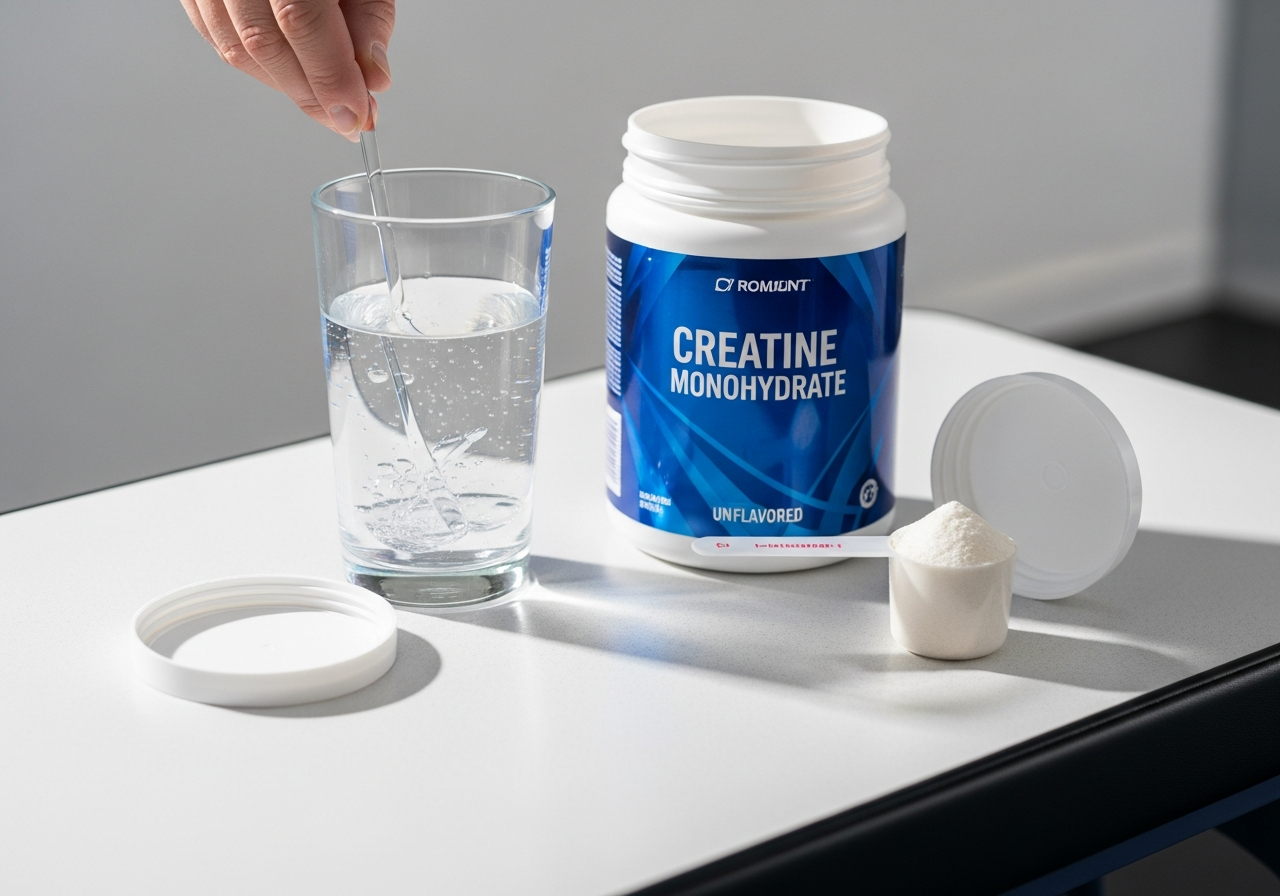
Best dose, timing, and who should use creatine if calories matter to them
For most adults, the best evidence-based creatine dose is 3 to 5 grams per day, and timing is far less important than daily consistency. That recommendation applies whether your goal is muscle gain, strength, healthy ageing, or preserving performance while dieting.
Here is the practical breakdown by user type:
- Beginners: start with 3 to 5 g daily of plain monohydrate. No loading is required if you are happy to wait a few weeks for full saturation.
- Women: the same dosing principles apply. Creatine does not need sugar to work, and plain monohydrate is often the easiest low-calorie option. See our guide for women.
- Older adults: 3 to 5 g daily can be a practical adjunct to resistance training for muscle and function. See creatine for older adults.
- Strength and power athletes: 5 g daily is common, with loading useful when faster saturation matters.
- Vegetarians and vegans: creatine may be especially useful because baseline muscle creatine stores can be lower when dietary creatine intake is low. See whether creatine is vegan and creatine for vegetarians.
Timing details are straightforward. The best time to take creatine is the time you will remember. Some people prefer post-workout because it is easy to pair with an existing shake or meal, but the difference between pre- and post-workout timing appears minor compared with simply taking it every day. The IOC consensus on supplements recognizes creatine as one of the more evidence-supported performance supplements for specific contexts, especially repeated high-intensity efforts. You can review that here: International Olympic Committee consensus on dietary supplements.
If calories are a concern, the best format is still plain powder. Capsules can also be effectively calorie-free in practice, but they are usually more expensive per gram and require several capsules to reach a full dose. Gummies are the least attractive option for strict calorie control because they usually package creatine with energy-containing ingredients.
One sentence summary: the right creatine plan for most people is plain monohydrate, 3 to 5 g daily, taken whenever it best fits the routine you can stick to.
Safety, side effects, and why ‘weight gain’ does not mean calorie gain
Creatine is one of the most studied sports supplements available, and plain creatine's lack of calories does not make it ineffective or unsafe. The most common side effect is mild water-weight gain inside muscle, especially during the first one to two weeks if you use a loading phase.
The 2017 ISSN position stand and later reviews support the general safety of creatine monohydrate for healthy individuals when used at recommended doses. Concerns about kidney damage in healthy users are often driven by confusion between creatine and creatinine, a breakdown product measured on blood tests. Creatinine can rise without this meaning creatine harmed healthy kidneys. If you have kidney disease, are under medical care for renal issues, or have a complicated medical history, speak with your clinician before using creatine. For a full discussion, read is creatine safe and the kidney question explained.
Common side effects and fixes:
- Scale weight increase: usually water held within muscle, not body fat.
- Stomach upset: more likely with large single doses; split doses or use 3 to 5 g daily instead.
- Loose stools: often a dosing or mixing issue; reduce the per-dose amount.
- Bloating complaints: sometimes due to loading, sweetened products, or taking too much at once rather than creatine itself.
What creatine does not do is add body fat simply because it contains calories. Plain creatine does not meaningfully contribute energy intake, so if you gain fat while taking creatine, the cause is your overall calorie balance, not the supplement's calorie content.
This point matters in athletes making weight and in dieters who fear the scale. If your body weight rises shortly after starting creatine, that does not prove you overate, nor does it prove the powder had hidden calories. It usually reflects fuller muscle creatine stores and the water that accompanies them.
For digestion-specific troubleshooting, see creatine digestive side effects. For a broader view of expected changes, our creatine benefits guide explains what is normal and what is not.
Common myths and mistakes: the label-reading checklist that prevents 90% of confusion
Most confusion about whether creatine has calories comes from buying the wrong product or misunderstanding what creatine actually does. The easiest way to avoid mistakes is to separate plain creatine from flavoured supplement formulas.
Let us debunk the biggest myths directly:
- Myth: Creatine has calories because it gives energy.
Fact: creatine supports rapid ATP recycling; it is not a meaningful dietary energy source. - Myth: Creatine has sugar because it tastes fine in flavoured products.
Fact: any sugar comes from additives, not from creatine itself. - Myth: If creatine makes you heavier, it must be calorie-dense.
Fact: early weight gain is usually intracellular water, not fat. - Myth: You need sugary juice for creatine to work.
Fact: creatine works perfectly well without sugar when taken consistently. - Myth: Expensive forms are cleaner or more calorie-free than monohydrate.
Fact: monohydrate is still the most studied and cost-effective form, and plain versions are already essentially calorie-free.
Use this buying checklist every time:
- Read the front label, then ignore the marketing.
- Turn to the ingredient list and look for creatine monohydrate only.
- Check for added sweeteners, dextrose, gummies, flavour systems, or blend ingredients.
- Check the serving size, because large flavoured scoops can hide small amounts of actual creatine.
- In Canada, prefer products with clear, compliant labelling and reputable testing practices.
If you are shopping in Canada, watch for proper natural health product presentation and transparent ingredient disclosure. An NPN, or Natural Product Number, can help indicate a regulated natural health product pathway, but you should still verify the ingredient panel and dose yourself. Third-party testing, clean-label claims, and transparent sourcing are useful quality signals, especially when comparing brands.
If you want to compare plain monohydrate against other forms, read the best type of creatine, monohydrate vs HCL, and why monohydrate still wins. In practice, the simplest answer remains the best one: buy plain monohydrate if you want creatine without calories, carbs, or sugar.
Bottom line: what to buy and what to do if you want calorie-free creatine
If your question is does creatine have calories, the bottom line is simple: plain creatine monohydrate has no meaningful calories, carbs, or sugar, and a standard 3 to 5 gram serving will not materially affect your daily intake. The only time creatine products meaningfully contain calories is when manufacturers add flavouring, gummy ingredients, carbohydrates, or other blend components.
So the practical action plan is straightforward:
- Buy plain creatine monohydrate if you want the cleanest, lowest-calorie option.
- Use 3 to 5 g daily unless you intentionally choose a short loading phase.
- Mix it with water if you want to avoid accidental calories or sugar.
- Judge success by consistency, training performance, and body-composition trends, not by whether you feel an instant effect.
- Read labels carefully on flavoured powders, gummies, and pre-workout blends.
Creatine does not directly burn calories, but it can support better training quality and muscle retention, including during a calorie deficit. That makes it a useful tool for lifters, athletes, beginners, women, older adults, and many plant-based eaters, provided the product and dose are chosen well.
If you want the shortest possible answer to remember, use this one: pure creatine is essentially calorie-free; added ingredients are what change the nutrition facts.
To continue, the most useful next reads are how much creatine per day, creatine for beginners, whether creatine breaks a fast, and how to choose the best creatine monohydrate in Canada.
Creatine Calories and Dosing at a Glance
- 0 meaningful Calories in 5 g plain creatine monohydrate — For practical diet tracking, plain creatine is treated as calorie-free.
- 3-5 g/day Standard maintenance dose — The mainstream evidence-based daily amount for most adults.
- 20 g/day Typical loading phase — Usually split into 4 doses for 5-7 days if faster saturation is desired.
- 5-7 days Loading timeline — After loading, most people switch to 3-5 g/day maintenance.
Frequently Asked Questions
Does creatine have calories?
Plain creatine monohydrate has no meaningful calories in practical diet terms. If a creatine product lists calories, they usually come from added ingredients such as flavouring, carbohydrate powders, gummies, or blend components rather than the creatine itself.
How many calories are in 5 g of creatine?
A 5 gram serving of plain creatine monohydrate has no meaningful calories for real-world calorie tracking. If you mix it into juice, milk, or a shake, the calories come from that liquid or other ingredients, not from the creatine.
Are there carbs in creatine?
Pure creatine monohydrate does not contain carbohydrates in any meaningful amount. Carbs only appear when creatine is sold in a flavoured formula, gummy, or all-in-one supplement that includes carbohydrate-based ingredients.
Does creatine have sugar in it?
Plain creatine does not have sugar in it. If you see sugar on a creatine label, it is almost always from added sweeteners, fruit powders, gummy ingredients, or a blended formula rather than from creatine itself.
Does flavoured creatine have calories?
Flavoured creatine sometimes has calories, but it depends entirely on the formula. Sugar-free flavoured products may still be very low-calorie, while gummies and sweetened drink mixes often contain measurable calories and carbohydrates.
Does creatine help burn calories?
Creatine does not directly burn a meaningful number of extra calories. Its main benefit is helping your muscles regenerate ATP during short, intense exercise, which can support harder training and better muscle retention over time.
Does creatine make you burn more calories at rest?
Creatine is not known for meaningfully increasing resting calorie burn. Any effect on total energy expenditure is indirect and usually comes from supporting better training performance or helping preserve or build lean mass over time.
Does creatine work in a calorie deficit?
Yes, creatine still works in a calorie deficit because it does not rely on adding calories to your diet. Many people find it especially useful while cutting because it can help maintain strength, training quality, and lean mass.
Does creatine powder have calories if it is mixed with water?
Plain creatine powder mixed with water still has no meaningful calories. Water does not change the nutrition profile, so the drink remains effectively calorie-free unless you add something else to it.
Why does creatine make the scale go up if it has no calories?
Creatine can make the scale go up because it increases water stored inside muscle cells, not because it adds calories. That early increase is usually water weight related to muscle creatine saturation, not body-fat gain.