Does Creatine Help You Lose Weight? The Honest Answer
By The Creatine Canada Research Team — Evidence-based supplement analysts
Creatine does not directly burn body fat, but it can help you lose fat more effectively by preserving strength and lean mass while you diet. In practical terms, creatine is good during a cut because it helps you train harder, hold onto muscle, and improve body composition even if the scale does not drop faster.
Evidence-based · Cites 4 sources · Editorial standards
Key Takeaways
- Creatine is not a fat burner, so it does not directly increase fat loss the way a calorie deficit does.
- Creatine can help during weight loss by supporting strength, training volume, and lean mass retention.
- The usual effective dose is 3-5 g of creatine monohydrate daily; loading is optional.
- A small early weight increase from water inside muscle is common and is not body fat gain.
- If you are cutting, creatine often improves body composition more than scale weight.
- Take creatine every day, including rest days, and judge progress with measurements, photos, and gym performance.
- For most healthy adults, creatine monohydrate is the most studied, most effective, and most cost-effective form.
Does creatine help you lose fat? Yes for body composition, no as a direct fat burner
Creatine can help you lose fat indirectly, but it does not directly burn fat on its own. The most accurate answer to “does creatine help with fat loss?” is that creatine supports the training performance and muscle retention that make fat loss more successful during a calorie deficit.
That distinction matters. Fat loss means reducing stored body fat. Weight loss means lowering total body weight, which can include water, muscle, glycogen, and fat. Creatine is well known to increase intramuscular water, meaning water stored inside muscle cells, so the scale can stay flat or even rise slightly in the first week or two even while your body composition improves. That is why many people ask “does creatine help you lose weight?” and get confused by the answer.
In plain English:
- Does creatine burn fat? No, not directly.
- Can creatine help fat loss? Yes, by helping you maintain better workouts and more lean mass while dieting.
- Does creatine make you lose weight? Usually not on the scale at first, because of water retention inside muscle.
- Is creatine good for weight loss? It can be very useful during a cut if your real goal is to look leaner and keep muscle.
The best evidence supports creatine for improving high-intensity exercise capacity, strength, and lean mass gains or retention, especially when combined with resistance training. The 2017 ISSN position stand concluded that creatine monohydrate is the most effective ergogenic, meaning performance-enhancing, nutritional supplement currently available for increasing high-intensity exercise capacity and lean body mass.
So if you are asking whether you should take creatine while cutting, the answer for many lifters, athletes, and general gym-goers is yes. Creatine will not replace a calorie deficit, protein intake, sleep, or progressive training, but it can make those fundamentals work better. If you want a broader primer first, see what creatine is and what it does.
How creatine helps in weight loss: the mechanism is better training, not magic fat burning
Creatine helps during a cut by increasing muscle phosphocreatine stores, which improves your ability to regenerate ATP, the cell’s immediate energy currency, during short, hard efforts. That means creatine is most useful for repeated high-intensity work such as lifting sets, sprints, explosive intervals, and dense training sessions where performance often drops in a calorie deficit.
Here is the mechanism in steps:
- Creatine raises muscle creatine and phosphocreatine stores. Phosphocreatine is the stored form used to rapidly recycle ATP.
- ATP is restored faster during hard efforts. This helps you squeeze out an extra rep, maintain bar speed, or hold output across sets.
- Better training quality helps preserve muscle. Muscle retention matters because dieting without adequate resistance training and recovery often leads to strength and lean mass loss.
- More lean mass supports a better body composition outcome. Even if the scale changes slowly, you can finish a cut looking harder, fuller, and leaner.
This is why questions like “can creatine help burn fat?” and “will creatine help me lose weight?” need nuance. Creatine does not work like caffeine, stimulants, or appetite suppressants. It does not meaningfully raise calorie burn in a way that makes fat drop off by itself. Instead, it reduces one of the biggest problems during fat loss: underperforming in the gym and losing muscle.
There may also be smaller indirect effects. If creatine helps you train with more volume and intensity, total energy expenditure from training can improve modestly. If it helps you recover enough to keep weekly training quality high, adherence often improves too. Those are useful advantages, but they are still secondary to the basics: calorie deficit, protein, resistance training, sleep, and consistency.
The 2021 JISSN review on creatine misconceptions notes that creatine-associated weight gain is primarily due to water retention, especially early on, and that creatine can enhance training adaptations. That water is typically stored in the muscle, not as body fat. If you are worried about the scale, read does creatine make you gain weight? and remember that appearance, measurements, and performance matter more than a one-week weigh-in.
What the science actually shows about creatine, fat loss, and body composition
The strongest research supports creatine for performance and lean mass, while direct fat-loss effects are smaller and less consistent. In other words, if you are searching “does creatine help lose fat,” the evidence says it helps most by improving body composition rather than acting as a stand-alone fat-loss supplement.
Across resistance-training studies, creatine monohydrate repeatedly shows benefits for strength, power, training capacity, and lean body mass. Those effects are especially relevant in a cutting phase, because a good cut is not just about losing kilograms; it is about keeping as much muscle and performance as possible while reducing fat mass.
What the evidence supports well:
- Creatine improves high-intensity training performance.
- Creatine helps increase or preserve lean mass when paired with training.
- Creatine often helps maintain strength better during demanding training periods.
- Creatine can improve overall body composition, even when scale weight is misleading.
What the evidence does not support strongly:
- Creatine as a direct fat burner.
- Creatine causing rapid scale weight loss.
- Creatine replacing diet quality, protein intake, or a calorie deficit.
The International Olympic Committee’s 2018 consensus lists creatine among the few supplements with strong evidence for performance use in sport. That is important because performance support is exactly what makes creatine helpful during a cut. You are not buying a fat-burner effect; you are buying a better chance of preserving the physique and performance you worked for.
Some studies and summaries suggest small favourable changes in fat mass or body-fat percentage over time, but these changes are usually best interpreted in context: if lean mass is better preserved or increased while total weight stays similar, body-fat percentage can improve even without dramatic absolute fat loss. That is still a win.
If you want the evidence-based form with the deepest research base, choose monohydrate. For a broader breakdown, see best type of creatine and why monohydrate still wins.
Should you take creatine while cutting? For most people, yes
Most people trying to lose fat should take creatine while cutting if they are also doing resistance training or repeated high-intensity exercise. Creatine is especially useful when calories are lower, recovery is harder, and strength is more difficult to maintain.
You are a good candidate for creatine during a cut if you fit one or more of these groups:
- Beginners: You are learning to train hard and want to keep performance up while dieting.
- Women: Creatine works for women too, and it does not cause automatic “bulkiness”; see creatine for women.
- Older adults: Creatine plus resistance training can support muscle retention, function, and training quality; see creatine for older adults.
- Team-sport and power athletes: It is especially relevant if your sport includes sprints, jumps, repeated efforts, or strength maintenance.
- Vegetarians and vegans: People with lower baseline dietary creatine intake may respond particularly well; see creatine for vegetarians.
You may care less about creatine during a cut if your activity is almost entirely low-intensity steady-state cardio and you do little or no strength training. Even then, if you want to preserve muscle while dieting, resistance work matters more than endless cardio, and creatine can support that plan.
Contest physique athletes sometimes worry that creatine will make them look watery. For most recreational cuts, that concern is overblown because the water is largely stored inside muscle, which can actually improve muscle fullness. Extremely lean stage-prep scenarios are a separate niche case and should be handled individually.
If your goal is “lose weight at any cost” for a weigh-in sport, rather than “lose fat and keep performance,” the calculus can differ because transient water shifts matter. But for the average person asking “is creatine good to lose weight?” the better question is “will creatine help me keep muscle while getting leaner?” On that question, the answer is often yes.
Exactly how much creatine to take during a cut
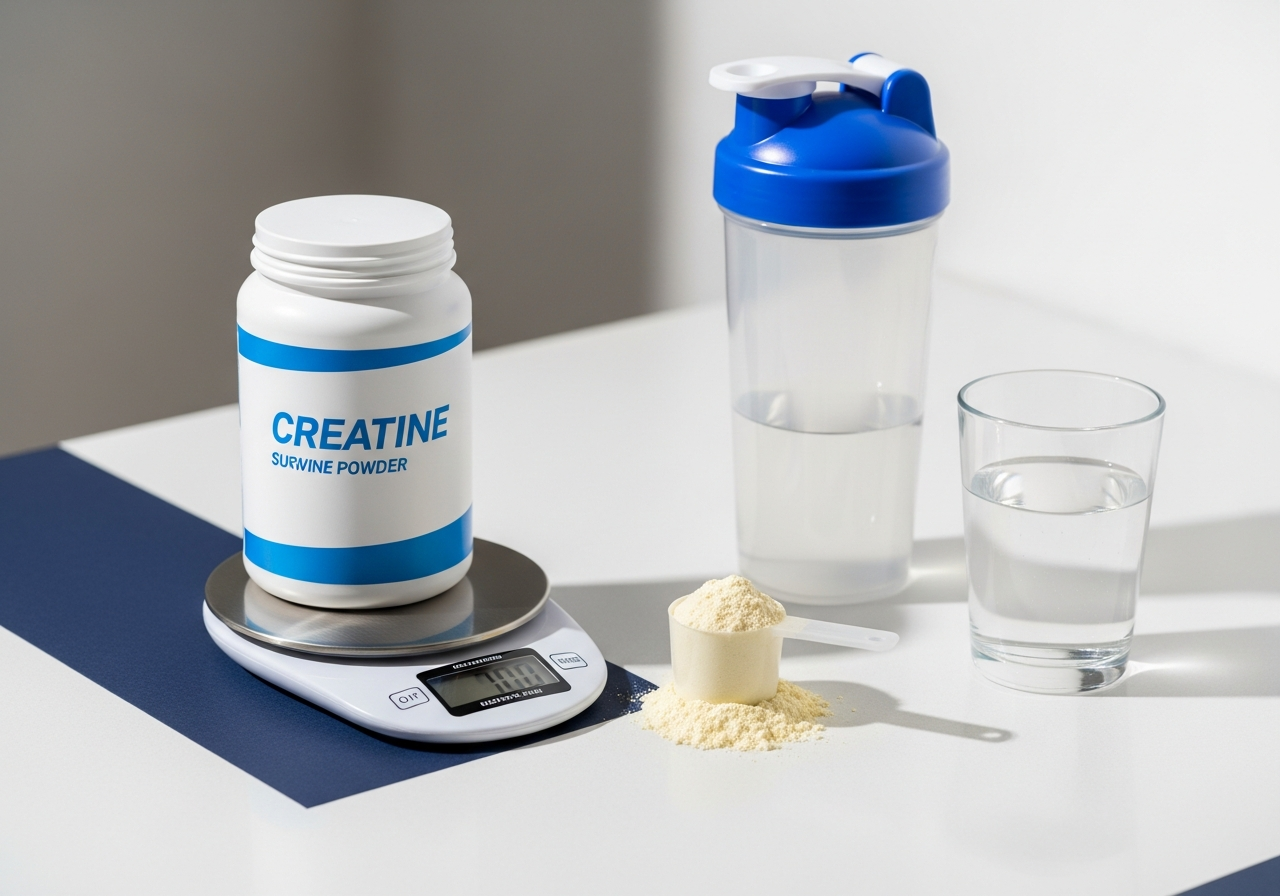
The standard creatine dose during a cut is 3-5 g of creatine monohydrate per day, every day. That dose is enough for most adults to maintain muscle creatine saturation, meaning your muscles stay topped up with the creatine they can effectively store.
You have two evidence-based ways to start:
- No loading: Take 3-5 g daily. Full muscle saturation typically builds over about 3-4 weeks.
- Loading phase: Take about 20 g per day split into 4 doses of 5 g for 5-7 days, then switch to 3-5 g daily. This saturates muscle faster.
Here is a practical dosing table:
| Body weight / goal | Simple daily dose | Optional loading phase | Best for |
|---|---|---|---|
| Under 60 kg | 3 g/day | 20 g/day split for 5-7 days, then 3 g/day | Smaller adults, lighter athletes |
| 60-90 kg | 3-5 g/day | 20 g/day split for 5-7 days, then 3-5 g/day | Most gym-goers cutting |
| Over 90 kg | 5 g/day | 20 g/day split for 5-7 days, then 5 g/day | Larger lifters, heavier athletes |
| Very precise protocol | ~0.03 g/kg/day | ~0.3 g/kg/day for 5-7 days, then ~0.03 g/kg/day | People who want body-weight-based dosing |
For example, a 55 kg person can do 3 g/day, a 75 kg person can do 5 g/day, and a 100 kg person can also do 5 g/day without overcomplicating it. If you want a personalized estimate, use our creatine dosage calculator or read how much creatine per day.
Do not cycle creatine during a cut unless you have a specific reason. Daily consistency matters more than fancy protocols. If you are sensitive to stomach upset, skip loading and start with 3 g/day with food. If your powder clumps or feels gritty, see how to mix creatine.
When to take creatine during weight loss, and what to expect week by week
Take creatine at any time you will remember it consistently, because daily adherence matters more than precise timing. If you are asking “should I take creatine while trying to lose weight?” the practical answer is yes, and you should take it every day, including rest days.
Timing basics:
- Best time: Whenever you can stick to daily use.
- With or without food: Either is fine, though some people tolerate it better with a meal.
- Workout days: Pre- or post-workout both work in practice.
- Rest days: Still take your normal daily dose.
What to expect if you do not load:
- Week 1: Usually no dramatic visible change. Some people notice slightly better workout pop or recovery between hard sets.
- Weeks 2-3: Training performance may feel steadier, especially on repeated efforts. Scale weight may rise a little, stay flat, or continue dropping depending on your diet and glycogen status.
- Weeks 3-4: Muscles are approaching saturation, and creatine’s performance benefits are more likely to be noticeable.
- Weeks 4+: The main payoff during a cut is often better maintenance of strength, reps, muscle fullness, and lean mass.
What to expect if you load:
- First 5-7 days: Faster saturation and a greater chance of early water-weight increase.
- By week 2: Benefits may appear sooner, especially if your training is intense and repeated.
How to tell it is working during a cut:
- You maintain more strength than usual in a calorie deficit.
- You lose fewer reps across later sets.
- You look flatter less often despite dieting.
- Your waist or skinfolds improve while the scale moves slowly.
For a full timing breakdown, see when to take creatine and how long creatine takes to work.
A simple step-by-step plan: how to use creatine for fat loss without sabotaging your cut
The best way to use creatine for fat loss is to combine 3-5 g daily with a moderate calorie deficit, high protein intake, and progressive resistance training. If you want a practical answer to “how does creatine help in weight loss?” this is it: creatine protects the quality of the process that actually causes fat loss.
- Create a sensible calorie deficit. Aim for a deficit you can sustain without crashing gym performance. Extreme deficits make muscle loss more likely.
- Set protein high enough. Prioritize protein at each meal to support muscle retention during dieting.
- Take 3-5 g creatine monohydrate daily. Mix it in water, a shake, yogurt, or another easy daily routine. See how to take creatine.
- Lift 3-5 times per week if possible. Keep key compound lifts in your plan even while cutting.
- Use performance as a guardrail. If every lift is collapsing fast, your deficit may be too aggressive, recovery too poor, or sleep too short.
- Track more than body weight. Use waist measurements, progress photos, gym logs, and how your clothes fit.
- Stay consistent for at least 4 weeks. Creatine is not a one-day effect if you skip loading.
Example for a 75 kg recreational lifter cutting for summer:
- Take 5 g creatine monohydrate daily.
- Lift 4 days per week and keep heavy rows, presses, squats, or hinging patterns in place.
- Walk more or add modest cardio instead of slashing calories too hard.
- Judge progress by weekly average weight, waist, mirror, and performance.
The biggest mistake is expecting creatine to create fat loss without the basics. The second biggest mistake is stopping creatine because the scale bumps up 0.5-1.5 kg early from water in muscle. During a cut, that temporary water shift can hide real fat-loss progress. If that bothers you psychologically, use weekly average weigh-ins rather than daily scale reactions.
Why creatine can make the scale weird during a cut
Creatine can increase body weight early by pulling more water into muscle cells, and that is the main reason people think creatine “stops” fat loss. In reality, that early scale change is usually water, not fat, and it does not mean your calorie deficit stopped working.
This is the key distinction:
- Fat gain: Requires a sustained calorie surplus over time.
- Creatine weight gain: Usually reflects increased water stored inside muscle and fuller glycogen-associated tissue.
That means the answer to “can creatine cause weight loss?” is usually no, at least not directly on the scale. If anything, creatine is more likely to cause a small short-term weight increase. But the answer to “can creatine help with fat loss?” can still be yes, because body composition can improve while scale weight does not change much.
Common scenarios:
- You lose fat and gain water: The scale stays flat but your waist shrinks.
- You keep muscle better: Weight loss is slower, but you look noticeably leaner at the same body weight.
- You load aggressively: The scale jumps more in week 1.
To avoid confusion, track:
- 7-day average body weight
- Waist at the navel
- Front, side, and back photos every 2 weeks
- Strength on your main lifts
If you are prone to bloating or stomach issues, use smaller doses and take creatine with food. Micronized monohydrate can mix a bit more easily, but standard monohydrate still works very well. For more on this topic, read does creatine cause bloating and creatine digestive side effects.
A person can be losing body fat successfully while taking creatine even if scale weight falls more slowly, because creatine commonly increases water stored inside muscle rather than body fat.
Is creatine safe for weight loss phases? Usually yes, with a few sensible cautions
Creatine monohydrate is considered safe for most healthy adults at recommended doses, including during a cut. The most common side effects are mild and practical, such as temporary water-weight changes or stomach discomfort from taking too much at once.
The ISSN position stand and the Mayo Clinic overview both describe creatine as generally safe when used appropriately in healthy people. The persistent internet myths that creatine inevitably harms kidneys, causes dehydration, or acts like a steroid are not supported in healthy users at standard doses.
Possible side effects and fixes:
- Water-weight increase: Normal, especially early on.
- Stomach upset or diarrhea: More likely if you take large doses at once; split doses or take with food.
- Perceived bloating: Often improved by skipping the loading phase and using 3-5 g daily.
Be more cautious and talk to a qualified healthcare professional first if you:
- Have known kidney disease or significant renal impairment
- Are pregnant or breastfeeding and want individualized medical guidance
- Take medications or have medical conditions that warrant review
One lab nuance matters: creatine can raise creatinine, a breakdown product often measured on blood tests, without meaning kidney damage. That is a common source of confusion. If you are getting bloodwork, tell your clinician you use creatine. For deeper dives, see is creatine safe and is creatine bad for your kidneys?
Hydration advice is simple: drink normally and adequately for your training load, climate, and sweat rate. You do not need absurd amounts of water just because you take creatine, but you should not ignore hydration either. Our guide on how much water to drink with creatine covers the practical details.
Common myths and mistakes: what creatine does not do during fat loss
Creatine is often misunderstood during weight loss, and most problems come from expecting the wrong outcome. The short version is that creatine does not melt fat, does not replace a calorie deficit, and does not make everyone look soft or puffy.
Let’s debunk the big ones:
- Myth: Creatine burns fat.
Reality: Creatine is not a direct fat burner. It supports better training and muscle retention. - Myth: If the scale goes up, creatine made me fat.
Reality: Early weight gain is usually water inside muscle, not fat tissue. - Myth: You should stop creatine while cutting.
Reality: Cutting is often when creatine is most useful for preserving performance and lean mass. - Myth: Women should avoid creatine because it makes them bulky.
Reality: Creatine does not override training and calorie balance to create instant bulk. - Myth: More is better.
Reality: Once stores are saturated, extra creatine does not mean extra fat loss. - Myth: Fancy forms work better than monohydrate.
Reality: Monohydrate remains the most studied and best-supported form.
The most common mistakes are equally simple:
- Judging creatine by scale weight alone
- Skipping resistance training while expecting body-composition benefits
- Using underdosed gummies or blends instead of verifying grams per serving
- Taking huge doses and then blaming creatine for stomach upset
- Buying expensive proprietary forms with less evidence than monohydrate
If you want a no-nonsense reality check on internet claims, see creatine myths debunked and creatine myths vs. facts. If your issue is that creatine seems not to be working, it may be a dosing, consistency, or expectation problem rather than a product failure.
What to buy in Canada: the best creatine for a cut is usually plain monohydrate
The best creatine for fat-loss phases in Canada is usually a plain creatine monohydrate powder with clear dosing, minimal ingredients, and credible quality controls. You do not need a “weight loss creatine” product, because creatine itself is not a distinct fat-burner category.
When shopping in Canada, look for:
- Creatine monohydrate as the main and ideally only active ingredient
- Per-serving dose clearly listed, typically 3 g or 5 g
- NPN, which means Natural Product Number, if the product is regulated and labelled as a licensed natural health product in Canada
- Third-party testing or strong manufacturing transparency
- No unnecessary blends that hide actual creatine amount
Comparison table:
| Type | Evidence for fat-loss phases | Typical value | Who should choose it |
|---|---|---|---|
| Creatine monohydrate powder | Strongest evidence overall | Usually best cost per gram | Almost everyone |
| Micronized monohydrate | Same active ingredient, easier mixing for some | Often slightly pricier | People who dislike gritty texture |
| Capsules | Works if dose is adequate | Often worse value | Travel or convenience users |
| Gummies | Can work if properly dosed, but often underdosed or costly | Usually expensive per gram | Only if you will not use powder |
| HCl and other novel forms | Less evidence than monohydrate | Often marketed as premium | Usually not necessary |
If you are comparing products, start with our best creatine rankings, browse the creatine brand reviews, or check the creatine product catalog. If you specifically want Canada-focused selection advice, our guide to best creatine monohydrate in Canada goes deeper.
The smartest buy for most people cutting is boring in the best way: unflavoured monohydrate, clinically standard dosing, and a trustworthy label.
Bottom line: use creatine to keep muscle while you lose fat
Creatine does not directly cause fat loss, but it absolutely can help you get leaner by improving the quality of your cut. If you want the shortest evidence-based answer to “will creatine help you lose weight?” it is this: creatine may not make the scale drop faster, but it can help you lose fat while keeping more strength, training performance, and lean mass.
The practical formula is simple:
- Take 3-5 g creatine monohydrate daily
- Maintain a real calorie deficit
- Prioritize protein and resistance training
- Track waist, photos, and gym performance, not just scale weight
- Stay consistent for at least 3-4 weeks before judging results if you skip loading
For many people, creatine is one of the few supplements worth keeping during a cut because it supports the goal that actually matters: better body composition, not just a smaller number on the scale. If your plan is to diet hard but keep looking athletic rather than flat and depleted, creatine monohydrate deserves a place in that plan.
If you want to build your full routine from here, the next best reads are creatine for beginners, creatine loading phase, and creatine on rest days.
Creatine During a Cut: The Numbers That Matter
- 3-5 g/day Standard daily maintenance dose — Effective for most healthy adults using creatine monohydrate.
- 20 g/day Optional loading dose — Usually split into 4 x 5 g doses for 5-7 days.
- 3-4 weeks Time to full saturation without loading — Daily use matters more than exact timing.
- 5-7 days Time to faster saturation with loading — Early scale weight may rise from water in muscle.
Frequently Asked Questions
Does creatine help lose fat or just water weight?
Creatine does not directly burn fat, but it can help you lose fat more effectively by supporting training quality and lean mass retention. It often increases water stored inside muscle, especially early on, so the scale can be misleading even while your body composition improves.
Does creatine help with weight loss on the scale?
Creatine usually does not help scale weight drop faster, and it can temporarily make weight loss look slower. That is because creatine often increases intramuscular water, so judge your cut by waist, photos, and strength as well as body weight.
Should I take creatine while cutting?
Yes, most people should take creatine while cutting if they are resistance training or doing repeated high-intensity exercise. Creatine is most useful during a cut when calories are lower and preserving strength and muscle becomes harder.
Can creatine help burn fat without exercise?
No, creatine is not a stand-alone fat burner and will not meaningfully burn fat without the basics. Its main benefit comes from helping you perform and recover better during training, which supports muscle retention and better body composition over time.
Does creatine make you lose weight at first?
No, creatine more often causes a small early increase in body weight because it draws more water into muscle cells. That short-term gain is not body fat, and it does not mean your calorie deficit stopped working.
Is creatine good for weight loss for women?
Yes, creatine can be very useful for women during weight loss when the goal is to keep strength and lean mass. It does not automatically make women bulky, and the same evidence-based daily dose of creatine monohydrate generally applies.
How much creatine should I take when trying to lose fat?
Most people should take 3-5 g of creatine monohydrate daily when trying to lose fat. An optional loading phase of about 20 g per day split into 4 doses for 5-7 days can saturate muscles faster, but it is not necessary.
When should I take creatine for fat loss?
Take creatine whenever you are most likely to remember it consistently, because daily intake matters more than precise timing. Pre-workout, post-workout, with meals, and on rest days can all work as long as you keep the dose regular.
Can creatine cause weight loss if I am overweight?
Creatine itself does not usually cause weight loss, even if you are overweight. It can still help by improving training quality and supporting muscle retention while you diet, which may lead to better fat-loss outcomes over time.
What is the best type of creatine for a cut?
Creatine monohydrate is the best type of creatine for a cut because it is the most studied, most reliable, and usually the best value. More heavily marketed forms have not consistently beaten monohydrate in the evidence.