Is Creatine Vegan? Why Plant-Based Athletes Respond Best
By The Creatine Canada Research Team — Evidence-based supplement analysts
Yes—almost all plain creatine monohydrate supplements are vegan and vegetarian because the creatine in supplements is made synthetically in a lab, not extracted from animals. Vegans and vegetarians can usually take creatine confidently, but you still need to check the capsule shell, flavour system, and third-party certifications if you want a product that is fully plant-based and, where relevant, halal.
Evidence-based · Cites 4 sources · Editorial standards
Key Takeaways
- Creatine supplements are typically synthetic, so plain creatine monohydrate powder is usually vegan and vegetarian.
- Creatine itself is not made from animals in modern supplements, but some capsules, gummies, or flavoured products may include non-vegan ingredients.
- Vegans and vegetarians often respond especially well to creatine because their baseline muscle creatine stores are often lower.
- The evidence-based dose for most adults is 3-5 g daily, with an optional loading phase of 20 g per day split into 4 doses for 5-7 days.
- Halal status depends on the full product, manufacturing controls, and certification—not just the creatine molecule.
- In Canada, look for a Natural Product Number (NPN), clear ingredient disclosure, and ideally third-party testing.
Yes, creatine is usually vegan—but the product around it may not be
Yes, creatine is usually vegan because supplement creatine is almost always produced synthetically rather than extracted from meat or other animal tissue. That direct answer covers the main search intent behind is creatine vegan, is creatine vegetarian, does vegan creatine exist, and is creatine made from animals.
Here is the key distinction: creatine the compound and the finished supplement product are not always the same thing. Modern creatine supplements typically contain lab-made creatine monohydrate, which is chemically identical to the creatine found naturally in animal foods and in your own body. That means the creatine powder itself is generally vegan. However, some finished products may add ingredients that are not vegan or not vegetarian, such as gelatin capsules, dairy-based flavour systems, or gummy bases that use animal-derived gelatine.
If you want the simplest, safest answer, choose an unflavoured creatine monohydrate powder with a short ingredient list. A label that says only creatine monohydrate is the easiest format for vegans and vegetarians to verify. If you want background on what creatine actually is, see what creatine is and what it does.
People also ask is on creatine vegan or are creatine supplements vegan. The honest answer is that some are and some are not. You must inspect the exact product format:
- Powders: usually vegan if unflavoured and single-ingredient.
- Capsules: may be non-vegan if the shell is gelatin rather than cellulose.
- Gummies: may be non-vegan if they use gelatine.
- Flavoured mixes: may include dairy derivatives, colourings, or sweetener systems some buyers prefer to avoid.
The performance side matters too. The 2017 ISSN position stand concluded that creatine monohydrate is the most effective ergogenic nutritional supplement currently available for increasing high-intensity exercise capacity and lean body mass during training, and that foundation applies to vegans and omnivores alike. Read the source here: Kreider et al. (2017), JISSN.
So, can vegans take creatine? Yes. Can vegetarians take creatine? Yes. In fact, for many plant-based athletes, creatine is one of the most rational supplements to consider.
How can creatine be vegan if creatine is found in meat?
Creatine can be vegan because the creatine in supplements is manufactured synthetically, even though creatine occurs naturally in animal foods like meat and fish. That single point answers how is creatine vegan, how can creatine be vegan, and does creatine come from animals.
Creatine is a naturally occurring compound made from three amino acid building blocks: arginine, glycine, and methionine. Your liver, kidneys, and pancreas produce some creatine on their own, and the rest can come from diet. Animal foods contain meaningful amounts; plants contain little to none. But supplement companies do not need to harvest creatine from animals to make it. Instead, they produce it through industrial chemical synthesis. The finished molecule is still creatine monohydrate, and your muscles use it the same way.
Inside muscle, creatine helps form phosphocreatine, which is stored creatine bound to phosphate. Phosphocreatine donates a phosphate group to regenerate ATP, the body’s immediate energy currency, during short, hard efforts like sprints, heavy sets, jumps, and repeated intervals. If that mechanism is new to you, our guide on how creatine powers muscles explains it in plain language.
This matters for plant-based athletes because vegans and vegetarians usually consume very little dietary creatine. They still make creatine internally, so they are not deficient in the medical sense, but their muscle stores can start lower than those of meat eaters. Lower starting stores often means more room to increase intramuscular creatine after supplementation. That is why the claim that plant-based athletes often respond best is plausible and supported by the general pattern of the literature, even though individual response varies.
The 2021 JISSN review on common questions and misconceptions about creatine noted that creatine is a naturally occurring compound and that supplementation increases muscle creatine stores, especially in those with lower baseline levels. See Antonio et al. (2021), JISSN.
In practical terms, vegan creatine is not a special weaker version of creatine. It is usually just regular creatine monohydrate sold in a formula that excludes animal-derived add-ons. If the label is clean, the source is reputable, and the dose is correct, vegan creatine works the same way as any other creatine monohydrate product.
Why plant-based athletes often notice more from creatine
Vegans and vegetarians often notice more from creatine because they typically start with lower muscle creatine stores, which creates more room for supplementation to raise those stores. That is the short answer to do vegans need creatine, do vegetarians need creatine, and how do vegans get creatine.
Need is the wrong word for most healthy adults. Vegans do not need creatine to survive, because the body synthesizes creatine on its own. But a vegan diet provides little dietary creatine, so supplementation can be more useful for performance, training quality, lean mass gains, and possibly some cognitive contexts than it is for someone who regularly eats meat or fish.
Think of creatine as a storage pool. If your baseline pool is already relatively full, adding more may still help, but the visible difference can be smaller. If your baseline pool is lower, adding 3-5 g daily can produce a bigger jump toward saturation, meaning your muscles hold closer to their upper practical storage limit. Saturation is why effects build over days to weeks rather than after a single dose.
What does that mean in the gym?
- Strength training: you may squeeze out extra reps or maintain output across repeated sets.
- Sprinting and team sports: you may recover faster between repeated high-intensity efforts.
- Lean mass: over weeks of training, better training quality can support greater gains.
- Body weight: some people notice a modest early increase from intracellular water stored with creatine in muscle.
This does not mean every vegan is a dramatic responder. Response depends on baseline diet, muscle mass, training style, dose consistency, and genetics. If you already supplement creatine, train inconsistently, or choose very long steady-state endurance work as your only exercise, you may notice less.
For beginners, the easiest sign that creatine is working is not a sudden pump. It is usually a subtle pattern over 2-4 weeks: slightly better repeat performance, less drop-off across sets, and more productive training sessions. Our guides on how long creatine takes to work and whether creatine builds muscle go deeper on realistic expectations.
Bottom line: vegans and vegetarians are not automatically deficient, but they are among the groups most likely to benefit noticeably from creatine supplementation.
What vegan creatine is made from, and what to check on the label
Vegan creatine is usually made from synthetic raw materials and sold as creatine monohydrate, not from animal flesh, bones, or by-products. That directly answers what is vegan creatine made from and does creatine have animal products.
From a buyer’s perspective, the ingredient panel matters more than the chemistry lesson. The cleanest option is a one-ingredient powder that lists only creatine monohydrate. If the label has more than one ingredient, inspect the extras.
Ingredients and features that are usually vegan-friendly:
- Creatine monohydrate
- Cellulose capsules labelled vegetarian or vegan
- Citric acid, natural flavours, or sweeteners that are clearly disclosed and acceptable to you
- Micronized creatine, which is simply finer powder for easier mixing
Ingredients or formats that deserve extra scrutiny:
- Gelatin capsules: usually animal-derived
- Gummies: often use gelatine unless explicitly vegan
- Creamy flavoured blends: may include milk derivatives
- Proprietary blends: harder to verify ingredient sourcing
If you are shopping in Canada, look for a Natural Product Number or NPN, which is the product licence number used by Health Canada for natural health products. An NPN does not certify that a product is vegan, but it does tell you the product is being sold under Canadian natural health product rules with labelled ingredients and claims. If import status, labels, and compliance matter to you, our guides on Canadian supplement regulations and buying creatine online in Canada are useful next reads.
Also check for manufacturing quality markers:
- Third-party testing for purity and contaminants
- Batch or lot identification
- Clear contact information for the brand
- Plain, transparent dosing instructions
If you are comparing formats, our best creatine rankings, creatine brand reviews, and creatine product catalog can help narrow the field. In most cases, the simplest answer is the best one: plain creatine monohydrate powder is the easiest vegan creatine to verify, the most studied, and usually the best value.
Is creatine halal? Usually possible, but halal depends on the full product
Creatine can be halal, but creatine is not automatically halal just because it is synthetic. That is the direct answer to is creatine halal and is creatine powder halal.
Why the nuance? Halal status depends on the complete product, not just the creatine molecule. A plain unflavoured creatine monohydrate powder is often easier to classify as halal-friendly because it contains only synthetic creatine monohydrate and no obvious animal ingredients. But once a product includes capsules, gummies, flavour systems, or shared manufacturing lines, you may need more information from the manufacturer or a halal certifier.
Here is a practical way to think about it:
- Lowest-risk option: single-ingredient creatine monohydrate powder
- Ask questions on: capsules, gummies, soft chews, flavoured blends
- Best proof: recognised halal certification on the exact product
Issues that can complicate halal status include:
- Gelatin capsule shells
- Animal-derived flavour carriers or processing aids
- Cross-contact concerns in manufacturing
- Lack of ingredient transparency
If halal compliance is important to you, contact the brand and ask four direct questions:
- Is the creatine source synthetic and non-animal-derived?
- Are any excipients, capsule shells, or flavours animal-derived?
- Is the product made on lines that also process non-halal ingredients?
- Does the finished product carry halal certification?
The same approach works for strict vegan shoppers. Do not assume all capsules are plant-based, and do not assume all gummies are vegan. If the company cannot answer clearly, choose a simpler product.
From a performance standpoint, halal creatine and vegan creatine work no differently than standard creatine monohydrate if the active ingredient and dose are the same. The IOC consensus on dietary supplements recognises creatine as one of the few supplements with good evidence for performance benefit in specific contexts. See International Olympic Committee consensus (2018).
So, is creatine halal? Often yes, especially in plain powder form, but the only airtight answer comes from the exact label and, ideally, certification.
How to take vegan creatine: the simplest step-by-step plan
Vegans and vegetarians should take creatine the same way omnivores do: use creatine monohydrate consistently until muscle stores rise and stay elevated. That is the direct answer to can vegans take creatine and can vegetarians take creatine.
For most people, the easiest plan is one scoop of creatine monohydrate every day. Consistency matters more than timing perfection.
- Choose the format: pick a plain monohydrate powder if you want the easiest vegan verification.
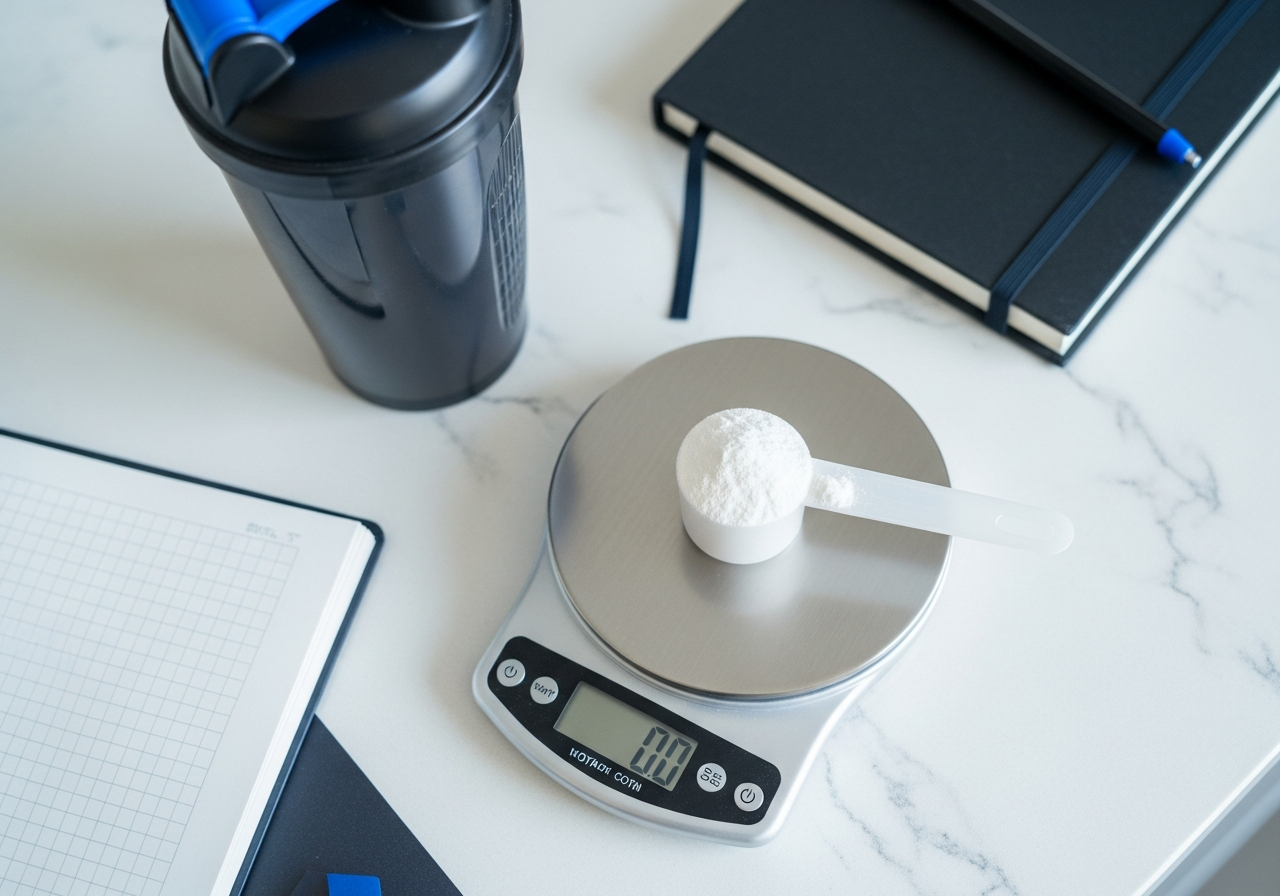
- Measure the dose: take 3-5 g daily. If your scoop is not exact, use a scale when possible.
- Mix it: stir into water, juice, a protein shake, or a smoothie. Warm liquids can help dissolving, though full dissolution is not required for effectiveness.
- Take it daily: training day or rest day, keep the habit the same.
- Optional loading: if you want faster saturation, take 20 g per day split into 4 doses for 5-7 days, then switch to 3-5 g daily.
- Stay patient: without loading, expect fuller benefits after roughly 3-4 weeks of daily use.
If you want detailed mixing tips, see how to take creatine, how to mix creatine, and whether to take creatine with food.
What should you expect week by week?
- Days 1-7 with loading: some people notice a small body-weight increase and slightly better repeat effort capacity quickly.
- Weeks 2-4 without loading: performance changes often become more noticeable.
- Weeks 4-8: training quality improvements can start to translate into visible strength or lean mass differences.
How do you tell it is working? Look for modest but repeatable changes: an extra rep at a given weight, better maintenance of sprint speed, less drop-off between intervals, or improved session quality. Creatine is not a stimulant, so do not expect an instant buzz.
If you miss a day, do not panic and do not double up later unless you are following a planned loading protocol. Just resume your normal daily dose. The long game is what matters.
Best creatine dose for vegans, vegetarians, athletes, women, and older adults
The best creatine dose for most adults, including vegans and vegetarians, is 3-5 g per day of creatine monohydrate, with an optional loading phase if you want faster saturation. That recommendation is well-established in sports nutrition and aligns with mainstream guidance from the ISSN and major evidence summaries.
Body size and training goal can help you choose where to sit inside that 3-5 g range. Larger athletes or those with more muscle mass often prefer the higher end. Smaller adults and many beginners do well with 3 g daily.
| Person or goal | Practical daily dose | Best approach |
|---|---|---|
| Smaller adult under about 60 kg | 3 g/day | Simple maintenance, no loading needed |
| Most adults 60-90+ kg | 3-5 g/day | Standard evidence-based dose |
| Larger or very muscular athlete | 5 g/day | Use the top end of standard maintenance |
| Fast results wanted | 20 g/day for 5-7 days, then 3-5 g/day | Split loading into 4 doses to reduce stomach upset |
| Older adults doing resistance training | 3-5 g/day | Consistency matters more than timing |
| Women | 3-5 g/day | No special lower “female dose” is required |
Women, older adults, and beginners do not need exotic formulas. Standard monohydrate works. If you want more targeted reading, see creatine for women, creatine for older adults, and creatine for competitive athletes.
For body-weight-specific help, use our creatine dosage calculator or read how much creatine per day. If you want to go deeper on loading versus no loading, see creatine loading phase.
One myth to kill here: vegans do not need a radically different dose just because they are vegan. They may respond more noticeably because baseline stores are lower, but the standard evidence-based dose is still the right starting point. More is not automatically better, and taking huge doses long-term is unnecessary for almost everyone.
When to take it, how long it takes to work, and how to know it is helping
The best time to take creatine is the time you will remember to take it every day, because long-term saturation matters far more than minute-by-minute timing. That answers a common hidden question behind plant-based creatine searches: yes, vegan creatine works, and it works by the same timing principles as any other creatine monohydrate.
Creatine is not like caffeine. You do not take it for an immediate pre-workout hit. You take it to gradually increase muscle phosphocreatine stores so you can regenerate ATP more effectively during repeated high-intensity efforts.
Practical timing rules:
- Most important: take it daily.
- Workout days: before or after training both work fine for most people.
- Rest days: still take it.
- With food or without: both are acceptable; some people find it easier on the stomach with a meal.
For a deeper breakdown, read when to take creatine and whether to take creatine on rest days.
How long does it take to work?
- With loading: muscle stores rise faster, often within about a week.
- Without loading: expect roughly 3-4 weeks to approach similar saturation with daily 3-5 g dosing.
What does “working” actually feel like?
- You finish hard sets with slightly less drop-off.
- You might get one more rep at a familiar weight.
- Your repeated sprints or intervals may hold up better.
- Your muscles may feel a bit fuller after the first couple of weeks.
What usually does not happen:
- No stimulant rush
- No dramatic same-day strength jump
- No direct fat-burning sensation
If you feel nothing after a month, check the basics first: Are you taking a true 3-5 g every day? Are you using monohydrate? Are you training hard enough in a style creatine actually supports? Have you mistaken “not dramatic” for “not working”? Some people are lower responders, but inconsistency and underdosing are more common explanations. Our creatine non-responder guide and creatine myths debunked can help troubleshoot.
Is vegan creatine safe? What the evidence says about side effects and kidney myths
Yes, creatine monohydrate is generally considered safe for healthy adults when used at recommended doses, and vegan creatine is not inherently safer or riskier than non-vegan creatine because the active ingredient is the same. That summary is consistent with the 2017 ISSN position stand and the 2021 JISSN review.
The side effects people most often notice are practical rather than dangerous:
- Water retention in muscle: this can increase body weight modestly, especially during loading.
- Stomach upset: more likely if you take too much at once or use poorly mixed powder.
- Bloating complaints: often related to loading or large single doses rather than daily maintenance dosing.
Common ways to reduce side effects:
- Use 3-5 g daily instead of aggressive loading if your stomach is sensitive.
- Split loading doses into 4 smaller servings if you do load.
- Take it with food if that feels better.
- Drink normal adequate fluids; you do not need to force extreme water intake.
One important myth: creatine does not equal kidney damage in healthy users just because it can increase creatinine, a breakdown product measured on blood tests. Higher creatinine can reflect greater creatine intake and turnover, and that does not automatically mean kidney harm. The confusion between creatine and creatinine is one reason this myth persists. If that concern is personal for you, read the kidney guide and creatine vs creatinine.
Who should be more cautious?
- Anyone with known kidney disease or significant renal concerns should speak with a physician first.
- Anyone taking medications or managing a complex medical condition should clear supplements with a qualified clinician.
- Pregnant or breastfeeding people should follow clinician guidance because sports-supplement use in these contexts deserves individual review.
The Mayo Clinic also notes that creatine appears to be generally safe when used appropriately, while recommending medical guidance for people with certain health conditions. See Mayo Clinic — Creatine.
For most healthy vegans and vegetarians, the risk profile of plain creatine monohydrate is well understood and favourable.
Common vegan creatine mistakes, myths, and how to buy smarter in Canada
The biggest mistake buyers make is assuming that every creatine product is vegan just because creatine itself is usually synthetic. The smarter approach is to verify the whole formula, the format, and the quality controls.
Let’s clear up the most common myths fast:
- Myth: Creatine comes from animals, so supplements cannot be vegan.
Fact: Modern creatine supplements are usually synthetically produced and are often vegan in plain powder form. - Myth: Vegan creatine is a special inferior version.
Fact: Vegan creatine is usually standard creatine monohydrate sold without animal-derived add-ons. - Myth: You can get enough creatine from plant foods.
Fact: Plant foods contribute little to no meaningful creatine, so vegans rely mainly on internal synthesis unless they supplement. - Myth: More creatine means more gains.
Fact: Once stores are saturated, extra intake offers little practical benefit for most users. - Myth: Creatine is a steroid.
Fact: It is not a steroid; it is a naturally occurring compound involved in rapid energy production.
Canadian buying checklist:
- Choose creatine monohydrate first.
- Prefer a one-ingredient powder if vegan purity matters most.
- Check the NPN on the label for products sold as natural health products in Canada.
- Look for vegetarian or vegan capsule shells if buying capsules.
- Look for third-party testing or strong manufacturing transparency.
- Be cautious with gummies and flavoured blends unless ingredients are crystal clear.
Need help comparing options? Start with best creatine rankings, brand reviews, and best creatine monohydrate in Canada. If you are tempted by trendier forms, read why monohydrate still wins before paying more.
The final buying truth is simple: if your goal is a vegan, evidence-based creatine that works, the winner is usually an unflavoured monohydrate powder from a reputable brand with transparent labelling.
Bottom line: the best creatine choice for most vegans and vegetarians
Yes, creatine is usually vegan, and plain creatine monohydrate powder is the best fit for most vegans and vegetarians. It is typically made synthetically, not from animals, it has the strongest evidence base, and plant-based athletes often stand to benefit the most because their starting creatine stores are commonly lower.
If you want the shortest possible recommendation, here it is:
- Buy a reputable unflavoured creatine monohydrate powder.
- Take 3-5 g every day.
- Use an optional 5-7 day loading phase only if you want faster results.
- Check labels carefully if you need strict vegan or halal compliance.
- Judge it over weeks, not hours.
For performance, the evidence is strongest for high-intensity exercise, repeated efforts, resistance training support, and lean mass gains over time when paired with training. For plant-based eaters, the practical case is especially strong because diet alone provides very little creatine.
There are still reasonable nuances. Not every creatine capsule is vegan. Not every gummy is vegetarian. Halal status depends on the finished product and sometimes certification. And while many vegans respond very well, not every individual notices the same degree of change.
But the big picture is clear in 2026: vegan creatine absolutely exists, standard creatine monohydrate is usually already vegan, and it works. If your goal is strength, power, training quality, or simply covering a gap inherent to a plant-based diet, creatine deserves a place near the top of your supplement shortlist.
If you want to keep learning, the most useful next reads are creatine for vegetarians, how much creatine per day, is creatine safe, and where creatine comes from.
Vegan Creatine: The Numbers That Matter
- 3-5 g/day Standard daily dose — Evidence-based maintenance dose for most adults using creatine monohydrate.
- 20 g/day Typical loading dose — Usually split into 4 doses for 5-7 days to raise muscle stores faster.
- 5-7 days Loading timeline — Common loading period before switching to daily maintenance.
- 3-4 weeks No-loading timeline — Rough time to approach similar saturation with 3-5 g taken daily.
Frequently Asked Questions
Is creatine vegan or does it come from animals?
Creatine supplements are usually vegan because the creatine is typically made synthetically rather than extracted from animals. The main caveat is that some finished products, especially capsules, gummies, or flavoured formulas, may include non-vegan ingredients such as gelatin or dairy-derived additives.
Is creatine vegetarian?
Yes, creatine supplements are usually vegetarian for the same reason they are usually vegan: the creatine itself is generally synthetic. Vegetarians should still check the full label for capsule shells, gummy bases, or flavour ingredients if they want to avoid hidden animal-derived components.
Can vegans take creatine safely?
Yes, healthy vegans can usually take creatine safely at standard doses of 3-5 g per day. Creatine monohydrate has a strong safety record in healthy adults, but anyone with kidney disease, significant medical issues, or medication concerns should speak with a clinician before supplementing.
Do vegans need creatine supplements?
Vegans do not need creatine supplements to survive because the body makes creatine on its own, but many vegans are good candidates for supplementation. A vegan diet provides little dietary creatine, so supplementation may offer more noticeable performance benefits than it does for people who regularly eat meat or fish.
Does vegan creatine work as well as regular creatine?
Yes, vegan creatine works just as well as regular creatine when the active ingredient is the same creatine monohydrate. Vegan creatine is usually not a different form at all; it is typically standard monohydrate sold in a formula without animal-derived capsule materials or additives.
What is vegan creatine made from?
Vegan creatine is usually made through synthetic chemical production rather than from animal tissue. The finished ingredient is still creatine monohydrate, which is chemically the same compound your body uses for phosphocreatine storage and rapid ATP regeneration during hard exercise.
Is creatine halal?
Creatine can be halal, but halal status depends on the exact finished product, not only the creatine itself. Plain unflavoured creatine monohydrate powder is often the easiest option to verify, while capsules, gummies, flavour systems, and manufacturing practices may require certification or confirmation from the brand.
How do vegans get creatine if plants do not contain much of it?
Vegans get creatine mainly by making it internally from amino acid precursors, because plant foods provide little meaningful creatine. Supplementing with creatine monohydrate is the most direct way for vegans to raise muscle creatine stores beyond what endogenous production alone typically supports.
Are creatine capsules vegan?
Some creatine capsules are vegan, but many are not because capsule shells can be made from gelatin. If you want a vegan capsule product, look specifically for labels that say vegetarian or vegan capsule, or choose plain powder to avoid that uncertainty entirely.
What is the best vegan creatine to buy?
The best vegan creatine for most people is a plain unflavoured creatine monohydrate powder from a reputable brand. It is the easiest format to verify as vegan, it is the most studied form, and it is usually the most cost-effective option in Canada and elsewhere.