
Creatine and Digestion: Diarrhea, Constipation, and Stomach Upset Explained
By The Creatine Canada Research Team — Evidence-based supplement analysts
Yes, creatine can cause diarrhea in some people, but it is usually a dosing or mixing problem rather than a sign that creatine itself is inherently bad for digestion. The most common triggers are taking too much at once, doing an aggressive loading phase, using poorly dissolved powder, or taking it on an empty stomach when your gut is sensitive.
Evidence-based · Cites 4 sources · Editorial standards
Key Takeaways
- Creatine can cause diarrhea, nausea, or stomach upset, but these side effects are usually preventable.
- The biggest cause of creatine diarrhea is taking too large a dose at one time, especially 10-20 g in one serving.
- A simple maintenance dose of 3-5 g daily is the easiest way to reduce digestive side effects.
- Taking creatine with food and plenty of fluid often helps if creatine on an empty stomach upsets your stomach.
- Creatine does not reliably cause constipation, but changes in fluid intake, diet, or training routine can make it seem that way.
- Micronized creatine monohydrate is usually the best first choice because it is the most studied and often easier to mix.
- If diarrhea persists even at 3 g daily with food, stop the supplement and speak with a healthcare professional.
Does creatine cause diarrhea? The direct answer most people need first
Yes, creatine can cause diarrhea, but usually because of how it is taken rather than because creatine is broadly harmful to the gut. In practice, the most common reasons are a dose that is too large for one sitting, a rapid loading phase, poor mixing, or taking it on an empty stomach when you already have a sensitive digestive system.
That distinction matters because creatine monohydrate remains one of the best-studied sports supplements for both safety and effectiveness. The 2017 ISSN position stand concluded that creatine monohydrate is effective and generally safe when used appropriately, and the 2021 JISSN review on common creatine questions reinforced that many feared side effects are overstated or misunderstood.
If you are wondering, does creatine give you diarrhea?, the practical answer is: it can, especially during loading or when you take a big scoop all at once. If you are wondering, can creatine upset your stomach?, the answer is also yes, but stomach upset is often mild and preventable with better dosing habits.
On the other side, does creatine cause constipation? is much less clear. Creatine is not known for directly slowing bowel movements. Constipation during creatine use is usually more likely to reflect changes in hydration habits, lower fibre intake, harder training, travel, or higher protein intake rather than the creatine molecule itself.
For most people, the easiest fix is simple:
- Use 3-5 g daily instead of loading.
- Take it with a meal or snack.
- Mix it thoroughly in enough liquid.
- Avoid dry scooping or chugging gritty powder.
If you are new to supplementation, our creatine dosage calculator and guide on how to take creatine can help you set a dose that works without beating up your stomach.
Why creatine can upset your stomach: the real mechanisms behind diarrhea and nausea
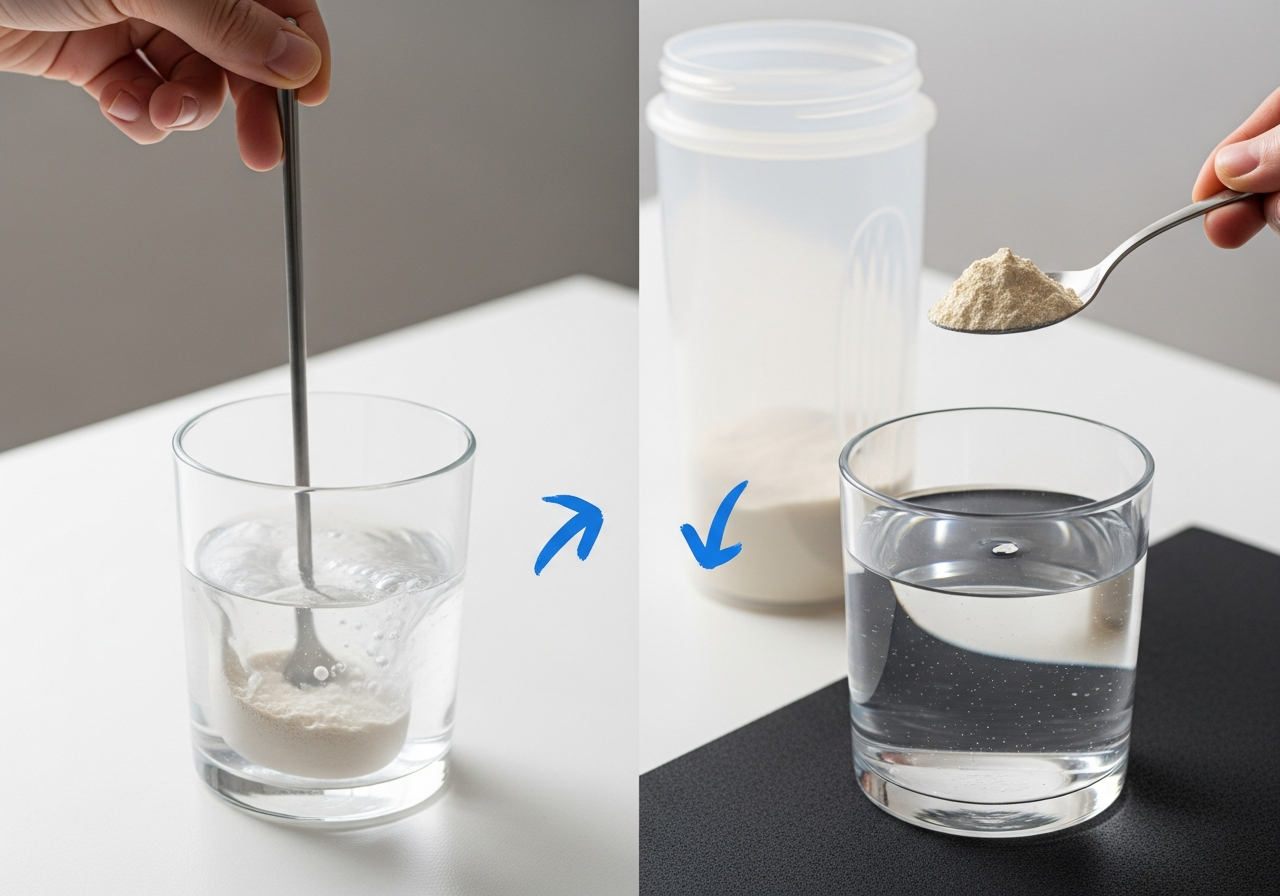
Creatine can upset your stomach mainly because a large amount of undissolved or concentrated creatine in the gut can pull water into the intestines and speed stool transit. That is why diarrhea is more common with big single doses than with smaller daily doses spread out over time.
Creatine itself is a compound your body naturally makes and stores, mostly in muscle, where it helps regenerate ATP, the cell's rapid energy currency. The digestive issue is not that creatine is toxic to the intestines; the problem is more mechanical and osmotic. Osmotic means a substance draws water toward it. If you dump a high concentration of creatine into the digestive tract at once, especially in a gritty mixture, some people experience loose stools, bloating, cramping, or nausea.
Several practical triggers increase the chance of stomach upset:
- Large single servings: Taking 10 g or more at once is far more likely to cause problems than taking 3-5 g.
- Loading too aggressively: A classic loading phase uses about 20 g daily split into 4 doses for 5-7 days. When people ignore the split dosing and take it in one or two hits, side effects rise.
- Poor dissolution: Coarse powder left clumpy in cold liquid can sit heavily in the stomach.
- Empty stomach use: Sensitive users may tolerate creatine better with food.
- Other ingredients: Flavoured products, sugar alcohols, stimulants, or pre-workout blends may be the real culprit.
This is also why people ask, does creatine powder cause diarrhea? The answer is yes, powder can do that if the serving is too concentrated or poorly mixed, but the issue is usually the dose and delivery, not the fact that it is a powder.
Micronized creatine, which is milled into smaller particles, often mixes more smoothly and may feel easier on the stomach for some users. If you want a deeper primer on forms and basics, see what creatine is and our creatine myths debunked page.
Does creatine cause constipation, or is something else going on?
Creatine does not appear to directly cause constipation in the way large doses can cause diarrhea, but some people feel more backed up after starting it because other habits changed at the same time. When someone says, can creatine make you constipated?, the most honest answer is that it is possible indirectly, but creatine is not a classic constipating supplement.
Here is why the confusion happens. Many people start creatine during a new training phase, a higher-protein diet, a cut, or a bulk. Any of those shifts can change digestion. If you start eating less fibre, travel more, sweat more, or drink less fluid overall, bowel movements may become harder or less frequent. Creatine itself tends to increase water retention inside muscle cells, not in the intestines, so it is not a proven cause of constipation.
Common reasons constipation shows up around the same time as creatine include:
- Higher protein, lower fibre: More shakes and less produce is a common gym mistake.
- Not enough total fluids: Not because creatine dehydrates you, but because training harder without adjusting fluid intake can leave you short.
- Travel or routine change: New meal times and lower activity outside the gym can alter bowel habits.
- Calorie restriction: Eating less often means less total food bulk moving through the gut.
If you are asking, does creatine make you poop?, there is no consistent stimulant-like effect. Some users notice looser stools when the dose is too high; others notice no digestive change at all. Creatine is not a laxative, and it is not meant to regulate bowel movements.
If constipation starts after you begin supplementing, check the full picture before blaming the creatine: fibre intake, total fluids, steps per day, training load, protein intake, and whether your creatine product contains extras. Our guide on how much water to drink with creatine can help you troubleshoot the hydration side of the equation.
Can you take creatine on an empty stomach, or should you have it with food?
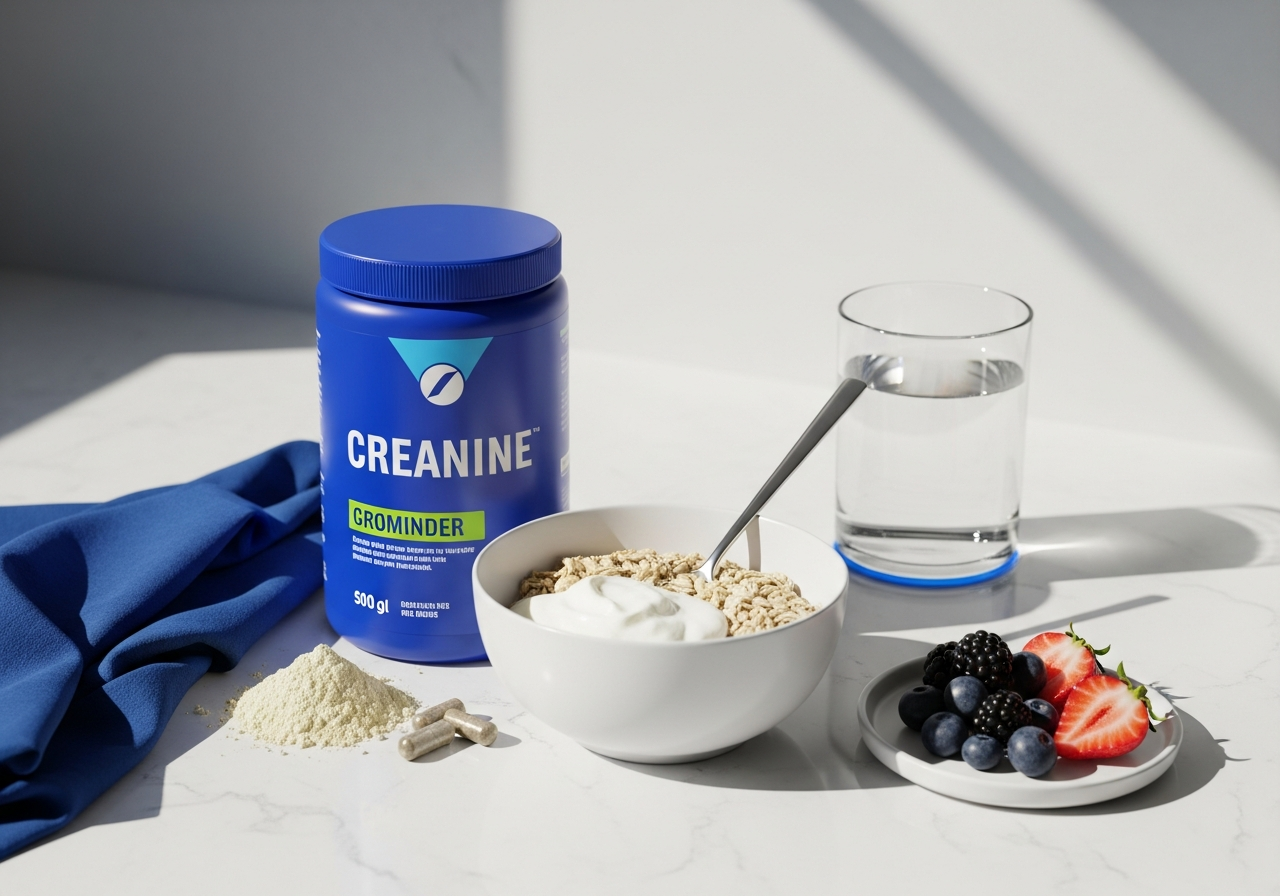
Yes, you can take creatine on an empty stomach, but if creatine on an empty stomach gives you nausea, cramping, or diarrhea, taking it with food is the smarter move. For results, the timing with or without food matters much less than consistent daily intake.
This is one of the most searched creatine questions because people often want a strict rule. There is no universal rule that creatine on an empty stomach is bad. Many people tolerate 3-5 g just fine first thing in the morning. Others do much better when they take it with breakfast, lunch, or a post-workout meal. The right answer is based on tolerance, not dogma.
If you are wondering, should you drink creatine on an empty stomach?, use this practical filter:
- If you have a sturdy stomach and use 3-5 g, empty stomach is often fine.
- If you are prone to reflux, nausea, IBS-like symptoms, or loose stools, take it with food.
- If you are loading, taking each smaller dose with meals usually reduces side effects.
Food may help because it slows gastric emptying and dilutes the creatine within a larger volume of stomach contents, making the dose feel less concentrated. For some users, mixing creatine into a protein shake, yoghurt, oatmeal, or a meal works better than plain water alone. If you stack supplements, remember that caffeine-heavy pre-workouts, sugar alcohols, magnesium, or large whey shakes can also be the real cause of digestive complaints.
The bigger priority is consistency. If your best-tolerated routine is 5 g with supper every day, that is better than forcing a fasted routine that upsets your stomach and makes you skip doses. For a full timing breakdown, see when to take creatine and whether creatine should be taken with or without food.
How to stop creatine diarrhea: a step-by-step fix that works for most people
If creatine is giving you diarrhea, the fastest fix is to lower the dose, stop loading, take it with food, and mix it more thoroughly. Most cases improve within a few days once the dose and method are cleaned up.
- Stop any loading phase immediately. If you jumped to 20 g per day or took multiple large scoops, switch to a simple maintenance dose.
- Drop to 3 g daily for 5-7 days. A smaller dose is often enough to settle the gut while still moving you toward muscle saturation.
- Take it with a meal. Breakfast or lunch is often easiest. Avoid taking it right before intense training if your stomach is touchy.
- Use enough liquid and stir well. Dissolve it in a full glass or shaker rather than swallowing semi-dry sludge.
- Try splitting the dose. If 5 g at once still bothers you, take 2-3 g twice daily.
- Check the label for extra ingredients. Artificial sweeteners, sugar alcohols, added magnesium, herbal blends, or stimulant-heavy formulas commonly cause more digestive issues than plain creatine monohydrate.
- Consider a simpler product. A plain, third-party-tested monohydrate is usually the best troubleshooting baseline.
For most users, that is enough. If you are asking, how to stop diarrhea from creatine or how to stop creatine diarrhea, this exact sequence is the best place to start.
You should stop the supplement and seek medical advice if you develop severe abdominal pain, blood in stool, fever, persistent vomiting, signs of dehydration, or diarrhea that continues despite stopping creatine. Those patterns suggest something other than ordinary supplement intolerance.
If you want to restart later, do so conservatively: 3 g daily with food for one week, then only increase to 5 g if tolerated. Our guides on creatine loading and how to mix creatine walk through the details more carefully.
The best creatine dose by body weight and goal if you want results without stomach issues
The best creatine dose for most adults is 3-5 g per day, and staying in that range is the simplest way to reduce diarrhea and nausea while still getting the performance benefits. Loading is optional, not required.
The reason daily maintenance works is that creatine benefits come from gradually increasing muscle creatine and phosphocreatine stores. Phosphocreatine is stored creatine linked to phosphate that helps rapidly regenerate ATP during hard efforts. You do not need one giant dose to make that happen; saturation can build over time.
| Body weight / goal | Low-GI approach | Faster saturation option | Best for |
|---|---|---|---|
| Under 60 kg | 3 g daily | Loading: ~20 g/day split into 4 doses for 5-7 days, then 3 g/day | Smaller users, sensitive stomachs |
| 60-90 kg | 3-5 g daily | Loading: ~20 g/day split into 4 doses for 5-7 days, then 3-5 g/day | Most gym-goers |
| Over 90 kg | 5 g daily | Loading: ~20 g/day split into 4 doses for 5-7 days, then 5 g/day | Larger athletes wanting convenience |
| Anyone with GI side effects | 3 g daily or 2-3 g twice daily | Avoid loading at first | People prone to diarrhea or nausea |
A few practical examples:
- 55 kg beginner: Start at 3 g with breakfast.
- 75 kg lifter: Start at 5 g with lunch or post-workout meal.
- 100 kg power athlete with a sensitive stomach: Use 3 g twice daily rather than 6 g once.
If your only goal is strength, muscle, or repeated sprint performance, there is no prize for taking more than you can tolerate. Higher doses mostly increase the chance of digestive issues. For personalised math, use our creatine dosage calculator or read how much creatine per day and maintenance dosing.
What to expect week by week, including how to tell if creatine is working
If you start with 3-5 g daily and no loading, digestive side effects usually show up immediately if they are going to happen, while performance benefits build more gradually over 2-4 weeks. That timeline is helpful because it tells you what is a stomach-tolerance issue versus what is simply normal patience.
Days 1-3: You may notice nothing at all, or you may notice mild stomach heaviness if your dose is too large or poorly mixed. Diarrhea that appears on day one is much more likely to be a dose-delivery problem than a sign that creatine “does not work for you”.
Week 1: If you tolerate the dose, bowel habits should feel normal. Users who load may notice mild water-weight gain and, if the protocol is sloppy, more bloating or loose stools. Users who skip loading usually have fewer digestive complaints.
Weeks 2-4: Muscle creatine stores rise progressively, and many people begin noticing better repeated-effort performance, an extra rep or two on hard sets, slightly better sprint repeatability, or better training volume. Water weight may rise modestly because creatine increases intracellular water, meaning water held inside muscle cells rather than under the skin.
After 4 weeks: With consistent use, you should have a clearer read on whether creatine is helping your training. If you have had zero stomach issues at 3-5 g daily, your routine is probably fine.
Good signs creatine is working include:
- Better performance on repeated short, intense efforts
- Slightly improved gym volume or rep quality
- Gradual scale increase from water in muscle, not fat gain
- Better recovery between sets for some users
If you want a more detailed adaptation timeline, see how long creatine takes to work and how creatine supports muscle gain. If you get diarrhea but no benefits, the answer is almost always to fix the protocol first rather than abandon creatine immediately.
Who is most likely to get stomach upset from creatine, and who usually does just fine?
People most likely to get stomach upset from creatine are those who take large single doses, have sensitive digestion, or use flavoured blends rather than plain monohydrate. Most healthy adults tolerate a standard 3-5 g daily dose well.
Beginners are the group most likely to make dosing mistakes. They often copy a bodybuilder's loading protocol, eyeball a scoop, take it dry, or combine it with a heavy pre-workout. A beginner usually does best with 3 g daily for the first week, then 5 g daily if tolerated.
Women do not appear to have unique diarrhea risks from creatine itself. The same dose principles apply, although smaller users may find 3 g daily plenty. If the question is body size and tolerance rather than sex, smaller individuals often do better starting low. Our creatine for women guide covers that in more depth.
Older adults may benefit from creatine for strength, function, and healthy aging, but they may also take medications or have digestive conditions that make a gentler start sensible. A conservative 3 g daily with food is a practical starting point. See creatine for older adults for details.
Athletes in weight-class or endurance sports may notice the digestive downsides of loading more acutely because they are also manipulating body weight, fluids, carbs, or race-day routines. In those settings, simple maintenance dosing is often the least disruptive option.
Vegetarians and vegans may respond especially well to creatine because baseline muscle creatine stores can be lower, but response quality does not mean they need bigger doses.
Use extra caution if you have:
- IBS or frequent unexplained diarrhea
- Active gastrointestinal illness
- A history of supplement intolerance
- Kidney disease or a medical condition requiring clinician guidance before supplementation
The Mayo Clinic also recommends discussing creatine with a healthcare professional if you have underlying medical concerns or take medications that could complicate use: Mayo Clinic — Creatine.
Which type of creatine is least likely to upset your stomach, and what Canadians should check on the label
Plain creatine monohydrate is still the best first choice if you want the lowest cost and the strongest evidence base, and a micronized version may be easier to mix if gritty powder bothers your stomach. Despite marketing, more exotic forms are not clearly proven to prevent diarrhea better than simply dosing monohydrate correctly.
The 2021 JISSN review notes that creatine monohydrate remains the reference form because it is the most researched. Many people switch forms too quickly when the real fix was just taking a smaller dose with food.
| Type | GI tolerance reality | Evidence quality | Value |
|---|---|---|---|
| Creatine monohydrate | Usually well tolerated at 3-5 g/day; side effects rise with large single doses | Strongest | Best |
| Micronized monohydrate | May mix better and feel smoother for some users | Strong, because it is still monohydrate | Usually very good |
| HCl and other specialty forms | Marketed as gentler, but evidence is limited compared with monohydrate | Weaker | Usually poorer |
| Flavoured blends / gummies / pre-workouts | May upset the stomach because of extra ingredients, not necessarily the creatine | Variable | Variable |
For Canadians, check for:
- NPN: A Natural Product Number, which indicates a product is licensed by Health Canada.
- Third-party testing: Useful for purity and label confidence.
- Simple ingredient list: Ideally just creatine monohydrate.
- Clear scoop size in grams: Avoid vague proprietary blends.
If you are comparing options, start with our best creatine rankings, creatine brand reviews, and product catalog. If your gut is sensitive, the best buying move is often not a fancier form, but a cleaner label and a more accurate dose.
Common mistakes and myths: what people blame on creatine that usually is not creatine
Most creatine digestion horror stories come from poor usage, not from normal evidence-based creatine intake. When people say creatine “wrecked” their stomach, there is often a preventable mistake hiding in the details.
- Myth: Creatine always causes diarrhea. Reality: Many people have no digestive side effects at all, especially at 3-5 g daily.
- Myth: You need to load to make creatine work. Reality: Loading speeds saturation but is optional, and skipping it often improves tolerance.
- Myth: Creatine causes constipation. Reality: Constipation is not a well-established direct effect of creatine; hydration, fibre, and diet changes are more plausible causes.
- Myth: Taking more creatine works better. Reality: Once you are using an effective daily dose, more mostly increases the chance of GI upset.
- Myth: If creatine upsets your stomach once, you are a non-responder. Reality: GI tolerance and performance response are different issues; many users do well after adjusting dose and timing.
- Myth: Fancy forms fix everything. Reality: Plain monohydrate is still the benchmark, and better dosing solves most problems.
The biggest real-world mistakes are dry scooping, taking it right before hard training, eyeballing servings, stacking it with a pre-workout that already causes nausea, or assuming a flavoured product's sweeteners could not possibly be the problem. Another common mistake is confusing short-term water weight gain with bloating or digestive trouble. Water retained inside muscle is not the same thing as stomach distress.
The International Olympic Committee's 2018 consensus placed creatine among the more evidence-backed performance supplements when used appropriately: IOC consensus on dietary supplements. That does not mean zero side effects for every person, but it does mean creatine's reputation for universal digestive misery is not supported by the broader evidence.
For a broader myth audit, see creatine myths vs. facts and our full creatine safety guide.
Bottom line: should you stop taking creatine if it gives you diarrhea or constipation?
You do not necessarily need to stop taking creatine if it gives you diarrhea once, because the problem is often solved by reducing the dose, avoiding loading, taking it with food, and switching to a plain monohydrate product. You should stop and reassess if symptoms are severe, persistent, or clearly reproducible even at a low dose.
Here is the simplest decision framework:
- Mild loose stool after a big dose: Reduce to 3 g daily with food and try again.
- Nausea on an empty stomach: Move the dose to a meal or shake.
- Constipation after starting creatine: Check fibre, fluids, protein intake, and training changes before blaming creatine.
- Persistent symptoms at 3 g daily with a plain product: Stop the supplement and consider medical advice.
- Severe GI symptoms or red flags: Stop immediately and seek care.
If you want the shortest possible answer to the main question, it is this: creatine can cause diarrhea, but usually because of too much, too fast, or too concentrated a dose. Creatine is far less likely to directly cause constipation, and most digestive issues can be prevented with better dosing habits.
For the smoothest experience, choose a straightforward creatine monohydrate, verify the label, start low, take it consistently, and let saturation build gradually. That approach gives you the upside of creatine with the lowest chance of stomach trouble.
If you are ready to dial in the rest of your routine, the most helpful next reads are creatine for beginners, is creatine safe, and which type of creatine is best.
Creatine digestion quick facts
- 3-5 g/day Best daily dose for most adults — The standard maintenance range that balances effectiveness and tolerance.
- 20 g/day Typical loading dose — Usually split into 4 doses for 5-7 days; side effects are more likely if taken in large single servings.
- 5-7 days Standard loading phase length — Optional, not required for creatine to work.
- 2-4 weeks Typical no-loading timeline — How long it often takes to build muscle creatine stores with steady daily use.
Frequently Asked Questions
Does creatine cause diarrhea?
Yes, creatine can cause diarrhea, especially if you take too much at once or use a loading phase carelessly. The usual fix is to reduce the dose to 3-5 g daily, take it with food, and mix it thoroughly rather than taking a large, concentrated serving.
Can creatine powder cause diarrhea?
Yes, creatine powder can cause diarrhea, but the problem is usually the serving size or poor mixing rather than the powder format itself. Plain powder is often tolerated well when you use a modest dose, enough fluid, and a fully dissolved mixture.
Does creatine cause constipation?
Creatine is not well established as a direct cause of constipation. If constipation starts after you begin creatine, it is more often linked to lower fibre intake, harder training, altered meal patterns, travel, or not drinking enough overall fluid for your activity level.
Can creatine make you constipated?
Creatine can seem to make you constipated, but usually only indirectly through routine changes that happen alongside supplementation. Check your fibre, total fluids, protein intake, and daily movement before assuming creatine is the true cause.
Can you take creatine on an empty stomach?
Yes, you can take creatine on an empty stomach if you tolerate it well. If it causes nausea, cramping, or loose stools, take the same dose with a meal or snack instead, because creatine's effectiveness depends more on daily consistency than on fasted timing.
Is creatine on an empty stomach bad?
Creatine on an empty stomach is not automatically bad, but it can be uncomfortable for people with sensitive digestion. Taking it with food often reduces stomach upset by diluting the dose within a larger volume of stomach contents.
Can taking creatine cause nausea?
Yes, creatine can cause nausea, especially when the dose is large, the powder is gritty, or you take it on an empty stomach. Smaller servings, better mixing, and taking it with food usually help.
How do you stop diarrhea from creatine?
To stop diarrhea from creatine, reduce your intake to 3 g daily for several days, take it with food, avoid loading, and make sure the powder is fully mixed in enough liquid. If symptoms continue even with a low dose and a plain product, stop using it and speak with a healthcare professional.
Does creatine make you poop more?
Creatine does not consistently make you poop more in the way a laxative would. If it changes bowel frequency, it is usually because the dose is too high and causes loose stool rather than because creatine is designed to stimulate digestion.
Should you drink creatine with food or without food?
You can take creatine either way, but taking it with food is often better if you have a sensitive stomach. For most people, a once-daily dose with a regular meal is the easiest routine to stick to and the least likely to cause digestive issues.