Creatine vs L-Carnitine: Different Goals, Different Mechanisms
By The Creatine Canada Research Team — Evidence-based supplement analysts
Creatine vs carnitine is not an either-or question for most people because they do different jobs: creatine is the better pick for strength, muscle, power, and training performance, while L-carnitine is more often chosen for specific fat-metabolism or recovery-related goals with less consistent results. If your main goal is to lift more, sprint harder, or build muscle, start with creatine monohydrate; if your main goal is fat loss, carnitine is not a shortcut and diet plus training still matter far more.
Evidence-based · Cites 4 sources · Editorial standards
Key Takeaways
- Creatine and L-carnitine work through different mechanisms, so the better choice depends on your goal.
- Creatine monohydrate has much stronger evidence for improving strength, power, lean mass, and repeated high-intensity performance.
- L-carnitine helps transport long-chain fatty acids into mitochondria, but that does not mean it reliably causes fat loss in healthy active adults.
- For most gym-goers, 3-5 g of creatine monohydrate daily is the highest-value first supplement.
- A creatine loading phase of 20 g/day split into 4 doses for 5-7 days speeds saturation, but it is optional.
- A creatine-carnitine stack is usually safe for healthy adults, but it should be built around a clear goal rather than supplement hype.
- In Canada, look for products with a Natural Product Number (NPN) when applicable and preferably third-party testing for identity and purity.
Creatine or carnitine? Here is the short answer most people actually need
Creatine is the better choice for muscle, strength, power, and gym performance, while L-carnitine is a niche add-on that is not nearly as reliable for fat loss. That is the direct answer to the creatine vs carnitine question for most healthy adults.
Creatine and carnitine are often compared because both are naturally occurring compounds involved in energy metabolism, but they do not do the same thing. Creatine mainly helps your body recycle ATP, the immediate energy currency used during short, hard efforts such as lifting, sprinting, jumping, and repeated intervals. L-carnitine mainly helps shuttle long-chain fatty acids into mitochondria, the cell structures that produce energy, so those fats can be oxidized.
That difference matters because training goals differ. If you want to:
- Build muscle or strength: choose creatine.
- Improve repeated sprint or high-intensity output: choose creatine.
- Support a cutting phase without losing performance: creatine is still usually more useful than carnitine.
- Experiment with a fat-metabolism supplement: L-carnitine is the more relevant option, but expectations should stay modest.
The evidence base is also very different. The 2017 ISSN position stand concluded that creatine monohydrate is the most effective ergogenic nutritional supplement currently available for increasing high-intensity exercise capacity and lean body mass during training. By contrast, carnitine has plausible physiology, but the step from mechanism to meaningful real-world fat loss is much less consistent in healthy, resistance-training adults.
If you are a beginner and only want one supplement, start with creatine monohydrate, not carnitine. It is usually cheaper per effective dose, more studied, and easier to judge objectively because you can track rep performance, training volume, body weight, and lean mass changes over a few weeks. If you want a deeper primer first, see what creatine is and our creatine for beginners guide.
Bottom line: when people ask, "should I take creatine or carnitine," the evidence-based default answer is creatine unless your use case is specifically centred on carnitine and you understand its limits.
They both affect energy, but through completely different systems
Creatine works mainly through the phosphocreatine system, while L-carnitine works mainly through fatty-acid transport into mitochondria. They are both connected to energy, but they operate on different time scales and for different fuel demands.
Creatine is stored in muscle as free creatine and phosphocreatine, a high-energy compound that helps rapidly regenerate ATP during brief, intense work. During a hard set of squats or a 10-second sprint, ATP is used fast. Phosphocreatine donates a phosphate to ADP so ATP can be regenerated quickly, which helps you maintain force output for a little longer or recover slightly better between repeated efforts. Over time, that small performance edge can lead to more total training volume and better muscle and strength gains.
L-carnitine has a different role. L-carnitine helps transport long-chain fatty acids across the inner mitochondrial membrane so they can be burned for energy. This matters more during lower-intensity, longer-duration metabolism than during a near-maximal bench press set. That is why the popular claim that carnitine is a "fat burner" is an oversimplification. Fat transport is only one part of the fat-loss equation, and in people who are not deficient in carnitine, adding more does not automatically produce a large increase in fat oxidation or visible fat loss.
There are also different supplemental forms. Creatine monohydrate is the reference form because it is the most studied and most cost-effective. Carnitine appears in forms such as L-carnitine, L-carnitine L-tartrate, and acetyl-L-carnitine. Those forms are not interchangeable in purpose, because some are marketed more for exercise recovery and others more for cognitive or general metabolic support.
The practical takeaway is simple:
- Short, explosive, repeated effort: creatine fits the physiology.
- Fatty-acid transport and some recovery/metabolic use cases: carnitine is more relevant.
- General gym results for most people: creatine has the clearer performance payoff.
For the broadest evidence overview on creatine, see Examine.com's creatine evidence summary. For a deeper dive into the performance side, our guides on creatine benefits and does creatine give you energy explain the ATP story in more practical detail.
Creatine vs carnitine for fat loss, muscle gain, and performance
Creatine wins clearly for muscle gain and performance, while carnitine is at best a secondary tool for fat-loss plans. If you are choosing one supplement based on results you can feel in training, creatine is the stronger option.
For muscle and strength, creatine has decades of support. The consistent pattern is not that creatine magically builds muscle without effort, but that creatine helps you train harder and recover repeated high-intensity output better, which can translate into greater lean mass and strength gains over weeks and months. This is why it shows up repeatedly in sports nutrition consensus statements, including the ISSN position stand and the International Olympic Committee consensus on dietary supplements.
For fat loss, the question is trickier. Carnitine sounds like the obvious choice because it is involved in fat transport, but that mechanism alone does not guarantee meaningful body-fat reduction. In real life, calorie intake, protein intake, sleep, training consistency, and daily movement overwhelm any likely standalone effect from carnitine in most healthy adults. Some people use L-carnitine during a cut hoping for better fat oxidation, appetite control, or recovery, but the expected benefit is much smaller and less predictable than the average gym-goer assumes.
Creatine is often unfairly dismissed during fat loss because it can increase intracellular water in muscle. That is not body fat. A small early scale increase with creatine usually reflects greater muscle water content, not fat gain, and it can actually help preserve training quality during a calorie deficit. If you are dieting and still want to keep strength and fullness, creatine is often more useful than carnitine.
Use this rule of thumb:
- Want better numbers in the gym? Creatine.
- Want better odds of preserving strength on a cut? Creatine.
- Want a supplement specifically aimed at fat metabolism? Carnitine is the relevant category, but keep expectations conservative.
- Want a "fat burner" that works on its own? Neither one replaces a calorie deficit.
If your main question is really about using creatine while leaning out, read does creatine help you lose fat and does creatine make you gain weight. Those pages explain why the scale can be misleading when body composition is the real goal.
Who should take creatine, who might try carnitine, and who should skip both
Most beginners, lifters, team-sport athletes, and older adults interested in muscle function should start with creatine, while carnitine makes more sense only for narrower goals. The right choice depends less on hype and more on the type of performance or body-composition outcome you actually want.
Creatine is a strong fit for:
- Beginners: It is one of the simplest, best-supported first supplements because 3-5 g daily is easy to follow and the benefits are measurable.
- Women: Women benefit from the same core creatine mechanisms as men, and the old "bulking" fear is mostly a misunderstanding of water retention. See creatine for women.
- Older adults: Creatine paired with resistance training may support strength, lean mass, and functional performance, making it especially relevant after 50. See creatine for older adults.
- Vegetarians and vegans: People who eat little or no meat may have lower baseline muscle creatine stores and can sometimes respond particularly well. See is creatine vegan.
- Athletes in power and repeated-sprint sports: Hockey, football, basketball, CrossFit, sprinting, and strength sports are obvious examples.
Carnitine may be considered by:
- People specifically interested in a fatty-acid transport supplement rather than a strength supplement.
- People exploring L-carnitine L-tartrate for workout recovery-related reasons.
- People using acetyl-L-carnitine for non-sport cognitive goals, which is a different conversation from gym performance.
Who should be more cautious or speak to a clinician first:
- Anyone with kidney disease or significant renal concerns before starting creatine.
- Anyone who is pregnant, breastfeeding, or on complex medications should get individual guidance before using either supplement.
- Anyone expecting carnitine to replace nutrition, cardio, or a calorie deficit should skip it until the basics are in place.
The Mayo Clinic notes that creatine appears generally safe for healthy adults when used as directed, but medical context still matters for individual cases. If that is your concern, read is creatine safe and who should not take creatine.
Practical screening question: if your training involves heavy sets, explosive effort, or repeated bursts, creatine is probably relevant; if your plan is mostly about body-fat reduction, fix diet and training first before spending money on carnitine.
Exact dosing: how much creatine or carnitine to take, by goal and body weight
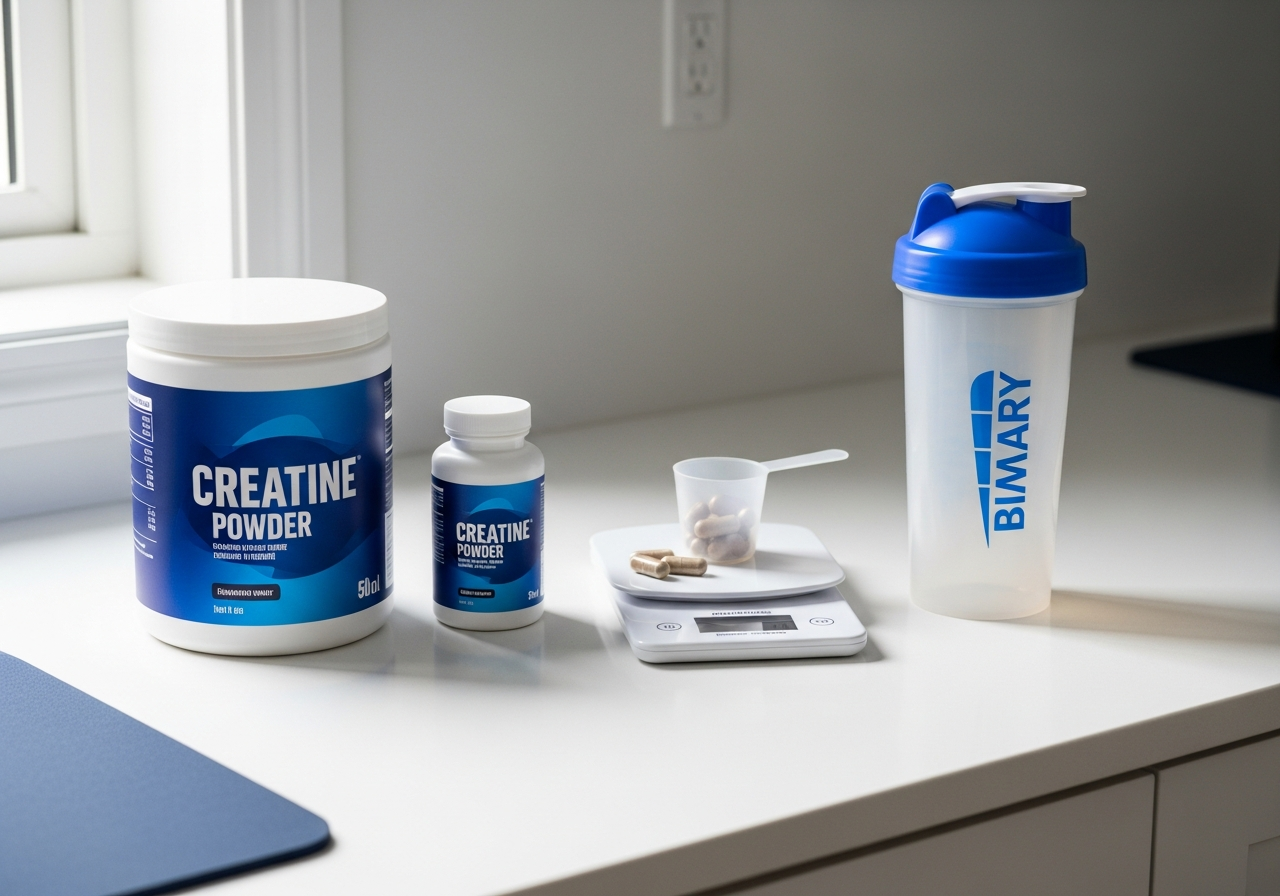
Creatine dosing is well established, while carnitine dosing varies more by form and intended use. If you want a simple, evidence-based routine, creatine is much easier to dose confidently.
For creatine monohydrate, the standard maintenance approach is 3-5 g per day. A faster option is a loading phase of 20 g per day split into 4 doses for 5-7 days, followed by 3-5 g per day. Another mainstream method is about 0.3 g/kg/day for 5-7 days during loading, then about 0.03 g/kg/day as maintenance.
For L-carnitine products, there is no single universal sports dose that is as settled as creatine monohydrate. In practice, products often land in the low-gram range per day, with exact use depending on whether the form is plain L-carnitine, L-carnitine L-tartrate, or acetyl-L-carnitine. Because carnitine evidence is more goal-specific and less standardized, follow the product label and avoid assuming "more is better".
| Supplement | Best-supported use | Typical dose | Timeline | Notes |
|---|---|---|---|---|
| Creatine monohydrate | Strength, power, lean mass, repeated high-intensity performance | 3-5 g daily | 2-4 weeks without loading; 5-7 days with loading | Most studied and most cost-effective form |
| Creatine monohydrate with loading | Same as above, but faster saturation | 20 g/day split into 4 doses for 5-7 days, then 3-5 g/day | Faster initial effect | May cause more stomach upset if taken in large single doses |
| L-carnitine or L-carnitine L-tartrate | Goal-specific metabolic or recovery use | Varies by form and label | Varies | Evidence less consistent for visible fat loss |
Examples by body weight for creatine maintenance:
- 60 kg person: 3 g/day is a reasonable starting point.
- 75 kg person: 3-5 g/day is standard.
- 90 kg person: 5 g/day is typical.
- 110 kg person: 5 g/day is still common; some larger athletes use slightly more, but 5 g/day works well for most.
If you want an exact calculation, use our creatine dosage calculator and read how much creatine per day. If you want loading instructions, see creatine loading phase.
When to take creatine or carnitine, and how to build a routine you will actually follow
Daily consistency matters far more than precise timing for creatine, while carnitine timing is usually product- and goal-dependent rather than universally critical. For most people, the best time to take creatine is simply the time they will remember every day.
Creatine works by increasing muscle creatine stores over time, a process often called saturation. Once your muscles are saturated, the exact minute you take it matters less than the fact that you keep taking it. That is why many lifters do well with one of these simple routines:
- Take 3-5 g creatine monohydrate once daily.
- Mix it in water, a shake, or a meal you already have consistently.
- Take it on training days and rest days.
- If loading, split 20 g/day into 4 smaller doses to reduce stomach upset.
For carnitine, timing depends more on the form and intent. Some users take it around workouts, while others take it with meals depending on the product directions. Because the evidence is not as simple or universal as creatine, the label instructions matter more with carnitine than they do with plain creatine monohydrate.
Here is the easiest real-world approach if you want a low-friction routine:
- Morning person: take creatine with breakfast daily.
- Post-workout shaker user: mix creatine into your post-workout protein shake.
- Forgetful beginner: leave the tub beside something you use every day and track it for the first month.
- Sensitive stomach: split the dose or take it with food.
Week-by-week, what should you expect from creatine?
- Days 1-7 with loading: saturation rises faster; some people notice better training pop or a slight scale increase.
- Weeks 2-4 without loading: benefits become more noticeable as stores rise steadily.
- Weeks 4-8: look for more reps at a given weight, slightly better repeat sprint output, or improved training volume.
For a fuller timing breakdown, see when to take creatine, how to take creatine, and creatine on rest days. If you have mixing issues, how to mix creatine helps with dissolving and texture.
Can you stack creatine and carnitine together? Yes, but the stack should have a purpose
You can take a creatine-carnitine stack, and the most logical reason is that they target different systems rather than duplicating each other. The key question is not whether you can stack them, but whether the extra cost fits a real need.
A sensible creatine-carnitine stack usually looks like this: creatine is the foundation for performance, while carnitine is an optional secondary add-on for a more specific goal. For example, a lifter cutting calories may keep creatine in to preserve training quality and then add a carnitine product if they want to experiment with a metabolic or recovery angle. An athlete focused on power and repeated sprints may take creatine and skip carnitine entirely because the incremental value of carnitine may be hard to notice.
What stacking should not mean:
- It should not mean taking both because social media says more supplements are always better.
- It should not mean replacing diet, sleep, or protein intake with capsules and powders.
- It should not mean expecting creatine to cover fat loss or carnitine to cover strength gains.
A simple stack decision framework:
- Pick the main outcome: strength, muscle, fat loss, endurance, recovery, or body composition.
- Add creatine first if strength, power, lean mass, or training quality is on the list.
- Add carnitine only if you have a specific reason and room in your budget after the basics are covered.
- Track one clear marker, such as training volume, sprint repeatability, body weight trend, waist measurement, or adherence to your cut.
If you are already using protein powder, a creatine stack remains simpler and better supported than a carnitine-first stack. See can you mix creatine with protein powder for the practical side.
Best use of a stack: make creatine non-negotiable if your training is high intensity, then treat carnitine as optional, testable, and dispensable if you do not see a benefit after a fair trial.
Safety, side effects, and what the evidence really says
Creatine is one of the best-studied sports supplements and appears safe for healthy adults when used as directed, while carnitine is also generally well tolerated but less central to sports nutrition evidence. Most problems people blame on creatine come from misunderstanding normal effects or using poor dosing habits.
Common creatine side effects are usually mild and manageable:
- Temporary water-weight increase: this is often intracellular water in muscle, not fat gain.
- Stomach upset or loose stools: more likely when people take large single doses, especially during loading.
- Bloating complaints: often reduced by splitting the dose or using plain monohydrate properly.
According to the 2021 JISSN paper on common questions and misconceptions about creatine, many long-standing fears about creatine, including dehydration, cramping, and kidney damage in healthy users, are often overstated or unsupported by the totality of evidence. Creatine can raise blood creatinine, but creatinine is a breakdown product used in lab testing and is not the same thing as kidney damage. That distinction matters, especially if routine blood work is being interpreted without supplement context. See is creatine bad for your kidneys and creatine vs creatinine.
L-carnitine can also cause gastrointestinal symptoms in some users, especially at higher intakes or with certain products. As with any supplement, more is not automatically more effective. Start conservatively, and stop if a product clearly does not agree with you.
Basic safety rules for both:
- Buy from reputable brands with clear lot information and preferably third-party testing.
- Follow the labelled serving size unless a clinician advises otherwise.
- Do not stack several new supplements at once if you want to identify what is helping or causing issues.
- Speak to a clinician first if you have kidney disease, are pregnant or breastfeeding, or take medications that complicate the picture.
In Canada, pay attention to product labelling and whether a supplement carries a Natural Product Number, or NPN, when applicable. An NPN is a Health Canada-issued identifier for approved natural health products. It is not a guarantee of athletic efficacy, but it is a useful legitimacy signal alongside third-party testing and transparent ingredient lists. For broader context, see is creatine approved in Canada.
Common mistakes and myths: the fastest way to waste money on either supplement
The biggest mistakes are choosing carnitine as a fat-loss shortcut, quitting creatine too early, and judging both supplements without tracking anything objective. Most supplement disappointment comes from unrealistic expectations, not from the compound itself.
Myth 1: Carnitine automatically burns fat because it moves fatty acids.
False. Carnitine participates in fatty-acid transport, but visible fat loss still depends on total energy balance, training, and diet adherence. A mechanism is not a guarantee of a meaningful body-composition change.
Myth 2: Creatine makes you fat.
False. Creatine can increase body weight through muscle water retention, especially early on, but that is not the same as gaining body fat. Our guides on weight gain and bloating break this down clearly.
Myth 3: If creatine does not work in three days, it is not working.
False. Without loading, many people need roughly 2-4 weeks of daily use before the benefits become obvious. See how long creatine takes to work.
Myth 4: You need exotic forms of creatine.
Usually false. Creatine monohydrate remains the reference standard because it is the most studied and most cost-effective. Fancy forms often solve a marketing problem more than a performance problem.
Myth 5: More supplements means better results.
False. If your protein is low, sleep is poor, and training lacks progression, neither creatine nor carnitine will rescue your results.
Three practical mistakes to avoid:
- Not taking creatine daily. Missed days matter more than imperfect timing.
- Using heaping random scoops. Measure your dose; do not guess. See how to measure creatine.
- Buying on buzzwords instead of evidence. Prioritize transparent labels, reputable brands, and plain monohydrate over flashy claims.
For a dedicated myth roundup, see creatine myths debunked and creatine myths vs facts. If your supplement budget is limited, myth-busting is often the most valuable money-saving step you can take.
Buying creatine or carnitine in Canada: what to look for on the label
In Canada, the smart buy is usually a plain creatine monohydrate product from a reputable brand with transparent labelling, while carnitine products require more scrutiny because forms and claims vary more. Shopping well matters because supplement quality is not equal across products that look similar online.
For creatine, the checklist is straightforward:
- Form: choose creatine monohydrate first.
- Dose transparency: the label should clearly state grams per serving.
- Minimal extras: plain powder is usually best value.
- Third-party testing: helpful for purity and label confidence.
- NPN awareness: an NPN can be a useful Canadian legitimacy signal when applicable.
For carnitine, read even more carefully:
- Check the exact form: L-carnitine, L-carnitine L-tartrate, or acetyl-L-carnitine.
- Check the per-serving amount and serving count.
- Ignore vague "fat burning" claims that are not tied to a realistic use case.
- Be extra cautious with stimulant-heavy blends that bury the carnitine dose in a proprietary formula.
If you are comparison shopping, ask these questions:
- What is the cost per effective serving?
- Is the form the one with the best evidence for my goal?
- Is the company transparent about testing and manufacturing?
- Am I paying for branding, flavour systems, or a genuinely useful formula?
For most readers, a basic unflavoured creatine monohydrate powder will outperform a fancier carnitine product on value, evidence, and expected results. To compare options, browse our best creatine rankings, creatine brand reviews, and creatine product catalog. If you want the Canadian regulatory background, our guide to Canadian supplement regulations explains NPNs, labels, and what approval does and does not mean.
Simple buying verdict: if you are asking "creatine vs carnitine" at the checkout page, the safer evidence-based spend is usually creatine monohydrate first, then carnitine only if you still have a specific reason to test it.
Bottom line: different goals, different mechanisms, but one is the clearer first choice
Creatine is the better first supplement for most people because it has stronger evidence, clearer performance benefits, simpler dosing, and better value than carnitine. That is the practical conclusion of the creatine vs carnitine comparison.
If your main goal is strength, power, lean mass, training quality, or preserving performance while cutting, choose creatine monohydrate and take 3-5 g daily. If you want faster saturation, use 20 g/day split into 4 doses for 5-7 days, then return to 3-5 g/day. Expect the most noticeable changes over 2-4 weeks without loading or sooner with loading.
If your main goal is fat loss, do not expect either creatine or carnitine to do the heavy lifting. A calorie deficit, adequate protein, resistance training, sleep, and daily movement matter more. Carnitine is the more relevant supplement if you specifically want a fatty-acid transport angle, but it is not the obvious winner many ads make it sound like.
If you want the simplest step-by-step recommendation:
- Start with creatine monohydrate.
- Take it every day, not just on workout days.
- Track body weight, gym performance, and recovery for at least a month.
- Only consider adding carnitine if you have a clear reason and the basics are already dialled in.
This is one of those supplement comparisons where the nuanced answer still leads to a clear action: creatine and L-carnitine are not rivals so much as different tools, but creatine is the tool most people should buy first.
If you are ready to act today, use the creatine dosage calculator, then read how to take creatine and best type of creatine so your first purchase and first month both go smoothly.
Creatine vs L-Carnitine at a Glance
- 3-5 g/day Standard creatine maintenance dose — Well-established mainstream dosing for creatine monohydrate.
- 20 g/day Typical creatine loading dose — Usually split into 4 doses for 5-7 days.
- 5-7 days Loading phase length — Speeds muscle creatine saturation compared with daily low-dose use.
- 2-4 weeks Typical time to notice creatine without loading — A common real-world timeline for daily 3-5 g use.
Frequently Asked Questions
Should I take creatine or carnitine for fat loss?
For fat loss alone, neither supplement matters as much as a calorie deficit, protein intake, and consistent training. Carnitine is the more relevant option mechanistically because it is involved in fatty-acid transport, but its real-world fat-loss effects are inconsistent, while creatine is often still worth taking during a cut to help preserve gym performance and lean mass.
Is creatine better than L-carnitine for building muscle?
Yes, creatine is clearly better than L-carnitine for building muscle. Creatine has much stronger evidence for improving high-intensity training capacity, which can translate into greater strength and lean mass gains over time, while L-carnitine is not a primary muscle-building supplement.
Can I take creatine and carnitine together?
Yes, you can take creatine and carnitine together because they work through different mechanisms. Creatine supports rapid ATP regeneration for high-intensity performance, while carnitine is involved in fatty-acid transport, so stacking can make sense if you have a specific goal and are not using supplements as a substitute for training and diet.
Does carnitine help you lose belly fat better than creatine?
No, carnitine is not proven to reliably reduce belly fat better than creatine in healthy active adults. Carnitine is often marketed for fat loss, but spot reduction is not how fat loss works, and overall nutrition, energy balance, and training habits determine whether abdominal fat comes down.
Which is better before a workout, creatine or carnitine?
Creatine is usually the more useful all-around supplement for people training hard, but daily consistency matters more than taking it right before a workout. Carnitine timing depends more on the specific form and product, whereas creatine's benefit comes mainly from saturated muscle stores rather than acute pre-workout effects.
Will creatine make me gain weight while carnitine helps me lose it?
Creatine can increase body weight slightly at first, but that early change is usually from more water inside muscle, not fat gain. Carnitine is not a guaranteed weight-loss supplement, so this comparison is often misleading because it confuses scale weight with body composition and overestimates what carnitine can do.
Is L-carnitine safer than creatine?
Not necessarily, because creatine is already very well studied and appears safe for healthy adults when used as directed. Both supplements are generally well tolerated, but the better question is whether the product is appropriate for you individually and whether you have any medical reasons to speak with a clinician first.
Do women benefit more from creatine or carnitine?
Most active women looking for strength, muscle, performance, or healthy ageing support are more likely to benefit from creatine. Carnitine may still be used for narrower goals, but creatine has the clearer evidence base and is often a better first supplement for women despite outdated fears about looking bulky.
What is the best form of creatine in this comparison?
Creatine monohydrate is the best form for most people in this comparison because it is the most studied, most cost-effective, and easiest to dose properly. More expensive creatine forms are usually not necessary unless a person has a specific tolerance or convenience issue.
How long should I try creatine or carnitine before deciding if it works?
Give creatine at least 2-4 weeks at 3-5 g daily if you are not loading, or about a week if you do a proper loading phase and then continue maintenance. For carnitine, a fair trial depends more on the form and goal, but you should still track objective outcomes instead of relying on vague feelings.