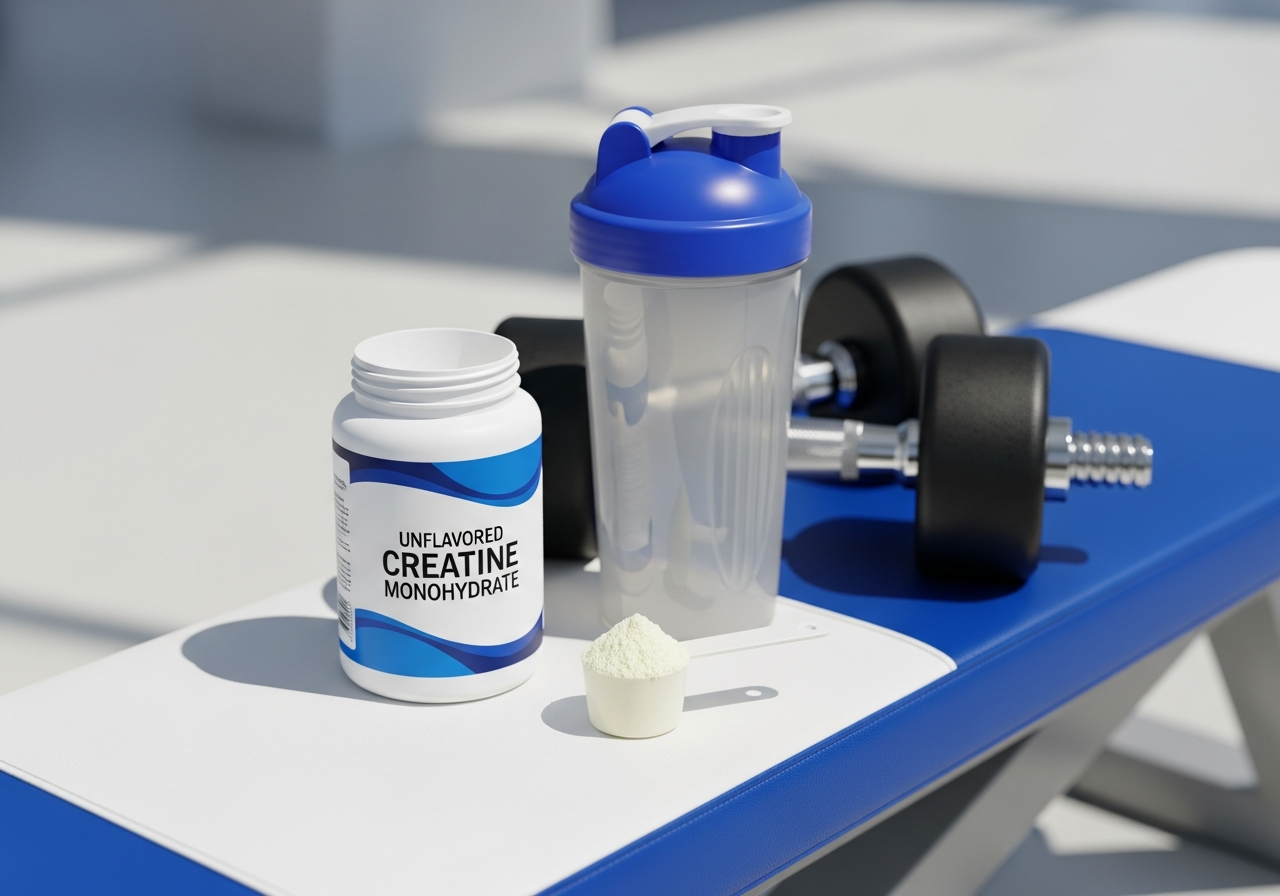
Does Creatine Give You Energy? How It Powers Your Muscles
By The Creatine Canada Research Team — Evidence-based supplement analysts
Yes, creatine can give you more usable exercise energy, but not in the way caffeine or an energy drink does. Creatine increases your muscles’ stored phosphocreatine so you can regenerate ATP faster during short, hard efforts, which usually feels like better power, a few more reps, and less drop-off between sets rather than a wired, awake feeling.
Evidence-based · Cites 4 sources · Editorial standards
Key Takeaways
- Creatine supports energy production inside muscle by helping rebuild ATP, your cells’ immediate energy currency.
- It is not a stimulant, so creatine does not reliably keep you awake or give a caffeine-like buzz.
- The standard evidence-based dose is 3-5 g of creatine monohydrate daily, with optional loading at 20 g/day split into 4 doses for 5-7 days.
- Most people notice gym performance changes after muscle stores saturate: about 1 week with loading or 3-4 weeks without.
- If creatine makes you tired, the usual culprits are poor hydration, GI upset from large doses, or unrelated training fatigue rather than creatine itself.
- Creatine works best for lifting, sprinting, jumping, HIIT, and repeated explosive efforts, not as a general wake-up supplement.
- In Canada, choose creatine monohydrate with a Health Canada NPN when applicable and, ideally, third-party testing for purity.
Does creatine give you energy? Yes — but it gives muscle energy, not a stimulant buzz
Yes, creatine gives you more usable energy for high-intensity exercise by helping your body regenerate ATP faster, but it does not act like caffeine and usually does not make you feel suddenly awake. The practical effect is better performance in short bursts of hard work such as heavy sets, sprints, jumps, repeated intervals, and explosive sport movements.
To be precise, creatine is not an energy drink ingredient in the usual sense and it is not a central nervous system stimulant. When people ask, "will creatine give me more energy?" the most accurate answer is: it can improve energy availability inside muscle cells during brief, intense work, which may make training feel stronger and more repeatable, but it does not usually raise day-to-day alertness in the same way coffee does.
This matters because many beginners expect a first-scoop sensation. Creatine does not work like pre-workout. It works through saturation, meaning your muscles gradually build up more stored creatine and phosphocreatine over days to weeks. Once those stores rise, your muscles can recycle ATP more quickly during demanding efforts. That is why the payoff is cumulative, not immediate.
The strongest evidence is for:
- Strength and resistance training
- Sprinting and repeated sprint ability
- Power output and explosive efforts
- High-intensity interval work
- Maintaining performance across multiple sets
The evidence is much weaker for using creatine as a general "energy booster" for a long workday, poor sleep, or steady-state cardio. If your goal is all-day wakefulness, creatine is the wrong tool. If your goal is to improve your ability to produce force repeatedly in the gym or in sport, creatine is one of the best-supported supplements available. The 2017 ISSN position stand concluded that creatine monohydrate is the most effective nutritional supplement currently available for increasing high-intensity exercise capacity and lean mass during training.
If you are brand new, the simplest starting plan is 3-5 g of creatine monohydrate every day, including rest days. If you want help with exact intake, use our creatine dosage calculator or read how to take creatine for a step-by-step setup.
How creatine affects ATP: the real mechanism behind "energy"
Creatine helps your body make ATP available faster by increasing phosphocreatine stores in muscle, and phosphocreatine donates a phosphate to rapidly rebuild ATP during intense effort. That is the core answer to "how does creatine affect ATP," "how does creatine make ATP," and "how does creatine produce ATP."
ATP stands for adenosine triphosphate, the molecule your cells use as immediate energy for contraction. You do not store much ATP at one time, so during heavy lifting or sprinting it gets used up quickly. Your body therefore needs fast systems to regenerate it. One of the fastest is the phosphocreatine system.
Here is the mechanism in plain English:
- You supplement with creatine, usually as creatine monohydrate.
- Your muscles store more total creatine, including more phosphocreatine, which is creatine bound to a phosphate group.
- During a hard set or sprint, ATP is broken down to ADP to release energy.
- Phosphocreatine donates its phosphate to ADP through the creatine kinase reaction.
- ADP becomes ATP again, letting you sustain force for a little longer or recover faster before the next effort.
That is why creatine is especially useful when work periods are short and intense, generally lasting seconds rather than many minutes. It does not directly create calories, and it does not replace carbohydrates or fat as fuel. Instead, it improves the speed of ATP recycling in the moments where rapid energy turnover matters most.
Another helpful way to think about it: creatine is like topping up the buffer system that keeps your immediate energy supply from dropping off so fast. In practice, that can mean:
- One or two extra reps at a given load
- Slightly higher bar speed
- Less power drop from sprint 1 to sprint 5
- Better training volume over time
Over weeks and months, those small session-by-session gains can compound into greater strength and muscle gain. For a broader primer, see what creatine is and what it does and the evidence-based list of creatine benefits. For a balanced review of benefits and limitations, the Examine.com creatine evidence summary is also useful.
What creatine actually feels like, and how long it takes to notice more energy
Creatine usually feels like better training capacity, not like a mental jolt, and most people notice it only after their muscle stores rise. If you are wondering, "does creatine make you have energy?" the honest answer is that it often shows up as improved performance rather than a sensation.
What people commonly notice when creatine is working:
- Heavier sets feel slightly more repeatable
- You get an extra rep on later sets
- You maintain sprint speed better across repeats
- Your muscles look a bit fuller from increased intracellular water
- Recovery between short efforts feels a bit quicker
What people usually do not notice:
- A buzz or rush 20 minutes after taking it
- A reliable mood lift on the first day
- A substitute for sleep, food, or caffeine
Timelines are predictable. With a loading phase of 20 g/day split into 4 doses for 5-7 days, many people reach near-saturation within about a week and may notice training effects quickly after that. Without loading, taking 3-5 g/day usually gets you there in roughly 3-4 weeks. That is why "creatine is not working" complaints often come from people who expected same-day effects.
A realistic week-by-week expectation:
- Days 1-3: Usually nothing dramatic; some people feel no difference at all.
- Days 4-7 with loading: Gym performance may start to feel steadier; body weight may rise slightly from water inside muscle.
- Weeks 2-4 without loading: Repeated sets and explosive efforts often improve gradually.
- Weeks 4-8: The biggest visible benefit is often better training quality, which supports longer-term strength and muscle gains.
If your main goal is to know when it should kick in, read how long creatine takes to work. If you think you are not responding, the issue may be inconsistent use, under-dosing, or already-high baseline muscle creatine. Our guide on creatine non-responders covers that in detail.
One more practical point: people with lower habitual dietary creatine intake, including many vegetarians and vegans, may sometimes notice a more obvious response because they often start from lower baseline muscle stores.
Does creatine keep you awake, wake you up, or make you tired?
Creatine is not a stimulant, so it does not typically keep you awake, and it should not reliably wake you up the way caffeine does. If you are asking "does creatine keep you awake" or "can creatine wake you up," the best answer is no for most people.
Creatine works mainly in muscle and other tissues by supporting cellular energy buffering, not by stimulating the brain’s alertness pathways. That distinction matters. Caffeine blocks adenosine receptors and can increase perceived alertness within minutes. Creatine does not do that. You can take creatine in the morning, afternoon, or evening based on convenience, and most people’s sleep is unaffected. If sleep timing matters to you, our guide on creatine before bed goes deeper.
What about tiredness? The research does not support creatine as a common cause of fatigue, but some people report feeling off when they first start. Usually the explanation is one of these:
- Large single doses: Taking 10-20 g at once can cause stomach upset, which can feel draining.
- Not enough fluid: Poor hydration can make hard training feel worse.
- Loading-phase bloat or GI discomfort: Temporary fullness can be mistaken for fatigue.
- Training harder because you feel stronger: Better workouts can create normal fatigue.
- Unrelated factors: Poor sleep, calorie deficit, illness, or stress are much more likely causes of low energy.
If you are wondering, "can creatine make you tired at first?" the answer is that it can indirectly feel that way in a minority of users if the dosing method or hydration is poor, but creatine itself is not known as a fatigue-inducing supplement. A better approach is to reduce to 3-5 g/day, take it with a meal or shake, and spread doses if loading.
There is also growing interest in creatine and mental energy, especially under sleep deprivation or in people with lower creatine intake, but that area is separate from the simple question of whether creatine keeps you awake. For that, the answer remains no: creatine is not an upper. See creatine and the brain if that topic interests you.
How to use creatine for more usable workout energy: a simple step-by-step plan
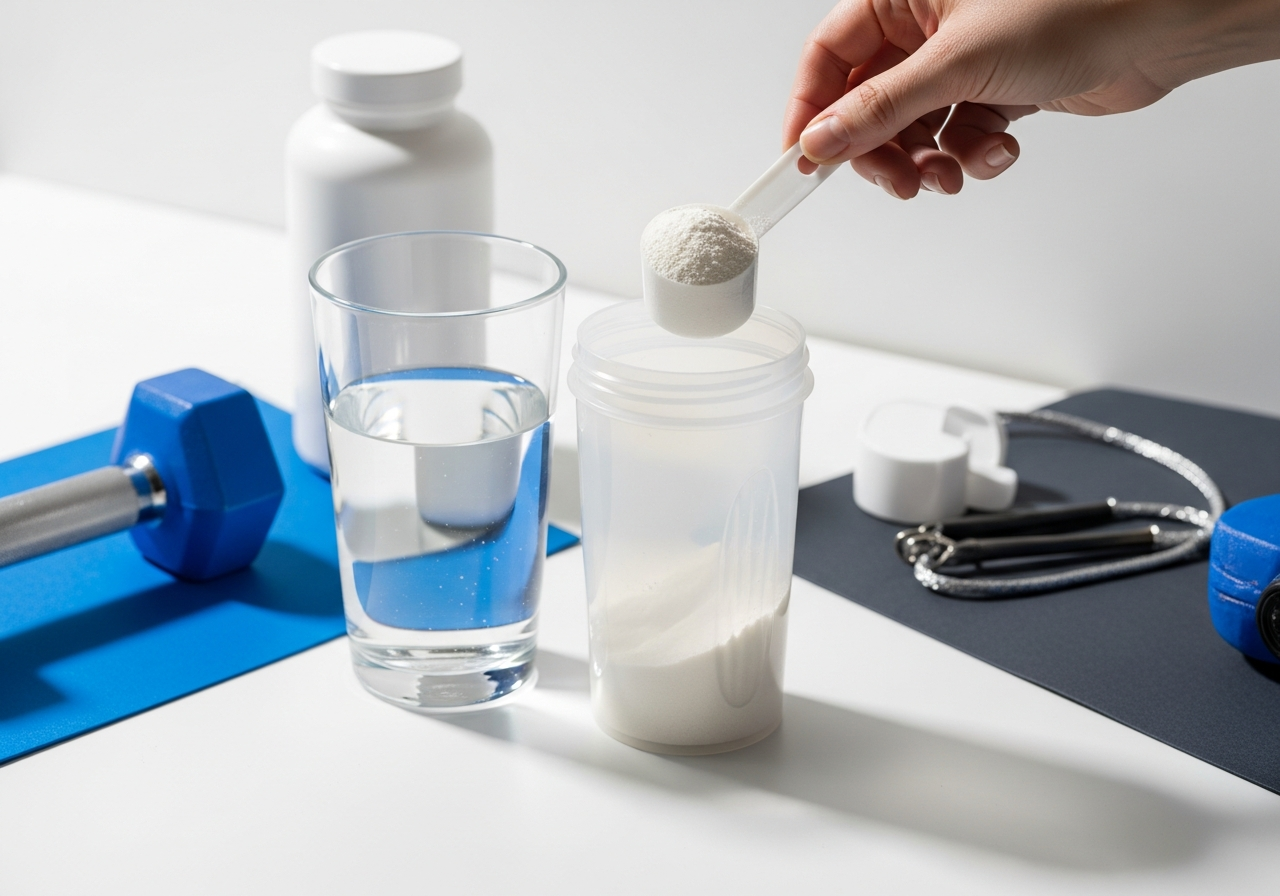
The best way to use creatine for more exercise energy is to take creatine monohydrate every day until your muscles are saturated, then keep taking a maintenance dose consistently. If you want the shortest path to results, follow these steps.
- Choose the right form. Buy plain creatine monohydrate. It is the most studied, the most cost-effective, and the form consistently supported by the evidence. Our best creatine rankings and creatine brand reviews can help if you are comparing options.
- Pick your dosing strategy. Either load at 20 g/day split into 4 doses for 5-7 days, then switch to 3-5 g/day, or skip loading and take 3-5 g/day from day one.
- Take it daily. Rest days count. Saturation is about regular intake over time, not only workout days. If you miss one day, do not double up; just resume normal intake.
- Mix it properly. Stir it into water, juice, a protein shake, or another cold or room-temperature drink. If texture bothers you, warm water improves dissolving. See how to mix creatine for clumping and taste tips.
- Train hard enough to benefit. Creatine shines when your training includes heavy sets, explosive work, sprints, or repeated high-effort intervals.
- Monitor simple signs. Track reps, sprint consistency, body weight, and how much your last few sets fall off compared with week one.
What should beginners expect? The biggest beginner mistake is expecting a dramatic energy rush. The right expectation is cumulative performance support. If you are new to supplementation, start with 3 g/day for the first week if you have a sensitive stomach, then move to 5 g/day if needed.
Here is a practical beginner example:
- Goal: Lift 4 days per week, gain strength
- Plan: 5 g creatine monohydrate daily with lunch or post-workout shake
- Timeline: About 3-4 weeks to full effect without loading
- What to watch: Extra reps on sets 3-5, slightly better recovery between sets
If you want a personalised setup, use our creatine dosage calculator and the full guide on how much creatine per day.
The right creatine dose by body weight, training goal, and speed of results
Most adults do well on 3-5 g of creatine monohydrate per day, but body size, training volume, and how quickly you want saturation can justify the higher end of that range. If you want the direct answer: 5 g/day is a simple, effective default for many active adults.
The classical loading protocol is 20 g/day for 5-7 days, usually split into 4 servings of 5 g, followed by a maintenance dose of 3-5 g/day. Another evidence-based method is to skip loading and take 3-5 g/day consistently; this works just as well, only slower.
| Person or goal | Practical daily dose | Best use case |
|---|---|---|
| Smaller adult, light training | 3 g/day | Convenience, maintenance, sensitive stomach |
| Average active adult | 5 g/day | Simple default for gym performance and saturation |
| Larger athlete or high training volume | 5 g/day, sometimes slightly above under professional guidance | Heavier body size, repeated explosive sessions |
| Fastest saturation | 20 g/day split into 4 x 5 g for 5-7 days, then 3-5 g/day | Need results within about a week |
Body-weight examples using practical dosing:
- 60 kg beginner: 3-5 g/day is enough; 3 g/day is often fine if consistency is high.
- 75 kg recreational lifter: 5 g/day is the easiest default.
- 95 kg strength athlete: 5 g/day is still common and effective; loading may be more useful if quick saturation matters.
By goal, creatine works best for:
- Strength and muscle: 3-5 g/day, every day
- Sprinting or team sports: 3-5 g/day, with optional loading before a block of intense competition or training
- General health or healthy ageing: 3-5 g/day is commonly used in practice
If you want precision, use our creatine dosage calculator. If you want a full deep dive on maintenance, loading, and measuring scoops correctly, read creatine loading phase, creatine maintenance dose, and how to measure creatine.
One key point: more is not better once muscle stores are full. Taking far above standard maintenance does not usually improve results and only raises the chance of stomach upset.
Timing, energy drinks, and caffeine: can you take creatine with an energy drink?
Creatine timing matters far less than daily consistency, and yes, you can usually take creatine with an energy drink, coffee, or pre-workout if the total caffeine dose suits you. The direct answer to "can you take creatine with energy drinks" is generally yes.
Here is the hierarchy that actually matters:
- Daily consistency matters most.
- Total dose matters next.
- Timing is a distant third for most people.
That is because creatine works by gradually saturating muscle stores, not by creating an acute stimulant effect on the day. You can take it before training, after training, with a meal, or on rest days whenever it is easiest to remember. If you want a dedicated timing breakdown, read when to take creatine.
What energy drink has creatine in it? Some ready-to-drink products and pre-workouts include small amounts of creatine, but many under-dose it relative to the 3-5 g/day normally used in research. That is why relying on an energy drink alone is often a poor strategy unless the label clearly provides an effective daily dose. In Canada, also check for proper supplement labelling and, where applicable, a Health Canada NPN, which is the Natural Product Number used on approved natural health products.
Can you put creatine in energy drinks? Yes. Creatine can be mixed into many beverages, including water, juice, sports drinks, and some energy drinks. The main practical concerns are:
- Caffeine tolerance and sleep if the drink is highly caffeinated
- Sugar content if you use multiple sweetened drinks daily
- Whether the drink actually contains enough creatine to matter
Do creatine and caffeine cancel each other out? Current evidence does not support a blanket claim that they "cancel" each other, though very high acute caffeine intake may affect comfort or GI tolerance in some people. For a nuanced look, see creatine and caffeine and mixing creatine with coffee.
Bottom line: if an energy drink helps you train, you can add creatine to it, but creatine itself is not the ingredient giving you the buzz. The drink’s caffeine is.
Who benefits most from creatine's energy support: beginners, women, older adults, and athletes
Creatine can benefit many groups, but it is most useful for people who perform repeated high-intensity efforts or want to train harder over time. If you are wondering whether creatine can increase energy for you specifically, the answer depends on what kind of energy you need.
Beginners: Yes, beginners can benefit because creatine helps support better training quality while they learn to lift and recover. The key is not to confuse it with a pre-workout. Our creatine for beginners guide covers the basics.
Women: Women respond to creatine too. Creatine does not cause steroid-like effects, and it does not make women "bulky" on its own. It can support strength, training volume, and muscle retention, especially during hard training or dieting. See creatine for women for a full breakdown.
Older adults: Older adults may benefit because maintaining muscle mass, strength, and function becomes more important with age. Creatine paired with resistance training has some of its most practical value here. Read creatine for older adults for age-specific guidance.
Athletes: Team-sport athletes, sprinters, CrossFit athletes, lifters, and power athletes are classic good fits because their sports repeatedly tax the phosphocreatine system. The 2018 IOC consensus on dietary supplements includes creatine among the few supplements with strong evidence for performance use in appropriate sporting contexts.
Vegetarians and vegans: People who eat little or no meat may respond especially well because baseline dietary creatine intake is lower. That can make the change in muscle creatine stores more noticeable once supplementing starts.
Endurance athletes: Creatine can still help if your sport includes sprints, surges, or strength work, but the value is less obvious for pure steady-state endurance where extra body mass may be a tradeoff. Our endurance-focused guides explore that nuance.
If your main problem is low energy from poor sleep, under-eating, or burnout, creatine is not the first fix. But if your goal is more repeatable power and less drop-off during hard efforts, creatine is highly relevant across sexes and age groups.
Safety, side effects, and the real reasons creatine might seem to make you tired
Creatine monohydrate is one of the best-studied sports supplements and is considered safe for healthy people when used at recommended doses, but side effects are still possible if you dose it poorly. The direct answer to "can taking creatine make you tired" is that creatine itself is not known for causing fatigue, and when tiredness happens there is usually another explanation.
The most common short-term issues are practical rather than dangerous:
- Stomach upset from taking too much at once
- Temporary water-weight gain from increased intracellular fluid
- Bloating or fullness, especially during loading
- Occasional loose stools if mixed poorly or taken in large boluses
The 2021 JISSN review on common questions and misconceptions about creatine addressed many recurring myths, including confusion around kidney concerns, water retention, dehydration, and cramping. In healthy users, the strongest evidence does not support the idea that normal creatine use damages kidneys. What often causes confusion is that creatine can raise creatinine, a breakdown product measured in blood tests, without indicating injury. If you have kidney disease, are being investigated for kidney problems, or have been told to restrict supplements, speak with your physician first.
How to reduce side effects:
- Use 3-5 g/day instead of giant single doses
- If loading, split 20 g into 4 smaller doses
- Take it with food or a shake if your stomach is sensitive
- Drink enough fluid through the day
- Choose simple monohydrate from a reputable brand
In Canada, it is sensible to look for products with transparent ingredient lists, lot information, and ideally third-party testing. If sold as a natural health product, a Health Canada NPN can add reassurance that the product has met regulatory requirements for that category. Our guides on is creatine safe, creatine digestive side effects, and kidney concerns and creatinine confusion go deeper.
The practical takeaway is simple: standard-dose creatine should not make a healthy person chronically tired. If you feel tired after starting it, first examine sleep, hydration, calorie intake, training load, and whether you tried an aggressive loading protocol.
Common mistakes and myths: why people think creatine gives instant energy, insomnia, or fatigue
Most creatine confusion comes from expecting it to behave like a stimulant, misunderstanding water weight, or using the wrong dose. If you want to avoid disappointment, the biggest rule is this: judge creatine by your training performance over weeks, not by how hyped you feel after one scoop.
Myth 1: Creatine is an energy booster like caffeine.
False. Creatine supports ATP regeneration in muscle; caffeine changes alertness acutely. Both can fit a routine, but they do different jobs.
Myth 2: Creatine should work immediately.
False. Creatine usually needs days to weeks to saturate muscle stores. That is why daily use matters more than exact timing.
Myth 3: More creatine means more energy.
False. After saturation, extra intake does not keep improving performance and only makes GI issues more likely.
Myth 4: Creatine makes everyone bloated and sluggish.
Overstated. Some people gain a small amount of water weight, but much of it is intracellular, meaning inside muscle rather than "puffy" in the way people fear.
Myth 5: If you feel tired, creatine is the cause.
Usually false. The more common reasons are poor dosing, poor hydration, hard training, dieting, or low sleep.
Common beginner mistakes:
- Buying a flashy blend instead of plain monohydrate
- Taking it only on workout days
- Using under-dosed gummies, drinks, or blends
- Stopping after one week because they felt no buzz
- Dry scooping instead of simply mixing it well
Another important misconception is that newer forms automatically outperform monohydrate. They usually do not. Monohydrate remains the benchmark because it has the strongest evidence, the best cost-effectiveness, and excellent real-world results. If you want more myth-busting, see creatine myths debunked, creatine myths vs facts, and why monohydrate still wins.
If you simply want more "energy" for life, fix sleep, food, hydration, and stress first. If you want more high-intensity performance capacity, use creatine correctly and give it time.
What to buy in Canada: the creatine form, label, and quality checks that actually matter
If your goal is more performance energy, buy plain creatine monohydrate from a reputable brand and ignore most fancy marketing. The best buying decision for almost everyone is simple unflavoured monohydrate powder because it is effective, flexible to dose, and usually the best value per gram.
When comparing products, prioritise these factors:
- Form: Creatine monohydrate first
- Dose transparency: Clear grams per serving
- Minimal ingredients: Fewer extras mean less guesswork
- Testing: Third-party testing or a strong quality reputation
- Canadian compliance: Check labelling and, where relevant, an NPN
| Option | Pros | Cons | Best for |
|---|---|---|---|
| Monohydrate powder | Most studied, easy to dose, best value | Needs mixing, slight grit in some brands | Almost everyone |
| Micronized monohydrate | May mix more smoothly | Often costs a bit more | People who dislike texture |
| Capsules | Convenient for travel | Many capsules needed to reach 3-5 g | People who hate powder |
| Energy drink or pre-workout with creatine | Convenient all-in-one format | Often under-dosed creatine, more expensive | Only if label provides a full effective dose |
| Novel forms like HCL or buffered | Strong marketing appeal | Less evidence, often higher price | Usually unnecessary |
In Canada, there is extra value in buying from trusted domestic retailers because you can more easily verify ingredients, shipping conditions, and product authenticity. Browse our creatine product catalog, best creatine rankings, and creatine brand reviews if you want Canadian-specific comparisons.
If you are tempted by a product because it promises "all-day energy," read the label closely. Creatine is rarely the reason a product feels stimulating; caffeine and other stimulants are. Buy creatine for ATP support and performance, not for the marketing language around "energy."
Bottom line: will creatine give you more energy?
Yes, creatine can give you more energy for short, intense exercise by increasing phosphocreatine stores and helping your muscles regenerate ATP faster, but it does not usually make you feel awake like caffeine. That single sentence is the clearest answer to the main question.
If your goal is:
- More alertness right now: Creatine is not the right tool.
- More reps, power, sprint repeatability, or better high-intensity training quality: Creatine is one of the best-supported supplements you can take.
The practical formula is simple:
- Buy creatine monohydrate.
- Take 3-5 g every day.
- Optionally load with 20 g/day split into 4 doses for 5-7 days if you want faster results.
- Keep taking it on rest days.
- Judge it by performance over weeks, not by a first-day feeling.
If you are still deciding where to start, the next most useful reads are how to take creatine, how much creatine per day, when to take creatine, and is creatine safe. Those guides will help you set up a simple, effective routine without overthinking it.
The final takeaway is practical, not flashy: creatine is an ATP support supplement, not a wakefulness supplement. Use it if you want better high-intensity output and long-term training progress.
Creatine and energy: the numbers that matter
- 3-5 g/day Standard maintenance dose — Effective daily dose for most adults using creatine monohydrate.
- 20 g/day Typical loading dose — Usually split into 4 doses for 5-7 days to saturate muscle faster.
- 5-7 days Time to faster saturation with loading — Many users notice training effects sooner when they load properly.
- 3-4 weeks Time to full effect without loading — Daily 3-5 g dosing works well, just more gradually.
Frequently Asked Questions
Does creatine give you energy like caffeine?
No, creatine does not give you energy like caffeine. Creatine helps your muscles regenerate ATP faster during short, intense efforts, while caffeine works as a stimulant that increases alertness more acutely. In real life, creatine usually feels like better gym performance and less drop-off between sets, not a buzz.
Will creatine give me more energy in the gym?
Yes, creatine can give you more usable energy in the gym for heavy lifting, sprints, and repeated hard efforts. It works by increasing muscle phosphocreatine stores so ATP can be rebuilt faster during intense work. Most people notice improved reps, power, or repeat performance after about a week with loading or 3-4 weeks without.
Does creatine improve energy levels in daily life?
Usually not in the same obvious way a stimulant does. Creatine is best thought of as a performance supplement for high-intensity exercise rather than a general all-day energy booster. Some emerging research looks at mental energy and cognition in specific contexts, but that is different from feeling instantly more awake during a normal day.
Does creatine keep you awake at night?
No, creatine does not typically keep you awake at night because it is not a stimulant. Most people can take creatine in the evening without sleep problems. If you notice insomnia, the more likely cause is another ingredient taken with it, such as caffeine in a pre-workout or energy drink.
Can creatine make you tired at first?
Yes, creatine can seem to make you tired at first in some cases, but usually indirectly rather than because the supplement itself causes fatigue. Large loading doses, stomach upset, poor hydration, or harder training are more common reasons. Reducing to 3-5 g/day and improving fluid intake often solves the issue.
How does creatine make ATP?
Creatine helps regenerate ATP by increasing phosphocreatine stored in muscle. During intense exercise, phosphocreatine donates a phosphate to ADP through the creatine kinase reaction, turning ADP back into ATP. Creatine does not replace carbs or fat as fuel; it speeds up immediate ATP recycling when demand is very high.
Can you take creatine with energy drinks?
Yes, you can usually take creatine with energy drinks if you tolerate the drink’s caffeine and other ingredients well. The bigger issue is that many energy drinks contain too little creatine to match the standard effective dose of 3-5 g/day. Creatine and caffeine do different jobs, so combining them is common.
What energy drink has creatine in it?
Some pre-workouts and ready-to-drink performance beverages include creatine, but many are under-dosed compared with the 3-5 g/day normally used in research. The only reliable way to know is to read the label and check the exact grams per serving. Do not assume a product marketed for energy provides enough creatine to saturate muscle.
Can you put creatine in energy drinks or coffee?
Yes, you can mix creatine into an energy drink or coffee, although plain water, juice, or a shake are often simpler options. What matters most is hitting your daily dose consistently, not the exact liquid you use. If the drink contains a lot of caffeine, consider whether it fits your sleep and tolerance.
Is creatine an energy booster?
Yes, creatine is an energy booster for high-intensity muscular work, but no, it is not an energy booster in the stimulant sense. It boosts immediate exercise energy availability by helping regenerate ATP during hard efforts. That makes it excellent for lifting and sprinting, but not a replacement for sleep or a wake-up supplement.