Creatine Non-Responders: Why It Might Not Be Working for You
By The Creatine Canada Research Team — Evidence-based supplement analysts
Yes, a true creatine non responder exists, but most people who think creatine is not working for them are actually under-dosed, not fully saturated, using inconsistent training, or expecting the wrong effects. In practice, creatine no effect usually means your muscles were already relatively full of creatine, your protocol is off, or you are judging it by water weight instead of improved gym performance.
Evidence-based · Cites 4 sources · Editorial standards
Key Takeaways
- Most cases of “creatine not working” are protocol problems, not true non-response.
- The best test is 3–5 g of creatine monohydrate daily for 4 weeks, or a 5–7 day loading phase of 20 g/day split into 4 doses.
- Creatine works by raising muscle phosphocreatine, which helps you regenerate ATP for short, hard efforts.
- You may be a low responder if you already eat a lot of meat, have higher baseline muscle creatine, or do little high-intensity training.
- Judge results by better reps, power, sprint repeatability, and recovery between hard sets, not just scale weight.
- Creatine monohydrate remains the most studied, most reliable, and most cost-effective form.
- If creatine seems ineffective after a proper trial, training quality, total calories, protein, sleep, and product quality are the next things to audit.
What a creatine non responder actually means
A creatine non responder is someone who gets little measurable benefit from creatine supplementation despite using an evidence-based dose for long enough to fully saturate muscle stores. That is the direct answer, and it matters because true non-response is real but much less common than people assume.
When people search “why is creatine not working for me”, they usually mean one of three things: they do not feel anything, the scale did not move, or their gym performance did not obviously improve. None of those alone proves non-response. Creatine is not a stimulant, so you should not expect a buzz or immediate surge of energy. Creatine works by increasing phosphocreatine, the stored form of creatine in muscle that helps rapidly remake ATP, the cell’s immediate energy currency, during short bursts of hard effort.
The key distinction is this: responders vs non responders is a spectrum, not an all-or-nothing category. Some people are high responders and gain noticeable body mass, training volume, and power quickly. Others are modest responders and only see subtle but real improvements, such as one extra rep on later sets, slightly better sprint repeatability, or less drop-off between intervals. A small minority show minimal change because their starting muscle creatine is already high or because their training style does not rely much on the energy system creatine helps most.
Research summaries such as the 2017 ISSN position stand and the 2021 JISSN review on common questions and misconceptions support creatine monohydrate as effective for high-intensity exercise, strength, lean mass, and training adaptations in many people, but they do not claim every individual responds identically.
If you are asking, “am I a creatine non responder?”, the honest answer is that you cannot know from a few random scoops, a week of use, or the absence of bloating. You can only judge after a proper trial with the right dose, a suitable training stimulus, and a clear definition of success. Before assuming you are a creatine no effect case, work through a structured troubleshooting process. For a full beginner foundation, see what creatine is and creatine for beginners.
How creatine works, and why some people feel nothing at first
Creatine works by increasing your muscle phosphocreatine stores, and that primarily helps repeated high-intensity efforts rather than creating a noticeable “feeling.” If creatine seems to have no effect, that often means you are looking for the wrong signal.
Your muscles use ATP for contraction, but ATP stores are tiny and get depleted quickly during heavy lifting, sprinting, jumping, and explosive work. Phosphocreatine donates a phosphate group to help regenerate ATP rapidly, which lets you maintain force output for a little longer and recover a little better between hard efforts. That small energetic advantage is exactly why creatine can translate into better training quality over time. More quality reps and sets can then lead to greater gains in strength and lean mass.
The mechanism explains why creatine helps some activities more than others. Creatine tends to be most useful for:
- Heavy resistance training
- Repeated sprinting
- Explosive team sports
- High-intensity interval work
- Training blocks where total volume matters
Creatine is less dramatic for long, steady endurance sessions where the phosphocreatine system is not the main limiter. If your training is mostly low-intensity cardio, you may conclude “creatine not working” when the reality is that your program simply does not showcase its main benefit.
Another reason people feel nothing is that creatine accumulates. Unlike caffeine, it does not need to create an acute sensation to be effective. Without a loading phase, daily supplementation of 3–5 g usually takes several weeks to saturate muscle. With loading, saturation happens much faster. That is why asking whether creatine worked after four days is usually premature. For the timeline details, see how long creatine takes to work.
Baseline muscle creatine also matters. People who already have relatively high stores often experience less noticeable change because they have less room for improvement. This is one reason meat eaters may respond less dramatically than vegetarians or vegans, who often start with lower stores and may respond especially well. If that describes you, compare your expectations to your context before assuming complete non-response.
In short, creatine no effect usually means one of four things: the dose is too low, the trial is too short, the training stimulus is a poor match, or the person is measuring the wrong outcome.
Why creatine might not be working for you: the most common real-world causes
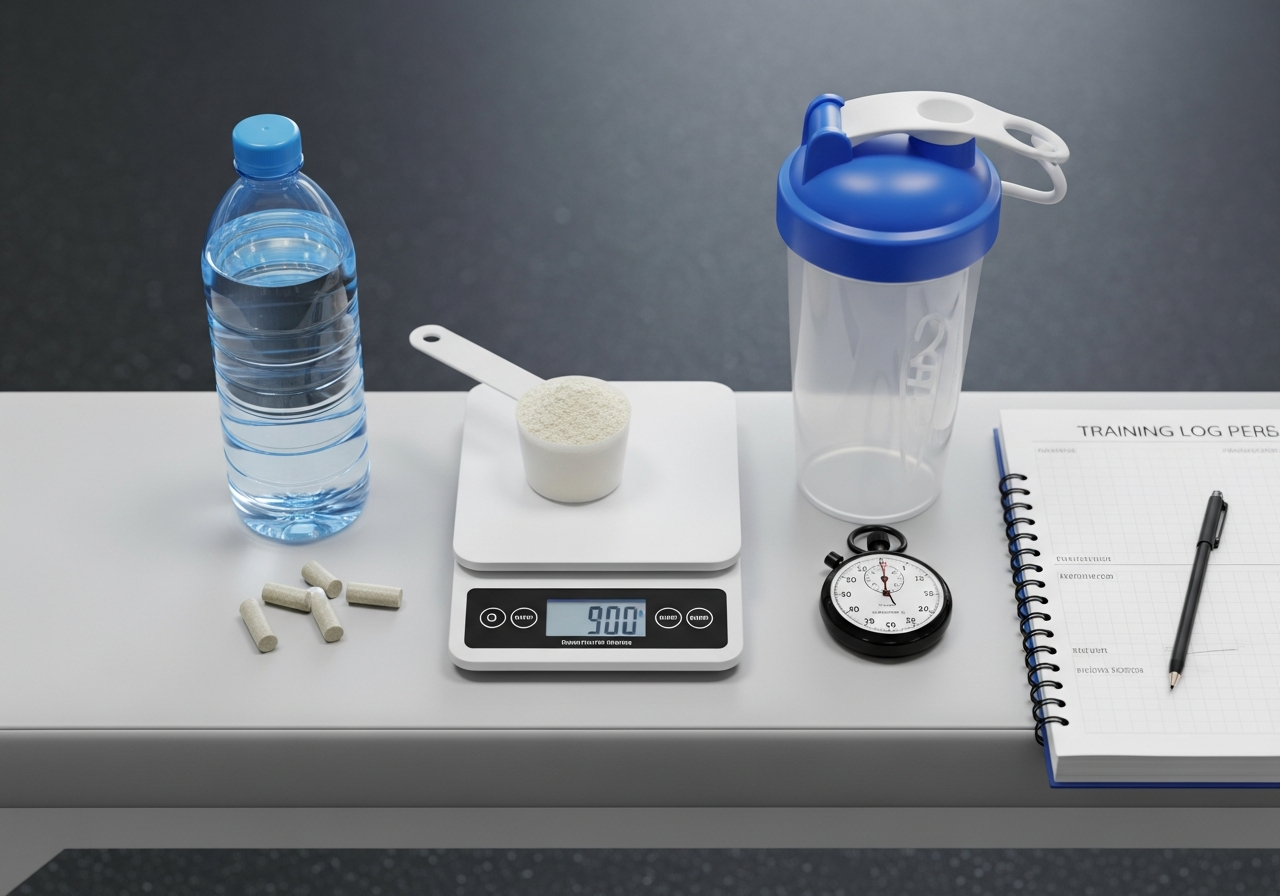
If you think creatine is not working for you, the most likely explanation is a fixable mistake in dose, duration, training, or expectations. True creatine non-response is possible, but it should be the last explanation you reach for, not the first.
Here are the most common reasons people get poor results:
- You have not taken enough for long enough. A maintenance dose of 3–5 g/day works, but it is slower. If you only tried it for 7–10 days without loading, you may not have reached saturation.
- Your training does not create a reason for creatine to shine. Creatine improves high-intensity output and repeated efforts. If you are not lifting hard, sprinting, or doing demanding intervals, the effect may be hard to notice.
- Your baseline muscle creatine may already be high. People with high habitual meat intake or naturally higher muscle stores may see smaller changes.
- You are judging it by body weight alone. Some people gain 1–2 kg of water weight early, while others gain little. Lack of scale change does not mean lack of benefit.
- Your product or serving size is poor. Some gummy, proprietary blend, or under-dosed products do not deliver a real 3–5 g daily amount. If in doubt, choose plain monohydrate from a reputable source. You can compare options in our best creatine rankings and creatine brand reviews.
- You are inconsistent. Missing multiple days each week makes it harder to fully saturate and stay saturated. Creatine rewards boring consistency.
- Your recovery is limiting results. Low calories, low protein, poor sleep, and erratic training can hide creatine’s effect.
One subtle point: “response” in studies is often defined by increases in intramuscular creatine, fat-free mass, or performance measures. Your own response may show up in only one category. For example, you may not gain much scale weight but may improve repeated-set performance. That still counts.
Also remember that non-response is not a moral failure or a sign the supplement is fake. Biology varies. The practical question is not whether you fit a label; it is whether a proper protocol improves outcomes that matter to your goal. If your goal is strength, track reps and load. If your goal is sprint performance, track repeatability. If your goal is body composition, track training volume and lean-mass trends over time.
For a more complete how-to setup, see how to take creatine and how much creatine per day.
Am I a creatine non responder? Use this 4-step test protocol first
If you want to know whether you are a creatine non responder, the best approach is a controlled 4-step trial using creatine monohydrate, a proper dose, and objective performance tracking. That is far more reliable than guessing based on how you feel.
- Choose the right product. Use plain creatine monohydrate powder from a reputable brand, ideally one with clear Canadian labelling and an NPN, which is a Natural Product Number issued for regulated natural health products in Canada. Third-party testing adds confidence, especially if you compete.
- Run a proper dosing phase. Either load with 20 g/day for 5–7 days split into four 5 g doses, then move to 3–5 g/day, or skip loading and take 3–5 g/day for at least 4 weeks. If you want help calculating, use our creatine dosage calculator.
- Track the right metrics. Record body weight, key lifts, total reps completed at a fixed load, sprint times, or repeat-interval drop-off. Compare week 0 to week 2, 4, and 6. Do not rely on “I think I look fuller” as your only metric.
- Keep everything else stable. Maintain similar protein intake, calories, hydration, sleep, and training frequency during the test. If your routine changes wildly, you cannot isolate creatine’s impact.
A practical example helps. Suppose you bench press 80 kg for 3 sets of 8, squat 100 kg for 3 sets of 6, and do bike sprints once weekly. During your creatine trial, track whether later sets hold up better, whether you can add one rep at the same load, and whether sprint power drops less across repeats. Those are the kinds of changes creatine often improves before mirror changes become obvious.
What counts as probable non-response? If you used verified creatine monohydrate, hit the dose daily, trained hard in a suitable style, and saw no meaningful change after 4–6 weeks in any relevant measure, you may be a low responder or practical non-responder. Even then, “no response” may simply mean the effect is too small to matter for your context.
If you want a faster answer, a loading phase is useful because it removes the “maybe I just wasn’t saturated yet” excuse. For a deeper walkthrough, read creatine loading phase and creatine on rest days.
The best creatine dose by body weight and goal when results are unclear
If creatine is not working for you, the most practical dosing fix is to use evidence-based creatine monohydrate at either 3–5 g/day consistently or a loading phase of 20 g/day for 5–7 days followed by 3–5 g/day. Those are the standard protocols supported by mainstream sports nutrition guidance.
Body weight can help fine-tune the decision, especially for larger athletes. A common loading method is roughly 0.3 g/kg/day for 5–7 days, followed by about 0.03 g/kg/day for maintenance. In practice, the simple standard doses below work well for most adults.
| Body weight | Fast saturation option | Maintenance option | Best for |
|---|---|---|---|
| Under 60 kg | 15–20 g/day for 5–7 days split into 4 doses | 3 g/day | Smaller adults, cautious starters |
| 60–90 kg | 20 g/day for 5–7 days split into 4 doses | 3–5 g/day | Most adults training for strength or muscle |
| Over 90 kg | 20–25 g/day for 5–7 days split into 4–5 doses | 5 g/day | Larger lifters and field athletes |
Goal also matters. If you want to know quickly whether you respond, loading is the fastest test. If you are prone to stomach upset, skip loading and use 3–5 g/day; it is slower but usually gentler. If you are a larger athlete and have been taking only 3 g inconsistently, moving to a reliable 5 g/day may solve the problem.
There is little good evidence that fancy forms outperform monohydrate for real-world results. The 2017 ISSN position stand concluded that creatine monohydrate is the most effective ergonomic nutritional supplement currently available to athletes for increasing high-intensity exercise capacity and lean body mass during training, and it remains the reference form. If your current product uses tiny proprietary servings or expensive alternative forms, switching to straightforward monohydrate is often the smartest correction.
For personalised dosing help, use the creatine dosage calculator, or read creatine maintenance dose and how to measure creatine.
Timing, food, and mixing: do these change your creatine response?
Timing matters much less than total daily intake, so if creatine seems ineffective, prioritise consistency over the perfect clock time. That is the practical answer for most people wondering whether they took it wrong.
Muscle saturation is the main goal, which means the best time to take creatine is the time you will actually remember every day. Some people prefer it post-workout with a shake, others with breakfast, and others at night. Current evidence does not support a dramatic performance difference between taking it before versus after training when total daily dosing is matched. If you miss doses because you are chasing an ideal timing window, you are hurting results more than helping them.
Taking creatine with food can improve convenience and reduce stomach upset for some people. Mixing it into a protein shake, yoghurt, or a meal-adjacent drink is fine. Carbohydrate and insulin have been discussed as possible ways to support uptake, but in normal real-world use, the effect is not large enough to matter more than hitting the dose consistently.
What about coffee? The old idea that caffeine cancels creatine is overstated. The more current view is that they can be used together, though some people find the combination rough on digestion. If you are troubleshooting, keep the plan simple: water or a shake, once daily, same habit every day.
Mixing issues can also create accidental under-dosing. Creatine monohydrate does not always dissolve perfectly in cold liquid, especially if the powder is not micronized. That does not mean it is ineffective. Stir well, use lukewarm water if you prefer, and drink any sediment left at the bottom so the full dose is actually consumed. For practical mixing tips, see how to mix creatine and creatine with or without food.
Hydration is worth mentioning, but not because creatine dehydrates you. The evidence does not support the myth that creatine causes dehydration in healthy users. You simply want normal good hydration habits, especially if you train hard. If you get headaches or stomach issues, poor fluid intake may be part of the problem, but it is not the main driver of non-response. See how much water with creatine for a practical guide.
Who responds best to creatine, and who often responds less
People most likely to respond well to creatine are those with lower baseline muscle creatine stores and those doing high-intensity training that repeatedly stresses the phosphocreatine system. That is why the same supplement can feel game-changing for one person and underwhelming for another.
Beginners often do well because almost any increase in training quality compounds with their rapid early adaptation phase. Creatine will not replace progressive overload, but it can support a little more work and a little better recovery between hard sets.
Vegetarians and vegans are often among the best responders because dietary creatine intake from meat and fish is low or absent, so baseline stores can be lower. If you are plant-based and think you are a non responder, double-check dose and consistency before writing it off; in this group, clear response is common.
Women can benefit meaningfully from creatine for strength, lean mass, training quality, and potentially some non-exercise outcomes, even though the supplement has historically been marketed more heavily to men. Women who think creatine no effect means “it did not make me bulky” are often judging the wrong outcome. It may still be improving strength or work capacity. For more, see creatine for women.
Older adults may benefit when creatine is paired with resistance training, especially for maintaining muscle and function. If an older adult says creatine is not working, the first question is whether they are doing sufficient resistance exercise to create a measurable adaptation.
Athletes in sprint, power, and team sports often see the most obvious performance relevance because repeated maximal or near-maximal efforts are central to their sport. The 2018 International Olympic Committee consensus on dietary supplements recognises creatine among the supplements with good evidence for specific performance uses.
Who often responds less? People with already high muscle creatine stores, people doing mostly low-intensity steady-state cardio, and people expecting stimulant-like sensations. Heavy meat eaters are not doomed to poor results, but their room to improve may be smaller. That is lower responsiveness, not necessarily zero responsiveness.
The big takeaway is that “responders vs non responders” depends on biology and training context together. The same muscles, same person, and same product can look like a better response in a strength block than in a long endurance block.
Side effects, safety, and when to be cautious before blaming non-response
Creatine monohydrate is well-supported as safe for healthy people at standard doses, and side effects are usually mild and manageable rather than a sign it is not working. That said, safety and tolerability matter because poor adherence can look like non-response.
The most common issue is digestive discomfort, especially with large single doses during a loading phase. If 5 g at once upsets your stomach, split doses more evenly, take creatine with food, or skip loading and use a steady 3–5 g/day. Loose stools are usually a dosing or mixing problem, not proof that your body “rejects” creatine. For more on that, see creatine digestive side effects.
Early water retention inside muscle is common, but not universal. Some people gain noticeable scale weight in the first 1–2 weeks, while others see little change. Lack of weight gain is not a safety issue and does not prove no effect. Conversely, seeing the scale rise does not mean you gained fat; if that concerns you, read does creatine make you gain weight.
Kidney concerns are one of the biggest myths around creatine. In healthy individuals, standard creatine use has a strong safety record. The confusion often comes from creatinine, a breakdown product measured on bloodwork, which can rise without indicating kidney damage. That is a testing interpretation issue, not evidence that creatine is harming healthy kidneys. Still, anyone with known kidney disease, major renal risk factors, or physician-advised dietary restrictions should talk to a clinician first. See is creatine bad for your kidneys and creatine vs creatinine.
The Mayo Clinic and the ISSN review both describe creatine as generally safe when used appropriately. In Canada, buying from reputable sellers with proper labelling, clear ingredient panels, and ideally an NPN can reduce quality concerns. Competitive athletes may also prefer third-party tested products to lower contamination risk.
Bottom line: if you stopped or skipped doses because of side effects, fix the tolerability issue first. An interrupted protocol can easily masquerade as a creatine no effect story.
Common myths that make people think creatine doesn’t work
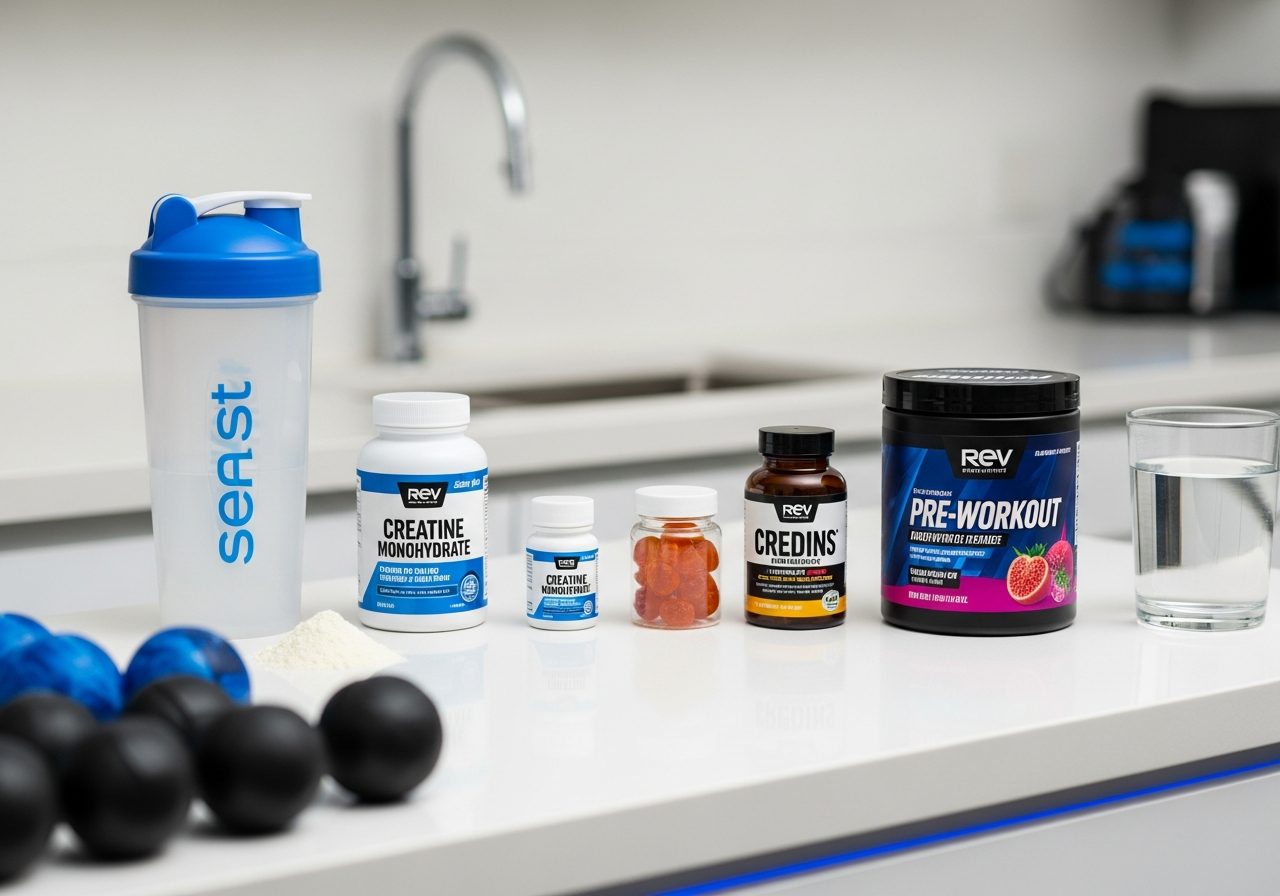
Several popular myths make people mislabel themselves as creatine non responders even when the supplement is working exactly as expected. Clearing these up often solves the confusion immediately.
- Myth 1: If I do not feel a rush, it is not working. False. Creatine is not a stimulant. Its main benefit is better ATP regeneration during repeated hard efforts, not a noticeable buzz.
- Myth 2: If I did not gain weight in a week, I am a non responder. False. Some people gain water weight quickly; others do not. Performance metrics matter more than rapid scale change.
- Myth 3: I need an expensive form because monohydrate did nothing. Usually false. Monohydrate remains the best-supported form. Many “better absorbed” alternatives are mostly marketing rather than superior outcomes.
- Myth 4: Creatine only works for bodybuilders. False. It can help strength athletes, team-sport athletes, sprinters, older adults, and some active beginners. It is not limited to bodybuilding.
- Myth 5: I can take it randomly and still know if it works. False. Creatine depends on consistent daily use. Sporadic intake is a poor test.
- Myth 6: If I am a woman, older adult, or not very muscular yet, it will not do anything. False. Response varies individually, but those groups can still benefit when dose and training are appropriate.
Another common mistake is confusing “small effect” with “no effect.” In practice, a modest responder may only gain an extra rep on later sets or recover slightly better between sprints. Over a single workout, that can feel trivial. Across months of training, it can matter a lot.
It is also easy to blame creatine when the real issue is a weak programme. If you are not progressively overloading, eating enough protein, and sleeping adequately, creatine cannot rescue the situation. Supplements amplify good habits; they do not replace them.
Finally, people often forget that creatine is one of the rare sports supplements where the boring, cheap, heavily studied option is still usually the best one. If you want a myth-by-myth breakdown, visit creatine myths debunked and creatine myths vs facts.
The best type to buy if you think creatine isn’t working
If you think creatine is not working for you, the safest buying move is to switch to plain creatine monohydrate with a clearly dosed serving and reputable quality controls. That eliminates most product-related reasons for poor results.
Here is the practical comparison:
| Form | What to know | Best use case | Worth it for suspected non-responders? |
|---|---|---|---|
| Creatine monohydrate powder | Most studied, inexpensive, reliable, easy to dose at 3–5 g | Almost everyone | Yes, this should be your reference standard |
| Micronized monohydrate | Same core ingredient, finer texture may mix better | People who dislike grit | Yes, if texture is your issue |
| Capsules | Convenient but often many capsules needed to reach full dose | Travel or no-mix convenience | Only if you reliably hit the full gram amount |
| Gummies | Convenient, but some are under-dosed or costly per effective serving | Taste-first users | Only if the label truly provides an effective dose |
| HCl, buffered, ethyl ester, nitrate | Heavier marketing than evidence for superior outcomes | Niche preferences | No clear reason to use these first |
In Canada, check the label carefully. A proper serving size in grams matters more than branding language like “advanced uptake.” An NPN can be a helpful sign that the product is sold within Canada’s natural health product framework, though label quality and seller reputation still matter. Competitive athletes should look for third-party testing where possible.
If you previously used a blended pre-workout, flavoured formula, capsule product with tiny servings, or gummies that required a large count to reach a real dose, it is entirely plausible that you simply never consumed enough creatine. That is not non-response; that is under-dosing.
For Canadian shoppers, our creatine product catalog, best creatine rankings, and best creatine monohydrate in Canada can help you compare straightforward options without paying extra for marketing claims. If you are torn between formats, see creatine powder vs capsules and creatine monohydrate vs HCL.
Week by week: what to expect from a proper creatine trial
If you are testing whether creatine works for you, expect measurable changes over days to weeks, not necessarily within a single workout. A realistic timeline prevents many false “creatine no effect” conclusions.
Days 1–7 with loading: If you load at 20 g/day split into 4 doses, muscle stores rise quickly. Some people notice fuller muscles, a small body-weight increase, or better recovery between hard sets by the end of the week. Digestive discomfort is most likely here if doses are too large or taken on an empty stomach.
Weeks 1–2 without loading: If you use 3–5 g/day from the start, effects are usually subtle early on. You may not notice any visible change yet. This does not mean creatine is not working.
Weeks 2–4: This is where many people start seeing the practical signs: one more rep at a fixed load, less drop-off across repeated sprints, or slightly better quality in later sets. Some users also notice improved training consistency because sessions feel less flat.
Weeks 4–6: By this point, a good trial should tell you something. If your product, dose, and adherence were solid and your training suits creatine’s mechanism, you should see some change in one or more objective measures. If not, low responsiveness becomes more plausible.
Use this checklist to judge progress:
- Can you complete more total reps at the same load?
- Are your sprint or interval performances more repeatable?
- Do later sets fall off less sharply?
- Has body weight or muscle fullness changed, even slightly?
- Has your training log improved over 4–6 weeks?
Creatine’s benefits are often cumulative because better sessions compound into better adaptation. That is why the smartest users track trends, not feelings. If you want a tighter timeline reference, read how long creatine takes to work and does creatine build muscle.
The bottom line is simple: do not declare yourself a creatine non responder after a few days, a half-dose, or a poor programme. Give the trial enough time to reveal a real answer.
Bottom line: how to troubleshoot creatine before giving up on it
If creatine is not working for you, do this before you quit: switch to plain monohydrate, take a full evidence-based dose every day, track performance for 4–6 weeks, and judge the result by training output rather than sensation alone. That is the shortest path to a clear answer.
Here is the practical troubleshooting sequence:
- Use the right form. Plain creatine monohydrate is the benchmark.
- Fix the dose. Use 3–5 g/day consistently, or load at 20 g/day split into 4 doses for 5–7 days if you want faster saturation.
- Train in a way creatine can help. Lift hard, sprint, or include repeated high-intensity efforts.
- Track objective outcomes. Reps, load, sprint repeatability, and body weight are more informative than “feeling it.”
- Audit the basics. Calories, protein, sleep, hydration, and programme quality all influence whether creatine’s effect becomes visible.
- Assess after enough time. Give it 4–6 weeks total if you did not load.
If you do all of that and still see no meaningful change, you may simply be a low responder. That does not mean anything is wrong with you. It just means your baseline biology and training context leave less room for creatine to make a noticeable difference. At that point, stopping is reasonable if the cost or hassle is not worth a marginal effect.
For everyone else, the verdict is usually more encouraging: most “creatine non responder” cases turn out to be under-dosing, under-training, inconsistent use, poor product choice, or unrealistic expectations. Once those are fixed, the supplement often performs exactly as the evidence predicts.
If you want to tighten your plan, start with our creatine dosage calculator, then review how to take creatine, is creatine safe, and why monohydrate still wins. In most cases, the problem is not that creatine does not work. It is that the test was never set up to let it work properly.
Creatine Non-Responder Reality Check
- 3–5 g/day Standard maintenance dose — Use daily to maintain muscle creatine saturation.
- 20 g/day Typical loading dose — Usually split into 4 doses for 5–7 days.
- 4–6 weeks Fair no-loading trial length — Long enough for most users to judge response without loading.
- 0.3 g/kg/day Weight-based loading guideline — Common evidence-based approach followed by about 0.03 g/kg/day maintenance.
Frequently Asked Questions
How do I know if I am a creatine non responder?
You only know after a proper trial, not after a few random doses. Use creatine monohydrate daily at 3–5 g for at least 4 weeks, or load with 20 g/day for 5–7 days, while tracking reps, power, sprint repeatability, or body weight. If nothing meaningful changes despite good training and consistency, you may be a low responder.
Why is creatine not working for me?
The most common reason creatine is not working for you is that you are under-dosed, not saturated yet, or not training in a way that highlights creatine’s benefits. Creatine helps short, hard, repeated efforts most. If you expected a stimulant-like feeling or judged it only by scale weight, you may miss its real effects.
Can you be immune to creatine?
No, people are not usually “immune” to creatine in a literal sense, but some are low responders. Lower response often happens when baseline muscle creatine is already high, such as in some meat eaters, or when the training style does not rely heavily on high-intensity repeated efforts.
Does creatine work for everyone?
No, creatine does not work equally for everyone, although it helps many people. Response exists on a spectrum, from strong to modest to minimal, and the biggest practical differences usually come from starting muscle creatine levels, body size, diet, and whether training matches the supplement’s main mechanism.
How long should I try creatine before deciding it has no effect?
You should give creatine at least 4 weeks at 3–5 g/day before deciding it has no effect, or 5–7 days if you use a proper loading phase followed by maintenance. Without loading, judging it after only a week is usually too early because muscle saturation takes longer.
If I do not gain water weight, is creatine still working?
Yes, creatine can still be working even if you do not gain obvious water weight. Water retention varies widely between users, and the more important signs are improved reps, power output, repeated sprint performance, or better recovery between hard sets.
Should I switch from monohydrate to HCL if creatine has no effect?
Usually no, you should not switch forms before fixing the basics. Creatine monohydrate is still the most studied and most reliable form, so first make sure you are taking a full effective dose consistently for long enough and using a product that clearly delivers 3–5 g per day.
Do vegetarians respond better to creatine?
Often yes, vegetarians and vegans can respond especially well because they tend to start with lower dietary creatine intake and lower muscle creatine stores. That gives them more room to increase stores with supplementation, which can make the effects more noticeable.
Can women be creatine non responders?
Yes, women can be low responders just like men, but many women do benefit from creatine when the dose and training are appropriate. A common mistake is assuming no visible bulk means no response, when the real benefit may be better strength, training volume, or recovery.
What is the best way to test whether creatine works for me?
The best test is to use plain creatine monohydrate with a controlled plan and objective tracking. Either load with 20 g/day for 5–7 days or take 3–5 g/day for 4 weeks, keep training and nutrition consistent, and compare performance markers like total reps, sprint repeatability, and body weight.