Creatine for Teen Girls: Safety, Benefits, and Age-Appropriate Dosing
By The Creatine Canada Research Team — Evidence-based supplement analysts
Yes—creatine monohydrate can be a reasonable, evidence-based supplement for healthy teenage girls, especially athletes, when used in age-appropriate doses and with parent, coach, or clinician awareness. The best-supported approach is plain creatine monohydrate at 3–5 g per day, with the clearest benefits in strength, sprint power, repeated high-intensity effort, and training quality rather than dramatic overnight muscle gain.
Evidence-based · Cites 4 sources · Editorial standards
Key Takeaways
- Creatine is not a steroid; it is a naturally occurring compound that helps regenerate quick energy in muscle.
- For most teen girls, 3–5 g of creatine monohydrate daily is the standard maintenance dose.
- A loading phase is optional: 20 g/day split into 4 doses for 5–7 days saturates muscles faster but is not required.
- The strongest evidence is for sports with repeated sprints, jumps, lifting, and high-intensity intervals.
- Mild water-weight gain of roughly 1–2 kg can happen early, especially with loading, but that is not body fat.
- Healthy adolescents should still avoid creatine if they have kidney disease, are taking potentially kidney-stressing medications, or have not cleared it with a clinician when medical issues are present.
- In Canada, choose a simple creatine monohydrate product with an NPN and ideally third-party sport testing for competitive athletes.
Is creatine safe for teenage girls? The direct answer first
Yes, creatine for teenage girls can be appropriate when the teen is healthy, understands what the supplement does, and uses a sensible dose of creatine monohydrate rather than flashy proprietary blends. The best current evidence supports creatine as one of the most studied sports supplements for improving high-intensity performance, and mainstream reviews do not show unique safety problems in females simply because they are female.
That said, the right framing matters. Creatine is not essential for every female teenager, and it is not a shortcut around training, food, sleep, or recovery. It is a performance and training-support supplement. For a teen girl athlete doing resistance training, sprinting, jumping, team sports, racquet sports, or repeated interval work, creatine is much more likely to be useful than it is for someone who is mostly sedentary.
The 2017 ISSN position stand concluded that creatine monohydrate is the most effective nutritional supplement available for increasing high-intensity exercise capacity and lean mass during training. The 2021 JISSN review on common questions and misconceptions also reinforced that many popular fears around creatine are not supported by the totality of evidence.
For parents asking, “Is creatine safe for teen girls?” the most honest answer is this: for healthy adolescent females, creatine monohydrate appears to be a reasonable option when used correctly, but minors should use supplements conservatively and ideally with adult oversight. If a teen has kidney disease, a significant medical condition, an eating disorder, unexplained swelling, or is taking medication that may affect kidney function, creatine should not be started casually.
If you want the practical version, here it is early: plain monohydrate, 3–5 g daily, every day, with water or food, and no need to cycle. If you need help with exact serving sizes, use our creatine dosage calculator. For a full safety deep dive beyond this article, see is creatine safe and our guide on creatine for teenagers.
- Good candidates: trained or training teen athletes, lifters, sprinters, field/court sport athletes, vegans/vegetarians with lower dietary creatine intake.
- Less compelling use cases: casual exercisers who dislike supplements, athletes in strict weight-class situations, or teens not yet consistent with basics.
- Not a fit without medical input: kidney disease, relevant medications, significant health concerns, or active disordered eating.
How creatine actually works in a teenage girl’s body
Creatine works by increasing muscle stores of phosphocreatine, a stored high-energy compound that helps rapidly remake ATP, the immediate fuel your muscles use for hard efforts lasting a few seconds. In plain English, creatine helps teen girls produce quick energy faster during repeated explosive efforts.
Your body already makes creatine from amino acids, and you also get some from animal foods. Once stored in muscle, creatine helps buffer the energy drop that happens during sprints, jumps, heavy sets, tumbling passes, accelerations, and repeated intervals. This is why creatine for girl athletes tends to help most in sports such as hockey, soccer, basketball, volleyball, track sprints, swimming sprints, gymnastics strength work, and resistance training.
The key term you will see is saturation. Saturation means filling muscle creatine stores close to their practical upper range. When muscle stores are more saturated, performance during repeated high-intensity work tends to improve. A loading phase gets you there faster; a steady daily dose gets you there more slowly but still effectively. If you want the full beginner science, see what is creatine and creatine and ATP.
Creatine does not directly build muscle the way a drug would. Instead, it supports better training. A teenage girl may squeeze out an extra rep, hold power slightly longer, recover between sets a bit better, or maintain speed deeper into practice. Over weeks and months, that improved training quality can contribute to better strength and lean mass outcomes.
There is also growing interest in creatine and the brain, because the brain also uses creatine-related energy systems. But for adolescent females, the strongest, most established evidence remains sports performance and training support rather than broad cognitive claims. That nuance matters.
One more point relevant to girls and young women: creatine is not a testosterone booster, and it does not “masculinize” you. It does not change the fact that the main visible effect comes from better training performance plus some extra water held inside muscle cells. If you want the hormone myth handled in more detail, read creatine and hormones and does creatine affect testosterone.
What benefits can a teen girl realistically expect from creatine?
The most realistic benefits of creatine for female teenagers are better strength progress, improved sprint and repeated-effort performance, and slightly better training quality over time. The headline is not “instant muscle”; the headline is better support for hard training.
According to the ISSN position stand, creatine is consistently effective for increasing high-intensity exercise capacity and lean mass when combined with training. In real life, a 16 year old girl who lifts, sprints, rows, plays volleyball, or does repeated intervals may notice that hard efforts feel a bit more repeatable. That can translate into practical outcomes such as:
- More total reps completed in the gym
- Better repeated sprint quality at practice
- Slightly higher jump or power output over time
- Better strength gains over several training blocks
- Improved lean mass support when training and eating appropriately
Creatine can also be especially relevant for young women who eat little or no red meat, poultry, or fish. Lower habitual dietary creatine intake may leave more room for benefit from supplementation. This is one reason vegetarian or vegan athletes often respond well.
What should you expect week by week? Without loading, many teens feel little in the first 7–10 days. By around 2–4 weeks of daily use, some notice better repeat performance in the gym or at practice. By 4–8 weeks, strength progress and training volume may be more obviously improved if the athlete is following a structured program. With loading, the timeline is shorter, but the end result is similar once full saturation is reached.
Creatine is less likely to produce dramatic benefits for long, steady aerobic exercise alone. A distance runner or endurance athlete may still use it strategically, but the evidence is strongest for shorter, harder, repeated efforts. For mixed-sport athletes, that often still matters.
Finally, creatine is not a fat-loss supplement, appetite suppressant, or physique “hardener.” If body composition improves, it is usually because the athlete trains better and preserves or builds more lean mass. For broader performance context, see creatine benefits, does creatine build muscle, and creatine for women.
Age-appropriate dosing: exactly how much creatine should a teen girl take?
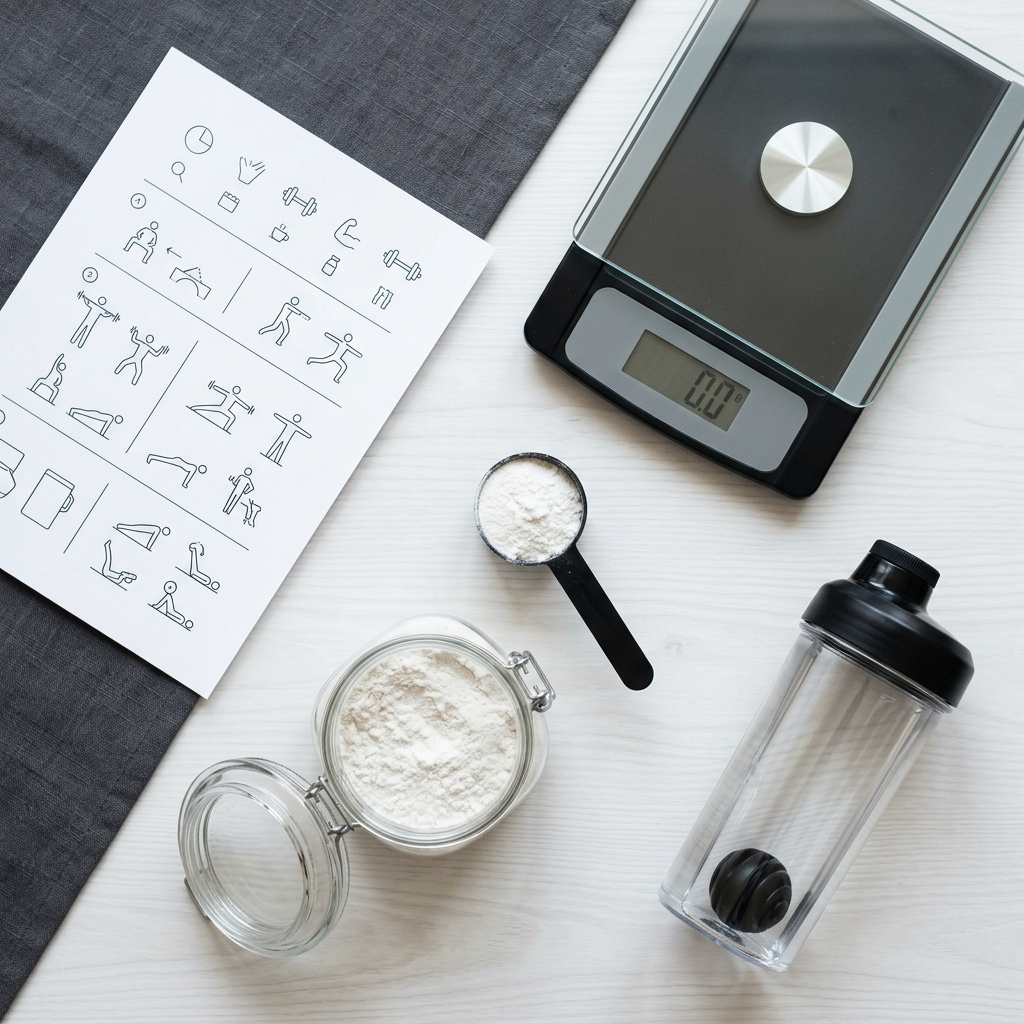
For most healthy teen girls, the practical dose is 3–5 g of creatine monohydrate per day. That is the evidence-based maintenance range used by most recreational and competitive athletes, including many adolescent females.
The standard loading option is 20 g per day for 5–7 days, split into 4 doses of 5 g, followed by 3–5 g per day after that. Loading is optional. It does not make creatine work better in the long run; it simply saturates muscle stores faster. Some teens do better skipping loading to reduce the chance of stomach upset or rapid scale changes.
Body weight can help make dosing feel more concrete, even though most teens still fit well within the normal 3–5 g range.
| Body weight | Simple daily dose | When this usually makes sense |
|---|---|---|
| 45–55 kg | 3 g/day | Smaller teens, beginners, or anyone wanting the gentlest approach |
| 56–70 kg | 3–5 g/day | Most teen girls and girl athletes |
| 71 kg+ | 5 g/day | Larger athletes, higher training loads, or those wanting a standard full maintenance dose |
Examples:
- 50 kg beginner lifter: start with 3 g daily.
- 60 kg soccer player: 3–5 g daily; 5 g is a common easy choice.
- 75 kg thrower or rugby athlete: 5 g daily is a practical maintenance dose.
For a parent searching “creatine 16 year old girl,” the simplest evidence-based answer is: plain monohydrate, usually 3–5 g daily, with no special female-only formula required. If she is very small, new to supplements, or nervous about bloating, starting at 3 g is sensible.
Do not confuse serving size with scoop size. Some brands have awkward scoops, and some gummies or capsules require multiple units to reach a full dose. Use the label carefully, or check our how to measure creatine guide and creatine dosage calculator. If you are considering loading, also read creatine loading phase and how much creatine per day.
How to start creatine as a teen girl: the simplest step-by-step plan
The easiest way to start creatine for teen girls is to take the same small dose every day and keep everything else boringly consistent. Consistency matters more than timing hacks.
- Pick plain creatine monohydrate. Choose an unflavoured or lightly flavoured product with minimal extras. Monohydrate is the best-studied and most cost-effective form. If you are comparing products, start with our best creatine rankings and creatine brand reviews.
- Start with 3 g daily if you are cautious, or 5 g daily if you want the standard athlete dose. Smaller teens or beginners can start at 3 g. Most athletes are fine at 5 g.
- Take it every day, including rest days. Creatine works by saturating muscle stores, so off-days still count. Do not cycle on and off.
- Mix it in water, milk, juice, or a protein shake. The exact liquid does not matter much. A meal or shake can make it easier on the stomach.
- Track 3 things for 4–8 weeks. Write down body weight, gym performance, and how hard repeated efforts feel in practice.
- Adjust only if needed. If you feel stomach upset, split the dose into smaller servings or take it with food.
A realistic first-month plan for a teen girl athlete looks like this:
- Week 1: daily dose established; maybe no obvious effect yet.
- Week 2: some athletes notice better training repeatability.
- Weeks 3–4: gym sets, sprint repeats, or practice quality may feel stronger if training is consistent.
- Weeks 5–8: strength progression and body-composition support become easier to spot than “feel.”
How do you know it is working? The best signs are not magic sensations. Look for objective markers: one more rep at a given weight, better speed retention in repeated sprints, slightly better practice output, or improved recovery between hard sets. Creatine is subtle day to day and more obvious over a training block.
Want a fuller beginner setup? See how to take creatine, creatine for beginners, and realistic creatine results.
When should a teen girl take creatine, and what should she mix it with?
A teen girl can take creatine at any time of day, because daily consistency matters more than exact timing. If taking it after training helps you remember, that is fine. If breakfast is easier, that is also fine.
Creatine is not a stimulant, so it does not need to be taken right before exercise to “kick in.” It works by gradually saturating muscle stores. That is why taking it on rest days still matters, and why missing the occasional day is not a disaster. If timing helps compliance, pair it with an already-fixed habit such as breakfast, a post-workout shake, or dinner.
Best mixing options include:
- Water
- Milk or chocolate milk
- A smoothie
- A whey or plant-protein shake
- Juice if preferred
The exact mixer is mostly about convenience and stomach comfort. Some people tolerate creatine better with food. Micronized powders may dissolve a bit more easily, but regular monohydrate still works well. If the powder feels gritty, warm water can help it dissolve better. More mixing tips are in how to mix creatine and with or without food.
Hydration matters, but there is no evidence-based rule that a teen girl must chug extreme amounts of water because she takes creatine. Creatine pulls more water into muscle cells, but that is not the same as dehydration. A practical rule is simple: drink normally, aim for pale-yellow urine most of the day, and pay extra attention during hot practices or long tournaments. If she is starting creatine during summer camp, two-a-days, or tournament season, build good hydration habits at the same time.
Can creatine be mixed with coffee? Yes, it can. Can it be mixed with protein? Yes, absolutely. Can it be taken before bed? Also yes, if that is the most consistent time. For deeper timing and hydration details, see when to take creatine, how much water with creatine, and creatine and protein powder.
Safety, side effects, and the situations where teen girls should be more cautious
For healthy users, creatine monohydrate is generally well tolerated, but that does not mean every teen girl should take it casually without thinking through context. The right safety message is balanced: the evidence is reassuring, yet minors still deserve a conservative, informed approach.
The most common side effects are mild and practical rather than dangerous:
- Temporary water-weight gain: often around 1–2 kg early on, especially with loading
- Stomach upset or loose stool: more likely with large single doses
- Feeling “puffy”: usually temporary and often exaggerated by social media
What about kidneys? In healthy people, creatine does not appear to damage normal kidneys in the way it is often claimed online. However, creatine can raise creatinine, a breakdown marker sometimes used in blood tests. That can confuse interpretation if a clinician does not know the athlete is supplementing. If a teen has known kidney disease, a relevant family or medical history, or takes medications that can stress the kidneys, that changes the risk discussion and needs clinician input. Our detailed explainer on creatine and kidneys covers this carefully.
When should a female teenager avoid or pause creatine pending medical advice?
- Known kidney disease or reduced kidney function
- Relevant medications or medical conditions
- Active eating disorder or major anxiety around scale weight
- Unexplained swelling, severe GI symptoms, or other unusual reactions
- Pregnancy or breastfeeding in older teens, where evidence is more limited and context-specific
A final real-world point: for some teen girls, the biggest downside is not physiology but psychology. If even a normal 1–2 kg water shift would cause panic, obsessive scale-checking, or conflict with a sport’s culture around leanness, creatine may be a poor fit right now even if it is physiologically safe. Context matters as much as chemistry.
For broader evidence summaries, see the Mayo Clinic overview, plus our guides on does creatine make you gain weight and digestive side effects.
Myths teen girls hear about creatine—and what the evidence actually says
Most fears about creatine for teenage girls come from old gym myths, not from the best evidence. The direct answer to most of them is simple: creatine is often misunderstood because people confuse water retention, hormones, and sports nutrition basics.
Myth 1: Creatine is a steroid.
False. Creatine is a naturally occurring compound involved in cellular energy. It is not an anabolic steroid and does not work like one. If you need a full breakdown, read is creatine a steroid.
Myth 2: Creatine makes girls bulky.
False in the way most people mean it. Creatine can increase intracellular water in muscle and can support better training, but it does not suddenly override genetics, calories, and programming to make a teen girl look bodybuilder-large.
Myth 3: Creatine causes dehydration and cramps.
The research does not support the idea that creatine inherently dehydrates athletes or causes cramping when normal hydration practices are in place. This is one of the misconceptions specifically addressed in the 2021 JISSN paper. More here: creatine and dehydration and does creatine cause cramps.
Myth 4: Creatine is only for boys or male bodybuilders.
False. The mechanism is not male-specific. Creatine for adolescent females can make sense for the same reason it does for males: repeated high-intensity energy demand.
Myth 5: A teen has to load, cycle, or “shock” the muscles.
False. Loading is optional, cycling is unnecessary, and the “shock the muscles” language is marketing, not physiology. Daily intake is what matters.
Myth 6: Creatine stunts growth.
There is no good evidence that creatine monohydrate stunts growth. That fear persists because people often lump all supplements together rather than assessing specific compounds on their own evidence base.
Myth 7: Creatine causes hair loss or acne in everyone.
The evidence does not support making broad claims like that. These topics are much more nuanced than social media posts suggest. See hair loss and acne.
For a full myth-by-myth breakdown, visit creatine myths debunked and creatine myths vs facts.
What type of creatine should teen girls buy in Canada?
The best type of creatine for teen girls is plain creatine monohydrate. It is the most studied form, usually the most affordable per effective dose, and still the benchmark against which newer forms are compared.
Teen-focused, women’s, lean, shred, and “toning” creatines are usually marketing categories, not different physiology. If a product’s main difference is pink packaging, caffeine, fat burners, or a proprietary blend, that is usually a worse choice than a simple monohydrate powder.
| Type | Best for | Pros | Cons |
|---|---|---|---|
| Creatine monohydrate powder | Almost everyone | Best evidence, low cost, easy to dose | Can feel slightly gritty in some liquids |
| Micronized monohydrate | People who want easier mixing | Same core ingredient, often dissolves better | Sometimes costs more for little practical difference |
| Capsules | Convenience and travel | No mixing, easy to carry | Often expensive and requires many capsules for full dose |
| Gummies/chews | Taste-first users | Simple and palatable | Often pricey and may make full dosing awkward |
| HCL or other specialty forms | Niche preference | Marketed as gentler or more soluble | Less evidence; monohydrate remains the reference standard |
For Canadian buyers, check for a valid NPN, which stands for Natural Product Number. An NPN means the product is licensed as a natural health product in Canada. For competitive athletes, third-party sport testing such as NSF Certified for Sport or Informed Sport adds extra confidence against contamination risks.
Also read labels closely. A good creatine product should not need a long ingredient list. Ideally you want creatine monohydrate and little else. This is especially true for teen girls, who generally do not need stimulant-heavy pre-workout hybrids disguised as creatine.
To compare products available in Canada, browse our creatine product catalog, best creatine rankings, and brand reviews. For buying-specific guidance, related reading includes best creatine monohydrate in Canada and third-party tested creatine in Canada.
Which teen girls are most likely to benefit—and who might skip creatine for now?
Creatine for girl athletes makes the most sense when the athlete regularly performs high-intensity, repeated efforts and already has basic habits in place. The more structured the training, the easier it is to notice a real benefit.
Teen girls most likely to benefit include:
- Strength trainees: lifting, power development, hypertrophy-focused training
- Team-sport athletes: soccer, hockey, basketball, lacrosse, volleyball, field hockey
- Explosive individual-sport athletes: sprinting, throwing, jumping, swimming sprints, gymnastics, cheer, combat sports
- Vegetarian or vegan athletes: often lower baseline dietary creatine intake
- Busy multi-sport athletes: where training quality and repeat performance matter
Who might reasonably skip it for now?
- A teen who has not yet built consistency with food, sleep, and training
- An athlete in a sport culture where any temporary scale change would be psychologically disruptive
- A pure endurance athlete who dislikes supplements and has no pressing need for high-intensity support
- Anyone with medical issues that need clinician input first
This is an important coaching point: creatine is useful, but it is not foundational in the way adequate calories, protein, sleep, and good programming are foundational. If a teen girl is under-eating, skipping breakfast, sleeping six hours, and training randomly, creatine is not the first fix.
Parents sometimes ask whether beginners should wait. The answer is not necessarily. A beginner teen girl can use creatine safely if she is healthy and understands the basics. But the supplement will matter more once there is a repeatable training stimulus. For many beginners, starting creatine at the same time as a structured lifting or sport-conditioning plan is perfectly reasonable.
If you are deciding whether creatine is actually worth it in your situation, related guides that help are creatine for athletes, creatine for recreational athletes, creatine for vegetarians, and who should not take creatine.
Why creatine sometimes seems ‘not to work’ for teen girls
When creatine for teenage girls seems not to work, the issue is usually protocol, expectations, or training quality—not that creatine somehow “doesn’t work for females.” The first fix is usually simple.
Common reasons creatine appears ineffective:
- Not taking it daily: irregular use slows or prevents full saturation.
- Expecting a stimulant feeling: creatine does not feel like pre-workout.
- Doing mostly low-intensity cardio: the biggest benefits are for high-intensity repeated efforts.
- Underdosing: gummy products or tiny scoops may not deliver a full effective dose.
- Quitting after one week: without loading, visible effects can take several weeks.
- Poor training and recovery: creatine amplifies a good plan; it does not replace one.
If a teen girl gets stomach upset, the fix is often one of these:
- Drop from 5 g to 3 g temporarily
- Split the dose into two smaller servings
- Take it with a meal or shake
- Skip loading if loading was the trigger
If she feels “bloated,” clarify what that means. Many users are actually noticing a small increase in muscle water, which can make muscles feel fuller. True digestive bloating is different and usually improves with better dosing habits.
If performance still does not budge after 6–8 weeks, ask better questions:
- Was the dose actually 3–5 g daily?
- Was training progressive and measurable?
- Was she sleeping and eating enough to support adaptation?
- Is the sport primarily explosive enough to reveal the benefit?
Some people also respond less dramatically than others. Baseline muscle creatine stores, diet, fibre type, and training style all matter. A less dramatic responder is not the same as a non-responder in the absolute sense.
For deeper troubleshooting, see creatine not working, creatine non-responders, and common creatine mistakes.
Bottom line: the smartest way to use creatine as a teen girl
The bottom line is straightforward: creatine monohydrate is a reasonable, evidence-based option for healthy teenage girls, especially athletes doing strength, sprint, power, or repeated high-intensity training. It is not required, but it is one of the few sports supplements that actually earns its reputation.
If you want the shortest practical recommendation for a teen girl athlete, use this:
- Choose plain creatine monohydrate.
- Take 3–5 g daily.
- Take it every day, not just workout days.
- Skip loading unless faster saturation really matters.
- Expect better training support, not magic body changes.
- Pause and ask a clinician first if there are kidney issues, medical concerns, or relevant medications.
For parents and coaches, the key is perspective. Creatine should sit low on the priority list until basics are covered: enough food, enough protein, enough sleep, progressive training, hydration, and a healthy relationship with body image. Once those are in place, creatine can be a smart addition. It is especially useful for competitive adolescent females in sports where repeated explosive output matters.
For teen girls themselves, the best mindset is simple: treat creatine like a boring daily habit, not a dramatic transformation product. The athletes who get the most from it are usually the ones who are already doing the unglamorous basics well.
If you want to take the next step, use our creatine dosage calculator, compare options in the product catalog, and read our related guides on what age can you take creatine, how long creatine takes to work, and best type of creatine.
Final takeaway: For healthy teen girls, especially athletes, creatine monohydrate at 3–5 g per day is the most evidence-based, practical, and generally sensible way to use creatine.
Creatine for Teen Girls: The Numbers That Matter
- 3–5 g/day Standard daily maintenance dose — Appropriate for most healthy teen girls using creatine monohydrate.
- 20 g/day Optional loading dose — Usually split into 4 doses for 5–7 days to saturate muscles faster.
- 5–7 days Typical loading-phase timeline — Gets muscle stores up faster than starting with maintenance only.
- 1–2 kg Possible early water-weight gain — More common with loading and not the same as body-fat gain.
Frequently Asked Questions
Is creatine safe for teen girls?
Yes, creatine monohydrate appears generally safe for healthy teen girls when used appropriately, especially in standard doses such as 3–5 g per day. The main caveat is context: teens with kidney disease, significant medical issues, relevant medications, or active eating-disorder concerns should not start it casually without clinician input.
Can a 16 year old girl take creatine?
Yes, a healthy 16 year old girl can potentially take creatine monohydrate, particularly if she is an athlete or strength trainee. The practical approach is usually 3–5 g daily of plain monohydrate, with parent awareness and attention to basics like training, food, hydration, and medical history.
What is the best creatine dose for a teenage girl?
The best creatine dose for most teenage girls is 3–5 g per day of creatine monohydrate. Smaller teens or cautious beginners can start at 3 g daily, while many athletes use 5 g daily; a loading phase is optional, not required.
Will creatine make a teen girl bulky?
No, creatine does not automatically make a teen girl bulky. It may cause a modest increase in water held inside muscle and can support better training, but dramatic physique changes still depend on training style, calorie intake, genetics, and time.
Does creatine cause weight gain in teenage girls?
Yes, creatine can cause a small early increase in scale weight in teenage girls, but it is usually water stored in muscle rather than body fat. This is often around 1–2 kg, especially if a loading phase is used.
Is creatine only for athletes, or can regular teen girls take it too?
Creatine is not only for athletes, and regular teen girls can take it, but the benefits are usually most noticeable in people doing consistent high-intensity training. If someone is not training regularly, creatine is less likely to make a meaningful difference.
Should teen girls use creatine loading?
No, teen girls do not need to use a loading phase for creatine to work. Loading at 20 g per day split into 4 doses for 5–7 days only saturates muscle faster; taking 3–5 g daily reaches the same place more gradually.
What kind of creatine is best for female teenagers?
Plain creatine monohydrate is the best kind of creatine for female teenagers. It has the strongest research base, is usually the best value, and avoids the unnecessary stimulants and marketing extras found in many teen- or women-targeted products.
Can teen girls take creatine every day?
Yes, teen girls can take creatine every day, and daily use is actually the standard protocol. Creatine works by building up muscle stores over time, so rest days still count and cycling is not necessary.
Do teen girls need a doctor’s approval before taking creatine?
Healthy teen girls do not always need formal doctor approval before taking creatine, but medical guidance is wise when any health issue, medication use, kidney concern, or unusual symptom is involved. For minors, parent awareness and a conservative approach are sensible.