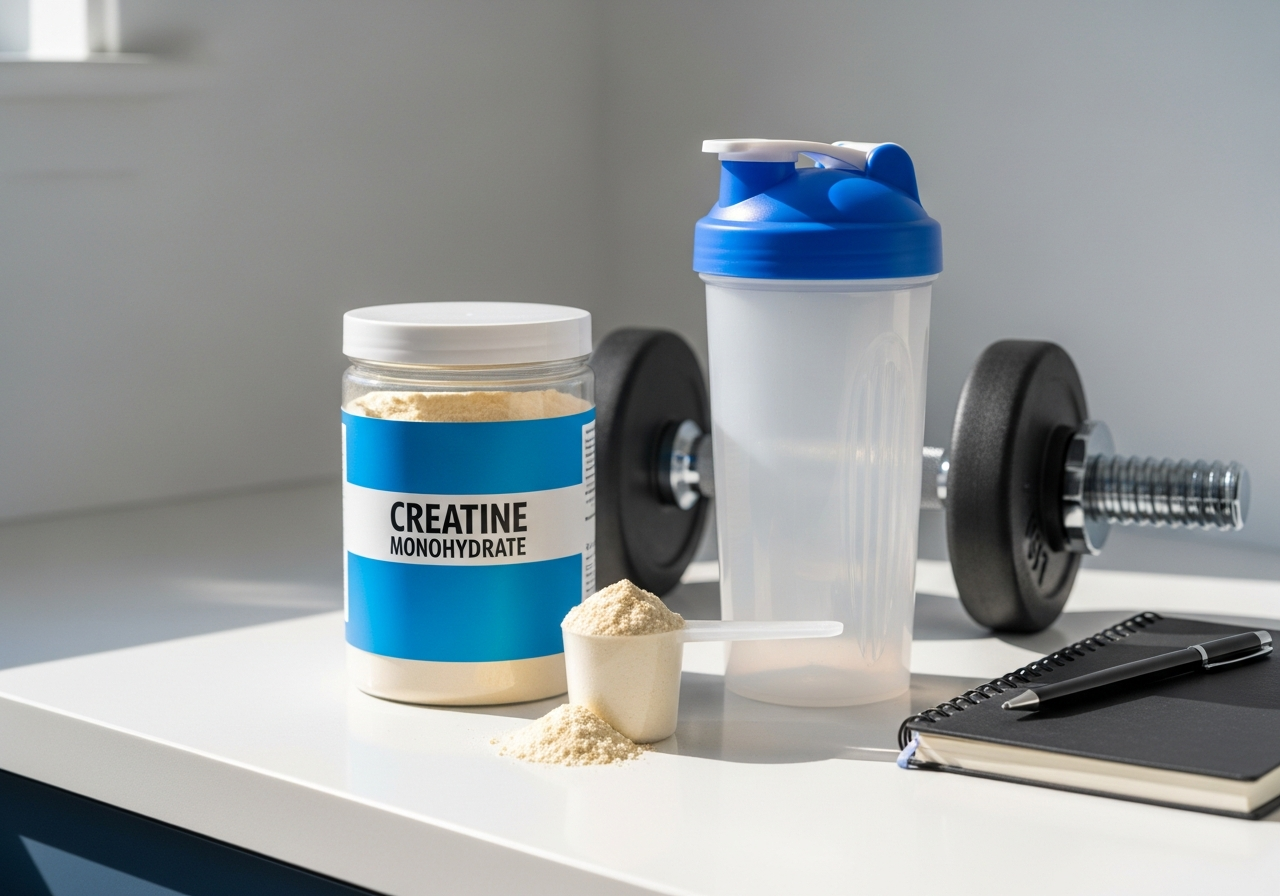
Why Women's Creatine Is Exploding in 2026: Strength, Hormones, and Menopause
By The Creatine Canada Research Team — Evidence-based supplement analysts
The creatine for women trend is exploding in 2026 because creatine monohydrate is one of the best-supported supplements for improving strength, training quality, and lean mass, and women are finally being marketed to with messages about hormones, healthy ageing, and menopause. In plain terms: the science was already there, but female-focused branding and life-stage relevance have caught up.
Evidence-based · Cites 4 sources · Editorial standards
Key Takeaways
- Creatine works for women as well as men; the best-studied form is creatine monohydrate.
- A simple maintenance dose of 3-5 g/day is enough for most women, with optional loading at 20 g/day split into 4 doses for 5-7 days.
- Creatine does not act like a steroid and does not inherently cause fat gain; early scale weight changes are usually water stored inside muscle.
- Women over 40 and women in perimenopause or post-menopause may find creatine especially useful alongside resistance training for lean mass, strength, and healthy ageing.
- Timing matters far less than consistency; take creatine daily, including rest days.
- The 2026 surge is also a market story: female-focused products are growing faster than the overall creatine category, but the ingredient that matters is still monohydrate.
- In Canada, look for a Natural Product Number, clear grams-per-serving labelling, and preferably third-party testing.
Why the creatine for women trend is surging in 2026
The creatine for women trend is surging because women are discovering that creatine is not a niche bodybuilding supplement, but a well-studied performance and healthy-ageing tool that can support strength, lean mass, and training quality across the lifespan. The core science is not new; what is new in 2026 is the way the market is finally speaking directly to women.
Market-research estimates put the global creatine supplement market near USD $1.85 billion in 2026, with some firms projecting roughly a 26.2% global CAGR toward USD $8.68 billion by 2033. Within that, market-research estimates suggest the U.S. women’s creatine segment is growing at about a 29.5% CAGR through 2033, which would outpace the overall market. That is why shelves, social feeds, and search results suddenly seem full of “women’s creatine”.
Historically, women were under-represented among creatine users despite evidence that the supplement is equally effective and safe for women. The 2026 jump reflects three things happening at once:
- Better branding: products are being packaged and explained for women rather than only for male strength athletes.
- Life-stage relevance: interest has expanded beyond gym performance to include perimenopause, post-menopause, healthy ageing, and cognition.
- Myth correction: more women now understand that creatine does not automatically make you “bulky”.
This matters because the question is no longer just “is creatine good for women?” The more useful question is which women benefit most, how should they take it, and what results are realistic?
The short answer is that women who lift, sprint, do repeated high-intensity training, or want to preserve muscle and performance as they age are the clearest candidates. Creatine helps replenish phosphocreatine, the stored high-energy compound your muscles use to rapidly regenerate ATP, which is the cell’s immediate energy currency during short, hard efforts. More available phosphocreatine can mean better performance on the reps and sets that actually drive adaptation.
If you are new to the topic, start with our complete guide to what creatine is and then come back here for the women-specific angle. The headline is simple: women’s creatine is a real trend, but the science-backed ingredient behind the trend is still the same old workhorse, creatine monohydrate.
Is creatine good for women? Yes — and the benefits are not just for bodybuilders
Yes, creatine is good for women, especially for improving strength, repeated high-intensity performance, and support for lean mass gains when paired with training. That answer is strongest for creatine monohydrate, the most studied and cost-effective form.
The 2017 ISSN position stand concluded that creatine monohydrate is the most effective nutritional supplement currently available for increasing high-intensity exercise capacity and lean body mass during training. That statement applies to women too, even though women were historically less likely to use it.
In practice, women usually notice benefits in a few specific areas:
- Strength: more quality reps, slightly heavier loads, or better repeated efforts in the gym.
- Power: better support for short bursts such as sprinting, jumping, or explosive circuits.
- Lean mass support: better training output can translate into more muscle over time.
- Recovery between efforts: not magic soreness removal, but often better repeatability from set to set.
- Healthy ageing relevance: for women over 40, muscle preservation becomes more important, not less.
What creatine is not: it is not a hormone, not a steroid, and not a fat burner. If you want a clearer breakdown, see is creatine a steroid? and creatine myths vs. facts.
Women often ask whether they need a special women’s formula. Usually, no. In most cases, “women’s creatine” is just creatine monohydrate with different branding, flavouring, or added ingredients. That does not make it bad, but it does mean you should read the label carefully and pay attention to the actual grams of creatine provided per serving.
Another common concern is body composition. Creatine can increase body weight early on, but that is typically because it draws more water into muscle cells, not because it adds body fat. Intramuscular water can actually be part of the mechanism that supports performance and training adaptation. For a deeper explanation, see does creatine make you gain weight?.
So yes, creatine women strength benefits are real. The smarter framing is that creatine helps women train harder and preserve more of the muscle and performance they care about, whether the goal is lifting, sport, or healthy ageing.
How creatine works in women: the muscle-energy mechanism, explained simply
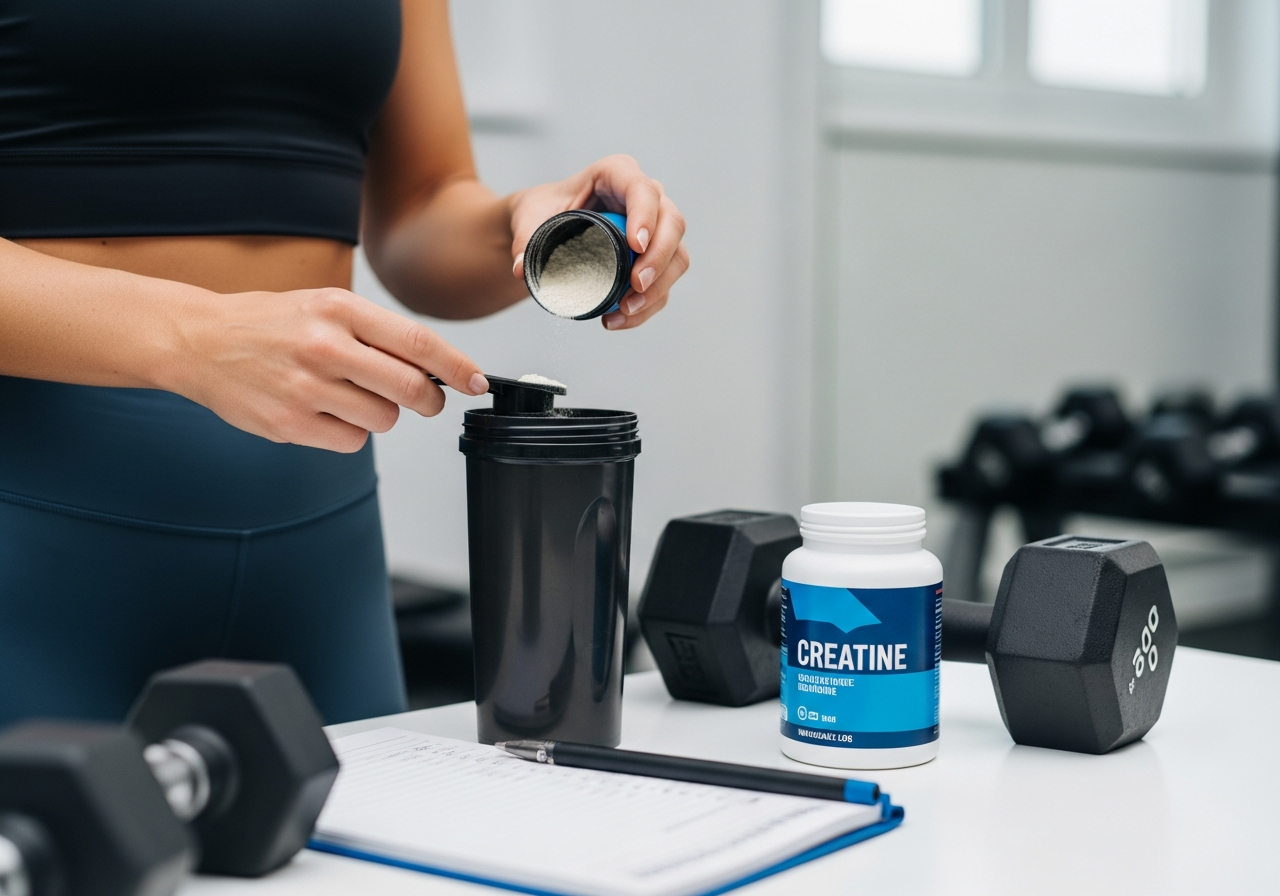
Creatine works in women by increasing muscle phosphocreatine stores, which helps muscles regenerate ATP faster during short, intense efforts. That means the benefit starts with energy metabolism, then shows up as better training performance and, over time, better adaptation.
Here is the simple chain of events:
- You supplement creatine.
- Your muscles store more phosphocreatine, which is the high-energy reserve used to rapidly remake ATP.
- During hard efforts like heavy sets, sprints, or repeated intervals, you can sustain output a bit better.
- Across weeks of training, those small performance advantages can add up to more strength and lean mass gains.
This is why creatine is most useful for activities with repeated bursts of effort rather than purely steady-state endurance. It is also why women who do resistance training, team sports, HIIT, CrossFit-style sessions, or sprint work tend to be the clearest responders.
Women also ask about creatine and hormones. Creatine is not a hormone supplement, and its primary mechanism is not hormonal. It does not work by “boosting female hormones” or “raising testosterone” in the way social media sometimes implies. Instead, the relevance to women’s hormones is more practical: hormonal transitions can influence muscle retention, recovery, and training tolerance, and creatine may help support performance during those phases because it improves the muscle energy system itself. For more on that distinction, see does creatine increase testosterone?.
There is also growing interest in creatine’s possible brain and cognition role, because the brain also uses large amounts of ATP. That area is promising but more nuanced than the strength evidence. The training and muscle evidence is well-established; cognition and life-stage benefits are better described as promising and relevant rather than equally settled. For a dedicated review, see creatine and the brain.
One more practical point: women who eat little red meat or fish, and especially women following plant-based diets, may have lower baseline dietary creatine intake. That can make supplementation more relevant, not less. If that sounds like you, our guide on whether creatine is vegan and creatine for vegetarians is worth reading.
The bottom line on mechanism is straightforward: creatine does not “change your hormones” so much as it improves the energy system your muscles rely on when training hard, and that can matter at every age.
Creatine for women over 40, perimenopause, and menopause: where the trend meets a real need
Creatine for women over 40 is trending because preserving muscle, strength, and function becomes more important during perimenopause and after menopause, and creatine can support those goals when paired with resistance training. This is one of the most credible reasons female interest has accelerated in 2026.
During perimenopause and post-menopause, many women notice a frustrating combination of reduced training response, slower recovery, changes in body composition, and a gradual loss of strength or lean mass if training is not intentional. Creatine is not a cure for menopause symptoms, and it is not hormone replacement therapy, but it may help support a major pillar of healthy ageing: keeping muscle and performance on your side.
That matters because muscle is not just cosmetic. More muscle and strength support:
- daily function and physical independence
- training capacity and resilience
- metabolic health
- balance, power, and confidence with age
This is also why market messaging around creatine for menopause has resonated so strongly. The trend is not purely aesthetic; it reflects a more mature understanding of what women want from supplementation. Many women are not asking how to get “bigger”. They are asking how to keep lifting well, maintain lean tissue, stay capable, and age without giving up physical performance.
The strongest evidence still supports creatine as a training-performance supplement, not as a stand-alone menopause intervention. In other words, creatine is most likely to help when it is combined with resistance training, adequate protein, and a reasonable programme. It is best thought of as a force multiplier for good habits.
For women over 40, consistency matters more than cleverness. A plain 3-5 g daily dose of monohydrate, taken every day, is usually a better play than hopping between trendy “women’s blends”. If your main goal is healthy ageing, you do not need an aggressive approach. You need a sustainable one.
If this is your use case, also read creatine for older adults and creatine for women. Those guides go deeper on expectations, lifestyle fit, and how to pair creatine with strength training if you are returning to exercise or increasing training after 40.
The key nuance is this: creatine and hormones in women is a relevant conversation, but the strongest practical reason to use creatine in midlife is still muscle, strength, and function.
Best creatine dose for women by body weight and goal
The best creatine dose for most women is 3-5 g per day of creatine monohydrate, taken daily, with or without food. Loading is optional, not required.
The standard evidence-based options are simple:
- Maintenance-only approach: 3-5 g/day, every day.
- Loading approach: 20 g/day split into 4 doses of 5 g for 5-7 days, then 3-5 g/day.
Loading saturates muscle stores faster, but daily maintenance gets you there too. If you want a personalised estimate, use our creatine dosage calculator or read how much creatine per day.
| Body weight | Simple daily maintenance | When to consider 5 g/day | Optional loading |
|---|---|---|---|
| Under 60 kg | 3 g/day | If training hard 4+ days/week | 20 g/day split into 4 doses for 5-7 days |
| 60-80 kg | 3-5 g/day | If strength or hypertrophy is the goal | 20 g/day split into 4 doses for 5-7 days |
| Over 80 kg | 5 g/day | Usually the practical default | 20 g/day split into 4 doses for 5-7 days |
Goal matters too:
- Beginner general fitness: 3 g/day is fine.
- Strength or muscle gain: 3-5 g/day, often 5 g/day for simplicity.
- Female athletes doing repeated sprints or power work: 5 g/day is a practical default.
- Women over 40 or menopause support with lifting: 3-5 g/day consistently.
Do not overcomplicate dosing. More is not better once muscle stores are saturated. Taking 10 g/day long-term instead of 5 g/day is more likely to waste product or upset your stomach than improve results.
If you are sensitive to digestion, split your dose into smaller servings or choose micronized monohydrate. Our guides on creatine digestive side effects and micronized creatine can help.
The practical rule is easy: if you are a healthy woman using creatine for training, strength, or healthy ageing, start with 3-5 g/day of monohydrate and stick with it for several weeks before judging results.
How to take creatine as a woman: a simple step-by-step plan that actually works
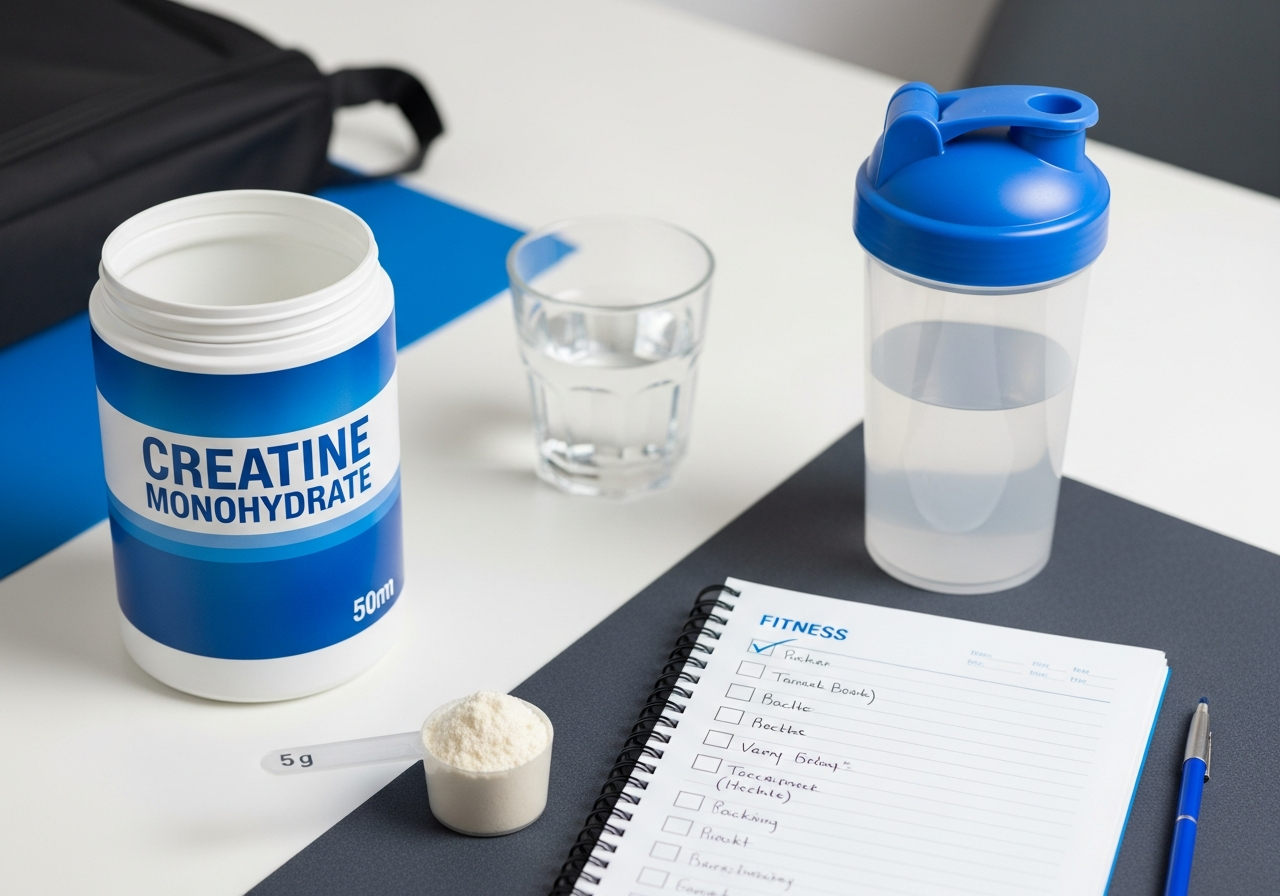
The best way to take creatine as a woman is to choose plain creatine monohydrate, take 3-5 g every day, and keep going long enough for muscle stores to saturate. Consistency beats perfect timing.
- Pick the right product. Choose creatine monohydrate first. You do not need a pink-labelled “women’s” version if the active ingredient and dose are the same. If you are shopping in Canada, check for a Natural Product Number, or NPN, which shows the product is licensed by Health Canada as a natural health product.
- Decide whether to load. If you want faster saturation, take 20 g/day split into 4 doses for 5-7 days, then drop to 3-5 g/day. If you prefer simplicity, skip loading and take 3-5 g/day from day one.
- Take it at a time you will remember. Post-workout, with breakfast, or with a protein shake are all fine. If you miss the “perfect” window but take it daily, you are still doing it right. See when to take creatine.
- Mix it well. Stir into water, juice, or a shake. Warm liquids may help it dissolve more easily, but this is a convenience issue, not an effectiveness issue. See how to mix creatine.
- Take it on rest days too. Saturation depends on regular intake, not only workout-day intake. Read creatine on rest days.
- Track useful outcomes. Watch gym performance, repeatability, strength numbers, training volume, and how recovered you feel between hard efforts.
What to expect week by week:
- Week 1 with loading: some women notice fuller muscles and a small scale increase from intramuscular water.
- Weeks 2-4: better training quality often becomes more noticeable.
- Weeks 4-8: strength progress and workout capacity are easier to judge.
- Beyond 8 weeks: the value is in the accumulated training benefit.
If you are wondering whether it is “working”, the most honest answer is that creatine rarely feels dramatic day to day. It works more like a quiet performance advantage that shows up in better reps, better sets, and better progress over time. For timeline details, see how long creatine takes to work.
The best beginner plan is boring on purpose: one daily dose, no cycling, no dry scooping, no expensive stack required.
Timing, training style, and creatine for female athletes
Creatine timing matters much less than daily consistency, but female athletes and serious lifters should take it every day and match expectations to their sport. Creatine is most useful where performance depends on repeated high-intensity effort.
For female athletes, the best-supported use cases include:
- strength training and powerlifting
- sprinting and repeated accelerations
- team sports with frequent bursts
- CrossFit-style mixed-intensity work
- swimming or cycling events with sprint components
This is why creatine for female athletes has remained relevant even as the marketing audience has broadened. The mechanism has always favoured sports with short, hard efforts and incomplete recovery between bouts.
Should you take it before or after a workout? The evidence does not support obsessing over the exact minute. A post-workout shake can be convenient, but the difference between before and after is small compared with the difference between taking it daily and forgetting it half the week. Our guide on when to take creatine covers this in detail.
Can endurance-focused women use it? Yes, but the trade-off is more individual. Creatine may help an endurance athlete who also needs sprint finish ability, hill attacks, or gym performance, but a small increase in body weight from intramuscular water may matter more in some events than others. That is why runners, cyclists, and weight-class athletes should think sport-first, not trend-first.
It is also worth noting that creatine is recognised within sports nutrition as an evidence-based supplement for performance contexts. The International Olympic Committee consensus on dietary supplements places creatine among the supplements with good support in the right athletic settings.
If you play competitive sport, also check your total supplement stack. Many “women’s performance” products hide underdosed creatine behind proprietary blends, caffeine, or electrolytes. If creatine is one of the reasons you are buying the product, the label should clearly state how many grams you are getting.
The practical athlete rule is simple: if your sport includes strength, power, repeated sprints, or gym-based performance, creatine monohydrate is usually worth serious consideration.
Safety, side effects, and the big hormone questions women ask
Creatine is considered safe for healthy adults when used at standard doses, and the most common side effects are mild digestive upset or temporary water-related weight gain rather than anything hormonal or dangerous. For women, the biggest fears are usually overblown or simply based on confusion.
The 2021 JISSN review on common questions and misconceptions about creatine addressed many of the internet’s favourite worries, including kidneys, dehydration, cramping, and hair loss claims. In healthy people using recommended doses, the broad safety picture is reassuring.
Here is what women most often need clarified:
- “Will it make me bulky?” No, creatine does not automatically build large amounts of muscle on its own. It supports training performance. Size changes depend mainly on training style, diet, and time.
- “Will it make me gain fat?” No, creatine itself does not cause fat gain.
- “Does it mess with women’s hormones?” Creatine is not a hormone supplement and does not work by dramatically altering female sex hormones.
- “Is the weight gain real?” Early changes are usually water inside muscle, not fat. See does creatine cause bloating?.
- “Is it hard on the kidneys?” In healthy individuals, standard-dose creatine is not shown to damage kidneys, but people with kidney disease or relevant medical conditions should speak with a clinician first. See the kidney question explained.
Practical side-effect management is straightforward:
- use 3-5 g/day rather than oversized doses
- split doses if your stomach is sensitive
- drink to normal thirst and training needs; you do not need absurd amounts of water
- avoid dry scooping
Who should be more cautious? Anyone who is pregnant, breastfeeding, has known kidney disease, or is managing a significant medical condition should get personalised medical advice before starting. The same applies if you take medications that affect kidney function or fluid balance.
For healthy women, though, the evidence-based bottom line is calm rather than dramatic: creatine monohydrate is one of the more established and less mysterious supplements on the market.
Myths women still hear: bulking, bloating, ‘women’s creatine’, and other half-truths
The biggest myths about women’s creatine are that it makes women bulky, that they need a special female formula, and that bloating means it is not working. None of those claims is a good reason to avoid creatine monohydrate.
Myth 1: Creatine makes women bulky.
Creatine helps you train harder; it does not force a bodybuilding physique onto you. Meaningful muscle gain still requires months of progressive resistance training and appropriate nutrition. Most women who take creatine simply notice better gym performance and, sometimes, slightly fuller muscles.
Myth 2: Women need a lower “female dose” because of hormones.
Women do not need a fundamentally different creatine mechanism or a pink-tax formula. Dose can be adjusted by body size and goal, but the standard evidence-based range of 3-5 g/day still applies.
Myth 3: Water retention is the same as bloating.
Creatine pulls water into muscle cells. That can increase body weight and muscle fullness, but it is different from looking or feeling puffy all over. Gastrointestinal bloating can happen in some people, especially with large single doses, but it is usually fixable by lowering or splitting the dose.
Myth 4: If it is marketed for hormones, it must work through hormones.
Not really. Women are interested in creatine because hormonal life stages can change training needs and muscle retention, but creatine’s primary job is still energy support in muscle.
Myth 5: Fancy forms are better for women.
Claims that HCl, gummies, liquids, or buffered forms are uniquely superior for women usually outpace the evidence. Monohydrate remains the benchmark. If you want the details, compare monohydrate vs HCl and gummies vs powder.
The most useful sceptical question to ask any product is: How many grams of actual creatine am I getting, in what form, for what price? If the answer is unclear, the branding is probably doing more work than the formulation.
We cover these issues more deeply in creatine myths debunked and our women’s creatine guide. The trend is real, but consumers should not confuse good education with good marketing. Sometimes they overlap; often they do not.
How to buy women’s creatine in Canada without overpaying for branding
The best way to buy women’s creatine in Canada is to look for licensed creatine monohydrate with clear grams-per-serving labelling, then compare quality, testing, and price rather than buying the prettiest jar. In most cases, ingredient quality matters more than whether the label says “for women”.
Start with these buying criteria:
- Form: creatine monohydrate first.
- Dose clarity: the label should clearly state how many grams of creatine you get per serving.
- NPN: in Canada, a Natural Product Number indicates Health Canada licensing for that natural health product category.
- Third-party testing: useful for purity and trust, especially in competitive sport.
- Minimal fluff: avoid paying a premium for tiny doses hidden in blends.
| Option | Best for | Pros | Watch-outs |
|---|---|---|---|
| Plain creatine monohydrate powder | Most women | Best evidence, easiest to dose, usually best value | Can be unflavoured and slightly gritty |
| Micronized monohydrate | Women who dislike texture | Often mixes better, may feel easier on the stomach | Usually costs a bit more |
| Capsules | Convenience and travel | No mixing, easy routine | Often expensive per gram; many pills needed |
| Gummies | Taste-first buyers | Easy to use | Often underdosed or pricey; may include sugar |
| “Women’s blends” | Brand-driven shoppers | May combine multiple goals in one product | Can be mostly marketing unless creatine dose is explicit |
If you want help comparing products, see our best creatine rankings, creatine brand reviews, and product catalogue. For Canadian shoppers specifically, best creatine monohydrate in Canada is the most relevant starting point.
A final buying tip: if a brand talks endlessly about hormones, detox, metabolism, or “toning” but barely mentions the actual grams of creatine monohydrate, that is a red flag. The science-backed ingredient should be the main event, not the fine print.
Bottom line: the 2026 women’s creatine boom is justified — if you keep the science ahead of the marketing
The women’s creatine boom in 2026 is justified because creatine monohydrate is genuinely useful for many women, but the smartest way to use the trend is to strip away the branding and follow the evidence. The right question is not whether women need creatine made “for women”; it is whether creatine helps your training, age, and goals.
For most healthy women, the practical answer looks like this:
- Choose creatine monohydrate.
- Take 3-5 g/day every day.
- Use an optional loading phase of 20 g/day split into 4 doses for 5-7 days only if you want faster saturation.
- Keep taking it on rest days.
- Judge it by training quality and strength progress, not by whether it gives you a dramatic “feeling”.
The women who stand to gain the most are not just bodybuilders. They include beginners who want better training support, female athletes who need repeated high-intensity output, women over 40 who want to preserve strength and lean mass, and women navigating perimenopause or menopause who are prioritising healthy ageing.
What the evidence strongly supports in 2026: creatine for strength, power, repeated high-intensity performance, and lean mass support during training. What is promising but more nuanced: broader applications related to cognition and life-stage concerns. That distinction matters, because it keeps your expectations realistic and your supplement budget sensible.
If you are ready to start, keep it simple. Read how to take creatine, check is creatine safe?, and compare a few reputable Canadian options before buying. The trend is real, but the reason it matters is even simpler: women are finally being included in a conversation that sports nutrition should have been having with them all along.
Women’s Creatine in 2026: The Trend in 4 Numbers
- 29.5% Estimated U.S. women’s creatine segment CAGR through 2033 — Market-research estimate; faster than the broader category
- USD $1.85B Estimated global creatine supplement market in 2026 — Market-research estimate
- 26.2% Estimated global creatine market CAGR toward 2033 — Some firms project growth toward USD $8.68B by 2033
- 3-5 g/day Standard daily creatine monohydrate dose for most women — Evidence-based maintenance range
Frequently Asked Questions
Why is creatine for women trending right now?
Creatine for women is trending because women are finally being targeted with messaging that matches the evidence: strength, performance, healthy ageing, and menopause support. The science itself is not brand-new; the 2026 surge is driven by female-focused branding, better myth correction, and broader interest in muscle and cognition across life stages.
Is creatine good for women who are not bodybuilders?
Yes, creatine is good for many women who are not bodybuilders, especially if they lift weights, do HIIT, play sport, or want to preserve strength as they age. Creatine supports the muscle energy system used in hard efforts, so its benefits extend well beyond physique-focused training.
Does creatine make women bulky?
No, creatine does not automatically make women bulky. Creatine helps you train harder and may increase intramuscular water, but large muscle gain still requires months of progressive resistance training and appropriate nutrition.
What is the best creatine for women?
The best creatine for women is usually plain creatine monohydrate. It is the most studied form, the most consistently effective form, and usually the best value compared with trendier alternatives marketed specifically to women.
How much creatine should a woman take per day?
Most women should take 3-5 g of creatine monohydrate per day. Smaller women with general fitness goals may do well with 3 g/day, while larger women or women training hard for strength and sport often use 5 g/day.
Is creatine helpful for women over 40?
Yes, creatine can be especially helpful for women over 40 when paired with resistance training. Its main value is supporting strength, lean mass, and training quality at a life stage when muscle preservation becomes increasingly important.
Can creatine help during menopause?
Creatine may help during menopause by supporting resistance training, lean mass retention, and strength, but it is not a direct menopause treatment. The strongest evidence is still for exercise performance and training adaptation rather than symptom relief on its own.
Does creatine affect women's hormones?
Creatine is not a hormone supplement and does not primarily work by altering women’s hormones. Its main mechanism is increasing phosphocreatine stores in muscle, although it becomes especially relevant during hormonal life stages that affect muscle and recovery.
Should women load creatine or just take it daily?
Women can do either, but daily use is enough for most people. Loading at 20 g/day split into 4 doses for 5-7 days saturates muscle faster, while taking 3-5 g/day reaches the same place more gradually and is often easier on digestion.
Do women need a special women's creatine formula?
No, women do not usually need a special women’s creatine formula. If two products provide the same form and grams of creatine monohydrate, the one labelled ‘for women’ is often just a branding difference rather than a physiological necessity.