Micronized Creatine: Is the Finer Powder Actually Better?
By The Creatine Canada Research Team — Evidence-based supplement analysts
Micronized creatine is not a stronger form of creatine than regular creatine monohydrate; it is simply creatine monohydrate ground into finer particles, which usually helps it mix more easily and may feel gentler on the stomach for some people. If the label says micronized creatine monohydrate, you are still getting the same well-studied creatine molecule that drives performance benefits.
Evidence-based · Cites 4 sources · Editorial standards
Key Takeaways
- Micronized creatine is usually just creatine monohydrate with smaller particle size, not a different active ingredient.
- Its main practical advantage is better mixability and less gritty texture, not better muscle uptake.
- The evidence-based dose is the same as standard monohydrate: 3-5 g daily, or about 20 g daily split into 4 doses for 5-7 days if loading.
- If regular monohydrate upsets your stomach or sinks in the shaker, micronized creatine can be a sensible upgrade.
- For strength, muscle, power, and repeated high-intensity performance, total daily intake and consistency matter more than whether the powder is micronized.
- In Canada, prioritize a simple ingredient label, an NPN where applicable, and reputable third-party testing over marketing claims about 'superior absorption'.
What micronized creatine actually is, in plain English
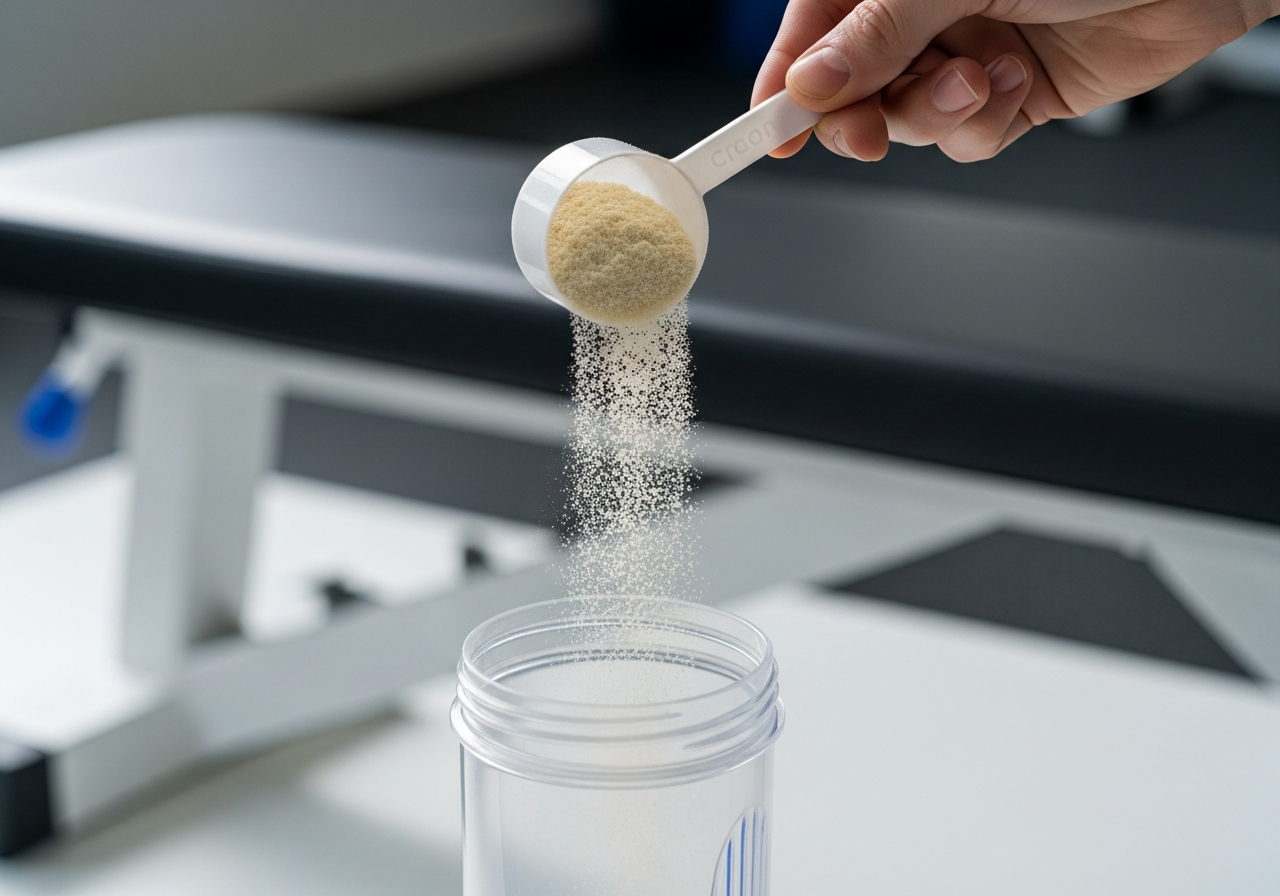
Micronized creatine is creatine monohydrate that has been processed into smaller powder particles, so it tends to disperse more easily in liquid and feel less gritty when you drink it. That direct answer matters because many shoppers assume micronized creatine is a different form, but in most products it is still the same monohydrate form backed by the largest body of research.
Creatine itself is a naturally occurring compound stored mostly in muscle, where it helps regenerate adenosine triphosphate, or ATP, the cell's fast energy currency. Creatine monohydrate is the most studied supplemental form by a wide margin, and the 2017 ISSN position stand concluded that it is both effective and safe for healthy people when used appropriately. Micronization changes the physical texture of the powder, not the underlying creatine molecule that supports performance. You can review that broader evidence base in the ISSN position stand.
In practical terms, the word micronized usually refers to particle size. Smaller particles create more surface area, which can help the powder suspend in water more evenly. That is why users often report that micronized creatine dissolves better, although technically most creatine powders are dispersing rather than fully dissolving in the way sugar does. If your glass has less sediment at the bottom, that is a mixability benefit, not proof of superior absorption.
For beginners, the big takeaway is simple: if a tub says micronized creatine monohydrate, treat it as monohydrate for dosing, timing, expected results, and safety. If you want the bigger beginner picture, our guide on what creatine is explains the basics, and our creatine for beginners article walks through first-time use.
- Same active form: usually creatine monohydrate.
- Main difference: smaller particles and smoother mixing.
- Not automatically better: finer powder does not mean more muscle creatine saturation.
- Use case: best for people who dislike gritty powder or get mild stomach upset with larger, clumpier powders.
Micronized vs. monohydrate: the real difference most labels blur
Micronized creatine and regular creatine monohydrate are usually the same ingredient from a performance standpoint; the difference is powder processing, not a different creatine chemistry. That means the search query micronized vs monohydrate is a bit misleading, because micronized creatine is commonly a subtype of monohydrate rather than a competitor to it.
Here is the easiest way to think about it. Monohydrate describes the chemical form of creatine bound with one water molecule. Micronized describes the particle size of that powder. A product can be both. In other words, "micronized creatine monohydrate" is still monohydrate. The muscle benefits come from the monohydrate, while the handling and mouthfeel differences come from the micronization.
Marketing often muddies this by implying that micronized creatine is a premium form with meaningfully superior absorption. The current evidence does not support the claim that micronization makes creatine intrinsically more effective for increasing strength, lean mass, or sprint performance once total daily dose is matched. According to Antonio et al. (2021) in JISSN, creatine monohydrate remains the reference form against which others are judged, and many marketing claims around alternative forms outrun the data.
| Feature | Micronized creatine monohydrate | Regular creatine monohydrate |
|---|---|---|
| Active ingredient | Creatine monohydrate | Creatine monohydrate |
| Particle size | Smaller | Larger |
| Mixability | Usually better | Often more gritty or sediment-heavy |
| Dose | 3-5 g/day maintenance | 3-5 g/day maintenance |
| Loading option | 20 g/day split into 4 doses for 5-7 days | 20 g/day split into 4 doses for 5-7 days |
| Evidence for better results | Not established | Strong evidence for effectiveness |
| Typical reason to choose | Smoother texture, easier mixing | Lowest cost, easiest to find |
If your goal is value, standard monohydrate is often enough. If your goal is convenience and smoother mixing, micronized can be worth paying slightly more for. For broader product comparisons, see our best creatine rankings, creatine brand reviews, and guide to the best type of creatine.
Is micronized creatine better for results, or just better in a shaker bottle?
Micronized creatine is usually better for mixability, but it is not proven to be better for muscle gain, strength, or performance than the same dose of regular creatine monohydrate. That is the honest answer to the question is micronized creatine better.
Creatine works by increasing intramuscular phosphocreatine, which is stored creatine linked to phosphate and used to rapidly regenerate ATP during short, hard efforts. Once your muscles are saturated, the benefit comes from having more phosphocreatine available, not from how fancy the powder looked in the scoop. As long as the product delivers the labelled amount of creatine monohydrate and you take it consistently, the physiological effect should be similar.
So why do some users swear micronized creatine works better? Usually for three practical reasons. First, they are more consistent because it mixes more easily and is less annoying to drink. Second, some people experience less stomach discomfort when they split doses and use a smoother powder. Third, finer particles can reduce that chalky sludge at the bottom of the bottle, so it feels like less product is being wasted. Those are useful benefits, but they are adherence benefits, not necessarily biological superiority.
The best-supported creatine outcomes remain the same regardless of whether the monohydrate is micronized: improvements in strength, lean mass over time when paired with training, and repeated high-intensity exercise capacity. The International Olympic Committee consensus on supplements also recognises creatine as one of the few supplements with strong evidence for certain performance uses in sport. You can read the IOC statement here.
What the evidence does not clearly show is that micronized creatine causes faster muscle saturation, better absorption into muscle, or a larger training response than standard monohydrate. If a label claims dramatically better uptake, ask whether the company is providing direct comparative human evidence or simply using a theoretical particle-size argument.
- Better supported: smoother mixing, easier daily use, possibly better tolerance for some users.
- Not clearly supported: larger gains, faster results, superior muscle retention.
- Most important variable: taking enough creatine every day for long enough to saturate muscle stores.
If you want the best odds of seeing results, focus less on micronized versus non-micronized and more on consistent dosing. Our guides on how long creatine takes to work and whether creatine builds muscle explain what to expect realistically.
How micronized creatine works in the body, and why finer powder can feel different
Micronized creatine works through the exact same muscle-energy mechanism as regular creatine monohydrate; the finer powder changes how it mixes and sits in the stomach, not the core biochemical pathway. That is why the benefits of micronized creatine still trace back to monohydrate science.
After you ingest creatine, it is absorbed from the gut and transported into muscle cells, where a large portion is stored as phosphocreatine. During short bursts of intense effort such as lifting, sprinting, jumping, or repeated intervals, phosphocreatine donates a phosphate group to help regenerate ATP quickly. More stored phosphocreatine means a slightly larger buffer for high-power work, which can translate into more reps, a bit more total training volume, and better quality repeated efforts over time. Those small session-level advantages are what help drive larger training adaptations.
Micronization likely helps at the level of powder behaviour. Smaller particles have more total surface area relative to their mass, so they disperse more readily in water. For some users, that leads to less sediment, fewer undissolved clumps, and a smoother mouthfeel. If you used to slam a gritty creatine slurry on an empty stomach and felt discomfort, switching to a finer powder and dividing the dose can make the experience noticeably better.
But it is important not to overstate the mechanism. Better dispersion in a shaker bottle is not the same thing as dramatically better absorption into muscle. Human performance outcomes still depend on dose, regularity, your baseline muscle creatine stores, diet, and training quality. Vegetarians and vegans often respond especially well because their baseline dietary creatine intake is lower, while people with already high intramuscular stores may notice less of a dramatic change.
The broad evidence summaries from Examine.com and the ISSN both support creatine monohydrate as the benchmark form. That is why a good micronized product should be viewed as a user-friendly version of the standard, not a whole new category of ergogenic aid.
If you want to optimise the practical side, pair this article with our guides on how to mix creatine and how much water to drink with creatine. Those basics often matter more day-to-day than the label term micronized.
How to take micronized creatine properly: a simple step-by-step plan
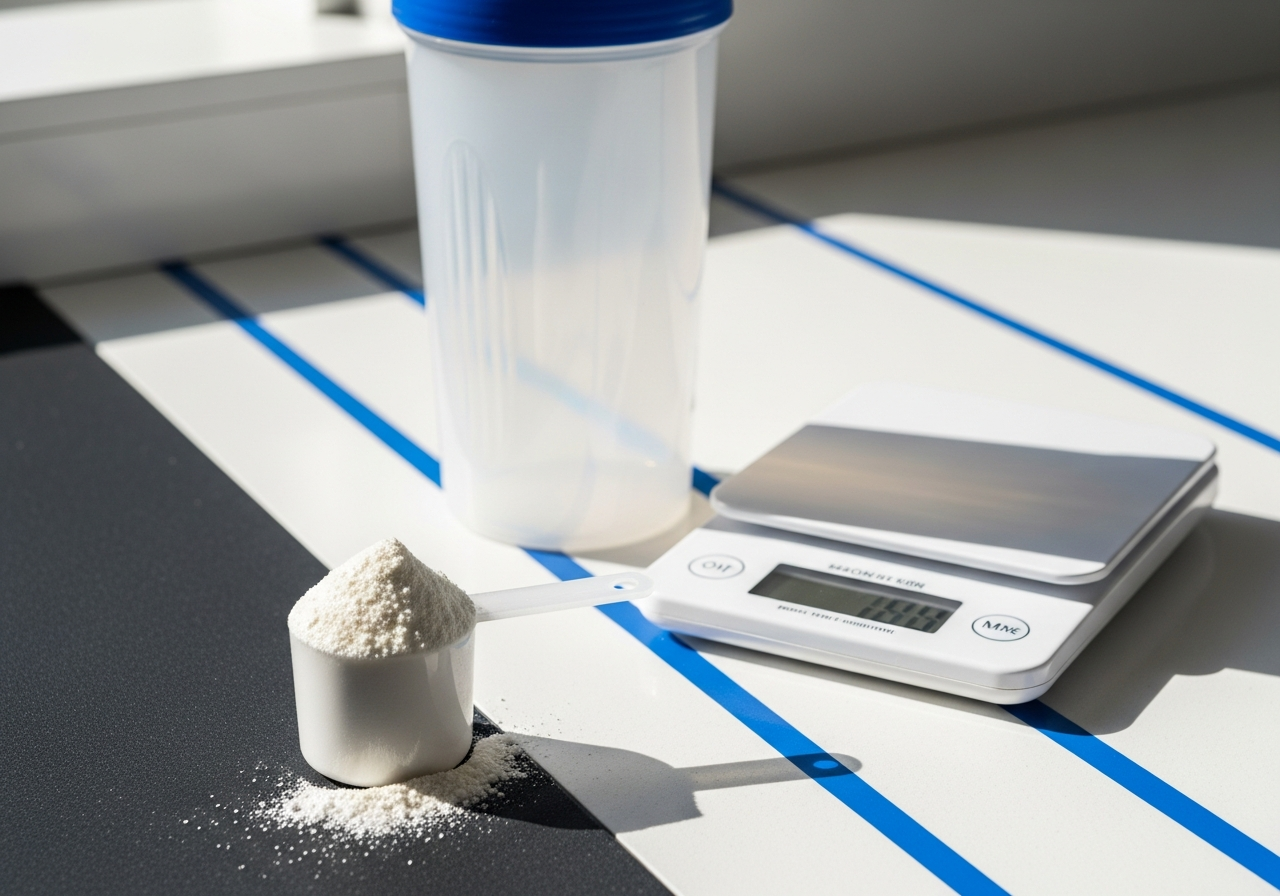
The best way to take micronized creatine is exactly the same as standard creatine monohydrate: choose a daily dose you can stick to, mix it well, and take it every day. Consistency beats perfect timing.
- Pick your dosing strategy. Use either a loading phase of 20 g per day split into 4 doses for 5-7 days, then switch to 3-5 g per day, or skip loading and take 3-5 g per day from day one.
- Measure accurately. Use a gram scoop or kitchen scale if possible. Many scoop sizes vary, so do not assume every "teaspoon" equals 5 g. If you need help, use our creatine dosage calculator or read how to measure creatine.
- Mix in enough fluid. Add your dose to water, juice, or a protein shake and stir or shake thoroughly. Micronized powder usually disperses more easily, but giving it 20-30 seconds in a shaker still helps.
- Take it with whatever routine you will remember. Post-workout, breakfast, lunch, or evening are all fine if they improve adherence. For a deeper timing breakdown, see when to take creatine.
- On training and rest days, keep the dose the same. Muscle saturation is maintained by regular intake, not only by taking it around workouts.
- Watch tolerance. If you get stomach upset, split 5 g into two smaller doses, take it with food, or avoid chugging a very concentrated mix.
- Stay the course for weeks, not days. Without loading, it often takes roughly 3-4 weeks to approach full saturation. With loading, you may notice effects within about a week.
A realistic beginner routine looks like this:
- Option A, no loading: 5 g with breakfast every day.
- Option B, loading: 5 g with breakfast, lunch, post-workout, and dinner for 5-7 days, then 5 g daily.
- Sensitive stomach option: 2.5 g twice daily with meals.
How do you know it is working? Expect better training quality first: an extra rep here, a bit more load there, or less drop-off across repeated hard sets. Scale weight may rise modestly early on because creatine increases intracellular water in muscle, not because it adds body fat overnight. If you miss a day, do not panic and do not double up dramatically the next day; simply resume normal dosing.
Exact dosing for micronized creatine by body weight and goal
The evidence-based dose for micronized creatine is the same as for regular monohydrate: 3-5 g per day for most adults, with an optional loading phase of 20 g per day split into 4 doses for 5-7 days. Body size and training goals can fine-tune that baseline.
A common scientific framework is about 0.3 g per kilogram of body weight per day during loading for 5-7 days, followed by about 0.03 g per kilogram per day as maintenance. In practice, that maps closely onto the familiar gym recommendation of 3-5 g daily for most people. Larger athletes, people with high lean mass, and those doing a lot of high-intensity training may lean toward 5 g daily rather than 3 g.
| Body weight | Loading phase for 5-7 days | Maintenance dose | Best use case |
|---|---|---|---|
| 50-65 kg | 15-20 g/day split into 3-4 doses | 3 g/day | Smaller adults, beginners, lighter athletes |
| 66-85 kg | 20 g/day split into 4 doses | 3-5 g/day | Most gym-goers |
| 86-105 kg | 20-25 g/day split into 4-5 doses | 5 g/day | Larger lifters and field-sport athletes |
| 105 kg+ | 25-30 g/day split into 5 doses | 5-7 g/day | Very large athletes with high lean mass |
Goal also matters:
- Muscle and strength: 5 g daily is a practical default.
- General wellness and beginner use: 3-5 g daily is usually enough.
- Faster saturation before a meet or training block: use a loading phase.
- Sensitive digestion: use smaller divided doses and take with meals.
You do not need to cycle micronized creatine, and you do not need a special "micro-dose" because the powder is finer. The active ingredient dose is what counts. If your tub suggests very tiny doses because it is "more bioavailable," treat that claim cautiously unless the company provides convincing human evidence against the monohydrate standard.
For exact personal numbers, our how much creatine per day guide and maintenance dose guide go deeper, and the calculator is the fastest way to dial in your daily amount.
Timing, mixing, and what to expect week by week
Micronized creatine does not need a special timing window; take it at any time you can be consistent, and expect changes in training performance before dramatic mirror changes. The claim that you must take it only post-workout is overstated.
Timing matters far less than saturation. If you load properly, many people notice fuller muscles, a small increase in body weight, or better repeated-effort performance within about 5-7 days. If you skip loading and take 3-5 g daily, noticeable benefits more often emerge over roughly 2-4 weeks as muscle stores gradually rise.
Here is a practical week-by-week expectation guide:
- Days 1-7 with loading: the scale may tick up slightly from increased intracellular water, and workouts may begin to feel a bit more repeatable.
- Weeks 2-4 without loading: strength and rep performance may start improving subtly if training is consistent.
- Weeks 4-8: the biggest visible benefit is often improved ability to train hard enough to support lean-mass gains over time.
- Beyond 8 weeks: benefits persist as long as you keep taking it and training appropriately.
For mixing, micronized powder usually gives you three advantages: less floating foam, less gritty sediment, and a smoother drink. Even so, a few best practices help:
- Use 250-500 mL of water or another beverage for a standard 3-5 g dose.
- Shake well rather than relying on a quick spoon stir.
- Drink soon after mixing instead of leaving it for hours.
- If clumps form, use room-temperature or slightly warm liquid and a shaker ball.
You can mix it with protein powder, juice, or coffee if that helps compliance, though very hot liquids are not necessary and are mainly a convenience issue. If you want exact mixing options, see how to mix creatine, mixing creatine with protein powder, and mixing creatine with coffee.
The simplest test of whether it is working is not whether the powder disappears fully in water. It is whether, after a few weeks, your training quality improves: one more rep at the same weight, less drop-off across intervals, or slightly more total work across a session.
Who micronized creatine is best for: beginners, women, older adults, and athletes
Micronized creatine is best for anyone who wants standard creatine monohydrate benefits with easier mixing, and it is especially appealing for beginners and people who dislike gritty powders. The physiological benefits of creatine itself extend well beyond young male bodybuilders.
Beginners often do well with micronized creatine because the user experience is easier. A finer powder sinks and clumps less, which makes it more likely you will actually take it every day. If you are new, 3-5 g daily is enough, and you do not need to overthink brand complexity.
Women can use micronized creatine exactly as men do, because the active ingredient and mechanism are the same. Creatine does not inherently make women "bulky"; it supports training performance, lean mass retention, and muscle function. Any early body-weight increase is typically from water stored inside muscle, not fat gain. Our creatine for women guide covers this in depth.
Older adults may benefit from creatine when it is combined with resistance training, especially for maintaining muscle function and lean mass. Micronized powder can be a good option if texture or digestion is a barrier to regular use. The broad safety and efficacy literature does not suggest older adults need a special form, but ease of use matters for adherence. See creatine for older adults for specifics.
Athletes in sports involving repeated sprints, jumps, collisions, throws, heavy lifts, or intervals are often ideal candidates for creatine. For endurance athletes, creatine can still help with sprint finishes, gym work, and high-intensity blocks, though some may weigh the trade-off of mild body-mass gain. Micronized powder can be helpful during travel and competition periods because it is easier to mix quickly.
Vegetarians and vegans may respond particularly well because baseline muscle creatine stores can be lower when dietary creatine intake from meat and fish is low. Again, that response advantage comes from creatine itself, not from the micronized processing.
If you have medical conditions, kidney disease, are pregnant, or take medications that warrant review, speak with a qualified healthcare professional first. For most healthy adults, though, the question is less "Who can use micronized creatine?" and more "Would easier mixing help you stay consistent?" If yes, it is a practical choice.
Safety, side effects, and the biggest myths about micronized creatine
Micronized creatine is generally as safe as regular creatine monohydrate for healthy people when used at standard doses, because it is usually the same active ingredient. The strongest evidence-backed concerns are mild gastrointestinal side effects in some users, especially with large single doses.
The ISSN position stand and later reviews have consistently supported creatine monohydrate as safe for healthy individuals, including longer-term use at recommended doses. Common side effects are usually practical rather than dangerous: stomach upset, bloating feelings, loose stools, or temporary water-weight gain. These effects are more likely when people take too much at once, do an aggressive loading phase without splitting doses, or use too little fluid.
Micronized powder may reduce complaints for some people because it tends to mix more smoothly, but it is not a guarantee against digestive issues. If you react poorly, the first troubleshooting move is to lower the single-dose size, not to abandon creatine entirely. Our guides on creatine digestive side effects, bloating, and creatine safety go deeper.
Now the common myths:
- Myth: Micronized creatine is safer because it is more advanced.
Reality: Safety is tied mainly to the active form and dose, and micronized monohydrate is usually just monohydrate with smaller particles. - Myth: Creatine harms healthy kidneys.
Reality: Creatine can raise creatinine on a blood test because creatinine is a breakdown product, but that does not automatically mean kidney damage. This is a common source of confusion. - Myth: Creatine causes dehydration and cramps.
Reality: The evidence does not support creatine as a dehydrating agent in healthy users taking sensible doses. - Myth: Water gain means fat gain.
Reality: Early scale increases are usually intracellular water in muscle, not body-fat gain. - Myth: You need to cycle off creatine.
Reality: Routine cycling is not required for most healthy adults.
The Mayo Clinic overview also notes creatine is likely safe when used appropriately, while reminding users that individual medical context matters. Read it here. For a broader myth roundup, visit our creatine myths debunked page.
How to buy micronized creatine in Canada without overpaying for marketing
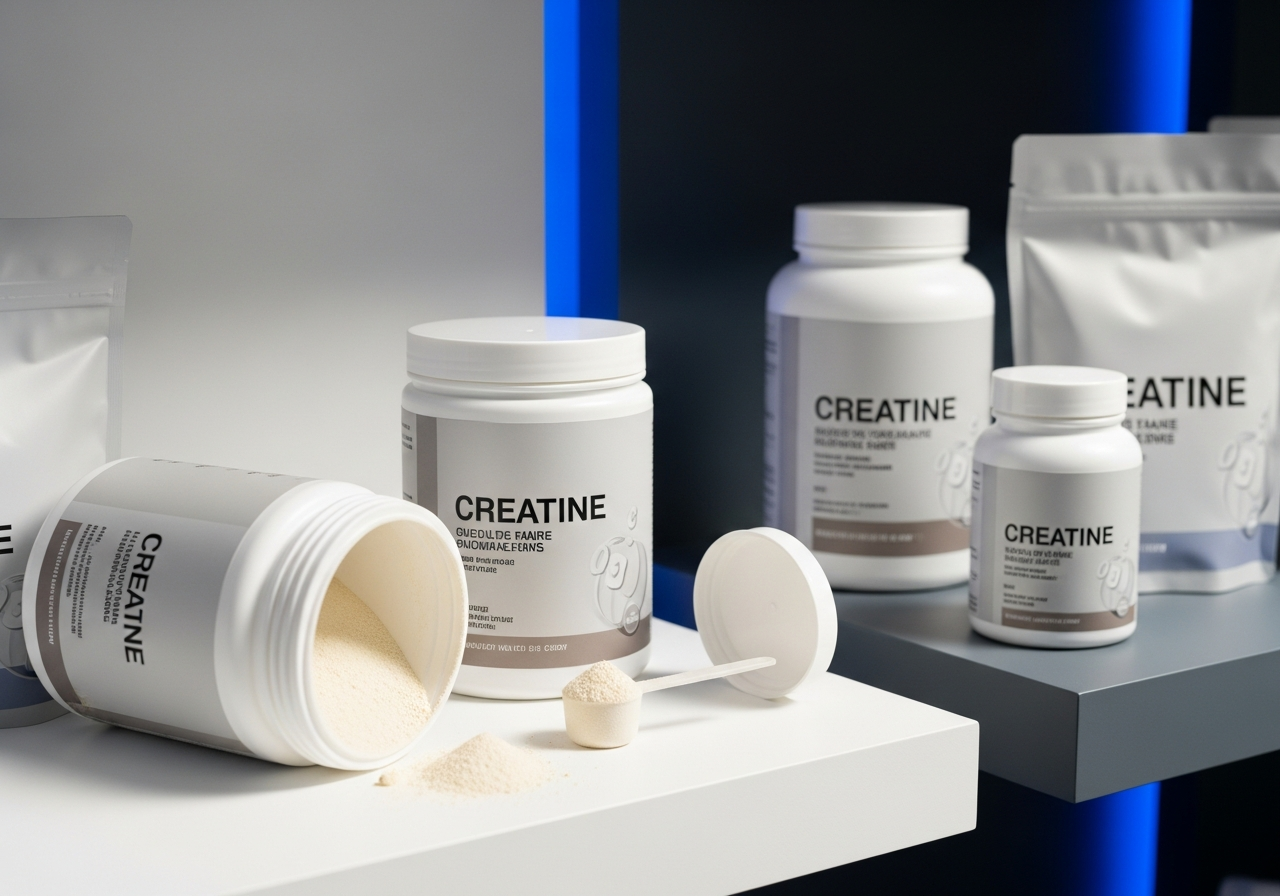
The best micronized creatine to buy in Canada is usually a plain creatine monohydrate powder from a reputable brand with transparent labelling, sensible pricing per serving, and quality controls you can verify. The word micronized should be a nice-to-have, not the main reason you trust a product.
Start with the ingredient panel. Ideally, you want a product that lists creatine monohydrate clearly and does not bury it in a flashy proprietary blend. If the front label says "micronized," check whether the Supplement Facts or product description confirms it is still monohydrate. That keeps you grounded in the form with the strongest evidence.
In Canada, a Natural Product Number, or NPN, can be a useful regulatory signal on supplement labels because it shows the product has been licensed by Health Canada as a natural health product. An NPN is not a magic proof of superiority, but it is part of a credibility checklist. Also look for third-party testing, lot traceability, plain allergen information, and realistic serving claims.
What should make you sceptical?
- Claims of dramatically superior absorption with tiny doses.
- Promises that micronized creatine causes zero water retention.
- Blends that hide the exact grams of creatine.
- Prices far above standard monohydrate without a clear quality rationale.
What is worth paying for?
- Trusted manufacturing and testing.
- Simple ingredient list.
- Good mixability if that improves your consistency.
- A format you will actually use daily.
Micronized creatine can make sense if you hated the texture of cheap, gritty powders in the past. But if your regular monohydrate works fine, there is no urgent need to switch. Compare options in our creatine product catalog, brand reviews, and best creatine rankings. If you are specifically shopping domestically, our guides on buying creatine online in Canada and Canadian supplement regulations are also useful next reads.
The most common mistakes people make with micronized creatine
The biggest mistake with micronized creatine is assuming the finer powder changes the fundamentals, when in reality dose, consistency, and training still drive the outcome. Many disappointments come from process errors, not from the product form.
- Expecting instant visible muscle gain. Creatine helps you train better and retain more water inside muscle, but noticeable physique changes still require weeks of training and nutrition support.
- Using too little because the label says it is more absorbable. For most adults, 3-5 g daily remains the evidence-based maintenance range even if the powder is micronized.
- Taking huge single doses. Slamming 10-20 g at once is more likely to upset your stomach than help. Split loading doses across the day.
- Only taking it on workout days. Creatine works through saturation, so rest-day dosing matters too. See creatine on rest days.
- Judging quality by how completely it dissolves. Better mixability is nice, but some sediment does not mean the creatine is ineffective.
- Confusing water retention with bloating or fat gain. Creatine-associated water is largely stored in muscle, and the scale is not telling the whole story.
- Switching products too quickly. If you try a tub for only a few days, you have not given creatine enough time to work.
Troubleshooting is usually straightforward:
- Upset stomach: take with meals, split the dose, or reduce concentration in the shaker.
- Powder settling: use more liquid and shake longer.
- No obvious effect: confirm your daily grams, training quality, and whether you have given it at least a few weeks.
- Weight jump worries: compare gym performance and measurements, not just the scale.
If you think you may be a low responder, remember that baseline creatine stores vary. People who already eat a lot of meat or have naturally higher stores may feel fewer obvious changes than vegetarians or newer lifters. That does not automatically mean the supplement is fake or that micronized creatine is ineffective. It may simply mean the magnitude of benefit is smaller or less noticeable.
Bottom line: should you choose micronized creatine?
Yes, micronized creatine is a good choice if you want the proven benefits of creatine monohydrate in a powder that usually mixes more easily, but no, it is not meaningfully superior to regular monohydrate for muscle uptake or performance when the dose is the same. For most people, that is the simplest and most accurate conclusion.
If you are deciding today, use this quick rule:
- Choose micronized creatine if you want smoother mixing, less grit, or a gentler user experience that helps you stay consistent.
- Choose regular monohydrate if you want the lowest-cost evidence-based option and do not mind a bit more sediment.
- Skip the hype if a brand claims micronization alone makes creatine dramatically more anabolic, faster acting, or effective at tiny doses.
The best creatine plan is boring in the best way: buy a reputable monohydrate product, take 3-5 g daily, consider loading only if you want faster saturation, and keep training hard. Over time, better repeated-effort performance can help you squeeze more quality from your programme, which is where the real gains happen.
For the next practical step, use our creatine dosage calculator to confirm your daily amount, compare products in the catalog, or read how to take creatine for a full implementation guide. If your question is really about whether any premium form beats monohydrate, our guide on why monohydrate still wins is the right follow-up.
Micronized creatine is best understood as a convenience upgrade to creatine monohydrate, not a fundamentally better creatine.
Micronized Creatine at a Glance
- 3-5 g/day Standard maintenance dose — Same evidence-based daily dose as regular creatine monohydrate for most adults.
- 20 g/day Typical loading dose — Usually split into 4 doses for 5-7 days to saturate muscles faster.
- 5-7 days Time to faster saturation with loading — Without loading, meaningful saturation usually takes closer to 3-4 weeks.
- Same active form Micronized usually means monohydrate — The main change is smaller particle size and better mixability, not a new creatine molecule.
Frequently Asked Questions
What is micronized creatine?
Micronized creatine is usually creatine monohydrate processed into smaller powder particles so it mixes more easily and feels less gritty. It is not typically a different active form of creatine, so you should think of it as monohydrate with improved texture rather than a fundamentally different supplement.
Is micronized creatine better than regular monohydrate?
Micronized creatine is better for mixability, but it is not proven to be better for muscle growth, strength, or performance than the same dose of regular monohydrate. If regular monohydrate already agrees with your stomach and budget, you are not missing out on major physiological benefits.
Does micronized creatine dissolve better?
Yes, micronized creatine usually disperses better in liquid because the powder particles are smaller and have more surface area. That said, creatine often still leaves some sediment, so better mixing does not necessarily mean it has become uniquely more absorbable in the body.
What are the benefits of micronized creatine?
The main benefits of micronized creatine are easier mixing, smoother texture, and possibly better stomach comfort for some users. The actual training benefits, such as better repeated high-intensity performance and support for strength and lean mass over time, come from creatine monohydrate itself.
How much micronized creatine should I take per day?
Most adults should take 3-5 g of micronized creatine per day, just as they would with standard creatine monohydrate. If you want faster saturation, use about 20 g per day split into 4 doses for 5-7 days, then drop to a maintenance dose.
Do I need to load micronized creatine?
No, you do not need to load micronized creatine, but loading can help you saturate muscle stores faster. A loading phase is mainly about speed, not superiority; taking 3-5 g daily without loading still works, just over a longer timeline.
Can micronized creatine reduce bloating or stomach upset?
Micronized creatine may reduce stomach discomfort for some people because it mixes more smoothly and can feel easier to drink, but it is not a guaranteed fix. If you get side effects, splitting the dose, taking it with food, and avoiding large single doses usually help more than the word 'micronized' alone.
Should beginners choose micronized creatine?
Yes, beginners can absolutely choose micronized creatine, especially if they want an easy-to-mix powder that improves daily compliance. The key is still to buy a simple creatine monohydrate product from a reputable brand and take it consistently.
When should I take micronized creatine?
You can take micronized creatine at any time of day that helps you remember it consistently. Pre-workout, post-workout, or with a meal are all reasonable, because long-term muscle saturation matters much more than exact timing for most people.
Is micronized creatine safe?
Yes, micronized creatine is generally considered safe for healthy adults when it is simply creatine monohydrate used at recommended doses. The main caveat is that people with relevant medical conditions or concerns about kidney function should speak with a qualified healthcare professional before supplementing.