Where Does Creatine Come From and How Is It Made?
By The Creatine Canada Research Team — Evidence-based supplement analysts
Creatine comes from two places: your body makes it naturally from the amino acids glycine, arginine, and methionine, and most creatine supplements are manufactured synthetically in factories rather than extracted from meat. In practice, the creatine powder you buy is usually creatine monohydrate made through an industrial chemical process, then purified, dried, and tested before it is sold as a supplement.
Evidence-based · Cites 4 sources · Editorial standards
Key Takeaways
- Your liver, kidneys, and pancreas make about 1 gram of creatine per day from glycine, arginine, and methionine.
- Most supplement creatine is not taken from animal tissue; it is synthesised industrially and then sold mainly as creatine monohydrate powder.
- Creatine works after it is stored in muscle as phosphocreatine, which helps regenerate ATP during short, hard efforts.
- The standard evidence-based dose is 3-5 g per day, with an optional loading phase of 20 g per day split into 4 doses for 5-7 days.
- Creatine monohydrate remains the most studied, most reliable, and most cost-effective form for supplements.
- Micronized creatine is still creatine monohydrate; the particles are just smaller to improve mixing.
- In Canada, look for a Natural Product Number (NPN), plain ingredient lists, and preferably third-party testing when buying creatine.
Where creatine actually comes from: your body, your food, and the factory
Creatine comes from three practical sources: your body makes it, certain animal foods contain it, and most supplement creatine is manufactured synthetically for purity and consistency. That direct answer matters because many people assume creatine powder is ground-up meat or a steroid-like drug, but neither is true.
Inside the body, creatine is a naturally occurring compound made from the amino acids glycine, arginine, and methionine. It is produced mainly through reactions involving the kidneys, pancreas, and liver, then transported in the blood to tissues that need fast energy, especially skeletal muscle. Roughly 95% of the body's creatine is stored in muscle, mostly as free creatine and phosphocreatine, which is creatine bound to a phosphate group that helps recycle ATP, the cell's immediate energy currency.
Creatine also occurs naturally in animal foods such as red meat and fish. That is why omnivores usually start with slightly higher baseline muscle creatine stores than vegetarians or vegans. Food can contribute meaningful creatine, but not in the same predictable, measured way as supplementation. If you want more detail on dietary sources, see foods high in creatine.
Most creatine supplements, however, are made in factories from basic chemical raw materials, not extracted from steak or fish. The finished ingredient is usually creatine monohydrate, the form backed most strongly by evidence for strength, lean mass, repeated sprint performance, and high-intensity training capacity. The 2017 International Society of Sports Nutrition position stand concluded that creatine monohydrate is the most effective ergogenic nutritional supplement currently available for increasing high-intensity exercise capacity and lean body mass during training. You can read that position stand here: Kreider et al. (2017), JISSN.
So if you are asking, where does creatine come from?, the short version is simple: your body makes some, food provides some, and the creatine powder sold in supplements is usually lab-made or factory-made creatine monohydrate designed to be stable, standardised, and easy to dose.
How creatine is made in the body, step by step
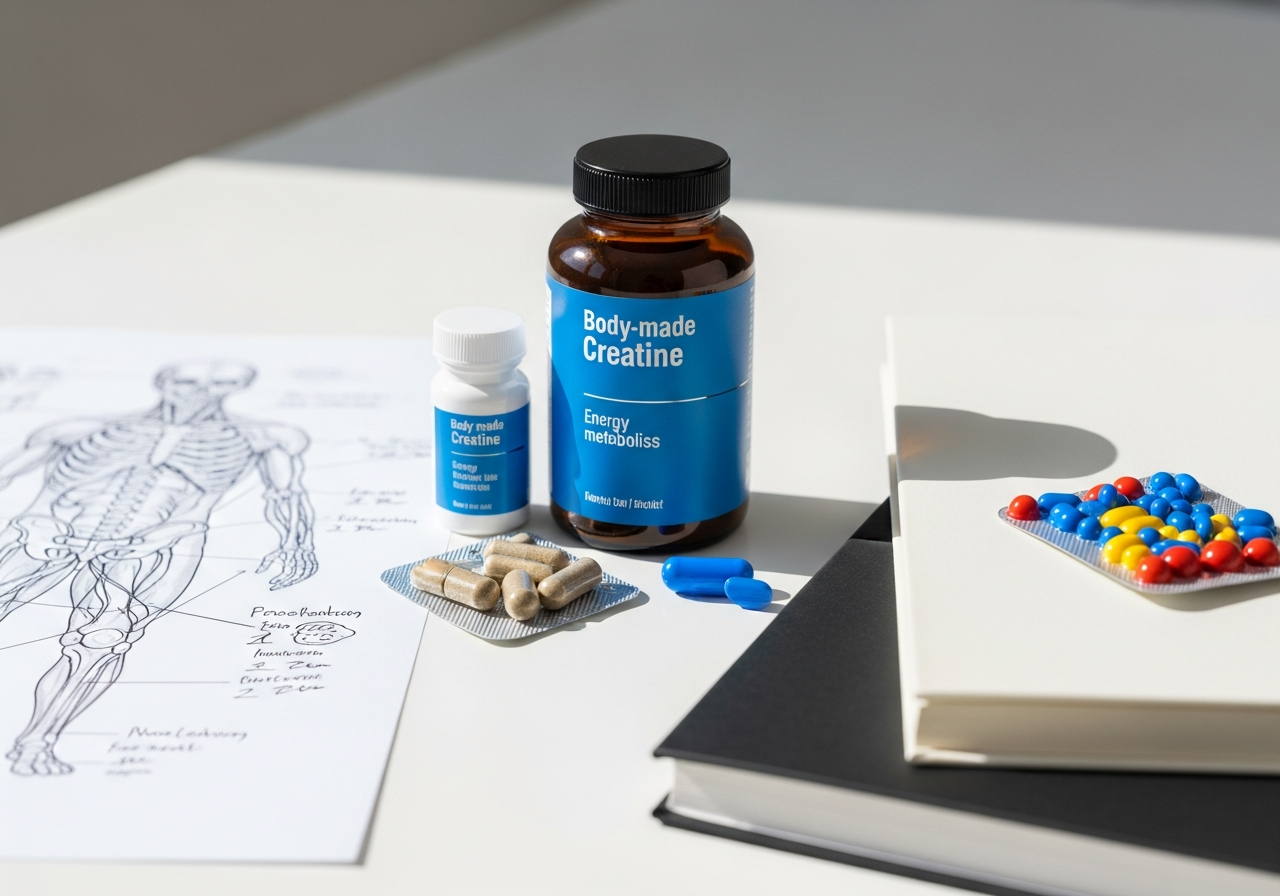
Your body makes creatine through a two-step biosynthesis pathway using glycine, arginine, and methionine. If you searched for how creatine is made in the body or how creatine is made in body, this is the answer.
First, the amino acids glycine and arginine react to form guanidinoacetate through an enzyme-mediated reaction. This step happens largely in the kidneys, though other tissues can contribute. Second, guanidinoacetate is methylated in the liver using a methyl group donated by methionine, producing creatine. That newly formed creatine then enters the bloodstream and is taken up by tissues, especially muscle, through a transporter called SLC6A8, often referred to simply as the creatine transporter.
Once inside muscle, some creatine stays as free creatine and some is converted into phosphocreatine by the enzyme creatine kinase. Phosphocreatine acts like a rapid phosphate reserve. During a hard set of squats, a sprint, or a heavy clean, ATP is broken down quickly for energy. Phosphocreatine donates its phosphate to ADP to rebuild ATP almost immediately, helping you maintain force output for a few extra reps or repeat high-power efforts with less drop-off.
The body both makes and loses creatine every day. A small portion spontaneously converts to creatinine, a waste product excreted in urine, so the body replaces what is lost through internal synthesis and diet. For many adults, endogenous production is often estimated at about 1 gram per day, with the rest varying by diet. This is one reason supplemental creatine can be useful: it raises muscle creatine stores above baseline, especially if intake from food is low.
Vegetarians and vegans often respond particularly well to supplementation because their starting stores can be lower. That does not mean omnivores do not benefit; it means people with less dietary creatine may see a bigger bump in tissue saturation. If you want a broader beginner framework, our creatine for beginners guide explains what saturation feels like and what results to expect.
In short, creatine is not foreign to the human body. It is a normal, well-studied energy compound your body already manufactures and uses every day.
How creatine is manufactured for supplements and turned into powder
Most supplement creatine is manufactured synthetically through an industrial chemical process, then purified, crystallised, dried, milled, and packaged as a powder. If you searched how is creatine made, how is creatine manufactured, how do they make creatine powder, or how is creatine made synthetically, this is the practical answer.
The exact proprietary details can vary by manufacturer, but the broad process is consistent: chemical precursors are reacted under controlled conditions to produce creatine, the creatine is purified to remove unwanted by-products, and the resulting material is dried into a stable powder. The most common finished ingredient is creatine monohydrate, which means each creatine molecule is associated with one water molecule in the crystal structure. That is a chemical naming detail, not a sign that the powder is diluted or weak.
After synthesis, quality-focused manufacturers typically test for purity, moisture, heavy metals, and contaminants. The powder may then be milled to a finer size. When a label says micronized, that usually means the creatine particles were made smaller to improve dispersion and mixability; it does not mean the creatine is a different form or inherently more effective than standard monohydrate. For a deeper comparison, see micronized creatine and best type of creatine.
Creatine can also be filled into capsules, pressed into tablets, blended into pre-workouts, or included in gummies, but the underlying active ingredient often remains creatine monohydrate. Powder is still the easiest format to dose accurately at 3-5 g per day and is usually the best value. If a product lists a proprietary blend without stating the grams of creatine, that is a buying red flag.
One useful point for Canadian buyers: a legal natural health product sold in Canada should typically have an Natural Product Number or NPN, which is Health Canada's product licence number for approved natural health products. An NPN does not guarantee perfection, but it does tell you the product has gone through the required regulatory pathway. You can learn more in our guide to Canadian supplement regulations.
So, how do they make creatine supplements? They do not usually harvest it from meat. They synthesise it, refine it, verify it, and standardise it into a form that is stable, measurable, and easy for consumers to use.
What creatine is made of and why that chemistry matters for performance
Creatine is made from components related to the amino acids glycine, arginine, and methionine, and its performance value comes from how it helps regenerate ATP during high-intensity effort. That is the key chemistry behind both what is creatine made of and what does it do.
Creatine itself is not a protein, a steroid, or a stimulant. It is a nitrogen-containing organic acid derivative stored largely in muscle. Once it is inside muscle cells, it can be phosphorylated to form phosphocreatine. During very hard exercise lasting only seconds, ATP demand spikes faster than the body can make new ATP through slower pathways such as aerobic metabolism. Phosphocreatine bridges that gap by rapidly donating phosphate to ADP, restoring ATP and helping maintain explosive output.
This mechanism is why creatine is most useful for activities like sprinting, jumping, Olympic lifting, powerlifting, team-sport repeated efforts, and hypertrophy training with hard sets. It is not a magic endurance booster for long, steady cardio, although some endurance athletes may still benefit in training blocks that involve sprints, hills, gym work, or recovery support.
Creatine also draws water into muscle cells, which can increase intracellular water. That is often part of the early bodyweight gain people notice, especially in the first 1-2 weeks. This is not the same as gaining body fat. Over time, better training quality can contribute to greater lean mass gains. If you are worried about scale changes, see does creatine make you gain weight.
The 2021 JISSN review on common questions and misconceptions about creatine supplementation emphasised that creatine is one of the most studied dietary supplements and that many common fears around dehydration, cramping, and kidney damage in healthy individuals are not supported by the bulk of evidence. Read it here: Antonio et al. (2021), JISSN.
If you want the most evidence-backed format, choose plain creatine monohydrate. Many alternative forms claim better absorption or no water retention, but the strongest and most consistent evidence still favours monohydrate. For the big-picture science, our what is creatine guide and creatine benefits article go deeper.
Exactly how to take creatine if you want it to work
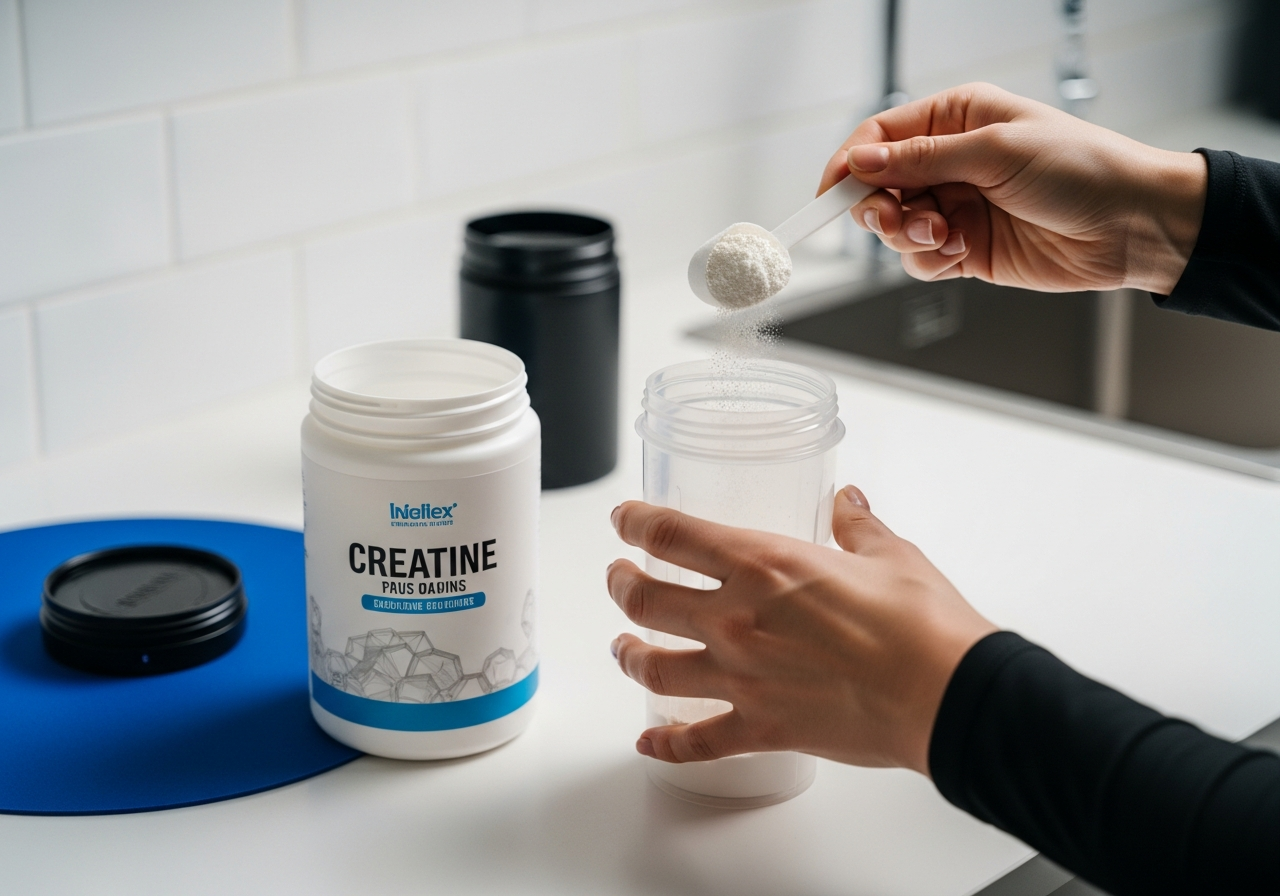
The best way to take creatine is to use 3-5 g of creatine monohydrate every day, consistently, until your muscles are saturated. If you want a faster start, use a loading phase of 20 g per day split into 4 doses for 5-7 days, then drop to a maintenance dose.
- Choose plain creatine monohydrate. Pick an unflavoured or simply flavoured product that clearly lists grams per serving. Avoid vague proprietary blends.
- Decide whether to load. Loading is optional. It speeds up saturation but is not required. Without loading, 3-5 g daily usually reaches near-full saturation in roughly 3-4 weeks.
- Measure your dose accurately. Use a gram scale or a labelled scoop. If you are unsure, use our creatine dosage calculator or read how to measure creatine.
- Mix it in a practical liquid. Water is fine. A shake, juice, or protein drink is also fine. The best liquid is the one you will actually use daily. For mixing tips, see how to mix creatine.
- Take it every day, including rest days. Creatine works by building stores over time, not by delivering an acute stimulant effect.
- Train hard enough to benefit. Creatine helps most when your programme includes repeated high-intensity efforts, progressive overload, or explosive work.
- Give it enough time. Expect subtle performance changes first, then body composition changes later if training and nutrition are in place.
Week by week, a typical pattern looks like this: during week 1 with loading, some people notice a small increase in bodyweight and improved training fullness; by weeks 2-4, repeated sets and short bursts may feel stronger; by weeks 4-8, better training quality can start showing up as measurable strength or lean mass improvements. Without loading, just push that timeline back by a few weeks.
If you miss a day, do not double up aggressively. Just resume your usual dose the next day. If your stomach feels off, split the dose into smaller servings or take it with food. For a complete routine, see how to take creatine and creatine loading phase.
Creatine dosing by body weight and training goal
The standard maintenance dose for most adults is 3-5 g per day, but larger athletes and people using bodyweight-based protocols can reasonably aim closer to 0.03 g per kilogram per day after loading. That is how to personalise dosing without overcomplicating it.
Bodyweight-based loading is commonly set at about 0.3 g per kilogram per day for 5-7 days, followed by maintenance at about 0.03 g per kilogram per day. In real life, most people round to easy numbers because creatine is forgiving and daily consistency matters more than precision to the tenth of a gram.
| Body weight | Optional loading phase | Maintenance dose | Simple practical target |
|---|---|---|---|
| 60 kg | ~18 g/day for 5-7 days | ~1.8 g/day | 3 g/day |
| 75 kg | ~22.5 g/day for 5-7 days | ~2.25 g/day | 3-5 g/day |
| 90 kg | ~27 g/day for 5-7 days | ~2.7 g/day | 5 g/day |
| 110 kg | ~33 g/day for 5-7 days | ~3.3 g/day | 5 g/day |
For muscle and strength, 3-5 g daily is the sweet spot for most people. For larger athletes with high lean mass, 5 g daily is the simplest default. For vegetarians or vegans, the same dose applies, though the response may be more noticeable because baseline stores can be lower. For older adults, creatine often makes the most sense when paired with resistance training. For women, the dose is generally the same as for men; there is no special pink-tax formula required. See creatine for women and creatine for older adults.
If your goal is sprint power, strength, hypertrophy, or repeated-effort sport performance, creatine is highly relevant. If your goal is only long, easy aerobic work, it may still help indirectly through gym performance, but the benefit is less direct. Competitive athletes can also review the IOC's supplement guidance here: International Olympic Committee consensus on dietary supplements.
If you want a full personalised breakdown, our how much creatine per day guide covers body weight, goals, and edge cases.
When to take creatine, how absorption works, and how to know it is working
Creatine timing matters far less than daily consistency, because creatine works by saturating muscle over time rather than by giving an immediate pre-workout kick. That is the main answer to questions about when should I take it and how do I know it is working.
You can take creatine in the morning, before training, after training, or with a meal. There is no strong evidence that one exact timing window dramatically changes results for most people if total daily intake is the same. Post-workout is popular because it is easy to remember as part of a shake routine, but convenience beats theory. If you want to dive into timing nuance, read when to take creatine.
Absorption is not usually the bottleneck. Creatine monohydrate is well-supported in the literature and works for most people when taken consistently. Taking it with carbohydrate or protein may modestly support uptake through insulin-related mechanisms, but this is not necessary for creatine to be effective. In plain English, you do not need a complicated transport system product.
How can you tell whether creatine is working? Look for the right signs:
- Slight bodyweight increase in the first 1-2 weeks, especially if you loaded.
- Better performance on repeated hard efforts, such as less drop-off across sprint intervals or sets.
- One or two extra reps at a given load.
- Improved training fullness or muscle “pop”.
- Gradual strength progression over several weeks when training and diet are consistent.
If you feel nothing after a month, check the basics first: are you actually taking 3-5 g daily, even on rest days; is the product legitimate; are you measuring accurately; and are you training in a way that uses the phosphocreatine system? Some people are also labelled “non-responders,” but true non-response is often overstated and may reflect already-high muscle stores or poor adherence. More here: creatine non-responders.
Bottom line: take creatine whenever you will remember it, keep the dose consistent, and judge it by training performance over weeks, not by whether you feel a buzz on day one.
Who creatine is for: beginners, women, older adults, athletes, and people who should be cautious
Creatine is appropriate for many healthy adults, especially beginners who lift, women, older adults doing resistance training, and athletes in sports that rely on strength, power, or repeated high-intensity efforts. The evidence base is strongest for these groups.
Beginners often benefit because creatine is simple, affordable, and easy to use once the basics are clear. It does not replace training or protein intake, but it can improve training quality enough to make a good programme work better. If you are just starting, combine 3-5 g daily with a progressive strength routine and enough dietary protein.
Women can use the same evidence-based dose as men. Creatine does not “bulk women up” on its own; it supports training adaptation. Older adults may benefit through improved resistance training capacity and, in some contexts, support for muscle mass and function. Evidence for brain-related applications is promising but still less settled than the performance literature. Our related guides on creatine for women and creatine and the brain explore those details.
Vegetarians and vegans are often excellent candidates because their baseline creatine stores can be lower in the absence of regular meat or fish intake. Supplement creatine itself is usually synthesised rather than animal-derived, which is why many creatine monohydrate products are suitable for vegans. See is creatine vegan.
People who should be more cautious include anyone with known kidney disease, those advised to restrict certain supplements by a clinician, and anyone taking medications or managing a medical condition where individual review makes sense. Creatine has a strong safety profile in healthy people, but “safe for most” is not the same as “right for every single person in every context.” If you have a relevant medical condition, pregnancy considerations, or unusual lab findings, ask a qualified healthcare professional.
For competitive athletes, creatine is widely accepted and is not a banned steroid. Even so, tested athletes should choose products with strong quality control to reduce contamination risk. In Canada, that means prioritising established brands, clean labels, and ideally third-party testing in addition to an NPN.
Safety, side effects, and the biggest myths about how creatine is made and used
Creatine monohydrate is generally considered safe for healthy people at recommended doses, and many common fears about kidney damage, dehydration, cramping, or being “unnatural” are exaggerated or incorrect. The strongest safety concerns in practice usually come from poor product quality, unnecessary mega-dosing, or misunderstanding lab tests.
The most common side effects are mild and practical: temporary water-weight gain, occasional stomach upset, or loose stools if you take too much at once. These are usually solved by using 3-5 g daily, splitting larger loading doses into four smaller servings, and taking creatine with food or more fluid if needed. If digestion is your main issue, read creatine and digestion.
Myth one: “Creatine is made from steroids or works like steroids.” False. Creatine is a naturally occurring compound involved in cellular energy, not an anabolic steroid or hormone. If that confusion comes up often in your circles, see is creatine a steroid.
Myth two: “Creatine is extracted from meat, so supplement powder is basically dried animal tissue.” False for most products. Commercial creatine is typically synthesised industrially and then purified.
Myth three: “Creatine ruins the kidneys.” In healthy individuals using recommended doses, the broad evidence does not support routine kidney damage from creatine monohydrate. What often causes confusion is creatinine, a breakdown product that can appear elevated on bloodwork when creatine intake is higher or muscle mass is greater. That is not the same thing as showing kidney injury. More here: is creatine bad for your kidneys and creatine vs creatinine.
Myth four: “You need to cycle creatine.” No strong evidence says healthy users must cycle on and off. Daily maintenance use is standard. If you want the full explanation, see do you need to cycle creatine.
For a broader myth clean-up, our creatine myths debunked hub and creatine myths vs facts guide cover the most common misconceptions in one place.
How to buy creatine in Canada without overpaying for marketing
The best creatine to buy in Canada is usually a plain creatine monohydrate powder with a clear dose per serving, a valid NPN, and preferably third-party testing or a strong reputation for purity. If you are choosing between flashy forms and basic monohydrate, the basic option usually wins on evidence and value.
Here is what to check before you buy:
- Ingredient list: Ideally just creatine monohydrate, or creatine monohydrate plus simple flavouring if desired.
- Dose transparency: The label should state the grams of creatine per serving clearly.
- NPN: In Canada, a Natural Product Number indicates the product is licensed as a natural health product.
- Testing and quality: Look for third-party testing, strong brand transparency, or a recognised quality standard.
- Format: Powder is usually best value; capsules are convenient but often costly per gram.
- Hype control: Be sceptical of claims that HCl, buffered creatine, or proprietary delivery systems work dramatically better than monohydrate.
| Option | Pros | Cons | Best for |
|---|---|---|---|
| Creatine monohydrate powder | Most studied, cheapest per gram, easy to dose | Can clump or settle if not mixed well | Most people |
| Micronized monohydrate | Mixes a bit better, same active form | Sometimes slightly pricier | People who care about texture |
| Capsules | Portable, no mixing | Usually more expensive, many capsules needed | Travel or convenience |
| Gummies | Easy to take | Often pricier and less dose-efficient | People who hate powders |
| Alternative forms like HCl | Marketing appeal, sometimes better solubility | Less evidence, often higher price | Niche preference, not first choice |
If you want product shortlists, browse our best creatine rankings, creatine brand reviews, and creatine product catalog. For most Canadian buyers, the smartest move is not to chase the newest form. It is to buy a well-made monohydrate product you will actually take daily.
Bottom line: where creatine comes from and what matters most for real-world results
Creatine comes from your body's own synthesis, from animal foods, and from industrial manufacturing used to make nearly all modern creatine supplements. The supplement in your tub is usually not extracted from meat; it is typically synthesised as creatine monohydrate, purified, dried into powder, and packaged for accurate daily use.
From a practical standpoint, the origin story matters less than the end result: does the product deliver a proven form, at a proven dose, with reliable quality? For almost everyone, the best answer is yes if you choose plain creatine monohydrate and take 3-5 g every day. Use a 5-7 day loading phase at 20 g per day in four doses only if you want to saturate faster.
If you train for strength, hypertrophy, sprinting, team sports, or repeated hard intervals, creatine is one of the rare supplements with a genuinely strong evidence base. If you are a beginner, a woman, an older adult, or a vegetarian, creatine can still be an excellent fit; the dosing principles are largely the same. What changes is your starting point, not the fundamental mechanism.
Do not overthink timing, proprietary blends, or expensive alternative forms. Focus on consistency, hard training, adequate protein, and a legitimate product. If you want the next step, start with our creatine dosage calculator, then read how much creatine per day, how long creatine takes to work, and is creatine safe.
One sentence summary: creatine is a natural body compound that supplement companies usually manufacture synthetically as creatine monohydrate, because that form is stable, pure, well-studied, and easy to dose at 3-5 g per day.
Creatine origin and dosing at a glance
- ~95% of the body's creatine is stored in skeletal muscle — Mostly as free creatine and phosphocreatine
- ~1 g/day is produced naturally by the body — Endogenous synthesis varies by person and diet
- 3-5 g/day is the standard maintenance dose for most adults — Creatine monohydrate is the usual evidence-based choice
- 20 g/day is the common loading protocol — Usually split into 4 doses for 5-7 days
Frequently Asked Questions
Where does creatine come from naturally?
Creatine comes naturally from both your body and certain foods. Your body synthesises it from glycine, arginine, and methionine, mainly through reactions involving the kidneys and liver, while red meat and fish provide dietary creatine that can help maintain muscle stores.
How is creatine made in the body?
Creatine is made in the body through a two-step process using glycine, arginine, and methionine. First, glycine and arginine form guanidinoacetate, and then the liver adds a methyl group from methionine to make creatine, which is transported to muscle and stored partly as phosphocreatine.
How is creatine made for supplements?
Creatine for supplements is usually made synthetically in factories rather than extracted from meat. Manufacturers react chemical precursors under controlled conditions, then purify, crystallise, dry, and mill the creatine into a powder, most often as creatine monohydrate.
How do they make creatine powder?
They make creatine powder by synthesising creatine, purifying it, drying it, and milling it into a fine stable powder. Some products are then micronized, which means the particle size is reduced to improve mixability, but the active form is still typically creatine monohydrate.
Is creatine made from meat?
No, most supplement creatine is not made from meat. Meat and fish contain natural creatine, but the creatine in supplements is usually industrially synthesised for consistency, purity, and scalable production.
How is creatine made synthetically?
Creatine is made synthetically by reacting precursor chemicals under controlled manufacturing conditions and then purifying the resulting creatine. The finished material is commonly processed into creatine monohydrate powder, which is the most studied supplemental form.
How is creatine made into powder for tubs and scoops?
Creatine is turned into powder by drying and milling purified creatine crystals after manufacturing. That powder is then packaged as bulk powder, or used in capsules, tablets, gummies, or blended products depending on the supplement format.
What is creatine made of?
Creatine is made from components related to the amino acids glycine, arginine, and methionine. In the body, those amino acids supply the building blocks for creatine synthesis, and in supplements the final product is usually creatine monohydrate.
Is lab-made creatine different from the creatine in food?
Lab-made or factory-made creatine is chemically the same core compound your body uses, even though the source is different. The practical difference is that supplement creatine provides a measured dose, while food sources vary and usually deliver less creatine per serving.
What form of creatine should I buy if I care about how it is made?
If you care about evidence and manufacturing quality, buy plain creatine monohydrate from a reputable brand. In Canada, look for a clear dose per serving, a valid NPN, and ideally third-party testing or strong brand transparency around purity.