Creatine for Wrestling: Explosive Strength, Endurance, and Weight Management
By The Creatine Canada Research Team — Evidence-based supplement analysts
Yes—creatine can help wrestling performance by improving repeated explosive efforts, strength training output, and recovery between hard bursts, but wrestlers in strict weight classes need to plan around the small water-weight increase that often comes with muscle creatine saturation. For most wrestlers, creatine monohydrate is useful in off-season and training phases, while the week before weigh-in requires a more cautious strategy.
Evidence-based · Cites 4 sources · Editorial standards
Key Takeaways
- Creatine helps wrestlers most with repeated high-intensity efforts, room work, lifting performance, and training quality.
- The standard evidence-based dose is 3–5 g of creatine monohydrate daily, with an optional loading phase of 20 g/day split into 4 doses for 5–7 days.
- Most wrestlers gain a small amount of water weight early on, so starting creatine right before a weigh-in is usually a bad idea.
- Creatine timing matters less than consistency; taking it daily is more important than taking it pre-workout.
- For weight-class athletes, off-season or early camp is the best time to start creatine and assess your body-mass response.
- Creatine monohydrate is the most studied, most cost-effective, and best-supported form for wrestlers.
- Healthy athletes generally tolerate creatine well, but anyone with kidney disease or a relevant medical condition should speak with a clinician first.
Does creatine help wrestling? Yes—if your goal is explosive repeatability, not last-minute scale manipulation
Yes, creatine helps wrestling primarily by improving the energy system used for short, violent efforts such as shots, scrambles, mat returns, hand fighting bursts, and repeated hard exchanges. Creatine is most useful when wrestling performance depends on producing high force again and again with incomplete rest, which is exactly how many live goes, drilling circuits, and strength sessions are structured.
Wrestling is not a pure endurance sport and not a single-effort power sport either; it sits in the middle. A match demands repeated explosive actions, brief isometric squeezing, transitions, and the ability to recover quickly enough to do it again. Creatine supports that pattern by increasing intramuscular phosphocreatine, the stored high-energy compound your muscles use to rapidly regenerate ATP, the immediate fuel for contraction. More phosphocreatine means a slightly larger reserve for top-end efforts and slightly faster recovery between them.
The practical result is that creatine often helps more in training than in any one isolated match statistic. A wrestler who gets one more quality rep on heavy pulls, maintains snap-down intensity later in the session, or fades less across repeated goes can accumulate better training over weeks. That is where the supplement earns its place.
The evidence base is strongest for creatine improving strength, power, lean mass gains, and repeated high-intensity exercise capacity. The 2017 ISSN position stand concluded that creatine monohydrate is the most effective nutritional supplement available for increasing high-intensity exercise capacity and lean body mass during training. The IOC consensus on dietary supplements also places creatine among the few supplements with meaningful sports-performance evidence.
Where wrestlers need extra judgement is body mass. Creatine can increase total body mass early, mostly from water drawn into muscle tissue rather than fat gain. That is not inherently bad for performance, but it can matter in a weight-class sport. If you are asking about creatine before weigh in, the short answer is usually no: do not begin creatine for the first time in the days just before making weight. If you are already saturated and know how your body responds, you can make a more individual decision.
If you are brand new, start with the fundamentals in our creatine dosage calculator and compare reliable options through our best creatine rankings.
How creatine works in a wrestling match: ATP, phosphocreatine, and repeated bursts
Creatine works for wrestlers by increasing muscle phosphocreatine stores, which helps regenerate ATP faster during short, maximal or near-maximal efforts. ATP is the molecule your muscles spend immediately during explosive movement, and phosphocreatine acts as a rapid backup system that helps restore ATP in the first seconds of intense work.
That matters in wrestling because many decisive actions happen in bursts lasting only a few seconds: level changes, penetration steps, sprawls, bridges, lifts, finishes, stand-ups, and explosive returns to position. When those efforts stack up across a period, the limiting factor is not only your technique or conditioning but also how well your high-energy phosphate system keeps replenishing.
Creatine does not act like a stimulant. You will not feel a sudden buzz, faster heart rate, or tunnel-vision focus the way some pre-workouts create. Instead, creatine changes the energy environment inside muscle over time. Once the muscle is saturated, performance benefits tend to show up as:
- better repeated sprint or burst capacity
- slightly higher power output
- more total work in lifting sessions
- better support for lean mass and strength gains over a training block
- potentially improved recovery between repeated intense efforts
For wrestlers, the training effect may be more important than the acute match effect. If creatine lets you complete more high-quality volume in the weight room, maintain better intensity in drilling, and lose less output late in hard room sessions, the long-term payoff can be significant.
Creatine may also support glycogen handling and cell hydration in ways that can indirectly help performance, though those mechanisms are secondary to the phosphocreatine effect. Cell hydration here means more water held inside muscle cells, not under the skin. That distinction matters because wrestlers often hear that creatine makes them “puffy”. In reality, the typical early weight increase is mostly intracellular water, which can coincide with better training performance rather than worse.
The catch is that creatine is best suited to the actual demands of your phase. During off-season strength development, its fit is excellent. During a brutal short-notice cut to a lower class, the same water-retention effect can become inconvenient. That is why the right question is not just “does creatine help wrestling?” but “when does creatine help this wrestler, in this phase, at this body weight?”
If you want the broader physiology explained from the ground up, see what creatine is and what it does and our guide on how creatine powers your muscles.
The best time to use creatine in wrestling season depends on your weight-class calendar
The best time for wrestlers to use creatine is usually the off-season, pre-season, or any training block where performance gains matter more than making a lower weigh-in within the next few days. Starting creatine right before a weigh-in is generally poor planning because the first week or two is when water-weight changes are most likely to show up.
Here is the simple season-based approach:
- Off-season: This is the easiest and often smartest time to start. You can load or begin a daily maintenance dose, monitor how your body mass responds, and use the supplement to support hard lifting, sprint work, drilling volume, and lean mass gains.
- Pre-season or early camp: Still a good time to start if you have several weeks before you need to hit a class. You get performance upside while learning your individual response.
- In-season while comfortably on weight: Reasonable if you compete near your natural class and are not cutting aggressively. Daily low-dose monohydrate often works well here.
- Fight week or weigh-in week equivalent: Usually not the time to begin. If you already take creatine, your decision to continue or pause depends on your margin above the class limit, the aggressiveness of your cut, and how predictable your body responds.
For creatine weight classes wrestling, the key issue is not that creatine is bad for wrestlers; it is that timing affects scale weight. A wrestler walking around only a fraction above class may not care. A wrestler squeezing every last bit out of a tough descent likely should.
Timing within the day matters far less than timing within the season. Research summaries, including Examine’s creatine evidence overview, consistently show that total daily intake and long-term saturation matter more than whether you take creatine exactly before or after training. If you are wondering about workout timing, our full breakdown on when to take creatine covers the details.
A practical rule works well for most wrestlers: if you have less than two weeks before an important weigh-in and you have never used creatine before, wait. If you have six to eight weeks before competition or are not cutting tightly, it is usually an ideal time to start and evaluate.
How to take creatine for wrestling: the simplest step-by-step plan that actually works
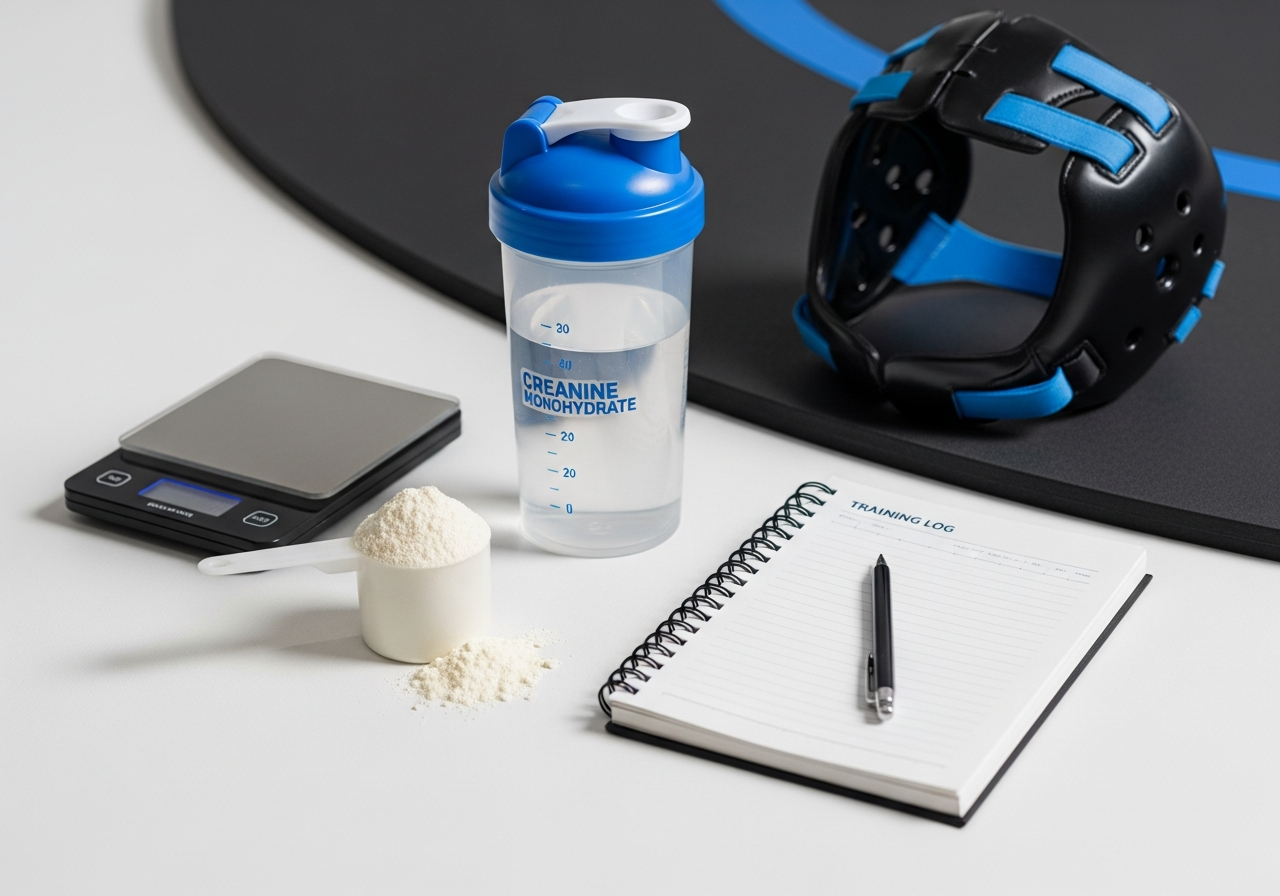
The best way to take creatine for wrestling is to use creatine monohydrate consistently every day, with or without a loading phase, and track body weight and training output for the first few weeks. Most wrestlers do not need a complicated stack or special timing trick.
- Choose the right form. Buy plain creatine monohydrate powder unless you have a specific reason to prefer capsules. Monohydrate is the most studied, most cost-effective form, and the form backed most strongly by the ISSN position stand.
- Pick your starting method. Use either a loading phase of 20 g/day split into 4 doses for 5–7 days, then 3–5 g/day, or skip loading and take 3–5 g/day from day one. Loading saturates muscles faster; maintenance-only gets you there more gradually.
- Take it daily. On training days and rest days alike, consistency beats timing. Mix it in water, juice, or a protein shake. Do not dry scoop it.
- Watch scale weight. Weigh yourself under the same conditions several mornings per week for the first 2–3 weeks. Wrestlers should care about trend, not one random weigh-in.
- Track performance markers. Log live-go quality, repeated shot speed, grip endurance in hard rounds, bar speed in lifts, and whether you can hold output deeper into practice.
- Hydrate normally and intelligently. Creatine does not dehydrate you, but wrestlers who sweat heavily still need solid hydration habits. Our guide on how much water to drink with creatine helps set expectations.
- Reassess before weight cuts. If a major weigh-in is approaching and you are close to the limit, decide whether to continue based on your known response and the size of your cut.
What to expect by week:
- Days 1–7 with loading: body weight may rise slightly; some wrestlers notice better gym output quickly.
- Weeks 2–4 without loading, or after loading: more noticeable training benefits usually show up here.
- Weeks 4–8: the bigger payoff is often cumulative—better strength work, more quality training, and better lean-mass retention during hard phases.
If you want exact scoop math, use our creatine dosage calculator, and if you need mixing help, see how to take creatine and how to mix creatine.
Creatine dosing for wrestlers by body weight, goal, and urgency
The right creatine dose for wrestlers is usually 3–5 g/day for maintenance, with an optional loading phase of 20 g/day split into 4 doses for 5–7 days if you want faster saturation. Larger athletes often sit at the upper end of the range, but most wrestlers do not need exotic dosing protocols.
The most practical way to decide is by goal:
| Goal | Best strategy | Who it suits | Main tradeoff |
|---|---|---|---|
| Fast saturation | 20 g/day for 5–7 days, split into 4 x 5 g, then 3–5 g/day | Off-season or early camp wrestlers wanting quicker results | Higher chance of early water-weight increase or stomach upset |
| Steady low-risk start | 3–5 g/day from day one | In-season wrestlers and beginners | Takes longer to fully saturate muscle stores |
| Tight weight-class management | 3 g/day started well before competition, monitor scale trend | Wrestlers near class limit | Still may slightly affect body mass |
| Large athlete prioritizing strength block | 5 g/day maintenance after optional loading | Heavier wrestlers, upper classes, hard gainers in the gym | Must monitor weight if class changes matter later |
Body-weight examples that keep things simple:
- 57–65 kg wrestler: 3 g/day is often enough, especially if weight management is tight.
- 65–86 kg wrestler: 3–5 g/day is the typical sweet spot.
- 86 kg+ wrestler: 5 g/day is a practical standard maintenance dose.
Some sports-nutrition frameworks also use approximately 0.3 g/kg/day for loading and around 0.03 g/kg/day for maintenance, which lines up closely with the standard gym-friendly recommendations above. In practice, wrestlers usually do best with consistency and monitoring rather than chasing perfect decimal precision.
If your stomach gets irritated, do not force big single doses. Split the dose into smaller servings and take it with meals. If you are cutting weight and experimenting with creatine at the same time, change only one variable at once so you can actually tell what is affecting performance or scale weight.
For a more general dose guide, read how much creatine per day and creatine maintenance dose.
Creatine and wrestling weight classes: what to do before weigh-in, during cuts, and after making weight
Creatine and wrestling weight classes can work together, but you should not start creatine right before a weigh-in if every fraction of body mass matters. The reason is simple: creatine commonly increases intracellular water in muscle during the saturation period, which can move the scale even when body fat does not change.
For the search query creatine before weigh in, the best short answer is this: do not begin creatine in the final days before weigh-in, and be cautious about continuing it during an aggressive cut unless you already know your response. That is not because creatine is unsafe; it is because wrestling weight management is unforgiving.
Use these scenarios:
- You are more than comfortably under your class: continuing a standard daily dose may be fine.
- You are close to the limit but not doing a severe cut: low-dose daily use can still work, but track morning body weight.
- You are doing a meaningful cut: many wrestlers pause creatine in the final stretch for simplicity, then resume after weigh-ins or after the competition block.
- You are testing creatine for the first time: do it in off-season, not in championship week.
What about after weigh-in? If weigh-in is well before competition, some wrestlers resume their normal intake during refuelling, but creatine is not a magic same-day performance booster if you have not already been taking it consistently. Its main benefit depends on saturated muscle stores over time, not a last-minute scoop.
Creatine can still be highly valuable for wrestlers trying to preserve performance while dieting. During a cut, training quality often falls because glycogen, hydration, and total energy intake are all under pressure. If your body mass situation allows it, creatine may help retain gym output and lean mass better than cutting without it. The trick is respecting the scale.
If weight is your biggest concern, also read does creatine make you gain weight, does creatine cause bloating, and creatine for MMA and combat sports, which covers similar weigh-in logic across fight sports.
Who creatine is for in wrestling: beginners, women, teenagers, heavyweights, and older athletes
Creatine is a good fit for many wrestlers, including beginners, women, heavier athletes, and masters competitors, as long as the person is healthy, trains seriously, and understands the body-mass tradeoff. It is not only for elite men trying to get huge in the off-season.
Beginners: Creatine is often useful for beginners because it is simple, well studied, and supportive of strength and training quality. A new wrestler does not need twenty supplements; if any performance supplement belongs near the top of the list, creatine monohydrate is one of the few with decades of evidence. Start with 3 g/day and learn your response before trying a loading phase.
Women wrestlers: Creatine can absolutely help women wrestlers with strength, repeated effort performance, and lean-mass support. Women are not “too small” for creatine, and the idea that it automatically makes women bulky is a myth. Women in weight classes should follow the same body-mass caution, but otherwise the supplement is just as relevant. See creatine for women for a deeper breakdown.
Teen wrestlers: Teenage athletes raise an extra layer of caution because maturity, supervision, and overall nutrition matter. The question is less whether creatine is inherently dangerous and more whether the athlete has sound training habits, adequate hydration, realistic expectations, and guidance from parents and coaches. Our guides on creatine for teenagers and what age can you take creatine cover that in detail.
Heavyweights and athletes far from the limit: These wrestlers often get the most straightforward benefit because a small scale increase matters less. If you compete close to your natural body weight, creatine is easier to use year-round.
Older or masters wrestlers: Creatine is also relevant to older athletes because it can support strength, training quality, and lean mass retention with age. See creatine for older adults for the broader evidence.
The main poor candidates are wrestlers with uncontrolled medical issues, people who expect instant results without hard training, or athletes who are about to do a harsh cut and have never tested how creatine affects their weight.
Safety, side effects, and testing: what wrestlers in Canada should actually worry about
Creatine monohydrate is generally considered safe for healthy athletes when used at evidence-based doses, and it is not a steroid, not a hormone, and not a banned performance-enhancing drug in normal sport settings. The biggest real-world concerns for wrestlers are stomach upset from poor dosing, confusion over creatinine blood tests, and buying low-quality products.
The 2021 JISSN review on common creatine questions and misconceptions addressed many persistent myths directly, including the claims that creatine causes dehydration, cramping, kidney damage in healthy users, or inevitable hair loss. Those claims are often repeated more confidently than the evidence justifies.
Potential side effects that are actually worth knowing:
- Water-weight increase: common early on, especially with loading.
- Stomach upset or loose stools: more likely with large single doses; usually improved by splitting doses.
- Higher creatinine on bloodwork: this can reflect creatine metabolism and does not automatically mean kidney damage, but it should be interpreted by a clinician in context.
Who should be cautious? Anyone with known kidney disease, a relevant medical condition, or medical advice restricting supplement use should speak with a healthcare professional before starting. Healthy wrestlers, however, generally tolerate creatine well when they stick to monohydrate and sensible dosing.
For Canadian buyers, quality control matters. Look for products with a Natural Product Number, or NPN, which is Health Canada’s product-licensing identifier for natural health products sold legally in Canada. An NPN is not a perfect guarantee of excellence, but it is a meaningful sign the product is in the regulated system. Third-party testing and reputable brand transparency are additional positives. You can compare options in our creatine brand reviews and browse the creatine product catalog.
Drug testing note: creatine itself is not prohibited by major anti-doping frameworks, but contamination is a separate issue. Competitive wrestlers should favour simple single-ingredient products from trustworthy brands rather than flashy proprietary blends.
For deeper safety reading, see is creatine safe, is creatine a steroid, and is creatine bad for your kidneys.
The biggest creatine mistakes wrestlers make—and the myths that keep costing them results
The biggest creatine mistakes wrestlers make are starting too close to weigh-in, buying fancy forms instead of monohydrate, taking it inconsistently, and blaming every scale fluctuation or stomach issue on the supplement itself. Most creatine problems are planning problems, not creatine problems.
Mistake 1: Starting during championship week. If you only care about the next weigh-in, creatine is the wrong late-stage experiment. Test it in a lower-risk phase first.
Mistake 2: Thinking more is better. Once your muscles are saturated, extra creatine does not create extra benefit. Megadosing mainly increases the chance of digestive issues and wasted product.
Mistake 3: Taking it only on training days. Creatine works by maintaining muscle saturation over time, so skipping rest days is a common beginner error. Daily intake matters.
Mistake 4: Paying more for weakly supported forms. HCL, buffered creatine, liquid creatine, and other specialty forms are often marketed aggressively, but monohydrate still has the best evidence and value proposition. See why monohydrate still wins and best type of creatine.
Now the myths:
- “Creatine is just for bodybuilders.” False. It is especially relevant for repeated high-intensity sports, which includes wrestling.
- “Creatine makes you fat.” False. Early weight gain is mostly water stored in muscle, not body-fat gain.
- “Creatine dehydrates you.” The evidence does not support creatine as a dehydrating supplement in healthy users at normal doses.
- “Creatine causes cramps.” This is a long-running myth, not a settled fact supported by strong evidence.
- “You need to cycle it.” No. Most athletes do not need on-off cycling. See do you need to cycle creatine.
The cleanest troubleshooting framework is simple: if performance is not improving, check adherence, total training quality, sleep, calorie intake, and whether you have given it enough time. If your stomach is upset, reduce single-dose size. If scale weight is the issue, review timing relative to your competitive calendar.
For a full myth breakdown, visit creatine myths debunked and creatine myths vs facts.
What wrestlers should buy: monohydrate, micronized powder, capsules, and what matters in Canada
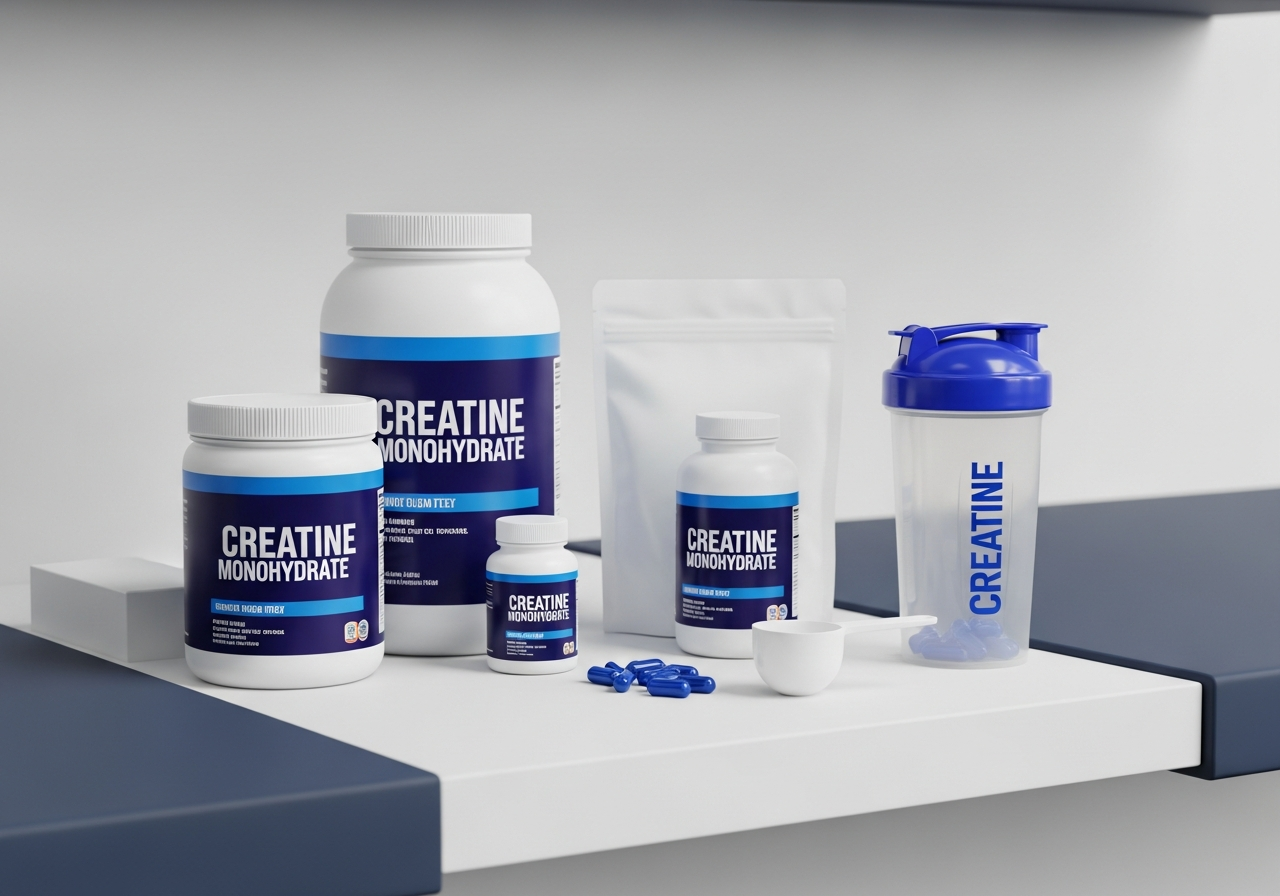
The best creatine for wrestling is usually a plain single-ingredient creatine monohydrate powder from a reputable brand with clear dosing, Canadian-compliant labelling, and preferably third-party testing. Most wrestlers do not need a premium “combat sport” formula.
| Option | Best for | Pros | Cons |
|---|---|---|---|
| Creatine monohydrate powder | Almost all wrestlers | Best evidence, best value, easy to dose | Some powders feel gritty if poorly mixed |
| Micronized monohydrate | Wrestlers who want easier mixing | Same core ingredient, often dissolves better | Sometimes costs more for only a convenience upgrade |
| Capsules | Travel or convenience users | No mixing, portable | Usually more expensive and often requires many capsules for a full dose |
| Flavoured blends | People who dislike plain powder | Better taste | Can include extra ingredients you do not need |
| HCL or specialty forms | Niche users only | Marketing claims around solubility or stomach comfort | Less evidence and usually worse value than monohydrate |
What to check on the label in Canada:
- NPN: confirms the product is licensed as a natural health product in Canada.
- Single ingredient: plain creatine monohydrate keeps dosing and tolerability straightforward.
- Serving size in grams: do not rely on “one scoop” unless the grams are printed clearly.
- Third-party testing or quality assurance: especially useful for competitive athletes.
Wrestlers should be wary of products bundled with stimulants, proprietary blends, or dramatic claims about “zero water retention”. The evidence does not show that expensive alternative forms reliably outperform monohydrate for real-world sport outcomes. If mixing is your only issue, micronized monohydrate is usually the first upgrade worth considering—not a whole different creatine chemistry.
Good buying research starts with our best creatine rankings, creatine brand reviews, and best creatine monohydrate in Canada. If you are deciding between formats, read creatine powder vs capsules and micronized creatine.
Bottom line: when creatine is worth it for wrestlers and when to leave it alone
Creatine for wrestling is worth it for most athletes who want better repeated explosiveness, stronger training sessions, and improved support for strength and lean mass—provided they respect the realities of weight classes. If you are asking whether creatine wrestling performance benefits are real, the answer is yes; if you are asking whether creatine is smart to start days before a tight weigh-in, the answer is usually no.
The smartest use case is straightforward: start creatine monohydrate in the off-season or early training block, take 3–5 g daily, monitor scale weight and performance, and keep it simple. If you want faster saturation, use a standard loading phase only when body-mass timing allows it. If you are a wrestler who competes close to natural weight and values hard training output, creatine is one of the few supplements with a genuinely strong case.
The weakest use case is also straightforward: last-minute experimentation while cutting hard. That is where many wrestlers misjudge the supplement. Creatine is not the enemy of weight-class athletes, but poor timing can turn a helpful supplement into an unnecessary logistical headache.
If you want a one-sentence rule to remember, use this: creatine helps wrestlers train and perform better over time, but it should be started when you have room to learn your water-weight response—not when the scale is already your main opponent.
Next steps:
- Choose plain creatine monohydrate.
- Start with 3–5 g daily, or 3 g if you are very weight conscious.
- Track morning body weight for 2–3 weeks.
- Log room and gym performance markers.
- Adjust your in-season plan around weigh-ins, not around supplement marketing.
If you want to dial in the details, use our creatine dosage calculator, read how long creatine takes to work, and compare products in our creatine product catalog.
Creatine for Wrestling: The Numbers That Matter
- 3–5 g/day Standard daily maintenance dose — The evidence-based range most wrestlers use after saturation.
- 20 g/day Typical loading dose — Usually split into 4 doses for 5–7 days to saturate faster.
- 5–7 days Time for a standard loading phase — Useful when you want quicker saturation and scale timing is not a concern.
- 2–4 weeks Typical timeline without loading — Daily use at maintenance doses usually reaches meaningful saturation over this period.
Frequently Asked Questions
Does creatine help wrestling performance?
Yes, creatine can help wrestling performance by improving repeated high-intensity efforts, strength training output, and the ability to sustain explosive work across hard sessions. Its biggest value is often seen over weeks of better practice and lifting quality rather than as an instant match-day boost from a single serving.
Is creatine good for wrestlers in weight classes?
Yes, creatine can still be good for wrestlers in weight classes, but body-mass management determines whether it is practical at a given time. Because creatine can slightly raise scale weight through water stored in muscle, it is best introduced in off-season, early camp, or any phase where you are not trying to squeeze into class at the last minute.
Should wrestlers take creatine before weigh-in?
Usually no, wrestlers should not start creatine right before weigh-in if making weight is tight. Creatine is not a useful last-minute weigh-in strategy because its main benefits come from long-term muscle saturation, while its early effect on water weight can make the scale less forgiving.
What is the best creatine for wrestlers?
The best creatine for wrestlers is plain creatine monohydrate from a reputable brand with clear dosing and quality control. Monohydrate is the most studied form, the most cost-effective option, and the version most consistently supported by sports-nutrition position stands.
How much creatine should a wrestler take per day?
Most wrestlers should take 3–5 g of creatine monohydrate per day, depending on body size and how tightly they manage scale weight. Smaller wrestlers who are cautious about weight classes often begin at 3 g daily, while larger athletes commonly use 5 g daily.
Do wrestlers need a creatine loading phase?
No, wrestlers do not need a creatine loading phase, but it can saturate muscle stores faster when timing allows. A loading phase of 20 g/day split into 4 doses for 5–7 days is useful in off-season or early training blocks, while a simple 3–5 g/day approach is often easier for in-season athletes.
Will creatine make a wrestler gain weight?
Yes, creatine can make a wrestler gain a small amount of weight at first, but that early gain is usually water inside muscle rather than fat. For wrestlers, that can be either a performance-positive effect or a weigh-in problem depending on how close they are to their class limit.
When should wrestlers take creatine?
Wrestlers should take creatine whenever they can remember it consistently, because daily intake matters more than exact timing. Pre-workout and post-workout use can both work, but the most important timing decision is seasonal—starting far enough from an important weigh-in.
Can female wrestlers take creatine?
Yes, female wrestlers can take creatine, and it can support strength, repeated-effort performance, and lean-mass retention just as it does in men. The same weight-class caution applies, but the idea that creatine automatically makes women bulky is not supported by the evidence.
Is creatine safe for high school wrestlers?
Creatine may be appropriate for some high school wrestlers, but it should be approached with more supervision and context than in adults. The athlete should already have solid nutrition, hydration, training habits, and parental or qualified adult guidance, and anyone with medical concerns should speak with a healthcare professional first.