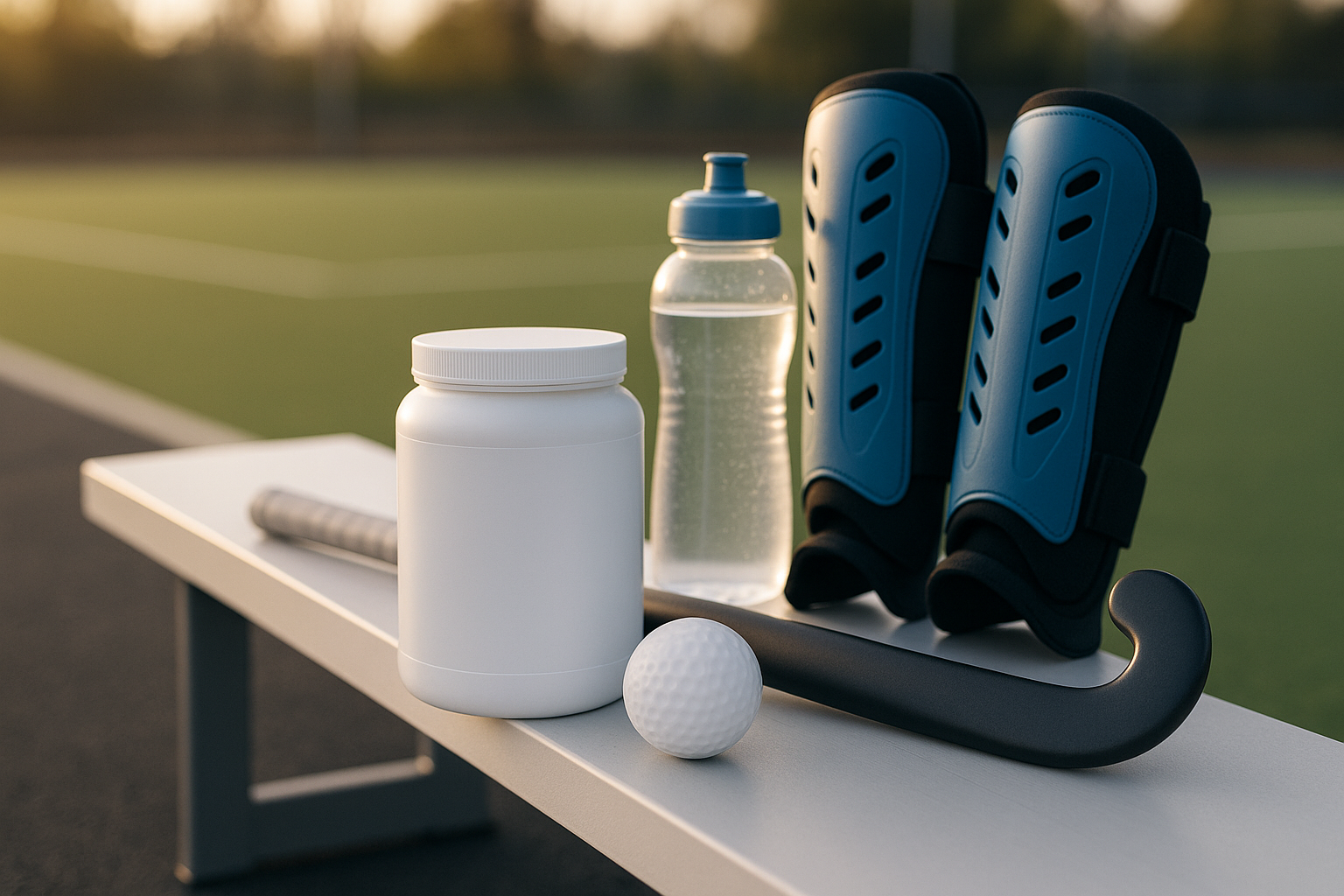
Creatine for Field Hockey: Stick Speed, Sprint Intervals, and 70-Minute Demands
By The Creatine Canada Research Team — Evidence-based supplement analysts
Yes—creatine for field hockey can help because field hockey is a repeated-sprint, repeated-power sport, and creatine improves the rapid energy system that fuels accelerations, tackles, stick actions, and hard efforts late in a 70-minute match. For most players, 3-5 g of creatine monohydrate daily is the simplest, best-supported protocol.
Evidence-based · Cites 4 sources · Editorial standards
Key Takeaways
- Creatine helps field hockey most by improving repeated sprint ability, explosive efforts, training quality, and recovery between hard bouts.
- Creatine monohydrate is the best-studied, most cost-effective form; most players do not need fancy versions.
- Use 3-5 g daily, every day; load with 20 g/day split into 4 doses for 5-7 days only if you want faster saturation.
- Expect possible scale gain of about 1-2 kg early from extra intracellular water, not body fat.
- Timing matters less than consistency, but taking creatine with a meal or post-training can make adherence easier.
- Field hockey players who may benefit most include sprinters, midfielders with heavy running loads, gym-based athletes, vegetarians, and players in congested match schedules.
- Choose a Canadian product with a clear NPN when applicable and, for competitive athletes, third-party testing such as NSF Certified for Sport or Informed Sport.
Does creatine help field hockey players? Yes—especially for repeated sprints, stick speed, and late-game power
Yes, creatine helps field hockey because field hockey demands repeated short bursts of high power layered on top of a long intermittent match, and creatine directly supports the energy system used for those bursts. If you are searching does creatine help field hockey, the practical answer is that it is most useful for accelerations, quick changes of pace, tackles, hard presses, rapid re-acceleration after deceleration, and the quality of repeated explosive efforts across training and matches.
Field hockey is not a pure endurance sport and it is not a pure strength sport. It sits in the middle: players cover substantial distance, but decisive moments often come from 1-10 second efforts. Those efforts rely heavily on phosphocreatine, which is stored creatine in muscle bound to phosphate and used to rapidly regenerate ATP, the cell's immediate energy currency. When your phosphocreatine stores are higher, you can generally produce high force again sooner after a hard effort.
That matters in field hockey because performance is rarely about one single sprint. It is about the tenth hard lead, the second effort after a tackle, the recovery between penalty corner repetitions, and whether your legs still have pop in the fourth quarter. The 2017 ISSN position stand concluded that creatine monohydrate is the most effective nutritional supplement currently available for increasing high-intensity exercise capacity and lean mass during training, which is exactly why it fits many creatine and team sports use cases. See Kreider et al. (2017), ISSN Position Stand.
For field hockey players, the biggest real-world benefits usually show up in four places:
- Repeated sprint quality: less drop-off across multiple hard efforts.
- Explosive actions: sharper starts, faster first steps, more force in training-room lifts.
- Training adaptation: better gym output can translate into stronger, more powerful legs and trunk over time.
- Recovery between bouts: better phosphocreatine re-synthesis supports repeated efforts during drills and interval work.
Creatine is not a magic match-day stimulant. It will not replace aerobic fitness, skill, tactics, or fuelling. But for players asking whether creatine for hockey players field is worth it, the evidence-based answer is yes: creatine is one of the few supplements with a strong enough evidence base to justify daily use for many competitive and recreational field hockey athletes. If you need the broad basics first, start with what creatine is and then use our creatine dosage calculator to set your dose.
Why creatine fits a 70-minute field hockey match: the phosphocreatine system explained simply
Creatine works for field hockey by increasing muscle phosphocreatine stores, which helps your body remake ATP faster during short, explosive efforts. That mechanism is why creatine tends to help most in sports built on repeated accelerations, collisions, jumps, and power outputs rather than steady-state cruising.
Here is the simple version. Your muscles carry only a tiny immediate store of ATP. During very hard efforts, ATP gets used almost instantly. Phosphocreatine acts like a rapid backup battery: it donates a phosphate group to help regenerate ATP on the spot. When you supplement with creatine, total muscle creatine stores rise, and phosphocreatine availability rises with them. That means the muscle can better support brief explosive output and recover faster between bursts.
For field hockey, that matters in at least three specific ways:
- Faster repeat efforts: after a 2-6 second sprint, lunge, tackle, or drive, higher creatine stores can support faster restoration of immediate energy.
- Higher training quality: in the gym and on conditioning sessions, creatine can let you maintain force and volume across sets, which compounds into better strength and power development.
- Potential glycogen support: creatine may help with muscle glycogen storage when combined with proper fuelling, which can be useful in hard training blocks and tournament settings.
This is why creatine is often more relevant to field hockey than people assume. Players sometimes hear 'creatine is for bodybuilders', but the actual mechanism is much broader. In team sports, the benefit comes less from looking bigger and more from preserving output when work-to-rest ratios are demanding.
The International Olympic Committee's 2018 consensus on dietary supplements identified creatine as one of the few supplements with strong evidence for performance use in appropriate contexts. For team-sport athletes, that context is usually repeated high-intensity exercise embedded within a longer session or competition. See the IOC consensus statement.
What creatine does not do is directly improve skill execution by itself. It will not teach passing angles, scanning, receiving under pressure, or tactical decision-making. Instead, it supports the physical engine behind those skills when they must be executed under fatigue. That is the key distinction for anyone researching field hockey supplements creatine: it is a performance support tool, not a substitute for coaching, conditioning, or technical work.
If you want a deeper primer on the mechanism, our guides on creatine and ATP and the creatine phosphate system break it down further.
Best creatine for field hockey players: why monohydrate still wins over flashy alternatives
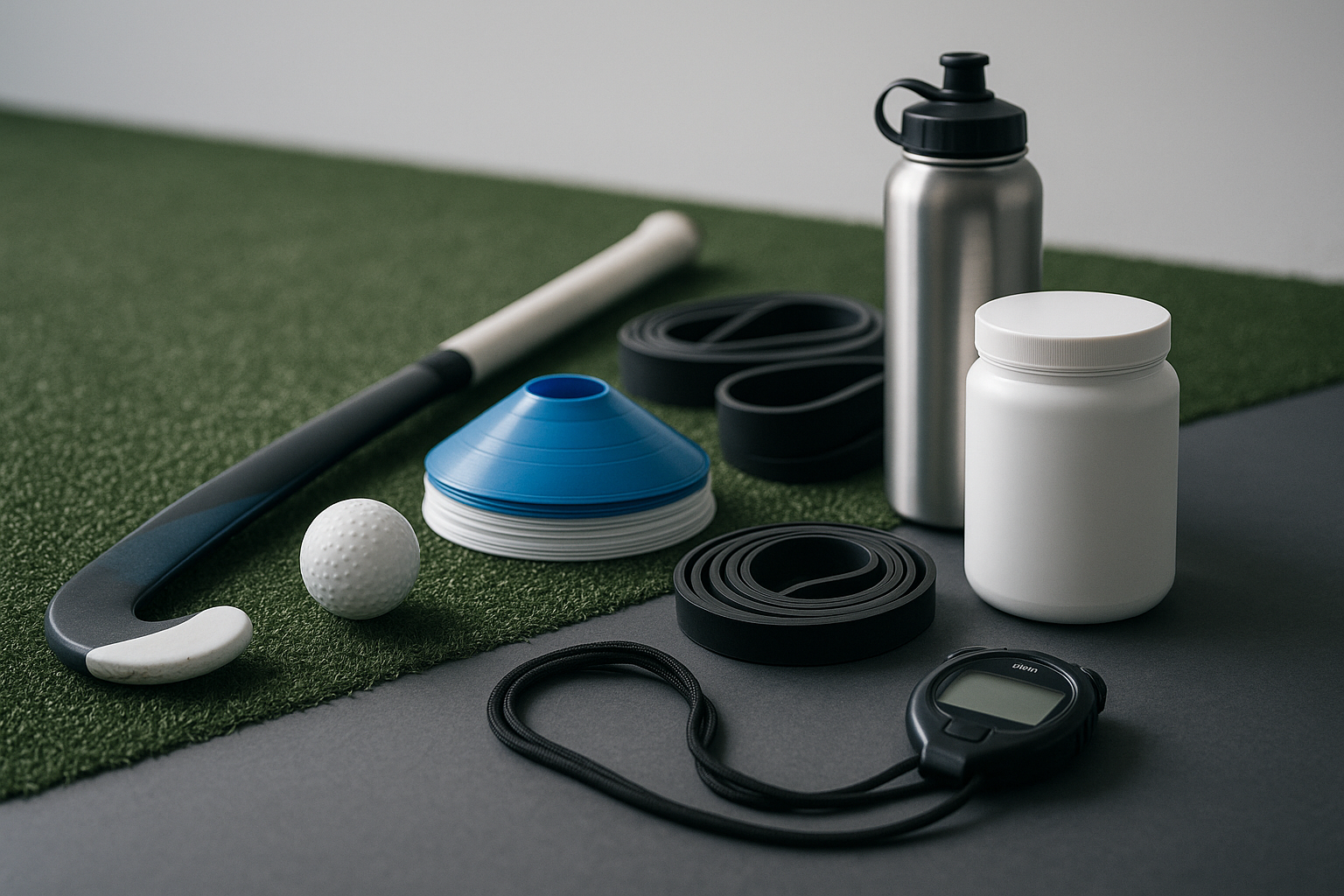
The best creatine for field hockey players is plain creatine monohydrate because it is the most studied, the most consistently effective, and usually the cheapest per effective gram. If you are comparing powders, gummies, capsules, HCL, or buffered products, monohydrate remains the evidence-based default in 2026.
The reason is simple: most of the sports-performance research on creatine has used monohydrate. It reliably raises muscle creatine stores, it works at standard doses, and alternative forms have not shown superior real-world performance outcomes robustly enough to replace it. Antonio et al. (2021) also addressed many misconceptions around creatine and reinforced that monohydrate remains the benchmark form. See Antonio et al. (2021), JISSN.
| Form | Best use case | Evidence strength | Practical verdict for field hockey |
|---|---|---|---|
| Creatine monohydrate powder | Most players | Strongest | Best overall choice for performance, cost, and dosing accuracy |
| Micronized monohydrate | Players who want easier mixing | Strong, because it is still monohydrate | Fine option if price is close to regular monohydrate |
| Capsules | Travel or convenience | Good if dose matches monohydrate needs | Works, but usually costs more and requires many capsules |
| Creatine HCL | People persuaded by marketing | Weaker than monohydrate | No clear advantage for most players |
| Buffered or 'advanced' creatines | Premium-positioned products | Weak to modest | Usually not worth the extra money |
| Gummies/liquids | Convenience seekers | Variable | Check whether you actually get a full effective daily dose |
For Canadian buyers, check a few basics before purchasing:
- Ingredient simplicity: ideally just creatine monohydrate, especially if you want flexible dosing.
- NPN awareness: in Canada, many natural health products carry a Natural Product Number, or NPN, indicating Health Canada authorisation under the applicable framework.
- Third-party testing: competitive athletes should favour NSF Certified for Sport or Informed Sport where available to reduce contamination risk.
- Cost per gram: ignore tub size and compare the price per effective 5 g serving.
If you want help choosing, browse our best creatine rankings, compare labels in our creatine brand reviews, or look through the creatine product catalog. For a deeper evidence-based comparison, see monohydrate vs. HCL and why monohydrate still wins.
Exactly how much creatine to take for field hockey, by body weight and goal
Most field hockey players should take 3-5 g of creatine monohydrate per day, every day, because that dose is enough for maintenance once muscle stores are saturated. If you want faster results, a loading phase of about 20 g/day split into 4 doses for 5-7 days is the standard evidence-based option.
There are two practical ways to dose creatine:
- No-load approach: take 3-5 g daily. Muscle saturation usually builds over roughly 3-4 weeks.
- Loading approach: take 20 g/day split into four 5 g doses for 5-7 days, then continue with 3-5 g/day. Saturation happens faster, often within about a week.
Body weight can help fine-tune the plan. A common evidence-based loading formula is roughly 0.3 g/kg/day for 5-7 days, followed by maintenance of around 0.03 g/kg/day. In practice, this still lands most adults near the familiar ranges.
| Body weight | Loading dose for 5-7 days | Maintenance dose | Simple real-world plan |
|---|---|---|---|
| 50-60 kg | 15-18 g/day | 3 g/day | 3 g daily, or load with 4 x ~4 g then use 3 g/day |
| 60-80 kg | 18-24 g/day | 3-5 g/day | 5 g daily, or load with 4 x 5 g then use 5 g/day |
| 80-100 kg | 24-30 g/day | 5 g/day | 5 g daily, or load with 4-5 doses totalling ~25 g then use 5 g/day |
| 100 kg+ | 30 g/day+ | 5-7 g/day | Usually 5 g/day is still practical; larger athletes may consider 5-7 g |
By goal, here is the simplest framework:
- In-season maintenance: 3-5 g/day.
- Pre-season fast start: load for 5-7 days, then maintain.
- Strength and power block: 5 g/day consistently, especially with resistance training.
- Younger or smaller athletes: stay near the lower end unless guided otherwise.
If you are unsure whether to load, the honest answer is that loading is optional. It gets you to the same place faster, but daily maintenance alone still works. Many players choose 5 g/day because it is easy to remember and aligns with a full scoop in many products. For exact calculations, use our creatine dosage calculator or read how much creatine per day and the loading phase guide.
For teens, injured athletes, or anyone with a medical condition, individual advice from a qualified clinician or sports dietitian is smarter than guessing.
When to take creatine for field hockey: best timing, match days, and what to expect week by week
The best time to take creatine for field hockey is the time you will remember every day, because consistency matters far more than precise timing. On training days, many players take it with a meal or after lifting; on match days, take your normal daily dose and do not treat creatine like a last-minute booster.
Creatine works through muscle saturation, not acute stimulation. That means you do not need to time it 30 minutes before push-back for it to 'kick in'. Once your muscles are saturated, the supplement is already doing its job in the background.
Here is a practical protocol:
- Training days: take 3-5 g with breakfast, lunch, or your post-training shake.
- Rest days: still take 3-5 g.
- Match days: take your regular dose at a convenient meal; no need to double-dose.
- Tournament weekends: keep the same daily dose and prioritise total fuelling, carbs, fluids, and sleep.
What to expect over time:
- Days 1-7 with loading: some players notice body mass increase from intracellular water and slightly better gym feel by the end of the week.
- Weeks 2-4 without loading, or week 2 after loading: repeated efforts, lifting volume, and training resilience may start to feel better.
- Weeks 4-8: benefits become more obvious in repeated sprint sessions, lower-body strength work, and ability to hold power across sets or drills.
- Weeks 8-12: the biggest visible payoff is often indirect: better training quality leading to better strength, power, and lean mass retention over time.
How do you know it is working? The best signs are not dramatic. Look for slightly better repeatability in hard intervals, a little less power drop-off late in sessions, more reps at a given load, or improved quality in repeated accelerations. If you only look for an immediate stimulant feeling, you will miss what creatine actually does.
For many field athletes, the supplement fits especially well with gym sessions plus intermittent running loads. If you want timing nuance, read when to take creatine, creatine on rest days, and how long creatine takes to work. Examine's evidence summary is also a useful independent overview: Examine.com — Creatine evidence summary.
Who should use creatine in field hockey—and who may notice the biggest payoff
Creatine can be useful for most field hockey players, but the biggest payoff usually goes to athletes who rely heavily on repeated power, train in the gym, or play dense schedules where maintaining output matters. That includes beginners and high-level players alike, as long as expectations match the supplement's real strengths.
Here is who often benefits most:
- Midfielders and high-work-rate players: they accumulate many accelerations and repeat-effort demands over a match.
- Forwards: quick leads, presses, and sharp first-step actions fit creatine's strengths well.
- Defenders: explosive tackles, recoveries, and repeated short chases can benefit, especially if they strength-train.
- Penalty corner units: drag-flickers and injectors may value support for explosive practice volume and power work.
- Players in pre-season: creatine shines when training density and resistance work are high.
- Vegetarian or vegan athletes: they often start with lower baseline creatine stores from diet and may respond especially well.
Women can absolutely use creatine for field hockey. The idea that creatine is only for men is wrong. Women typically use the same evidence-based daily dosing ranges, adjusted for body size where relevant, and the main concerns they raise—bloating, unwanted bulk, scale fluctuations—are usually manageable and often misunderstood. Extra scale weight early on is usually water drawn into muscle, not fat gain. For more, see creatine for women.
Older masters players can also benefit. In a player over 35, 40, or 50, creatine may support resistance-training quality, lean mass retention, and recovery as training age rises but recovery speed declines. The case can be especially strong if the athlete is trying to maintain power and robustness while managing work and family demands.
Beginners often ask whether they should 'earn the right' to use creatine first. They do not need to. Creatine is not an advanced-only supplement; it is one of the simplest and most studied starting points in sports nutrition. The caveat is that beginners should first have the basics in place: enough total food, enough carbohydrate around training, consistent sleep, and a sensible programme. Then creatine makes more sense as a force multiplier.
Who should pause before using it? Anyone with known kidney disease, relevant medication concerns, or a clinician's warning should speak to a healthcare professional first. Competitive athletes should also verify that the exact product they buy is suitable for tested sport. Our guides on creatine for beginners, creatine for plant-based athletes, and creatine for older adults go deeper.
A simple step-by-step creatine plan for field hockey players starting today
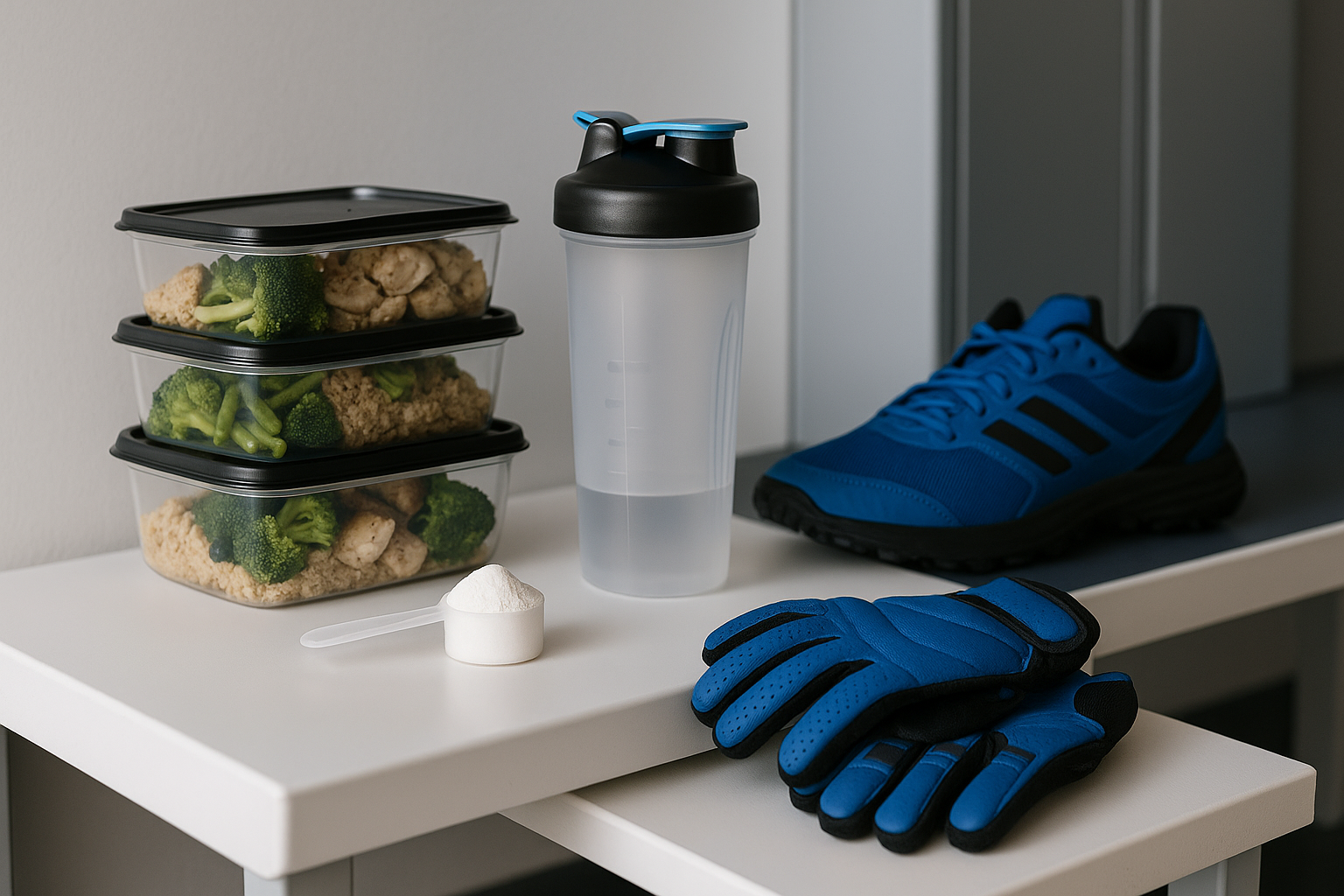
The easiest way to start creatine for field hockey is to buy plain monohydrate, take 3-5 g every day, and keep doing it for at least 4 weeks before judging results. Most players do better with a boring, repeatable routine than an aggressive protocol they abandon after ten days.
- Choose the right product. Buy creatine monohydrate from a reputable brand. If you are in tested sport, prioritise third-party testing. In Canada, also look for clear labelling and an NPN where applicable.
- Pick your dose. Use 3 g/day if you are smaller, 5 g/day if you are average to larger, or use a loading phase if you want faster saturation.
- Set one anchor habit. Tie creatine to breakfast, your post-gym shake, or brushing your teeth at night. Adherence beats perfect timing.
- Mix it properly. Stir it into water, a protein shake, juice, or a smoothie. Warm liquid may dissolve it more easily, but any temperature works.
- Keep taking it on rest and match days. Creatine is a daily saturation supplement, not a training-day-only supplement.
- Track the right outcomes. Note body weight, repeated sprint quality, gym reps, and how you feel late in hard sessions.
- Reassess after 4-8 weeks. If training quality or repeat efforts improved, keep going. If not, check your dose, consistency, sleep, and fuelling before blaming the supplement.
A sample first month for a 68 kg club player might look like this:
- Option A: 5 g every day with lunch for 30 days.
- Option B: 4 x 5 g for 6 days, then 5 g daily with breakfast.
A sample first month for a 56 kg junior player might be:
- Option A: 3 g every day after training or with dinner.
- Option B: only consider loading if a qualified practitioner wants faster saturation before a tournament block.
Troubleshooting is usually simple. If you get stomach upset, split the dose into smaller servings, take it with food, or switch to micronized monohydrate. If you forget doses, put the tub beside the kettle, shaker, or toothbrush. If you hate gritty texture, read how to mix creatine and how to measure creatine.
For a more complete setup, see how to take creatine, the ideal daily protocol, and realistic results by week.
Is creatine safe for field hockey players? What to know about weight gain, bloating, kidneys, and hydration
Creatine monohydrate is generally considered safe for healthy people when used at recommended doses, and the most common side effects are mild and manageable rather than dangerous. The strongest recurring concerns in field hockey are early body-mass gain, bloating worries, hydration myths, and kidney confusion.
The 2017 ISSN position stand concluded that creatine monohydrate is not only effective but also safe for healthy individuals when taken within established protocols. The 2021 JISSN review also tackled common misconceptions around dehydration, cramping, and kidney harm. That said, 'safe for most healthy people' is not the same as 'appropriate for every individual in every context'.
Here are the main practical issues:
- Early weight gain: many players gain roughly 1-2 kg early, largely from water held inside muscle. That can be acceptable or even useful for strength and power, but some speed-focused or highly weight-sensitive athletes may want to assess timing.
- Bloating: true stomach bloating is more often caused by large doses at once, especially during loading, than by creatine itself. Splitting doses usually fixes it.
- Kidney worries: creatine can raise creatinine on bloodwork because creatinine is a breakdown product, but that does not automatically mean kidney damage. This is a common source of confusion.
- Hydration: creatine does not appear to dehydrate athletes when used properly. You still need normal good hydration habits because field hockey can involve heavy sweat losses, especially on hot turf.
- GI upset: this is usually dose-related and improves with smaller servings or taking it with food.
Players who should get medical advice first include anyone with known kidney disease, relevant medications, unexplained renal issues, or a clinician who is monitoring lab markers. For healthy athletes, the bigger practical concern is not hidden danger; it is whether the small increase in body mass is worth the performance upside.
For field hockey, the trade-off is usually favourable because the sport depends heavily on repeat power. But if you are a very light player worried about speed feel, start in the off-season or pre-season so you can evaluate it under less pressure. If you want deeper myth-busting, read is creatine safe, does creatine make you gain weight, does creatine cause bloating, and the kidney guide. Mayo Clinic also provides a conservative public-facing overview: Mayo Clinic — Creatine.
Common field hockey creatine mistakes and myths, debunked clearly
The biggest creatine mistakes in field hockey are underdosing, skipping rest days, expecting a stimulant effect, buying over-marketed forms, and panicking over harmless early water weight. Most 'creatine didn't work for me' stories come down to protocol errors rather than creatine failing.
Myth 1: Creatine is only for bodybuilders.
False. Creatine supports the phosphocreatine system used in repeated high-intensity exercise, which is exactly why it is relevant in team sports and repeated-sprint sports.
Myth 2: You have to cycle creatine.
False for most users. There is no good evidence that healthy users need on-off cycles. Daily use is the normal approach. See do you need to cycle creatine.
Myth 3: Creatine makes you slow because it adds weight.
Overstated. Some players gain about 1-2 kg early, but whether that hurts performance depends on the athlete, position, and training status. Many still perform better because repeated power improves.
Myth 4: Take more for better results.
False. Once muscle stores are saturated, extra creatine does not keep improving performance and is more likely to cause stomach trouble.
Myth 5: You only take creatine before training.
False. Creatine is not a pre-workout stimulant. Daily consistency matters more than pre-session timing.
Myth 6: Creatine causes dehydration and cramps.
The evidence does not support that claim in healthy users following normal protocols. Good hydration still matters because field hockey is sweaty, not because creatine is drying you out.
Myth 7: More expensive forms are more advanced.
Usually false. In practice, plain monohydrate is still the form to beat on evidence and value.
The five most common real mistakes are:
- Taking only 1-2 g/day and wondering why nothing changes
- Forgetting rest days and missing saturation
- Judging it after one week without loading
- Using a low-dose gummy or underdosed blend instead of a full effective dose
- Ignoring training, carbs, sleep, and hydration, then expecting creatine to carry performance by itself
If creatine seems not to be working, first check consistency for at least 3-4 weeks, then review dose, body weight, training quality, and whether you are measuring the right outcomes. Better gym volume, repeat sprint quality, and less performance drop-off matter more than whether you 'feel' it. For more myth-busting, see creatine myths debunked and why creatine may not seem to work.
Creatine and team sports: what to pair it with for field hockey, and what not to expect
Creatine works best in field hockey when it sits inside a complete team-sport nutrition plan that includes carbohydrate, protein, hydration, and enough total energy intake. If you are searching creatine and team sports, the key idea is that creatine helps one important piece of performance, but it is not the whole picture.
What should field hockey players pair it with?
- Carbohydrate: this matters for fuelling match play and hard sessions. Creatine does not replace carbs; it complements them.
- Protein: useful for recovery and adaptation, especially if you also lift. Mixing creatine into a protein shake is perfectly fine.
- Fluids and electrolytes: important in hot weather, tournament play, and double-session days.
- Caffeine, if tolerated: useful acutely for alertness and effort, but separate from the daily role of creatine.
What should you not expect?
- Creatine will not substitute for pre-match carbohydrates.
- Creatine will not compensate for under-eating in a heavy training week.
- Creatine will not fix poor sprint mechanics, low aerobic fitness, or weak lower-body strength on its own.
The best field hockey supplement hierarchy for most players is usually: first nail food, total calories, carbs around training, protein, fluids, and sleep; then add creatine as one of the few genuinely worthwhile evidence-based extras. The IOC consensus supports this broader view: supplements should only support, not replace, a strong food-first foundation.
Two common stacking questions:
Can I mix creatine with protein powder? Yes. That is one of the easiest ways to take it consistently. See creatine and protein powder.
Can I take creatine with coffee or pre-workout? Yes, for most people. The old idea that caffeine cancels creatine is overstated and not a reason to avoid combining them if your gut tolerates it. See creatine and caffeine and mixing with coffee.
If you want to build the rest of your support plan, our guides on creatine for HIIT, creatine for sprinting, and creatine for competitive athletes expand on how the supplement fits repeated-effort sports beyond the weight room.
Buying creatine in Canada for field hockey: what labels, testing, and quality markers actually matter
For Canadian field hockey players, the smartest creatine purchase is not the most heavily marketed tub; it is a plain monohydrate product from a reputable seller with transparent labelling, good value per gram, and third-party testing if you compete in tested sport. In Canada, product quality and compliance details matter because not all supplement labels offer the same level of reassurance.
Start with label basics:
- Ingredient list: ideally just creatine monohydrate, unless you specifically want a flavoured product.
- Serving size in grams: make sure one scoop actually tells you how many grams of creatine you are getting.
- NPN: a Natural Product Number indicates authorisation by Health Canada under the natural health product framework where applicable.
- Lot information and contact details: basic signs that the brand takes traceability seriously.
For competitive field hockey players, third-party testing is often the most important feature. NSF Certified for Sport and Informed Sport programmes reduce the risk of contamination with prohibited substances. No certification can make risk literally zero, but it is a strong risk-management step for athletes who may be drug-tested now or later.
Pay attention to format economics too. Powder is usually the most cost-effective because you can get a full 3-5 g dose without paying for lots of capsules, flavour systems, or underdosed convenience formats. If a gummy or capsule looks attractive, calculate how many units you need to reach a real effective daily amount.
Canadian shoppers should also be cautious with random marketplace sellers, damaged seals, and products that make extreme claims like 'no water retention', 'instant results', or '5x stronger than monohydrate'. Those claims usually signal marketing, not better science.
A strong buying checklist for field hockey players is:
- Choose monohydrate first.
- Confirm grams per serving.
- Check NPN where relevant.
- Prefer third-party tested products if you compete.
- Compare cost per gram, not flashy packaging.
If you want help narrowing options, see best creatine monohydrate in Canada, third-party tested creatine in Canada, buying online in Canada, and how to choose creatine.
Bottom line: should you take creatine for field hockey?
Yes—if you play field hockey and want an evidence-based supplement for repeated sprint power, training quality, and high-intensity repeatability, creatine monohydrate is one of the best options available. The strongest case is for players who sprint often, lift regularly, train hard in pre-season, or want to hold output deeper into matches and congested schedules.
The most practical plan is also the simplest:
- Buy plain creatine monohydrate.
- Take 3-5 g every day.
- Load only if you want faster saturation.
- Stay consistent for at least 4 weeks.
- Judge it by repeated effort quality, gym output, and match robustness—not by whether it feels like a stimulant.
Creatine is not a miracle, and it is not equally useful for every athlete in every phase. If you are extremely sensitive to small weight changes, a goalkeeper or highly weight-conscious player may want to trial it in the off-season first. If you have kidney disease or a relevant medical issue, get individual medical advice before starting. But for the average healthy field hockey player, the evidence-based answer to creatine field hockey is straightforward: yes, it is a sensible, well-supported supplement choice.
If you want to start today, the easiest next steps are to calculate your intake with our creatine dosage calculator, compare products in the catalogue, and read how to take creatine for a practical setup. If you still have doubts, review creatine myths vs. facts or the complete creatine guide.
For most field hockey players, 3-5 g of creatine monohydrate daily is the simplest evidence-based protocol to support repeated sprint performance, explosive training quality, and power maintenance across a demanding intermittent match.
Creatine for Field Hockey: the numbers that matter
- 3-5 g/day Standard daily maintenance dose — Suitable for most field hockey players once saturated
- 20 g/day Typical loading dose — Usually split into 4 doses for 5-7 days
- 5-7 days Time to saturate with loading — Without loading, full effect usually takes longer
- 1-2 kg Common early scale increase — Usually intracellular water, not body fat
Frequently Asked Questions
Does creatine help field hockey players specifically, or just gym athletes?
Creatine helps field hockey players specifically because the sport relies on repeated short, high-intensity efforts, not just long steady running. Its main value is supporting repeated sprint output, explosive actions, and training quality, which can all matter in pressing, tackles, rapid leads, and late-game work rate.
What is the best creatine for field hockey?
The best creatine for field hockey is plain creatine monohydrate. It has the strongest research base, reliably raises muscle creatine stores, and is usually the most cost-effective option compared with HCL, buffered forms, gummies, or other heavily marketed alternatives.
How much creatine should a field hockey player take?
Most field hockey players should take 3-5 g of creatine monohydrate per day. Players who want faster saturation can use a loading phase of about 20 g/day split into 4 doses for 5-7 days, then continue with 3-5 g/day.
When should I take creatine for field hockey training or matches?
You should take creatine whenever you will remember it consistently, because daily adherence matters more than exact timing. On match days, just take your usual daily dose with a meal rather than treating creatine like a last-minute performance booster.
Will creatine make me slower in field hockey because of weight gain?
Creatine can raise body weight slightly at first, but that does not automatically make you slower. The early gain is usually about 1-2 kg of water held inside muscle, and many players still improve repeated power enough that the net performance effect is positive.
Is creatine safe for female field hockey players?
Yes, creatine is generally considered safe for healthy female field hockey players when used at recommended doses. Women use the same evidence-based supplement, and the main practical concerns are usually mild GI upset or temporary scale changes rather than anything unique or dangerous.
Do field hockey players need to load creatine?
No, field hockey players do not need to load creatine to get benefits. Loading only saturates muscle stores faster; taking 3-5 g daily without loading still works well, but it typically takes around 3-4 weeks to reach full saturation.
Can I take creatine with protein powder after field hockey training?
Yes, you can take creatine with protein powder after field hockey training. Mixing them is convenient, does not reduce creatine effectiveness, and can make it easier to remember your daily dose consistently.
Is creatine banned in field hockey or tested sport?
Creatine is not banned in normal sport settings and is widely used by athletes. The bigger issue is product contamination risk, so tested athletes should choose products with strong quality control and preferably third-party certification such as NSF Certified for Sport or Informed Sport.
How long does creatine take to work for field hockey performance?
Creatine can start working within about 5-7 days if you use a standard loading phase, or in roughly 3-4 weeks if you use only a maintenance dose. In field hockey, the earliest noticeable changes are usually better repeatability in hard efforts and improved gym training quality rather than an instant match-day feeling.