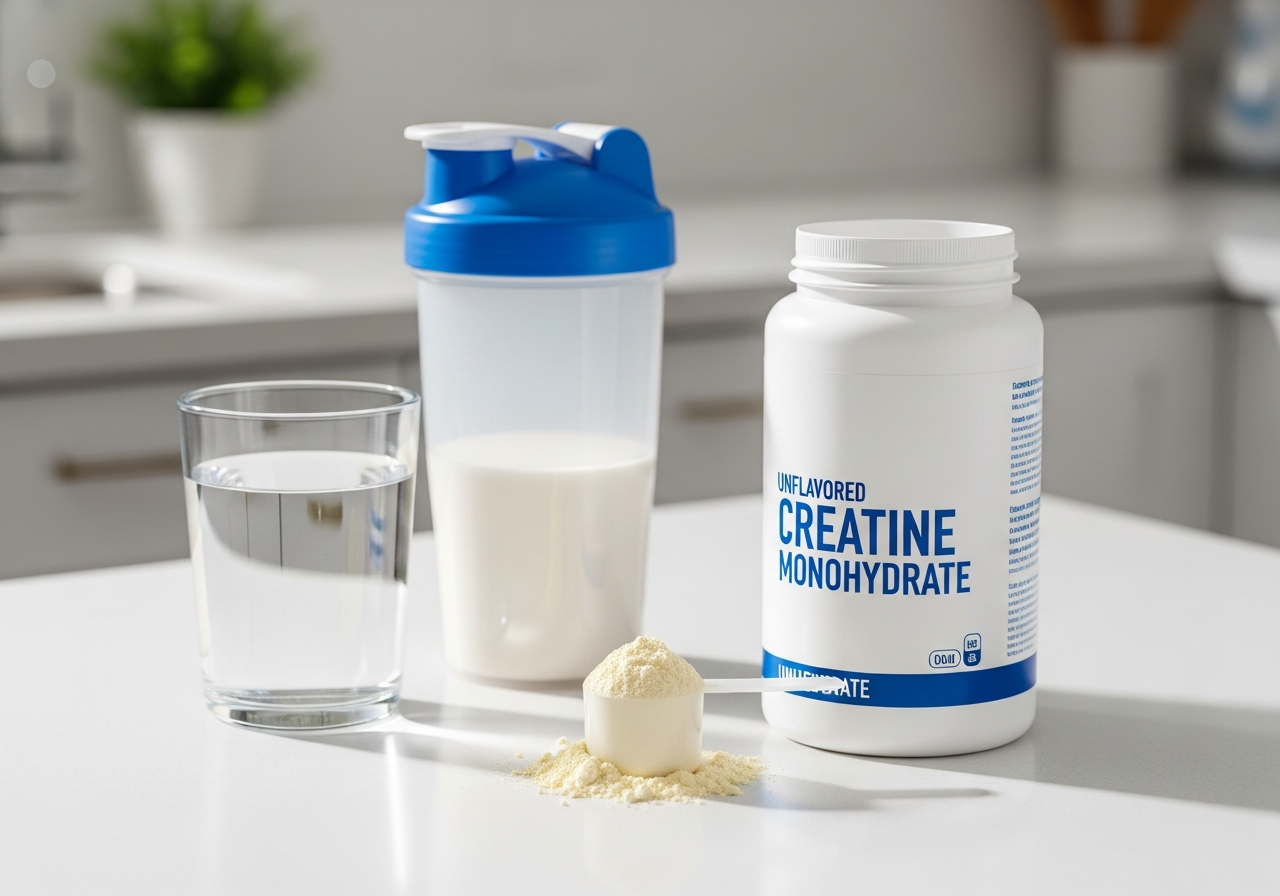
Creatine and Fibromyalgia: Energy, Pain, and the Research Evidence
By The Creatine Canada Research Team — Evidence-based supplement analysts
Creatine is not a proven treatment for fibromyalgia, but it may help some people with fibromyalgia-related fatigue, low muscle function, or exercise tolerance by improving cellular energy availability. The current evidence is limited and mixed, so creatine should be viewed as a cautious adjunct to medical care and activity-based rehab, not a stand-alone fix for fibromyalgia pain.
Evidence-based · Cites 4 sources · Editorial standards
Key Takeaways
- Creatine and fibromyalgia is an emerging, not settled, area of research; evidence is limited compared with sports use.
- Creatine is most plausible for fibromyalgia fatigue, weakness, and exercise capacity, not as a reliably proven pain reliever.
- Creatine monohydrate is the best-studied form; a practical starting dose is 3-5 g daily.
- A loading phase of about 20 g/day for 5-7 days can speed saturation, but many people with fibromyalgia tolerate a no-loading approach better.
- Expect any benefit to appear gradually over 2-4 weeks without loading, or within about 1 week after loading plus maintenance.
- Creatine is generally well studied for safety in healthy adults, but anyone with kidney disease, pregnancy, complex medical conditions, or multiple medications should ask their clinician first.
- For Canadians, choose a plain monohydrate product with a Natural Product Number when applicable, simple ingredients, and preferably third-party testing.
Does creatine help fibromyalgia? The honest short answer
Creatine may help some people with fibromyalgia, but it is not an established fibromyalgia treatment and the evidence is still limited. If you are searching for a direct answer on creatine and fibromyalgia, the best evidence-based summary is this: creatine is more likely to help with fatigue, muscle energy, strength, and exercise tolerance than to reliably reduce fibromyalgia pain on its own.
Fibromyalgia is a chronic pain syndrome marked by widespread pain, fatigue, sleep disturbance, cognitive symptoms, and reduced physical function. Because many symptoms overlap with low exercise capacity and poor muscular endurance, researchers have asked whether creatine could help by increasing phosphocreatine, the fast energy reserve used to regenerate ATP, the cell's immediate energy currency. That mechanism is biologically plausible, but plausibility is not the same thing as proof.
The strong evidence base for creatine comes from sports nutrition and muscle performance. The 2017 ISSN position stand concluded that creatine monohydrate is the most effective ergogenic, meaning performance-supporting, nutritional supplement for increasing high-intensity exercise capacity and lean mass during training. That matters for fibromyalgia because exercise intolerance is common, but it does not mean creatine has been proven to treat chronic pain conditions directly.
So where does that leave a person with fibromyalgia?
- Reasonable to consider: if fatigue, deconditioning, low strength, or difficulty tolerating rehab exercise are major problems.
- Less likely to be a cure: if your main goal is immediate relief of widespread pain or tender points.
- Best use case: as part of a broader plan that includes pacing, progressive resistance exercise, sleep management, and medical supervision.
If you want a primer on the supplement itself, see what creatine is and what it does. If you decide to try it, the simplest evidence-based choice is plain monohydrate rather than a trendy form marketed for special recovery or pain benefits.
The practical bottom line is that creatine for fibromyalgia pain is not strongly proven, but creatine for fibromyalgia fatigue and low physical capacity has a more defensible rationale and may be worth a careful personal trial.
Why creatine could matter in fibromyalgia: the energy mechanism in plain English
Creatine could help fibromyalgia symptoms because it supports rapid energy recycling inside muscle, and possibly brain tissue, where low energy availability may worsen fatigue and activity intolerance. That is the key mechanism behind the interest in creatine fibromyalgia research.
Creatine is stored partly as phosphocreatine, a high-energy compound that donates a phosphate group to help remake ATP during short bursts of effort. ATP is the molecule your cells use for immediate work, from contracting muscle to maintaining ion balance and supporting nerve signalling. When phosphocreatine stores are higher, your body can regenerate ATP faster during physical effort.
That matters for fibromyalgia for three practical reasons.
- Muscle fatigue: People with fibromyalgia often feel their muscles "burn out" quickly during stairs, walking, lifting, or rehab work. Better phosphocreatine availability can support repeated contractions and reduce the sense of hitting an energy wall.
- Exercise tolerance: Gentle resistance training and graded activity are common parts of fibromyalgia care, but many people struggle to do enough work consistently. Creatine may make training a bit more tolerable and productive.
- Potential central effects: Creatine is also active in the brain, and research into cognition, mood, and mental fatigue is growing. That is relevant because fibromyalgia often includes brain fog, though the evidence there is still emerging rather than definitive.
Mechanistically, creatine is not an anti-inflammatory drug, not a sedative, and not a direct analgesic. In other words, it does not block pain in the same way a pain medication might. Instead, it may help by improving the energy side of the equation, which can indirectly support function, confidence, and training quality.
This is why creatine chronic pain claims should be framed carefully. Creatine is not proven as a general pain supplement. It is better understood as a supplement that may improve the physical capacity that chronic pain often erodes.
The 2021 JISSN review on creatine misconceptions reinforces an important point: monohydrate remains the reference form because it is the most studied for absorption, efficacy, and safety. For a deeper foundation, our guide to creatine benefits and article on how creatine gives you energy explain why this ATP-phosphocreatine system matters beyond bodybuilding.
The most accurate expectation is modest support for energy and performance, not a dramatic switch-off of fibromyalgia symptoms.
What the research actually shows on creatine for fibromyalgia pain and fatigue
The research on creatine and fibromyalgia is limited, and the current body of evidence does not support strong claims that creatine reliably treats fibromyalgia pain. What the evidence does support is a biologically plausible role in fatigue, strength, lean tissue support, and exercise performance, with symptom relief likely being indirect and variable.
This is an area where honesty matters. Creatine has decades of evidence in resistance training, sprint performance, lean mass, and some rehabilitation settings, but fibromyalgia-specific trials are few compared with the sports literature. That means you should avoid any product page or social post claiming creatine is a clinically proven treatment for fibromyalgia.
Here is the fairest way to interpret the literature:
- Strong evidence: creatine monohydrate increases intramuscular creatine stores and improves performance in repeated high-intensity muscular work.
- Moderate evidence: creatine can support lean mass and strength gains when combined with training, including in some older-adult and rehab contexts.
- Weak-to-emerging evidence: creatine may help certain symptoms in some clinical populations involving fatigue, low muscle stores, or reduced function.
- Insufficient evidence: creatine as a proven stand-alone therapy for fibromyalgia pain.
Why does this distinction matter? Because in fibromyalgia, the most reliable symptom improvements usually come from multi-part management: medication when appropriate, sleep support, psychological coping tools, and carefully dosed physical activity. Creatine may fit best as a supportive supplement that helps you tolerate strengthening work or maintain function when fatigue is a limiting factor.
Examine's evidence summary is useful here because it separates better-supported muscle and performance outcomes from more speculative condition-specific claims: Examine.com — Creatine evidence summary. Mayo Clinic also takes a conservative stance, noting that creatine has known uses but not broad proof across every proposed health condition: Mayo Clinic — Creatine.
If your question is simply does creatine help fibromyalgia, the best answer is: possibly for fatigue and physical function, uncertain for pain, and worth trying only with realistic expectations. That expectation management is essential, because people with chronic pain are often overpromised and underhelped.
How to try creatine with fibromyalgia: a simple 6-step plan
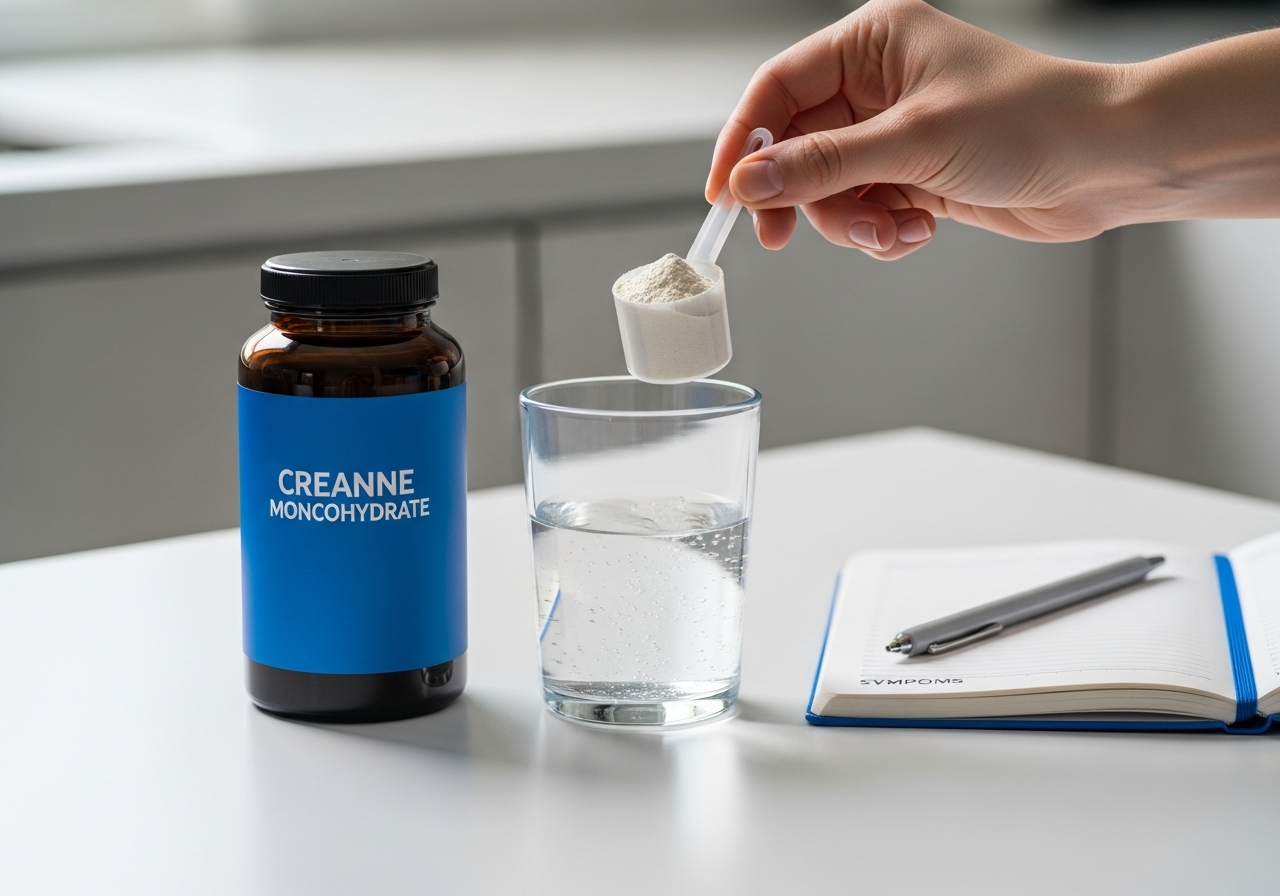
The best way to try creatine for fibromyalgia is to use plain creatine monohydrate, start low if you are symptom-sensitive, take it daily, and track function rather than hoping for instant pain relief. A structured self-trial works better than guessing.
- Get medical clearance if needed. Ask your clinician first if you have kidney disease, are pregnant or breastfeeding, take nephrotoxic medications, or have a complex medical history. If you have basic questions first, read is creatine safe.
- Choose the right product. Pick a single-ingredient creatine monohydrate powder. Avoid proprietary blends with stimulants or "pain support" herbs during your first trial, because they make it impossible to tell what is helping.
- Start with 3 g daily for 1 week. This lower starting point is often easier for people who are sensitive to GI upset or who already manage multiple symptoms.
- Increase to 5 g daily if tolerated. Five grams per day is the classic maintenance dose for most adults and is the simplest default. You can use our creatine dosage calculator if you want a body-weight-informed estimate.
- Take it every day, not just on active days. Creatine works by saturating tissues over time, so consistency matters more than workout timing. Our step-by-step guide to taking creatine covers the practical details.
- Track the right outcomes for 4-6 weeks. Rate fatigue, number of good-function days, walking tolerance, stair tolerance, grip or gym performance, and next-day recovery. Pain alone is too narrow a metric for this supplement.
If you prefer faster saturation and you tolerate supplements well, a loading phase is an option: about 20 g per day split into 4 doses for 5-7 days, followed by 3-5 g daily. However, many people with fibromyalgia do better skipping the loading phase because it can increase stomach upset or water-weight fluctuations. If you want the full protocol, see our loading phase guide.
Mix creatine into water, a protein shake, or another routine beverage. Timing is secondary; a daily habit you can actually sustain is what matters. If you train, taking it near training is fine, but there is no need to obsess over a tiny timing edge. For more on this, see when to take creatine.
The best trial is boring, consistent, and measured.
Best dose for creatine and fibromyalgia: by body weight, sensitivity, and goal
The best creatine dose for fibromyalgia is usually the same evidence-based range used for general supplementation: 3-5 g of creatine monohydrate daily, with optional loading if faster saturation matters more than convenience. The right dose depends less on fibromyalgia itself than on body size, GI tolerance, and your goal.
Most adults do well with a simple maintenance approach. Larger bodies and heavier training loads may justify the upper end of the range, while highly symptom-sensitive people may prefer a slower start. A loading phase is not required to get results; it only speeds up how quickly muscle stores rise.
| Situation | Suggested dose | Why this works |
|---|---|---|
| Very symptom-sensitive beginner | 3 g/day | Lower chance of stomach upset while still building stores gradually |
| Average adult with fibromyalgia | 5 g/day | Simple, well-established maintenance dose for most people |
| Fast-start approach | 20 g/day for 5-7 days, split into 4 doses, then 3-5 g/day | Speeds saturation and may bring effects sooner |
| Smaller adult, light body weight, no training | 3-4 g/day | Often enough when the goal is general tissue saturation rather than performance |
| Larger adult or regular resistance training | 5 g/day | Practical upper-end default that fits most evidence-based use |
Examples:
- 55 kg person, fatigue-focused, cautious trial: start at 3 g/day and stay there for 2 weeks before deciding whether to move to 5 g/day.
- 70 kg person doing light strength training twice weekly: 5 g/day is a straightforward choice.
- 90 kg person aiming to improve gym tolerance quickly: optional loading, then 5 g/day maintenance.
If you want more tailored dosing logic, read how much creatine per day and creatine maintenance dose. If measuring powder is confusing, our guide to measuring creatine helps you get close to the intended grams consistently.
The key principle is that more is not better once stores are saturated. Extra creatine does not mean extra pain relief. It mostly means more chance of stomach upset and wasted powder.
How long creatine takes to work for fibromyalgia, and what changes to watch for
Creatine usually works gradually, and in fibromyalgia the first noticeable changes are more likely to be better exercise tolerance or slightly less fatigue than dramatic pain relief. Without loading, expect about 2-4 weeks before many people notice anything; with loading, changes can appear in about 5-7 days once stores rise quickly.
That timeline reflects saturation, meaning the process of filling muscle creatine stores. Creatine is not a stimulant, so it does not create an immediate surge of energy after one scoop. If you are expecting an instant effect, you are using the wrong benchmark.
Here is a realistic week-by-week guide:
- Days 1-7 without loading: probably no dramatic change. The main goal is tolerance and routine.
- Days 5-7 with loading: some people notice fuller muscles, slight scale increase from water moving into muscle, or better repeated-effort capacity.
- Weeks 2-4: this is when some users report climbing stairs a bit easier, tolerating rehab sets better, or feeling less wiped out after activity.
- Weeks 4-6: if it is helping, functional changes should be clearer in your logbook or training numbers.
Good signs that creatine might be helping in fibromyalgia include:
- you recover better between sets or between active days
- your walking or resistance sessions feel less draining
- you can maintain effort a little longer before fatigue spikes
- you see small strength gains or less next-day shutdown after exercise
Poor signs that it is not helping enough to continue include:
- no meaningful functional change after 4-6 weeks of consistent use
- persistent GI discomfort despite lowering the dose
- you only notice scale gain, with no improvement in fatigue or performance
For a fuller timeline, see how long creatine takes to work. Also remember that if fibromyalgia symptoms flare because your activity increased too aggressively, creatine may be blamed unfairly. Pacing still matters.
The fairest test is whether daily life and tolerated training improve, not whether every pain score drops overnight.
Who creatine may fit best: beginners, women, older adults, and active people with fibromyalgia
Creatine may fit best for people with fibromyalgia who also have low strength, poor exercise tolerance, age-related muscle loss risk, or a structured rehab or resistance-training plan. It is especially worth considering when the goal is better function, not just lower pain.
Beginners often do well with creatine because the simplest dose, 3-5 g/day, requires very little skill or timing. If exercise leaves you wiped out for days, creatine may offer enough support to make gradual training more doable. Our creatine for beginners guide covers the practical basics.
Women with fibromyalgia are often told creatine is only for bodybuilding, which is incorrect. Creatine supports cellular energy, strength, and training quality, and it does not automatically make women bulky. For many women managing pain, fatigue, and low muscle confidence, that myth keeps a useful tool off the table. See creatine for women for a deeper breakdown.
Older adults may have the strongest practical case if fibromyalgia overlaps with sarcopenia risk, meaning age-related muscle loss. In older adults, creatine is most useful when paired with resistance exercise, because the supplement supplies potential while training supplies the signal for adaptation. Our creatine for older adults article explains this in detail.
Athletes or previously active adults with fibromyalgia may benefit because they can often detect small changes in repeated-effort capacity, power, and recovery more clearly. If fibromyalgia has reduced your training ceiling, creatine may help close part of that gap.
Vegetarians and vegans sometimes respond especially well to creatine because they typically consume less dietary creatine from foods like meat and fish. If you eat little or no animal protein, the chance of noticing a benefit may be somewhat higher. Our is creatine vegan and creatine for vegetarians guides explain why.
Who may benefit least? People who expect a medication-like analgesic effect, those unwilling to take it consistently, and those not addressing sleep, pacing, or physical activity. Creatine is a support tool, and support tools work best when the rest of the system is in place.
Safety, side effects, and when people with fibromyalgia should be extra cautious
Creatine monohydrate is generally well studied and considered safe for healthy adults at recommended doses, but fibromyalgia patients should still screen for kidney issues, medication complexity, and symptom sensitivity before starting. Safety is where nuance matters most.
The broad safety profile of creatine is strong in the general literature. The ISSN position stand and the 2021 review of common creatine misconceptions both support creatine monohydrate as safe for healthy populations when used appropriately. The main reason this does not automatically answer every fibromyalgia case is that people with chronic illness often have more overlapping conditions and more medications.
Common side effects are usually mild and manageable:
- Temporary water-weight gain: often from water being drawn into muscle, not body fat.
- Stomach upset or loose stools: more common with large single doses or loading too aggressively.
- Bloating sensation: sometimes reported, often improved by splitting doses or choosing plain micronized monohydrate.
Important cautions:
- Kidney disease: do not self-start creatine without medical clearance.
- Abnormal kidney bloodwork history: ask a clinician, because creatine can raise creatinine, a blood marker, without necessarily causing kidney damage. That distinction is explained in creatine vs creatinine and is creatine bad for your kidneys.
- Pregnancy or breastfeeding: evidence is not strong enough for casual supplementation without professional guidance.
- Severe GI sensitivity: start at 2-3 g/day and increase slowly if tolerated.
Hydration matters, but you do not need extreme water intake. Just maintain normal good hydration habits, especially if heat, exercise, or certain medications already affect fluid balance. For practical guidance, see how much water to drink with creatine.
If you stop because of side effects, the most common fix is not abandoning creatine entirely. It is lowering the dose, dividing it, taking it with food, or skipping the loading phase.
Common mistakes and myths about creatine for chronic pain, debunked
The biggest mistake with creatine and chronic pain is expecting it to work like a painkiller instead of a tissue-saturation supplement that may improve function over time. Most disappointment comes from mismatched expectations, poor dosing, or choosing the wrong product.
- Myth: Creatine directly treats fibromyalgia pain.
Reality: evidence for direct pain reduction is weak. Any symptom benefit is more likely to come through better energy handling, training quality, and recovery. - Myth: You only take creatine on workout days.
Reality: creatine works by saturating tissue stores, so daily use matters more than pre-workout use. - Myth: Newer forms are better for sensitive people.
Reality: monohydrate is still the best-studied standard. Fancy forms often cost more without superior evidence. See best type of creatine and why monohydrate still wins. - Myth: Water gain means fat gain.
Reality: the typical early weight increase is intracellular water in muscle, not fat. Our weight gain guide explains the difference. - Myth: Creatine harms kidneys in everyone.
Reality: in healthy adults, recommended doses have a strong safety record; the confusion often comes from creatinine blood tests, not kidney injury itself. - Myth: If 5 g is good, 10 g must be better.
Reality: once stores are saturated, more is usually just more likely to upset your stomach.
Common real-world mistakes include:
- starting with a full loading phase despite a history of GI sensitivity
- switching products every week and never giving one protocol time
- judging success only by pain instead of fatigue, output, and recovery
- buying flavoured blends that hide the actual creatine dose
- quitting after five days on a no-loading plan and calling it ineffective
If you want a broader myth check, our creatine myths debunked and myths vs. facts guide go deeper.
The cleanest way to judge creatine is simple: use the most studied form, take the right dose long enough, and measure the right outcomes.
How to choose a creatine product in Canada: what matters and what doesn't
The best creatine product for fibromyalgia in Canada is usually a plain creatine monohydrate powder with minimal ingredients, clear dosing, and good manufacturing quality. In most cases, you do not need a special "fibromyalgia formula" or an expensive designer creatine.
When buying in Canada, check for these basics:
- Creatine monohydrate as the only active ingredient.
- Clearly stated grams per serving, ideally 3 g or 5 g.
- Minimal additives, especially if you have GI sensitivity.
- Natural Product Number (NPN) when applicable, which is Health Canada's product-licensing identifier for many natural health products sold in Canada.
- Third-party testing or transparent quality standards.
| Buying factor | What to prefer | What to be cautious about |
|---|---|---|
| Form | Creatine monohydrate | Claims that HCl, buffered, or liquid forms are inherently better for fibromyalgia |
| Ingredients | Single-ingredient powder | Multi-ingredient blends with stimulants, herbs, or sugar alcohols |
| Dose transparency | Exact grams listed | "Proprietary matrix" style labelling |
| Quality cues | NPN, GMP, third-party testing | Vague sourcing and no quality documentation |
| Value | Low cost per 5 g serving | Premium pricing for weakly supported forms |
If you want help comparing options, browse our best creatine rankings, creatine brand reviews, and creatine product catalog. For Canadian regulation basics, the most relevant concept is that an NPN indicates a product has been authorized for sale as a natural health product under Health Canada rules. It is useful, but it is not a guarantee that one brand works better than another identical monohydrate product.
For symptom-sensitive users, unflavoured powder is often the smartest first choice because it removes sweeteners, gums, and flavour systems that may cause digestive confusion. If plain powder tastes chalky, mix it into a smoothie or protein shake rather than abandoning it.
The best buying rule is simple: pay for evidence and quality, not marketing theatre.
Bottom line: when creatine is worth trying for fibromyalgia
Creatine is worth trying in fibromyalgia when fatigue, weakness, poor exercise tolerance, or deconditioning are major problems, and when you understand that the goal is functional support rather than a guaranteed pain cure. That is the clearest bottom line on creatine and fibromyalgia.
The evidence today supports a cautious, realistic position. Creatine monohydrate is one of the most researched sports supplements in the world, with consistent evidence for improving high-intensity performance, muscle creatine stores, and training adaptations. What it does not yet have is a strong fibromyalgia-specific evidence base proving direct pain relief.
That does not make it useless. It means the right question is not "Will creatine cure my fibromyalgia?" but rather "Can creatine help me do more, recover better, or feel less drained by activity?" For some people, especially those using exercise as part of their management plan, that is a meaningful and worthwhile outcome.
If you try it, keep the protocol simple:
- choose plain creatine monohydrate
- take 3-5 g daily
- skip loading if you are GI-sensitive
- track fatigue, function, training tolerance, and recovery for 4-6 weeks
- continue only if you notice a real-world benefit
If you want to go deeper next, the most useful companion reads are how much creatine per day, how long creatine takes to work, taking creatine without working out, and who should not take creatine.
The final verdict is straightforward: creatine for fibromyalgia pain is not proven enough to oversell, but creatine for fibromyalgia fatigue, muscular function, and exercise support is plausible enough to justify a careful, low-risk trial in the right person.
Creatine and Fibromyalgia: The numbers that matter
- 3-5 g/day Typical daily creatine monohydrate dose — Standard maintenance range for most adults
- 20 g/day Typical loading dose — Usually split into 4 doses for 5-7 days
- 2-4 weeks Common no-loading timeline — Typical window to notice effects as stores gradually saturate
- 5-7 days Fast saturation timeline with loading — Follow with 3-5 g/day maintenance
Frequently Asked Questions
Does creatine help fibromyalgia pain?
Creatine is not reliably proven to reduce fibromyalgia pain directly. The better-supported theory is that it may help some people indirectly by improving muscle energy, exercise tolerance, and recovery, which can make day-to-day function easier even if pain itself does not change dramatically.
Can creatine help fibromyalgia fatigue?
Yes, creatine may be more useful for fibromyalgia fatigue than for pain itself. Because creatine helps regenerate ATP through the phosphocreatine system, it may support repeated muscle effort and reduce the sense of running out of energy quickly during activity.
What is the best creatine for fibromyalgia?
The best creatine for fibromyalgia is usually plain creatine monohydrate. It is the most studied, the most cost-effective, and the easiest form to dose consistently, while newer forms have not shown better evidence for chronic pain or fibromyalgia-specific outcomes.
How much creatine should someone with fibromyalgia take?
Most people with fibromyalgia can start with 3-5 g of creatine monohydrate per day. If you are very sensitive to supplements or digestive upset, starting at 3 g daily and increasing slowly is often more practical than jumping into a full loading phase.
Should you load creatine if you have fibromyalgia?
You do not need to load creatine if you have fibromyalgia. Loading at about 20 g per day for 5-7 days can speed up saturation, but many symptom-sensitive people tolerate a simple 3-5 g daily plan better and still reach effective tissue levels over time.
How long does creatine take to work for fibromyalgia fatigue?
Creatine usually takes about 2-4 weeks to have noticeable effects without loading, and about 5-7 days with a loading phase. In fibromyalgia, the first changes are more likely to be better exercise tolerance or less post-activity fatigue than instant pain relief.
Is creatine safe for people with fibromyalgia?
Creatine is generally well studied for safety in healthy adults, but safety in fibromyalgia depends on the person, not the diagnosis alone. If you have kidney disease, unusual kidney labs, pregnancy, breastfeeding, or a complex medication list, speak with your clinician before starting.
Can creatine make fibromyalgia symptoms worse?
Creatine does not usually worsen fibromyalgia directly, but it can cause bloating, stomach upset, or temporary water-weight gain in some people. It can also be blamed for symptom flares that are actually caused by increasing exercise too quickly, so pacing and dose control matter.
Can you take creatine without working out if you have fibromyalgia?
Yes, you can take creatine without working out, but the benefits may be smaller. Creatine can still raise tissue stores and potentially support general energy handling, yet it tends to show the clearest practical value when paired with some form of progressive activity or resistance training.
Does creatine help chronic pain conditions in general?
Creatine is not established as a general chronic pain supplement. Its strongest evidence is for muscle energy, power, training output, and lean-mass support, so any chronic-pain benefit is likely condition-specific and indirect rather than a universal analgesic effect.