How to Maximize Creatine Absorption: Evidence-Based Tips That Actually Work
By The Creatine Canada Research Team — Evidence-based supplement analysts
To maximize creatine absorption, take 3–5 g of creatine monohydrate every day, use a proven loading phase if you want faster saturation, and pair it with a meal or shake you can tolerate consistently. The biggest driver of creatine uptake is not a fancy form or exact timing trick; it is saturating your muscle stores over days and weeks with the right dose, then sticking with it.
Evidence-based · Cites 4 sources · Editorial standards
Key Takeaways
- Creatine monohydrate is the best-studied and most reliable form for maximizing creatine uptake.
- A loading phase of 20 g/day split into 4 doses for 5–7 days saturates muscles faster than 3–5 g/day alone.
- Taking creatine with a meal or post-workout shake can support uptake, but daily consistency matters more than timing.
- Smaller split doses often reduce stomach upset and improve tolerance during loading.
- Micronized powder may mix more easily, but standard monohydrate works just as well when total daily dose is correct.
- Most people do not need sugar, cycling, or expensive 'enhanced absorption' forms to improve creatine effectiveness.
- If creatine seems not to be working, the usual problems are underdosing, skipping days, poor training, or unrealistic expectations.
How to maximize creatine absorption: the short answer most people actually need
The best way to maximize creatine absorption is to use creatine monohydrate, take enough to saturate muscle stores, and do it consistently every day. In practice, that means either 3–5 g daily or a loading phase of 20 g daily split into 4 doses for 5–7 days, followed by 3–5 g daily for maintenance.
If you want the featured-snippet version: how to absorb creatine better comes down to dose, consistency, and tolerability, not marketing claims about special delivery systems. The 2017 ISSN position stand concluded that creatine monohydrate is the most effective ergogenic nutritional supplement currently available for increasing high-intensity exercise capacity and lean mass during training.
It helps to define the goal correctly. When people ask about creatine absorption, they usually mean one of three things:
- Intestinal absorption: getting creatine from your gut into your bloodstream.
- Muscle uptake: getting creatine from your blood into muscle cells.
- Practical effectiveness: actually saturating muscles enough to improve performance and training output.
For most healthy people, plain creatine monohydrate is already absorbed well enough from the gut. The real bottleneck is usually not whether a powder can enter your blood, but whether you take enough, long enough, to raise intramuscular creatine and phosphocreatine. Phosphocreatine is the stored form that helps regenerate ATP, the immediate energy currency your muscles use for short, hard efforts.
That is why maximize creatine effectiveness is a better frame than obsessing over “bioavailability” alone. You can buy the priciest form on the shelf and still get poor results if you underdose, skip rest days, or quit before saturation happens. If you want help nailing the amount, use our creatine dosage calculator or read the full guides on how to take creatine and how much creatine per day.
Bottom line: if you want the best creatine uptake tips, start with the fundamentals that are strongly supported by evidence, then use small adjustments like taking it with a meal, splitting doses, and choosing a product you will actually take daily.
What ‘creatine absorption’ really means inside your body
Creatine works best when your muscles become saturated with it, because higher intramuscular creatine and phosphocreatine stores help you regenerate ATP faster during repeated high-intensity efforts. That is the core mechanism behind better performance, stronger training sessions, and over time, greater gains in lean mass and strength.
Here is the simple pathway. You swallow creatine, it moves through the gut, enters the bloodstream, and is then transported into tissues, especially skeletal muscle. Muscle cells use a specific transporter to pull creatine inside, where some of it is stored as free creatine and some as phosphocreatine. During heavy sets, sprints, jumps, or repeated intervals, phosphocreatine donates a phosphate group to help rebuild ATP quickly.
This is why creatine bioavailability is only part of the story. A creatine product can be absorbed from the gut, yet still fail to maximize results if muscle stores are not meaningfully elevated. The goal is saturation, meaning your muscles hold more creatine than they did at baseline.
The best-supported way to raise muscle stores is straightforward:
- Fast approach: about 20 g/day, typically as 4 doses of 5 g, for 5–7 days.
- Slow approach: 3–5 g/day for several weeks.
The 2021 JISSN review on common questions and misconceptions about creatine explains that creatine monohydrate remains the reference form against which other versions should be judged. Most newer forms are sold on the promise of better solubility, less bloating, or better uptake, but they generally do not outperform monohydrate on the outcomes that matter most.
Insulin can help support creatine transport into muscle, which is why people often ask about carbs, juice, or post-workout shakes. That said, the effect of meal pairing is modest compared with the much larger effect of simply taking the correct daily dose consistently. In other words, adding creatine to a meal can be helpful, but it does not rescue a weak protocol.
If you are a beginner, this should be reassuring. You do not need a complicated stack or timing ritual to improve creatine uptake. You need a reliable daily habit, sufficient dosing, and enough training quality for the performance benefits to show up. For deeper background on how creatine functions in the body, see what is creatine and our evidence hub on the complete guide to creatine.
The best step-by-step protocol to absorb creatine better starting today
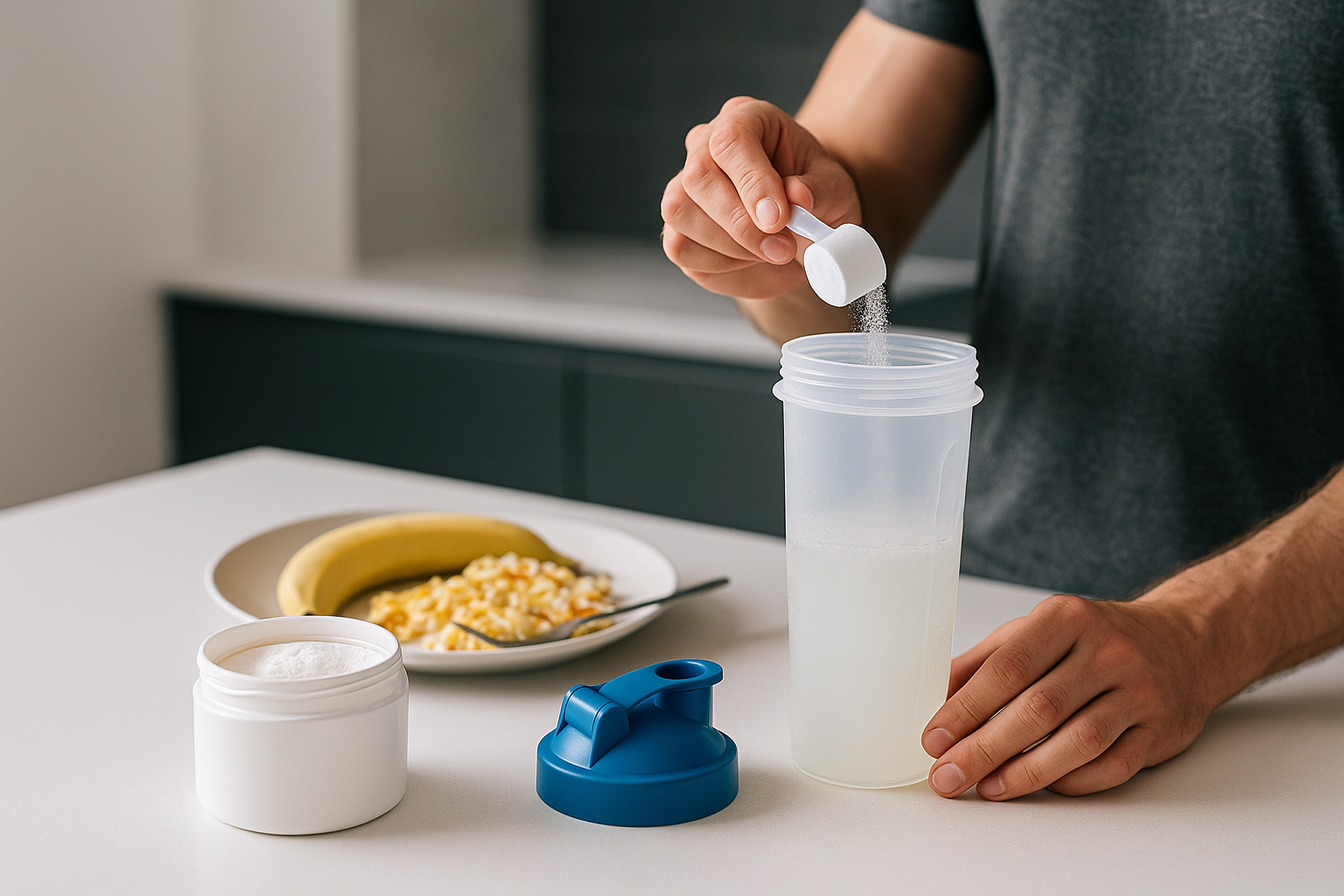
If you want a practical plan for how to maximize creatine absorption, use a plain monohydrate powder, choose either loading or no loading, and take it at the same time every day with enough fluid. This is the simplest protocol that works for beginners and experienced lifters alike.
- Choose creatine monohydrate. Buy a product that clearly lists creatine monohydrate as the only active ingredient or primary ingredient. If you are comparing options, our best creatine rankings, creatine brand reviews, and creatine product catalog can help.
- Pick your dosing strategy. Use either 3–5 g/day from day one, or load with 20 g/day split into 4 doses for 5–7 days, then continue with 3–5 g/day.
- Measure accurately. Use the scoop only if it lists grams clearly; otherwise use a scale. Creatine is one supplement where small measurement errors repeated daily add up.
- Take it with water or a meal you tolerate well. Mixing it into a shake, yoghurt, oatmeal, or a post-workout meal is fine if that improves compliance.
- Split doses if your stomach is sensitive. During loading, smaller doses spaced through the day are often easier on digestion than one large serving.
- Take it every day, including rest days. Muscle saturation is maintained by regular intake, not only workout-day use.
- Stay on it long enough to judge results. Loading can saturate muscle within about a week; daily maintenance without loading usually takes several weeks.
Here is what to expect. In the first week of loading, some people notice a small body-mass increase from intracellular water, meaning water drawn into muscle cells rather than fat gain. Over the next few weeks, you are more likely to notice practical signs: one extra rep on hard sets, slightly better repeat sprint performance, improved training volume, or less drop-off from set to set.
How do you know it is working? The best signs are not dramatic sensations. Look for more quality work: a little more power, a little more repeated-effort capacity, and over time better progress from training. If you want a realistic timeline, pair this guide with how long creatine takes to work and realistic creatine results.
The key creatine absorption best practice is making the protocol easy enough that you can do it for months, not days. A perfect strategy you abandon is worse than a simple one you follow.
Exact dosing by body weight and goal: muscle gain, strength, sport, and healthy aging
The best creatine dose for absorption is the smallest dose that reliably saturates your muscles, and for most adults that is still 3–5 g daily after any optional loading phase. Body weight, muscle mass, diet, and goal can justify leaning toward the lower or upper end of that range.
For simplicity, many people do well with a flat dose. But a body-weight-based loading formula is also commonly used: about 0.3 g per kg of body weight per day for 5–7 days, then 0.03 g per kg per day as maintenance. That usually lands near the standard 20 g/day loading and 3–5 g/day maintenance range.
| Body weight | Fast saturation option | Daily maintenance | Who this often suits |
|---|---|---|---|
| 60 kg | ~18 g/day for 5–7 days, split doses | 3 g/day | Smaller adults, many women, beginners |
| 75 kg | ~22.5 g/day for 5–7 days, split doses | 3–5 g/day | Average gym-goers |
| 90 kg | ~27 g/day for 5–7 days, split doses | 5 g/day | Larger lifters, field-sport athletes |
| 105 kg | ~31.5 g/day for 5–7 days, split doses | 5 g/day | Very large or highly muscular athletes |
Goal matters too:
- Beginners building muscle or strength: 3–5 g/day is enough; loading is optional.
- Athletes wanting faster effect: loading helps because you reach saturation sooner.
- Vegetarians and vegans: they may respond especially well because baseline muscle creatine can be lower, so consistent maintenance matters. See creatine for vegetarians.
- Older adults: 3–5 g/day is a common practical range, especially when combined with resistance training. See creatine for older adults.
- Women: women do not need a special pink version or a tiny ineffective dose; standard evidence-based dosing applies. See creatine for women.
If you want precision, use a body-weight method. If you want simplicity, use 5 g/day and be done with it. Both can work. What matters most for improve creatine uptake is not chasing the perfect decimal place but choosing a dose that actually maintains saturation.
One important caveat: more is not better once stores are full. Taking far above maintenance long term does not appear to provide extra muscle saturation benefits for most people; it mostly increases cost and, in some cases, stomach upset.
Should you take creatine with food, carbs, or protein to improve uptake?
Taking creatine with a meal or shake can help support muscle uptake, but the benefit is smaller than the benefit of simply taking enough creatine every day. If pairing it with food makes the habit easier or reduces stomach discomfort, that is usually a smart move.
The reason food may help is that insulin, which rises after eating, can support creatine transport into muscle. This is why you often hear advice to mix creatine with juice or take it post-workout with carbs and protein. There is some physiological logic there, but it is easy to overstate. For most recreational lifters and athletes, you do not need a high-sugar drink to get good creatine results.
Practical hierarchy:
- Daily adherence matters most.
- Total dose matters next.
- Taking it with a meal or shake is a useful extra, not a magic trick.
- Exact carb amount is rarely worth overthinking.
Good options include:
- After training in a protein shake
- With breakfast if morning routines are easiest
- With lunch or dinner if that is when you remember supplements best
- With yoghurt, oats, or a smoothie if plain water bothers your stomach
What about fasted training? You can still take creatine while fasted if needed. Creatine does not require a carb spike to work. If you tolerate it better with food, then take it during your eating window. If you are deciding between empty stomach and with a meal, choose the approach you will repeat daily. Our guides on creatine with or without food, creatine with juice, and creatine and protein powder go deeper.
What about pre- versus post-workout? Current evidence does not show that a tiny timing edge matters nearly as much as overall saturation. The better answer is to attach creatine to whichever training or meal routine you rarely miss. For a full timing breakdown, see when to take creatine.
So if you are searching for creatine and better absorption, the honest answer is this: yes, meals and shakes can support uptake and comfort, but they are accessories to the main plan, not substitutes for it.
Which form absorbs best? Monohydrate vs HCl, micronized, gummies, capsules, and ‘advanced’ blends
Creatine monohydrate remains the best form for maximizing real-world creatine effectiveness because it is the most studied, reliably effective, and typically the most cost-effective. Newer forms may change texture, convenience, or solubility, but they have not clearly beaten monohydrate on the outcomes that matter most.
This is where a lot of absorption marketing goes wrong. Brands often blur the difference between mixes better, feels lighter in the stomach, and increases muscle creatine more. Those are not the same claim.
| Form | What it may do well | What the evidence says about uptake/results | Best use case |
|---|---|---|---|
| Creatine monohydrate | Best evidence, lowest cost, proven dosing | Gold standard for raising muscle creatine and improving performance | Almost everyone |
| Micronized monohydrate | Mixes more easily, less gritty texture | Same active form; convenience benefit more than performance advantage | People who dislike texture |
| Creatine HCl | Often marketed as more soluble | No consistent proof it outperforms monohydrate on key outcomes | People willing to pay more for format preference |
| Capsules | Portable, precise dosing | Can work well, but often expensive per gram | Travel or no-mix convenience |
| Gummies/chews | Easy to take | Can work if total grams are adequate, but dose per serving is often low | People who hate powders |
| Liquid creatine/pre-mixed drinks | Convenient | Stability concerns have historically limited confidence versus dry powder | Generally lower-value choice |
The 2021 JISSN misconceptions paper and the ISSN position stand both support the idea that creatine monohydrate should be the benchmark. If a brand claims dramatically superior creatine bioavailability, ask a harder question: does it raise muscle stores or improve performance better than monohydrate at an equivalent dose?
For Canadians, the smartest buying angle is usually boring on purpose: plain monohydrate, clear serving size in grams, a Health Canada-compliant label where applicable, and ideally third-party testing for competitive athletes. If you want product help, see best type of creatine, monohydrate vs HCl, and third-party tested creatine in Canada.
If your main problem is mixability rather than results, micronized monohydrate can be worth it. If your main goal is actual performance and muscle uptake, standard monohydrate still wins the evidence argument.
Mixing, water temperature, hydration, and digestion: the small details that can matter
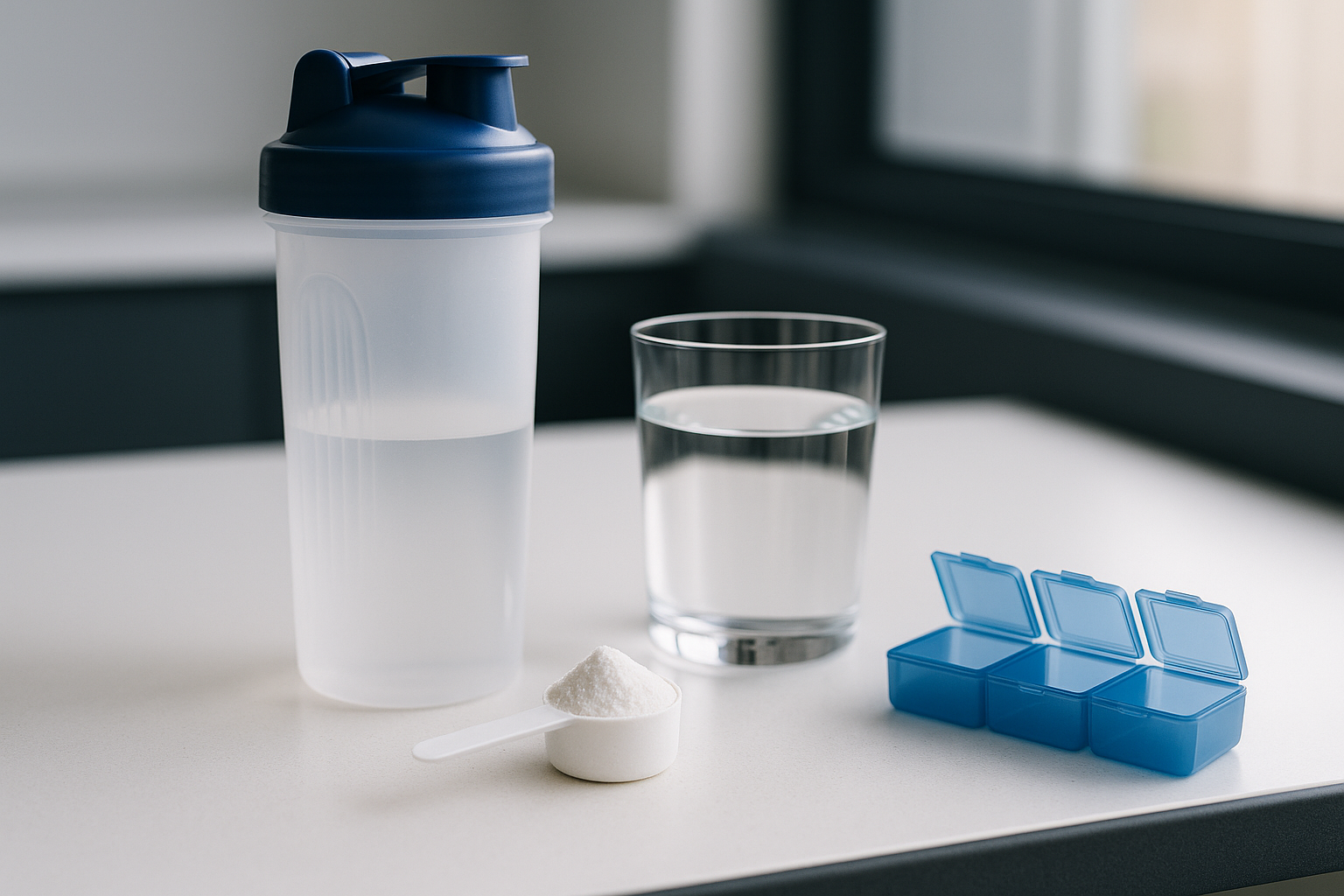
Better mixing can improve the experience of taking creatine, but it does not transform an ineffective product into a superior one. The main reason to care about solubility, fluid volume, and water temperature is comfort, convenience, and reducing the chance you skip doses.
Creatine monohydrate is not highly soluble in cold liquid, so some grit at the bottom of the glass is normal. That does not mean the product is bad. Warm water can improve dissolving, and vigorous shaking helps, but total dose still matters more than perfect clarity.
Useful creatine uptake tips for mixing:
- Use enough liquid. Many people tolerate 3–5 g better in a full glass or shaker rather than a tiny shot of water.
- Warm liquid can help dissolve it. Lukewarm water often reduces grittiness compared with ice-cold water.
- Shake and drink promptly. Leaving mixed creatine sitting for long periods is unnecessary.
- Micronized powder can improve texture. This is a convenience advantage, not proof of superior muscle uptake.
- Avoid dry scooping. It is uncomfortable, can cause coughing or choking, and offers no absorption advantage.
Hydration matters, but not in the exaggerated way social media often suggests. Creatine draws water into muscle cells, so it makes sense to maintain normal good hydration, especially during loading or hard training. That does not mean you need absurd amounts of water or that creatine dehydrates you. The IOC consensus on dietary supplements and mainstream evidence do not support the myth that standard creatine use inherently causes dehydration in healthy users.
If you get bloating or loose stools, the fix is usually practical: reduce single-dose size, take it with food, switch from loading to straight maintenance, or spread doses through the day. See how to mix creatine, how much water with creatine, and creatine digestive side effects.
So yes, there are real creatine absorption best practices around mixing and tolerance. But they are best viewed as adherence tools. If a method helps you consistently get your 3–5 g in, then it is working.
Who should care most about creatine uptake, and what results should each group expect?
The people who benefit most from optimizing creatine uptake are those doing repeated high-intensity work, trying to gain strength or lean mass, or at higher risk of low muscle creatine stores, such as vegetarians and some older adults. Better uptake matters because these groups are more likely to notice the training and performance payoff from reaching saturation.
- Beginners: You do not need a complex protocol. A steady 3–5 g/day often works well because your training itself will already create fast early progress. Creatine helps you get a bit more quality out of that work.
- Women: Standard evidence-based dosing applies. Women do not need a special low-dose “women’s creatine” to absorb it properly. See creatine for women.
- Older adults: Creatine combined with resistance training can support strength and lean mass retention, which matters more with age. See creatine for older adults.
- Strength and power athletes: This is where the phosphocreatine system matters most because sets, sprints, jumps, throws, and repeated efforts rely heavily on rapid ATP resynthesis.
- Team-sport athletes: Hockey, football, soccer, basketball, lacrosse, and similar sports often involve repeated high-intensity bursts that fit creatine’s mechanism well.
- Vegetarians and vegans: They may have lower baseline stores and often respond strongly to supplementation. See is creatine vegan and creatine on a plant-based diet.
What should you expect week by week?
- Days 1–7 with loading: saturation rises quickly; some notice fuller muscles and small water-weight gain.
- Weeks 2–4: better repeat efforts, extra reps, slightly improved training volume, less drop-off across sets.
- Weeks 4–12: if training and nutrition are solid, improved performance can translate into greater strength and lean-mass gains over time.
What should you not expect? A stimulant-like buzz, instant fat loss, or dramatic visible muscle growth in a few days. Creatine is a saturation supplement, not an acute “feel it right now” product.
If you think you are a non-responder, do not jump to that conclusion too fast. Many supposed non-responders are simply underdosed, inconsistent, poorly hydrated, or not training in a way that exposes creatine’s benefits. For troubleshooting, see creatine non-responders and creatine not working.
Safety, side effects, and what Canadians should look for on the label
Creatine monohydrate is well-supported as safe for healthy individuals when used at recommended doses, and the most common side effects are practical ones like mild stomach upset or temporary water-weight gain, not organ damage. The ISSN position stand and the 2021 JISSN review both support the strong safety profile of creatine in healthy populations.
The most common side effects and fixes are straightforward:
- Stomach upset or diarrhea: usually caused by taking too much at once; split doses or take with food.
- Bloating or heaviness: often more noticeable during loading; lower single-dose size or skip loading.
- Scale weight increase: usually reflects intracellular water retention, not fat gain.
- Confusion over bloodwork: creatine can affect creatinine levels, which is not the same thing as causing kidney damage in healthy users. If you have a kidney condition or medical concerns, speak with your clinician first.
Who should be more cautious? Anyone with known kidney disease, complex medical conditions, or medication interactions should talk to a qualified healthcare professional before using creatine. That is not because creatine is broadly dangerous; it is because pre-existing conditions change the risk equation.
For Canadians, label quality matters. Look for:
- Clear ingredient identity: ideally creatine monohydrate.
- Serving size listed in grams: not vague “proprietary blend” language.
- NPN where applicable: an NPN is a Natural Product Number issued by Health Canada for licensed natural health products.
- Third-party testing if you are a tested athlete: NSF Certified for Sport or Informed Sport can add confidence around contamination and banned substances.
Do not confuse “better absorption” with “safer because lower dose.” Many advanced forms market tiny doses as proof of potency, but if they do not deliver equivalent muscle saturation, you may simply be paying more for less proven results. In Canada, boring transparency is a feature, not a flaw.
If safety is your main concern, read is creatine safe, is creatine bad for your kidneys, and Canadian supplement regulations. Those guides explain how to separate legitimate caution from recycled myths.
The biggest mistakes that hurt creatine absorption and the myths that keep spreading
The biggest mistakes are underdosing, skipping days, relying on “enhanced absorption” marketing, and expecting instant dramatic results. Most creatine problems are protocol problems, not product chemistry problems.
Here are the errors that most often reduce creatine effectiveness:
- Taking too little. One or two grams a day is often not enough for reliable saturation in most adults.
- Only taking it on workout days. Creatine works through saturation, so rest days count.
- Stopping after a week without loading. At 3–5 g/day, it usually takes several weeks to fully appreciate the effect.
- Buying exotic forms for “absorption” instead of using enough monohydrate.
- Using giant single doses. This raises the chance of stomach upset without adding real benefit once transporter capacity and total daily needs are considered.
- Judging it by sensation. Creatine is not a pre-workout. You may not feel a buzz at all.
Now the myths:
Myth 1: You need lots of sugar to absorb creatine.
False. Carbs and insulin can support uptake, but standard daily dosing works well without forcing high-sugar drinks.
Myth 2: Creatine HCl or buffered creatine is proven to absorb far better.
Not established. These forms may change mixability or user experience, but monohydrate remains the evidence standard.
Myth 3: Dry scooping gets it into your system faster.
False. It adds irritation and risk, not better uptake.
Myth 4: You must cycle creatine to keep absorbing it.
False for most users. Creatine does not stop working because you stay consistent. See do you need to cycle creatine.
Myth 5: Water retention means it is not working.
False. Early intracellular water retention can be one sign that creatine is doing what it is supposed to do inside muscle.
The 2021 JISSN paper on misconceptions is particularly useful here because many popular creatine beliefs are decades old and no longer reflect the evidence. If you want a full myth breakdown, see creatine myths debunked and creatine myths vs facts.
If you remember one thing, remember this: the most powerful way to maximize creatine effectiveness is still the least glamorous one—correct dose, every day, for long enough.
Bottom line: the evidence-based formula for better creatine absorption
If you want the best evidence-based answer to how to maximize creatine absorption, use creatine monohydrate, take enough to saturate muscle, and stay consistent long enough for the effect to show up in your training. Everything else is secondary.
The formula is simple:
- Choose creatine monohydrate.
- Take 3–5 g daily, or load with 20 g daily split into 4 doses for 5–7 days if you want faster saturation.
- Take it with a meal or shake if that improves tolerance or routine.
- Split doses if your stomach is sensitive.
- Continue daily on rest days.
- Judge success by better training output over weeks, not by instant sensation.
That is the real answer to creatine absorption tips, creatine uptake tips, and how to absorb creatine better. You do not need to hack human physiology with overpriced forms or ritualistic timing. You need to make saturation inevitable.
For most people, the practical best practice is boring by design: a quality monohydrate you trust, a dose you can repeat daily, and a simple habit linked to breakfast, a post-workout shake, or another routine you rarely miss. If you want the shortest possible summary, it is this: maximize muscle saturation, not supplement hype.
To build your full protocol, continue with creatine maintenance dose, creatine loading phase, creatine on rest days, and how to choose creatine.
Creatine uptake is won by consistency more than cleverness: the right daily dose of monohydrate, taken long enough to saturate muscle, beats almost every “better absorption” claim on the market.
That is the standard worth following in 2026, and it is still the one the evidence supports best.
Maximize Creatine Absorption: The Numbers That Matter
- 3–5 g/day Standard maintenance dose — Enough for most adults to maintain muscle saturation.
- 20 g/day Typical loading dose — Usually split into 4 servings of 5 g for 5–7 days.
- 5–7 days Fast-saturation timeline — A loading phase reaches elevated muscle stores much faster.
- 4 doses/day Best way to split loading — Smaller servings often improve tolerance versus one large dose.
Frequently Asked Questions
How can I maximize creatine absorption?
You can maximize creatine absorption by taking creatine monohydrate at an evidence-based dose every day and, if desired, using a loading phase to saturate muscles faster. Pairing it with a meal or shake may help uptake and tolerance, but the biggest factor is consistent daily intake of 3–5 g, not a special form or exact timing trick.
Does taking creatine with carbs improve absorption?
Yes, taking creatine with carbs can support uptake because insulin helps move creatine into muscle, but the benefit is modest compared with simply taking enough creatine consistently. You do not need lots of sugar for creatine to work well, and many people do just fine taking it with a regular mixed meal.
Should I take creatine with protein for better uptake?
Yes, taking creatine with protein is a practical option, especially if it is part of a post-workout shake you already use. Protein-containing meals often come with enough overall nutrition to make the dose easy to tolerate and remember, which in real life matters more than chasing tiny timing advantages.
Is creatine monohydrate the most bioavailable form?
Creatine monohydrate is the most proven form for real-world effectiveness, even if other forms market themselves as more bioavailable or soluble. The evidence still supports monohydrate as the gold standard because it reliably raises muscle creatine stores and improves performance when dosed correctly.
Does micronized creatine absorb better?
Micronized creatine may mix more easily and feel less gritty, but it is not clearly superior to regular creatine monohydrate for muscle uptake or results. Its main advantage is convenience and mouthfeel, not a proven performance edge.
Should I take creatine before or after my workout for best absorption?
The best time to take creatine is the time you will remember every day, because muscle saturation matters more than workout timing. Taking it after training with a meal or shake is convenient for many people, but pre-workout, post-workout, or any consistent daily time can work.
Can I take creatine on an empty stomach?
Yes, you can take creatine on an empty stomach if you tolerate it well. If it causes stomach discomfort, take it with food, split the dose, or use a full glass of water, because better tolerance usually leads to better long-term adherence.
Why does my creatine not seem to be working?
Creatine often seems not to work because the dose is too low, doses are skipped on rest days, or the person stopped before muscle saturation occurred. Another common issue is expecting a stimulant-like feeling instead of looking for better training performance over weeks.
Do I need a loading phase to absorb creatine properly?
No, you do not need a loading phase for creatine to work properly, but loading helps you reach saturation faster. Taking 3–5 g daily without loading still works; it simply takes longer before the full effect is likely to show up.
What is the best liquid to mix creatine with?
The best liquid to mix creatine with is whichever one helps you take it consistently, such as water or a protein shake. Warm or room-temperature liquid may dissolve it more easily than very cold liquid, but the liquid itself matters far less than the total daily dose.