Creatine at Costco Canada: Is It Available and Is It a Good Deal?
By The Creatine Canada Research Team — Evidence-based supplement analysts
Yes, creatine is sometimes available at Costco Canada, but stock, brands, sizes, and prices vary widely by warehouse and online. If you find plain creatine monohydrate at Costco Canada, it can be a good deal, but you should judge it by cost per gram, Health Canada labelling, and third-party testing rather than the tub price alone.
Evidence-based · Cites 4 sources · Editorial standards
Key Takeaways
- Creatine at Costco Canada is not consistently stocked, so availability can change by province, warehouse, season, and Costco.ca listings.
- The best Costco creatine buy is usually plain creatine monohydrate powder, not flashy blends with extra ingredients.
- A good creatine dose for most adults is 3-5 g daily; brand matters less than purity, accurate dosing, and consistent use.
- Use cost per gram, not sticker price, to compare Costco creatine with other Canadian retailers.
- Look for a Natural Product Number (NPN) on Canadian labels and favour brands with third-party testing when possible.
- If Costco's option is oversized, flavoured, or bundled with fillers, a specialist Canadian supplement retailer may offer better value.
- Creatine works by increasing muscle phosphocreatine stores, which helps you regenerate ATP faster during short, hard efforts.
Is creatine available at Costco Canada? The direct answer Canadian shoppers need
Yes, creatine at Costco Canada is sometimes available, but it is not a guaranteed everyday item in every warehouse or on Costco.ca. That is the most accurate answer to searches like creatine costco canada, costco creatine canada, and is creatine available at costco canada.
Costco operates on a rotating assortment model, which means supplements can appear, disappear, return in a different size, or switch brands without much notice. In practice, that means one Canadian shopper may find a large tub of creatine monohydrate in-store, while another sees only protein powders, pre-workouts, or nothing at all. Warehouse inventory can differ by region, and online stock can differ again from what you see in store.
If you are specifically trying to buy creatine at Costco, the smart approach is to look for three things first:
- Form: plain creatine monohydrate is the gold standard.
- Dose: the label should make it easy to get 3-5 g per serving.
- Compliance and quality: in Canada, check for an NPN, which is a Natural Product Number showing the product is licensed for sale by Health Canada.
Do not assume every product labelled as a costco creatine supplement is equally good. Some tubs are pure monohydrate, which is ideal. Others are flavoured blends, gummies, capsules, or hybrid formulas with amino acids, caffeine, sweeteners, or electrolytes. Those formats can be convenient, but they often raise the cost per gram and make it harder to compare value.
For most people, the best answer is simple: if Costco Canada has a reputable creatine monohydrate product at a competitive cost per gram, it can be an excellent buy. If not, compare against specialist options in our creatine product catalog, browse the best creatine rankings, or use a dedicated guide on buying creatine online in Canada to see whether Costco is actually the bargain it appears to be.
The key point is that Costco can be a good place to buy creatine in Canada, but it is not automatically the best place. Availability is inconsistent, and value depends on the exact product in front of you.
What makes a good Costco creatine purchase: the 5 checks that matter more than brand hype
A good Costco Canada creatine monohydrate purchase is one that gives you pure, properly dosed creatine at a low cost per gram from a compliant, well-made product. That matters more than flashy packaging or a giant warehouse tub.
When you evaluate a creatine product at Costco Canada, run through this five-point checklist:
- Confirm the form is creatine monohydrate. The 2017 ISSN position stand concluded that creatine monohydrate is the most effective ergogenic nutritional supplement currently available to athletes for increasing high-intensity exercise capacity and lean mass gains during training. In plain language, it is the most studied and usually the most cost-effective form. See Kreider et al. (2017), ISSN Position Stand.
- Check the serving size in grams. Many good products provide 5 g per scoop, while some list smaller servings that require two scoops. That is not inherently bad, but it can mislead buyers comparing tub sizes.
- Read the ingredient list. The cleanest option is usually one ingredient: creatine monohydrate. Added flavours, acids, gums, sweeteners, and blends are not necessarily harmful, but they can reduce value and increase the chance of stomach upset.
- Look for Canadian compliance. In Canada, an NPN on the label is a practical trust signal that the supplement is licensed under Health Canada rules. If you want to understand this more deeply, our guide to Canadian supplement regulations is worth reading.
- Assess quality signals. Third-party testing, lot information, and clear manufacturing details are all positives. Athletes who are drug tested should be especially cautious and may prefer products with sport-specific testing standards.
This is also where Costco can be slightly tricky. A giant tub can look like a steal, but if it is a lower-dose flavoured product, the true value may be worse than a smaller tub of plain monohydrate elsewhere. Use the same buyer's framework you would use in any store. Our guides on how to choose creatine and how to read a creatine label cover the details.
The short version is this: the best costco creatine supplement is not the one with the biggest container or loudest claims. It is the one with plain monohydrate, a clear 3-5 g daily dose, compliant Canadian labelling, and a strong price per gram.
Why creatine works at all: the science behind the scoop you buy at Costco
Creatine works because it helps your muscles regenerate ATP faster during short, hard efforts, and that benefit does not depend on where you buy it. Whether your tub comes from Costco Canada or a specialist retailer, the mechanism is the same.
ATP, or adenosine triphosphate, is your body's immediate energy currency for muscular contraction. During heavy lifting, sprinting, jumping, repeated intervals, and other explosive efforts, ATP gets used up quickly. Phosphocreatine, which is the stored form of creatine in muscle, helps restore ATP rapidly so you can maintain force output for a bit longer and recover repeated efforts a bit better.
That sounds small, but over weeks of training it compounds. One extra rep, slightly higher training volume, or slightly better repeat sprint output can help drive better strength and muscle gains over time. The 2017 ISSN position stand and the 2021 JISSN review on common questions and misconceptions both support creatine monohydrate as effective, well studied, and appropriate for many healthy active people. See Antonio et al. (2021).
Creatine does not work like a stimulant. You do not take it and feel a caffeine-like jolt. Instead, it works by raising intramuscular creatine stores over time until your muscles are more saturated. That is why consistency matters more than perfect timing.
What does the evidence support most strongly?
- Strength and power: strongest evidence.
- Lean mass gains with training: strong evidence.
- Repeated high-intensity efforts: strong evidence.
- General endurance performance: mixed; less impressive than for explosive work.
- Cognition and healthy aging: promising, but more context-dependent and still evolving.
For buyers searching costco canada creatine monohydrate, this science matters because it tells you what you are actually paying for. You are not buying a mysterious muscle booster. You are buying a simple compound with one of the strongest evidence bases in sports nutrition. If the Costco product is plain monohydrate, properly dosed, and fairly priced, it can deliver the same core benefits as more expensive alternatives.
If you want the deeper primer, see what creatine is, creatine benefits, and why monohydrate still wins.
Costco creatine price vs other Canadian options: how to compare value properly
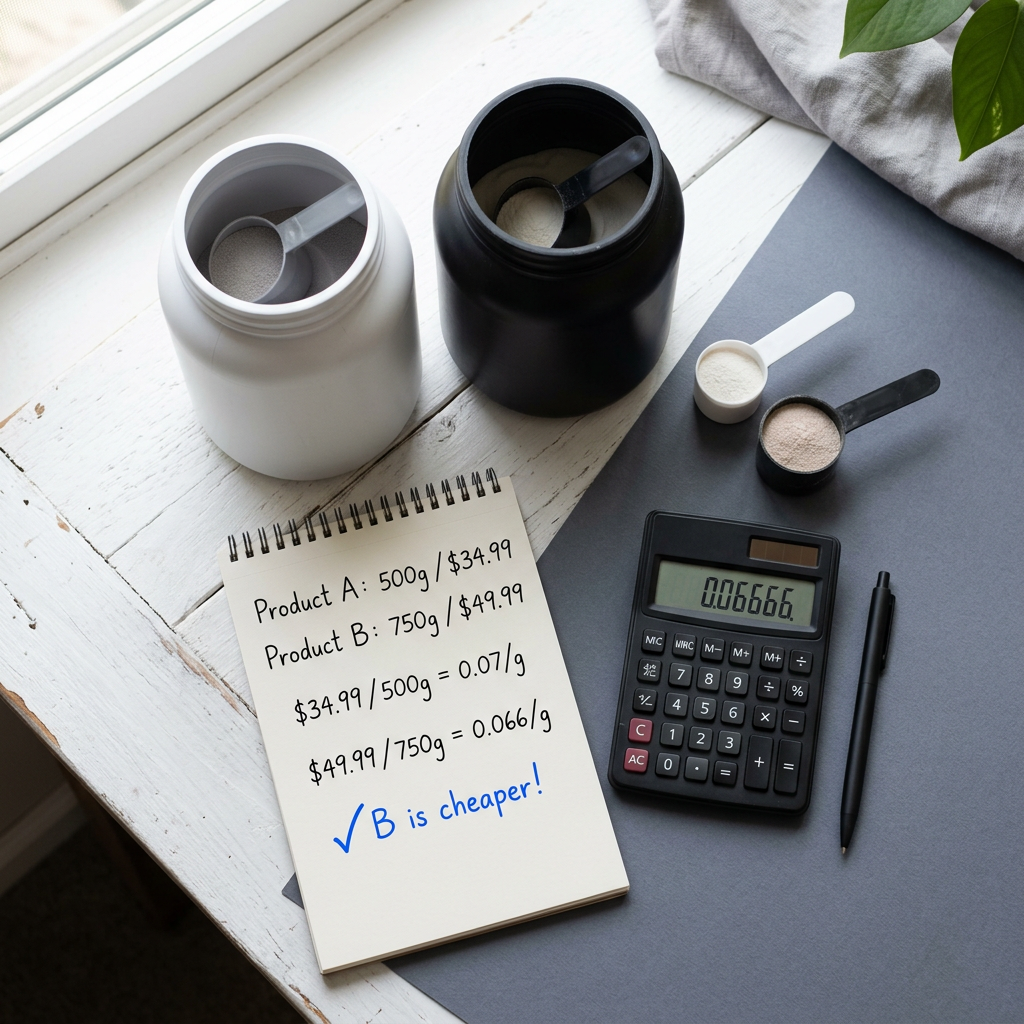
The right way to judge creatine Costco price is by cost per gram of actual creatine monohydrate, not by tub size or sale sticker. This is where many Canadian buyers make the wrong call.
Here is a practical comparison framework you can use whether you are shopping at Costco, a supplement chain, a pharmacy, or online:
| Buying factor | What to look for at Costco Canada | Why it matters |
|---|---|---|
| Form | Plain creatine monohydrate powder | Best-supported, most cost-effective form |
| Serving size | Ideally 3-5 g actual creatine per scoop | Makes daily dosing straightforward |
| Container size | Total grams of powder and servings | Lets you calculate cost per gram |
| Ingredient list | Minimal extras | Reduces filler cost and digestive issues |
| NPN | Visible on the label | Confirms Canadian natural health product licensing |
| Third-party testing | Look for certification or brand transparency | Helpful for purity and athlete reassurance |
| Return/convenience | Warehouse pickup, online shipping, Costco return policy | Part of real-world value, not just price |
Costco can win on value when it sells a large tub of plain monohydrate at a low cost per gram. Costco can lose on value when the product is:
- flavoured and padded with non-creatine ingredients
- underdosed per scoop
- capsules or gummies, which usually cost more per useful dose
- available only in oversized tubs that are inconvenient for first-time users
Many shoppers also overlook opportunity cost. If Costco has no stock today, driving to multiple warehouses is not free. For plenty of Canadians, a clearly priced online product with transparent testing and fast shipping is the better deal in practice. Compare local warehouse finds against resources like our creatine cost per gram guide, cheapest creatine in Canada, and where to buy creatine in Canada.
The bottom line is simple: costco creatine canada can be a bargain, but only if the actual formula is right. A low price on the wrong format is not a deal.
How to buy creatine at Costco Canada without guessing: a simple step-by-step checklist
If you want to buy creatine at Costco intelligently, use a repeatable five-minute process instead of impulse-buying the first tub you see. This helps whether you are a beginner or an experienced lifter.
- Search both Costco.ca and your local warehouse options. Online stock and warehouse stock are often different, so check both before making a special trip.
- Photograph the label. Capture the front, supplement facts or product facts panel, ingredient list, and NPN. This gives you time to compare later.
- Confirm the active ingredient. If the label says creatine monohydrate and little else, that is usually the strongest sign you are looking at a solid product.
- Check the dose per serving. Make sure one serving gives you a practical daily amount. Most people want an easy path to 3-5 g daily.
- Calculate cost per gram. Divide the price by total grams of creatine, not by number of scoops unless each scoop is pure creatine.
- Check quality cues. NPN, batch details, brand reputation, and any certification should all influence your decision.
- Decide whether bulk size suits your use. A huge tub can save money, but only if you will actually use it consistently before it sits around clumping in a damp cupboard.
For beginners, this is often the simplest decision tree:
- Yes: plain monohydrate, clear NPN, easy 5 g scoop, competitive cost per gram.
- Maybe: monohydrate with minor flavouring if the price is still good and you know you prefer flavoured products.
- No: proprietary blends, tiny low-dose servings, expensive gummies, or products making exaggerated claims.
If you are unsure how much you personally need, use our creatine dosage calculator or see how much creatine per day. If you want a broader market scan before buying, compare Costco finds against our creatine brand reviews and best type of creatine guide.
The best buyer's habit is to separate availability from value. A tub being physically present at Costco Canada does not automatically mean it is the best creatine supplement for you. Your goal is not just to find creatine. Your goal is to find the right creatine at the right price.
How much creatine should you take after you buy it? Dosing by goal and body weight
Once you buy creatine, the standard evidence-based maintenance dose for most adults is 3-5 g per day. That recommendation applies whether your product came from Costco Canada or anywhere else.
There are two proven ways to start:
- Loading option: about 20 g per day, split into 4 doses of 5 g, for 5-7 days, then 3-5 g per day after that.
- No-loading option: take 3-5 g per day from day one and expect full saturation in roughly 3-4 weeks.
The loading phase is not necessary, but it gets muscle creatine stores up faster. If you are prone to stomach upset, the no-loading approach is often easier.
Here is a practical dosing table:
| Body weight / goal | Simple daily dose | Best use case |
|---|---|---|
| Under 60 kg | 3 g/day | Smaller adults, maintenance, cautious beginners |
| 60-90 kg | 3-5 g/day | Most active adults |
| Over 90 kg | 5 g/day | Larger athletes, strength focus |
| Rapid saturation goal | 20 g/day for 5-7 days, then 3-5 g/day | People wanting faster onset |
If you prefer more body-weight-specific guidance, some protocols use about 0.3 g/kg/day during loading and around 0.03 g/kg/day for maintenance. In real life, most people do perfectly well with 3-5 g daily because it is simple and sustainable.
Examples:
- A 55 kg beginner who trains three times per week could take 3 g daily.
- A 75 kg recreational lifter could take 5 g daily for simplicity.
- A 100 kg power athlete could take 5 g daily, or use a loading phase if fast saturation matters.
If your Costco product uses a scoop smaller than 5 g, read the label carefully. Many users underdose simply because they assume one scoop always equals 5 g. For accurate measuring, see how to measure creatine, creatine maintenance dose, and creatine loading phase.
The most important dosing rule is this: the best dose is the one you will actually take daily for weeks. Creatine works through saturation, not sporadic use.
When to take Costco creatine, how to mix it, and what results to expect week by week
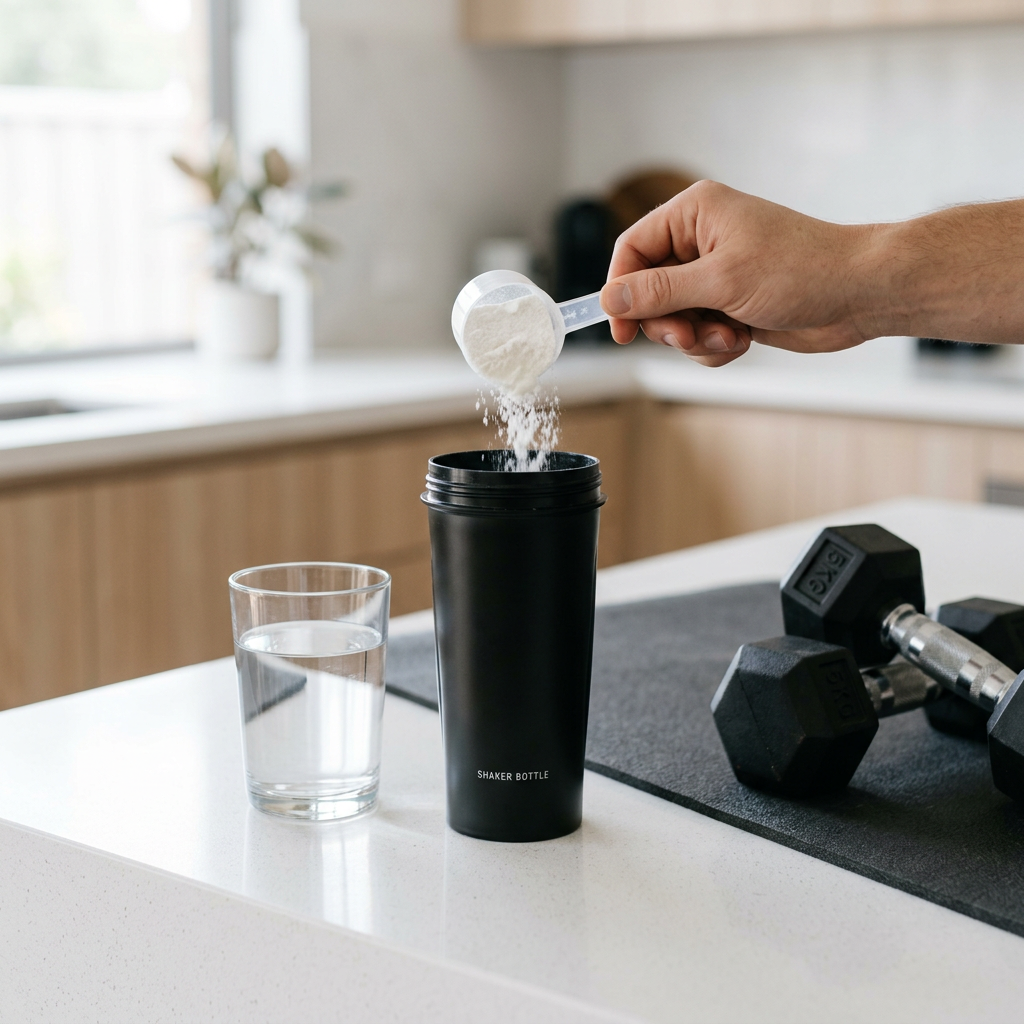
The best time to take creatine is whenever you will remember it every day, because consistent daily intake matters more than precise timing. That is the evidence-based answer for most people asking how to use a costco creatine supplement.
You can take creatine:
- before training
- after training
- with a meal
- on rest days at any convenient time
There is no strong reason for most users to obsess over pre- versus post-workout timing. Muscle saturation drives the benefit. If taking it with food makes it easier on your stomach or easier to remember, that is a sensible choice. For a deeper look, see when to take creatine and with or without food.
How to mix it:
- Measure your dose accurately.
- Mix it in water, a protein shake, juice, or another non-alcoholic drink.
- Stir or shake well. Warm liquid can improve dissolving, though it is not required.
- Drink it soon after mixing for convenience and consistency.
Micronized powders often feel less gritty, but regular monohydrate works too. If your Costco powder clumps slightly, that usually reflects moisture exposure rather than a loss of effectiveness. Store it cool and dry with the lid tightly closed.
What to expect:
- Week 1 with loading: some people notice improved gym performance and a small increase in scale weight from intracellular water.
- Weeks 2-4 without loading: muscle stores gradually rise; workouts may start to feel stronger or more repeatable.
- Weeks 4-8: the main benefit is often better training quality, not a dramatic feeling from the supplement itself.
- Weeks 8-12: if training and nutrition are in place, many users notice stronger lifts, slightly better work capacity, and fuller muscles.
How do you tell if it is working? Look for better repeat performance, slightly improved strength progression, and sometimes modest early water-weight gain that is inside the muscle rather than body fat. If you want more detail, read how long creatine takes to work, does creatine build muscle, and realistic creatine results.
Who Costco creatine is for: beginners, women, older adults, and athletes
Creatine is appropriate for many healthy adults, and a good Costco product can work just as well for beginners, women, older adults, and athletes as a more expensive alternative. The key is matching the supplement format to the person, not assuming one warehouse tub suits everyone.
Beginners: creatine is one of the few supplements worth considering early because the evidence base is strong, the mechanism is clear, and the daily protocol is simple. A plain monohydrate powder is usually the best place to start. If you are brand new, see creatine for beginners.
Women: women do not need a special pink-labelled formula. The same creatine monohydrate works, and the same 3-5 g daily range applies for most. Creatine does not make women bulky by itself; it supports training quality and lean mass accrual over time. See creatine for women.
Older adults: creatine can be especially useful when paired with resistance training because preserving or improving lean mass and strength matters more with age. It is not a magic anti-aging powder, but it is one of the better-supported supplements in this area. See creatine for older adults.
Athletes in explosive sports: the strongest case for creatine is in repeated high-intensity efforts such as lifting, sprinting, hockey, football, rowing starts, or team-sport accelerations. The International Olympic Committee consensus on supplements recognises a role for a small group of performance supplements with good evidence, and creatine belongs in that conversation. See IOC consensus on dietary supplements.
Vegetarians and vegans: people who eat little or no meat may respond particularly well because baseline creatine stores can be lower. If that applies to you, a basic monohydrate tub from Costco Canada may be all you need. See creatine for vegetarians and is creatine vegan.
Who should pause and ask a clinician first? People with known kidney disease, significant medical conditions, pregnancy or breastfeeding considerations, or medication questions should get personalised advice. For the broader safety picture, read is creatine safe and who should not take creatine.
The main takeaway is that a well-chosen Costco creatine product can suit many Canadians. The best fit depends less on your gender or training status than on purity, dosing accuracy, and whether you will use it consistently.
Safety, side effects, and Canadian label checks: what to know before you toss a tub in the cart
Creatine monohydrate is generally considered safe for healthy people when used at recommended doses, but you should still read the label carefully and buy with your eyes open. That is especially important when shopping at a general retailer like Costco Canada rather than a specialist supplement store.
The 2017 ISSN position stand and the 2021 JISSN misconceptions review both support the safety profile of creatine monohydrate in healthy populations at standard supplemental intakes. The common side effects are usually practical rather than dangerous:
- Water-weight gain: often a small early increase from more water being stored in muscle.
- Digestive upset: more likely with large single doses, poor mixing, or loading too aggressively.
- Temporary bloating sensations: often dose-related and manageable.
Most side effects improve if you:
- switch from loading to a straight 3-5 g daily dose
- split larger doses into smaller servings
- take creatine with food
- mix it thoroughly
A very common confusion involves creatinine, a breakdown product measured on blood tests. Creatine supplementation can affect creatinine readings without meaning the kidneys are being harmed in a healthy person. That is one reason medical context matters. If you want the full explanation, see creatine vs creatinine and is creatine bad for your kidneys.
For Canadian buyers, label checks matter:
- NPN: look for a Natural Product Number.
- Directions: ensure the stated dose is practical and clear.
- Non-medicinal ingredients: know what else is in the product.
- Warnings: read age, pregnancy, medication, and medical-condition cautions.
- Lot and expiry information: basic quality transparency matters.
If you are a tested athlete, add one more filter: seek products with reputable third-party testing where possible. Costco may or may not carry the ideal option for that niche need.
The practical bottom line is that creatine is one of the better-supported and safer sports supplements for healthy adults, but the safest Costco purchase is still the simplest one: plain monohydrate, clear Canadian labelling, and a dose you can tolerate daily.
Costco creatine myths and shopping mistakes: what buyers get wrong most often
The biggest mistakes people make with creatine at Costco Canada are buying the wrong format, taking the wrong dose, or expecting the wrong kind of result. Most creatine frustration comes from those three errors, not from creatine itself.
Myth 1: The most expensive or most advanced-looking creatine must be better.
False. Creatine monohydrate remains the reference standard because it is the most studied and usually the most cost-effective. Fancy forms often rely more on marketing than stronger evidence.
Myth 2: You need a pre-workout blend for creatine to work.
False. Creatine works perfectly well on its own. If Costco stocks a hybrid product, that does not automatically make it superior to plain monohydrate.
Myth 3: Creatine is a steroid.
False. Creatine is not an anabolic steroid and does not work through steroid-like hormonal mechanisms. It supports cellular energy availability. See is creatine a steroid.
Myth 4: Creatine causes fat gain.
False. Early weight gain is usually water stored in muscle, not body fat. If your scale moves up, that does not mean the supplement made you fatter. See does creatine make you gain weight.
Myth 5: If you miss a day, the whole cycle is ruined.
False. Creatine works by maintaining elevated stores over time. Missing one day is not ideal, but it is not a disaster. See what happens if you miss a day.
Now the most common shopping mistakes:
- judging value by tub size instead of cost per gram
- not checking whether one scoop actually equals a full daily dose
- buying gummies or capsules without realising how expensive the effective dose becomes
- assuming any Canadian retailer product is automatically third-party tested
- loading with huge single doses and then blaming creatine for stomach issues
If you want a compact myth-busting refresher, see creatine myths debunked and common creatine mistakes. For most Costco shoppers, the smartest move is boring on purpose: plain monohydrate, sensible dose, daily consistency, and no belief in miracle claims.
Bottom line: is Costco Canada a good place to buy creatine?
Yes, Costco Canada can be a good place to buy creatine, but only when the exact product is plain creatine monohydrate, properly labelled for Canada, and competitively priced per gram. That is the clearest answer to costco creatine canada and creatine costco price questions.
If you find a straightforward monohydrate tub with an NPN, an easy 3-5 g serving, and a low cost per gram, Costco is absolutely worth considering. If what you find is a flavoured blend, expensive alternative format, or a product with unclear quality signals, then Costco is merely convenient, not necessarily best.
Here is the decision in one quick framework:
- Buy it: pure monohydrate, fair price per gram, compliant label, good brand reputation.
- Compare first: if the formula includes extras or the serving size is unclear.
- Skip it: if the price premium comes mostly from format, flavour, or marketing claims.
Remember what actually drives results:
- taking the right form, which is usually monohydrate
- dosing it consistently at 3-5 g daily
- training hard enough for creatine to matter
- giving it time to work through muscle saturation
For the average Canadian shopper, Costco is best thought of as a possible value source, not a guaranteed best source. The winning move is to compare any warehouse find against specialist options, especially if you care about athlete testing, smaller tubs, or highly transparent sourcing.
Next steps:
- Use the creatine dosage calculator to set your daily dose.
- Compare options in the creatine product catalog.
- Review the best creatine rankings before buying.
- Read best creatine monohydrate in Canada if you want the strongest buyer's shortlist.
If you keep the buying process simple, creatine at Costco Canada can be a smart, practical purchase. Just do not confuse warehouse convenience with automatic product quality.
Costco Canada Creatine: The Numbers That Actually Matter
- 3-5 g/day Standard maintenance dose — Appropriate for most healthy active adults using creatine monohydrate.
- 20 g/day Typical loading dose — Usually split into 4 x 5 g servings for 5-7 days.
- 5-7 days Fast saturation timeline — Expected when using a standard loading phase.
- 3-4 weeks No-loading saturation timeline — Typical timeframe when taking 3-5 g daily from day one.
Frequently Asked Questions
Does Costco Canada sell creatine?
Yes, Costco Canada sometimes sells creatine, but availability is inconsistent across warehouses and Costco.ca. The exact brand, size, and format can change, so the best approach is to check both online listings and your local store rather than assuming it is always in stock.
What kind of creatine should I buy at Costco Canada?
The best kind of creatine to buy at Costco Canada is plain creatine monohydrate powder. It is the most studied form, usually the cheapest per effective dose, and easier to use properly than blends, gummies, or capsules.
Is Costco creatine a good deal?
Costco creatine can be a good deal if the product is pure monohydrate and the cost per gram is low. A large tub is not automatically better value, because flavoured formulas, low-dose scoops, and alternative formats often make the real price per useful serving worse.
How do I compare creatine Costco price properly?
Compare creatine Costco price by dividing the total price by the total grams of actual creatine in the container. This gives you cost per gram, which is a far better metric than tub size, scoop count, or promotional pricing.
Is creatine monohydrate at Costco Canada as effective as expensive brands?
Yes, creatine monohydrate at Costco Canada can be just as effective as expensive brands if it is a legitimate, properly dosed, quality product. Creatine's benefits come from the compound itself, not from premium branding, as long as purity and label accuracy are solid.
How much Costco creatine should I take per day?
Most people should take 3-5 g of creatine per day after buying it from Costco or anywhere else. If you want faster saturation, a common loading approach is 20 g per day split into four 5 g servings for 5-7 days, then 3-5 g daily.
When should I take creatine from Costco Canada?
You should take creatine whenever you are most likely to remember it daily. Timing matters less than consistency, so before workouts, after workouts, or with a meal are all reasonable options if they help you stick to the habit.
Is creatine available at Costco Canada online or only in store?
Creatine may be available at Costco Canada online, in store, or both, depending on the product and current inventory. Costco often carries different supplement assortments online versus in warehouses, so checking both channels gives you the best chance of finding it.
Should I look for an NPN on Costco creatine in Canada?
Yes, in Canada you should look for an NPN on creatine products whenever possible. An NPN, or Natural Product Number, indicates the product is licensed for sale by Health Canada and is an important trust signal for Canadian supplement buyers.
What if Costco Canada does not have creatine in stock?
If Costco Canada does not have creatine in stock, compare specialist Canadian supplement retailers and reputable online options. In many cases, a clearly labelled monohydrate product with transparent testing and competitive shipping can be a better buy than waiting for warehouse stock to return.