Creatine as a Nootropic: What the Evidence Says
By The Creatine Canada Research Team — Evidence-based supplement analysts
Creatine can qualify as a nootropic, but only in a specific, evidence-based sense: it is a creatine brain supplement that may support mental energy, focus, and some cognitive tasks by helping the brain recycle ATP more efficiently. The evidence is strongest under stressors like sleep deprivation, mentally fatiguing work, and in people with lower baseline creatine stores, while benefits in young, well-rested omnivores are smaller and less consistent.
Evidence-based · Cites 4 sources · Editorial standards
Key Takeaways
- Yes, creatine is a nootropic if you define a nootropic as a compound that supports cognition without acting like a classic stimulant.
- Creatine nootropic effects are most plausible through brain energy support, not through a buzz, mood spike, or instant focus hit.
- The most studied form is creatine monohydrate, and brain-focused studies typically use 3-10 g/day taken consistently for weeks.
- Evidence is strongest for sleep-deprived people, vegetarians and vegans, older adults, and mentally demanding conditions.
- Young, rested omnivores may still benefit, but creatine cognitive benefits are usually smaller and less reliable in that group.
- Creatine is not a substitute for sleep, good nutrition, or caffeine when you need immediate alertness.
- If you want the best nootropic creatine, choose a plain monohydrate with clear dosing, good testing, and Canadian-compliant labelling.
Is creatine a nootropic? Yes — but not in the way most people mean it
Yes, creatine is a nootropic if you use the term accurately: it supports brain energy and some aspects of cognition, but it is not a fast-acting stimulant or a miracle focus drug. That distinction matters because many people searching for a creatine nootropic expect something that feels like caffeine, nicotine, or a high-stim pre-workout. Creatine does not work like that.
A nootropic is generally understood as a compound that supports cognitive performance with a relatively favourable safety profile and without the trade-offs typical of harsher stimulants. By that standard, creatine fits reasonably well. It is a naturally occurring compound made from amino acids, stored mostly in muscle but also in the brain, where it helps regenerate ATP, the cell’s immediate energy currency. If you want the full beginner background, see what creatine is and what it does.
The key point is that creatine for focus is mostly an energy availability story, not a neurotransmitter manipulation story. It does not directly force wakefulness, sharply increase dopamine, or produce an obvious acute sensation. Instead, it may help the brain cope better when energy demand is high or supply is challenged. That is why the evidence is strongest in situations like sleep deprivation, mentally fatiguing tasks, and populations with lower baseline creatine stores.
The 2017 ISSN position stand concluded that creatine monohydrate is the most effective ergogenic nutritional supplement currently available for increasing high-intensity exercise capacity and lean mass, and that same broad safety and mechanistic foundation is part of why creatine has also attracted interest as a brain supplement. The newer cognition-specific interest is real, but it is still more nuanced than the muscle data. For a deeper dedicated review of memory and cognition outcomes, we recommend our guide to creatine and cognition and our brain benefits page.
Market-research and industry estimates also show why this topic is trending: creatine is increasingly being evaluated beyond sport, with consumers actively looking at it as a creatine brain supplement rather than only a gym product. That consumer trend should not be confused with clinical proof, but it does reflect a real shift in how creatine is being used and discussed in 2026.
How a creatine nootropic works: modestly raising brain creatine to support ATP recycling
Creatine works as a nootropic by helping the brain buffer and recycle energy, specifically through the phosphocreatine system that helps regenerate ATP during periods of high demand. Phosphocreatine is the stored, high-energy form of creatine that can rapidly donate a phosphate group to help rebuild ATP, the molecule cells use for immediate energy.
This mechanism is well established in muscle, but it also exists in brain tissue. The brain has enormous energy demands despite its relatively small size, and neurons are especially sensitive to shortfalls in rapid energy availability. Supplementing with creatine appears to raise brain creatine stores modestly, not dramatically. That is an important nuance. Muscle stores generally respond more robustly than brain stores, which is one reason the cognitive effects are less predictable than the performance effects in the gym.
Why would modest increases matter? Because even small improvements in energy buffering can become meaningful when the brain is under strain. Examples include:
- sleep loss, which increases perceived effort and impairs executive function
- prolonged mental work, which taxes attention and working memory
- low dietary creatine intake, as seen in many vegetarians and vegans
- aging-related changes that may reduce physiological reserve
Creatine is therefore best viewed as a resilience supplement for cognition. It may help maintain performance when the system is challenged more than it may elevate performance when everything is already ideal. That is why asking “is creatine a nootropic?” has a conditional answer: yes, but mainly in contexts where extra cellular energy support can actually matter.
The evidence base also supports another practical point: the best-supported form is still monohydrate. The ISSN position stand and the 2021 review on common questions and misconceptions both reinforce that creatine monohydrate remains the most studied, most reliable, and most cost-effective form. If you are comparing fancy brain-marketed formulas, start with plain monohydrate before paying for novelty. Our best creatine rankings and creatine brand reviews can help narrow options.
For a practical side note, if you are also using caffeine, the current evidence does not support the simplistic claim that they “cancel each other out”; they work through different mechanisms, and you can read more in our guide to creatine and caffeine.
Where creatine cognitive benefits are most believable — and where they are not
The strongest case for creatine cognitive benefits is in sleep deprivation, mentally fatiguing tasks, vegetarians and vegans, and older adults; the weakest case is in young, well-rested omnivores doing easy tasks. This is the fairest summary of the evidence as of 2026.
Why these groups and situations? Because creatine is more likely to help when baseline stores are lower or when the brain’s energy demand is higher. Vegetarians and vegans typically consume little or no dietary creatine because creatine is found mainly in animal foods, so they may have more room to benefit. Older adults may also be more responsive in some settings because energy metabolism and cognitive reserve can become more fragile with age.
Sleep deprivation is one of the most promising use cases. When people are short on sleep, attention, reaction time, working memory, and mental resilience often drop. In that context, a supplement that supports ATP buffering has a plausible role. Similarly, during long study sessions, shift work, travel, exams, overnight competition, or cognitively demanding work under fatigue, creatine may be more useful than it is on a normal, well-rested day.
By contrast, if you are a young, healthy omnivore sleeping well and eating enough calories and protein, creatine for focus may produce little that you can clearly feel. That does not mean it does nothing; it means the effect size is likely smaller, task-dependent, and often not subjectively dramatic. This is one reason user reports are so mixed.
A sensible interpretation is:
- Best-supported: fatigue resistance for the brain, especially under strain
- Reasonably plausible: support for working memory, mental processing, or task persistence in some people
- Less convincing: a universal boost in day-to-day focus for everyone
- Not supported: instant “limitless pill” effects
If you want a broader treatment of cognition outcomes rather than the nootropic angle specifically, see Creatine and the Brain: Memory, Focus, and Mental Energy. If you are plant-based, our guide for vegetarians is especially relevant because that group has one of the clearest rationales for supplementation.
Put simply, the question is not only “does creatine help the brain?” but “who is most likely to notice?” The answer is usually people who are stressed, depleted, under-recovered, aging, or starting from lower creatine intake.
Best nootropic creatine: why monohydrate still beats brain-branded alternatives
The best nootropic creatine for almost everyone is plain creatine monohydrate because it has the best evidence, the most predictable dosing, and usually the best value. This is not the flashy answer, but it is the correct one.
Many products now market themselves as premium brain creatine, neuro creatine, or next-generation nootropic creatine. Most of the time, the sales angle is stronger than the evidence. If the active ingredient is still creatine, the burden of proof is on the seller to show that its form works better than monohydrate for cognition, absorption, or tolerability. Right now, that burden has not been met convincingly.
| Option | Best use case | Evidence for cognition | Practical verdict |
|---|---|---|---|
| Creatine monohydrate | Almost everyone | Best overall evidence base | First choice for a creatine nootropic |
| Micronized monohydrate | People who want easier mixing | Same active ingredient as monohydrate | Fine if price is reasonable |
| Capsules | Travel or convenience | Depends on total daily creatine dose | Works, but often costs more per gram |
| Gummies | Taste and convenience | Limited product-specific validation | Can work if dosing is adequate, often expensive |
| HCl, buffered, ethyl ester, nitrate | Niche marketing claims | No clear cognition advantage over monohydrate | Usually not worth the premium |
In Canada, also look for practical quality signals:
- a clear ingredient panel showing actual grams of creatine per serving
- a Natural Product Number, or NPN, where applicable under Canadian supplement rules
- third-party testing or transparent quality-control information
- minimal unnecessary add-ins if your goal is dosing precision
If you want help shopping, browse our creatine product catalog, guide to the best creatine monohydrate in Canada, and Canadian supplement regulations guide. The short version is that the “best” creatine nootropic is not the one with the smartest branding; it is the one that reliably delivers the right daily dose of monohydrate over time.
That matters because consistency is what moves brain creatine stores. A more expensive form that you under-dose or stop using is less useful than a simple monohydrate you take every day.
How to take creatine for focus and mental performance, step by step
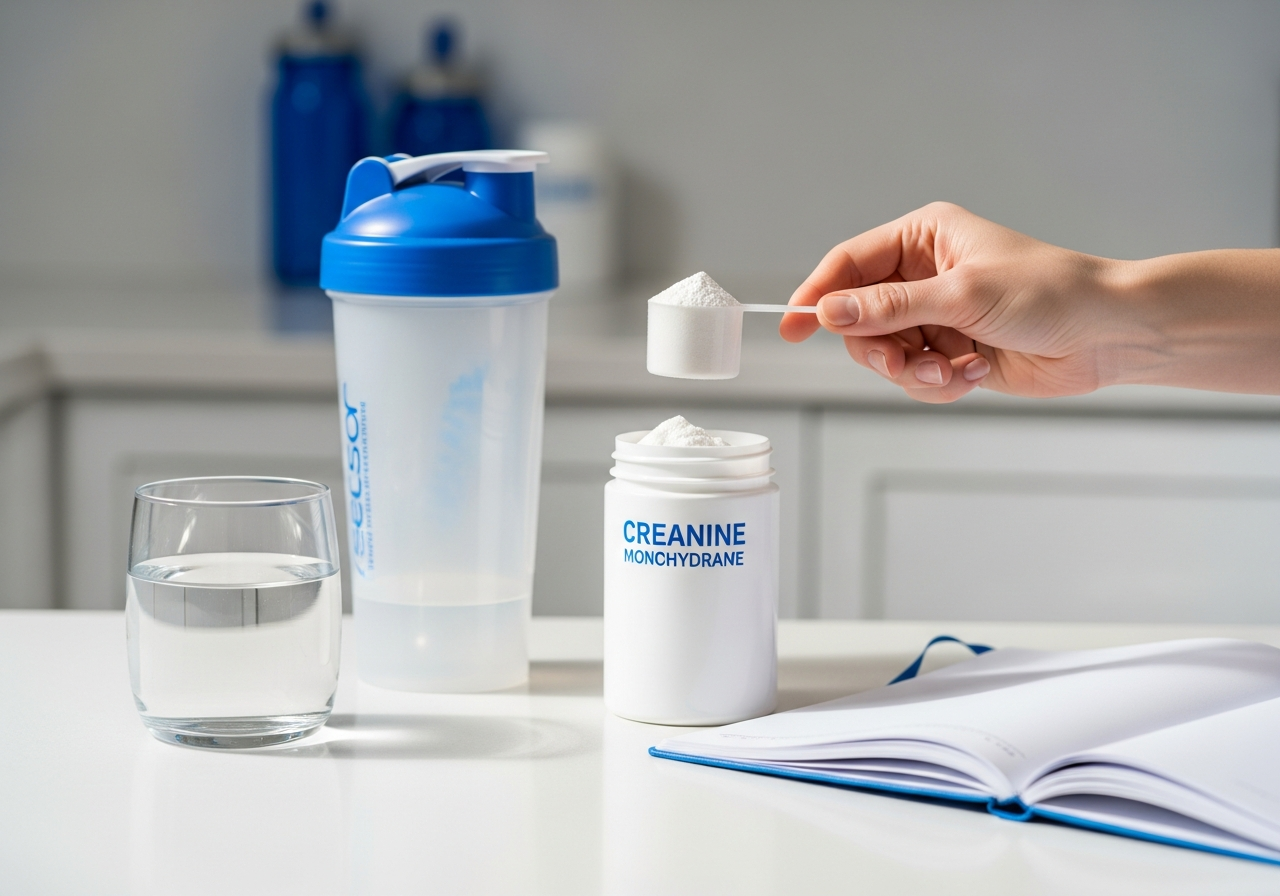
If you want to use creatine for focus, the best method is simple: take creatine monohydrate daily, hit the full dose consistently, and give it several weeks before judging the result. Unlike caffeine, creatine is not mainly about perfect same-day timing.
- Pick a form you can stick with. Plain monohydrate powder is usually the easiest and cheapest. Capsules are fine if convenience matters more than cost.
- Choose your daily dose. Most people can start with 3-5 g/day. Many brain-focused studies use 3-10 g/day depending on the context and population.
- Decide whether to load. A loading phase of about 20 g/day split into 4 doses for 5-7 days can saturate stores faster, but it is optional. For many people using creatine as a nootropic, steady daily intake is simpler and easier on the stomach. Learn more in our loading guide.
- Take it every day. Training day or rest day does not matter much for brain purposes. Daily consistency does.
- Mix it in whatever helps adherence. Water, a shake, or with a meal are all fine. See how to take creatine and mixing tips.
- Track the right outcomes. Look for better task endurance, fewer concentration drop-offs, better late-day mental resilience, or less decline under poor sleep. Do not expect a stimulant-like sensation.
- Reassess after 3-6 weeks. This is a more realistic trial window than judging after two doses.
What should you expect week by week?
- Days 1-7: usually no dramatic mental effect unless you load and are especially responsive.
- Weeks 2-4: some users notice better consistency in mentally demanding work, especially if sleep or diet are imperfect.
- Weeks 4-8: this is a fair window to decide whether creatine cognitive benefits are meaningful for you.
If you want precision, use our creatine dosage calculator and the detailed dose guide at how much creatine per day. If you miss a day, do not panic or double up aggressively the next day; just resume your normal dose. For most people, the nootropic use case is a long game of saturation and consistency, not acute timing tricks.
Creatine nootropic dosing: exact amounts by goal, body weight, and situation
For a creatine nootropic, 3-5 g/day is the standard starting range, while some brain-oriented protocols use 5-10 g/day when the goal is cognitive support under higher demand or in higher-need groups. The goal is not to mega-dose; the goal is to reach and maintain useful tissue saturation safely and consistently.
Here is a practical framework:
| Body weight / situation | Conservative daily dose | Common practical dose | When to consider the higher end |
|---|---|---|---|
| Under 60 kg | 3 g/day | 3-5 g/day | Plant-based diet, older age, heavy mental demand |
| 60-90 kg | 3 g/day | 5 g/day | Sleep loss, vegetarian or vegan, larger training load |
| Over 90 kg | 5 g/day | 5-7 g/day | Large body size or if using evidence-informed higher-end protocols |
| Short loading option | Not required | 20 g/day split into 4 doses for 5-7 days | Only if you want faster saturation |
| Brain-focused higher range | Only when appropriate | 5-10 g/day | Use judgment and prioritise tolerance |
Examples:
- 55 kg student on a vegan diet: start at 3 g/day for 2 weeks, then consider 5 g/day if tolerated and desired.
- 75 kg office worker wanting better resilience during long days: 5 g/day is a sensible default.
- 95 kg shift worker combining gym training with overnight schedules: 5 g/day is reasonable, with some choosing 7 g/day based on size and context.
Two cautions matter. First, more is not automatically better. Once stores are adequately supported, extra powder does not guarantee extra cognitive benefit. Second, high single doses are more likely to cause stomach upset than divided doses. If 5 g at once bothers you, try 2.5 g twice daily.
For body-weight-specific help, use the dosage calculator or read maintenance dose guidance. If you get digestive issues, our guide on creatine digestive side effects can help you fix them without abandoning supplementation.
The take-home message is simple: start in the proven range, scale thoughtfully, and let consistency do the work.
Creatine vs caffeine and common nootropic stacks: what each does better
Creatine is better for steady brain-energy support over time, while caffeine is better for immediate alertness, and the two can complement each other because they solve different problems. This is the clearest way to compare them.
If you need to be awake and sharper in the next 30 minutes, caffeine is the stronger tool. It works acutely through adenosine receptor antagonism, which reduces perceived fatigue and increases alertness. Creatine does not do that. If you need better resilience to repeated mental or physical demand across days and weeks, creatine is the more foundational supplement.
A quick comparison:
- Creatine: gradual, saturation-based, supports ATP buffering, no stimulant feel
- Caffeine: acute, noticeable, boosts alertness, can impair sleep or cause jitters
- Creatine + caffeine: useful for people who want both long-term support and same-day sharpness
This is why creatine for focus can feel underwhelming if you are expecting a caffeine-like hit. Creatine is more like “less drop-off under demand” than “instant laser focus.”
What about common stacks?
- With coffee: generally fine for most people. See can you mix creatine with coffee.
- With protein powder: totally fine and often convenient. See mixing creatine with protein.
- With pre-workout: fine if the total daily dose is clear and you tolerate the stimulants.
- With other nootropics: possible, but the value depends on the other ingredient’s evidence quality.
The important principle is to avoid overdosing accidentally when a “brain blend” hides a tiny creatine amount behind a proprietary formula. If the label does not tell you how many grams of creatine you are getting, it is not a serious creatine product.
For timing, daily adherence matters more than the clock. You can take creatine morning, afternoon, post-workout, or with a meal. If you want the full timing breakdown, read when to take creatine and with or without food. For a nootropic use case, choose the time you are most likely to remember every day.
Who should consider creatine as a brain supplement — beginners, women, older adults, and athletes
Creatine as a brain supplement makes the most sense for people who want a safe, non-stimulant foundation for mental energy support, especially if they are plant-based, older, sleep-stressed, or also training hard. It can still be useful for beginners, but the expectations should be realistic.
Beginners: Creatine is one of the simplest supplements to use because the basic plan is just daily dosing. If you are new, start with monohydrate and avoid overcomplicating the process. Our beginner guide covers the essentials.
Women: Women can use the same evidence-based creatine approach as men. The idea that creatine is only for bulking or that it is somehow “too intense” for women is a myth. For broader context, see our guide to creatine for women.
Older adults: Older adults are one of the more interesting groups for creatine because it may support not only training capacity and muscle function but also aspects of brain energy resilience. This is one of the more credible nootropic-adjacent use cases. See creatine for older adults.
Vegetarians and vegans: This may be the clearest group to consider supplementation because habitual dietary creatine intake is lower. If you eat little or no meat or fish, you may have more room to benefit cognitively as well as physically.
Athletes and high-output workers: Creatine can be especially appealing when both the brain and body are under regular strain, such as in team sports, shift work, exams, tactical professions, travel-heavy schedules, or combined physical and mental workloads.
Who may notice less? Healthy young omnivores who already sleep well, eat enough, manage stress well, and are looking for a dramatic acute focus effect. In that case, creatine may still be worth using for training and general supplementation, but it may not become your favourite “brain” product.
Put differently, creatine is not just for bodybuilders. It is best thought of as a broad human-performance supplement whose cognitive upside appears most relevant when energy demand is high, reserve is lower, or baseline intake is low.
Safety, side effects, and myths: what a creatine nootropic does not do
Creatine is one of the most researched sports supplements available, and for healthy people using recommended doses, the evidence supports a strong safety profile; most problems come from myths, poor dosing habits, or confusion with unrelated issues.
The ISSN position stand and the 2021 JISSN misconceptions review both support the general safety of creatine monohydrate in healthy populations when used appropriately. The common side effects are usually practical rather than dangerous:
- Stomach upset: more likely with large single doses or poor mixing
- Water retention: often intracellular, especially early on, and not the same as gaining fat
- Temporary scale increase: common in some users because creatine draws water into tissues
Common myths to reject:
- “Creatine damages healthy kidneys.” This is not supported in healthy individuals using recommended doses, though people with known kidney disease should speak with a clinician first. See our kidney guide.
- “Creatine dehydrates you.” This is a persistent myth, not a consensus finding. Normal hydration habits are usually sufficient. See creatine and dehydration.
- “Creatine causes hair loss.” The evidence does not support a clear causal claim. See our hair-loss review.
- “You need to cycle it.” Most people do not need on-off cycling. See cycling guidance.
- “If I don’t feel it, it isn’t working.” False for a creatine nootropic, because the effect is often subtle and context-dependent.
Who should be more cautious? People with significant kidney disease, those under active medical management for major health conditions, people who are pregnant or breastfeeding, and anyone who has been told to restrict supplements should ask a qualified clinician first. Healthy users can find a deeper review at is creatine safe.
One useful myth correction for nootropic shoppers is this: creatine does not need a flashy “brain matrix” to be legitimate. A boring tub of monohydrate with accurate dosing is often the more evidence-based choice.
Why the creatine nootropic trend is exploding — and how to buy smart in Canada
The creatine nootropic trend is growing because consumers increasingly want one supplement that supports both training and cognition, but the market trend is moving faster than the evidence, so buying discipline matters. Editor-verified market context for this page shows a clear 2026 angle: creatine is now being actively evaluated as a nootropic rather than only as a gym supplement. That trend is commercially important, but it should not be mistaken for proof that every “brain creatine” product is superior or even well formulated.
The same market context also highlights the specific scientific angle that matters most: brain creatine stores can be raised with supplementation, but only modestly, and the strongest evidence sits in sleep deprivation, mentally fatiguing tasks, vegetarians and vegans, and older adults. In other words, the best marketing message is not always the best scientific message.
When buying in Canada, use a simple checklist:
- Look for monohydrate first. Fancy forms rarely beat the standard.
- Check the actual dose in grams. Brain blends often under-dose creatine.
- Look for Canadian-compliant labelling. An NPN, or Natural Product Number, is one useful quality signal under Health Canada’s framework where applicable.
- Prefer transparent brands. Third-party testing, purity statements, and plain labels beat vague neuro-marketing.
- Choose a format you will use consistently. Powder usually wins on value, while capsules and gummies win on convenience.
If you want shopping help, see where to buy creatine in Canada, buying online in Canada, and the clean-label creatine trend. If you want the simplest shortlist, our rankings and brand reviews are good starting points.
The smart consumer takeaway is this: the best nootropic creatine is usually not the one with the most futuristic brain claims. It is the one that gives you well-dosed creatine monohydrate, good quality control, and a format you will actually take for weeks.
Bottom line: should you use creatine as a nootropic?
Yes, creatine is a credible nootropic option if your goal is better mental energy support and cognitive resilience, especially under fatigue or if your baseline creatine intake is low; no, it is not the best choice if you want an immediate stimulant-like boost.
That balanced answer is the right one for most readers. Creatine nootropic use makes sense because the mechanism is plausible, the safety profile is strong, and there are real scenarios where cognitive benefits show up most clearly. The best-supported use cases are sleep deprivation, mentally demanding work, plant-based diets, older age, and combined physical-plus-mental stress.
At the same time, honesty matters. Evidence in young, rested omnivores is mixed and often less impressive. The brain store increase from supplementation is modest. The effects are not dramatic for everyone. And the supplement works slowly, which means many users expecting an acute productivity hit will misjudge it.
If you want to try it, keep the protocol simple:
- Choose creatine monohydrate.
- Take 3-5 g/day, or scale thoughtfully within evidence-informed ranges.
- Stay consistent for at least 3-6 weeks.
- Judge it by task endurance and fatigue resistance, not by whether you “feel” it instantly.
That is the evidence-based approach to using creatine for focus and cognitive support. If you want to go deeper on the broader science, continue with our cognition guide, brain benefits overview, and how long creatine takes to work.
For most people, the verdict is straightforward: creatine is a legitimate, low-drama, high-upside supplement that can qualify as a nootropic, provided your expectations match what the evidence actually supports.
Creatine as a Nootropic: The Practical Numbers
- 3-5 g/day Standard daily creatine nootropic dose — Best starting range for most healthy adults using creatine monohydrate.
- 3-10 g/day Range commonly used in brain-focused studies — Used across different cognitive contexts and populations, with consistency over weeks mattering most.
- 5-7 days Typical loading-phase length — About 20 g/day split into 4 doses can saturate stores faster, but loading is optional.
- 2026 Year the creatine nootropic trend is clearly mainstream — Market-research and industry estimates show consumers increasingly evaluate creatine as a brain supplement, not only a gym supplement.
Frequently Asked Questions
Is creatine a nootropic or just a sports supplement?
Creatine is both a sports supplement and a plausible nootropic. It is best known for muscle and performance benefits, but it also supports brain energy metabolism through the phosphocreatine system, which is why it may help cognition in some situations, especially fatigue, sleep loss, or lower baseline creatine intake.
Does creatine help with focus?
Creatine can help with focus, but usually in an indirect and less dramatic way than caffeine. It may improve mental energy availability and reduce cognitive drop-off during long, tiring, or sleep-deprived tasks, while everyday focus benefits in well-rested young adults are often smaller and less noticeable.
What is the best nootropic creatine?
The best nootropic creatine for most people is plain creatine monohydrate. It has the strongest evidence, the clearest dosing, the best value, and no alternative form has convincingly shown better cognitive results than monohydrate.
How much creatine should I take for cognitive benefits?
A practical starting dose for cognitive benefits is 3-5 g/day of creatine monohydrate. Some brain-focused studies use 5-10 g/day, but higher doses are not automatically better, and consistency over several weeks matters more than chasing large acute doses.
How long does creatine take to work for the brain?
Creatine usually takes weeks, not hours, to show brain-related benefits. Some people may notice changes earlier, especially if they load or start with low creatine stores, but a fair trial for cognitive effects is usually about 3-6 weeks of consistent daily use.
Is creatine better than caffeine for mental performance?
Creatine is not better than caffeine for immediate alertness, but it may be better for longer-term brain-energy support. Caffeine works acutely and feels stronger right away, while creatine builds up gradually and may help resilience under fatigue rather than providing a sharp stimulant effect.
Do vegetarians and vegans respond better to creatine as a brain supplement?
Vegetarians and vegans may respond better because they usually consume little or no dietary creatine from food. Lower baseline intake can leave more room for supplementation to raise stores, which is one reason cognitive and performance benefits may be more noticeable in plant-based users.
Can I take creatine with coffee or other nootropics?
Yes, most people can take creatine with coffee or other nootropics, provided the stack is sensible and the label is transparent. Creatine and caffeine work through different mechanisms, so the main issue is not a conflict but making sure you still get an effective full daily creatine dose.
Is creatine safe to take every day for brain health?
For healthy adults using recommended doses, daily creatine is generally considered safe based on a large research base. People with kidney disease, major medical conditions, pregnancy, breastfeeding, or clinician-directed dietary restrictions should get individual medical advice first.
Who is most likely to notice creatine cognitive benefits?
People most likely to notice creatine cognitive benefits include those who are sleep-deprived, mentally overworked, vegetarian or vegan, older, or combining hard training with high cognitive demands. Young, well-rested omnivores can still benefit, but the effects are often less dramatic and less consistent.