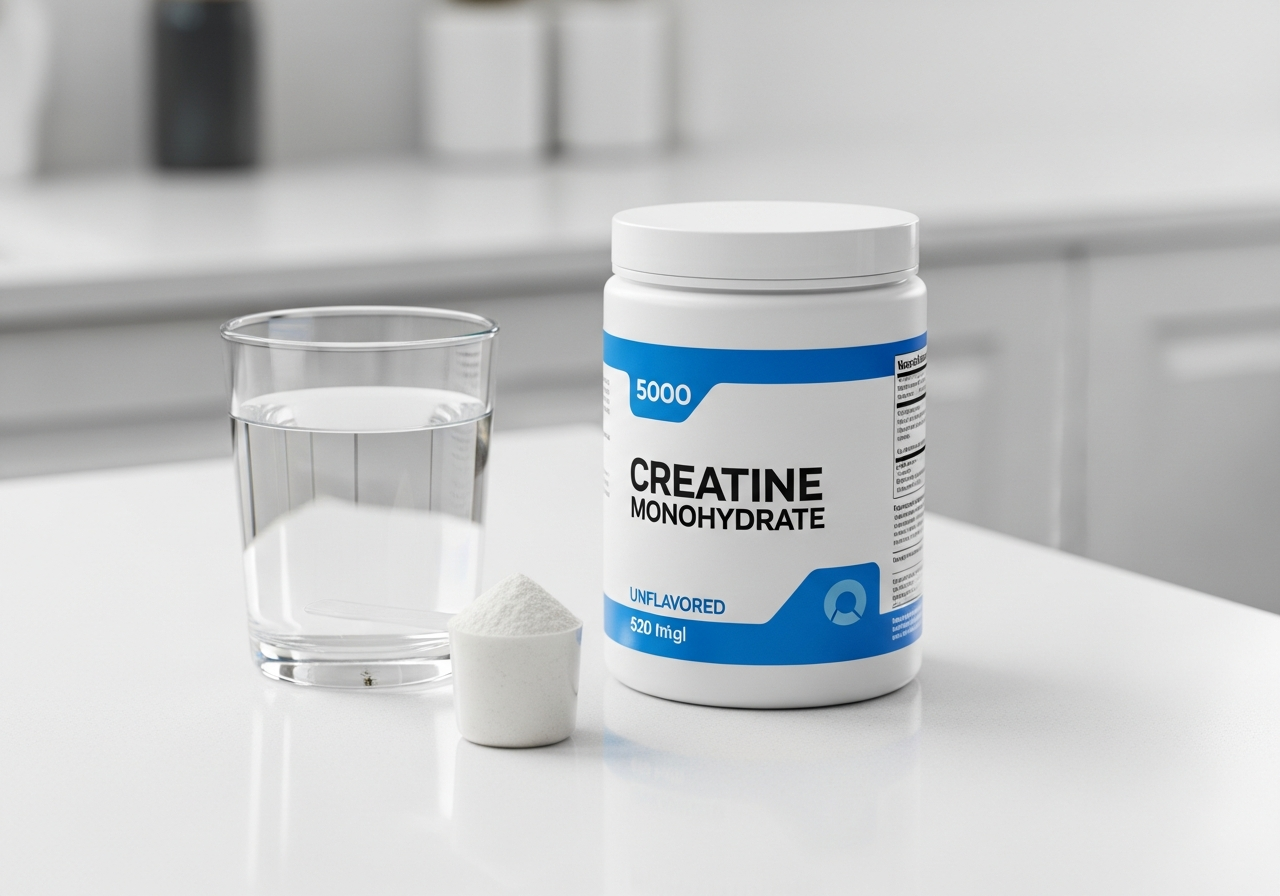
Clean-Label Creatine in 2026: Why Creapure and Third-Party Testing Now Win the Sale
By The Creatine Canada Research Team — Evidence-based supplement analysts
Clean-label creatine is creatine monohydrate sold with stronger proof of purity, identity, and manufacturing quality, and in 2026 that proof increasingly matters as much as price. If you want the safest, smartest buy, choose plain creatine monohydrate backed by transparent testing, trusted manufacturing such as Creapure, and—if you are in Canada—a valid Health Canada NPN.
Evidence-based · Cites 4 sources · Editorial standards
Key Takeaways
- Clean-label creatine means simple ingredients plus visible proof of purity, not just clever packaging.
- Creatine monohydrate remains the best-studied form; certifications do not make weaker forms better.
- Creapure is a recognised high-purity German-made creatine monohydrate and a strong trust signal.
- Third-party testing such as NSF Certified for Sport or Informed Sport adds meaningful screening for contaminants and banned substances.
- Typical dosing is 3-5 g daily, with an optional loading phase of 20 g daily split into 4 doses for 5-7 days.
- In Canada, an NPN helps confirm the product is legally licensed as a natural health product.
- Poorly made creatine can contain contaminants such as DCD, dihydrotriazine, and potentially heavy metals, so label transparency matters.
What clean-label creatine actually means in 2026
Clean-label creatine means creatine monohydrate with minimal ingredients and unusually clear proof of purity, identity, and manufacturing quality. In practical terms, a clean-label product usually has one active ingredient, discloses exactly what form it uses, avoids unnecessary fillers or proprietary blends, and gives you trust signals you can verify rather than just marketing language.
That distinction matters more in 2026 because market-research estimates put the overall creatine supplement market near USD $1.85 billion, and rapid growth always attracts new brands, new formats, and uneven quality. As more first-time buyers enter the category, many are no longer satisfied with a tub that simply says “creatine”. They want to know which creatine, where it was made, whether it was contaminant-tested, and whether the product is legal and properly labelled in Canada.
Clean label does not automatically mean “natural”, “organic”, or “better absorbed”. It usually means the brand has reduced avoidable uncertainty. For creatine, the most important uncertainties are:
- Is it really creatine monohydrate, the form with the strongest evidence?
- Is the dose accurate per scoop?
- Was it manufactured to a high standard?
- Was it screened for contaminants such as dicyandiamide (DCD), dihydrotriazine, or heavy metals?
- For athletes, was it screened for banned substances?
The best clean-label creatine is still plain monohydrate, not a flashy new form. The 2017 ISSN position stand concluded that creatine monohydrate is the most effective ergogenic nutritional supplement currently available for increasing high-intensity exercise capacity and lean mass gains during training. A cleaner label should make that evidence-based choice easier to trust, not distract you from it.
If you are new to the category, start with our best creatine rankings and compare labels in the creatine product catalog. If you want the technical background on the molecule itself, read what creatine is and what it does.
Bottom line: clean-label creatine is about verified simplicity—one proven form, one honest dose, and fewer unanswered questions between the factory and your scoop.
Why Creapure and third-party testing now win the sale
Creapure and independent testing now win the sale because they reduce the two biggest modern buyer fears: contamination and uncertainty. In a crowded market, people are not just buying performance; they are buying confidence that what is in the tub matches the label and has been screened to a higher standard.
Market-research and industry estimates show that in 2026, “clean label” and verified purity are among the strongest purchase drivers in creatine. That trend is rational, not cosmetic. Poorly manufactured creatine has historically raised concern about impurities created during production, including DCD and dihydrotriazine, and consumers are increasingly alert to the possibility of heavy metal contamination across supplement categories.
Creapure is a branded German-made creatine monohydrate known for high purity, and that manufacturing origin itself functions as a trust signal. It does not change creatine’s basic physiology versus any other well-made monohydrate, but it does reassure buyers who want a widely recognised quality benchmark.
Third-party testing adds a second layer of trust because it checks what the brand claims. The most recognised programmes include:
- NSF Certified for Sport: screens for label claim accuracy and many banned substances relevant to sport.
- Informed Sport and Informed Choice: screening programmes focused heavily on sports supplement risk management.
- Brand-specific certificate of analysis reporting: useful when transparent and current, though not all brand-posted testing is equally easy to interpret.
These certifications matter most for competitive athletes, military personnel, and anyone subject to anti-doping rules, but they also help regular gym-goers. The International Olympic Committee consensus on dietary supplements emphasised that supplement contamination is a real anti-doping risk. A sport certification does not guarantee the “best” creatine, but it lowers one important category of risk.
The key nuance is that certification screens for purity and banned substances, but it does not turn an inferior creatine form into a superior one. A third-party tested monohydrate is still the evidence-based standard to beat. A tested gummy blend, proprietary pre-workout, or exotic creatine salt may be cleaner than average, but it still does not have a stronger performance case than simple monohydrate.
If you are comparing labels brand by brand, our creatine brand reviews and best creatine rankings can help you sort real trust signals from packaging theatre.
How creatine works, and why purity matters even though the molecule is simple
Creatine works by increasing muscle phosphocreatine stores, which helps your body remake ATP faster during short, hard efforts, and purity matters because the benefit depends on taking enough of the right molecule consistently. ATP, or adenosine triphosphate, is the immediate energy currency your muscles use for explosive work such as sprinting, jumping, and heavy sets.
Phosphocreatine is the stored form of creatine in muscle that donates a phosphate to help regenerate ATP quickly. When your muscle stores are more saturated with creatine, you can typically sustain slightly more total training work across repeated high-intensity efforts. Over time, that often translates into better strength, power, training volume, and lean mass gains.
The mechanism is well established, but “clean label” does not make creatine work differently; it makes the dose more trustworthy. The evidence-supported physiological target is muscle saturation. That is why the practical question is not whether your creatine sounds advanced, but whether it reliably delivers the grams of monohydrate stated on the label.
The 2017 ISSN position stand and the 2021 JISSN review on common creatine questions and misconceptions both support monohydrate as the most studied form for performance and safety. That means your buying priority should be:
- Get the right form: creatine monohydrate.
- Get enough of it daily: usually 3-5 g.
- Use a product with stronger evidence of purity and quality control.
Purity matters because contamination is not the same thing as side effects from creatine itself. For example, mild water-weight gain during the first weeks can be a normal effect of creatine increasing intracellular water in muscle. That is different from the risk of consuming avoidable manufacturing by-products or contaminants from a lower-quality product.
Put simply: creatine’s benefit comes from saturation of muscle stores, while clean-label standards reduce the chance that your scoop contains more than you bargained for. If you want a broader science primer, see the evidence-based list of creatine benefits and how creatine helps build muscle.
How to buy clean-label creatine step by step without getting fooled by marketing
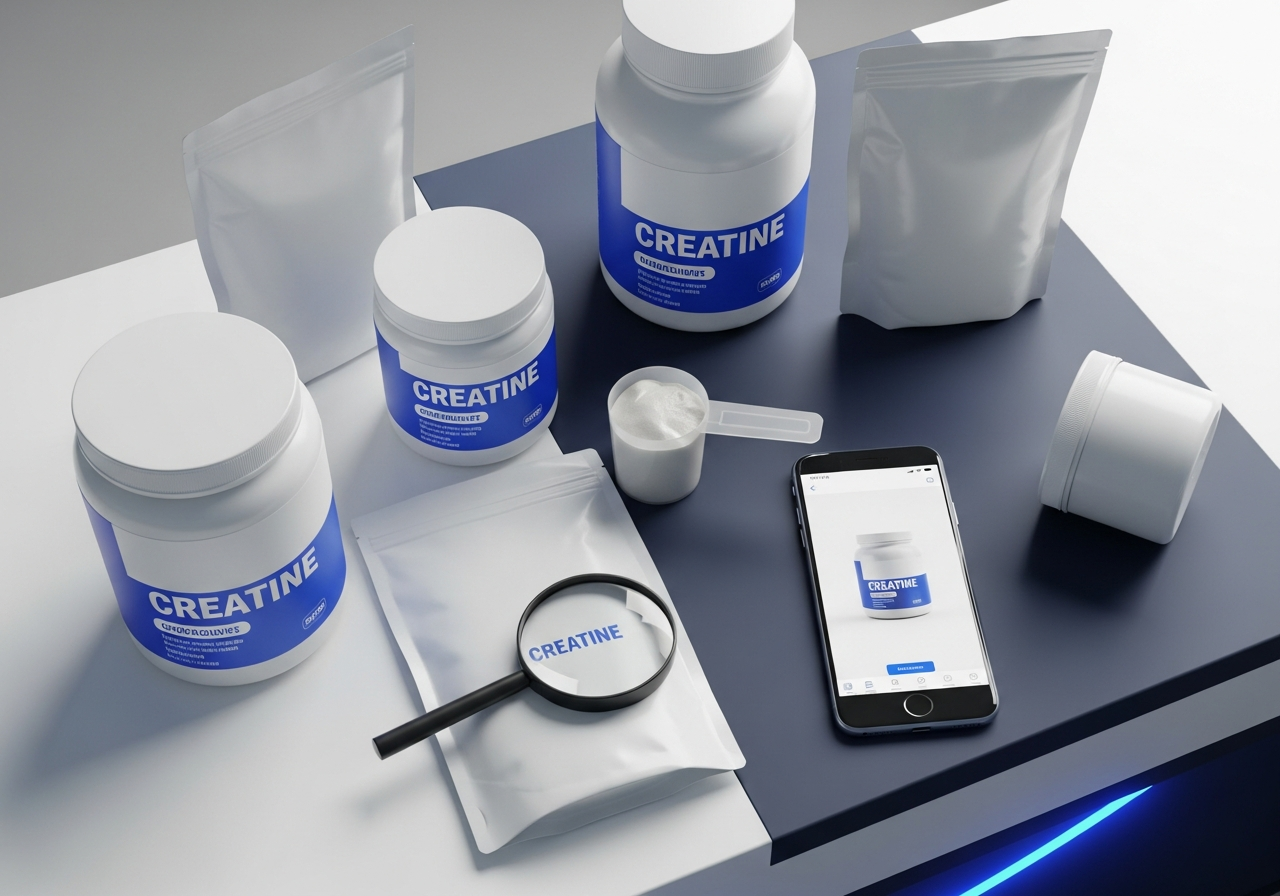
The simplest way to buy clean-label creatine is to vet the form first, the trust signals second, and the extras last. Most buyers do the reverse and end up overpaying for flavour systems, influencer branding, or weak forms dressed up as innovation.
- Check the ingredient line. It should say creatine monohydrate. If it is a blend, a proprietary matrix, or a different form entirely, ask what evidence justifies paying more.
- Look for a simple formula. Unflavoured powder with one ingredient is the cleanest starting point. Flavoured products can still be good, but they add variables.
- Look for manufacturing trust signals. Creapure is a strong example because it is a recognised, high-purity branded monohydrate. Other monohydrates can also be good, but they should still show quality controls.
- Check for third-party testing or sport certification. NSF Certified for Sport, Informed Sport, or Informed Choice are meaningful if you need extra assurance.
- In Canada, look for an NPN. An NPN, or Natural Product Number, means the product is licensed by Health Canada as a natural health product. It is not identical to sport certification, but it is an important legality and labelling signal.
- Check the serving size in grams, not teaspoons. You want a clearly stated dose, usually 3-5 g per serving.
- Check for transparent brand support. A credible brand should answer where the creatine is sourced, what testing is done, and whether recent lot testing is available.
If you are an athlete, certification matters more than aesthetics. A minimalist pouch with no independent screening is not automatically a safer choice than a more conventional tub with NSF or Informed Sport verification.
Here is the mindset shift that helps: “clean label” is not a vibe; it is a checklist. If the product gives you clean graphics but vague sourcing, no testing details, and no Canadian regulatory information, it is not meaningfully cleaner in the way that matters.
For practical shopping help, use our creatine dosage calculator to confirm your dose, then compare options in the creatine product catalog. If you want a deeper Canadian buying framework, the related guide on best creatine monohydrate in Canada is the natural next read.
Good creatine should be boring on the label and reassuring in the details. That is usually a better sign than an exciting formula.
The right dose for clean-label creatine by body weight and goal
Clean-label creatine uses the same evidence-based dosing as any other good monohydrate: 3-5 g daily for most adults, with an optional loading phase of 20 g daily split into 4 doses for 5-7 days. Purity changes confidence in the product, not the physiological dose required to saturate muscle creatine stores.
For most people, maintenance-only dosing works well. Loading is useful if you want to feel the effects sooner or are starting creatine ahead of a competition block, training cycle, or physique phase. If you prefer not to load, daily use still works; it simply takes longer to fully saturate muscle stores.
| Body weight / goal | Practical daily dose | Loading option | Best use case |
|---|---|---|---|
| Under 60 kg | 3 g/day | 20 g/day split into 4 doses for 5-7 days, then 3 g/day | Smaller athletes, beginners, cautious stomachs |
| 60-90 kg | 3-5 g/day | 20 g/day split into 4 doses for 5-7 days, then 3-5 g/day | Most adults training for strength, muscle, sport |
| Over 90 kg | 5 g/day | 20 g/day split into 4 doses for 5-7 days, then 5 g/day | Larger lifters and athletes wanting simpler dosing |
| Performance urgency | 3-5 g/day | Use loading | Faster saturation and earlier noticeable effects |
| Digestion sensitivity | 3 g/day to start | Skip loading or use smaller split doses | Reduces risk of stomach upset |
If you want exact precision, body-weight-based approaches exist, but fixed daily dosing is usually enough in real life. The main reason people miss results is not being 1 gram off; it is skipping days or using underdosed products.
What should you expect? With loading, many people notice better repeat performance in the gym within the first week. Without loading, the benefits often become more obvious after several weeks of daily use. Early scale weight increases are typically water in muscle, not body fat. For help tailoring the dose, use our creatine dosage calculator and read how much creatine per day or whether a loading phase is necessary.
The best dose is the one you can take consistently from a trustworthy monohydrate product.
Timing, mixing, and what to expect week by week
Creatine timing matters far less than taking it every day, so the best time to take clean-label creatine is whenever you will reliably remember it. There is no special absorption window that turns average creatine into superior creatine. Consistency drives saturation.
Take your dose with water, a shake, or a meal—whatever makes adherence easy. Some people prefer post-workout simply because it becomes part of a routine; others add it to a morning protein shake. If your powder is micronized, it may mix more easily, but mixing quality is a convenience issue, not a performance upgrade.
A realistic timeline helps you judge whether it is working.
- Days 1-7 with loading: some people notice increased body weight, fuller muscles, or slightly better repeat effort capacity quickly.
- Weeks 2-4 without loading: performance improvements often become more noticeable as muscle stores rise.
- Weeks 4-8: the real value usually shows up as better total training quality, more reps at a given load, improved sprint repeatability, or better lean mass progress when training and diet are on point.
How do you tell it is working? Look for patterns, not magic. Useful signs include one extra rep on later sets, slightly better maintenance of power across intervals, improved training volume, or steadier progress in strength blocks. If your body weight goes up modestly in the first weeks, that is usually intracellular water retention in muscle, not “bloating” in the negative sense.
Practical mixing tips:
- Dissolve it in a full glass or shaker rather than dry scooping.
- Split larger doses if loading bothers your stomach.
- Take it on rest days too, because you are maintaining saturation, not chasing a stimulant effect.
If you want the details, see when to take creatine, how to take creatine, and how long creatine takes to work.
The biggest timing mistake is overthinking timing and underperforming on consistency. A clean, tested monohydrate taken daily beats a “perfectly timed” product you forget three days a week.
Who should prioritise clean-label creatine most: beginners, women, older adults, and tested athletes
Anyone can benefit from cleaner, more transparent creatine, but beginners, competitive athletes, women, and older adults often have the strongest reasons to prioritise it. Their questions differ, but they all benefit from removing unnecessary uncertainty.
Beginners should choose clean-label creatine because it makes the category simpler. The best first product is usually plain monohydrate with a clear gram dose and obvious quality signals. Beginners are especially vulnerable to marketing claims around exotic forms, fat loss promises, or “no water retention” language that distracts from the basics.
Women often want reassurance that creatine is not a steroid, does not automatically cause bulky weight gain, and can be used for strength, performance, and body-composition support. A cleaner label helps because it reduces suspicion about hidden stimulants or unnecessary extras. If that is your use case, see creatine for women.
Older adults may prioritise safety, simplicity, and legal labelling over trendiness. Creatine monohydrate is still the main form worth considering, and a clean-label product with an NPN in Canada is often the most reassuring starting point. More context is in creatine for older adults.
Competitive athletes should care the most about third-party testing. If you are subject to anti-doping rules, contamination risk is not theoretical. The IOC consensus on supplements highlighted this clearly. For these users, NSF Certified for Sport or Informed Sport is not a luxury signal; it is part of risk management.
Vegetarians and vegans can also respond well to creatine because dietary intake from food is often lower. In practice, that makes product purity and honest dosing especially useful because results depend on filling that gap consistently.
The practical rule is simple: the more risk-averse, medically cautious, or sport-regulated you are, the more valuable clean-label verification becomes. But even for the average gym-goer, a transparent monohydrate is still the low-stress choice.
Is my creatine safe? Heavy metals, impurities, side effects, and the Canadian reality
For healthy adults, creatine monohydrate is generally considered safe when used at evidence-based doses, but product quality still matters because safety questions are often really contamination questions. That is why “is my creatine safe?” has become one of the most important buyer queries.
The mainstream research base on creatine itself is reassuring. The ISSN position stand and later reviews support creatine monohydrate as safe for healthy individuals when consumed appropriately. The Mayo Clinic overview similarly notes that creatine appears to be safe for up to several years when used as directed.
But a safe ingredient can still be sold in a poorly controlled product. The concerns buyers hear about most are:
- DCD and dihydrotriazine, which are unwanted manufacturing by-products associated with lower-quality creatine production.
- Heavy metals, which are a broader supplement quality concern and one reason independent testing is valuable.
- Banned substances, which matter especially for tested athletes.
Normal creatine side effects are usually mild and dose-related, not signs of contamination. The most common are temporary water-weight gain and occasional stomach upset, especially when people load aggressively or take large single doses. If you get GI issues, reduce the single dose, split it across the day, or skip loading.
When should you be cautious? If you have kidney disease, are under medical supervision for renal issues, are pregnant or breastfeeding, or are taking medications that warrant review, speak with a qualified clinician before starting. Also remember that creatine can raise blood creatinine, which is a breakdown marker and can confuse lab interpretation without meaning kidney damage.
In Canada, an NPN is an important trust marker because it shows the product is licensed by Health Canada as a natural health product. It is not identical to NSF or Informed Sport, but it helps confirm the product is part of the regulated Canadian framework. For more detail, read is creatine safe, the kidney myth explained, and creatine digestive side effects.
The short answer to “is my creatine safe?” is this: if it is plain monohydrate from a transparent brand with clear testing and appropriate Canadian labelling, the odds are strongly in your favour.
Creapure vs NSF vs Informed Sport vs NPN: what each trust signal does
Creapure, NSF, Informed Sport, and an NPN are all useful trust signals, but they do different jobs and should not be confused. Buyers often treat them as interchangeable badges when they actually answer different questions.
| Trust signal | What it mainly tells you | Best for | What it does not guarantee |
|---|---|---|---|
| Creapure | Recognised branded German-manufactured creatine monohydrate associated with high purity | Buyers focused on source quality and simplicity | It does not replace sport certification if banned-substance risk is your main concern |
| NSF Certified for Sport | Independent sport-focused certification screening for contaminants and many banned substances | Tested athletes and cautious buyers | It does not make a weaker creatine form better than monohydrate |
| Informed Sport / Informed Choice | Independent screening programmes widely recognised in sport supplement risk management | Athletes, teams, and anti-doping contexts | It does not tell you that a product is the most evidence-based form |
| NPN (Canada) | Health Canada natural health product licence and compliant Canadian labelling framework | Canadian buyers wanting legal, regulated products | It is not the same as banned-substance sport certification |
If you are a regular gym user, Creapure or another transparent monohydrate with clear testing may be enough. If you are a tested athlete, add NSF Certified for Sport or Informed Sport to your checklist. If you are buying in Canada, an NPN adds another layer of reassurance that the product is properly licensed.
The smartest interpretation is cumulative: monohydrate first, then purity proof, then role-specific certifications. Do not reverse that order. A highly certified exotic blend is still a worse first choice than a well-made monohydrate with strong quality controls.
If you want a broader comparison of forms, see why monohydrate still wins and the best type of creatine.
Common clean-label creatine mistakes and myths to stop believing
The biggest clean-label creatine mistake is assuming that expensive, trendy, or heavily branded means purer, safer, or more effective. In reality, the evidence still points back to plain creatine monohydrate and transparent quality control.
- Myth: The purest creatine must be a special form like HCl, buffered, or liquid.
Reality: The purest creatine is usually just well-made monohydrate with credible manufacturing and testing. Different forms often market convenience or solubility, not better outcomes. - Myth: Creapure works better than all other monohydrate.
Reality: Creapure is a trust signal for source and purity, not a different physiological ingredient. A different high-quality monohydrate can still perform similarly if it is genuinely pure and accurately dosed. - Myth: Third-party tested creatine means the dose no longer matters.
Reality: Testing does not overcome underdosing or inconsistency. You still need enough creatine every day. - Myth: If a product says “no bloating”, it is superior.
Reality: Many “no bloating” claims rely on reframing normal intracellular water gain as a problem. Some people tolerate smaller doses better, but that does not mean standard monohydrate is inferior. - Myth: Clean-label creatine should dissolve perfectly.
Reality: Solubility is not purity. Monohydrate often settles somewhat; that is normal. - Myth: You need to cycle creatine to stay safe.
Reality: Routine cycling is not required for healthy adults using appropriate doses.
Another frequent mistake is treating “free from” language as proof. A label can say free from gluten, soy, sugar, dyes, and artificial flavours and still tell you almost nothing about creatine source quality, contaminant testing, or banned-substance screening.
The practical fix is simple: ask better questions. Is it monohydrate? Is the dose clear? Is there testing? Is there a sport certification if I need one? Is there an NPN if I am buying in Canada? Those questions cut through almost every myth.
For a wider myth roundup, visit creatine myths debunked and creatine myths vs facts.
The 2026 market trend: why clean-label creatine is surging so fast
Clean-label creatine is surging in 2026 because the category has become mainstream, and mainstream buyers demand more proof than early adopters did. Market-research estimates place the global creatine supplement market near USD $1.85 billion in 2026, and that scale brings both opportunity and noise.
As the market expands beyond bodybuilders into women, older adults, team-sport athletes, plant-based eaters, and general wellness consumers, the average buyer profile changes. Many of these customers are not asking, “Which form has the coolest marketing story?” They are asking:
- Is this the purest creatine?
- Is my creatine safe?
- Has it been tested for heavy metals?
- Is it third-party tested?
- What does Creapure mean?
- Does it have an NPN in Canada?
That shift is exactly why verified purity now wins the sale. It aligns with a broader supplement trend toward traceability, cleaner formulas, and third-party validation. Creatine is especially suited to this trend because the product should be simple. When the core ingredient is straightforward, buyers become less tolerant of ambiguity around sourcing and testing.
The trust driver is equally clear: low-quality or poorly manufactured creatine can carry contaminants such as DCD, dihydrotriazine, and potentially heavy metals, which pushes buyers toward better-verified options. This does not mean every budget creatine is bad or every premium creatine is excellent. It means proof now competes directly with price.
In Canada, the trend has an extra layer because buyers often look for the regulatory reassurance of an NPN in addition to sport certifications or recognised sourcing like Creapure. Clean-label demand here is not just aesthetic minimalism; it is a search for products that are transparent, compliant, and easy to trust.
The brands most likely to win in this environment are not the loudest; they are the easiest to verify. That is the real story behind clean-label creatine in 2026.
Bottom line: the best clean-label creatine choice for most Canadians
The best clean-label creatine for most people in 2026 is plain creatine monohydrate from a transparent brand, ideally with recognised purity signals such as Creapure or robust third-party testing, and an NPN if you are buying in Canada. That is the short answer, and it is the one most buyers should follow.
If you are a beginner, buy one ingredient: creatine monohydrate. Dose it at 3-5 g daily. If you want faster saturation, use a loading phase of 20 g daily split into 4 doses for 5-7 days, then return to 3-5 g daily. Take it whenever you will remember it. Keep using it on rest days.
If you are a tested athlete, prioritise NSF Certified for Sport or Informed Sport on top of monohydrate. If you are buying in Canada, confirm the product has a valid NPN. If the brand highlights Creapure, that is a meaningful source-quality signal, though it is not the only route to a good product.
What should you avoid? Proprietary blends, vague sourcing, mystery “advanced” forms with little evidence, and labels that talk endlessly about being clean without showing you anything verifiable. The purest creatine is not the one with the biggest claim; it is the one with the fewest unanswered questions.
Use the practical tools on site if you need help choosing or dosing: the creatine dosage calculator, best creatine rankings, and brand reviews are the fastest next steps.
Final verdict: buy evidence first and reassurance second, but try to get both in the same tub. In 2026, the clean-label creatine that wins is the one that stays faithful to monohydrate while giving you credible proof that the product is pure, compliant, and worth trusting.
Clean-Label Creatine: The Numbers That Matter
- USD $1.85B Estimated 2026 creatine market size — Market-research estimate showing how fast the category has scaled
- 3-5 g/day Standard daily maintenance dose — Evidence-based dose for most adults using creatine monohydrate
- 20 g/day Typical loading dose — Usually split into 4 doses for 5-7 days before maintenance
- 1 ingredient Ideal clean-label formula — Plain creatine monohydrate is the simplest evidence-based starting point
Frequently Asked Questions
What is clean-label creatine?
Clean-label creatine is usually creatine monohydrate sold with simple ingredients and stronger proof of purity, sourcing, and quality control. In practice, that means a clear ingredient line, an honest gram dose, transparent manufacturing, and ideally added verification such as Creapure, third-party testing, or an NPN in Canada.
Is Creapure the purest creatine?
Creapure is one of the best-known purity benchmarks in creatine, but it is not the only possible high-quality option. It is a branded German-made creatine monohydrate associated with high purity, yet another monohydrate can still be excellent if it is accurately dosed and backed by credible testing.
Is third-party tested creatine worth it?
Yes, third-party tested creatine is usually worth it if you care about extra reassurance on purity, contaminants, or banned-substance risk. This matters most for competitive athletes, but regular consumers also benefit because testing helps verify that the product matches its label and has been screened beyond the brand's own claims.
What does NSF Certified for Sport mean for creatine?
NSF Certified for Sport means the product has gone through an independent certification process focused on label accuracy and screening for many banned substances relevant to athletes. It is a strong trust signal, but it does not mean the formula is automatically better than plain creatine monohydrate on performance grounds.
What is Informed Sport creatine?
Informed Sport creatine is a creatine product enrolled in the Informed Sport testing programme, which is designed to reduce the risk of banned-substance contamination. It is especially valuable for tested athletes, teams, and anyone who needs stronger supplement risk management, but monohydrate should still be your preferred form.
Should I worry about heavy metals in creatine?
You should not panic, but it is reasonable to care about heavy metal testing because supplement quality varies by brand and manufacturing standard. Choosing transparent monohydrate from a trusted source with third-party testing or strong quality documentation is the practical way to reduce that concern.
How can I tell if my creatine is safe?
You can judge creatine safety by checking whether it is plain monohydrate, clearly dosed, from a transparent brand, and supported by credible testing or certification. In Canada, a valid NPN is an additional positive sign that the product is licensed within the Health Canada natural health product framework.
Is monohydrate still better than HCL or buffered creatine if I want a clean label?
Yes, creatine monohydrate is still the best first choice even if your priority is a clean label. Clean-label principles should strengthen the case for the most studied form, not push you toward expensive alternatives that often have less evidence for performance and no clear superiority on safety.
Does clean-label creatine work better?
Clean-label creatine does not work better because of the label itself; it works better only if the product gives you a reliable dose of genuine creatine monohydrate. The benefit is mostly confidence, consistency, and lower contamination risk rather than a unique muscle-building mechanism.
Do I need an NPN for creatine in Canada?
If you are buying creatine in Canada, an NPN is a useful sign because it indicates the product is licensed by Health Canada as a natural health product. It is not a sport certification, but it does help confirm legal market status and proper Canadian labelling.