What Age Can You Take Creatine? Safety for Teens and Young Athletes
By The Creatine Canada Research Team — Evidence-based supplement analysts
There is no official universal minimum age for creatine, but the evidence-based answer is that creatine can be appropriate for some teenagers, including trained young athletes, when it is used correctly, supervised by a parent or qualified professional, and built on a solid foundation of food, training, sleep, and hydration. For children and younger teens who are not training seriously, creatine is usually unnecessary.
Evidence-based · Cites 4 sources · Editorial standards
Key Takeaways
- There is no fixed legal age limit for creatine, but age alone is the wrong question; maturity, training status, supervision, and medical history matter more.
- Creatine monohydrate is the most-studied form and the one experts generally recommend for teens and adults.
- A practical teen dose is usually 3 to 5 g daily, while larger athletes may use weight-based loading only if faster saturation is truly needed.
- Creatine works by increasing muscle phosphocreatine stores, which helps regenerate ATP for short, hard efforts like sprinting, lifting, and repeated bursts.
- Healthy adolescents who use sensible doses do not appear to face unique creatine risks, but anyone with kidney disease, relevant medical conditions, or unclear symptoms should get medical clearance first.
- Common side effects are usually mild and dose-related, especially stomach upset or temporary water-weight gain from intracellular water, not fat gain.
- If a 16-year-old athlete is eating well, training consistently, and using a tested monohydrate product under adult guidance, creatine is generally considered a reasonable option.
What age can you take creatine? The direct answer parents and teens actually need
There is no official universal minimum age for creatine, and there is also no evidence-based rule that says nobody under 18 can take it. The better question is whether the person is mature enough to use it properly, trains hard enough to benefit from it, has adult supervision, and has no medical reason to avoid it.
For practical purposes, creatine is most reasonably considered for older adolescents who are already involved in structured training, especially sports that depend on repeated high-intensity efforts such as hockey, football, sprinting, swimming, wrestling, basketball, and resistance training. A healthy, well-informed 16-year-old athlete is very different from an unsupervised 12-year-old who wants supplements because of social media.
The 2017 ISSN position stand concluded that creatine monohydrate is effective and safe for healthy individuals when used at appropriate doses. The same paper also noted that younger athletes may be a population that can benefit, provided supplementation is sensible and supervised. The International Olympic Committee consensus likewise places creatine among the few supplements with strong evidence for performance benefit in specific contexts.
So what age is safe to take creatine? A concise answer is this: creatine may be appropriate for some teens, but it is usually unnecessary for children and casual exercisers. If a teenager has not yet built basic habits such as regular meals, adequate protein, sleep, hydration, and a consistent training plan, those should come first. Supplements should sit on top of fundamentals, not replace them.
If you are searching for the youngest age to take creatine, understand that research and expert guidance do not give a single magic number. Instead, they point to a decision framework:
- Is the athlete healthy?
- Are they participating in serious, supervised training?
- Do they understand dose, daily use, and hydration?
- Are parents and ideally a coach, dietitian, or physician involved?
- Is the product a reputable creatine monohydrate?
If those boxes are not checked, creatine is probably not the next priority. If they are, creatine can be a reasonable, evidence-based option. For a broader primer, see what creatine is and what it does and our guide to creatine for teenagers.
How creatine works in teenage and adult athletes, and why age does not change the basic mechanism
Creatine works the same basic way in teenagers and adults: it raises muscle stores of phosphocreatine, a stored high-energy compound that helps your body rapidly remake ATP, the immediate energy currency used for short, explosive effort.
That mechanism matters most in activities lasting only a few seconds to about half a minute, or in repeated high-intensity bouts with short rest. Think heavy sets in the weight room, sprint repeats, repeated shifts in hockey, jumps in volleyball, hard swimming intervals, or bursts in field sports. When phosphocreatine stores are higher, athletes can often squeeze out a little more total training volume, a little more power, or slightly better repeat-effort performance. Those small gains can matter over months of training.
Creatine does not act like a stimulant. It does not work by making a teenager feel wired, aggressive, or hyper. It works inside muscle cells by helping energy recycling happen faster during hard efforts. That is one reason creatine is not comparable to a steroid; if you need that myth addressed directly, see is creatine a steroid?.
Creatine also pulls more water into muscle cells, which is why early scale weight often increases slightly. That is typically intracellular water, meaning water stored inside muscle tissue, not body fat. In some athletes, this can make muscles feel a bit fuller during the first 1 to 2 weeks. For a deeper explanation, see does creatine make you gain weight?.
Age does not fundamentally change this physiology. A healthy 17-year-old sprinter and a healthy 27-year-old sprinter both rely on the phosphocreatine system for explosive efforts. What does change with age is whether supplementation is necessary, appropriate, and supervised.
Another useful point: creatine is not exotic. Your body already makes some creatine from amino acids, and you also get some from foods like meat and fish. Supplementation simply increases muscle stores beyond what diet alone usually provides. Vegetarians and people with lower dietary creatine intake may respond especially well because they often start with lower baseline stores. For more background, see foods high in creatine and creatine for vegetarians.
The short version is simple: creatine helps high-intensity performance by improving energy availability inside muscle, and that mechanism is not age-specific. The age question is mostly about judgment, readiness, and safe use.
Who creatine makes sense for, and who should probably skip it for now
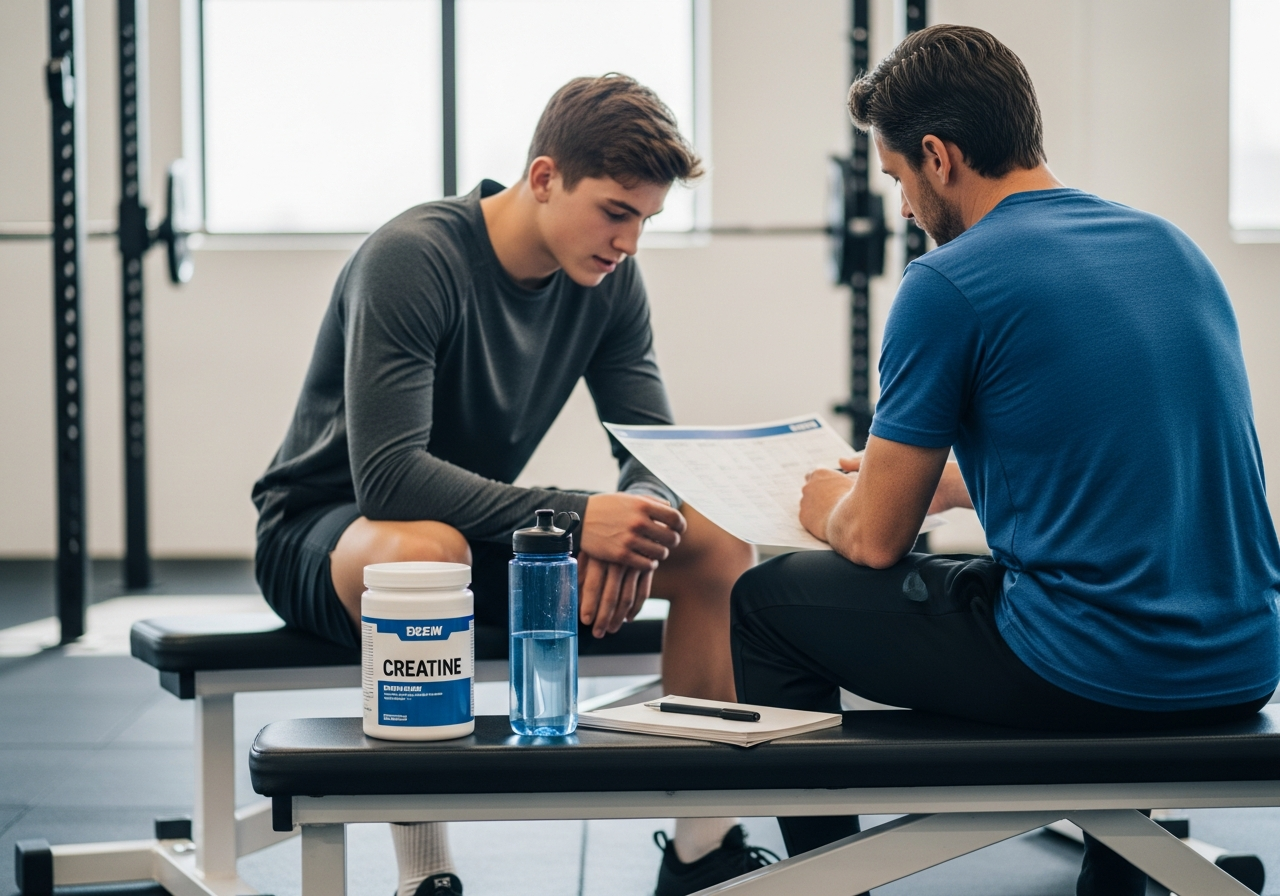
Creatine makes the most sense for healthy people doing regular, structured training, including many older teens, adults, women, men, and masters athletes. It makes far less sense for children, inconsistent exercisers, or anyone looking for a shortcut around basic habits.
For adolescents, the strongest practical case is usually a teen athlete who is:
- Training several times per week with a coach or a clear programme
- Competing in a power, strength, sprint, or repeated-effort sport
- Already eating enough calories and protein
- Sleeping adequately and hydrating well
- Able to follow simple dosing instructions daily
- Using the supplement with parent or guardian awareness
That is why the answer to "can a 16 year old take creatine" is often yes, potentially, but only in context. A 16-year-old football player lifting year-round is a very different case from a 16-year-old who barely trains, skips meals, and wants a dramatic physique change in two weeks.
Beginners can use creatine, but beginners should understand that it is an assistant, not a foundation. If a beginner adds creatine while also starting a sensible strength programme, the supplement can still help. But if that same beginner is under-eating, missing workouts, and sleeping 5 hours a night, creatine will not rescue poor fundamentals. Our creatine for beginners guide explains how to get the basics right first.
Creatine is also relevant beyond teen boys in weight rooms. It can be useful for girls and women involved in lifting or team sports, and later in life it may help support muscle and training quality in older adults. If that applies, see creatine for women and creatine for older adults.
Who should hold off?
- Children and young adolescents who do not have a clear training need
- Anyone with known kidney disease or under evaluation for kidney issues unless their physician approves it
- People with unexplained swelling, persistent GI symptoms, or unusual lab work until medically assessed
- Athletes in weight-sensitive sports who cannot afford even a small increase in water weight right now
- Anyone unwilling to use a plain, reputable product at the correct dose
In other words, the minimum age for creatine is not best expressed as a single number. It is best expressed as the point at which the athlete is healthy, trained, informed, supervised, and likely to benefit.
Exact creatine dosing for teens and adults: simple daily use, loading, and when body weight matters
The simplest evidence-based creatine dose for most teenagers and adults is 3 to 5 g of creatine monohydrate once daily. That daily approach works well for nearly everyone and avoids the higher chance of stomach upset that comes with aggressive loading.
There are two proven ways to take creatine:
- No loading: Take 3 to 5 g daily. Muscle stores usually become meaningfully elevated in about 3 to 4 weeks.
- Loading phase: Take about 20 g per day for 5 to 7 days, usually split into 4 doses of 5 g, then continue with 3 to 5 g daily. This saturates muscles faster.
For teens, the no-loading approach is often the more practical and gentler choice unless there is a real reason to accelerate saturation. If a tournament, training camp, or testing period is close, loading can be considered, but only if the athlete tolerates it well.
Body weight can refine the plan, especially for larger athletes. A common loading formula is 0.3 g per kilogram of body weight per day for 5 to 7 days, followed by a maintenance intake of roughly 0.03 g per kilogram per day. In practice, that often lands close to the usual 3 to 5 g daily range.
| Body weight | Simple daily dose | Optional loading dose | Maintenance after loading |
|---|---|---|---|
| 50 kg | 3 g/day | 15 g/day split into 3 x 5 g | 3 g/day |
| 60 kg | 3 to 5 g/day | 18 g/day split into 3 to 4 doses | 3 g/day |
| 75 kg | 5 g/day | 20 to 22 g/day split into 4 doses | 5 g/day |
| 90 kg | 5 g/day | 27 g/day split into 4 to 5 doses | 5 g/day |
For most people, you do not need to chase precision beyond that. A level scoop that provides 3 to 5 g is enough. If you want a more tailored estimate, use our creatine dosage calculator or see how much creatine per day.
Important dosing notes for teens:
- Choose plain creatine monohydrate, not a proprietary blend.
- Do not assume more is better; higher doses do not create proportionally better results once stores are saturated.
- If stomach upset occurs, reduce the dose, split it, or take it with food.
- There is no need to cycle creatine on and off.
The bottom-line dose answer is simple: 3 to 5 g daily suits most teen and adult users, while loading is optional rather than required.
How a teenager should start creatine safely: a realistic step-by-step plan
If a teenager is going to use creatine, the safest practical approach is to start with a simple, boring, repeatable routine. The goal is not to maximise hype; it is to minimise errors and make the supplement almost impossible to misuse.
- Confirm creatine is actually needed. If training is inconsistent, meals are poor, or sleep is a mess, fix those first. Creatine is not step one.
- Get parent or guardian awareness. For minors, supplementation should never be secretive. Ideally, a coach, physician, or sports dietitian also knows.
- Choose the right product. Buy plain creatine monohydrate from a reputable brand. In Canada, look for a valid NPN, meaning Natural Product Number, which shows the product has been licensed by Health Canada. Third-party testing adds confidence on purity and label accuracy.
- Start with 3 g daily. A conservative start reduces the chance of stomach issues. After a week, many athletes simply continue there or move to 5 g daily if larger-bodied.
- Take it every day. Consistency matters more than timing. Mix it into water, a shake, or a meal you already have daily.
- Drink normally and train normally. You do not need absurd water intake, but you should avoid chronically under-drinking.
- Track what happens for 4 weeks. Watch body weight, training log numbers, sprint repeat quality, and how you feel during hard sessions.
What should a teen expect in the first month?
- Week 1: Usually nothing dramatic unless loading is used. Some athletes notice slightly fuller muscles or a small scale increase.
- Week 2: Hard training may begin to feel a bit more repeatable. Recovery between short bursts can improve subtly.
- Weeks 3 to 4: Strength and repeated-effort benefits are more likely to show up if training is consistent.
A key point for families: creatine should be treated like any performance tool, not a personality badge. If the teen starts adding random pre-workouts, fat burners, or social-media blends, the process has gone off track. Stick to one ingredient, one dose, one routine.
If you want a fuller walkthrough, see how to take creatine, how to mix creatine, and whether to take creatine with food. If the athlete wants faster results, read creatine loading phase before trying it.
The safest teen protocol is usually the least exciting one: plain monohydrate, 3 to 5 g daily, consistent use, adult awareness, and no supplement stacking circus.
When to take creatine, how long it takes to work, and how to tell if it is helping
The best time to take creatine is whenever you will remember to take it every day, because total daily intake and muscle saturation matter more than exact clock timing. For most teens and adults, consistency beats optimisation.
This is why the answer to timing questions is reassuringly simple. You can take creatine:
- With breakfast
- After training in a protein shake
- With lunch or dinner
- On rest days at the same usual time
If you want a dedicated timing guide, see when to take creatine and creatine on rest days.
How long does creatine take to work? With daily 3 to 5 g and no loading, most users should think in terms of 2 to 4 weeks, not overnight effects. With a loading phase of about 20 g/day for 5 to 7 days, benefits can show up within about a week. The exact timeline depends on baseline creatine stores, body size, training type, and whether the person responds strongly.
How do you tell if it is working? The right markers are not just mirror photos. Look for:
- A small increase in body weight, often within the first 1 to 2 weeks
- Better repeat quality across sets, sprints, or intervals
- Slightly more reps at a given weight
- Improved training volume over time
- Feeling less drop-off between hard efforts
What you should not expect is a stimulant buzz, dramatic instant muscle gain, or major changes if training is poor. Creatine amplifies productive training; it does not substitute for it.
Some people worry they are "non-responders" if nothing obvious happens in 7 days. That is too soon to judge unless they loaded properly. People with already high muscle creatine stores, often from higher meat intake or naturally greater baseline levels, may notice less dramatic changes. But even then, the supplement can still support training over time. If you want more on that, see creatine non-responders and how long creatine takes to work.
The practical answer is: take creatine daily at a convenient time, give it at least 3 to 4 weeks without loading, and judge it by training performance more than by sensations.
Is creatine safe for teens? What the evidence supports, what side effects are real, and when to ask a doctor
For healthy people using recommended doses, creatine monohydrate is generally considered safe, and that includes many adolescent athletes when use is sensible and supervised. The evidence does not support the common claim that creatine is inherently dangerous for healthy teens.
The 2021 JISSN review on common questions and misconceptions about creatine and the ISSN position stand both reinforce a broad safety profile in healthy users. The Mayo Clinic overview also notes that creatine appears safe for up to several years in healthy people when used appropriately.
The most common side effects are usually mild and manageable:
- Temporary water-weight gain: often from more water inside muscle cells
- Stomach upset or loose stool: more likely with large single doses or poor mixing
- Bloating sensation: often dose-related and less common with smaller daily amounts
These issues are usually solved by reducing the dose, splitting it into smaller servings, taking it with food, or skipping the loading phase. For troubleshooting, see creatine digestive side effects and does creatine cause bloating.
Now for the important caution: creatine is not for everyone. A teen or adult should speak with a physician before using it if they have:
- Known kidney disease or reduced kidney function
- Single-kidney concerns or active kidney evaluation
- Significant chronic illness or multiple medications
- Unexplained swelling, persistent vomiting, or abnormal lab results
- A history that makes hydration management difficult
One source of confusion is creatinine, a blood marker that can rise slightly with creatine use because it is a breakdown product of creatine. That does not automatically mean kidney damage, but it can complicate lab interpretation. If blood work is planned, tell the clinician about creatine use. More on that in creatine vs creatinine and is creatine bad for your kidneys?.
The most evidence-based safety summary is this: healthy teens are not automatically excluded from creatine by age alone, but minors should use it conservatively, transparently, and with medical caution when any health issue is present.
Creatine myths about age, growth, hormones, and dehydration — debunked carefully
Most fear around teenage creatine use comes from myths, not from what the best evidence actually shows. The right way to assess creatine is to separate plausible concerns from recycled internet claims.
Myth 1: Creatine stunts growth.
There is no good evidence that creatine stunts height or normal adolescent growth. Creatine is not a hormone blocker, and it does not work by shutting down puberty-related processes. If this is your main concern, read does creatine stunt growth?.
Myth 2: Creatine is a steroid.
Creatine is not an anabolic steroid and does not act like one. Steroids alter hormonal signalling; creatine supports rapid energy recycling in muscle. Those are completely different mechanisms.
Myth 3: Creatine damages healthy kidneys.
In healthy users taking recommended doses, evidence does not support the claim that creatine harms kidneys. The confusion often comes from lab creatinine, which is not the same thing as kidney injury.
Myth 4: Creatine dehydrates you or causes cramps.
Research does not support the old blanket claim that creatine causes dehydration or cramping in healthy users. Because creatine increases intracellular water, some people misread that as dehydration. In practice, normal good hydration habits are enough for most athletes. See creatine and dehydration and does creatine cause cramps.
Myth 5: Teenagers should never touch supplements.
That is too broad to be useful. Many teen athletes already use sports nutrition strategically, including protein powder, electrolyte products, and carbohydrate drinks. The real question is whether a given supplement has evidence, a sensible use case, and supervision. Creatine ranks relatively well on that standard compared with many trend-driven products.
Myth 6: More creatine means more gains.
Once muscle stores are saturated, extra creatine mostly increases the chance of GI issues and wastes money. The classic 3 to 5 g daily maintenance range exists for a reason.
The myth-free version is straightforward: creatine is not a steroid, does not appear to stunt growth, and is not uniquely dangerous for healthy teens when used appropriately. But that does not mean every young person needs it. Evidence-based does not mean mandatory.
If you want a broader roundup of claims versus reality, see creatine myths debunked and creatine myths vs facts.
What kind of creatine should a teen buy in Canada? Monohydrate, labels, testing, and what to avoid
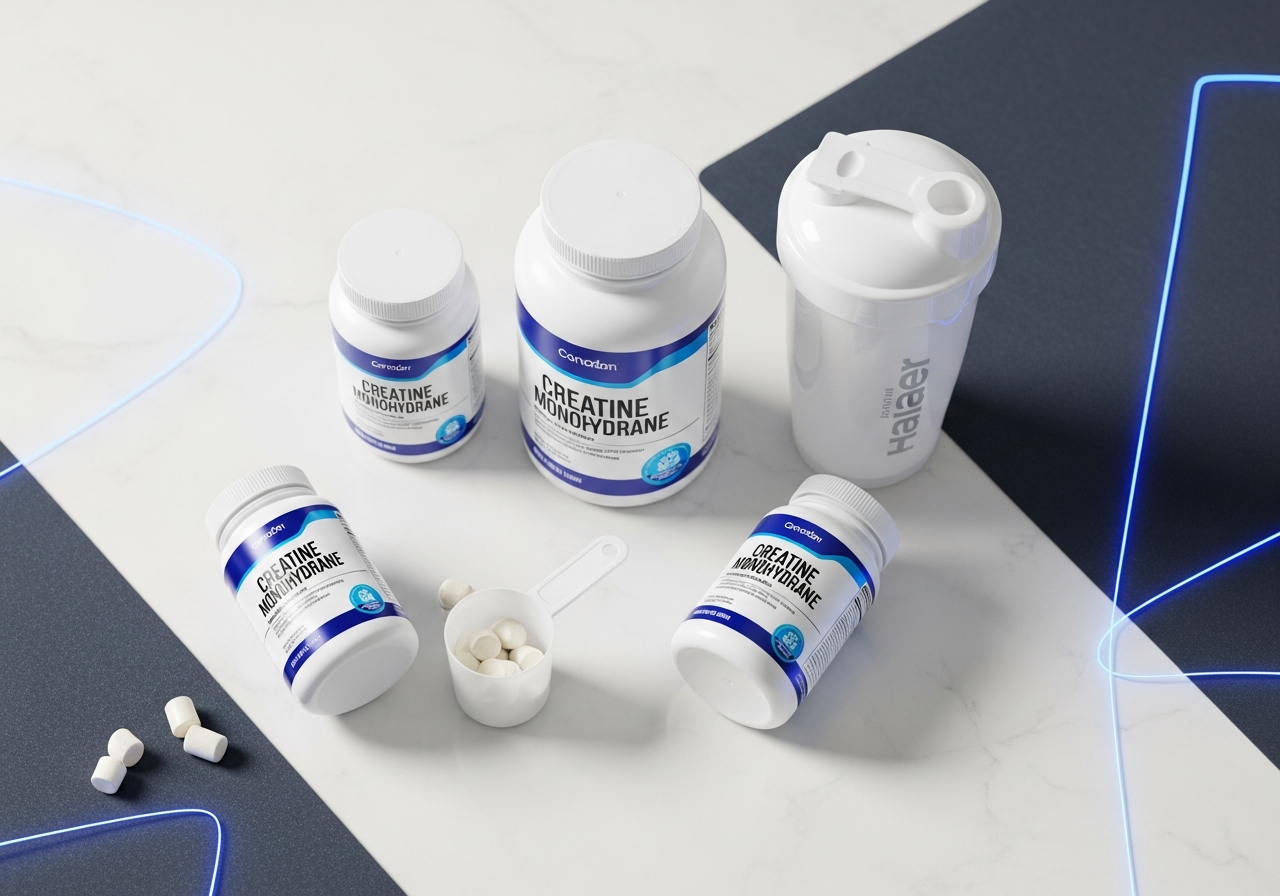
If a teenager or parent decides to buy creatine, the best choice is usually plain creatine monohydrate powder from a reputable company. Monohydrate remains the most-studied, most effective, and usually most cost-effective form.
Fancy versions such as HCL, buffered creatine, ethyl ester, nitrate, gummies, or proprietary blends are often marketed as cleaner, stronger, or easier on the stomach, but they do not have a better evidence base than monohydrate. If someone has trouble tolerating monohydrate, the first fix should usually be smaller doses or micronized monohydrate, not expensive marketing. For comparisons, see best type of creatine and creatine monohydrate vs HCL.
In Canada, there are a few useful buying checks:
- Look for an NPN. An NPN, or Natural Product Number, indicates the product is licensed by Health Canada.
- Check the ingredient panel. Ideally it says creatine monohydrate and little else.
- Prefer third-party testing. Independent testing helps with purity and label confidence.
- Avoid stimulant stacks. Teen athletes do not need creatine bundled with high-caffeine pre-workouts or mystery performance blends.
| Option | Best for | Pros | Cons |
|---|---|---|---|
| Plain creatine monohydrate powder | Most teens and adults | Best evidence, low cost, flexible dosing | Needs mixing |
| Micronized monohydrate | Users who dislike gritty texture | Often mixes better, same core ingredient | Sometimes slightly pricier |
| Capsules | Travel or convenience | No mixing, easy to carry | Many capsules needed to reach 3 to 5 g |
| Flavoured blends or gummies | Convenience-focused users | Taste and ease | Often higher cost, less transparent formulas, lower value |
Parents should also be wary of buying from random online sellers, especially if the product lacks Canadian labelling norms or clear manufacturer information. If you want vetted options, compare our best creatine rankings, browse creatine brand reviews, or see the creatine product catalog.
The buying rule for teens is simple: choose a boring, reputable monohydrate with clear Canadian labelling, not a flashy formula promising extreme results.
The mistakes young athletes make with creatine, and how to avoid wasting money or causing side effects
The most common creatine mistakes are not dramatic; they are simple habits that quietly make the supplement less useful or less comfortable. Most are easy to fix.
Mistake 1: Taking random amounts.
A heaping scoop is not a dosing strategy. Use the label or weigh it if needed. Most users need only 3 to 5 g daily.
Mistake 2: Expecting instant results.
Without loading, creatine takes time. Many teens quit after one week because they expected a visible transformation. That is not how saturation works.
Mistake 3: Starting creatine before fixing food and sleep.
If a teen skips breakfast, under-eats protein, and sleeps badly, creatine is not the bottleneck. The supplement can help performance, but it cannot compensate for chronic recovery debt.
Mistake 4: Dry scooping or taking it in giant single doses.
Dry scooping is pointless and raises the chance of coughing, choking, or GI discomfort. Huge single doses are more likely to cause stomach upset. Mix it properly instead. See dry scooping creatine.
Mistake 5: Buying the wrong product.
A teen often does not need a high-caffeine pre-workout that happens to include creatine. Keep creatine separate and simple.
Mistake 6: Skipping rest days.
Creatine works by maintaining elevated muscle stores, so you still take it on days off. Missing one day is not catastrophic, but regular inconsistency slows the process. See what happens if you miss a day of creatine.
Mistake 7: Confusing water weight with fat gain.
A small early scale increase is common and usually reflects more water stored in muscle tissue, not increased body fat.
Mistake 8: Ignoring medical context.
If a young athlete has a health issue, abnormal bloodwork, or is on multiple medications, clearance matters more than internet reassurance.
If a teen wants creatine to work, the formula is boring but reliable:
- Choose monohydrate
- Take 3 to 5 g daily
- Keep training hard
- Eat enough
- Sleep well
- Give it several weeks
The biggest takeaway is that creatine usually fails in practice because of poor expectations, poor consistency, or poor product choice, not because the supplement itself is flawed.
Bottom line: the safest evidence-based answer on the minimum age for creatine
The most honest answer to "what age can you take creatine" is that there is no single evidence-based age cutoff. Creatine can be an appropriate supplement for some teenagers, including 16- and 17-year-old athletes, but it is not automatically necessary or appropriate just because someone is under 18 and wants better results.
If you want a practical rule, use this one: creatine is reasonable when the athlete is healthy, training seriously, understands daily dosing, has parent or professional oversight, and is using a plain reputable monohydrate product. If those conditions are not in place, creatine is usually not the next best step.
For parents, the priority questions are not "Is there an age limit for creatine?" but:
- Does my child actually have a sport-performance use case?
- Are meals, hydration, sleep, and training already handled well?
- Is the product reputable and simple?
- Is there any medical reason to avoid it or check with a doctor first?
For teens, the key message is equally simple: creatine is a useful tool, not a shortcut. It can help you train a bit harder and recover better between explosive efforts, but it will not replace disciplined lifting, coaching, or recovery habits.
If you are still deciding, start with the lowest-friction approach:
- Read about overall creatine safety.
- Use plain monohydrate only.
- Take 3 g daily for a week, then 3 to 5 g daily ongoing.
- Track training for 4 weeks.
- Stop and ask a clinician if anything feels off or if medical history is relevant.
The final evidence-based conclusion is this: creatine does not have a universal minimum age, but healthy, supervised teenage athletes can use it responsibly, while children and poorly supervised casual users generally should not prioritise it.
Creatine age and safety: the numbers that matter
- 3-5 g/day Typical daily maintenance dose — Suitable for most teens and adults using creatine monohydrate
- 20 g/day Standard loading total — Usually split into 4 doses for 5-7 days if faster saturation is desired
- 2-4 weeks Typical time to notice benefits without loading — Assumes consistent daily use and regular training
- 0.3 g/kg/day Weight-based loading formula — Commonly used for 5-7 days before moving to maintenance
Frequently Asked Questions
What age is safe to take creatine?
There is no single age that is universally declared safe for creatine. In practice, creatine is generally considered a reasonable option for healthy, supervised teenagers who train seriously and can follow proper dosing, while it is usually unnecessary for children or unsupervised casual users.
Is there an age limit for creatine?
No, there is no official universal age limit for creatine. The decision is usually based more on health status, training demands, maturity, and supervision than on a strict birthday cutoff.
Can a 16 year old take creatine?
Yes, a 16-year-old can potentially take creatine if they are healthy, training consistently, using plain creatine monohydrate, and have parent or professional guidance. A sensible daily dose is usually 3 to 5 g, and there should be no relevant kidney or medical concerns without physician clearance.
What is the minimum age for creatine?
There is no evidence-based minimum age expressed as one exact number. Most experts treat creatine as more appropriate for older adolescents with real training needs than for children, because the issue is readiness and benefit, not just chronological age.
What is the youngest age to take creatine?
The youngest age to take creatine is not defined by a universal medical rule. Rather than asking for the youngest possible age, it is better to ask whether the athlete is healthy, mature enough to use it properly, training seriously, and supervised by adults.
Can a 14 year old take creatine?
A 14-year-old may be able to take creatine in some cases, but this deserves more caution than with an older teen. At that age, parent involvement, training quality, medical context, and a strong need for the supplement all matter, and many 14-year-olds would be better served by focusing on food, sleep, and coaching first.
Can creatine stunt growth in teenagers?
No, there is no good evidence that creatine stunts growth in teenagers. Creatine does not work by altering growth plates or suppressing normal development; it works by supporting rapid ATP regeneration in muscle during high-intensity activity.
Is creatine safe for high school athletes?
Creatine is generally considered safe for healthy high school athletes when used at recommended doses with proper supervision. The best-supported choice is creatine monohydrate, taken consistently at 3 to 5 g daily after basics like nutrition, hydration, and sleep are already in place.
Should teens load creatine or just take a normal daily dose?
Most teens do not need to load creatine. A simple 3 to 5 g daily dose is easier to tolerate and still works well, though loading with about 20 g per day split over 5 to 7 days can saturate muscles faster if there is a specific performance reason.
Should a teenager ask a doctor before taking creatine?
Yes, a teenager should ask a doctor before taking creatine if they have kidney issues, chronic illness, unusual symptoms, or any uncertain medical history. Even healthy teens benefit from parent involvement and transparent discussion with a clinician or sports dietitian if questions remain.