How to Read a Creatine Label: Decode Serving Size, Purity, and Fine Print
By The Creatine Canada Research Team — Evidence-based supplement analysts
To read a creatine supplement label properly, start by checking the form, the actual grams of creatine per serving, the ingredient list, and the quality signals in the fine print. For most people, the best label is simple: creatine monohydrate, 3 to 5 g per serving, few or no extras, and clear manufacturing, testing, and Canadian compliance details.
Evidence-based · Cites 4 sources · Editorial standards
Key Takeaways
- Look for creatine monohydrate first; it remains the most studied and most cost-effective form.
- Ignore flashy front-label claims and verify the actual grams of creatine in the Supplement Facts or product panel.
- A good daily maintenance serving is usually 3 to 5 g of creatine, regardless of flavouring or branding.
- Short ingredient lists are usually better; avoid underdosed blends, proprietary formulas, and unnecessary fillers.
- In Canada, check for an NPN and clear manufacturer or importer details on the package.
- Third-party testing, batch information, and sport certifications matter more than marketing words like pure or advanced.
- Compare price by cost per gram of creatine, not by tub size or scoop count.
How to read a creatine label in 60 seconds
The fastest way to read a creatine supplement label is to verify four things in order: the form of creatine, the grams per serving, the full ingredient list, and the quality or compliance details. If the label says creatine monohydrate, provides 3 to 5 g per serving, has a short ingredient list, and shows legitimate packaging details, it passes the first screen.
Most shoppers make the mistake of reading the front label like it is the full story. It is not. The front panel is marketing; the side or back panel is where the useful information lives. Your goal is to answer a simple question: How much actual creatine am I getting, in what form, and with what else?
- Step 1: Find the form. The best-supported form is creatine monohydrate. Other forms may sound more advanced, but monohydrate is still the reference standard in the research.
- Step 2: Find the dose. Look for the actual amount of creatine in grams per serving, not just scoop size. A 7 g scoop may only contain 3 g of creatine if the rest is flavouring or fillers.
- Step 3: Read all ingredients. For unflavoured powder, the ideal list is often just one ingredient: creatine monohydrate. For flavoured products, extra ingredients are expected, but they should be clearly listed and not hide the dose.
- Step 4: Check the fine print. Look for serving count, directions, lot number, expiry, manufacturer details, and, in Canada, an NPN where applicable. If you want to understand Canadian label rules better, see Canadian supplement regulations.
A simple label is usually a good sign because creatine does not need much help to work. As the 2017 ISSN position stand concluded, creatine monohydrate is the most effective ergogenic nutritional supplement currently available for increasing high-intensity exercise capacity and lean mass during training.
If you are completely new, pair this guide with creatine for beginners and our creatine dosage calculator so you can translate the label into an actual daily plan.
Creatine label explained: what each panel is really telling you
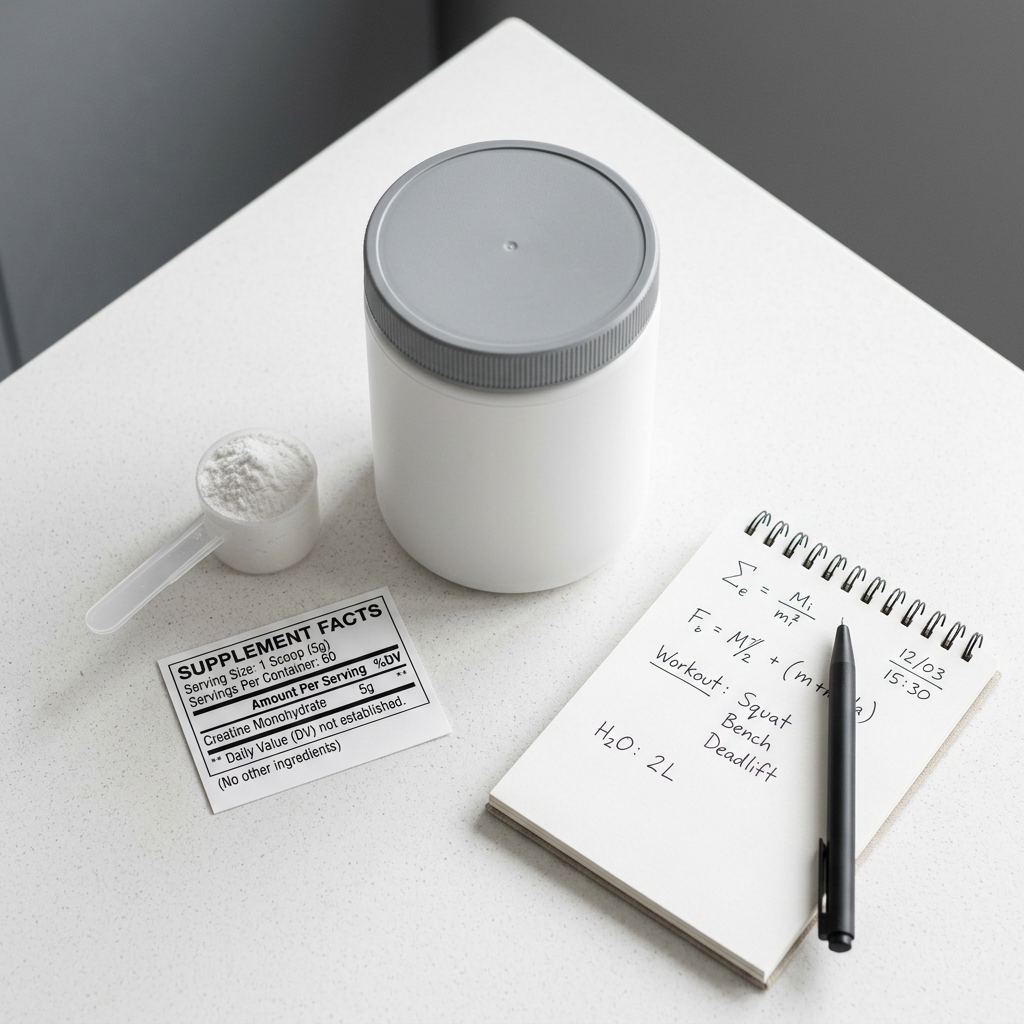
A creatine label usually has five useful parts: the front panel, serving information, active ingredients, non-medicinal ingredients, and manufacturer or compliance details. Once you know what each part means, reading supplement labels for creatine becomes much easier.
The front panel is the least important part scientifically. It may say things like micronized, ultra-pure, muscle volumizer, performance support, or recovery matrix. Those phrases are not useless, but they do not tell you whether the product gives you an evidence-based dose.
The serving information tells you serving size, servings per container, and sometimes scoop size. This is where people get tripped up. A scoop size is not the same as actual creatine content. For example, a flavoured powder may use a larger scoop because sweeteners, acids, and natural flavours take up space and weight.
The active ingredient panel is where you want to see exactly what kind of creatine is used and how much is present per serving. If the label says “creatine blend” or “proprietary matrix” without telling you how many grams of each form are included, that is a red flag. The product may contain too little monohydrate to matter.
The non-medicinal or other ingredients list matters for tolerability. Citric acid, flavouring agents, silica, sweeteners, gums, and colours are common in flavoured products. They are not inherently bad, but they can change taste, mixability, and digestive comfort. If you have a sensitive stomach, plain unflavoured monohydrate is often the safest starting point. Our guide to how to take creatine covers practical mixing options.
The compliance and company details tell you whether the product looks legitimate. In Canada, look for the Natural Product Number, or NPN, which is an eight-digit licence number used on approved natural health products. Also check for a company name, contact details, lot number, and expiry date. A reputable label should make traceability easy, not vague.
When in doubt, remember this rule: the more clearly the label tells you what is in the tub and how much, the more trustworthy it usually is. If the product forces you to decode hype, it is probably not the cleanest option. For side-by-side examples, browse our creatine brand reviews and creatine product catalog.
Which creatine form should you want to see on the label?
The best creatine form to look for on a label is creatine monohydrate because it has the strongest evidence base, the best value, and the most consistent real-world results. If your goal is performance, strength, muscle gain, or general supplementation, monohydrate is still the benchmark in 2026.
That matters because labels often push alternative forms as if newer automatically means better. Common examples include creatine HCl, buffered creatine, creatine ethyl ester, nitrate forms, gummies, liquids, and blends of several forms. Some may be convenient or easier for certain users to tolerate, but convenience is not the same as superior physiology.
Creatine works by increasing intramuscular phosphocreatine, which is stored creatine bound to phosphate and used to rapidly regenerate ATP, the immediate energy currency your muscles burn during short, intense efforts. The key requirement is not a fancy delivery system; it is getting enough absorbable creatine into the body, consistently, over time. Monohydrate does that very well.
The 2021 JISSN review on common questions and misconceptions about creatine notes that creatine monohydrate remains the most extensively studied form and the one with the clearest support for efficacy and safety. That is why a simple monohydrate label is usually a positive sign, not a boring one.
There are a few label terms worth understanding:
- Micronized creatine monohydrate: still monohydrate, just milled into a finer powder for better mixability.
- Creapure: a branded raw material standard for monohydrate, often used as a purity signal.
- Buffered or pH-corrected: marketed as causing less breakdown or bloating, but not clearly superior in the evidence.
- HCl: often sold in smaller scoop sizes, but not proven to outperform monohydrate for outcomes that matter.
If you want the shortest answer to “what to look for on a creatine label,” it is this: creatine monohydrate, clearly dosed. If you want a deeper comparison, see best type of creatine and creatine monohydrate vs. HCL.
Serving size, scoop size, and actual grams of creatine are not the same thing
The most important number on a creatine label is the actual grams of creatine per serving, not the scoop weight and not the number of servings alone. This is the single biggest source of confusion when people read creatine supplement facts.
Here is why. A label might say:
- Serving size: 1 scoop
- Scoop weight: 7.5 g
- Creatine monohydrate: 5 g
That means the scoop is not 7.5 g of pure creatine. It is 5 g of creatine plus 2.5 g of other ingredients. Those extras might be citric acid, flavouring, sweeteners, colouring agents, anti-caking agents, or electrolytes. None of that is automatically a problem, but you should know what you are paying for.
For unflavoured pure monohydrate, the label is usually much cleaner. It may simply state 1 scoop equals 5 g creatine monohydrate. That makes dose tracking easier, especially if you are following a loading phase or a precise maintenance plan. If you need dose help, our guides on how much creatine per day and how to measure creatine walk through grams, scoops, and body-weight examples.
Use this quick formula when comparing products: grams of creatine per tub = servings per container × grams of creatine per serving. That tells you the true amount of active ingredient you are buying.
| Label item | What it means | Why it matters |
|---|---|---|
| Serving size | The amount the company defines as one serving | Useful only if it also states grams of creatine clearly |
| Scoop size | The physical weight or volume of one scoop | Can be inflated by flavours and fillers |
| Creatine per serving | The grams of actual creatine ingredient | This is the number that determines dose adequacy |
| Servings per container | How many labelled servings are in the tub | Needed to calculate value and how long the tub lasts |
For most users, an evidence-based maintenance intake is 3 to 5 g daily. A standard loading protocol is about 20 g per day split into 4 doses for 5 to 7 days, followed by maintenance. The ISSN position stand and mainstream summaries such as Examine’s creatine evidence summary are consistent on these dosing ranges.
If a label hides the active grams, treats a tiny dose as a full serving, or makes you do too much math, that is a creatine label red flag.
Creatine ingredients label red flags: what should make you put the tub back
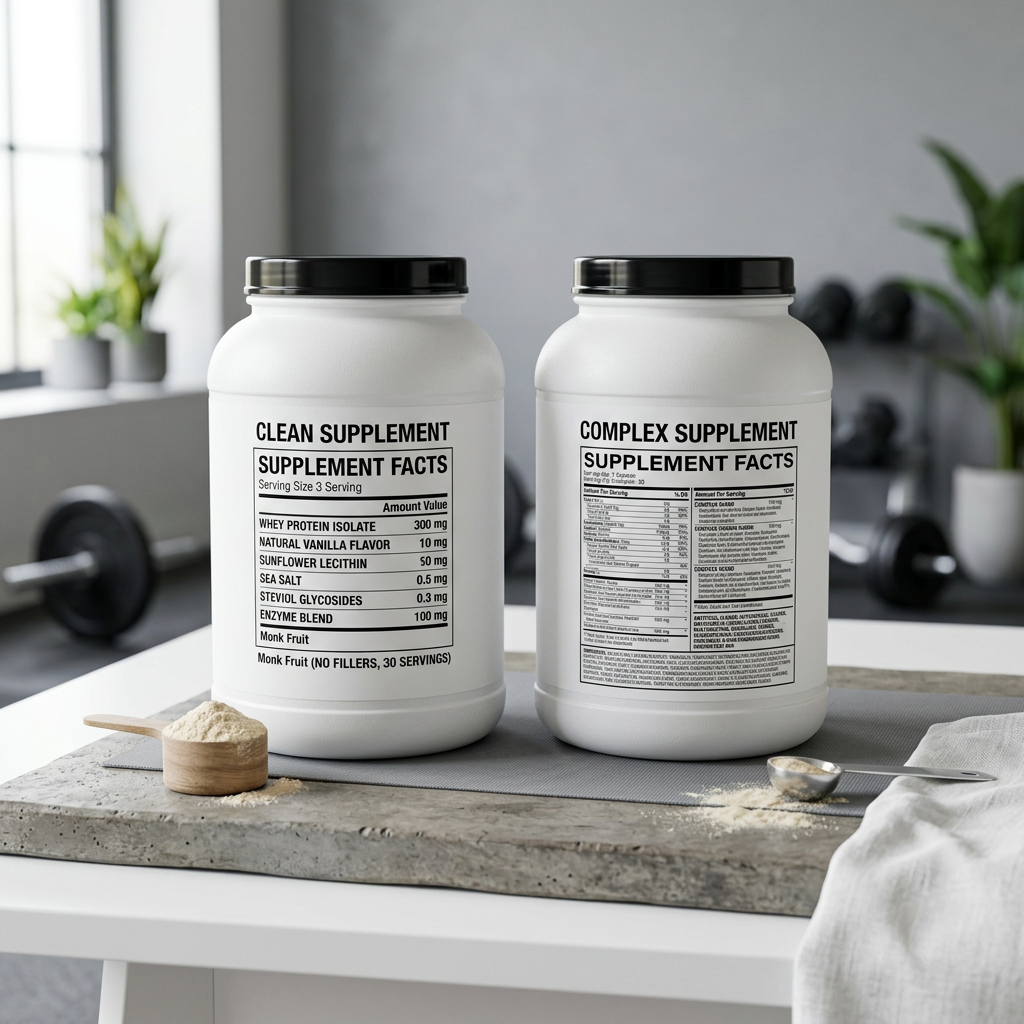
The biggest creatine label red flags are proprietary blends, unclear dosing, unnecessary stimulant add-ons, and ingredient lists that make a simple supplement look like a pre-workout. A good creatine ingredients label should be boringly clear.
Start with the obvious. If the label does not tell you exactly how many grams of creatine you get per serving, do not buy it. Creatine is not a mystery ingredient. There is no good reason to hide the dose behind a blend name like “anabolic transport system” or “volumizing complex.”
Here are the most common red flags:
- Proprietary blends: You cannot tell whether the product contains a useful dose of creatine monohydrate or just a token amount.
- Multiple creatine forms in a blend: This often looks advanced but may reduce clarity rather than improve results.
- Tiny dose claims: If a serving only provides 1 to 2 g of creatine, you will need multiple servings to reach a standard daily dose.
- Loaded with stimulants: Caffeine, yohimbine, or aggressive pre-workout compounds make a product less flexible and can confuse what the supplement is supposed to do.
- Excess sugar or calories: Not automatically bad, but if you only want creatine, extra calories may be pointless.
- Hype claims that overpromise: “Instant saturation,” “zero water retention,” or “works better than monohydrate” should trigger skepticism.
There are also softer red flags. A very long ingredient list is not always bad, especially for flavoured products, but each addition should have a practical purpose. If not, you are often paying a premium for taste, branding, or perceived complexity rather than better creatine outcomes.
One nuance: some ingredients that look suspicious are harmless. Silicon dioxide, for example, is a common anti-caking agent. Citric acid helps flavour and tartness. Sucralose or stevia may improve taste. These are formulation choices, not proof of a poor product. The real issue is whether they crowd out the active dose or hide it.
If you want a broader myth cleanup, our creatine myths debunked guide and creatine myths vs. facts explain why more ingredients rarely means better results.
The simplest rule is still the best one: if two products contain the same amount of well-made creatine monohydrate, the one with the cleaner, clearer label is usually the smarter buy.
Use the label to match the right dose to your body weight and goal
The right creatine dose depends more on your goal and consistency than on flashy label directions, and most labels either oversimplify or oversell this part. For most adults, the practical target is still 3 to 5 g per day of creatine monohydrate for maintenance.
That said, body size and goal matter. Larger athletes, people with more lean mass, or those who want to saturate faster may sit at the upper end of the usual range. A common research-based loading protocol is 0.3 g per kilogram of body weight per day for 5 to 7 days, followed by a maintenance intake of roughly 3 to 5 g daily. Without loading, daily creatine still works; it just takes longer to fully saturate muscle stores, often around 3 to 4 weeks.
Here is a practical framework you can apply directly to the label:
- Beginner who just wants simplicity: 3 to 5 g once daily.
- Strength or muscle gain focus: 5 g daily is a sensible default.
- Smaller adult: 3 g may be sufficient if the product is pure monohydrate and taken consistently.
- Larger athlete: 5 g daily is often more practical than trying to stretch a 3 g serving.
- Fast saturation goal: use a loading phase if tolerated.
Examples:
- 60 kg person: loading would be about 18 g per day for 5 to 7 days, then 3 to 5 g daily.
- 80 kg person: loading would be about 24 g per day for 5 to 7 days, then 3 to 5 g daily.
- 100 kg person: loading would be about 30 g per day for 5 to 7 days, then 5 g daily is a common real-world maintenance choice.
These examples show why the label matters. If the tub only provides 2.5 g per serving, the “one scoop daily” suggestion may be underdosed for many users. If the serving is 5 g, the product is easier to use correctly.
For beginners, women, older adults, and recreational lifters, the label does not need to be different. The same core dosing principles apply. The main differences are tolerability, convenience, and whether you prefer unflavoured powder, capsules, or another format. For more tailored guidance, see creatine for women, creatine for older adults, and creatine for athletes.
What the directions section should say, and why timing matters less than labels imply
The best direction on a creatine label is simple: take it daily and take enough of it, because consistency matters more than precise timing. Many labels imply that pre-workout, post-workout, or meal timing is the secret. For creatine, that is usually marketing exaggeration.
Creatine does not work like caffeine, where you feel an acute boost after one dose. It works through saturation, meaning your muscle creatine stores gradually increase over days and weeks until they are fuller. Once those stores are elevated, your muscles can regenerate ATP faster during repeated short, intense efforts such as sprinting, lifting, jumping, and hard intervals.
That mechanism explains why the timing section on a label should not be overcomplicated. If you remember it best with breakfast, take it with breakfast. If you always have a post-workout shake, add it there. Daily adherence beats theoretical optimization.
Reasonable label directions usually look like one of these:
- Maintenance: Take 1 serving daily with water or a beverage of choice.
- Loading option: Take 4 servings daily for 5 to 7 days, divided throughout the day, then continue with 1 serving daily.
What you should be cautious about are labels that tell you to take creatine only on training days, only immediately before exercise, or in tiny doses that never reach saturation. Creatine is a daily supplement, not just a workout-day supplement. Our guide to creatine on rest days covers why rest-day dosing still counts.
In practical terms, here is what most users notice:
- With loading: possible body-weight increase from extra water stored in muscle within the first week, then training performance benefits shortly after.
- Without loading: little obvious change at first, then gradual improvements in training output over roughly 2 to 4 weeks.
That early weight increase is not body fat. It reflects water being pulled into muscle tissue as intramuscular creatine rises. If you want details, see does creatine make you gain weight.
For timing specifics, including whether pre- or post-workout is marginally preferable in some routines, see when to take creatine. The short version is simple: labels should help you be consistent, not make you think you need a perfect minute on the clock.
Canadian fine print: NPNs, lot numbers, testing claims, and buying with confidence
In Canada, a good creatine label should make regulatory and quality details easy to find, including the NPN where applicable, company information, lot tracing, and any third-party testing or sport certification claims. This fine print is where a trustworthy product often separates itself from a merely flashy one.
An NPN, or Natural Product Number, is an eight-digit product licence number used for approved natural health products in Canada. Its presence does not guarantee that a product is the best one on the market, but it does show that the product is being sold within the Canadian natural health product framework. If you buy in Canada, it is a meaningful legitimacy signal.
Also check for:
- Manufacturer or importer name and contact details: a real company should be easy to identify.
- Lot or batch number: this supports traceability if there is a quality issue.
- Best-before or expiry information: useful for shelf-life management.
- Storage directions: creatine is generally stable as a dry powder, but labels should still tell you to keep it sealed and dry.
- Testing or certification statements: claims like NSF Certified for Sport or Informed Sport matter most for competitive athletes.
For tested athletes, certification is more than a nice bonus. The 2018 International Olympic Committee consensus on dietary supplements emphasized that supplement contamination is a real issue and that athlete risk management matters. A cleaner label, a better-known manufacturer, and sport certification can meaningfully reduce risk, though no system is perfect.
Be careful with vague purity claims. “Lab tested,” “pharmaceutical grade,” or “ultra pure” are only as useful as the details behind them. Does the company explain who tested it, for what, or to what standard? A specific certification beats a generic slogan.
If you are shopping domestically, our guides on is creatine approved in Canada, third-party tested creatine in Canada, and where to buy creatine in Canada go deeper. For straight product comparisons, the best creatine rankings can help you narrow the field.
Bottom line: in Canada, a complete label should help you confirm both what is in the tub and who stands behind it.
How to compare two creatine labels side by side without getting fooled by marketing
The smartest way to compare creatine labels is to reduce each product to five decision points: form, grams per serving, extra ingredients, quality signals, and cost per gram. This method beats brand hype almost every time.
Here is a practical comparison framework you can use in under two minutes:
- Confirm the form. If one product is creatine monohydrate and the other is a blend of trendy forms, monohydrate usually starts ahead on evidence and value.
- Check actual grams per serving. Do not compare scoop sizes; compare creatine grams.
- Scan the ingredient list. Decide whether extras are useful or just noise.
- Review quality cues. NPN, batch details, third-party testing, sport certification, company transparency.
- Calculate cost per gram. Divide price by total grams of creatine in the container.
| What to compare | Better label sign | Warning sign |
|---|---|---|
| Creatine form | Creatine monohydrate clearly stated | Blend with unclear amounts |
| Dose per serving | 3 to 5 g creatine listed plainly | Small dose hidden in a matrix |
| Ingredients | Short, purposeful list | Long list with fillers and stimulants |
| Quality info | NPN, lot number, testing details | Vague purity claims only |
| Value | Low cost per gram of creatine | High price for flavours or branding |
Example: Product A is unflavoured monohydrate, 5 g per serving, 80 servings. Product B is flavoured “performance creatine,” 3 g per serving, 60 servings. Even if Product B looks bigger and more exciting on the shelf, Product A may give you more actual creatine, easier dosing, cleaner ingredients, and better value.
This is also where format matters. Gummies, capsules, and drink mixes can be legitimate, but their labels often reveal tradeoffs. Capsules may require many caps to reach 5 g. Gummies may contain lower per-serving doses or added sugars. Flavoured mixes may be fine, but always check whether they dilute the active amount.
If you want help comparing real products available to Canadian shoppers, see best creatine monohydrate in Canada, creatine gummies vs. powder, and creatine powder vs capsules.
The best creatine supplement label is usually the one that makes comparison easy, not the one that tries hardest to sound impressive.
Beginners, women, older adults, and athletes: what matters most on the label for you
Different users do not need different creatine science, but they often do need different label priorities. The core facts stay the same: adequate dose, monohydrate preferred, and consistent daily use. What changes is what you may want to emphasize when choosing a product.
Beginners should prioritize simplicity. A plain unflavoured creatine monohydrate with 3 to 5 g per serving is usually ideal. Beginners are more likely to quit because the product is confusing or causes avoidable stomach upset from unnecessary extras. If that is you, start simple and build the habit first.
Women should read past gendered marketing. A “women’s creatine” label is not inherently better than a regular creatine label. The key is still dose, form, and tolerability. The supplement does not need to be pink, hormone-themed, or loaded with beauty ingredients to be effective. If you want the physiology and practical context, see creatine for women.
Older adults may care more about ease of use, medical caution, and evidence-backed simplicity. A clearly dosed powder or capsule product with minimal extras is often best. Creatine can be a useful adjunct to resistance training as people age, but older adults may want especially clear labels, realistic directions, and easy communication with a healthcare provider. Our creatine for older adults guide covers this in detail.
Competitive athletes should care most about contamination risk and testing. In that case, third-party certification and batch traceability can matter as much as the ingredient panel itself. A basic monohydrate from a company with stronger testing practices is often wiser than a “high-performance blend.”
Vegetarians and vegans may respond especially well to supplementation because dietary creatine intake tends to be lower. The label priority is still dose and purity, but they may want confirmation about suitability or manufacturing. See is creatine vegan and creatine for vegetarians.
The lesson across all groups is the same: do not let lifestyle marketing distract you from label fundamentals. The tub should tell you what matters scientifically, not just what sounds emotionally tailored.
What labels and marketing get wrong about safety, bloating, kidneys, and ‘non-responders’
Creatine labels often exaggerate side effects to make alternative forms look better, but the evidence still supports creatine monohydrate as safe for healthy people when used at standard doses. If a label implies that regular monohydrate is harsh, dangerous, or outdated, that is usually a marketing angle rather than a scientific one.
The ISSN position stand and the 2021 JISSN misconceptions review both support the broad safety profile of creatine when appropriately used. The Mayo Clinic overview is also broadly consistent that creatine appears safe for healthy adults at recommended doses.
Here is what labels often get wrong:
- “No water retention unlike monohydrate.” Creatine can increase water stored inside muscle, especially early on, but that is part of how saturation works. It is not the same as getting fat.
- “No bloating.” Some people do get GI discomfort, especially with large single doses. Splitting doses or avoiding loading often solves this. See creatine digestive side effects.
- “Safer for kidneys.” This is usually an unsupported implication. Creatine can raise blood creatinine, which is a breakdown marker and can confuse lab interpretation, but that is not the same as proving kidney damage in healthy users. More on that at is creatine bad for your kidneys.
- “Works even if you are a non-responder.” True non-response is often overstated. Some people notice less obvious benefit because they already have relatively high baseline muscle creatine, eat more meat, or train in ways that make effects less visible. That does not prove a fancy blend will work better.
Reasonable caution still matters. People with pre-existing medical conditions, especially kidney-related concerns, or those taking medications should speak with a qualified healthcare professional before use. Labels should never be your only safety source.
A trustworthy product does not need fear-based claims to justify itself. In creatine, plain monohydrate plus honest dosing is usually the most evidence-aligned option.
The bottom line: your creatine label checklist before you buy
If you want the shortest possible answer to how to read a creatine label, use this checklist: choose creatine monohydrate, confirm 3 to 5 g of actual creatine per serving, keep the ingredient list simple, verify Canadian and quality details, and compare cost per gram before you buy. That is the framework that works for almost everyone.
Here is the full buyer checklist in order:
- Form: Is it creatine monohydrate?
- Dose: Does one serving provide a meaningful amount, usually 3 to 5 g?
- Clarity: Is the amount of creatine stated plainly, not hidden in a blend?
- Ingredients: Are there only necessary extras?
- Directions: Do the instructions support daily use, not just workout-day use?
- Quality: Is there an NPN, lot number, expiry, and clear company information?
- Testing: Are any third-party claims specific and credible?
- Value: What is the cost per gram of actual creatine?
If a label passes those eight points, you are probably looking at a solid product. If it fails more than one or two, keep shopping.
For many people, the best purchase is still an unflavoured creatine monohydrate powder with a one-ingredient label. It is simple, effective, usually cheaper per gram, and easiest to dose correctly. Flavoured powders, capsules, and gummies can still be valid choices, but they should earn their place through convenience, not confusion.
If you want to go further, explore our how to choose creatine guide, the best creatine rankings, and our creatine brand reviews. If you already have a tub in hand, use this article as your creatine label guide: find the form, find the grams, read the ingredients, and trust the fine print more than the front-panel promises.
The best creatine label is the one that tells the truth clearly. In practice, that usually means plain monohydrate, evidence-based dosing, and very little drama.
Creatine Label Numbers That Actually Matter
- 3-5 g/day Typical maintenance dose — The most common evidence-based daily intake for staying saturated.
- 20 g/day Standard loading total — Usually split into 4 doses per day for 5 to 7 days.
- 5-7 days Typical loading phase — Gets muscle stores up faster than maintenance-only use.
- 3-4 weeks Time to saturate without loading — Daily creatine still works if you skip loading.
Frequently Asked Questions
How do you read a creatine label properly?
Read a creatine label by checking the creatine form, the grams of actual creatine per serving, the full ingredient list, and the fine print for quality details. The best labels usually show creatine monohydrate clearly, provide 3 to 5 g per serving, avoid proprietary blends, and include traceable company and batch information.
What should I look for on a creatine label?
You should look for creatine monohydrate, a clearly stated dose, and a short ingredient list. In practice, that means confirming the product gives you a meaningful daily amount of creatine, does not hide the dose in a blend, and provides legitimate quality and compliance details such as an NPN in Canada.
Is a bigger scoop better on a creatine supplement label?
No, a bigger scoop is not automatically better because scoop size is not the same as creatine content. A large scoop may simply include more flavouring, sweetener, or filler, so you should compare the grams of actual creatine per serving instead of the physical scoop weight.
How many grams of creatine should a label show per serving?
A useful creatine label usually shows 3 to 5 g of creatine per serving for maintenance use. Some products use smaller doses, but those may require multiple servings to reach the standard daily intake supported by mainstream creatine research.
What are the red flags on a creatine label?
The main red flags are proprietary blends, unclear dosing, multiple creatine forms with no amounts listed, and exaggerated claims such as zero water retention or better than monohydrate. A label that makes it hard to know how much creatine you are actually getting is usually not a strong buy.
Is creatine monohydrate the best thing to see on the label?
Yes, creatine monohydrate is still the best form to see on the label for most buyers. It remains the most studied, most consistently effective, and usually the most affordable form, which is why it is still the default recommendation for strength, muscle, and performance goals.
Do I need a creatine label with third-party testing?
You do not always need third-party testing, but it is a valuable extra, especially for competitive athletes. If you are subject to drug testing or want a higher-confidence quality signal, certifications such as NSF Certified for Sport or Informed Sport are more meaningful than vague claims like lab tested.
What does NPN mean on a creatine label in Canada?
NPN stands for Natural Product Number, which is an eight-digit licence number used for approved natural health products in Canada. It is a useful legitimacy signal for Canadian buyers, although it does not by itself prove that one creatine is better than another.
Are extra ingredients on a creatine label bad?
Extra ingredients are not automatically bad, but they should have a clear purpose and should not reduce dose clarity. Flavours, citric acid, anti-caking agents, or sweeteners can be fine, while unnecessary stimulants, hidden blends, or filler-heavy formulas are less appealing for a product as simple as creatine.
How can I compare two creatine supplement labels fairly?
Compare two creatine labels by checking the form, grams per serving, ingredient list, quality cues, and cost per gram of actual creatine. This prevents you from being misled by tub size, scoop size, or front-label marketing language that sounds impressive but says little about true value.