Creatine for Hardgainers: Why You May Need It More, and How to Maximize Results
By The Creatine Canada Research Team — Evidence-based supplement analysts
Yes—creatine for hardgainers is usually worth taking, because it helps you train harder, recover your high-intensity efforts faster, and add lean mass even if gaining muscle has always been slow for you. It will not override too-few calories or poor training, but for people who struggle to grow, creatine monohydrate is one of the safest, cheapest, most evidence-based ways to improve the muscle-building environment.
Evidence-based · Cites 4 sources · Editorial standards
Key Takeaways
- Hardgainers can benefit from creatine, but it works best when calories, protein, and progressive overload are already in place.
- The most evidence-based dose is 3 to 5 g of creatine monohydrate daily, or a 5 to 7 day loading phase of about 20 g/day split into 4 doses.
- Creatine helps hard-to-gain muscle by increasing phosphocreatine stores, which improves repeated high-intensity performance and training quality.
- Expect faster scale changes from water in the first 1 to 2 weeks, with meaningful strength and muscle benefits building over several weeks of training.
- If you are a slow gainer, consistency matters more than timing; take creatine every day, including rest days.
- Micronized creatine monohydrate is usually the best buy for Canadians; look for a Natural Product Number and, ideally, third-party testing.
- Common problems like bloating or stomach upset are usually solved by smaller doses, better mixing, and avoiding unnecessary mega-dosing.
Creatine for hardgainers: the direct answer nobody should overcomplicate
Creatine for hardgainers works because it improves the quality of muscle-building training, not because it magically changes your body type. If you are a hardgainer, an ectomorph, or simply someone who feels it is hard to gain muscle, creatine can help you add lean mass and strength more efficiently by increasing your muscle phosphocreatine stores. Phosphocreatine is stored creatine bound to phosphate inside muscle, and its main job is to help rapidly regenerate ATP, the immediate energy currency for short, hard efforts like heavy sets, sprints, and explosive reps.
That matters for hardgainers because muscle growth is driven by repeated productive training over time. If creatine helps you squeeze out one more rep, maintain bar speed across sets, or recover better between hard intervals, your training volume and quality often improve enough to support more muscle gain. The 2017 ISSN position stand concluded that creatine monohydrate is the most effective ergogenic nutritional supplement currently available for increasing high-intensity exercise capacity and lean body mass during training.
What creatine does not do is solve the real reasons many people stay skinny. If you chronically under-eat, skip sessions, fail to progressively overload, or bounce between programs, creatine will not rescue your results. Many so-called hardgainers are actually under-recovered under-eaters with inconsistent training rather than genetically doomed non-responders.
For beginners, the practical takeaway is simple:
- Take creatine monohydrate daily.
- Lift with a structured program built around compounds and enough hard sets.
- Eat in a calorie surplus consistently.
- Track body weight, strength, and gym performance for at least 6 to 8 weeks.
If you want a starting point, our creatine dosage calculator and guide on creatine product catalog can make the first step easier. If you have never used the supplement before, see /creatine-for-beginners for a full walkthrough.
The short version is this: creatine and hardgainer goals fit together very well, but creatine amplifies good habits rather than replacing them.
Why hardgainers often need creatine more than naturally big lifters
Hardgainers often benefit disproportionately from creatine because they have less margin for wasted training stimulus. When muscle gain comes slowly, every hard set matters more. Creatine improves the rapid-energy side of performance, which can help preserve output across multiple sets and sessions. For someone who struggles to gain muscle, that extra training quality can be the difference between merely exercising and actually accumulating a hypertrophy stimulus.
There is also a practical reason creatine matters for leaner, lighter, or more plant-based lifters: baseline muscle creatine stores are not identical in everyone. People who eat little or no meat may start with lower creatine stores and can sometimes see a stronger response when they supplement. That does not mean meat-eaters cannot benefit; it means some hardgainers, especially vegetarian or vegan ones, may have more room to improve their saturation level.
Another overlooked point is recovery within a session. Hardgainers often report that they fatigue early, lose reps fast, or feel flat by the third or fourth working set. Creatine helps regenerate ATP more quickly between repeated high-intensity bouts, so later sets may hold up better. Better repeat performance can translate into:
- More total reps at a given load
- Slightly better training volume over time
- More effective progressive overload
- Potentially better cell hydration, which supports a more anabolic training environment
Cell hydration matters because creatine pulls water into muscle cells, increasing intracellular water. This is not the same as gaining fat or getting soft. Intracellular water is water held inside muscle tissue, and it may contribute to a fuller look and support training-related adaptations. If your scale weight goes up early, that is usually part of the expected process, not a sign the supplement is making you fat. For a deeper breakdown, see /does-creatine-make-you-gain-weight.
What about true non-responders? They exist, but the term is overused. People may appear not to respond because they are under-dosing, missing days, not training hard enough, or already near high baseline muscle creatine stores. If you suspect this applies to you, our guide to creatine non-responders and creatine not working can help troubleshoot.
In plain language: if your body is hard to grow, creatine gives your training more bite.
How creatine actually helps people who can't gain muscle
Creatine helps people who cannot seem to gain muscle by improving high-intensity energy availability, training volume, and the conditions that support hypertrophy. The mechanism starts with the phosphocreatine system. During short, hard efforts, ATP is used rapidly. Phosphocreatine donates a phosphate group to help rebuild ATP quickly, allowing you to sustain force output for a little longer or recover faster before the next effort.
That sounds technical, but the gym translation is straightforward: you may manage an extra rep on your top set, hold strength better on later sets, or maintain power through repeated efforts. Over weeks and months, those small advantages can accumulate into more total productive work. More productive work is one of the main drivers of muscle growth when paired with adequate food and recovery.
Creatine may also support lean mass indirectly through several related effects:
- Greater training quality: better repeated sprint or lifting performance can raise your effective workload.
- Improved recovery between sets: you may feel less drop-off across a session.
- Higher muscle water content: fuller muscle cells are not new muscle tissue by themselves, but they often improve training feel and appearance.
- Potential support for glycogen storage: glycogen is stored carbohydrate in muscle, and better fuel availability can support hard training.
This is why creatine is not a mass gainer in the calorie sense. It does not contain meaningful calories, protein, or carbohydrate. It is not replacing food. Instead, it helps you get more from the training and nutrition you are already doing. That is an important distinction for the person searching for creatine for people who can't gain muscle: creatine solves a performance bottleneck, not a calorie deficit.
The 2021 JISSN review on common questions and misconceptions about creatine reinforces that creatine monohydrate remains the reference form and that many popular fears around safety, cramping, dehydration, and kidney harm in healthy users are not supported by the bulk of evidence.
If you want the bigger science picture, read /does-creatine-build-muscle and /creatine-and-atp. But the key practical idea is simple: creatine gives slow gainers a better chance to turn hard training into visible progress.
The best creatine dose for hardgainers, by body weight and goal
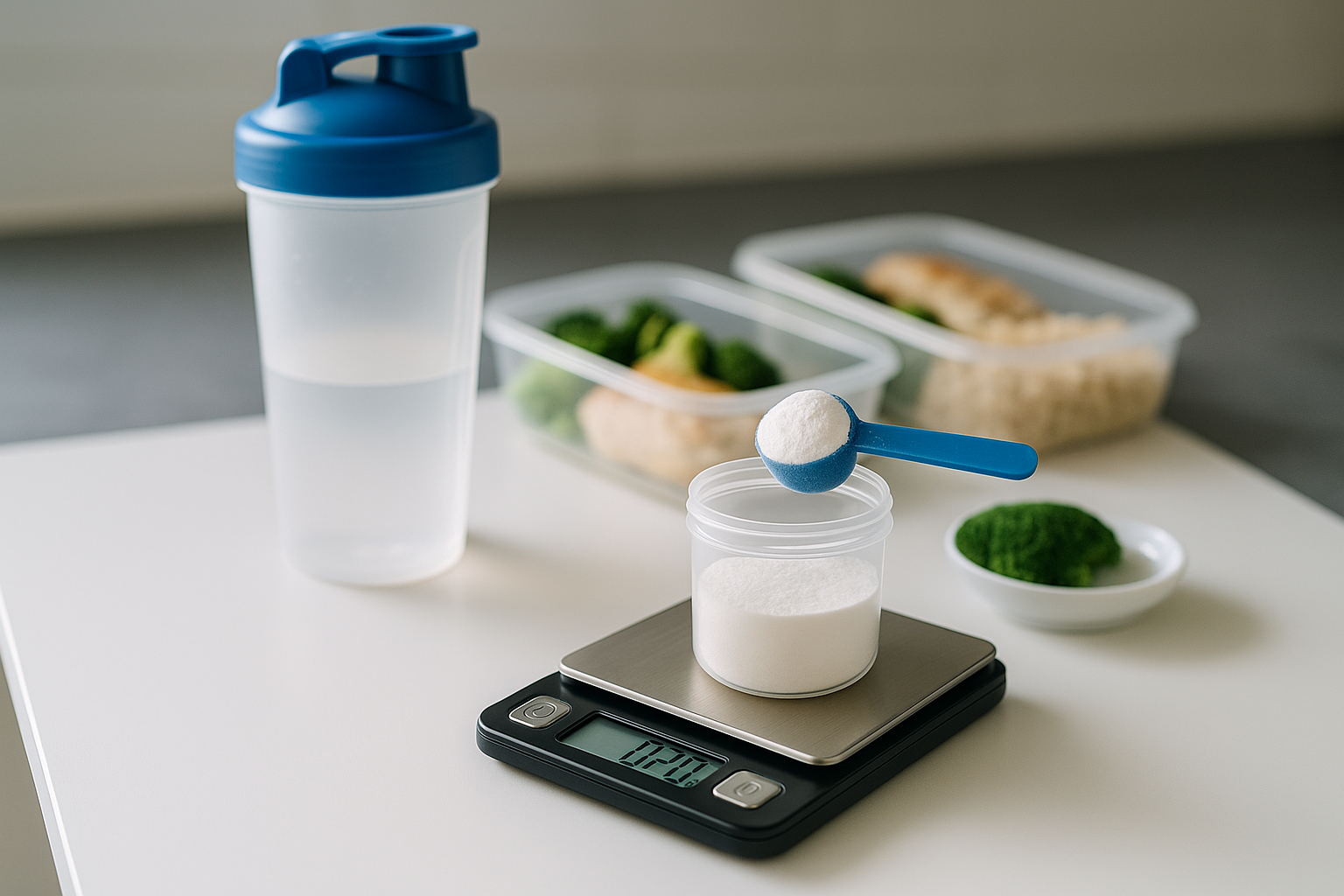
The best creatine dose for most hardgainers is 3 to 5 g of creatine monohydrate every day, with an optional loading phase if you want results faster. You do not need a fancy formula, and you do not need to cycle it. The standard evidence-based approaches are:
- Maintenance-only: 3 to 5 g once daily.
- Loading plus maintenance: about 20 g per day, split into 4 doses of 5 g, for 5 to 7 days; then 3 to 5 g daily.
Loading saturates muscle creatine stores faster. Maintenance-only gets you to the same place more gradually. For many hardgainers, the choice is simple: if you want faster early effects and tolerate split doses well, load; if you prefer simplicity or have a sensitive stomach, skip loading.
| Body weight | Goal | Simple daily dose | Optional loading phase |
|---|---|---|---|
| Under 60 kg | General muscle gain | 3 g/day | 20 g/day split into 4 doses for 5 to 7 days |
| 60 to 90 kg | Muscle and strength | 3 to 5 g/day | 20 g/day split into 4 doses for 5 to 7 days |
| Over 90 kg | Size, strength, repeated power | 5 g/day | 20 g/day split into 4 doses for 5 to 7 days |
Body weight does matter at the margins, but the classic 3 to 5 g maintenance range covers most people well. Bigger athletes tend to sit more comfortably at 5 g daily. Smaller lifters often do fine at 3 g daily once saturated. If you want a more personalised starting point, use the creatine dosage calculator or read /how-much-creatine-per-day.
Two common dosing mistakes hurt results in hardgainers:
- Taking creatine only on workout days.
- Taking huge doses because more feels more anabolic.
Creatine works by saturating muscle over time. Missing rest days slows or weakens that saturation. Mega-dosing does not build muscle faster once stores are full; it mostly increases the chance of stomach upset.
If you are hard to gain muscle and want the simplest winning protocol, take 5 g of monohydrate every day and keep doing it for at least 8 weeks.
When to take creatine, what to mix it with, and how fast hardgainers notice results
For hardgainers, the best time to take creatine is the time you will remember every day, because consistency matters much more than exact timing. Daily muscle saturation is the main goal. Whether you take it pre-workout, post-workout, with breakfast, or with a shake matters less than making it routine.
That said, many lifters find one of these approaches easiest:
- Post-workout with protein and carbs: convenient and easy to remember.
- With a daily meal: often gentler on the stomach.
- Split doses during loading: reduces digestive discomfort.
You can mix creatine monohydrate with water, juice, or a protein shake. It does not need sugar to work, though taking it with food is fine. If texture bothers you, warm water improves solubility. For detailed mixing help, see /how-to-mix-creatine, and for timing nuance, read /when-to-take-creatine.
Here is a realistic expectation timeline for a slow gainer:
- Days 1 to 7 with loading: some people notice fuller muscles, slight body-weight increase, and better gym pop quickly.
- Weeks 2 to 4: strength endurance and repeated effort performance often start feeling more obvious.
- Weeks 4 to 8: if training and food are dialled in, you may see measurable progress in loads, reps, and scale weight.
- Weeks 8 to 12: body composition changes become more meaningful, especially if your training log is improving steadily.
How do you know it is working? Look for:
- More reps at the same load.
- Less performance drop-off across sets.
- Gradual increases in body weight without a matching increase in waist size.
- A slightly fuller, less flat muscle look.
If nothing changes after 6 to 8 weeks, the problem is usually not timing. It is more often under-eating, missed doses, poor programming, inadequate effort, or unrealistic expectations. Our guides on /how-long-does-creatine-take-to-work and /creatine-and-training-results go deeper.
Take creatine every day, keep training hard, and judge it by your logbook over weeks, not by a one-day feeling.
A step-by-step creatine plan for skinny lifters and slow gainers
The best hardgainer creatine plan is boringly simple: buy plain monohydrate, dose it daily, pair it with a calorie surplus, and track training outcomes for at least two months. Here is a practical step-by-step protocol you can start today.
- Pick the right form. Buy creatine monohydrate, ideally micronized for easier mixing. You do not need HCL, buffered creatine, ethyl ester, or a proprietary blend.
- Choose your dose. Take 5 g daily if you want the broadest simple recommendation. Smaller lifters can use 3 g daily after saturation.
- Decide whether to load. If you want faster results, take 5 g four times daily for 5 to 7 days, then drop to 3 to 5 g daily.
- Attach it to a habit. Take it with breakfast, after training, or with your nightly shake.
- Eat enough. A hardgainer who is not in a consistent calorie surplus will struggle to build muscle even with perfect supplementation.
- Train for progression. Focus on compounds, sufficient weekly volume, and adding reps or load over time.
- Track weekly. Log body weight, key lifts, and at least one body measurement or progress photo.
A useful weekly target for many hardgainers is a slow, controlled increase in scale weight rather than aggressive bulking. If your weight is not moving at all after two weeks, add food before blaming the creatine. A protein shake plus carb source, an extra lunch portion, or a daily bedtime snack often solves the real issue.
What should a sample day look like?
- Breakfast: creatine with water or juice
- Training: normal pre-workout meal if desired
- Post-workout: protein plus carbohydrate meal or shake
- Later meals: continue eating enough total calories
Creatine does not need to be cycled. Keep taking it on training days, rest days, deload weeks, and travel days. If you miss one day, it is not a disaster; just resume as normal. For the bigger picture, see /how-to-take-creatine, /creatine-on-rest-days, and /do-you-need-to-cycle-creatine.
If you are a hardgainer, treat creatine like brushing your teeth: simple, daily, non-negotiable, and not dependent on motivation.
Who creatine is for: beginners, women, older adults, athletes, and true ectomorphs
Creatine is not just for young male bodybuilders; it can be useful for almost any healthy person whose goal is more strength, lean mass, or repeated high-intensity performance. That includes many people who identify as hardgainers.
Beginners: Yes, beginners can take creatine from day one. In fact, new lifters often benefit because early training progress is driven by consistency and skill practice, and creatine can support better workout quality while good habits are forming.
Women: Women can use the same basic monohydrate protocol as men. Creatine does not make women bulky by itself. It supports lean mass, training output, and recovery, and the common fear of becoming “puffy” is usually confusion about normal intracellular water retention. See /creatine-for-women for the full discussion.
Older adults: Adults over 50 or 60 may benefit from creatine when combined with resistance training because preserving muscle, strength, and function becomes increasingly important with age. The goal here is often healthy aging as much as aesthetics. Related guides include /creatine-for-older-adults and /creatine-and-aging.
Athletes: Creatine is especially relevant in sports that rely on repeated power output, sprinting, jumping, tackling, lifting, and accelerating. The International Olympic Committee consensus on supplements recognises creatine as one of the few sports supplements with strong evidence for specific performance uses.
Vegetarians and vegans: Plant-based athletes often have a strong rationale for supplementing because dietary creatine intake is low or absent. This can make creatine particularly relevant for leaner lifters who have trouble building size.
True ectomorphs and naturally skinny lifters: The body-type language is imperfect, but the practical question is fair. If you are naturally light, long-limbed, and difficult to bulk, creatine is still one of the best first supplements to try because it addresses training performance rather than promising a fantasy metabolism reset.
Who should be more cautious? Anyone with existing kidney disease, a relevant medical condition, or medication concerns should speak to a qualified clinician before supplementing. For general safety questions, see /is-creatine-safe and /who-should-not-take-creatine.
In short, creatine is for hardgainers of many kinds, not just one stereotype.
Safety, side effects, kidney myths, and the weight gain hardgainers should expect
Creatine monohydrate is well-supported as safe for healthy people at standard doses, and the most common side effects are mild, manageable, and usually dose-related. The best-supported safety overview remains the ISSN position stand, which found no compelling evidence that recommended creatine use harms healthy kidneys, causes dehydration, or increases cramping risk.
The side effects hardgainers most commonly notice are:
- Early scale-weight gain: usually water held inside muscle, especially during loading.
- Stomach upset: more likely if you take too much at once.
- Temporary bloated feeling: often improved by smaller divided doses or skipping loading.
The kidney myth needs context. Creatine can raise creatinine, a normal breakdown product measured on blood tests. That does not automatically mean kidney damage. This is one reason people confuse creatine with kidney stress. If you have healthy kidneys, standard supplementation is generally considered safe; if you have kidney disease or a physician has told you to avoid it, get personalised medical advice first. See /is-creatine-bad-for-your-kidneys and /creatine-vs-creatinine.
Does creatine dehydrate you? No, not in the way the myth suggests. Creatine increases intracellular water storage, but that does not mean it dries out the rest of your body. You should still drink normally and especially pay attention to hydration if you train hard, sweat heavily, or live through hot Canadian summers. More on that in /how-much-water-with-creatine.
For hardgainers, the key safety mindset is this: the supplement is not the risky part; the common mistake is using it to distract from basics. If you are under-sleeping, under-eating, and smashing random workouts, creatine will not cause harm so much as give you false hope.
Expected early weight gain from creatine is usually not fat, and for most hardgainers that is a feature, not a problem.
The hardgainer mistakes that make creatine look like it is not working
Creatine usually fails for hardgainers because of execution errors, not because creatine itself is weak. When someone says, “creatine did nothing for me,” the root cause is often one of a handful of fixable mistakes.
- Not eating enough: Creatine does not replace a calorie surplus.
- Taking it inconsistently: Sporadic use slows saturation.
- Expecting it to work without training: Creatine amplifies training, not inactivity.
- Using under-dosed fancy blends: the label says “muscle matrix,” but the actual creatine dose is unclear.
- Program hopping: no supplement can compensate for untracked random lifting.
- Judging by mirror changes after a few days: real muscle gain takes weeks to months.
Now for the common myths.
Myth 1: Hardgainers need exotic creatine forms. False. Monohydrate remains the gold standard for efficacy, cost, and evidence. More expensive forms are usually marketing first, evidence second.
Myth 2: Creatine makes you fat. False. The early weight gain is usually water retained in muscle, not fat gain.
Myth 3: You have to cycle creatine. False. Daily continuous use is the standard approach.
Myth 4: If you do not feel a rush, it is not working. False. Creatine is not a stimulant. It works through saturation and training effects, not a buzz.
Myth 5: More is better. False. Once stores are saturated, taking more than a sensible maintenance dose does not create extra muscle-building magic.
For a full myth breakdown, see creatine myths debunked and /creatine-myths-and-facts. If your stomach gets upset, the fix is usually practical: reduce single-dose size, mix it better, take it with food, or use micronized powder. If your results are poor, fix calories, protein, and programming before you go hunting for a “stronger” form.
Creatine and hardgainer frustration usually come down to the basics: the supplement can help, but only if the rest of the system gives it something to work with.
How to choose the right creatine in Canada without overpaying for marketing
The best creatine for hardgainers in Canada is usually a plain creatine monohydrate powder with a clear dose, a Natural Product Number, and preferably third-party testing. In Canada, an NPN is a Natural Product Number issued for licensed natural health products. It does not mean a product is perfect, but it does mean the product has gone through Health Canada’s natural health product framework.
When you compare products, ignore flashy labels and check the fundamentals:
- Form: creatine monohydrate first.
- Dose clarity: 3 to 5 g actual creatine monohydrate per serving.
- Added ingredients: fewer is usually better unless you specifically want flavour.
- Testing: look for NSF Certified for Sport, Informed Sport, or reputable quality-control disclosure where relevant.
- Value: calculate cost per gram, not just tub price.
| Option | Best for | Pros | Cons |
|---|---|---|---|
| Unflavoured monohydrate powder | Most hardgainers | Best evidence, lowest cost per gram, easy to dose | Can feel gritty if poorly mixed |
| Micronized monohydrate | People who dislike texture | Mixes better, same active ingredient | Sometimes slightly pricier |
| Capsules | Travel and convenience | No mixing, easy to pack | Usually worse value, more pills needed |
| Gummies or blends | Taste-focused users | Convenient for some | Often under-dosed or expensive per gram |
If you are shopping now, start with our best creatine rankings, compare options in creatine brand reviews, or browse the creatine product catalog. For a deeper Canadian buying framework, the related guide /best-type-of-creatine is useful, as is /best-creatine-monohydrate-canada.
A final buying rule: if a product claims it beats monohydrate but hides the exact dose or leans on proprietary terms, be sceptical. Hardgainers do not need novelty; they need something affordable enough to take every day for months.
The smartest Canadian purchase is usually the least sexy one: plain monohydrate, correctly labelled, priced fairly, and used consistently.
Bottom line: should a hardgainer take creatine?
Yes, a hardgainer should usually take creatine if the goal is gaining muscle and strength more effectively, because creatine monohydrate is one of the rare supplements with strong evidence, low cost, and practical upside. It is especially useful for people who feel stuck, flat, weak late in sessions, or unable to turn effort into visible progress.
But the hierarchy matters. For someone who is hard to gain muscle, the winning order is:
- Train with progressive overload.
- Eat enough total calories and protein.
- Sleep and recover well.
- Use creatine daily to improve training output and support lean mass gains.
If those first three are missing, creatine will disappoint you. If those first three are in place, creatine is one of the best additions you can make. The practical recommendation for nearly everyone is simple: buy creatine monohydrate, take 3 to 5 g daily, stay consistent for at least 8 weeks, and judge it by better gym performance and gradual body-weight progress rather than hype.
For next steps, the most useful reads are /creatine-for-bulking, /creatine-for-skinny-guys, /creatine-maintenance-dose, and /complete-creatine-guide.
Creatine for hardgainers is not a shortcut; it is a force multiplier for people who finally want their training and eating effort to produce more size and strength.
If you have struggled to grow, creatine is probably not the whole answer, but it is very often part of the right answer.
Creatine for Hardgainers: The Numbers That Matter
- 3-5 g/day Standard daily maintenance dose — The evidence-based range that keeps muscle stores elevated for most adults.
- ~20 g/day Typical loading dose — Usually split into 4 doses for 5-7 days to saturate muscles faster.
- 5-7 days Fastest common saturation timeline — With a standard loading phase.
- 4-8 weeks Realistic window for noticeable training and physique changes — Assumes daily use plus effective training and adequate calorie intake.
Frequently Asked Questions
Is creatine good for hardgainers?
Yes, creatine is good for hardgainers because it helps improve high-intensity training performance and can support greater lean mass gains over time. It will not replace eating enough or training properly, but among legal supplements it has one of the strongest evidence bases for people who struggle to add muscle.
Will creatine help if I am hard to gain muscle?
Yes, creatine can help if you are hard to gain muscle, especially by improving repeated effort performance in the gym. The benefit is usually indirect: better sets, more productive volume, and a better chance of progressing your lifts, which together support muscle growth when calories and protein are sufficient.
Is creatine for ectomorphs worth it?
Yes, creatine for ectomorphs is usually worth it because naturally skinny lifters often need every possible boost to training quality and lean-mass support. Creatine will not change your body type overnight, but it is one of the most practical supplements for making your resistance training more effective.
How much creatine should a hardgainer take?
Most hardgainers should take 3 to 5 g of creatine monohydrate daily. If you want faster saturation, you can use a loading phase of about 20 g per day split into 4 doses for 5 to 7 days, then continue with 3 to 5 g daily.
How long does creatine take to work for a slow gainer?
Creatine can start affecting muscle stores within days if you load, but most slow gainers notice meaningful gym benefits over 2 to 4 weeks and clearer physique changes over 4 to 8 weeks. The timeline depends heavily on daily consistency, training quality, and whether you are actually eating in a surplus.
Does creatine make hardgainers gain fat?
No, creatine does not directly make hardgainers gain fat. Early weight gain is usually water stored inside muscle cells, and actual fat gain depends on your overall calorie intake rather than creatine itself.
What is the best type of creatine for hardgainers?
The best type of creatine for hardgainers is creatine monohydrate. It is the most studied form, the most cost-effective form, and the reference standard against which newer forms are compared.
Should a hardgainer load creatine or just take 5 grams a day?
Both approaches work, so the choice depends on how quickly you want saturation and how well your stomach tolerates larger intakes. Loading can produce faster early effects, while taking 3 to 5 g daily is simpler and usually easier to stick with.
Can beginners who are skinny take creatine right away?
Yes, skinny beginners can take creatine right away. There is no rule saying you must earn creatine by training for a certain number of months first, and beginners often benefit from establishing a simple daily habit early.
Why does creatine seem not to work for some hardgainers?
Creatine usually seems not to work for hardgainers because they are under-eating, missing doses, expecting instant visible muscle gain, or following inconsistent training. True low response can happen, but poor execution is far more common than true non-response.