
Creatine and Glycogen: How Creatine Enhances Carbohydrate Storage and Use
By The Creatine Canada Research Team — Evidence-based supplement analysts
Creatine can help muscles store and restore more glycogen, especially when you combine it with carbohydrate and hard training. In plain English, creatine does not replace carbs, but it can improve creatine glycogen storage, support glucose uptake into muscle, and help you refill fuel faster after demanding exercise.
Evidence-based · Cites 4 sources · Editorial standards
Key Takeaways
- Creatine monohydrate can support muscle glycogen storage, but the effect is strongest when carbs and training are already in place.
- The standard evidence-based dose is 3-5 g of creatine monohydrate daily, with an optional loading phase of 20 g/day split into 4 doses for 5-7 days.
- Creatine and carbs work well together because insulin and muscle contraction both help move nutrients into muscle.
- For glycogen resynthesis after hard sessions, take creatine consistently and pair post-workout meals with adequate carbohydrate.
- You do not need sugar to make creatine work, but taking creatine with a meal can be practical and well tolerated.
- Monohydrate is still the best-studied, most cost-effective form for performance and muscle fuel support.
- If creatine seems not to be working, the usual issues are underdosing, inconsistency, poor training stimulus, or expecting an immediate visual change.
Yes — creatine can increase muscle glycogen storage, but only in the right context
Creatine and glycogen are complementary, not competing, parts of muscle energy. Creatine helps your muscles regenerate ATP, the cell’s immediate energy currency, during short, hard efforts, while glycogen is the stored form of carbohydrate that feeds repeated contractions. When people ask whether creatine helps glycogen, the practical answer is yes: creatine can support muscle glycogen storage and glycogen resynthesis, particularly when it is combined with carbohydrate intake and exercise that depletes muscle fuel.
The main point is that creatine does not “turn into carbs” or directly become glycogen. Instead, creatine raises intramuscular phosphocreatine, which is stored creatine bound to phosphate and used to rapidly remake ATP. That improves training quality, repeated sprint capacity, and cell hydration, and those changes appear to create a better environment for muscles to take up glucose and replenish glycogen after training.
This is why creatine and carbohydrate metabolism are often discussed together. Hard training lowers glycogen. Carbohydrate intake provides the raw material to refill it. Creatine may help the muscle pull in and retain more of that fuel, especially after glycogen-depleting work such as team sport intervals, high-volume lifting, repeated sprints, or two-a-day sessions.
The 2017 ISSN position stand concluded that creatine monohydrate is the most effective ergogenic nutritional supplement currently available for increasing high-intensity exercise capacity and lean mass, and that foundation matters because better training quality is one reason glycogen-related outcomes can improve over time. If you need a refresher on the basics, see what creatine is and our creatine dosage calculator.
For most people, the take-home is simple. If your goal is better training performance, fuller muscles, faster recovery between hard sessions, or better carbohydrate storage in muscle, take creatine monohydrate daily and keep your carb intake appropriate for your workload. Creatine works best as a force multiplier on a good diet and solid training, not as a workaround for low energy intake.
How creatine affects glycogen: the mechanisms that actually make sense
Creatine may enhance glycogen storage through several overlapping mechanisms, not one magic switch. The most plausible pathways are improved training output, greater cell hydration, and better nutrient handling in exercised muscle.
First, creatine improves rapid ATP recycling. Phosphocreatine donates a phosphate group to ADP to remake ATP during very intense effort. When ATP supply is restored faster, you can often maintain force or sprint output for more repetitions or more total work. More high-quality work creates a stronger signal for carbohydrate use during training and carbohydrate replacement after training. This is one reason creatine and muscle glycogen are linked in athletes doing repeated hard sessions rather than in sedentary conditions.
Second, creatine increases intracellular water, which may support glycogen storage. Glycogen is stored with water inside muscle, so the “fuller” feeling people notice on creatine is not just random puffiness. It is usually intracellular water in muscle tissue, not body fat. A better-hydrated muscle cell may create a more favourable anabolic and storage environment, although this mechanism is supportive rather than fully explanatory on its own.
Third, creatine may help glucose uptake in muscle when paired with exercise. Muscle contraction itself stimulates glucose transport into muscle, and some research suggests creatine supplementation can amplify parts of that response. In practical terms, the effect seems strongest in active people who are training and eating carbohydrate, not in people expecting creatine alone to transform blood sugar handling.
Fourth, creatine may support faster glycogen resynthesis after depletion. This matters most when muscles are partly emptied by hard work and you need to refuel for the next session. Team-sport athletes, lifters on high-volume blocks, CrossFit athletes, and endurance athletes using sprint work are the most obvious examples.
Evidence here is promising but more variable than the evidence for strength and power. The safest expert summary is this: creatine glycogen storage effects are biologically plausible and supported in some exercise settings, but they are not as universally robust as creatine’s effects on high-intensity performance. For broader evidence summaries, see Kreider et al. (2017), ISSN Position Stand and Examine’s creatine evidence summary.
Creatine with carbs: when it helps, when it doesn’t, and what ‘absorption’ really means
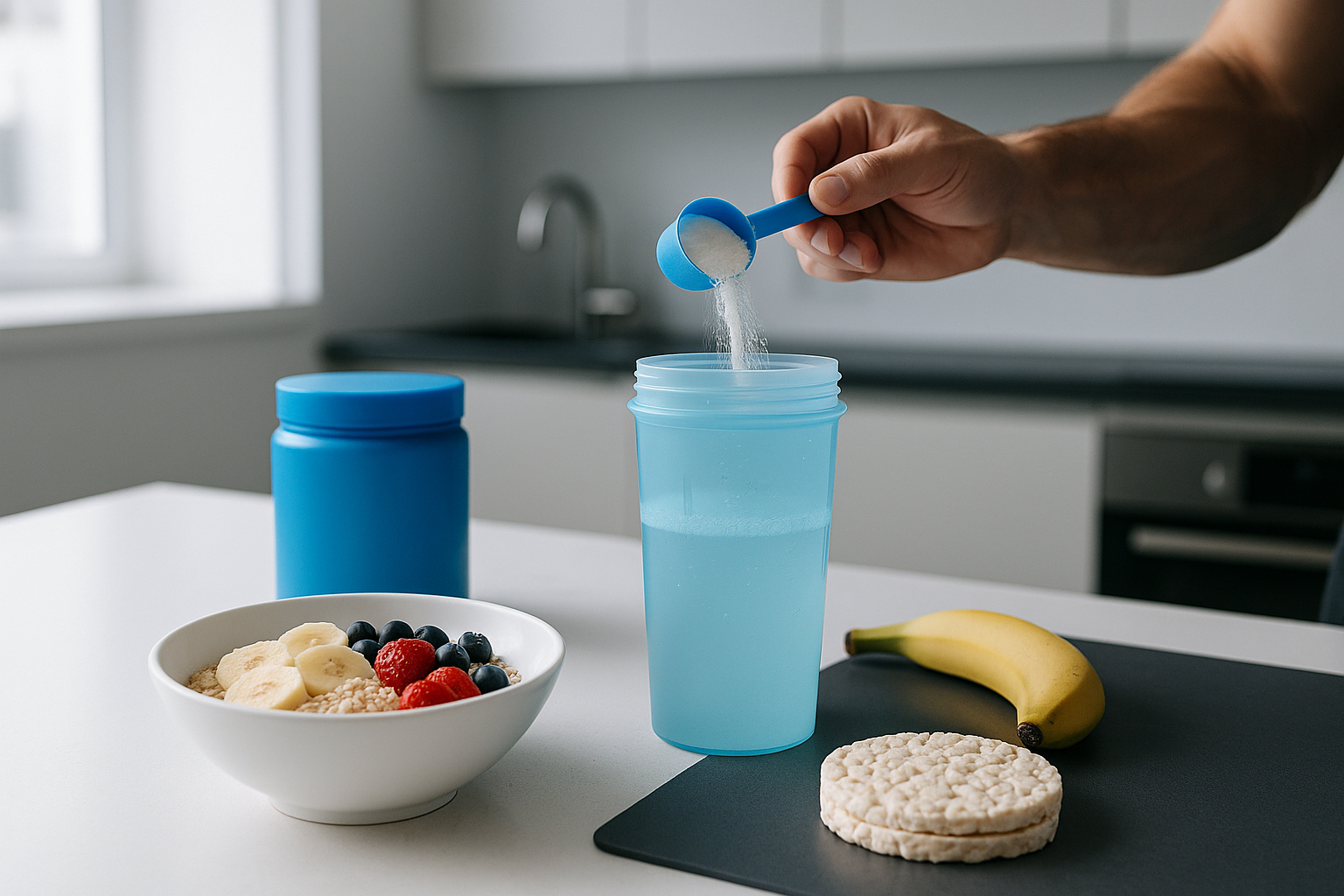
Taking creatine with carbs can be useful, but you do not need a sugary drink for creatine to work. This is one of the most misunderstood areas in sports nutrition. Creatine absorption from the gut is generally good on its own. What carbs mainly influence is muscle uptake, not whether your intestine can absorb the creatine powder in the first place.
Insulin helps shuttle nutrients into muscle, and carbohydrate raises insulin. That is the logic behind pairing creatine with carbohydrate. However, in real life, a normal mixed meal often does the job well enough. You do not need to chase huge insulin spikes or force down fast sugar if it does not fit your goal, appetite, or stomach.
For most lifters and athletes, the practical hierarchy is this:
- Daily consistency matters more than exact timing.
- Taking creatine with a meal is often easier on digestion.
- Post-workout carbs matter more when the session was long, hard, or glycogen-depleting.
- Adding carbs is most useful when you are trying to maximize glycogen resynthesis between sessions.
This means “creatine and carbs absorption” is partly the wrong question. The better question is whether carbs improve muscle retention and glycogen restoration enough to matter for your training schedule. If you train once per day recreationally, the advantage may be modest. If you train twice in one day or compete in repeated bouts, it can matter more.
Examples:
- Beginner lifting 3 times per week: 3-5 g creatine with breakfast or a post-workout meal is enough.
- Hockey or soccer athlete with repeated high-intensity sessions: 3-5 g creatine daily plus a substantial carb-containing recovery meal after hard training is smart.
- Person dieting on lower carbs: creatine still works for phosphocreatine saturation, but glycogen-related benefits may be smaller if carb intake is chronically low.
If you want a fuller timing breakdown, read when to take creatine and whether to take creatine with or without food. The bottom line is clear: creatine with carbs is helpful when your goal is muscle fuel restoration, but creatine monohydrate does not require sugar to be effective.
Why creatine may help glycogen resynthesis after hard training
Creatine glycogen resynthesis matters most after you have actually depleted glycogen. If your workout barely dented carbohydrate stores, there is less to restore and less room for creatine to show a noticeable effect. The athletes most likely to care are those doing repeated sprints, long interval sessions, high-volume leg training, or multiple sessions in 24 hours.
After demanding exercise, muscle becomes more receptive to refuelling. Glucose transport into muscle rises, glycogen synthase activity is elevated, and the body prioritizes repair and replenishment. Adding creatine to your daily routine may support this window by helping muscle retain more fuel and water while you recover. In short, exercise opens the door, carbohydrate provides the bricks, and creatine may help you rebuild the wall faster.
This is especially relevant in sports with repeated high-intensity bursts. Hockey, football, rugby, basketball, sprint swimming, and CrossFit-style training all rely on both phosphocreatine and glycogen. Phosphocreatine helps power the first few explosive seconds. Glycogen helps sustain repeated efforts over the whole session. Improving one system without supporting the other leaves performance on the table.
What should you do after a hard glycogen-draining workout?
- Take your usual creatine dose that day, ideally 3-5 g of monohydrate.
- Eat carbohydrate in your next meal or snack.
- Include protein for recovery and satiety.
- Rehydrate normally with fluids and electrolytes as needed.
- Repeat daily rather than treating creatine as an occasional recovery trick.
What should you expect? You are unlikely to “feel glycogen resynthesis” directly after one dose. The benefits show up more as better repeat performance, less drop-off between sessions, improved training volume, fuller muscles, and easier recovery over days and weeks. If you stop taking creatine, muscle stores gradually drift back down over time, so consistency matters more than any single post-workout serving.
For practical protocols, see how to take creatine and our guide to creatine loading.
A step-by-step creatine and glycogen protocol you can start today

The best creatine and glycogen protocol is simple: saturate muscle with creatine, match carbs to training demand, and stay consistent. Most people overcomplicate this. You do not need six supplements, a dextrose tub, or a perfect anabolic window.
- Choose creatine monohydrate. Monohydrate is the most studied, most reliable, and usually the best value. If you are shopping, start with our best creatine rankings, creatine brand reviews, or creatine product catalog.
- Decide whether to load. If you want faster saturation, take 20 g/day split into 4 doses of 5 g for 5-7 days. If not, take 3-5 g/day and reach full saturation more gradually over several weeks.
- Take it every day. Training day and rest day both count. Creatine works by keeping muscle stores elevated, not by giving a one-day stimulant effect.
- Pair it with a meal you already eat. Breakfast, lunch, or your post-workout meal all work. A carb-containing meal is convenient if glycogen restoration is one of your goals.
- Eat enough carbohydrate for your workload. Creatine cannot create glycogen from nothing. If your training is hard and your carbs are too low, glycogen-related benefits will be limited.
- Track useful outcomes. Watch performance in repeated sets, sprint consistency, workout volume, body weight, and muscle fullness over 2-6 weeks.
- Troubleshoot if needed. If you have stomach upset, split the dose, dissolve it better, or take it with food. If results are unclear, check dose accuracy and training quality before blaming the supplement.
A realistic beginner expectation is modest but meaningful improvement, not instant transformation. In week 1 with loading, many people notice a slight increase in scale weight and training fullness. By weeks 2-4, repeated effort performance and recovery often become more noticeable. Over 6-12 weeks, the main pay-off is usually better training output, which can translate into better strength and lean mass progress.
If you want dose precision, use our creatine dosage calculator or read how much creatine per day.
Dosing by body weight and goal: the amounts that make sense
For nearly everyone, 3-5 g of creatine monohydrate daily is the correct maintenance dose. Body weight, muscle mass, and training volume can nudge you within that range, but there is no special glycogen dose separate from the standard evidence-based creatine dose.
If speed matters, use a loading phase. Loading saturates muscle faster, which may help if you want quicker support for training volume, repeated sprint work, or glycogen restoration during a busy block. If speed does not matter, daily maintenance works fine.
| Goal / body size | Loading option | Maintenance dose | Best use case |
|---|---|---|---|
| Smaller adult, under ~70 kg | 20 g/day split into 4 x 5 g for 5-7 days | 3 g/day | General fitness, beginners, lighter women |
| Average adult, ~70-90 kg | 20 g/day split into 4 x 5 g for 5-7 days | 3-5 g/day | Lifting, team sports, mixed training |
| Larger adult, over ~90 kg or high lean mass | 20 g/day split into 4 x 5 g for 5-7 days | 5 g/day | Large strength athletes, high training volume |
| Rapid refuelling focus | Loading useful | 3-5 g/day | Two-a-days, tournaments, repeated hard sessions |
| Low-carb or cutting phase | Optional | 3-5 g/day | Maintain phosphocreatine despite lower glycogen intake |
Creatine timing is secondary to total daily intake. If glycogen resynthesis is a priority, it is sensible to include creatine with a post-workout carb-containing meal. If convenience is the priority, take it whenever you remember consistently.
Do not confuse bigger doses with better results. More than 5 g/day long term is usually unnecessary for most users unless a clinician or sport dietitian has a specific reason. Oversized scoops mainly increase cost and the chance of digestive side effects.
If you are unsure whether to load, maintain, or adjust for your size, see maintenance dosing and how muscle saturation works. The practical rule is still simple: daily creatine monohydrate, correctly dosed, does the job.
Who benefits most from combining creatine with smart carbohydrate intake
The people who benefit most are those who train hard enough to challenge both phosphocreatine and glycogen systems. Creatine and muscle glycogen matter most when your sport or training demands repeated intense work, not just casual movement.
Beginners can benefit. New lifters often improve quickly from training alone, but creatine can still support workout quality, especially once sessions become more demanding. A beginner does not need a fancy protocol: 3-5 g/day with a regular meal is enough.
Women benefit just as much from the core mechanism. Creatine is not a “men’s supplement.” Women doing strength training, intervals, field sports, or active lifestyle training can use the same evidence-based monohydrate protocol. If you want a deeper dive, see our guide to creatine for women.
Older adults may benefit for slightly different reasons. In adults over 50, creatine is often used to support training quality, muscle function, and lean mass retention. The glycogen angle is less about looking “full” and more about maintaining function, training capacity, and recovery when combined with resistance exercise. Related reading: creatine for older adults.
Team-sport and high-intensity athletes are prime candidates. Hockey, soccer, basketball, rugby, football, combat sports, sprint events, and CrossFit-style training all involve repeat bursts where phosphocreatine and glycogen both matter. These athletes usually get the most practical value from pairing daily creatine with disciplined post-training carbohydrate intake.
Vegetarians and vegans may respond especially well. People who eat little or no dietary creatine from animal foods may start with lower baseline muscle creatine stores, so supplementation can produce a larger change. See whether creatine is vegan and our vegetarian guide.
Who may notice less? Sedentary people, people eating chronically very low carbohydrate, and people doing mostly easy steady-state cardio may still benefit from creatine’s broader effects, but the glycogen-related benefits are usually less dramatic.
In short, creatine with carbs is most useful when your muscles repeatedly burn through fuel and you need to restore it fast enough to perform again.
Safety, side effects, and what Canadians should check before buying
Creatine monohydrate is one of the most studied and best-supported sports supplements for safety in healthy people. The 2017 ISSN position stand and the 2021 JISSN review on common questions and misconceptions both support creatine’s safety profile when used appropriately. For most healthy adults, the main real-world side effects are mild and manageable: stomach upset from large doses, temporary water-weight gain, and occasional bloating if the protocol is sloppy.
The most common side effect is an increase in body weight from water stored inside muscle. That is not body fat, and it is one reason muscles can look fuller on creatine. If you are in a weight-class sport or very sensitive to scale changes, plan around that.
Digestive issues are usually a dosing problem, not a creatine problem. Taking too much at once, dry scooping, or poorly dissolving the powder can cause discomfort. Solutions include splitting doses, mixing thoroughly, and taking creatine with food. See creatine digestive side effects if this is an issue.
Kidney fears are often based on confusion between creatine and creatinine. Creatinine is a breakdown product measured on blood tests, and it can rise slightly with supplementation without meaning kidney damage. People with pre-existing kidney disease or complex medical issues should still speak with a physician before starting. We cover this in our kidney guide and our full safety guide.
For Canadians, label quality matters. Look for products with a valid Natural Product Number, or NPN, which is the Health Canada identifier used on licensed natural health products. Also look for clear ingredient lists, batch transparency, and third-party testing such as NSF Certified for Sport or Informed Sport where relevant for tested athletes.
What should you buy? Plain creatine monohydrate powder is usually the smartest choice. Avoid proprietary blends that hide the actual dose. For help comparing products, see best creatine monohydrate in Canada and third-party tested creatine in Canada.
For external references, see Antonio et al. (2021) and Mayo Clinic’s creatine overview.
The biggest mistakes and myths about creatine, glycogen, and carbs
Most creatine mistakes come from misunderstanding what the supplement does and what it does not do. Creatine supports high-intensity energy availability and can help glycogen storage in the right conditions, but it is not a carb substitute, a stimulant, or a miracle recovery powder.
- Myth: creatine only works if you take it with sugar. False. Carbs can help muscle uptake in some contexts, but daily creatine monohydrate works perfectly well without a sugary drink.
- Myth: creatine becomes glycogen. False. Glycogen is stored carbohydrate. Creatine is a separate compound that helps energy recycling and may indirectly improve glycogen storage.
- Myth: more creatine means more glycogen. False. Once muscle stores are saturated, extra creatine mostly wastes product and may upset your stomach.
- Myth: creatine causes fat gain. False. Early weight gain is usually water retained inside muscle. Read our guide on creatine and weight gain.
- Myth: you need to cycle creatine. False for most users. Routine cycling is not necessary. See do you need to cycle creatine.
- Myth: if you do not feel anything, it is not working. False. Creatine often works quietly through improved repeat performance, training volume, and long-term progress rather than a dramatic immediate sensation.
The biggest practical mistakes are underdosing, skipping rest days, and expecting creatine to rescue a poor diet. If your training is glycogen-demanding but your carb intake is very low, do not expect maximal glycogen-related benefits. If you only take creatine pre-workout a few times a week, do not expect full muscle saturation. And if you buy expensive exotic forms over basic monohydrate, do not expect better results just because the label looks more advanced.
If you think creatine is “not working,” check four things first:
- Are you actually taking 3-5 g daily?
- Have you been consistent for at least 2-4 weeks, or 5-7 days with proper loading?
- Is your training hard enough to benefit from improved phosphocreatine and glycogen handling?
- Are you eating enough total energy and carbohydrate for your goal?
For more, see creatine myths debunked and why creatine may not be working.
Best form for glycogen support: why plain monohydrate still wins
If your goal is creatine and glycogen support, plain creatine monohydrate is still the best form to buy. There is no strong evidence that HCl, buffered creatine, gummies, or flashy blends outperform monohydrate for muscle saturation, performance, or glycogen-related outcomes.
| Form | Evidence for muscle saturation | Evidence for glycogen-related benefit | Typical value | Best verdict |
|---|---|---|---|---|
| Creatine monohydrate powder | Strongest | Strongest practical support | Usually best cost per gram | Best default choice |
| Micronized monohydrate | Strong | Comparable to monohydrate | Usually good | Fine if you want easier mixing |
| Creatine HCl | Weaker comparative evidence | No clear glycogen advantage | Often more expensive | Usually not worth the premium |
| Buffered / specialty forms | Limited advantage evidence | No clear glycogen advantage | Often poor value | Mostly marketing |
| Gummies / chewables | Can work if the dose is adequate | No special advantage | Often expensive per gram | Convenience option only |
The buying checklist is straightforward.
- Choose creatine monohydrate.
- Check the grams per serving, not the scoop size hype.
- Look for minimal ingredients if you want dose transparency.
- For athletes subject to testing, prioritize third-party certification.
- In Canada, check for proper labelling and an NPN where applicable.
Do flavoured products or carb blends help? They can be convenient, but they are not necessary. If you already eat carbs in meals, a plain unflavoured monohydrate powder usually gives you the same core creatine benefits at a lower cost. That is why monohydrate remains the benchmark in both research and practice.
For side-by-side comparisons, see monohydrate vs HCl, best type of creatine, and why monohydrate still wins.
Bottom line: use creatine to support glycogen, not to replace good nutrition
Creatine can enhance carbohydrate storage and use in muscle, but it works best as part of a complete training and nutrition plan. The clearest evidence-based statement is this: daily creatine monohydrate helps saturate muscle creatine stores, supports high-intensity performance, and can improve glycogen storage or glycogen resynthesis most reliably when paired with exercise and adequate carbohydrate intake.
If you want the shortest practical answer, do this:
- Take 3-5 g of creatine monohydrate every day.
- Optionally load with 20 g/day split into 4 doses for 5-7 days if you want faster saturation.
- Pair at least one daily dose with a meal, ideally one containing carbohydrate if refuelling is a priority.
- Eat enough carbs to match your training volume.
- Judge results over weeks, not hours.
Who should care most? Lifters doing high-volume work, team-sport athletes, sprinters, CrossFit athletes, and anyone training hard enough to repeatedly challenge muscle fuel stores. Recreational exercisers can still benefit, but the glycogen angle becomes more important as training density and repeat-effort demands rise.
What should you remember most? Creatine is not a replacement for carbs, and carbs are not a replacement for creatine. They do different jobs. Carbohydrate fills the tank. Creatine helps you access fast energy and may help you refill that tank more effectively after demanding work.
If you want to build your full routine from here, continue with the complete creatine guide, the ideal daily creatine protocol, and our guide to creatine and insulin.
Creatine and Glycogen: The Numbers That Matter
- 3-5 g/day standard creatine maintenance dose — The evidence-based daily amount for most adults using creatine monohydrate.
- 20 g/day common loading dose — Usually split into 4 doses for 5-7 days to saturate muscle faster.
- 5-7 days typical loading timeline — A standard loading phase reaches effective muscle saturation much faster than maintenance alone.
- 2-4 weeks common window to notice practical benefits without loading — Many users notice improved workout performance and muscle fullness over this period with daily use.
Frequently Asked Questions
Does creatine increase glycogen storage?
Yes, creatine can increase muscle glycogen storage, especially when it is combined with carbohydrate intake and exercise that depletes muscle fuel. It does not become glycogen itself, but it may improve the muscle environment for glucose uptake and glycogen resynthesis after hard training.
Should I take creatine with carbs?
Yes, taking creatine with carbs can be helpful, but it is not mandatory. Carbohydrate can support insulin-mediated muscle uptake and makes the most sense when you are trying to maximize post-workout glycogen restoration or recover quickly for your next session.
Does sugar improve creatine absorption?
Sugar is not required for creatine absorption from the gut, and creatine still works without it. What carbs may improve is nutrient uptake into muscle, which is more relevant for performance and glycogen restoration than for basic intestinal absorption.
Can creatine help glycogen resynthesis after exercise?
Yes, creatine can help glycogen resynthesis after exercise, particularly after hard or repeated sessions that significantly lower muscle glycogen. The effect is most useful when creatine is taken consistently and paired with adequate post-exercise carbohydrate intake.
Is creatine useful on a low-carb diet?
Yes, creatine is still useful on a low-carb diet because it supports phosphocreatine stores and high-intensity energy production independently of carbohydrate. However, the specific glycogen-storage benefits of creatine are usually smaller when carbohydrate intake is chronically low.
How much creatine should I take for muscle glycogen support?
For muscle glycogen support, the standard creatine monohydrate dose is still 3-5 g per day. If you want faster saturation, use a loading phase of 20 g/day split into 4 doses for 5-7 days, then continue with 3-5 g/day.
When is the best time to take creatine for glycogen replenishment?
The best time to take creatine for glycogen replenishment is any time you will take it consistently, though pairing it with a post-workout carb-containing meal is sensible after hard training. Daily consistency matters more than a narrow timing window.
Does creatine affect glucose uptake in muscle?
Yes, creatine may support glucose uptake in muscle, particularly when combined with exercise. The effect seems most relevant in active muscle tissue, where contraction and recovery signals already increase the movement of glucose into the cell.
Will creatine make me gain fat if I take it with carbs?
No, creatine does not inherently make you gain fat just because you take it with carbs. Early weight gain from creatine is usually water stored inside muscle, while fat gain depends on your overall calorie surplus, not on creatine itself.
What is the best type of creatine for carbohydrate storage and performance?
Creatine monohydrate is the best type of creatine for carbohydrate storage support and performance because it has the strongest evidence base, the most consistent results, and usually the best cost per gram. Other forms have not shown a clear advantage.