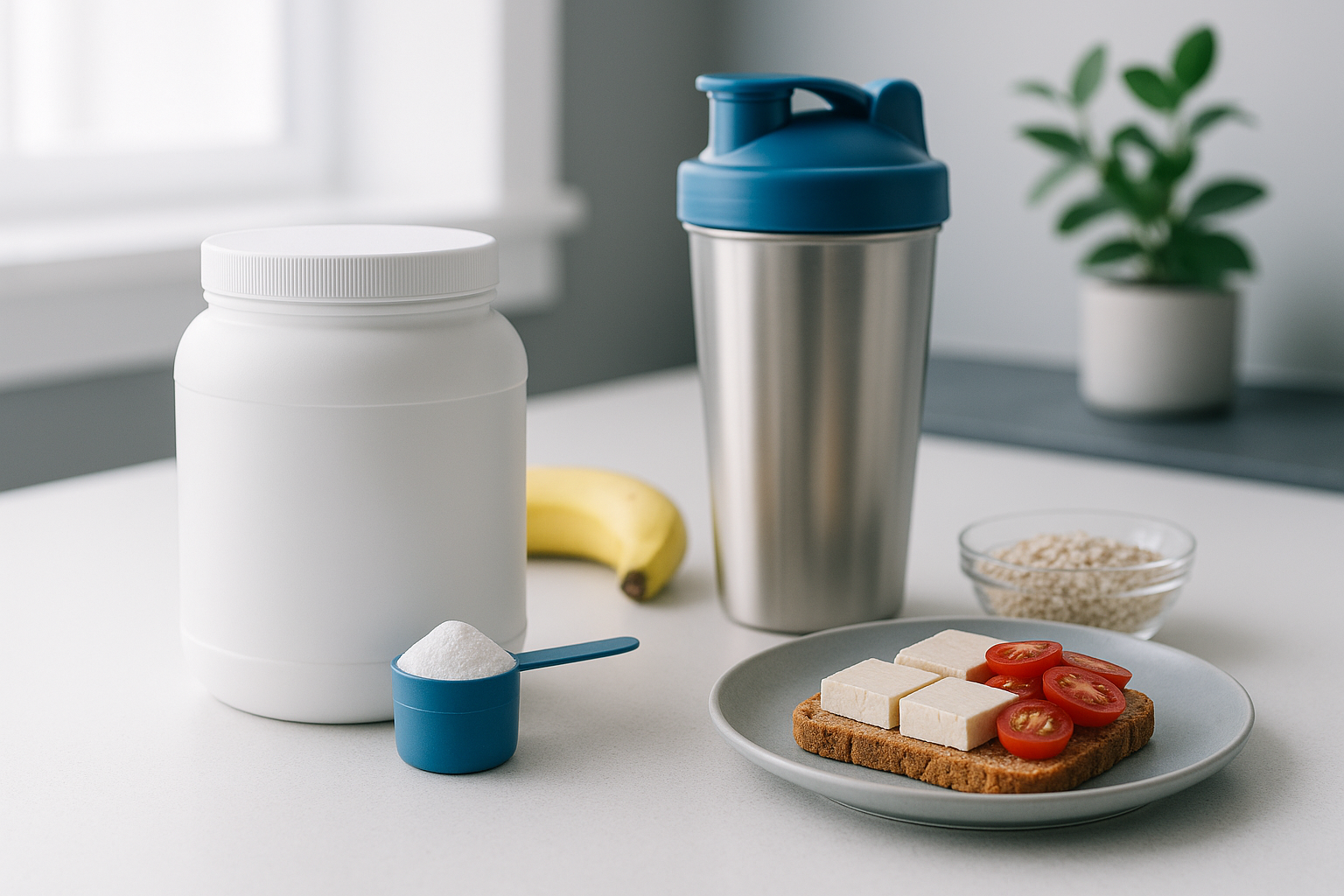
Vegan Creatine in Canada: Best Plant-Based Options and What to Look For
By The Creatine Canada Research Team — Evidence-based supplement analysts
Yes — vegan creatine in Canada is widely available, and the best choice for most people is a vegan-certified or clearly plant-based creatine monohydrate powder with a Natural Product Number (NPN) and, ideally, third-party testing. Creatine itself is not sourced from animal tissue in supplements, but Canadian buyers should still check the label for vegan certification, flavouring additives, capsule ingredients, and quality markers before buying.
Evidence-based · Cites 4 sources · Editorial standards
Key Takeaways
- The best vegan creatine supplement for most Canadians is plain creatine monohydrate at 3–5 g per day.
- Supplemental creatine is typically synthetic rather than animal-derived, but not every product is explicitly vegan-certified.
- Vegans and vegetarians often have lower baseline muscle creatine stores, so they may notice a stronger response to supplementation.
- Loading is optional: 20 g per day split into 4 doses for 5–7 days saturates faster, while 3–5 g daily reaches the same place in about 3–4 weeks.
- In Canada, look for an NPN, clear ingredient list, batch testing or third-party certification, and a brand that states vegan suitability plainly.
- Flavoured gummies, blends, and capsules are more likely than plain powder to include non-vegan ingredients or unnecessary extras.
- If a vegan creatine is causing bloating or stomach upset, reduce the dose per serving, take it with food, and choose unflavoured micronized monohydrate.
What vegan creatine in Canada actually means
Vegan creatine in Canada usually means a creatine supplement that contains no animal-derived ingredients and is sold with Canadian-compliant labelling, ideally including an NPN. That is the short answer most shoppers need, but there is an important nuance: creatine as a supplement is generally synthesised in manufacturing rather than extracted from meat, so the active ingredient itself is typically compatible with a vegan diet.
The confusion comes from two places. First, many people know that creatine naturally occurs in animal foods such as meat and fish, so they assume all creatine is animal-derived. Second, a finished supplement can contain other ingredients that are not vegan even if the creatine itself is. Capsules may use gelatin, flavoured products may include additives you do not want, and some brands simply do not state whether the product is vegan.
For Canadian buyers, the cleanest definition is practical: a vegan creatine supplement is one whose full formula, processing, and capsule or flavour system are free of animal ingredients, and whose label clearly communicates that status. The best fit for most people is vegan creatine monohydrate, because monohydrate is the most studied form, the most cost-effective form, and the benchmark used in most performance and safety research.
The 2017 International Society of Sports Nutrition position stand concluded that creatine monohydrate is the most effective ergogenic nutritional supplement currently available for increasing high-intensity exercise capacity and lean body mass during training. That conclusion is why plain monohydrate remains the default recommendation rather than trendier alternatives. If you want the broader primer first, see what creatine is and what it does.
In other words, if you are searching for vegan creatine Canada, plant based creatine, vegetarian creatine Canada, or creatine for vegans Canada, you are usually looking for the same thing: a clearly vegan, preferably unflavoured creatine monohydrate product sold legally and transparently in Canada.
For product discovery, start with the creatine product catalog or compare options in our best creatine rankings.
Why creatine often matters more on a vegan or vegetarian diet
Creatine often matters more for vegans and vegetarians because people who avoid meat and fish usually consume little to no dietary creatine, which can leave muscle creatine stores lower at baseline. Lower starting stores do not mean deficiency in the medical sense for most healthy people, but they do create a stronger rationale for supplementation.
Your body makes creatine from the amino acids arginine, glycine, and methionine, mainly in the liver and kidneys. That creatine is then stored mostly in skeletal muscle as free creatine and phosphocreatine, which is the stored form used to rapidly regenerate ATP, the cell’s immediate energy currency, during brief hard efforts. When you sprint, grind through a heavy set, jump, or repeat explosive intervals, phosphocreatine helps restore ATP quickly so performance drops off more slowly.
If you eat meat or fish, you get some creatine from food. If you eat fully plant-based, you rely on your own synthesis unless you supplement. That is one reason vegan athletes, lifters, and active adults can be good candidates for creatine even when they are not trying to bulk. The benefit is not that creatine is somehow “more natural” for vegans; the benefit is that vegans may start farther from full saturation.
The mechanism is simple: creatine supplementation increases intramuscular creatine and phosphocreatine stores, which supports repeated high-intensity output, training volume, and over time often better strength and lean mass gains when paired with resistance training. The same ATP-buffering role is also one reason creatine research has expanded into cognitive and healthy-aging questions, though the strongest evidence still remains in muscle and performance.
The 2021 JISSN review on common questions and misconceptions about creatine reinforces that creatine is one of the most studied sports supplements and that many common safety fears are overstated. If you want to understand the energy system itself, our guide to the creatine phosphate system and creatine and ATP goes deeper.
Practically, that means creatine for vegans Canada is not a niche trend. It is one of the few supplements with a strong mechanistic and evidence-based case for plant-based eaters who care about strength, power, training quality, body composition, or potentially broader performance support.
External reference: Kreider et al. (2017), ISSN Position Stand.
The best vegan creatine form is still monohydrate, not the flashy alternatives
The best vegan creatine supplement for most Canadians is plain creatine monohydrate powder, ideally micronized, because it matches the evidence base, the effective dose, and the best value per gram. This is true whether the label says vegan creatine, plant based creatine, or vegetarian creatine.
Creatine monohydrate has decades of research behind it. Newer forms such as HCl, buffered creatine, gummies, liquids, and multi-ingredient “vegan performance” blends often cost more without showing better real-world results. The main reasons people switch away from monohydrate are convenience, marketing, or an attempt to avoid mild digestive issues that are usually fixable by adjusting dose size and mixing method.
Micronized monohydrate can be a smart choice if texture matters to you. Micronized simply means the powder particles are smaller, which can improve suspension and mouthfeel. It does not make creatine fundamentally more effective, but it can make daily use easier. If compliance improves, that matters.
What should you avoid? Usually, avoid paying a premium for buzzwords unless the product solves a real problem for you. “Vegan performance matrix,” “cell volumizing complex,” and underdosed blends are often just expensive ways to deliver the same 3–5 g of creatine you could buy more simply. Gummies and capsules can work, but they are usually more expensive per gram and may require multiple pieces or capsules to hit an evidence-based dose.
| Form | Best for | Pros | Tradeoffs |
|---|---|---|---|
| Unflavoured creatine monohydrate powder | Most Canadians | Most studied, lowest cost per gram, easy 3–5 g dose | Can feel gritty if not mixed well |
| Micronized monohydrate | People who hate texture | Mixes a bit better, same core ingredient | Sometimes slightly pricier |
| Capsules | Travel and convenience | No mixing, easy portability | Often many capsules needed for full dose |
| Gummies | Taste-first users | Simple to take | Usually costly, may include sweeteners or lower doses |
| HCl or specialty forms | Niche preference | Marketing claims around solubility | Less evidence, often higher price |
If you want a deeper form comparison, see best type of creatine and creatine monohydrate vs. HCL. For most readers searching vegan creatine monohydrate, the answer is straightforward: buy monohydrate unless a specific format genuinely improves consistency.
How to choose a vegan creatine supplement in Canada without getting fooled by marketing
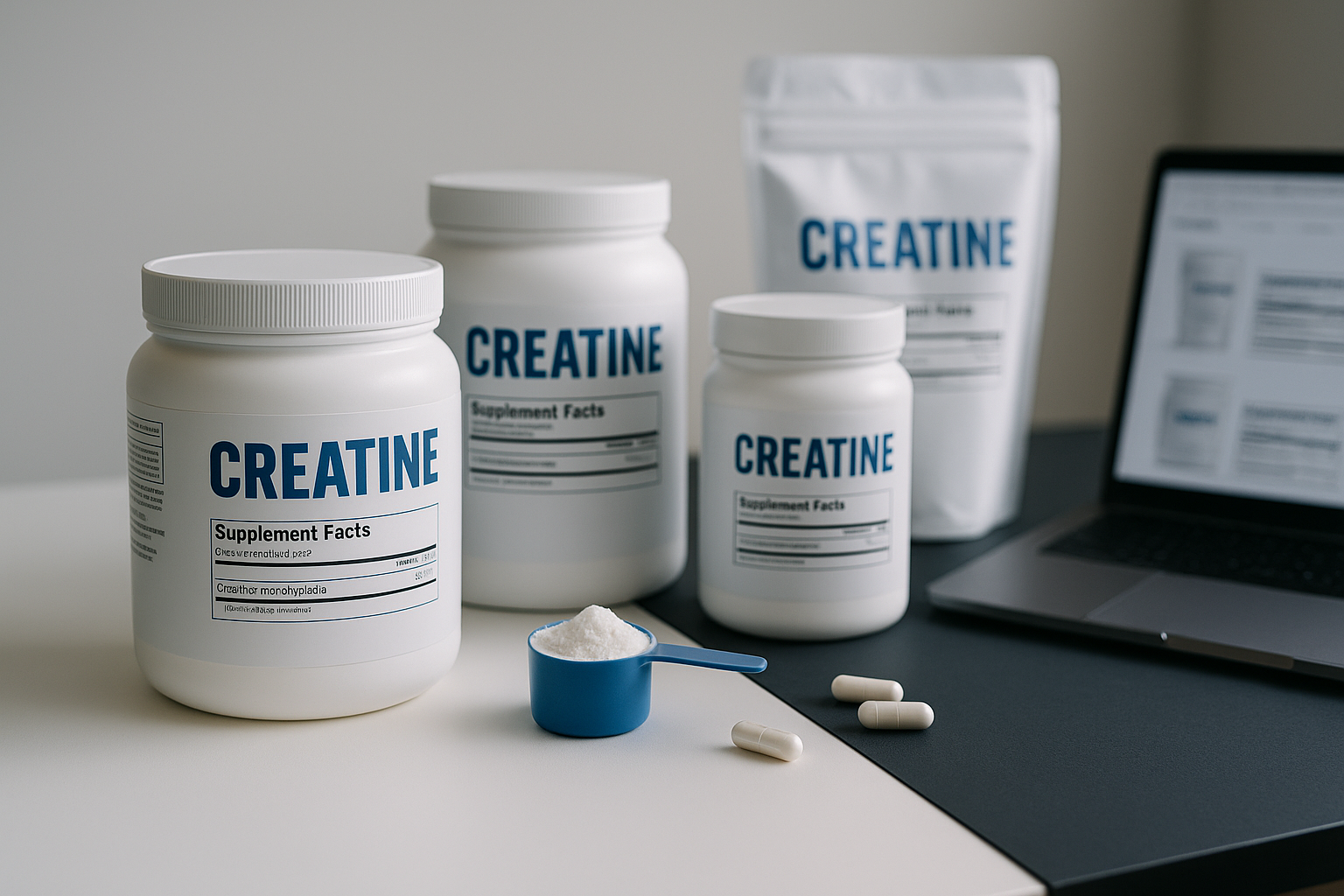
To choose vegan creatine in Canada well, check five things in order: form, vegan status, Canadian compliance, testing, and total value per gram. This process filters out most bad buys in under two minutes.
- Choose creatine monohydrate first. If the product is not monohydrate, ask what problem the alternate form is actually solving.
- Confirm vegan suitability. Look for a clear “vegan” or “plant-based” statement, or ideally a recognised vegan certification. If it is in capsules, confirm the capsule shell is not gelatin.
- Look for an NPN. In Canada, an NPN is a Natural Product Number, which signals the product has been licensed under Health Canada’s natural health product framework. That does not guarantee superiority, but it is a useful legitimacy check.
- Prefer third-party testing or transparent batch testing. This matters even more for competitive athletes or anyone who wants extra reassurance around contamination risk. Informed Sport or NSF-style screening can be especially relevant in drug-tested sport.
- Calculate value by grams of creatine, not tub size. A big container with a small dose per scoop can look cheaper than it really is.
Also read the non-medicinal ingredients. Plain powder is usually easiest to assess. Once you move into flavoured products, pre-workout blends, gummies, or “greens plus creatine” formulas, the chance of unnecessary ingredients goes up. None of those extras are inherently bad, but they can obscure whether you are actually buying a high-quality vegan creatine supplement or just a lifestyle product.
Canadian shoppers should also be careful with cross-border listings and marketplace sellers. A legitimate brand page, lot tracking, clear ingredient disclosure, and Canadian-friendly shipping and returns are good signs. If you want the buying framework in more detail, read how to choose creatine and compare brand-specific notes in our creatine brand reviews.
This is where the search for creatine vegan certified becomes useful. Certification is not mandatory if the ingredient list is already transparent, but it is a strong trust signal when available. For serious athletes, pair that with third-party testing; for everyday gym-goers, a plain monohydrate product with NPN and clear vegan status is usually enough.
Exact vegan creatine dosage: maintenance, loading, and how much to take by goal
The standard vegan creatine dose is the same as any other creatine dose: 3–5 g per day for maintenance, or 20 g per day split into 4 doses for 5–7 days if you want to load. Being vegan does not change the basic protocol, though lower baseline stores may make the results feel more noticeable.
There are two evidence-based ways to take creatine monohydrate:
- Slow saturation: take 3–5 g once daily, every day. You will typically approach muscle saturation in about 3–4 weeks.
- Loading phase: take about 20 g per day, split into 4 servings of 5 g, for 5–7 days, then continue with 3–5 g daily. This saturates faster but is more likely to cause mild stomach upset or temporary water-weight gain.
For most adults, 5 g daily is a simple, practical default. Smaller individuals may do well on 3 g; larger lifters and athletes often choose 5 g for simplicity. The research literature also uses body-weight methods in some contexts, commonly around 0.3 g/kg/day during loading and around 0.03 g/kg/day for maintenance.
| Body weight | Simple daily maintenance | Loading option | Best fit |
|---|---|---|---|
| 50–65 kg | 3 g/day | 15–20 g/day split for 5–7 days | General fitness, beginners |
| 66–85 kg | 4–5 g/day | 20 g/day split for 5–7 days | Most active adults |
| 86 kg+ | 5 g/day | 20 g/day split for 5–7 days | Larger lifters, strength athletes |
Goal matters too. If you need results quickly for a block of hard training, loading makes sense. If you care more about comfort, budget, and simplicity, daily maintenance is usually the better plan. If you are cutting, recomping, or training for sport, the dose stays basically the same.
Use our creatine dosage calculator for a personalised estimate, and read how much creatine per day or creatine loading phase for a deeper walkthrough.
The main mistake is inconsistency. Creatine works through saturation, not a one-time hit. The best vegan creatine supplement is the one you will actually take every day.
When to take vegan creatine, what to mix it with, and what to expect week by week
The best time to take vegan creatine is the time you will remember consistently, because daily intake matters far more than exact timing. For most people, that means taking it with breakfast, after training, or alongside a daily shake.
Creatine does not work like a stimulant, so you do not need to “feel it” right after taking it. It builds up in muscle over days and weeks. Timing around workouts is a minor detail compared with hitting your daily dose. If taking it with food reduces stomach upset, do that. If adding it to a protein shake makes the habit automatic, do that.
- Measure 3–5 g. Use a gram scale if you want accuracy, especially if your scoop is not labelled clearly.
- Mix with water or a shake. Warm or room-temperature liquid can improve dissolution. Juice, smoothies, oats, or post-workout shakes are all fine.
- Take it daily, including rest days. Skipping rest days slows saturation and makes adherence worse.
- Hydrate normally. You do not need extreme water intake, but do not neglect fluids, especially during loading or hot-weather training.
Week by week, here is what many people experience:
- Week 1 with loading: possible small increase in scale weight from intracellular water, fuller muscles, sometimes mild stomach upset if doses are too large.
- Weeks 2–4 without loading: gradual saturation, subtle training improvements, better repeated-effort performance.
- Weeks 4–8: easier to squeeze out extra reps or maintain power later in sessions.
- Months 2–3: if training and nutrition are solid, creatine can contribute to better strength and lean mass progress over time.
If you want details on timing, see when to take creatine. For practical mixing help, read how to take creatine and how to mix creatine.
A good way to tell whether it is working is not a dramatic sensation. It is better performance quality: one more rep at the same load, a bit more pop in sprints, better training volume, or slightly less fade across repeated hard efforts. That is how creatine earns its reputation.
Who vegan creatine is best for: beginners, women, older adults, and athletes
Vegan creatine can be useful for almost any healthy adult on a plant-based diet, but it is especially compelling for beginners, vegan women, older adults, and athletes doing repeated high-intensity work. The supplement is not only for bodybuilders.
Beginners: If you are new to training, creatine is one of the few supplements worth considering early because it is simple, cheap, and evidence-based. You do not need to “earn” the right to use creatine. If you are lifting 2–4 times per week and want better strength and training quality, it is reasonable from day one. See creatine for beginners.
Women: Creatine is not masculinising, not a steroid, and not only for bulking. Women can use the same daily 3–5 g range as men. It may support strength, training capacity, and lean mass retention, especially during dieting or life stages where muscle maintenance matters more. More detail: creatine for women.
Older adults: Older vegans and vegetarians have two reasons to care: lower dietary creatine intake and age-related pressure on muscle retention. When paired with resistance training, creatine can be a sensible tool for maintaining strength and function. It is not a magic fix, but it is often underused in healthy aging. More here: creatine for older adults.
Athletes: Creatine shines in sports involving sprints, jumps, repeated intervals, collisions, lifting, and explosive efforts. Team-sport athletes, CrossFit participants, power athletes, and combat-sport athletes often benefit the most. Endurance athletes may also benefit in specific contexts, though body-mass changes matter more for them. Drug-tested athletes should put even more weight on third-party testing and contamination control.
Vegetarians versus vegans: The same logic generally applies. Even if you consume dairy or eggs, your direct creatine intake may still be low because creatine is concentrated in meat and fish rather than those foods.
The key point is that vegetarian creatine Canada and creatine for vegans Canada are not separate science categories. They are buyer-intent variations describing the same practical question: who benefits most from clearly vegan, high-quality creatine monohydrate? Usually, people with low dietary creatine intake and a reason to care about performance, muscle, or healthy aging.
Safety, side effects, and the Canadian label checks that actually matter
Creatine monohydrate is well studied and is considered safe for healthy individuals when used at recommended doses, but buying a clean product and using the right dose still matters. The biggest real-world issues are usually minor digestive discomfort, temporary water-weight changes, and confusion about blood-test markers such as creatinine.
The ISSN position stand and later reviews report that recommended creatine supplementation is safe for healthy people across a wide range of study designs. The Mayo Clinic and JISSN reviews echo that creatine’s risk profile is generally favourable when taken appropriately. Common side effects are usually manageable:
- Water-weight increase: often from increased intracellular water, especially during loading. That is not the same as fat gain. See does creatine make you gain weight.
- Bloating or stomach upset: more common with large single doses, poor mixing, or unnecessary flavoured extras. Reduce the per-serving dose or take it with meals. See creatine digestive side effects.
- Creatinine confusion: creatinine is a normal breakdown product and can rise on lab work without meaning kidney damage. If you have kidney disease or medical concerns, talk to your clinician before supplementing. Related: is creatine bad for your kidneys.
Who should be cautious? Anyone with known kidney disease, significant medical conditions, pregnancy or breastfeeding questions, or medication concerns should speak with a qualified healthcare professional before starting. That is not because creatine is broadly dangerous; it is because individual context matters more than internet generalities.
For Canadian buyers, label checks matter because safety is not only about the ingredient, but also the product. Look for:
- NPN on-pack
- Full ingredient disclosure
- Serving size clearly stated in grams of creatine
- Vegan status if that matters to you
- Third-party testing if you are an athlete or want extra reassurance
External references: Antonio et al. (2021), JISSN and Mayo Clinic — Creatine.
Vegan creatine myths, answered plainly
Most myths about vegan creatine come from mixing up where creatine is found in food with how creatine supplements are actually made and how they work in the body. Here are the myths that most often mislead Canadian shoppers.
Myth 1: Creatine is not vegan because meat contains creatine.
False. Meat contains naturally occurring creatine, but supplemental creatine is generally manufactured synthetically rather than extracted from animal tissue. The finished product can still fail to be vegan if other ingredients are animal-derived, which is why label checks matter.
Myth 2: Plant-based creatine is different from regular creatine.
Usually false. In most cases, “plant based creatine” is just standard creatine monohydrate marketed to a vegan audience. If the ingredient is creatine monohydrate, the core performance effect should be the same.
Myth 3: You need a special women’s or vegan formula.
Usually false. Most people do not need a special formula. They need the correct dose of monohydrate and a label they trust. Gendered or lifestyle-branded formulas often cost more without providing a unique physiological advantage.
Myth 4: Creatine is a steroid.
False. Creatine is not an anabolic steroid and does not work through steroid hormone pathways. It supports rapid ATP regeneration. See is creatine a steroid.
Myth 5: Creatine ruins your kidneys if you take it long term.
Unsupported for healthy people using recommended doses. Kidney concerns are often driven by misunderstanding creatinine on blood tests rather than evidence of harm in healthy users.
Myth 6: If you gain weight, it is fat.
False. Early scale increases are usually water held inside muscle cells, especially during loading. That is different from gaining body fat.
Myth 7: You have to cycle creatine.
False for most people. Daily maintenance is standard, and most users do not need on-off cycles. See do you need to cycle creatine.
If you want a full myth breakdown, read creatine myths debunked or creatine myths vs. facts. For this topic, the big takeaway is simple: the best plant based creatine is usually just well-labelled, well-tested creatine monohydrate without nonsense around it.
The Canadian buyer’s checklist for the best vegan creatine supplement
If you want the best vegan creatine supplement in Canada, buy the product that clears a strict but simple checklist: monohydrate, explicit vegan status, NPN, transparent testing, and fair cost per gram. That framework will outperform most “top 10” lists.
Use this checklist before you buy:
- Ingredient: creatine monohydrate as the main active ingredient
- Format: plain powder first, unless capsules or gummies genuinely improve adherence
- Vegan status: vegan-certified if possible, or at least clearly labelled suitable for vegans
- Canada compliance: NPN present and seller ships reliably within Canada
- Purity assurance: third-party tested, Informed Sport, NSF, or transparent batch-testing information
- Dose honesty: serving provides a real 3–5 g dose without awkward fine print
- Value: compare cost per effective gram, not per tub or per scoop
When should you pay more? Usually only when the extra spend buys something tangible: athlete-focused third-party testing, clearly stronger quality assurance, better texture from micronization, or a format you will genuinely use more consistently. When should you not pay more? When the premium is just branding around words like “plant-powered,” “clean gains,” or “performance matrix.”
If you are comparing multiple options, start broad with our best creatine rankings, then narrow using the creatine brand reviews. For Canadians specifically, buying creatine online in Canada, is creatine approved in Canada, and third-party tested creatine in Canada are especially relevant next reads.
The core buying lesson is this: do not overcomplicate the supplement. A well-made vegan creatine monohydrate product is more important than a “perfect” lifestyle-branded formula. Quality signals beat marketing signals.
Bottom line: what most Canadians should buy and how to start today
Most Canadians looking for vegan creatine should buy an unflavoured or lightly flavoured vegan-labelled creatine monohydrate powder with an NPN and use 3–5 g daily. That is the simplest, most evidence-based, and usually most economical answer.
If you want the short action plan, it is this:
- Choose creatine monohydrate.
- Confirm vegan status, especially if the product uses capsules, flavours, or blends.
- Check for an NPN and prefer transparent testing.
- Take 3–5 g every day, including rest days.
- Load only if you want faster saturation.
- Judge it by training performance over weeks, not by a dramatic feeling on day one.
For vegans, vegetarians, and other plant-based eaters, creatine is one of the few supplements with a particularly strong logic because your dietary intake is often minimal. That does not make you dependent on supplementation, but it does make the upside more compelling. If your goal is better gym performance, more strength, more training volume, or support for muscle retention, vegan creatine monohydrate is a smart place to start.
And if you are still deciding, the safest default is the least glamorous one: plain monohydrate from a reputable Canadian-friendly brand. The evidence is much stronger than the marketing.
Next steps: use the creatine dosage calculator, review our best creatine rankings, and if you want the vegan-specific science angle, continue with is creatine vegan and creatine on a plant-based diet.
Vegan Creatine in Canada: The numbers that matter
- 3–5 g/day Standard maintenance dose — The evidence-based daily dose for most adults using creatine monohydrate.
- 20 g/day Optional loading dose — Typically split into 4 doses for 5–7 days to saturate muscle stores faster.
- 3–4 weeks Time to saturate without loading — Daily use reaches similar saturation to loading, just more gradually.
- 5–7 days Time to saturate with loading — Faster approach, but more likely to cause mild digestive discomfort.
Frequently Asked Questions
Is creatine vegan in Canada?
Yes, most supplemental creatine sold in Canada is compatible with a vegan diet because the creatine ingredient is usually synthesised rather than extracted from animals. The catch is that the finished product may still include non-vegan capsule shells, flavour systems, or unclear processing, so check for an explicit vegan claim or certification.
What is the best vegan creatine supplement?
For most people, the best vegan creatine supplement is plain creatine monohydrate powder that clearly states it is vegan and ideally carries an NPN. Monohydrate is the most studied form, the most cost-effective form, and the form used in most research on strength, lean mass, and repeated high-intensity performance.
Is vegan creatine monohydrate different from regular creatine monohydrate?
Usually no — vegan creatine monohydrate is generally the same active ingredient as regular creatine monohydrate. The difference is mostly in the finished product’s certification, capsule material, flavouring ingredients, or brand positioning rather than a different physiological effect.
Why do vegans benefit more from creatine?
Vegans often benefit more from creatine because they usually consume little or no dietary creatine from food, which can leave baseline muscle stores lower. Lower starting stores can make supplementation more noticeable, especially for strength, repeated sprint performance, and training volume.
How much vegan creatine should I take per day?
Most adults should take 3–5 g of vegan creatine per day, every day. If you want faster saturation, you can use a loading phase of 20 g per day split into 4 doses for 5–7 days, then drop to 3–5 g daily for maintenance.
Do I need vegan-certified creatine or is a vegan label enough?
A vegan-certified product is ideal, but a clear vegan label can still be sufficient if the ingredient list is simple and transparent. Certification adds an extra trust signal, while a plain monohydrate powder with no questionable additives is often easy to verify on its own.
Can vegetarians use the same creatine as vegans?
Yes, vegetarians can use the same creatine as vegans, and the practical recommendation is usually identical. Because vegetarians may still consume very little direct dietary creatine, a vegan-labelled creatine monohydrate product is often an excellent fit for both groups.
When should I take vegan creatine?
You should take vegan creatine whenever you are most likely to remember it consistently, because timing matters much less than daily intake. Many people take it with breakfast, after workouts, or mixed into a regular shake to make the habit automatic.
Does vegan creatine cause bloating or weight gain?
Vegan creatine can cause a small increase in body weight, but that is usually from more water being stored inside muscle cells rather than fat gain. Bloating or stomach upset is more likely when people take large single doses, load aggressively, or use heavily flavoured products instead of plain monohydrate.
What should I look for when buying vegan creatine in Canada?
When buying vegan creatine in Canada, look for creatine monohydrate, explicit vegan suitability, an NPN, transparent ingredient disclosure, and ideally third-party testing. Also compare products by effective grams of creatine, not by scoop size or flashy packaging.