Foods High in Creatine: Natural Dietary Sources
By The Creatine Canada Research Team — Evidence-based supplement analysts
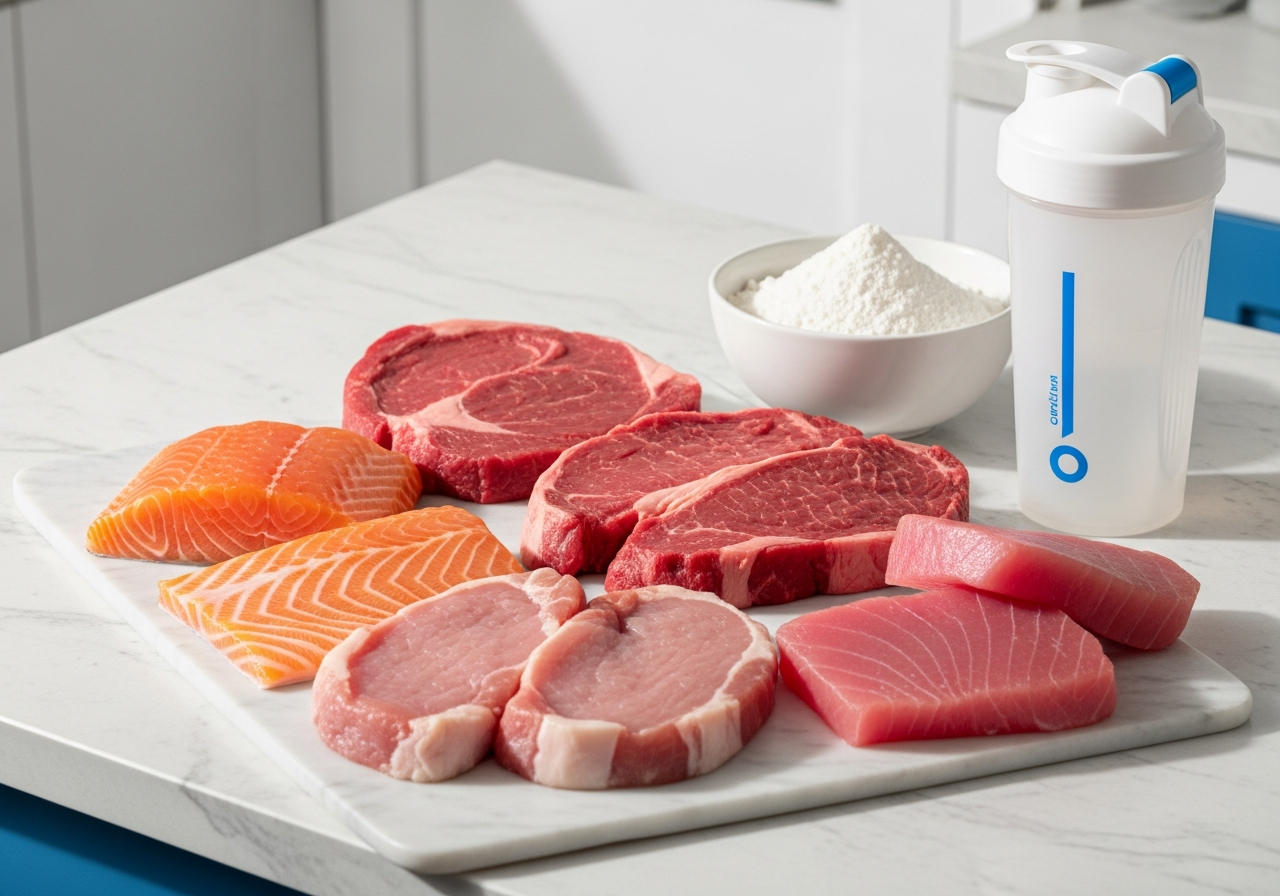
The foods highest in creatine are meat and fish, especially herring, pork, beef, salmon and tuna. If you want to get creatine naturally, animal foods do provide it, but the amount in food is usually far lower than the 3–5 g per day used in supplementation studies, which is why diet alone is often not enough to fully saturate muscle creatine stores.
Evidence-based · Cites 4 sources · Editorial standards
Key Takeaways
- Creatine occurs naturally in animal muscle tissue, so meat and fish are the main food sources of creatine.
- The richest dietary sources are typically herring, pork, beef, salmon and tuna.
- Plant foods do not meaningfully contain creatine, so vegans and vegetarians usually get little to none from diet alone.
- A typical maintenance supplement dose is 3–5 g daily, which is hard to match consistently with normal food portions.
- Cooking can reduce creatine somewhat because heat and moisture losses affect meat and fish.
- You can mix creatine powder into soft foods or drinks, but it is still a supplement, not a naturally creatine-rich food.
- If your goal is performance, strength or reliably full creatine stores, creatine monohydrate is the most practical and evidence-based option.
What foods have creatine? The direct answer most people need first
Foods with creatine are almost entirely animal foods, because creatine is stored naturally in muscle tissue. If you are asking what foods have creatine, what foods contain creatine, or what foods are high in creatine, the short answer is meat and fish, with little to none in plant foods.
Creatine is a compound your body makes from the amino acids arginine, glycine and methionine, and it is also found in foods from animals. In food, creatine is concentrated in skeletal muscle, which is why beef, pork, poultry and fish contain it, while fruits, vegetables, grains, beans and oils do not contribute meaningful amounts.
The foods usually considered highest in creatine include:
- Herring
- Pork
- Beef
- Salmon
- Tuna
- Other fish such as cod
- Chicken and turkey, though generally less than red meat or some fish
If you want a practical rule, darker, denser animal muscle foods tend to provide more creatine than plant foods, because plant foods essentially provide none. That is why people searching where does creatine naturally come from or where does creatine naturally occur should think first of animal muscle tissue and second of your body’s own internal production.
The key limitation is dose. Even though foods do have creatine, the amount in a normal serving is modest compared with the standard supplemental intake used in sports nutrition. The 2017 ISSN position stand concluded that creatine monohydrate is the most effective ergogenic nutritional supplement currently available for increasing high-intensity exercise capacity and lean mass during training, and those effects are typically studied at 3–5 g per day or a 20 g per day loading phase for 5–7 days.
For context, that means diet can contribute to your creatine intake, but normal eating alone often will not match the amount used to saturate muscle stores in supplementation research. If you are brand new to the topic, start with our what creatine is guide and then use the creatine dosage calculator if your goal is performance rather than just eating creatine-rich foods.
The natural sources of creatine, ranked from richest to least useful
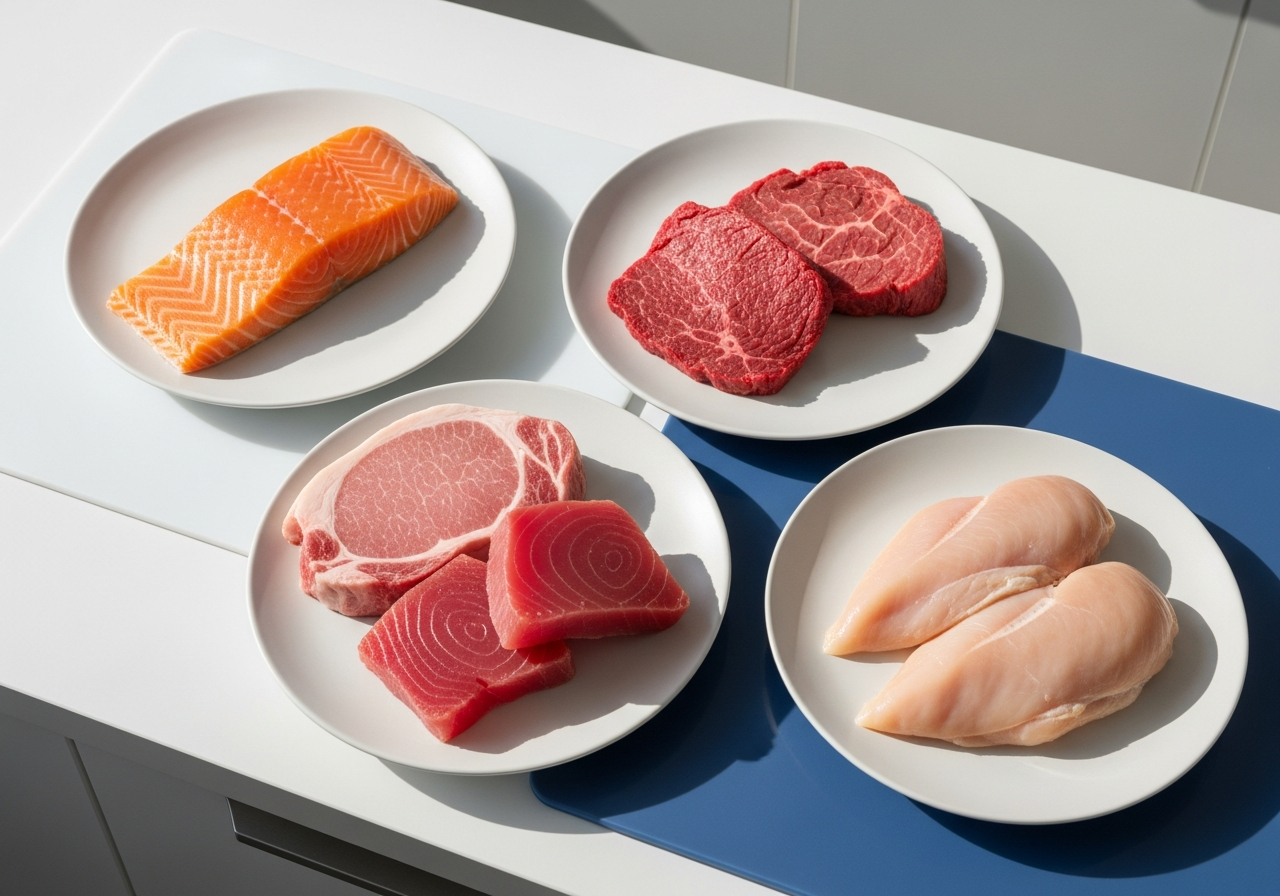
The natural sources of creatine are meat and fish, but some sources are clearly more useful than others. If you want to know what food is highest in creatine or which foods are rich in creatine, the best answer is fatty fish like herring and animal meats such as pork and beef, followed by salmon, tuna and poultry.
Because creatine content varies by species, cut, water content and preparation method, food tables give ranges rather than one exact universal number. Still, the following comparison is practical and consistent with mainstream sports-nutrition references.
| Food | Typical creatine level | Practical takeaway |
|---|---|---|
| Herring | Among the highest natural sources | Very creatine-dense, but not commonly eaten daily |
| Pork | High | One of the better land-animal sources |
| Beef | High | Reliable source, especially lean beef portions |
| Salmon | Moderate to high | Good option for people who prefer fish |
| Tuna | Moderate to high | Useful, though processing and cooking matter |
| Cod and similar fish | Moderate | Contains creatine, but usually less dense than herring |
| Chicken and turkey | Lower than beef or some fish | Still contributes, just less efficiently |
| Milk, eggs, cheese | Very low | Not meaningful sources for creatine loading or maintenance |
| Beans, grains, fruit, vegetables | Essentially none | Not realistic creatine sources |
This table also answers a common question: do you get creatine from meat? Yes, you do, and meat is one of the main ways omnivores get creatine naturally. But it also explains why someone asking is creatine in any foods and then hoping to find it in plant foods will come up short.
For a general fitness audience, the real-world hierarchy is simple:
- Fish and red meat are your best natural dietary sources.
- Poultry helps, but is not as efficient.
- Dairy and eggs are not meaningful creatine foods.
- Plant foods do not supply useful creatine.
If your main goal is to maximise muscle creatine stores rather than simply eat a creatine-aware diet, food quality matters less than total daily creatine intake. That is one reason best creatine rankings and straightforward monohydrate powders exist: they make it much easier to hit evidence-based amounts consistently than relying on food alone.
Why creatine in food matters: the muscle-energy mechanism in plain English
Creatine in food matters because it helps replenish phosphocreatine, the stored form of creatine in muscle that rapidly helps regenerate ATP, the cell’s immediate energy currency during short, hard efforts. That is the basic reason creatine supports strength, sprinting, repeated high-intensity work and training quality.
Here is the mechanism without the jargon overload. Your muscles keep a small pool of ATP ready to power contraction, but ATP is used up quickly during explosive effort. Phosphocreatine donates a phosphate group to help remake ATP fast, which lets you sustain force for a bit longer, repeat hard efforts more effectively and often get more total quality work done in training.
Dietary creatine and supplemental creatine both feed that same system. The main difference is amount and consistency. Food can top up stores, but supplements make it much easier to push muscle toward saturation, meaning your muscles are carrying close to their practical upper limit of stored creatine.
The 2021 JISSN review on common questions and misconceptions about creatine explains that creatine is one of the most studied supplements in sport and that the weight gain people notice early on is usually due to increased intracellular water inside muscle, not body fat. That early cell hydration is part of the reason muscles often feel fuller soon after starting supplementation.
Food-based creatine works the same way biologically, just less dramatically. If you eat meat or fish regularly, you are already getting some creatine. If you eat little or no animal food, your baseline stores are often lower, which is why vegetarians and vegans may respond especially well when they supplement. If you want the broader evidence base on this, see our guide on creatine benefits and our explainer on whether creatine gives you energy.
The performance benefit is indirect but powerful: creatine does not act like a stimulant, and it does not give a caffeine-like buzz. It improves the availability of rapid energy in muscle, which can help you get an extra rep, maintain sprint speed longer, or preserve bar speed across sets. Over weeks and months, those small training improvements can contribute to better strength and lean mass outcomes.
Can you get enough creatine naturally from food alone?
Yes, you can get creatine naturally from food, but for most people it is difficult to get supplement-level amounts from food alone every day. That is the most honest answer to how do I get creatine naturally and whether creatine is available in food.
A standard evidence-based maintenance intake is 3–5 g per day, and a classic loading protocol is 20 g per day split into 4 doses for 5–7 days, followed by maintenance. Those numbers come up repeatedly in mainstream sports-nutrition guidance, including the ISSN position stand and broad evidence summaries such as Examine’s creatine review.
Now compare that with food. A normal serving of meat or fish contributes some creatine, but usually not several grams at once unless you are eating very large portions. In practice, trying to reach 3–5 g every day from food alone often means consistently eating a lot of red meat or fish, which may be expensive, inconvenient or simply not how you prefer to eat.
Food alone is usually enough if your goal is just to consume some natural creatine as part of a balanced omnivorous diet. Food alone is usually not enough if your goal is any of the following:
- Rapid muscle creatine saturation
- Reliable sports-performance dosing
- A vegetarian or vegan-friendly strategy
- A lower-cost gram-for-gram approach
- A precise intake during a strength or hypertrophy block
This is also where beginners often get tripped up by marketing from “food-based” creatine products. If you are evaluating claims like is Hearthy Foods creatine legit, the right question is not whether a product sounds natural. The right questions are whether it provides a clearly stated dose in grams, whether the form is creatine monohydrate, and whether the product has appropriate quality controls. In Canada, check for an NPN, which is a Natural Product Number issued for licensed natural health products, and prefer reputable brands with third-party testing when possible. Our creatine brand reviews and creatine product catalog can help you compare those details.
Bottom line: eating creatine-rich foods is healthy and useful, but supplementation is the simpler tool when your target is full muscle stores and repeatable dosing.
How to get creatine naturally: a realistic step-by-step plan from your grocery list to your plate
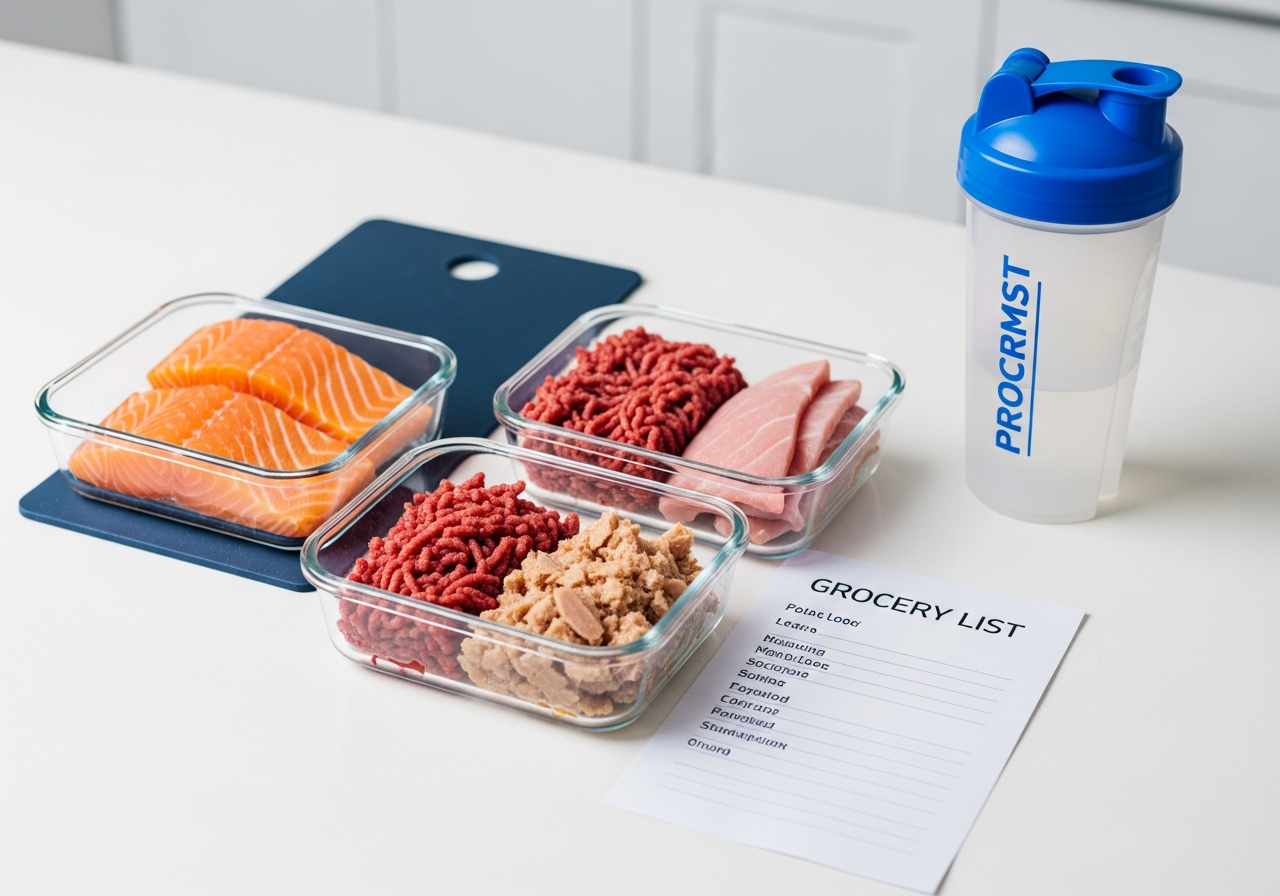
The most realistic way to get creatine naturally is to centre your protein choices around creatine-containing animal foods, especially fish and red meat. If you want a practical answer to how to get creatine naturally or where to find creatine naturally, follow a food-first plan that prioritises the highest-yield sources most often.
- Pick your main creatine foods for the week. Choose two to four options such as salmon, tuna, lean beef, pork loin or extra-lean ground beef.
- Eat one or two creatine-containing meals per day. A lunch or dinner built around fish or meat gives you a steady intake without overthinking it.
- Use larger portions when food is your main strategy. Small token portions will not move the needle much.
- Rotate sources for cost and convenience. Fresh fish is excellent, but canned tuna, frozen salmon and sale-priced beef can make the plan easier.
- Track performance, not just intake. If strength, sprint repeatability and training volume are not improving, food alone may be too inconsistent for your goal.
- Add creatine monohydrate if you want certainty. Food can stay in the plan, but the supplement closes the dose gap.
Here is what that might look like in real life:
- Strength-focused omnivore: salmon at lunch, lean beef at dinner, plus 3–5 g creatine monohydrate daily.
- General health omnivore: three to five weekly meals featuring beef, pork or fish, with no supplement if performance is not the priority.
- Vegetarian or vegan: use a supplement, because food will not provide meaningful creatine.
If your body weight is lower, moderate portions may still contribute meaningfully to total intake. If your body weight is higher and your goal is maximal saturation, the food-only approach gets harder fast. That is why our guides on how much creatine per day and how to take creatine are often the next step once people realise the food route is nutritionally sound but not always logistically efficient.
One more practical tip: consistency beats perfection. Eating herring once a week does not do much if the rest of your diet contains almost no creatine. A moderate but repeatable pattern of fish and meat is more useful than an occasional very high-creatine meal.
Can you cook creatine into food or mix creatine into meals?
Yes, you can mix creatine powder into food, but cooking it into very hot food is not the smartest way to use it. That directly answers common searches like can I put creatine on my food, can you mix creatine into food and can I cook creatine into food.
Creatine monohydrate is flexible. You can stir it into:
- Yoghurt
- Oatmeal after it cools slightly
- Smoothies
- Protein shakes
- Applesauce
- Soft foods like pudding or cottage cheese
The main goal is simply to consume the full dose. Creatine does not need a magical delivery system, and timing is less important than daily consistency. If you prefer mixing it into food because you dislike the texture in plain water, that is completely reasonable.
What about heat? Creatine can degrade over time in hot, acidic liquid environments, converting gradually to creatinine. In everyday kitchen use, this means two practical rules:
- Mix it into food right before eating, not hours in advance.
- Avoid prolonged heating or baking with it whenever possible.
So if you want to add creatine to warm oatmeal, soup or rice, do it after cooking and eat it soon. If you want to mix it into a smoothie, shake or yogurt bowl, that is even simpler. If you want best-practice mixing details, see our guide on how to mix creatine and our article on taking creatine with or without food.
The same logic applies to creatine already present in food. Cooking meat and fish does not erase all creatine, but heat, moisture loss and drip loss can reduce content. That is one reason food-based creatine estimates are always rough rather than exact. A raw salmon portion and an overcooked salmon portion are not nutritionally identical in creatine content.
The takeaway is simple. Natural food sources of creatine are meat and fish. Supplemental creatine can be mixed into foods. But if you are trying to preserve dose accuracy, add the powder to ready-to-eat foods or cool liquids rather than exposing it to long cooking times.
Who benefits most from creatine-rich foods and who usually needs a supplement
Everyone can benefit from understanding which foods contain creatine, but some groups benefit much more from supplementation than from food alone. The people most likely to notice the biggest gap between food intake and optimal creatine status are vegetarians, vegans, hard-training athletes, older adults and anyone in a focused strength or muscle-building phase.
Beginners often do well with a simple food-first approach at first, especially if they already eat meat or fish several times per week. But if they want a low-effort, evidence-based performance upgrade, 3–5 g of creatine monohydrate daily is much easier than trying to calculate meat equivalents.
Women can use the same food and supplement principles as men. Creatine is not a male-only supplement, and it does not “bulk” women automatically. Women who eat little red meat or fish may especially appreciate the convenience of daily monohydrate. See our dedicated guide on creatine for women.
Older adults may benefit because creatine can support training quality and lean mass retention when combined with resistance exercise. Food quality matters here, but appetite, chewing issues and total protein intake can make food-only creatine less reliable. Our older adults guide covers this in depth.
Athletes in sprint, power, team-sport, CrossFit and repeated-effort environments are usually better served by supplementation because their target is reliable saturation, not casual intake. The IOC consensus on dietary supplements recognises creatine as one of the more evidence-backed performance supplements.
Vegetarians and vegans are the clearest case. Plant foods do not meaningfully contain creatine, so food alone will not solve the problem. This is why our guide on whether creatine is vegan and our article on creatine for vegetarians are so relevant for plant-based athletes.
If you are sedentary and simply eating a balanced omnivorous diet, food may be enough for your needs. If you train hard, care about measurable gym performance, or avoid animal products, a supplement usually makes much more sense.
Safety, side effects and the food-versus-supplement reality check
Creatine from food is inherently familiar, and creatine monohydrate supplementation is also well supported for safety in healthy people when used at standard doses. That is the balanced answer people need when they worry that “natural” food creatine is safe but powder creatine is somehow suspect.
The evidence base on creatine monohydrate is unusually strong for a sports supplement. The ISSN position stand and later reviews conclude that creatine monohydrate is effective and generally safe for healthy individuals at accepted intakes. The Mayo Clinic overview also notes that creatine appears to be safe when used appropriately, while still advising sensible medical caution for people with kidney disease or other health conditions.
Typical side effects, when they happen, are usually minor and dose-related rather than dangerous:
- Stomach upset from taking too much at once
- Loose stool during aggressive loading
- Temporary scale-weight increase from water being stored in muscle
- Occasional bloating feelings if the dose is large or poorly mixed
Food-based creatine does not usually cause those issues because the dose arrives more gradually inside whole foods. But food-based creatine comes with its own tradeoffs, such as higher cost, more meal planning, and sometimes higher intake of calories, fat or sodium depending on the foods you choose.
If you are supplementing, basic best practice is simple:
- Take 3–5 g daily for maintenance.
- If loading, split 20 g per day into 4 smaller doses for 5–7 days.
- Mix well and take with enough fluid.
- Do not confuse a creatinine blood-test change with kidney damage without context; creatinine is a breakdown product and can rise somewhat when creatine intake rises.
If kidney disease, pregnancy, medication interactions or a complex medical history apply to you, talk to your clinician first. For a deeper look, see our guides on creatine safety, digestive side effects and the kidney myth.
Common myths and mistakes: what foods contain creatine, what does not, and what people get wrong
The biggest mistake people make is assuming any “healthy” or high-protein food contains creatine. In reality, creatine is found mainly in animal muscle foods, not in all protein-rich foods, and not in plant foods just because they are nutritious.
Here are the most common myths and the straight answers:
- Myth: Eggs are a great source of creatine.
Reality: Eggs are nutritious and high in protein, but they are not a meaningful creatine source. - Myth: Dairy gives you lots of creatine.
Reality: Milk, cheese and yogurt contain little to no useful creatine compared with meat and fish. - Myth: Beans and lentils contain creatine because they contain amino acids.
Reality: They help provide amino acids your body can use to make some creatine, but they do not supply meaningful creatine directly. - Myth: If you eat steak once in a while, you do not need to think about creatine.
Reality: Occasional intake is not the same as the daily 3–5 g often used for performance goals. - Myth: Creatine powder is unnatural, but meat creatine is natural and therefore better.
Reality: Creatine is the same compound either way; the practical difference is dose, purity and convenience. - Myth: You must take creatine immediately before training.
Reality: Daily consistency matters more than exact timing for most people.
Another easy mistake is chasing exotic creatine foods instead of solving the real problem. The question is rarely whether cod contains a bit more or less creatine than chicken. The real question is whether your overall intake is enough for your goal. If not, supplementation is usually the cleaner solution.
People also overestimate food labels and under-check supplement labels. In Canada, smart buyers should look for clear gram amounts per serving, the specific form used, and ideally an NPN and reputable testing. You can browse our creatine myths debunked hub if you want the longer version of these misconceptions.
If food is not enough: how to choose a creatine supplement in Canada without overpaying
If creatine-rich foods are not enough for your goal, the best supplement choice for most Canadians is plain creatine monohydrate. That is the simplest, most evidence-based answer, and it remains true in 2026 despite endless marketing around fancier forms.
When comparing products in Canada, use this checklist:
- Form: Choose creatine monohydrate first.
- Dose transparency: Look for clearly labelled grams per serving.
- Third-party testing: Prefer brands that verify identity and purity.
- NPN: In Canada, an NPN indicates a licensed natural health product.
- Minimal extras: Plain powder is usually the best value.
- Cost per 5 g serving: This matters more than flashy packaging.
Most people do not need creatine HCl, gummies, liquids or proprietary “food-inspired” blends to get results. Monohydrate is still the benchmark because it is the most studied, most available and usually the most cost-effective. If you want to compare options, see our guides to best creatine monohydrate in Canada and why monohydrate still wins.
For Canadians shopping online or in-store, the buying process should be boring in the best possible way:
- Pick monohydrate.
- Confirm the dose in grams.
- Check for NPN and quality controls.
- Avoid being upsold on unnecessary add-ons.
- Use your creatine dosage calculator and stick to the plan.
If you are choosing between food and supplements on budget alone, supplements often win on a gram-for-gram basis. Meat and fish are excellent foods, but they are expensive ways to chase a precisely measured daily creatine target. The ideal setup for many people is not either-or. It is a healthy diet plus a simple creatine monohydrate routine.
Bottom line: the best way to use food and creatine together
The foods highest in creatine are meat and fish, and the most practical natural sources are herring, pork, beef, salmon and tuna. If your only question was what food contains creatine, that is the answer.
The more useful answer is this: natural food sources of creatine are real and worthwhile, but normal diets usually provide much less creatine than the 3–5 g daily commonly used to maintain fully saturated muscle stores. That is why food and supplementation are not competing ideas. They solve different problems.
Use food first if you want to:
- Eat a balanced omnivorous diet
- Increase natural creatine intake without supplements
- Support general fitness and protein intake together
Use creatine monohydrate if you want to:
- Reach evidence-based intakes precisely
- Support strength, power and muscle gain more reliably
- Avoid eating very large amounts of meat or fish
- Cover the gap on a vegetarian or vegan diet
A smart, beginner-friendly plan looks like this:
- Keep protein-rich meals built around fish or meat if you eat them.
- Add 3–5 g creatine monohydrate daily if your goal is measurable training performance or muscle support.
- Take it consistently, with a drink or soft food, at whatever time you are most likely to remember.
- Assess progress over several weeks, not one workout.
If you want the simplest next step, read creatine for beginners, then move to how long creatine takes to work and whether to use a loading phase. That sequence will tell you what to expect, how fast to expect it, and whether food alone is realistically enough for your goal.
In short, yes, foods do have creatine. But if your aim is fully topped-up muscle stores rather than just some dietary intake, supplements are the easier tool and meat and fish are the supporting cast.
Creatine in Food vs Supplement: The Numbers That Matter
- 3–5 g/day Standard maintenance dose — Common evidence-based supplemental intake for maintaining muscle creatine stores.
- 20 g/day Classic loading dose — Usually split into 4 doses daily for 5–7 days.
- 5–7 days Typical loading timeline — How long a standard loading phase usually lasts.
- 4 doses/day Best way to split loading — Smaller divided doses often improve tolerance versus taking a large single serving.
Frequently Asked Questions
What foods have creatine naturally?
Foods with creatine naturally are mainly meat and fish. The best-known natural sources are herring, beef, pork, salmon, tuna and other animal muscle foods, while plant foods do not provide meaningful creatine.
Do foods have creatine, or is creatine only a supplement?
Foods do have creatine, but only certain foods. Creatine occurs naturally in animal muscle tissue, so meat and fish contain it, while supplements simply provide the same compound in a more concentrated and convenient dose.
What food is highest in creatine?
Herring is commonly listed among the highest natural food sources of creatine. In practical diets, pork, beef, salmon and tuna are also strong sources and are often easier to find and eat regularly.
Do you get creatine from meat?
Yes, you get creatine from meat because creatine is stored in animal muscle tissue. Beef and pork are among the better land-animal sources, though the amount still may not equal a full 3–5 g supplement dose.
Is creatine in any plant foods?
No plant foods are meaningful direct sources of creatine. Plants may provide amino acids your body uses to make some creatine on its own, but they do not supply useful amounts of creatine itself.
How do I get creatine naturally without supplements?
You get creatine naturally by eating meat and fish regularly. The most effective food-first approach is to include creatine-rich meals built around salmon, tuna, lean beef or pork several times per week, though this still may not match supplement-level intake.
Can I put creatine on my food?
Yes, you can put creatine on food or mix it into soft foods. The best approach is to stir creatine monohydrate into ready-to-eat foods like yogurt, oatmeal after cooking, smoothies or applesauce rather than baking or boiling it for long periods.
Can you cook creatine into food?
You can, but it is not ideal to cook creatine powder into food for a long time at high heat. For better dose reliability, add creatine after cooking and eat it soon rather than exposing it to prolonged heat.
Is Hearthy Foods creatine legit?
A creatine product is only worth trusting if it clearly states the form, dose and quality controls. When judging any brand, including Hearthy Foods, check whether it uses creatine monohydrate, lists grams per serving clearly, and in Canada ideally carries an NPN and reputable testing.
Can I get enough creatine from food alone?
You can get some creatine from food alone, but most people will not consistently reach the 3–5 g per day commonly used in supplementation studies through normal eating. Food is helpful, but supplementation is usually the more practical way to fully support muscle creatine stores.