Creatine for Skinny Guys: How to Use It to Finally Build Size
By The Creatine Canada Research Team — Evidence-based supplement analysts
Yes — creatine can absolutely help skinny guys build size, but only if it is paired with hard training and enough calories. For naturally thin, slim, or hard-gainer body types, creatine monohydrate helps you gain muscle by increasing muscle phosphocreatine stores, improving training performance, and often adding a small amount of intracellular water that makes muscles look fuller within the first 1-3 weeks.
Evidence-based · Cites 4 sources · Editorial standards
Key Takeaways
- Creatine works for skinny guys, but it is not a substitute for a calorie surplus and progressive lifting.
- The best form is creatine monohydrate at 3-5 g daily; loading is optional, not required.
- Expect faster gym performance gains first, then visible size gains over weeks as training volume improves.
- A small early weight increase is usually water inside muscle, not body fat.
- Hard gainers often fail with creatine because they under-eat, skip doses, or stop too soon.
- Take creatine every day, including rest days, and judge it over 4-12 weeks, not 4 days.
- In Canada, choose a product with an NPN and ideally third-party testing if you compete.
Yes, creatine helps skinny guys — but only if you give it muscle to build
Yes, creatine for skinny guys can be highly effective, but it only works as part of a complete muscle-gain plan. If you are naturally thin, slim, underweight, or think of yourself as an ectomorph or hard gainer, creatine helps by making high-quality training more productive, not by magically adding tissue on its own.
The key distinction matters. Creatine is not a mass gainer, appetite stimulant, or steroid. Creatine is a naturally occurring compound stored largely in muscle, where it helps regenerate ATP, the cell’s immediate energy currency for short, hard efforts. When your muscle stores are more saturated, you can often squeeze out extra reps, maintain power deeper into a session, and recover better between repeated efforts. Over time, those extra quality reps and sets are what help a skinny person become more muscular.
If you are asking whether creatine for thin people or creatine for naturally thin bodies works differently, the answer is mostly no. The mechanism is the same. What differs is the starting point. Thin beginners often have more room to improve because they are newer to structured training, and some people with lower dietary creatine intake may respond especially well. That is one reason creatine is often useful in a “skinny to muscular” plan.
There is also a visual effect that shows up before true hypertrophy. Creatine draws more water into muscle cells, which can make muscles look a bit fuller within days to a couple of weeks. That is not fake progress. It is not fat gain, and it often accompanies the muscle-saturation process that supports better training performance. If you want more detail on what creatine is actually doing, see what creatine is and what it does and our guide on whether creatine builds muscle.
The plain-English bottom line is simple:
- Creatine helps skinny guys train harder.
- Harder, better training helps build muscle.
- Muscle gain still depends on enough food, protein, sleep, and consistency.
If you are under-eating or barely training, creatine will not transform your frame. If you are lifting progressively and eating in a surplus, creatine is one of the best-supported, lowest-friction supplements you can add. The 2017 ISSN position stand concluded that creatine monohydrate is the most effective ergogenic supplement currently available for increasing high-intensity exercise capacity and lean body mass during training.
Why creatine works for hard gainers: the ATP and phosphocreatine advantage
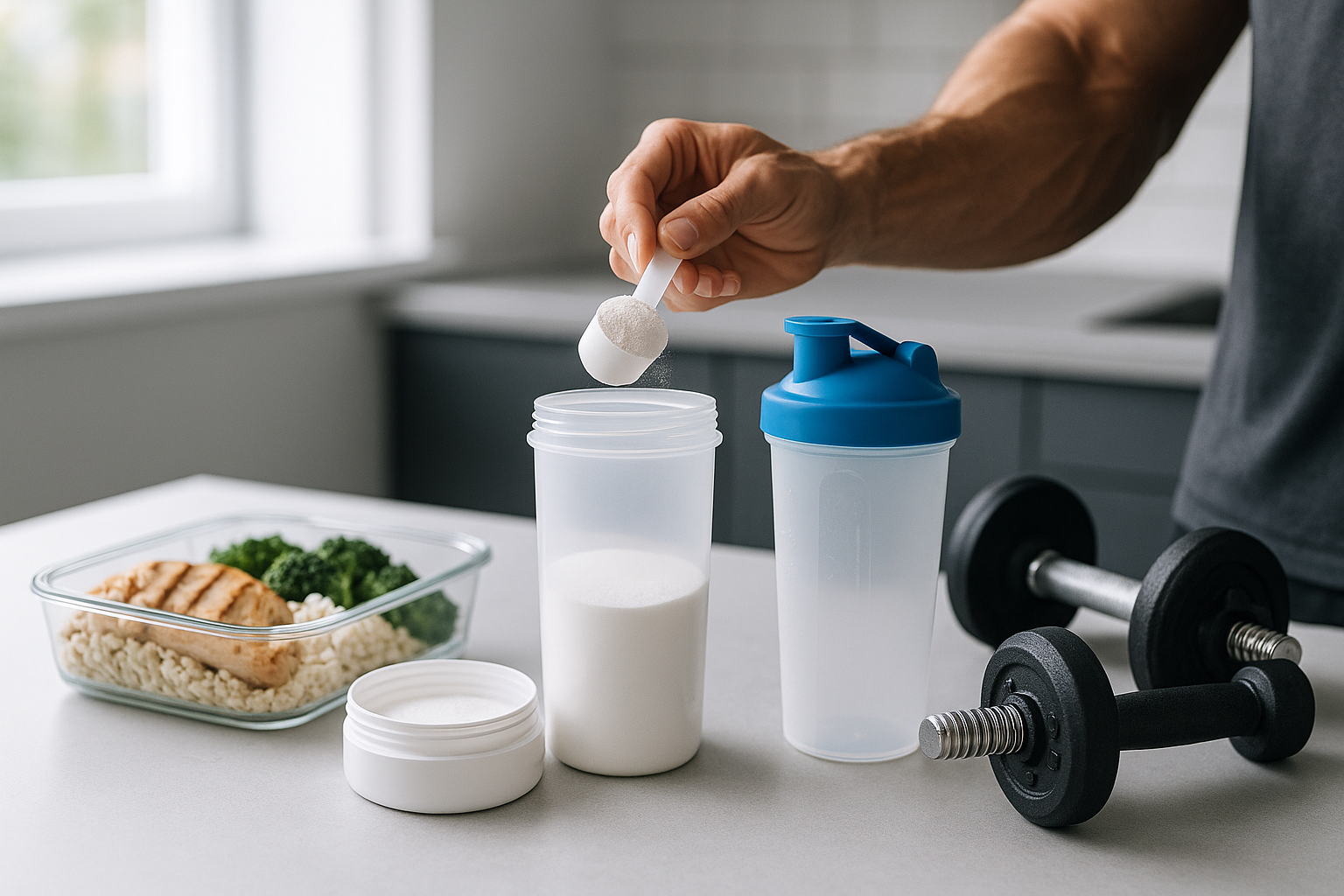
Creatine helps hard gainers by increasing intramuscular phosphocreatine, which lets muscle regenerate ATP faster during short, intense efforts. That matters most for lifting, sprinting, jumping, repeated sets, and the kinds of sessions that build size and strength.
Here is the mechanism in practical terms. During a hard set of 5-12 reps, your muscles burn through ATP quickly. Phosphocreatine acts like a rapid backup system that helps restore ATP so you can maintain force for a bit longer. More stored creatine generally means better support for repeated high-output efforts. In the gym, that can look like:
- 1-2 more reps at the same weight
- slightly better power on later sets
- more total training volume over a workout
- less drop-off between rounds or repeated efforts
Those sound small, but muscle growth is built on accumulated small advantages. If you add even a few high-quality reps each week across presses, rows, squats, deadlifts, pull-downs, and curls, the training stimulus rises. Over 8-12 weeks, that can turn into noticeably better gains.
Creatine may also support muscle gain indirectly through cell hydration and training recovery. When muscle cells hold more water, the muscle can look fuller, and the hydrated state may help create a more favourable environment for training adaptation. That does not mean creatine bypasses protein intake or progressive overload. It means the supplement helps create conditions where those basics work better.
This is why creatine for ectomorph searches often miss the real issue. “Ectomorph” is a body-type label, not a special metabolic exemption from the laws of muscle gain. If you are naturally thin, you still build muscle through the same fundamentals: enough energy intake, sufficient protein, progressive resistance training, and recovery. Creatine simply makes the training part more effective.
The best evidence remains for activities that rely on repeated high-intensity effort. The International Olympic Committee’s consensus on supplements recognizes creatine as one of the more evidence-based performance supplements for this context. For a broader summary of the research, see Examine’s creatine evidence summary.
What creatine does not do is overcome chronic under-eating. If a skinny person burns 2,500 calories and eats 2,000, creatine cannot replace the missing 500. It is a performance tool, not a calorie source. That is why skinny guys often get the best results when they treat creatine as the final 10% on top of a serious lifting and eating plan, not the foundation itself.
What a skinny person should expect from creatine in the first 12 weeks
A skinny person usually notices creatine first in body weight, muscle fullness, and training output, with true size gains building more gradually over weeks. The fastest changes are rarely pure muscle, but that does not mean the process is not working.
Here is a realistic timeline for creatine for skinny to muscular goals:
- Days 1-7 with loading: some people notice a small body-weight increase and slightly better training endurance by the end of the week.
- Weeks 2-4: muscle fullness often becomes more noticeable, and many lifters report better reps on repeated sets.
- Weeks 4-8: improved training quality begins to accumulate into visible progress if calories and protein are adequate.
- Weeks 8-12: strength trends and lean mass changes are easier to notice in photos, measurements, and your logbook.
If you skip loading and simply take 3-5 g per day, expect a slower ramp-up. Saturation usually takes several weeks rather than several days. If you want the full timing breakdown, read how long creatine takes to work and how creatine saturation works.
How do you tell whether it is working?
- Your body weight trends up slightly. Early scale gain is commonly water inside muscle, not fat.
- Your muscles look a bit fuller. This is especially noticeable in shoulders, arms, chest, and quads.
- Your performance improves in repeated hard sets. Look for extra reps, less fatigue, or better set quality.
- Your weekly training volume rises. More productive work is one of the main routes to more growth.
What should you not expect? Do not expect creatine to make you huge in a week, fix a poor programme, or compensate for sleeping five hours a night. Also do not assume no visible change means no benefit. Some users feel creatine more than they see it at first, especially if their body weight is low and their training history is short.
A helpful rule: judge creatine by your training log, body-weight trend, and 8-12 week photos, not by whether you look dramatically different after three scoops. The 2021 JISSN review on common creatine questions and misconceptions notes that creatine’s benefits are well established for performance and lean mass, but response magnitude varies between people.
How to take creatine if you are skinny and want size: the simplest effective plan
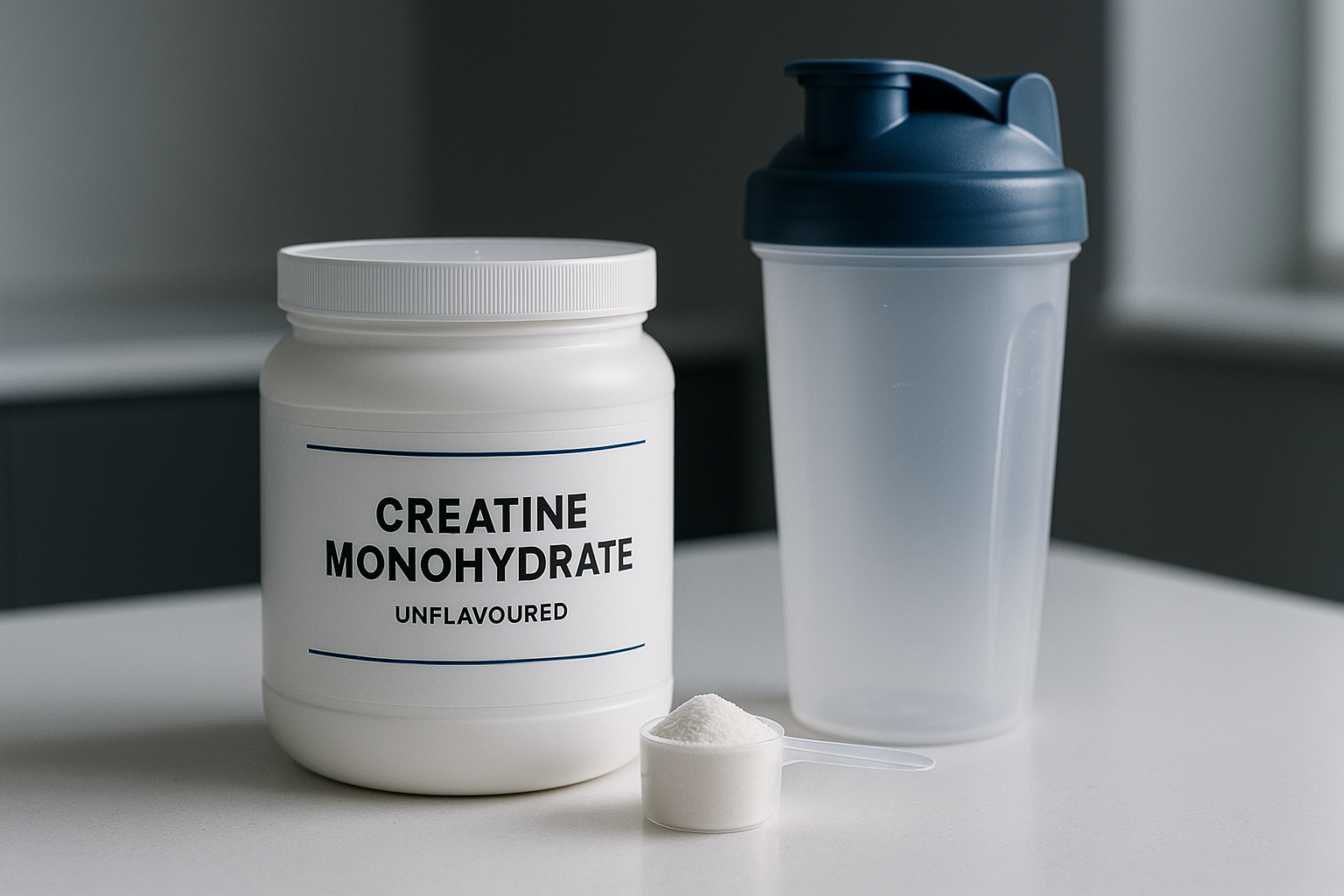
The simplest effective plan for a skinny guy is to take 3-5 g of creatine monohydrate every day, train hard 3-5 times per week, and eat in a calorie surplus. That is the version most people should start with because it is easy to follow and works.
- Choose creatine monohydrate. It is the most studied, most reliable, and usually the best value. Our best creatine rankings and creatine product catalog can help you compare options.
- Measure a consistent daily dose. Use 3 g if you are smaller and cautious with digestion, or 5 g if you want the standard maintenance dose most lifters use. You can also use the creatine dosage calculator.
- Decide whether to load. Loading means about 20 g per day split into 4 doses for 5-7 days, then switching to 3-5 g daily. Loading saturates muscles faster but is not necessary.
- Take it every day. Workout days and rest days both count because the goal is saturation, not a stimulant-like acute effect.
- Mix it in water, a shake, or a meal-adjacent drink. There is no magic liquid. Pick the routine you will actually stick to.
- Keep lifting progressively. Creatine shines when your programme includes compound lifts and enough hard sets.
- Eat enough to gain. If the scale is not moving at all after a couple of weeks, food intake is likely the bottleneck.
For most thin beginners, a practical setup looks like this:
- Breakfast or post-workout: 5 g creatine monohydrate
- Protein target: adequate daily protein intake spread across meals
- Calories: a modest surplus rather than random overeating
- Training: 3-4 full-body or upper/lower sessions weekly
If you want to keep it even simpler, stack creatine with protein powder in one shake. That is fine and common. See mixing creatine with protein powder and how to take creatine for more detail.
The biggest behavioural advantage of creatine is consistency. The supplement does not need a perfect ritual; it needs a repeatable one. Skinny guys often overcomplicate the details while underdelivering on the basics. If you take the right dose daily for 8-12 weeks, train with progression, and eat enough, you are doing the part that matters.
Best creatine dose for thin people, underweight lifters, and bigger hard gainers
The best creatine dose for most thin people is still the standard evidence-based dose: 3-5 g per day of creatine monohydrate. Being skinny does not mean you need a special mega-dose, and taking more than you can absorb comfortably usually just increases the chance of stomach upset.
A useful way to think about dosing is by goal and body size, not by body-type label alone:
| Body weight / goal | Daily maintenance | Optional loading phase | Best use case |
|---|---|---|---|
| Under 60 kg | 3 g/day | 20 g/day split into 4 doses for 5-7 days | Smaller beginners, cautious stomachs |
| 60-90 kg | 3-5 g/day | 20 g/day split into 4 doses for 5-7 days | Most lifters and team-sport athletes |
| Over 90 kg | 5 g/day | 20 g/day split into 4 doses for 5-7 days | Larger lifters wanting full saturation support |
| Fastest visible start | 3-5 g/day after loading | Yes | People who want quicker saturation |
| Lowest chance of GI discomfort | 3-5 g/day | No | Anyone sensitive to bloating or loose stools |
This is intentionally conservative and practical. Mainstream guidance has long supported a loading protocol of roughly 20 g daily for 5-7 days, followed by 3-5 g daily, or simply 3-5 g daily from day one. More is not better once muscle stores are saturated. If you want the detailed rationale, see how much creatine per day and whether you need a loading phase.
If you are very underweight and worried about digestive tolerance, start at 3 g daily for one week, then move to 5 g if everything feels fine. If you are using capsules or gummies, check the label carefully. Many formats under-dose per serving compared with plain powder, which is one reason powder remains the best-value option.
A common misconception is that hard gainers need 10 g, 15 g, or even more every day because their metabolism is “fast.” Creatine dose does not scale with your appetite or metabolism in that way. It scales with saturating muscle stores. Once those stores are full, extra creatine does not keep increasing results. That is where product marketing often outruns physiology.
For exact math by body weight, scoops, and loading setup, use the calculator or read our maintenance-dose guide.
When should skinny guys take creatine for size? Timing matters less than daily use
Skinny guys should take creatine whenever they are most likely to remember it, because daily consistency matters more than exact timing. Creatine is not a pre-workout stimulant; it works by gradually saturating muscle over time.
That said, there are a few timing approaches that make real-world adherence easier:
- Post-workout with your shake: easy to remember and naturally paired with protein and carbs.
- With breakfast: ideal if you train at different times and want one fixed routine.
- With any meal: often gentler on the stomach than taking it dry or on an empty stomach.
If you train in the evening, it is fine to take creatine at night. If you train in the morning, it is fine to take it then. Missing the exact pre- or post-workout window is not what costs people results. Missing doses repeatedly does.
Can carbs or protein help? Possibly, in the sense that insulin and meal context can support nutrient uptake, but this is not a reason to obsess. The performance difference from consistent saturation dwarfs any minor timing nuance. For most lifters, the best answer is simply: take your daily dose at the same time you already consume something else reliably.
On rest days, keep taking it. Muscle stores do not stay topped up by accident. Rest-day dosing is part of the same saturation strategy. If you stop every weekend or only take it before training, you are using creatine like caffeine, and that is not how it works.
Good timing choices for common skinny-guy scenarios:
- Busy student or office worker: 5 g at breakfast every day
- Shake user: 5 g mixed into your post-workout protein shake
- Sensitive stomach: 3-5 g with lunch or dinner
- During loading: 4 smaller doses spread through the day
If you want the full evidence-based timing breakdown, read when to take creatine, with or without food, and whether to take creatine on rest days.
The best timing plan is the one you can repeat for months. Creatine rewards boring consistency, and that is good news for hard gainers who already have enough variables to manage with training and eating.
Why some skinny guys say creatine did nothing: the real bottlenecks are food and training
If a skinny guy says creatine did nothing, the most common explanation is not that creatine failed — it is that calories, protein, training quality, or patience failed first. Creatine can improve the engine, but it cannot drive a parked car.
Here are the four most common bottlenecks for hard gainers:
- No calorie surplus. If your body weight is flat for weeks, you are probably not eating enough to support growth.
- Weak training stimulus. Random exercises, too little effort, or no progression make it hard for creatine to show value.
- Inconsistent dosing. Taking creatine only on workout days slows or limits saturation.
- Unrealistic expectations. Looking for dramatic visual change in one week leads people to quit before it can help.
If you are thin and want size, creatine should sit inside a simple gain-focused system:
- Train: base your plan around squats or leg presses, hinges, presses, rows, pull-downs or pull-ups, and some direct arm and shoulder work.
- Progress: aim to add reps, load, or total sets over time.
- Eat: keep body weight trending upward gradually rather than force-feeding unpredictably.
- Recover: sleep enough to adapt to the added training volume creatine may help you perform.
Protein matters too, but many skinny lifters overfocus on powders while under-eating total daily energy. If you are struggling to gain, adding a shake with calories you can digest easily often helps more than endlessly changing supplements. Creatine is synergistic with that approach because better fuel plus better training usually beats either one alone.
Another reason some lifters think creatine is not working is that they choose the wrong success metric. They look only at mirror changes, not training output. But one of the earliest signs is often improved repeat performance in the gym. If you used to hit 8, 7, and 6 reps across sets and now you hit 8, 8, and 7, that matters. Over months, those small gains become bigger muscles.
If this sounds familiar, read why creatine may not seem to be working, common beginner mistakes, and our hardgainers guide. For many skinny lifters, the fix is not a new supplement; it is doing the same good plan long enough for it to work.
Who creatine is for: skinny beginners, women, older adults, athletes, and plant-based lifters
Creatine is not just for skinny young men in the weight room; it is useful for many people who want better high-intensity performance, strength, or lean-mass support. If you are thin, slim, naturally small-framed, or under-muscled, you do not need to “earn” creatine first. Beginners can use it from the start.
Skinny beginners: Yes, beginners can take creatine immediately. In fact, it may help them get more out of early training when neural gains and technique gains are rising quickly. The biggest caution is not physiological but behavioural: do not let supplements distract from learning how to train and eat.
Women: Women can use the same creatine monohydrate protocols as men. Creatine does not make women bulky by itself. It supports performance and lean tissue, and many women benefit from the same 3-5 g daily routine. See our guide for women.
Older adults: Creatine can also be useful for older adults, especially when paired with resistance training. The goals may be muscle preservation, strength, function, or healthy aging rather than classic bulking. See creatine for older adults.
Athletes: Team-sport and power athletes often benefit because their sports involve repeated sprints, jumps, collisions, or explosive efforts. Endurance athletes may use it more selectively depending on whether the performance gain outweighs any extra body mass. The IOC consensus includes creatine among the better-supported sports supplements for relevant contexts.
Vegetarians and vegans: Plant-based eaters may sometimes respond especially well because dietary creatine intake tends to be lower. If you are naturally thin and also plant-based, creatine may be especially worth considering. See creatine for vegetarians and whether creatine is vegan.
Underweight people: If you are medically underweight, creatine can still be part of a muscle-gain plan, but the larger issue is usually total nutrition and sometimes underlying health factors. Creatine is not a medical treatment for underweight status. It is a training and muscle-support supplement.
The broad point is this: creatine for slim people, creatine for underweight lifters, and creatine for hard gainers all follows the same evidence-based framework. The goals differ a bit, but the foundational dose, form, and mechanism do not.
Safety, side effects, and myths: what skinny guys should stop worrying about
Creatine monohydrate is one of the most studied sports supplements available, and it is considered safe for healthy people when used at standard doses. The biggest issues most skinny guys actually face are mild digestive discomfort, temporary water-weight changes, and confusion caused by internet myths.
The ISSN position stand and the 2021 JISSN misconceptions paper both reinforce that creatine is well supported for safety and efficacy in healthy populations.
What you may notice:
- Water-weight gain: common early on, usually from more water stored in muscle.
- Stomach upset: more likely with large single doses or poor mixing.
- Bloating: sometimes reported, often reduced by skipping loading or splitting doses.
What is often misunderstood:
- “Creatine makes you fat.” False. Creatine has no calories and does not directly cause fat gain.
- “Creatine is a steroid.” False. It is not an anabolic steroid and works through energy metabolism.
- “Creatine ruins your kidneys.” Unsupported in healthy individuals at standard doses, though people with kidney disease or relevant medical conditions should speak to a clinician first.
- “You need to cycle it.” False for most users. Daily use is the normal evidence-based approach.
- “It causes dehydration or cramps.” This is not supported by the better evidence and is widely overstated.
One lab-related nuance matters. Creatine can increase creatinine, a breakdown product measured in blood tests. That can confuse people into thinking creatine harmed kidney function, when in many cases it simply changed the marker. If you want that explained properly, see our kidney guide and creatine vs. creatinine.
When should someone be cautious? If you have pre-existing kidney disease, are pregnant or breastfeeding, take medications that affect kidney function, or have a relevant medical condition, speak with a qualified clinician first. For healthy lifters, however, creatine’s risk profile is favourable compared with many flashier supplements that have far less evidence behind them.
If you want a full myth-by-myth breakdown, read creatine myths debunked and our complete safety guide.
How to choose the right creatine in Canada without paying for hype
The best creatine to buy in Canada for a skinny guy is usually plain creatine monohydrate powder with a valid NPN and transparent quality standards. In Canada, an NPN is a Natural Product Number issued for licensed natural health products, and it is a useful legitimacy signal on supplement labels.
What to look for:
- Creatine monohydrate as the only active ingredient
- Clearly stated grams per serving
- NPN on the label
- Third-party testing or athlete-friendly certification if relevant
- Good cost per gram, not flashy packaging
What to be cautious about:
- Proprietary blends that hide the real creatine dose
- Expensive alternative forms claiming better absorption without better evidence
- Gummies or capsules that make it hard to reach a full daily dose affordably
- “Mass” formulas that mix creatine with lots of sugar and inflate the price
| Option | Pros | Cons | Best for |
|---|---|---|---|
| Unflavoured monohydrate powder | Best evidence, cheapest per gram, easy to dose | Needs mixing | Most skinny guys |
| Micronized monohydrate | May mix a bit easier, same core ingredient | Sometimes costs more | People who dislike gritty texture |
| Capsules | Convenient, portable | Usually more expensive, more pills needed | Travel or convenience users |
| Gummies | Easy to take | Often expensive and under-dosed for the price | Adherence-focused users with budget flexibility |
| HCL or exotic forms | Marketing appeal | Less evidence, often pricier | Rarely the best first choice |
If you compete in tested sport, give extra weight to third-party testing such as NSF Certified for Sport or Informed Sport where available. If you are a regular gym-goer, plain monohydrate from a reputable brand is usually enough. Our creatine brand reviews, rankings, and Canadian monohydrate guide go deeper.
The buying rule that saves most people money is simple: pay for purity, dose accuracy, and legitimacy, not for “advanced” claims that monohydrate already covers. Skinny guys do not need a special body-type formula. They need enough real creatine, every day, from a trustworthy tub.
Bottom line: the best way for a skinny guy to use creatine to finally build size
The best way for a skinny guy to use creatine is to take 3-5 g of creatine monohydrate every day, lift with progressive overload, and eat enough to gain body weight gradually. That is the whole strategy in one sentence.
If you want the fastest saturation, add a loading phase of about 20 g per day split into 4 doses for 5-7 days, then continue with 3-5 g daily. If you want the simplest and gentlest approach, skip loading and just take 3-5 g every day from the start. Both methods work; loading only changes how quickly muscle stores fill.
For the classic creatine for skinny guys question, the answer is not whether creatine works. It does. The real question is whether your full routine supports growth. Creatine helps convert your effort into better training sessions, but muscle still comes from repeated overload, enough total food, adequate protein, and recovery over time.
Use these checkpoints:
- Your daily dose is consistent
- Your body weight is trending up slowly
- Your gym log shows improving reps, load, or set quality
- Your photos and measurements improve over 8-12 weeks
If those boxes are checked, creatine is doing its job. If they are not, the fix is usually outside the supplement tub.
For your next step, use the creatine dosage calculator, compare products in the catalog, and read our bulking guide or realistic creatine results by timeline. For most thin lifters, creatine is not the miracle. It is the multiplier. The miracle, if there is one, is finally doing the simple things consistently enough for them to work.
Creatine for Skinny Guys: The Numbers That Matter
- 3-5 g/day standard daily creatine monohydrate dose — Works for most lifters, including thin beginners and hard gainers.
- 20 g/day optional loading dose — Typically split into 4 doses for 5-7 days to saturate faster.
- 5-7 days time to faster saturation with loading — Without loading, saturation usually takes several weeks.
- 8-12 weeks best window to judge size and strength results — Use body weight, photos, and training performance rather than day-to-day mirror checks.
Frequently Asked Questions
Is creatine good for skinny guys trying to bulk up?
Yes, creatine is good for skinny guys trying to bulk up because it helps you train harder and supports lean-mass gains over time. It works best when you also eat in a calorie surplus and follow a progressive lifting plan, because creatine improves the training stimulus rather than replacing food.
Will creatine make a skinny person look bigger?
Yes, creatine can make a skinny person look bigger, often first by increasing water stored inside muscle cells. That fuller look can appear within 1-3 weeks, and if training and nutrition are on point, real muscle gains can follow over the next several weeks.
Does creatine work for ectomorph body types?
Yes, creatine works for ectomorph body types because the mechanism is based on muscle phosphocreatine and ATP regeneration, not on body-type labels. Being naturally thin does not block creatine from working, but under-eating can absolutely limit your results.
How much creatine should a skinny guy take?
A skinny guy should usually take 3-5 g of creatine monohydrate per day. Smaller users can start at 3 g daily if they want to be cautious with digestion, while most lifters do well with 5 g daily; loading is optional, not required.
Should underweight people use creatine?
Yes, underweight people can use creatine if the goal is to support training performance and muscle gain, but creatine is not a treatment for being underweight. If someone is medically underweight, overall nutrition and any underlying health issues matter more than the supplement itself.
How long does creatine take to work for thin people?
Creatine usually starts working for thin people within days to weeks, depending on whether they load. With loading, some people notice fuller muscles and better repeated-set performance within 5-7 days; without loading, it often takes several weeks to fully saturate muscle stores.
Can creatine help hard gainers build muscle faster?
Yes, creatine can help hard gainers build muscle faster by improving training quality, especially total reps and repeated effort performance. The effect is indirect but meaningful: better workouts create a stronger growth signal when calories, protein, and recovery are also in place.
Will creatine make me fat if I'm skinny?
No, creatine will not make you fat because creatine contains no calories and does not directly increase body fat. Early weight gain is usually water inside muscle, and any fat gain during a bulk comes from eating more calories than you need, not from creatine itself.
Do skinny beginners need a loading phase?
No, skinny beginners do not need a loading phase because 3-5 g daily will still work over time. Loading is only a faster route to saturation, so if you want fewer digestive issues and a simpler routine, skipping loading is perfectly fine.
What is the best creatine for skinny guys in Canada?
The best creatine for skinny guys in Canada is usually plain creatine monohydrate powder from a reputable brand with an NPN and clear dosing. If you compete, choosing a product with third-party testing adds another layer of confidence.