Creatine for MMA and Combat Sports: Power, Grappling, and Weight Cuts
By The Creatine Canada Research Team — Evidence-based supplement analysts
Yes—creatine can help MMA, BJJ, and other combat-sport athletes by improving repeated high-intensity efforts, strength, power, and training quality, but you need to manage body-mass changes around weigh-ins. For most fighters, creatine monohydrate at 3–5 g daily is the best default, while loading and pre-fight use should depend on your weight-cut timeline.
Evidence-based · Cites 4 sources · Editorial standards
Key Takeaways
- Creatine helps fighters most in explosive scrambles, takedown chains, hard pad rounds, repeated shots, and strength work between rounds or sets.
- Creatine monohydrate is the most-studied, most reliable, and usually most cost-effective form for MMA and BJJ athletes.
- A standard maintenance dose is 3–5 g daily; loading is optional if you want faster saturation in 5–7 days.
- Expect possible body-mass increases from extra water stored inside muscle, which matters more during fight camp and weight cuts than in off-season training.
- If you have a weigh-in soon, do not start creatine for the first time in the final 1–2 weeks before making weight.
- Most healthy athletes tolerate creatine well, but splitting doses and taking it with meals can reduce stomach upset.
- For Canadian buyers, choose plain creatine monohydrate with an NPN and preferably third-party testing or strong quality-control signals.
Does creatine help MMA and BJJ? Yes—especially for repeated bursts, grappling scrambles, and hard training volume
Yes, creatine for MMA and creatine for BJJ makes the most sense when you care about repeated explosive efforts, strength retention, and high-quality training sessions rather than a magical boost in steady-state cardio. Creatine works best in efforts that rely heavily on the phosphocreatine system, which is your muscle’s rapid energy buffer for short, intense bursts such as sprawls, takedowns, guard passes, stand-ups, scrambles, clinch exchanges, short flurries, and repeated hard rounds.
In plain English, creatine helps your muscles regenerate ATP, the body’s immediate energy currency, faster during high-intensity work. That matters in combat sports because fights and sparring are rarely one long even-paced effort; they are repeated spikes of maximal or near-maximal output with incomplete recovery between them. The 2017 ISSN position stand concluded that creatine monohydrate is effective for increasing high-intensity exercise capacity and lean mass during training, which is highly relevant to fighters who need to hit hard, wrestle hard, and recover for the next sequence.
Where many fighters get confused is this: creatine is not just a “muscle-building supplement”. It is primarily a performance-support supplement. For an MMA athlete, the practical payoff may look like:
- more total quality reps in strength sessions
- better repeat power on pads, bag work, and wrestling drills
- less drop-off from early to late rounds
- better support for lean mass retention in hard training blocks
- improved ability to train explosively while fatigued
That does not mean every fighter should use it at every point in the season. The main trade-off is body mass. Creatine often increases total body mass modestly, especially in the first 1–3 weeks, because it raises intramuscular water storage. That can be helpful for performance and muscle fullness, but it can complicate aggressive weight cuts if badly timed. So the direct answer is simple: creatine is usually a good tool for fighters, especially in off-season and early camp, but it needs a plan around weigh-ins.
If you are brand new to supplementation, start with the fundamentals in our creatine dosage calculator and pair this guide with creatine product catalog options that use plain monohydrate.
Why creatine works for combat sports: the energy system behind shots, scrambles, and flurries
Creatine helps combat-sport athletes because it increases muscle phosphocreatine stores, and phosphocreatine is the fast backup system that restores ATP during short, hard efforts. In MMA, BJJ, boxing, kickboxing, and wrestling, many of the most decisive moments last only seconds, but they happen repeatedly under fatigue.
Here is the mechanism in practical terms. When you shoot a double-leg, explode into a scramble, bridge hard from bottom, fire a punching combination, or pummel for underhooks, your muscles burn ATP very quickly. Stored ATP runs low fast, so your body leans on phosphocreatine to donate a phosphate and regenerate ATP. Supplementing with creatine raises the amount of creatine stored in muscle, which means more phosphocreatine is available to support repeated high-power actions.
This matters not only for “one big effort” but also for repeatability. Combat athletes often do bursts, partial recovery, then another burst. The more effectively you can replenish ATP between those bursts, the better you can maintain output across rounds, live rolls, and interval work. This is why creatine often shows its value in repeated sprint ability, resistance training volume, and high-intensity interval settings more than in long easy aerobic work. The International Olympic Committee consensus on dietary supplements recognises creatine as one of the better-supported performance supplements for short-duration, high-intensity exercise.
Creatine may also indirectly help fighters by improving training adaptation over time. If you can handle slightly more quality work in the gym—another rep, another hard effort, another heavy set, a little less performance drop-off—you create more opportunities to get stronger and more powerful over weeks and months. That is often where the biggest real-world benefit shows up.
For grapplers, there is another angle: isometric and repeated positional force. A hard squeeze in front headlock control, repeated hand-fighting, standing from guard, or chain-wrestling against the fence all rely on high-force output with limited rest. Creatine does not replace conditioning, but it supports the energy demands of those hard exchanges.
If you want a broader primer on the basics, read what is creatine and creatine benefits. Those pages explain the bigger picture, while this guide focuses on the fighter-specific trade-offs.
The best creatine for fighters is still monohydrate—not the fancy version with the loudest marketing
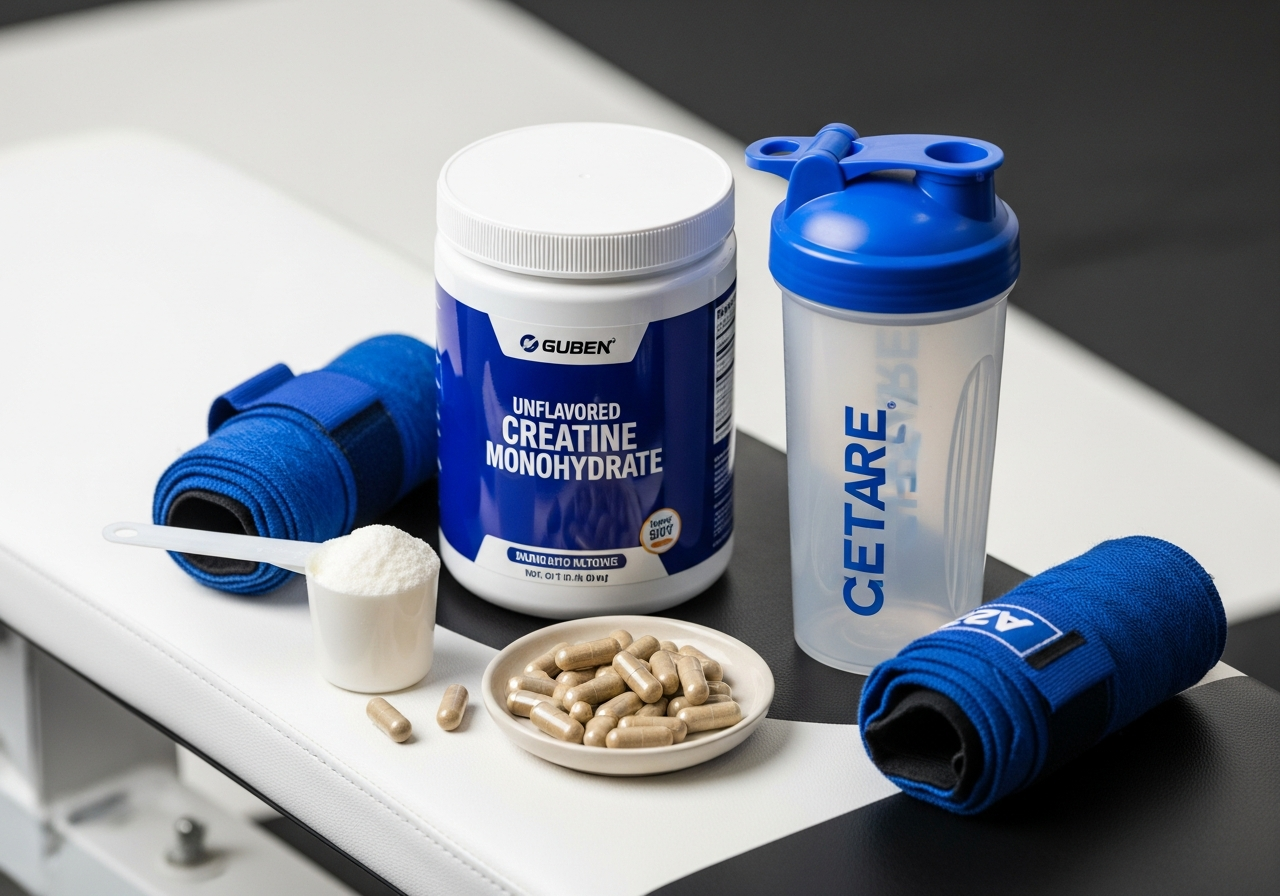
The best creatine for fighters is creatine monohydrate, because it is the most studied form, the most consistently effective form, and usually the best value per gram. For most MMA and BJJ athletes, there is no evidence-based reason to pay more for HCl, buffered creatine, ethyl ester, or proprietary “fight” blends if your goal is better training performance.
The 2017 ISSN position stand and the 2021 JISSN review on misconceptions both support creatine monohydrate as the reference form used in most research. Claims that other forms absorb dramatically better, avoid water retention entirely, or require tiny doses are not well supported compared with monohydrate. Water retention from creatine is also often misunderstood: the typical early increase is largely inside muscle, not the same thing as looking soft or bloated everywhere.
| Creatine form | Best use case | Evidence quality | Value for fighters |
|---|---|---|---|
| Monohydrate | Default choice for nearly everyone | Strongest | Best overall balance of results, safety, and cost |
| Micronized monohydrate | If you want easier mixing | Strong, because it is still monohydrate | Good option if texture bothers you |
| HCl | If you personally tolerate it better | Weaker than monohydrate | Possible convenience, but not proven superior |
| Buffered/alkaline forms | Mostly marketing-driven | Weak | Usually not worth the premium |
| Blends/gummies/pre-workouts | If convenience matters more than price | Varies by formula | Check actual grams per serving carefully |
For Canadian buyers, favour products with a visible NPN, which is a Natural Product Number issued under Health Canada’s natural health product system. An NPN is not a guarantee of athletic suitability, but it is a useful legitimacy check in Canada. Also look for plain ingredient decks, batch information, and brand transparency. Our best creatine rankings and creatine brand reviews can help you compare options more critically.
If you are cutting weight often, plain unflavoured monohydrate powder usually gives you the easiest dose control. Capsules can work, but hitting 3–5 g daily may require several capsules and costs more. Flavoured blends can be fine, but they sometimes hide lower creatine doses behind a larger scoop size.
Bottom line: for creatine combat sports use, monohydrate is still the standard by which everything else should be judged.
How to take creatine for MMA: a simple step-by-step plan for off-season, camp, and rest days
The simplest effective way to take creatine for MMA is 3–5 g of creatine monohydrate every day, including rest days, for long enough to keep muscle stores saturated. Consistency matters more than exact clock timing.
- Pick your season phase. If you are in the off-season or early camp, creatine is usually easy to fit in. If you are within the final 1–2 weeks before a difficult weight cut and have not been taking it already, wait until after the fight.
- Choose your dose. Most fighters do well with 3–5 g daily. Heavier athletes and those with more muscle mass often choose 5 g. Lighter athletes can often use 3 g.
- Decide whether to load. If you want faster saturation, take about 20 g per day split into 4 doses for 5–7 days, then drop to 3–5 g daily. If you prefer a gentler start, skip loading and take 3–5 g daily; full saturation just takes longer.
- Take it with a meal or shake if your stomach is sensitive. This often improves tolerance.
- Keep taking it on rest days. Creatine works by maintaining higher muscle stores, not by acting like a stimulant only on workout days.
- Track body mass and training quality. Weigh yourself under the same conditions 3–4 times per week and note round quality, strength numbers, and perceived repeat explosiveness.
A practical weekly routine might look like this:
- Morning lifter: 5 g with breakfast after weigh-in
- Evening fighter: 5 g with your post-training meal or protein shake
- Two-a-day athlete: 3 g with meal one and 2 g with meal two if you prefer split dosing
Do not overcomplicate timing. The evidence suggests total daily intake and long-term saturation matter far more than whether you take it pre- or post-session. If you want more on that point, see when to take creatine and creatine on rest days.
For fighters who travel for tournaments or fight week, pre-portioning daily servings into small baggies or a pill case of capsules can make compliance easier. Just keep the routine boring and repeatable. In practice, the best creatine protocol is the one you can follow for months without missing doses.
Exact creatine dosing for fighters by body weight, goal, and timeline to weigh-in
For most fighters, the right creatine dose is 3–5 g per day, with optional loading if you need faster saturation before a training block. Body weight changes the ideal dose slightly, but your goal and timeline to competition matter just as much.
| Fighter profile | Daily maintenance dose | Loading option | Best use case |
|---|---|---|---|
| Under 60 kg | 3 g/day | 20 g/day split into 4 doses for 5–7 days if fast saturation is needed | Lighter fighters wanting performance support with minimal excess intake |
| 60–90 kg | 3–5 g/day | Same loading protocol | Most amateur and pro MMA/BJJ athletes |
| Over 90 kg | 5 g/day | Same loading protocol | Heavyweights and larger grapplers |
| Weight cut approaching | Continue only if already tolerated and planned | Avoid starting a load close to weigh-in | Protect consistency and reduce surprises |
Use these goal-based rules:
- Off-season strength and power: 5 g/day is a sensible default.
- Early camp: 3–5 g/day works well if you are still several weeks from making weight.
- Close to a hard cut: avoid starting creatine for the first time; if already using it, decide with your coach or sports dietitian whether the performance benefit outweighs small body-mass changes.
- BJJ tournament without severe cutting: 3–5 g/day is usually straightforward.
How quickly does it work? If you load, many athletes notice fuller muscles and better gym performance within about a week. Without loading, you usually need roughly 3–4 weeks of daily use to approach full saturation. That is why fighters should think in training blocks, not in “fight night booster” terms. Creatine is not something you take once and feel like caffeine.
Body weight examples:
- 56 kg atomweight or strawweight athlete: 3 g/day
- 70 kg featherweight or lightweight athlete: 3–5 g/day
- 84 kg middleweight athlete: 5 g/day
- 105 kg heavyweight grappler: 5 g/day
If you want a more individualised estimate, use our creatine dosage calculator and compare it with the guidance in how much creatine per day and creatine loading phase.
Creatine and weight cuts: the real issue is scale weight timing, not dangerous ‘water under the skin’ myths
Creatine and weight cut strategy comes down to timing: creatine can slightly increase body mass, so it is helpful in many training phases but sometimes inconvenient near weigh-ins. The key point is that creatine-associated water is stored largely inside muscle cells, not as random subcutaneous puffiness, but any increase in scale weight still matters when you must hit a number.
This is why fighters should treat creatine as a season-planning tool. In off-season, between fights, or early in camp, creatine can support harder sessions and lean-mass retention. In the final stage before a hard cut, especially for athletes who already push the limit of their class, even a modest increase in body mass can create extra work. That does not make creatine “bad for fighters”; it just means you should not ignore the scale consequences.
Here is a practical framework:
- More than 4 weeks from weigh-in: usually a good time to start or continue creatine if it fits your goals.
- 2–4 weeks from weigh-in: continue only if you know how your body responds and your projected cut still works.
- Final 1–2 weeks before weigh-in: do not start creatine for the first time; many fighters prefer to keep variables stable here.
- Same-day weigh-ins or very small margin classes: be especially conservative with any supplement that may shift scale weight.
For BJJ athletes, the equation is often easier because tournament cuts are commonly less extreme than MMA cuts, though that varies by level and federation. If you compete close to your walk-around weight, creatine may be easy to keep in year-round. If you rely on repeated aggressive cuts, you may periodise it around competition.
A common mistake is dropping creatine too early and assuming performance will be unaffected. Muscle creatine stores do not vanish overnight, but they do gradually drift back down when supplementation stops. If you choose to stop before a fight, do it as part of an intentional plan, not out of panic. For more on body-mass changes, see does creatine make you gain weight and does creatine cause bloating.
Bottom line: creatine and combat-sport weight management can coexist, but only if you respect the calendar.
Best timing, hydration, and stacks for fighters: keep it boring, consistent, and easy to tolerate
The best time to take creatine for fighters is simply the time you will remember every day, because saturation matters more than pre-workout timing. You can take creatine before training, after training, with food, or on rest days with any meal; the meaningful goal is regular daily intake.
Some athletes like post-workout use because it pairs well with an existing shake or meal routine. Others take it at breakfast so it is done before chaotic training days begin. Either approach is fine. If your stomach gets upset taking creatine on an empty stomach, use it with a meal or split the dose.
Hydration matters, but not because creatine “dehydrates” you. That claim is not supported by the balance of evidence. The 2021 JISSN misconceptions paper addressed this directly: creatine does not appear to increase cramping, dehydration, or heat illness risk in healthy users under normal conditions. Fighters should still hydrate properly because combat training itself is dehydrating, especially with sweat suits, saunas, or hot rooms in a cut.
Simple hydration habits for creatine users:
- take your dose with a full glass or bottle of fluid
- aim for pale-yellow urine most of the day outside deliberate cut phases
- increase attention to fluids and electrolytes during double sessions or hot-weather training
- do not use creatine as an excuse to ignore normal hydration practice
Good stack options for fighters include:
- Creatine + whey protein: convenient after lifting or hard sparring
- Creatine + carbohydrates in a meal: easy for compliance, especially post-training
- Creatine + caffeine: usually fine for most people if tolerated, despite the old myth that they cancel each other out
Useful reads here are how much water with creatine, creatine and caffeine, and can you mix creatine with protein powder. If your routine is already overloaded with pre-workouts and intra-workouts, keep creatine separate and simple rather than burying it in a complicated stack you forget to take.
Fighters win with repeatable habits. A basic daily 3–5 g routine beats an “optimal” protocol you abandon after six days.
Who should use creatine in combat sports: beginners, women, older athletes, and plant-based fighters all can benefit
Creatine is appropriate for many kinds of fighters, including beginners, women, masters athletes, and plant-based athletes, as long as the timing fits their competitive calendar and they have no relevant medical contraindications. You do not need to be a bodybuilder or heavyweight to benefit.
Beginners: New MMA or BJJ athletes often benefit because their training includes repeated hard efforts and strength work, and creatine can support both. Beginners should not expect miracles, but they may notice improved gym quality and less drop-off in intense rounds once saturation is established.
Women fighters: Women can use the same evidence-based doses as men, generally 3–5 g/day. The idea that creatine is only for men or automatically causes bulky weight gain is false. Any early scale increase is usually water held inside muscle, not fat gain. Women in weight-class sports still need to plan around weigh-ins, but the supplement itself is not sex-specific. See creatine for women for a deeper breakdown.
Older or masters combat athletes: Creatine may be especially useful for preserving strength, power, and training capacity as recovery gets less forgiving with age. Pairing creatine with resistance training is particularly sensible here. Our creatine for older adults guide covers that population in more depth.
Vegetarian or vegan fighters: Plant-based athletes often have lower baseline dietary creatine intake because creatine is naturally found in animal foods. That means they may respond especially well to supplementation. See creatine for vegetarians and is creatine vegan.
Who should be more cautious? Anyone with kidney disease, significant underlying medical conditions, pregnancy or breastfeeding questions, or medication-related concerns should speak with a qualified clinician before starting. Also, athletes with severe recurring GI issues should begin with a lower split dose to test tolerance.
For teens in competitive combat sports, the conversation should involve parents, coaches, and ideally a sports dietitian or physician. The point is not fear; the point is mature use within a bigger performance and safety plan.
Is creatine safe for fighters? For healthy athletes, yes—but buy smart and respect side effects
Creatine is generally considered safe for healthy athletes when used at recommended doses, and this includes fighters, grapplers, and other combat-sport competitors. The best safety data are on creatine monohydrate, and both the ISSN position stand and the JISSN misconceptions review support its favourable safety profile in healthy populations.
Common side effects are usually manageable rather than dangerous:
- Temporary body-mass increase: often the most relevant issue for weight-class athletes
- Stomach upset or loose stools: more likely with large single doses, poor mixing, or loading too aggressively
- Mild bloating sensation: often improved by splitting the dose or taking it with food
What creatine does not reliably cause, based on current evidence, is kidney damage in healthy users, dehydration, or cramping as a normal expected effect. One nuance matters: creatine can increase creatinine on bloodwork because creatinine is a breakdown product, and that can confuse interpretation if a clinician does not know you supplement. That is not the same thing as proof of kidney harm. If you want a deeper dive, read is creatine safe and is creatine bad for your kidneys.
For competitive fighters, product quality is a real safety issue. The supplement itself may be legal and well supported, but contamination or sloppy manufacturing is a separate problem. In Canada, useful quality checks include:
- an NPN on the label
- a plain ingredient list, ideally just creatine monohydrate for unflavoured powder
- clear serving size in grams, not vague proprietary blends
- brand transparency about testing, manufacturing, or third-party verification
The Mayo Clinic overview also notes creatine is likely safe when used appropriately, though people with pre-existing medical conditions should seek medical guidance.
If you are a tested athlete, buy from reputable companies and keep your tub, lot number, and receipt. That is just good risk management. For fighters, the biggest creatine mistake is usually not safety—it is poor timing around weight management or buying an overhyped formula that underdoses the ingredient.
10 common creatine mistakes and myths fighters still believe
Most creatine problems in combat sports come from bad planning and bad information, not from creatine itself. Here are the myths and mistakes that trip up fighters most often.
- “Creatine is only for bodybuilders.” False. It is highly relevant to repeated explosive efforts, which describes much of MMA, BJJ, wrestling, and striking.
- “It will make me slow.” Not inherently. If a small body-mass increase harms your speed-to-weight ratio, that is a programming or class-management issue, not proof creatine kills athleticism.
- “It is basically a steroid.” False. Creatine is not an anabolic steroid and works through cellular energy support, not hormonal drug effects.
- “You need to cycle it.” Usually false. Most healthy users do not need on-off cycles; daily use is standard.
- “More is better.” False. Above recommended intake, you mainly increase the chance of GI side effects.
- “You only take it on training days.” False. Rest-day use helps maintain saturation.
- “It dehydrates you.” Not supported by the balance of evidence in healthy users.
- “If I missed one day, I ruined it.” False. Just resume your normal dose.
- “I should start loading during fight week.” Usually a bad idea. Fight week is not the time to introduce unpredictable body-mass or GI changes.
- “HCL is automatically better for fighters.” Not proven. Monohydrate remains the benchmark.
A few practical mistakes matter even more than the myths:
- starting creatine too close to a weigh-in
- using a heaping scoop without checking grams
- blaming creatine for water-cut mistakes caused by poor planning
- confusing normal intramuscular water retention with fat gain
- buying flashy blends that provide less actual creatine than plain monohydrate
Fighters do best when they treat creatine as one small part of a system that includes weight management, strength training, skill work, recovery, and hydration. If you want a broader myth-by-myth breakdown, read creatine myths debunked and creatine myths vs. facts.
The truth is less dramatic than the internet makes it sound: creatine is useful, boring, effective, and sometimes inconvenient near the scale. That is exactly why it is worth understanding properly.
Bottom line: should fighters take creatine?
Yes, many fighters should take creatine—especially in off-season, strength blocks, and early fight camp—because it supports repeated high-intensity performance, strength, power, and training quality. The best overall choice is creatine monohydrate at 3–5 g per day, taken consistently enough to maintain saturation.
The one major caveat is body mass. For weight-class athletes, creatine is not a random “yes or no” decision; it is a calendar decision. If you are far enough from weigh-ins, it is often a smart addition. If you are inside the final stage of a difficult cut and have not been using it already, it is usually better to avoid introducing it.
Use this quick rule set:
- Off-season or early camp: yes, likely worth it
- Regular BJJ training with no harsh cut: yes, usually straightforward
- Close to a hard MMA weigh-in: maybe, but only if already tested in training and body mass is under control
- Fight week first-time trial: no
If you are a beginner, keep the protocol simple: buy plain monohydrate, take 3–5 g daily, monitor scale weight and performance, and make no other dramatic changes at the same time. If you are an experienced athlete, use creatine like you use any effective tool—strategically, not emotionally.
The evidence-backed conclusion in 2026 remains very stable: creatine is one of the most useful legal supplements for high-intensity sport, and combat sports fit that profile well. The fighter’s job is not to ask whether creatine “works” in the abstract. The better question is whether it works for your phase of training, your class, and your cut strategy right now.
For next steps, compare options in our creatine product catalog, shortlist clean picks via best creatine rankings, and dial in your dose with the creatine dosage calculator.
Creatine for MMA and BJJ: the numbers that matter
- 3–5 g/day Standard maintenance dose — Best default for most fighters using creatine monohydrate.
- ~20 g/day Typical loading protocol — Usually split into 4 doses daily for 5–7 days to saturate faster.
- 5–7 days Time to faster saturation with loading — Without loading, reaching similar saturation commonly takes about 3–4 weeks.
- 1–2 weeks Avoid first-time use before a hard weigh-in — Not a strict physiological cutoff, but a practical fight-camp rule to reduce surprises.
Frequently Asked Questions
Is creatine good for MMA fighters?
Yes, creatine is good for many MMA fighters because it supports repeated high-intensity efforts, strength, and power more than steady-state endurance. It is especially relevant for scrambles, takedowns, pad rounds, wrestling exchanges, and lifting sessions, but the main trade-off is a possible increase in scale weight that must be managed around weigh-ins.
Does creatine help in BJJ?
Yes, creatine can help in BJJ by supporting explosive movements and repeated hard efforts during rolls and drilling. It is most useful for stand-ups, guard passing, bridging, grip-intensive exchanges, and strength work rather than for slow technical flow sessions alone.
Will creatine make me miss weight?
Creatine can make missing weight more likely if you start it too close to a tight weight cut, because it may increase body mass modestly through greater water storage inside muscle. It will not automatically ruin a cut, but fighters near their class limit should plan its use around the competition calendar.
Should fighters stop creatine before a fight?
Sometimes, but not always, fighters stop creatine before a fight if scale weight is very tight. If weigh-ins are not a major issue, many athletes can continue using it, but if every fraction of a kilogram matters, some prefer to stop in advance as part of a broader weight-management plan.
What is the best creatine for fighters?
The best creatine for fighters is usually plain creatine monohydrate. It has the strongest evidence, the lowest typical cost per effective dose, and the most predictable performance benefits compared with newer premium forms.
How much creatine should an MMA fighter take?
Most MMA fighters should take 3–5 g of creatine monohydrate per day. Lighter athletes often do well with 3 g daily, while heavier or more muscular athletes often use 5 g daily, and loading is optional if faster saturation is needed.
Does creatine hurt cardio for combat sports?
Creatine does not directly hurt cardio, but a small increase in body mass can feel different if you are very weight-sensitive. In return, creatine may improve repeated bursts and training quality, so the real question is whether the power benefit outweighs the body-mass trade-off in your weight class.
Can I take creatine during fight camp?
Yes, you can take creatine during fight camp, especially in the earlier phases when performance and training quality are priorities. The closer you get to a difficult weigh-in, the more carefully you should monitor body mass and decide whether continuing it still fits the cut plan.
Do boxers and kickboxers benefit from creatine too?
Yes, boxers and kickboxers can benefit from creatine because striking sports also involve repeated explosive efforts with incomplete recovery. Hard combinations, clinch work, footwork bursts, bag intervals, and strength training all draw on the type of high-intensity energy support creatine helps improve.
Is creatine legal in amateur and professional combat sports?
Yes, creatine is generally legal in amateur and professional combat sports and is not an anabolic steroid. The bigger issue is product quality, so competitive athletes should buy from reputable brands and avoid contaminated or poorly labelled supplements.