Creatine for Lean Muscle: How to Gain Size Without Adding Fat
By The Creatine Canada Research Team — Evidence-based supplement analysts
Yes, creatine can help you gain lean muscle without adding body fat when you pair it with resistance training, enough protein, and a sensible calorie intake. Creatine for lean muscle works mainly by increasing muscle phosphocreatine stores so you can train harder, recover better between hard efforts, and gradually build more fat-free mass over time.
Evidence-based · Cites 4 sources · Editorial standards
Key Takeaways
- Creatine monohydrate is the best-supported form for lean muscle gain and the one most people should buy.
- A simple 3-5 g daily dose is enough for most adults; loading at 20 g/day for 5-7 days only speeds saturation.
- Creatine does not directly cause fat gain; early scale changes are usually from more water stored inside muscle.
- For a lean bulk, use creatine alongside progressive strength training and a small calorie surplus, not a mass-gainer style overfeed.
- If your goal is a defined physique, keep taking creatine during a cut to help preserve training performance and lean mass.
- Take creatine every day, including rest days, because consistency matters more than exact timing.
- Choose products sold in Canada with clear ingredient labels, an NPN when applicable, and preferably third-party testing.
Can creatine build lean muscle without making you fat? Yes — here’s the straight answer
Yes, creatine for lean muscle is a legitimate, evidence-based strategy, and it does not inherently make you gain fat. Creatine helps you gain fat-free mass by increasing your muscles’ phosphocreatine stores, which improves rapid energy production during hard sets, sprints, and repeated efforts.
That distinction matters. When people ask about creatine without fat gain, they are usually mixing up three different things: fat gain, water retention, and real muscle growth. Fat gain happens when calorie intake consistently exceeds calorie expenditure by more than your body can use to support training and tissue building. Creatine itself has no calories and does not directly drive fat storage. Any actual fat gain comes from your diet, not from the creatine molecule.
The more common early change is a small increase in body weight from intramuscular water, meaning water stored inside muscle cells rather than under the skin. That can make muscles look fuller, not softer. This is one reason creatine is often useful for a creatine lean bulk: it can improve training quality and muscle fullness without requiring the sloppy high-calorie approach that causes excess fat gain.
The strongest evidence supports creatine monohydrate as the form to use. The 2017 ISSN position stand concluded that creatine monohydrate is the most effective nutritional supplement currently available for increasing high-intensity exercise capacity and lean body mass during training. The key phrase is during training. Creatine is not magic by itself; it amplifies good training.
If your goal is a lean physique, think of creatine as a performance tool rather than a shortcut. It can help you:
- get more reps at a given weight
- maintain bar speed and power across sets
- recover better between intense efforts
- support gradual increases in training volume
- hold onto lean mass while dieting
For beginners, the simplest plan is to take 3-5 g of creatine monohydrate daily, lift with progressive overload, eat enough protein, and monitor waist size alongside body weight. If you want a broader primer first, see what creatine is and what it does. If you want your dose dialed in quickly, use our creatine dosage calculator.
How creatine helps lean muscle gain: the mechanism most people never hear explained
Creatine supports lean muscle gain because it helps your body regenerate ATP faster during intense exercise, letting you do slightly more quality work over time. ATP, or adenosine triphosphate, is the immediate energy currency your muscles use for explosive contractions.
Inside muscle, creatine is stored partly as phosphocreatine, a high-energy compound that donates a phosphate group to help rapidly remake ATP during short, hard efforts. That means your third, fourth, and fifth heavy rep may be a little stronger, your sprint repeats may fall off less, and your total training volume may climb. Those small performance advantages, repeated across weeks and months, are where the muscle-building payoff comes from.
Creatine also appears to support lean gains through several secondary mechanisms:
- Better training volume: more total reps or load completed across a workout.
- Improved cell hydration: more water inside muscle cells may create a more anabolic environment for growth signalling, though performance remains the primary driver.
- Enhanced glycogen support: creatine may help carbohydrate storage in muscle in some training contexts, which can support repeated effort performance.
- Reduced performance drop-off: shorter recovery between hard bouts can improve density in hypertrophy training.
Importantly, creatine does not directly "tone" muscle, because toning is not a separate physiological process. A "toned" look simply means having enough muscle and low enough body fat for that muscle to show. So when people search for creatine for toning, creatine for defined muscles, or creatine for muscle definition, the honest answer is this: creatine can help you build and preserve the muscle that looks defined, but body-fat levels determine how visible that definition is.
The 2021 JISSN review on common creatine questions and misconceptions reinforces that creatine’s benefits are well supported for strength and lean mass, while many common fears are overstated or based on misunderstandings. The IOC consensus on dietary supplements also recognises creatine as one of the few supplements with a strong evidence base for performance applications.
Bottom line: creatine helps build a lean body not by burning fat, but by making your training and muscle retention better enough to improve body composition over time. For a deeper dive, see does creatine build muscle and creatine and muscle hypertrophy.
What results to expect from creatine for a lean physique, week by week
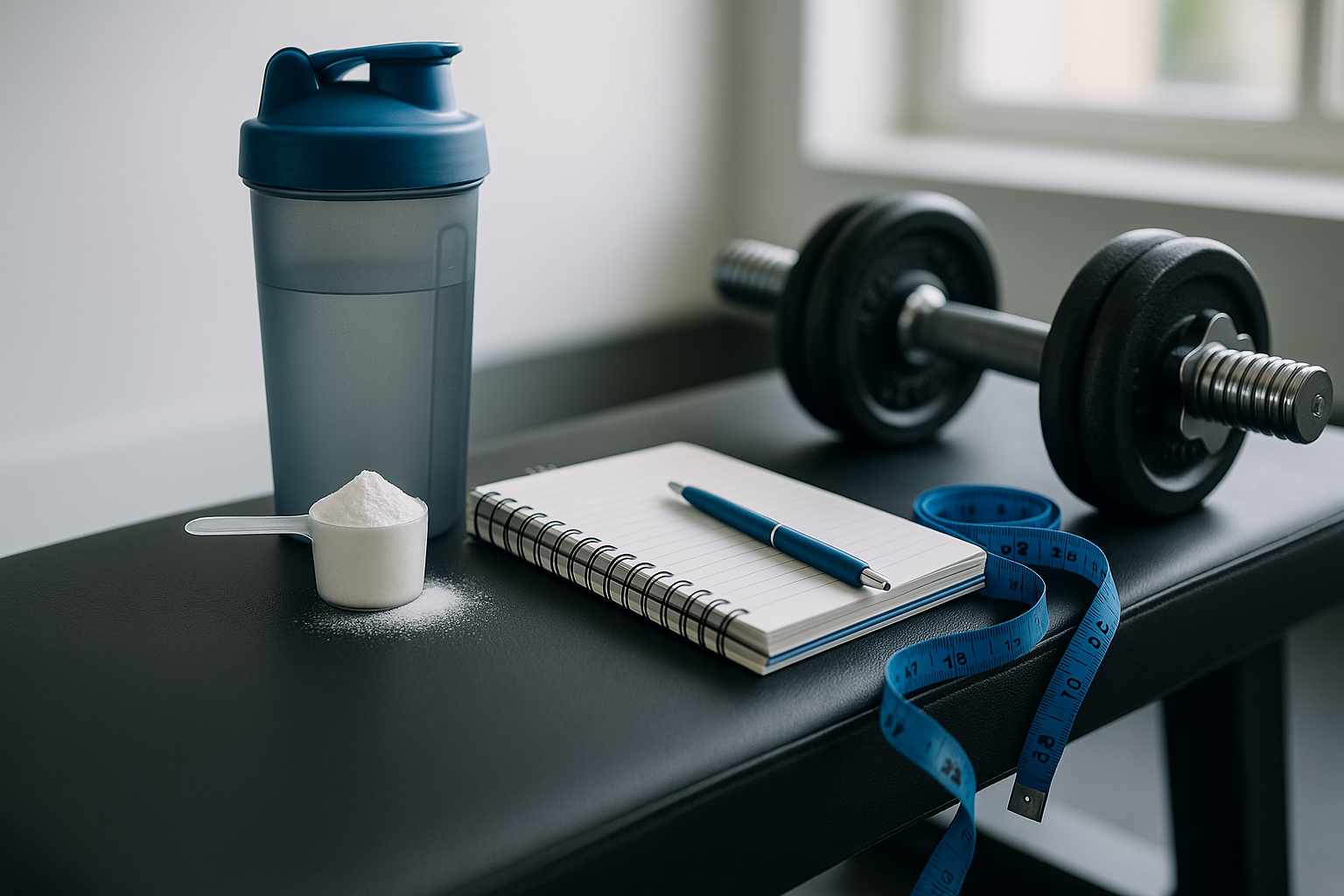
Creatine for a lean physique usually works gradually, with performance changes often showing up before obvious visual changes. If you know what to expect, you are much less likely to quit too early or mistake normal water shifts for fat gain.
Here is the realistic timeline for most healthy adults using creatine monohydrate consistently:
- Days 1-7 with loading: muscle saturation rises quickly if you take about 20 g/day split into 4 doses. Some people notice a fuller muscle look and a small body-weight increase.
- Weeks 2-4: training performance often improves first, especially on repeated hard sets, short sprints, or explosive lifts.
- Weeks 4-8: lean mass changes become more meaningful when training and food intake are aligned with your goal.
- Weeks 8-12: the biggest visible payoff is usually better muscle fullness, improved workout output, and more measurable progress in reps, load, or training density.
If you skip loading and simply take 3-5 g/day, the same endpoint is reached more slowly, usually over roughly 3-4 weeks. That is why many people asking how long does creatine take to work get confused: it depends on whether you loaded, how well your stores were filled before, and whether your training gives creatine a chance to matter.
How do you know it is working? Look for:
- one or two extra reps on hard working sets
- better repeat performance across sets
- slightly faster progression in load or volume
- improved muscle fullness
- stable or improving strength while cutting
Do not judge creatine only by mirror changes after three days. Early scale increases are usually water inside muscle tissue, not fat. If your waist measurement is stable but body weight is up slightly and gym performance is improving, that often points to a favourable response.
On the other hand, if nothing seems to happen after 6-8 weeks, troubleshoot before assuming creatine does not work for you. Common issues include underdosing, inconsistent use, poor sleep, too little protein, and training that lacks progressive overload. We cover these in more detail in creatine not working and how long creatine takes to work.
For a lean-gain phase, the best marker is not just scale weight; it is the combination of performance, body measurements, and photos taken under consistent conditions.
Exactly how to use creatine for lean bulk: the step-by-step plan that actually works
The best way to use creatine for lean bulk is to take it daily, train hard with progressive overload, and keep your calorie surplus small enough to support muscle gain without unnecessary fat gain. Creatine is the easy part; the structure around it determines whether your gains stay lean.
- Pick creatine monohydrate. Choose a simple monohydrate powder unless you have a strong reason to prefer capsules. If you are comparing options, start with our best creatine rankings and creatine brand reviews.
- Choose your saturation method. Either load with 20 g/day split into 4 x 5 g doses for 5-7 days, then move to 3-5 g/day, or skip loading and take 3-5 g/day from day one.
- Take it every day. Daily consistency matters more than pre- versus post-workout timing. On rest days, take the same maintenance dose.
- Train for hypertrophy and strength. Base your week around compound lifts and enough total hard sets for each muscle group. Creatine helps most when sessions include repeated high-effort work.
- Eat a small surplus. Aim for a modest calorie surplus rather than an all-out bulk. A slower rate of gain usually produces a better lean-to-fat ratio.
- Hit protein consistently. Creatine is not a protein replacement. You still need adequate daily protein intake to turn better training into muscle tissue.
- Track the right metrics. Use body weight, waist measurement, gym log, and progress photos. If weight is climbing fast and waist is expanding quickly, your surplus is probably too aggressive.
A practical beginner routine is simple: mix 3-5 g creatine into water or a protein shake once daily, attach it to a habit you never miss, and keep going for at least 8-12 weeks. If you want a simple pairing, see can you mix creatine with protein powder and how to take creatine.
For a creatine lean body approach, avoid the two biggest errors: using creatine while under-eating so badly that you cannot build, or over-eating so much that any lean-gain advantage gets buried under body-fat gain. Creatine can improve your body-composition trajectory, but it cannot override a poor nutrition setup.
If your goal is a beach-lean, athletic look rather than maximal bodybuilder size, think maintenance or slight surplus on training days, keep food quality high, and let creatine help you earn more from each session.
Creatine dose for lean gains: by body weight, training goal, and whether you want to load
The standard creatine dose for lean gains is 3-5 g per day for most adults, with an optional loading phase of 20 g per day split into 4 doses for 5-7 days. Bigger athletes and those with more muscle mass often sit at the upper end of that range.
Maintenance dosing does not need to be complicated, but body size and training goal can help you choose the most practical target. The goal is to saturate and then keep muscle creatine stores elevated.
| Body weight | Lean-gain goal | Simple daily dose | Optional loading plan |
|---|---|---|---|
| Under 60 kg | General lean muscle support | 3 g/day | 20 g/day split into 4 doses for 5-7 days, then 3 g/day |
| 60-90 kg | Most lifters and field/court athletes | 3-5 g/day | 20 g/day split into 4 doses for 5-7 days, then 3-5 g/day |
| Over 90 kg | Large lifters, high muscle mass, aggressive training volume | 5 g/day | 20 g/day split into 4 doses for 5-7 days, then 5 g/day |
| Cutting phase | Preserve strength and fullness | 3-5 g/day | Usually not necessary unless starting from zero |
Some experts and practitioners also use body-weight formulas in the loading phase, commonly around 0.3 g/kg/day for 5-7 days, followed by roughly 0.03 g/kg/day. In practice, the simple fixed-dose approach above works well for most gym-goers and is easier to follow consistently.
When should you choose loading?
- Choose loading if you want faster saturation for an upcoming training block, team camp, or short-term lean-bulk phase.
- Skip loading if you are prone to stomach upset, prefer simplicity, or do not mind waiting a few extra weeks.
For a defined look, higher doses do not create extra definition. More is not better once stores are saturated. Taking 10 g/day long-term without a specific reason is mostly a way to run through your tub faster.
If you want a more personalised estimate, use the creatine dosage calculator, or read how much creatine per day and creatine maintenance dose. The best dose is the one you will actually take every day for months, not three perfect days followed by two missed weeks.
Best time to take creatine for muscle definition: timing matters less than consistency
The best time to take creatine for muscle definition is the time you will remember to take it every day, because total daily intake matters much more than exact timing. Once your muscles are saturated, the main goal is keeping stores topped up.
That said, practical timing can still improve adherence and stomach comfort. Most people do well with one of these options:
- Post-workout with a meal or shake: easy habit, often convenient, and gentle on the stomach.
- Pre-workout: fine if it helps you remember, though it is not a true acute stimulant.
- Any meal on rest days: breakfast or lunch tends to be easiest for consistency.
Should you take creatine with carbs? You can, but you do not have to. Insulin can help creatine uptake, yet for everyday users the difference is usually less important than simply taking the supplement consistently. Mixing creatine into a protein shake, smoothie, juice, or plain water is perfectly acceptable.
Helpful pairing options for lean-mass goals include:
- Whey or other protein powder: supports total protein intake.
- A regular post-workout meal: simple and sustainable.
- Electrolytes or water: useful if you train hard and sweat heavily, though not mandatory.
Creatine does not need to be cycled, and missing the so-called anabolic window does not erase its benefits. Daily use over time is what matters. The Examine creatine evidence summary is useful here because it emphasises the broad consistency of benefit across protocols when total intake is adequate.
Common timing questions:
- Before bed? Fine if it does not bother your stomach.
- With coffee? Usually fine for most people.
- On an empty stomach? Fine for some, but others get mild GI upset and do better with food.
For a deeper timing breakdown, read when to take creatine, with or without food, and creatine on rest days. If you are chasing a creatine lean physique, do not major in the minors. Nail your daily dose, lifting plan, and nutrition first.
Who should use creatine for lean body goals — and who tends to benefit the most
Creatine can help a wide range of people build or preserve a lean body, but the biggest benefits usually show up in people doing regular resistance training or repeated high-intensity sport. It is not only for male bodybuilders, and it is not only for bulking phases.
Beginners often benefit because they are already improving quickly from training, and creatine can support better session quality and faster accumulation of productive volume. Beginners also tend to overcomplicate things; in reality, a plain monohydrate and a consistent lifting routine are enough.
Women can absolutely use creatine for lean muscle, definition, and performance. Creatine does not masculinise you, and it does not force unwanted bulk. For many women, especially those trying to look firmer or more athletic, creatine supports the muscle-building side of body recomposition. See creatine for women for a dedicated guide.
Older adults may benefit because preserving or increasing lean mass gets harder with age. Creatine paired with resistance training can support muscle function and training capacity, which matters for health as much as aesthetics. Our guide on creatine for older adults covers the nuances.
Vegetarians and vegans often respond especially well because dietary creatine intake from meat and fish is lower or absent. Lower baseline stores can mean more room for improvement once supplementation starts.
Athletes in stop-start sports such as hockey, soccer, football, basketball, CrossFit, sprinting, and racquet sports often benefit from creatine because their performance depends heavily on repeated high-power efforts. In these cases, better training quality can feed directly into leaner, more powerful physiques.
Who should be more cautious? People with pre-existing kidney disease, those taking medications that raise kidney concerns, and anyone with a complex medical condition should speak with a qualified healthcare professional first. Creatine is well studied in healthy people, but individual context still matters.
If you are deciding whether to start, the rule is simple: if your goal is creatine and lean gains, and you are training hard enough to stimulate muscle adaptation, you are probably a good candidate. If you are sedentary and not lifting, creatine may still affect muscle stores, but the visible lean-muscle payoff will be far smaller.
Safety, side effects, and the ‘weight gain’ confusion: what lean-focused users need to know
Creatine is widely considered safe for healthy people when used at recommended doses, and the most common side effects are mild, manageable, and often avoidable. The biggest source of confusion for lean-focused users is not danger but misinterpreting normal body-weight changes.
The Mayo Clinic overview and the ISSN position stand both note that creatine is generally safe when used appropriately. For healthy adults, long-term daily use of standard doses has a strong research base.
The most common issues are:
- Temporary scale increase: usually from more water stored inside muscle, especially during the first couple of weeks.
- Stomach upset: more likely if you take too much at once, dry scoop, or load aggressively.
- Bloating complaints: often exaggerated, but some people feel puffy if they use large single doses or certain flavoured formulas.
For someone pursuing creatine without fat gain, here is the key point: a 1-2 kg jump on the scale early on does not automatically mean you gained fat. Fat gain requires sustained calorie surplus, while early creatine-related gain is usually water retention within muscle tissue. That is why body weight alone is a poor progress marker during the first month.
How to reduce side effects:
- use creatine monohydrate from a reputable brand
- take 3-5 g rather than huge single doses
- split loading doses into 4 servings if you load
- take it with food if your stomach is sensitive
- drink according to thirst and training demands rather than forcing extreme water intake
Creatine does not dehydrate you, is not a steroid, and does not need to be cycled for safety. It can, however, raise creatinine on bloodwork, which can confuse people because creatinine is a breakdown product used in kidney function testing. That does not automatically mean kidney damage; interpretation matters. We cover that in is creatine bad for your kidneys and creatine vs creatinine.
For a fuller review, see is creatine safe, does creatine make you gain weight, and does creatine cause bloating.
Why creatine ‘isn’t working’: the biggest mistakes and the myths that derail lean gains
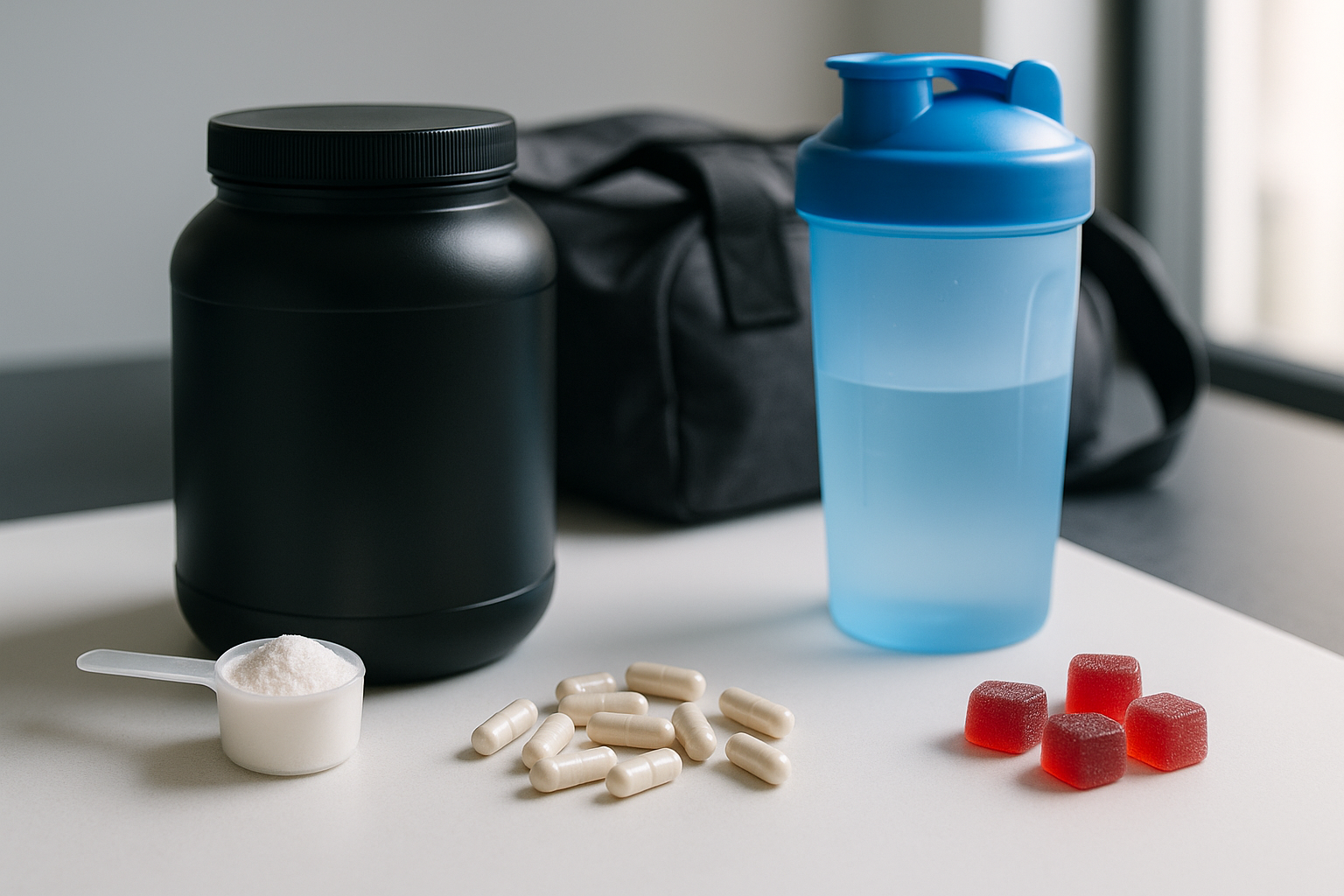
Creatine usually fails for one of two reasons: the user is making a simple protocol mistake, or they expected it to work like a fat burner or steroid. For lean muscle gain, creatine is highly effective, but only within the job it actually does.
Here are the most common mistakes:
- Not taking it daily. Creatine works by saturating muscle stores, so random use produces random results.
- Underdosing. Tiny sprinkle doses are often not enough.
- Expecting instant visible transformation. Performance improvements often arrive before physique changes.
- Training too lightly. If you never push hard sets, creatine has little opportunity to help.
- Eating poorly for the goal. Too few calories and protein can blunt muscle gain; too many calories can bury lean gains under fat.
- Switching forms constantly. Fancy forms often cost more without beating monohydrate.
Now the myths.
Myth 1: Creatine makes you fat. False. Creatine contains no calories and does not directly increase fat mass.
Myth 2: Creatine is only for bulking. False. It is also useful during maintenance and cutting to help preserve performance and lean mass.
Myth 3: Creatine ruins definition by making you watery. Misleading. Most retained water is inside muscle, which often improves fullness rather than blurring your look.
Myth 4: Women should avoid creatine if they want to look toned. False. A toned appearance comes from muscle plus low enough body fat, and creatine can support the muscle side of that equation.
Myth 5: You need exotic creatine forms for a lean physique. False. Monohydrate remains the reference standard on evidence, value, and practicality.
If you want a stronger, more defined look, the correct mindset is this: creatine improves the quality of your training and helps you retain more of the muscle you build. It is not a shortcut around consistency. If progress stalls, review the basics before buying a more expensive product.
For a full myth breakdown, visit creatine myths debunked and common creatine mistakes. Many so-called non-responders are simply inconsistent users or people whose training and nutrition do not match their goal.
Best creatine for lean muscle in Canada: what to buy, what to skip, and how to read the label
The best creatine for lean muscle in Canada is usually a plain creatine monohydrate powder with a short ingredient list, clear dose per serving, and strong quality signals such as third-party testing. You do not need a “lean muscle” proprietary blend to get lean-muscle benefits.
When shopping in Canada, look for:
- Creatine monohydrate as the active ingredient
- 5 g or similar clearly stated serving size
- minimal extras, especially if you want to avoid unnecessary sweeteners or fillers
- NPN when applicable, which stands for Natural Product Number and indicates Health Canada authorisation for a natural health product
- third-party testing such as NSF Certified for Sport or Informed Sport if you are a tested athlete
| Format or type | Best for | Pros | Cons |
|---|---|---|---|
| Monohydrate powder | Most people seeking lean gains | Best evidence, cost-effective, easy to dose | Can be slightly gritty in some liquids |
| Micronized monohydrate | People who want better mixability | Same core ingredient, often mixes a bit easier | Sometimes costs more for little real-world difference |
| Capsules | Travel or convenience | No mixing, easy to carry | Higher cost per gram, more pills needed |
| Gummies/chews | Taste-first users | Convenient, palatable | Often expensive and may require multiple pieces for a full dose |
| HCL and other specialty forms | Niche preference | Marketing around solubility or lower dose | Less evidence and usually poorer value than monohydrate |
What should you skip? Products that hide the dose in a proprietary blend, products that imply creatine itself burns fat, and products priced far above basic monohydrate without giving a clear quality reason.
If you are comparing Canadian options, browse our creatine product catalog, best creatine monohydrate in Canada, and third-party tested creatine in Canada. If you want to decode labels properly, see how to read a creatine label and Canadian supplement regulations.
For a creatine lean physique goal, value matters because creatine works through months of consistent use. The fancy tub is rarely better than the plain, proven one.
Creatine during a cut, recomp, or ‘toning’ phase: often more useful than during a bulk
Creatine is often especially useful during a cut or recomposition phase because it helps you preserve training performance and lean mass while calories are tighter. If your goal is creatine for toning or a more defined physique, this is where creatine earns its reputation.
Remember that definition comes from revealing muscle, not from some special “toning” supplement effect. During a calorie deficit, your risk is losing strength, reducing training volume, and shedding some lean tissue along with fat. Creatine can help blunt that slide by supporting high-intensity performance and muscle fullness.
This makes creatine a smart tool for:
- body recomposition, where you aim to gain or preserve muscle while losing fat
- cutting phases, where you want to look harder and fuller rather than flat
- maintenance phases, where you want to keep strength while staying lean
A practical recomposition setup looks like this:
- Take 3-5 g creatine monohydrate daily.
- Lift 3-5 times per week with hard sets close enough to failure to maintain or build muscle.
- Keep protein intake high and spread through the day.
- Use a mild calorie deficit, not a crash diet.
- Judge progress by waist, strength, and photos, not only by total body weight.
Some people panic when they start creatine during a cut because the scale stalls briefly. That does not mean fat loss stopped. Water shifts can mask scale changes even while body composition improves. If your waist is shrinking, strength is holding, and you look fuller, that is often a successful outcome.
In fact, many lifters look better on creatine while dieting because they keep more training quality and avoid the flat, depleted look that often comes with a hard cut.
If this is your goal, read does creatine help you lose fat, creatine for body recomposition, and creatine in a caloric deficit. For physique-focused users, creatine is not just a bulking supplement; it is one of the best tools for looking more muscular at a given body weight.
Bottom line: the smartest way to use creatine for lean muscle and definition
The smartest way to use creatine for lean muscle is simple: take creatine monohydrate daily, train hard enough to earn the extra performance it provides, and keep nutrition aligned with whether you want to lean bulk, recomp, or cut. Creatine works best as a force multiplier for good habits.
If you remember only five things, remember these:
- Creatine does not directly cause fat gain.
- 3-5 g per day is enough for most people.
- Loading is optional and only speeds up saturation.
- Consistency beats timing.
- Monohydrate is still the best-supported, best-value form.
For a lean bulk, use a small calorie surplus and monitor waist size so your gains stay mostly lean. For a cut or recomp, keep creatine in because it can help preserve strength, fullness, and fat-free mass. For a more defined or toned look, understand that creatine builds and protects the muscle; your body-fat level determines how much of that muscle shows.
So, does creatine help with lean muscle gain? Yes — reliably enough that it remains one of the few supplements with decades of support and a clear mechanism. It will not replace disciplined training or smart nutrition, but it can make both pay off more.
If you are ready to start today, choose a plain creatine monohydrate, take 3-5 g every day, and stick with it for at least 8-12 weeks while tracking performance, body weight, waist, and photos. For next steps, use our creatine dosage calculator, compare options in the product catalog, and read how to take creatine for a beginner-friendly setup.
Creatine helps you build a leaner, more muscular physique not by burning fat directly, but by improving the quality of the training stimulus that drives muscle growth and retention.
Creatine for Lean Muscle: the numbers that matter
- 3-5 g/day standard maintenance dose — Enough for most adults to maintain elevated muscle creatine stores.
- 20 g/day common loading dose — Usually split into 4 doses for 5-7 days to saturate muscle faster.
- 5-7 days typical loading timeline — Gets you to saturation quicker than daily low-dose use alone.
- 3-4 weeks typical no-loading saturation window — Rough timeline when taking 3-5 g/day from the start.
Frequently Asked Questions
Does creatine help you gain lean muscle or just water weight?
Creatine helps with both, but the two happen on different timelines. Early on, many people gain some water stored inside muscle cells, which can make muscles look fuller, and over time creatine can also support real lean mass gains by improving training quality and total high-intensity work performed.
Can creatine make you gain fat?
Creatine itself does not make you gain fat because it contains no calories and does not directly increase fat storage. If you gain fat while taking creatine, the usual cause is an overly large calorie surplus, not the supplement itself.
Is creatine good for a lean bulk?
Yes, creatine is excellent for a lean bulk because it can help you train harder and gain fat-free mass without requiring extreme calorie intake. It works best when paired with a small surplus, progressive lifting, and adequate protein rather than a sloppy bulk.
Will creatine ruin muscle definition?
No, creatine does not usually ruin muscle definition, and for many people it improves muscle fullness. Most water retained with creatine is stored inside muscle tissue, while visible definition still depends mainly on your body-fat level.
Should I take creatine while cutting for a more toned look?
Yes, taking creatine while cutting is often a smart move because it helps preserve training performance and lean mass in a calorie deficit. That can help you keep more muscle as you lose fat, which is what creates a more toned or defined appearance.
What is the best creatine for lean muscle gain?
The best creatine for lean muscle gain is usually plain creatine monohydrate. It has the strongest evidence, the best value per gram, and fewer reasons to overpay compared with trendier forms marketed for lean physiques.
How much creatine should I take for lean muscle?
Most people should take 3-5 g of creatine monohydrate per day for lean muscle support. If you want faster saturation, you can use a loading phase of 20 g/day split into 4 doses for 5-7 days, then return to 3-5 g/day.
How long does creatine take to work for lean gains?
Creatine can start affecting training performance within days if you use a loading phase, but visible lean-gain effects usually take several weeks. Without loading, muscle saturation often takes about 3-4 weeks, and noticeable physique changes depend on your training and diet.
Can women use creatine for toning and lean muscle?
Yes, women can absolutely use creatine for toning and lean muscle goals. Creatine supports the muscle-building and muscle-retention side of body recomposition, while the toned look itself still depends on overall body-fat levels and training.
Do I need to cycle creatine to stay lean?
No, you do not need to cycle creatine to stay lean. Daily ongoing use at a standard dose is the normal evidence-based approach, and staying lean depends far more on calorie balance and training than on cycling on and off creatine.