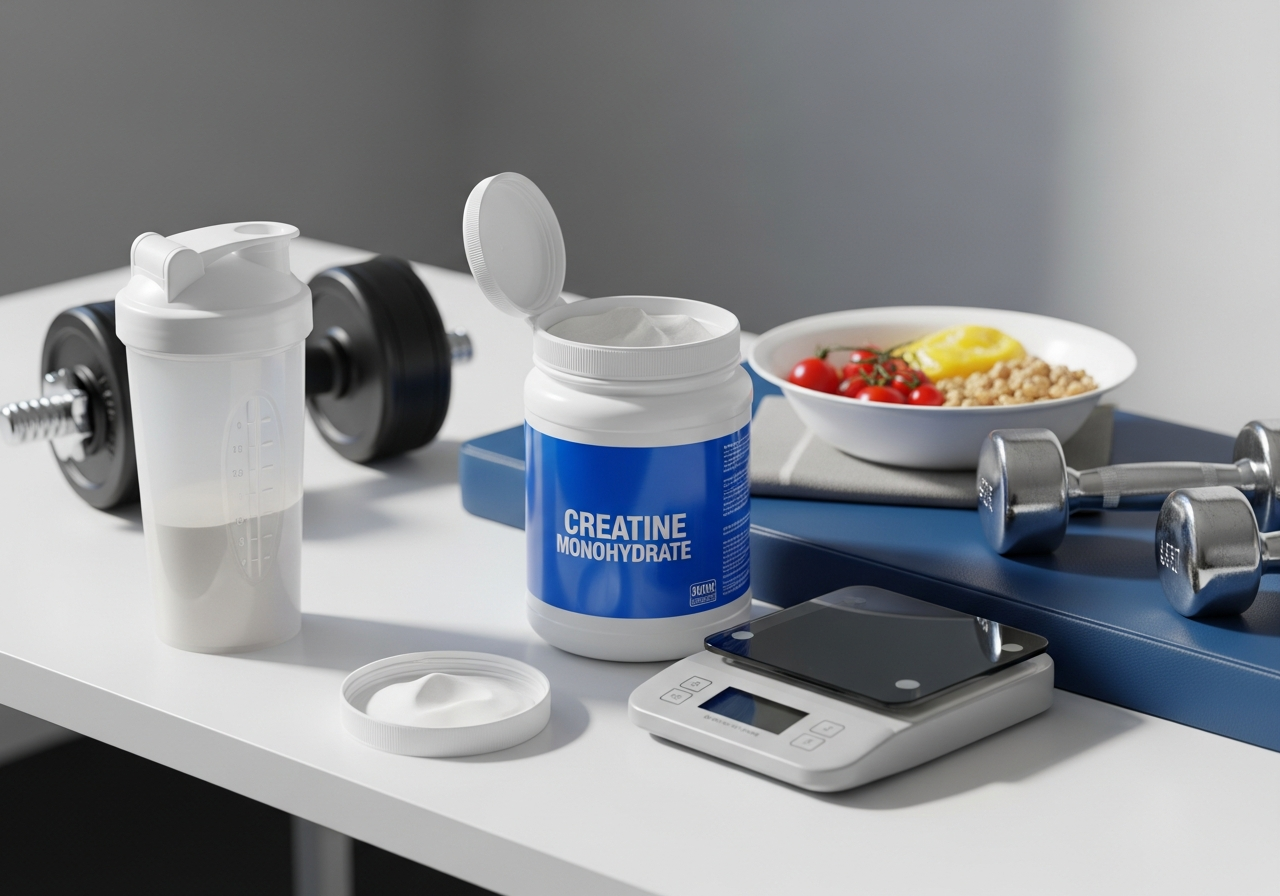
Creatine for Bulking: How to Maximize Muscle and Strength Gains
By The Creatine Canada Research Team — Evidence-based supplement analysts
Yes—creatine helps bulking by increasing your muscles’ phosphocreatine stores, which lets you train harder, recover repeated high-intensity efforts better, and gain more lean mass over time when paired with a calorie surplus and progressive lifting. For most people bulking, 3–5 g of creatine monohydrate daily is the simplest, best-supported way to improve muscle and strength gains.
Evidence-based · Cites 4 sources · Editorial standards
Key Takeaways
- Creatine monohydrate is the best creatine for bulking because it is the most studied, most effective, and usually the best value.
- A standard maintenance dose for bulking is 3–5 g daily; a loading phase of 20 g/day split into 4 doses for 5–7 days saturates muscles faster.
- Creatine does not bulk you by adding fat; early scale gain is usually intracellular water inside muscle, followed by better training output and lean mass gains.
- Take creatine every day, including rest days, because muscle saturation matters more than exact timing.
- Bulking results are best when creatine is combined with progressive resistance training, enough total calories, and adequate protein.
- Mild stomach upset or temporary water-weight gain are the most common issues and are usually fixed by splitting the dose or using micronized powder.
- In Canada, look for creatine products with clear monohydrate labelling, an NPN when applicable, and reputable third-party testing.
Does creatine help bulking? Yes—and here is exactly what it does
Yes, creatine helps bulking by improving your ability to produce energy during hard sets, which usually means more quality training volume and better lean-mass gains over time. Creatine for bulking is not magic on its own, but it is one of the most evidence-based supplements for adding muscle and strength when you are eating in a surplus and training with intent.
Creatine is a compound stored mostly in skeletal muscle, where part of it is held as phosphocreatine, a high-energy reserve that helps rapidly regenerate adenosine triphosphate, or ATP, the immediate fuel your muscles use for powerful contractions. During bulking, that matters because the workouts that drive growth—heavy compound lifts, hard accessory work, sprint intervals, repeated explosive efforts—depend heavily on this fast energy system.
The practical benefit is straightforward: when your muscle creatine stores are saturated, you can often squeeze out an extra rep, maintain bar speed a little better, or complete more total work across a session. Those small performance advantages compound across weeks and months. The 2017 ISSN position stand concluded that creatine monohydrate is the most effective nutritional supplement currently available for increasing high-intensity exercise capacity and lean body mass during training.
Creatine while bulking also commonly causes a small increase in body weight early on, but that initial gain is usually water drawn into muscle cells, not fat gain. That is one reason people often look fuller within the first one to two weeks. Over longer phases, the real payoff is not the water itself; it is the improved training output and the slightly better environment for muscle growth.
If your goal is to bulk efficiently, the simple answer is this:
- Use creatine monohydrate.
- Take 3–5 g every day.
- Keep calories, protein, and training consistent.
If you want the basics first, see our creatine dosage calculator or the primer on what creatine is and what it does.
How creatine supports muscle and strength gains during a bulk
Creatine supports bulk gains mainly by increasing phosphocreatine availability in muscle, which helps you sustain repeated high-intensity effort and accumulate more growth-producing training over time. That is the core mechanism, and it is much more important than any marketing claim about “anabolic” effects.
Here is how the process works in plain English:
- Supplemental creatine raises intramuscular creatine stores. Muscle can store only so much, so daily intake gradually pushes you toward saturation.
- Higher phosphocreatine stores improve rapid ATP regeneration. In short bursts of effort, that means more available fuel for another hard rep or sprint.
- Better ATP regeneration can improve training quality. You may hold force output better set to set, recover repeated efforts faster, and tolerate more total volume.
- More productive training creates more hypertrophy stimulus. More high-quality reps near meaningful effort levels usually means better gains across a bulking block.
Creatine may also increase cell hydration inside muscle, which many lifters notice as improved “fullness.” That fuller look is not fake progress, but it is also not the whole story. The long-term value comes from performance support, not from transient water retention alone.
The evidence is strongest for resistance training, sprinting, and sports with repeated explosive efforts. The International Olympic Committee consensus on dietary supplements includes creatine among the relatively few supplements with strong evidence for certain performance uses. The 2021 JISSN review on common questions and misconceptions also reinforces that creatine is effective and broadly misunderstood.
What creatine does not do is replace the fundamentals of bulking. If you are not progressively training, not eating enough, or missing protein targets, creatine will not rescue the plan. Think of it as a force multiplier for a good bulk rather than the foundation of the bulk itself.
A useful expectation is that creatine can make hard training feel slightly more repeatable rather than dramatically easier. That subtle edge is exactly why it works so well for bulking: small improvements in performance, repeated over dozens of sessions, can meaningfully change your results.
Best creatine for bulking: why monohydrate still wins
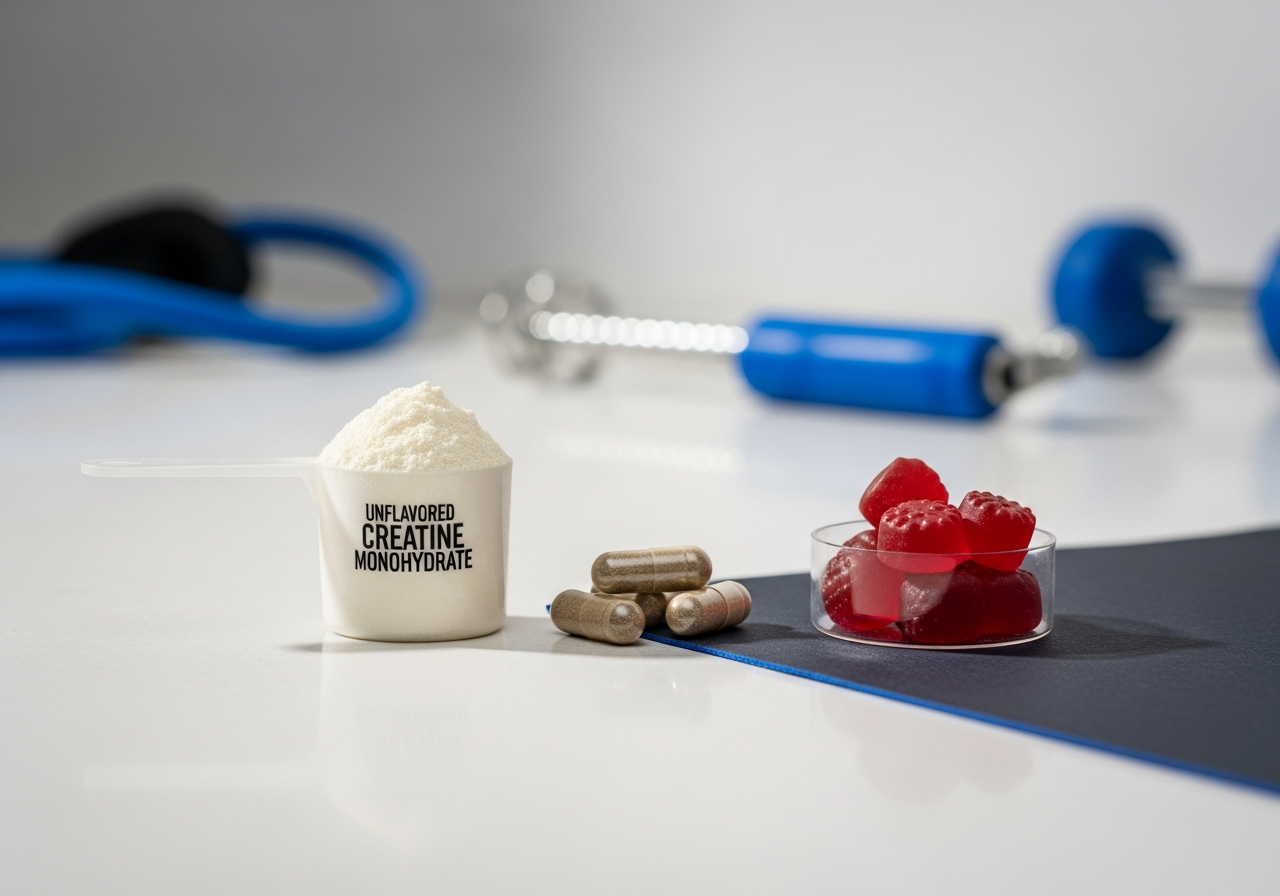
The best creatine for bulking is creatine monohydrate because it has the strongest evidence, the most consistent dosing data, and usually the lowest cost per effective gram. If you are comparing fancy forms, the burden of proof is on them—not on monohydrate.
Creatine monohydrate is the reference form used in the vast majority of the research on muscle size, strength, and repeated-effort performance. Claims that HCl, buffered forms, nitrate, ethyl ester, or gummies inherently build more muscle are not supported by stronger evidence than monohydrate. In practice, most people should choose plain monohydrate powder and spend the difference on food.
| Form | Best use case | Bulking verdict | Notes |
|---|---|---|---|
| Creatine monohydrate | Nearly everyone | Best overall | Most studied, effective, and cost-efficient |
| Micronized monohydrate | People who want easier mixing | Also excellent | Same active ingredient, finer texture |
| Creatine HCl | People who strongly prefer capsules or smaller servings | Usually not worth the premium | Less evidence than monohydrate for superior results |
| Buffered or “pH” creatine | Marketing-driven buyers | No clear bulking advantage | Often pricier without better outcomes |
| Gummies or RTD formats | Convenience-first users | Can work if dosed properly | Often more expensive per effective daily dose |
For Canadians, a smart buying checklist is simple:
- Look for creatine monohydrate as the ingredient, not a proprietary blend.
- Check for transparent serving size in grams.
- Prefer brands with third-party testing or strong quality-control reputation.
- When relevant, look for a Canadian NPN, or Natural Product Number, which indicates Health Canada-authorised product licensing for applicable natural health products.
If you are comparing products, start with our best creatine rankings, browse the creatine brand reviews, or compare options in the creatine product catalog. For a deeper breakdown of forms, our guide on the best type of creatine explains why monohydrate still leads in 2026.
How to take creatine while bulking: the simple step-by-step plan
The best way to take creatine while bulking is to use 3–5 g of creatine monohydrate every day, with or without food, and keep taking it on training days and rest days alike. Consistency matters more than a perfect ritual.
- Choose plain creatine monohydrate. Powder is the easiest and usually the cheapest effective option.
- Decide whether you want to load. If you want faster saturation, take 20 g/day split into 4 doses of 5 g for 5–7 days. If you do not mind waiting longer, skip loading and take 3–5 g/day from day one.
- Take it daily. On workout days, add it to water, a shake, or a meal. On rest days, take it whenever you are most likely to remember.
- Drink normally and train hard. You do not need extreme water intake, but regular hydration is sensible, especially in hot training environments.
- Track body weight, gym performance, and photos. Those three measures will tell you far more than “feel” alone.
If you are bulking, pairing creatine with a meal or post-workout shake can help adherence because it anchors the habit to something you already do. Many lifters mix it into a protein shake; that is perfectly fine. If you want help building the routine, read how to take creatine step by step and whether you can mix creatine with protein powder.
A realistic week-by-week expectation looks like this:
- Week 1 with loading: body weight may rise quickly and muscles may feel a bit fuller.
- Weeks 2–4: you may notice better repeat effort, slightly stronger later sets, or extra reps at a given load.
- Weeks 4–12: if training and calories are appropriate, creatine bulk gains show up as better progress in performance and lean mass than you likely would have achieved without it.
If you miss a day, do not double or panic—just resume normal dosing the next day. Creatine works through saturation, so one missed dose rarely matters in the real world.
Creatine dosing for bulking by body weight, experience, and goal
For bulking, most adults do well with 3–5 g of creatine monohydrate daily, but larger bodies, higher lean mass, and aggressive training volumes can justify aiming toward the upper end of that range. The main goal is full muscle saturation, not chasing a more “hardcore” number.
The traditional evidence-based approaches are:
- Loading: 20 g/day, split into 4 doses of 5 g, for 5–7 days; then 3–5 g/day maintenance.
- No loading: 3–5 g/day from the start; full saturation usually takes longer, often a few weeks.
Practical examples:
| Body weight | Bulking goal | Daily dose | When to consider loading |
|---|---|---|---|
| Under 68 kg | Beginner lean bulk | 3 g/day | If you want results to start faster |
| 68–91 kg | Most lifters | 3–5 g/day | Helpful before a new training block |
| Over 91 kg | Larger or highly muscular lifters | 5 g/day | Reasonable if you want rapid saturation |
| Vegetarian or vegan | Any bulk phase | 3–5 g/day | Often worthwhile because baseline stores may be lower |
| Older adult lifting seriously | Strength and lean mass support | 3–5 g/day | Optional, based on tolerance and preference |
These are pragmatic ranges, not a sign that everyone needs bodybuilder-level dosing. More is not better once stores are saturated. Taking 10 g/day long-term for a standard bulk is usually unnecessary unless a clinician or sports dietitian has a specific reason.
How do you know your dose is working? The best signs are:
- Stable daily compliance
- Slight early weight gain from water in muscle
- Improved repeated-set performance within weeks
- Better strength and volume progression over a training block
If you want a tailored estimate, use the creatine dosage calculator or read how much creatine per day and maintenance dose guidance. For faster saturation, our loading phase guide covers exactly how to split doses.
When to take creatine for bulking: timing matters less than consistency
The best time to take creatine for bulking is the time you will remember every day, because saturation drives results more than pre-workout versus post-workout timing. That is the direct answer most people need.
There is ongoing interest in whether post-workout creatine is marginally better than pre-workout creatine, often because insulin, blood flow, or nutrient timing are thought to improve uptake. In real-world terms, any advantage appears small at best compared with the much larger effect of simply taking creatine every day for weeks and months. If you miss doses while chasing “optimal timing,” you are making the important variable worse.
Good options include:
- Post-workout shake: ideal if you already drink protein after training.
- Breakfast: simple for people who train later in the day.
- With any main meal: useful for consistency during a bulk.
- Rest days at a fixed time: keeps the habit intact.
Creatine can be mixed with water, juice, protein shakes, or many other beverages. It is also fine with coffee for most people, although some find warm drinks clump or settle more. If you want the details, see when to take creatine, whether to take it with food, and mixing creatine with coffee.
For bulking specifically, the most practical timing strategy is this:
- Attach your dose to your most reliable meal or shake.
- Take the same dose on rest days.
- Do not skip because you trained at an unusual time.
One more nuance: if larger single doses upset your stomach, split your intake. For example, during loading you can take 5 g four times per day rather than 20 g at once. Even for maintenance, some people prefer 2–3 g twice daily. Compliance and tolerance beat theoretical perfection.
Who should use creatine for bulking—and who may benefit most

Creatine for bulking is a good fit for most healthy adults doing resistance training, and it may be especially useful for beginners, vegetarians or vegans, women, older adults, and athletes in strength-power sports. The mechanism is not male-specific, and the benefits are not limited to bodybuilders.
Beginners: Creatine can be worth using from the start because beginners adapt quickly to training, and creatine supports the high-intensity work that drives those early gains. It is not “too advanced” for a new lifter; the key is learning the basics and taking the right dose.
Women: Women can use the same evidence-based creatine approach as men for bulking and strength phases. Creatine does not turn women bulky on its own; it supports lean tissue, training performance, and often improved muscle fullness. Our dedicated guide on creatine for women covers common concerns in more detail.
Older adults: Older lifters can benefit when creatine is paired with resistance training, particularly for preserving or improving lean mass and strength. The principle is the same: better high-intensity work capacity helps you train more effectively.
Vegetarians and vegans: People who eat little or no meat may begin with lower baseline muscle creatine stores, so supplementation can be especially relevant. If you are plant-based, creatine is one of the most sensible performance supplements to consider.
Athletes: Creatine while bulking is particularly relevant for football, rugby, hockey, powerlifting, weightlifting, sprinting, and CrossFit-style training, where repeated explosive effort matters. For endurance athletes, the calculation is more nuanced because the extra body mass is not always helpful.
Who should be more cautious? Anyone with a kidney condition, a complex medical history, or clinician-advised fluid restrictions should speak with a qualified healthcare professional before starting. That is not because creatine is broadly unsafe; it is because individual context matters.
Safety, water weight, bloating, and other side effects during a bulk
Creatine monohydrate is widely considered safe for healthy people when used at standard doses, and the most common side effects during a bulk are mild water-weight gain and occasional digestive upset. Those effects are usually manageable and do not mean creatine is harming your body.
The safety profile is one of creatine’s biggest strengths. The ISSN position stand and the 2021 JISSN misconceptions review both support the conclusion that creatine monohydrate is safe for healthy individuals at recommended intakes. The Mayo Clinic also notes that creatine appears to be safe when used appropriately for up to several years in adults.
What you might notice:
- Scale weight increase: often appears early, especially with loading, because creatine increases intracellular water in muscle.
- Muscle fullness: commonly seen as a positive during bulking.
- Stomach discomfort: more likely if you take too much at once or use a poorly dissolving powder.
What creatine does not reliably do in healthy users:
- It does not directly increase body fat.
- It does not act like an anabolic steroid.
- It does not inherently dehydrate you.
- It does not require cycling.
One common source of confusion is creatinine, a breakdown product measured on blood tests. Creatine supplementation can increase creatinine somewhat without indicating kidney damage, which is why context matters in lab interpretation. If you want the full explanation, see is creatine safe, kidney concerns explained, and water vs. fat vs. muscle gain.
To reduce side effects:
- Use monohydrate or micronized monohydrate.
- Split larger doses.
- Take it with a meal if your stomach is sensitive.
- Stay normally hydrated rather than forcing extreme water intake.
If a product causes repeated issues, the problem is often the dose, the format, or the product quality—not creatine itself.
Common bulking mistakes and creatine myths that waste results
The biggest creatine mistakes during a bulk are inconsistency, underdosing, expecting instant muscle gain, and buying expensive forms that offer no clear advantage over monohydrate. Most “creatine didn’t work for me” stories come back to one of those issues.
Here are the mistakes that matter most:
- Taking it only on workout days: This slows or prevents full saturation. Daily use is the goal.
- Using too little: Tiny “sprinkled” doses are often ineffective for a meaningful bulk phase.
- Judging it after three days: Without loading, creatine takes time to build up in muscle.
- Confusing water weight with fat gain: Early scale changes are often part of the mechanism, not a sign your bulk is “dirty.”
- Ignoring training and diet: Creatine amplifies a good program; it cannot fix a poor one.
- Paying extra for hype: Fancy labels do not beat stronger evidence.
Now the most common myths:
Myth: Creatine is just water weight.
Fact: Early water retention is common, but the evidence-supported performance benefit is what drives better long-term lean-mass outcomes.
Myth: Creatine makes you bulky in a bad way.
Fact: Creatine helps muscle fullness and performance; it does not automatically create unwanted fat gain.
Myth: You need to cycle creatine.
Fact: Healthy adults generally do not need on-off cycling to maintain benefit or safety.
Myth: Loading is mandatory.
Fact: Loading is optional and only speeds saturation; it is not required for creatine to work.
Myth: Creatine damages kidneys in healthy people.
Fact: Standard-dose creatine is considered safe for healthy users, though anyone with kidney disease should get medical guidance.
For a deeper myth-by-myth review, visit creatine myths debunked or our related guide on creatine myths vs. facts. Troubleshooting a poor response? Read why creatine might not seem to work.
How to know creatine is working during a bulk—and how to troubleshoot it
You know creatine is working during a bulk when your body weight trends up appropriately, your muscles look a bit fuller, and your training performance improves over several weeks at the same or rising loads. The effect is often subtle session to session but meaningful across an entire mesocycle.
Use a simple scoreboard:
- Morning body weight: watch the weekly average, not day-to-day noise.
- Strength performance: log reps, load, and total hard sets.
- Photos every 2–4 weeks: same lighting, same poses.
- Recovery between sets: note whether repeated efforts feel more sustainable.
A good bulk with creatine often looks like this in practice: you gain a bit of scale weight early, maintain or improve rep performance at a given load, then gradually push more volume or heavier weights across the block. That combination is more informative than trying to “feel” creatine in your body.
If it seems not to be working, troubleshoot in order:
- Check adherence. Have you actually taken it daily for long enough?
- Check dose. Most people need 3–5 g/day, not random partial scoops.
- Check product. Is it genuine monohydrate from a reputable brand?
- Check your bulk. Are calories high enough and protein consistent?
- Check the program. Creatine helps best when training includes hard, progressive, repeated efforts.
Two practical stacking notes:
- Creatine plus protein: a highly sensible bulking combination because the supplements do different jobs.
- Creatine plus caffeine: generally fine for most people, especially if it improves workout quality and routine adherence.
If you need help with the basics, see how long creatine takes to work, creatine on rest days, and how to mix creatine properly. The supplement is simple; the main challenge is sticking with it long enough to let the performance advantage accumulate.
Bottom line: the smartest way to use creatine for bulking
Creatine for bulking works best when you use 3–5 g of creatine monohydrate every day, train hard enough to benefit from better repeated effort, and support the process with a sensible calorie surplus and adequate protein. If you want the shortest, most reliable answer, that is it.
Does creatine help bulking? Yes—because it improves the energy system that powers hard lifting and repeated explosive efforts, which helps you do more of the training that actually builds muscle. Best creatine for bulking? Creatine monohydrate, still. Best timing? Whenever you will take it consistently. Best expectation? Some early water weight, then better gym output and stronger lean-mass progress over time.
For most lifters, there is no need to complicate the process:
- Buy a reputable creatine monohydrate.
- Take 3–5 g daily.
- Optional: load with 20 g/day split into 4 doses for 5–7 days if you want faster saturation.
- Keep taking it on rest days.
- Track body weight and training performance for at least 4–8 weeks.
That plan satisfies nearly every search behind “creatine bulk gains,” “creatine while bulking,” and “does creatine help bulking” without unnecessary complexity. If you want to continue learning, the most useful next reads are does creatine build muscle, best creatine monohydrate in Canada, and where to buy creatine in Canada.
Creatine is not a substitute for disciplined bulking, but among legal, evidence-based supplements, it remains one of the smartest buys for adding size and strength in 2026.
Creatine for Bulking: The Numbers That Matter
- 3–5 g/day Standard daily bulking dose — Best-supported maintenance range for most adults using creatine monohydrate
- 20 g/day Typical loading dose — Usually split into 4 doses for 5–7 days to saturate muscle faster
- 5–7 days Loading phase timeline — Common protocol before dropping to maintenance
- 4 doses of 5 g How to split loading — Reduces the chance of stomach discomfort compared with one large dose
Frequently Asked Questions
Does creatine help bulking or just add water weight?
Creatine helps bulking beyond just water weight because it improves high-intensity training capacity, which can translate into better strength and lean-mass gains over time. Early weight gain is often water stored inside muscle, but that is only the first phase; the more important effect is that better repeated effort supports better training across a full bulk.
What is the best creatine for bulking?
The best creatine for bulking is creatine monohydrate. It is the most studied form, the one used in most of the evidence on muscle and strength, and usually the most cost-effective option per effective daily dose.
How much creatine should I take while bulking?
Most people should take 3–5 g of creatine monohydrate daily while bulking. If you want faster saturation, you can use a loading phase of 20 g/day split into 4 doses for 5–7 days, then continue with 3–5 g/day.
Should I load creatine when bulking?
You do not need to load creatine for it to work, but loading helps it work faster. A loading phase is useful if you want your muscle creatine stores saturated within about a week instead of waiting a few weeks with standard daily dosing.
When should I take creatine while bulking?
Take creatine at the time of day you can remember consistently, because daily use matters more than exact timing. Many people take it post-workout or with a meal simply because those routines are easy to maintain.
Can beginners use creatine for bulking?
Yes, beginners can use creatine for bulking. It is not an advanced-only supplement, and beginners often benefit because their training progress is rapid and creatine supports the repeated high-intensity effort that drives early gains.
Does creatine make your bulk dirty or cause fat gain?
Creatine does not make a bulk dirty and does not directly cause fat gain. If body fat increases during a bulk, the main drivers are usually your calorie surplus and food choices, not creatine itself.
Is creatine good for women who want to bulk?
Yes, creatine is good for women who want to bulk because the mechanism is the same as in men: better phosphocreatine availability supports stronger training and lean-mass gains. It does not automatically make women bulky; it simply supports muscle performance and adaptation.
How long does creatine take to work for bulking?
Creatine can start affecting muscle stores within days if you use a loading phase, but noticeable bulking benefits usually emerge over several weeks of training. Without loading, expect a slower build toward saturation and performance benefits over roughly a few weeks.
Do I need to cycle creatine after a bulking phase?
No, most healthy adults do not need to cycle creatine after a bulking phase. If you still benefit from training performance, strength maintenance, or general muscle support, you can usually continue taking a standard daily dose year-round.