The Ideal Daily Creatine Protocol: Timing, Dose, and Stacking for Maximum Results
By The Creatine Canada Research Team — Evidence-based supplement analysts
The ideal daily creatine protocol is simple: take 3 to 5 grams of creatine monohydrate every day, including rest days, and prioritise consistency over perfect timing. If you want faster saturation, use a loading phase of 20 grams per day split into 4 doses for 5 to 7 days, then continue with a 3 to 5 gram daily maintenance dose.
Evidence-based · Cites 4 sources · Editorial standards
Key Takeaways
- For most adults, the best daily creatine routine is 3 to 5 g of creatine monohydrate every day.
- Take creatine on training days and rest days; muscle saturation matters more than workout timing.
- A loading phase of 20 g/day split into 4 doses for 5 to 7 days works faster but is optional.
- Post-workout, pre-workout, morning, and night can all work if you take the dose consistently.
- Bigger athletes and people with more lean mass often do better at the upper end of the range.
- Creatine monohydrate is still the most studied, most effective, and most cost-effective form.
- If creatine upsets your stomach, split the dose, take it with food, and avoid dry scooping.
The best daily creatine protocol for most people
The best daily creatine protocol for most people is 3 to 5 grams of creatine monohydrate once per day, every day, whether you train or not. That is the short answer, and it covers the vast majority of lifters, recreational athletes, and beginners looking for a reliable creatine daily routine.
This works because creatine is not a stimulant that has to be felt acutely before a workout. Creatine works by gradually increasing your muscles’ stored creatine and phosphocreatine, which is the rapidly available energy reserve used to regenerate ATP during short, hard efforts. Once your muscles are saturated, your creatine schedule is mainly about keeping those stores topped up.
If you want the fastest possible start, you can use a loading phase: 20 grams per day for 5 to 7 days, split into 4 servings of 5 grams, followed by 3 to 5 grams per day. The 2017 ISSN position stand concluded that creatine monohydrate is the most effective ergogenic nutritional supplement currently available for increasing high-intensity exercise capacity and lean mass gains during training. You can review that evidence directly in Kreider et al. (2017), ISSN Position Stand.
For a practical routine, keep it boring:
- Pick one form: plain creatine monohydrate powder is the default best choice.
- Pick one daily anchor: breakfast, post-workout shake, lunch, or dinner.
- Take it every day: training days, rest days, deloads, and travel days.
- Measure the dose: use a scoop only if it is gram-verified, or use a scale.
If you are unsure where to start, use our creatine dosage calculator to get a simple dose based on your body size and goal. If you need the full beginner framework first, see how to take creatine and creatine product catalog.
One more direct answer for snippet purposes: the ideal creatine regimen is daily use, not occasional use. Missing the occasional day is not a disaster, but taking creatine only on workout days is a weaker protocol than taking it consistently every day.
Why a daily creatine routine works: the mechanism in plain English
A daily creatine protocol works because it raises intramuscular creatine and phosphocreatine stores, which helps your body remake ATP faster during short, intense exercise. ATP, or adenosine triphosphate, is the immediate energy currency your muscles spend when you sprint, jump, lift, or repeat hard intervals.
Phosphocreatine is stored mostly in skeletal muscle and acts like a rapid phosphate donor. During high-output efforts, your body burns ATP quickly. Phosphocreatine helps recycle ATP so you can maintain force and repeat explosive efforts with less drop-off. That is why creatine tends to help most with strength, power, sprinting, repeated intervals, and training volume, rather than long, steady aerobic work.
The important concept is saturation. Saturation means your muscle stores are filled to a higher level than baseline. You do not need a huge dose forever; you need enough creatine daily to build up stores and then maintain them. Without loading, this usually takes a few weeks. With loading, it usually happens within about a week.
Creatine’s benefits are not limited to one workout. Better phosphocreatine availability can let you get an extra rep, maintain bar speed slightly better across sets, or hold output deeper into a sprint session. Those small training advantages compound over weeks and months into better strength and muscle gains. This is why creatine is best thought of as a training support supplement, not a one-time performance trick.
The 2021 JISSN review by Antonio and colleagues also addressed common misconceptions and reinforced that creatine’s core evidence base is strongest for exercise performance and body composition, with additional emerging areas like cognition still being investigated. Read it here: Antonio et al. (2021), common questions and misconceptions about creatine.
Two practical implications follow from the mechanism:
- Timing matters less than adherence, because creatine works through stored tissue levels, not an acute stimulant effect.
- Rest days still matter, because you are maintaining muscle saturation, not just fuelling the current session.
If you want a deeper science primer, see what is creatine and creatine muscle saturation. But for daily use, the key takeaway is simple: your best creatine schedule is the one you will actually follow for months.
How to take creatine daily: a simple 5-step schedule you can start today
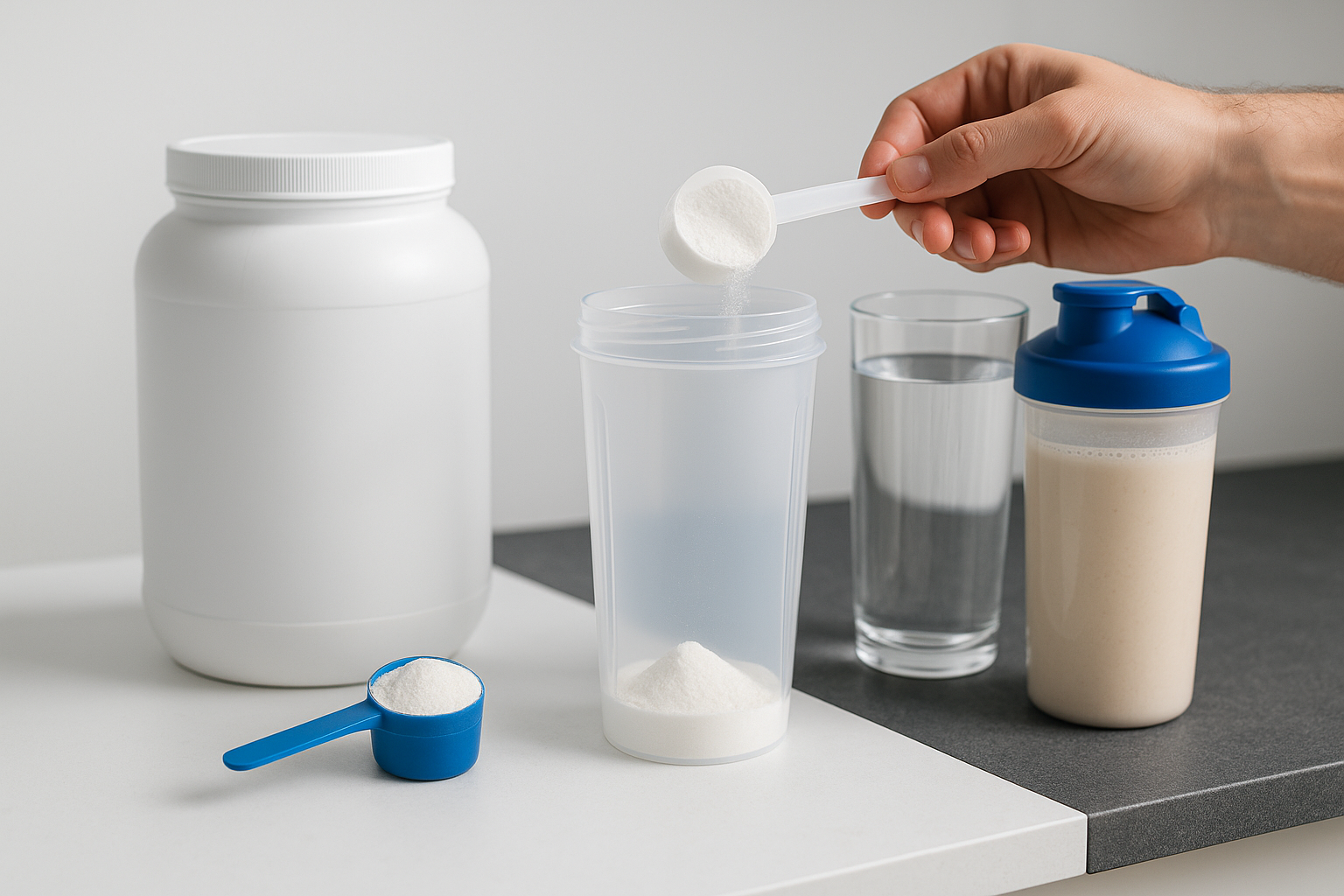
The easiest way to take creatine daily is to build it into an existing habit, use the right dose, and remove all unnecessary complexity. A good creatine supplement plan should take less than one minute per day.
- Choose creatine monohydrate. Creatine monohydrate is the gold standard because it is the most studied form and the most cost-effective. If you are comparing options, our best creatine rankings and creatine brand reviews can help.
- Decide whether to load. If you want faster results, take 5 grams, 4 times per day, for 5 to 7 days. If you prefer a gentler start, skip loading and take 3 to 5 grams once daily.
- Pick your anchor time. Good options include with breakfast, after training, with your protein shake, or with dinner. The best time is the time you rarely forget.
- Mix and take it properly. Stir the powder into water, a shake, or another drink and consume it. Taking it with a meal can help if you get stomach upset.
- Stay consistent for weeks, not days. Track your daily intake for the first month. Treat it like brushing your teeth, not like a pre-workout.
A sample creatine daily routine looks like this:
- Training day: 5 g in your post-workout shake or with lunch.
- Rest day: 5 g with breakfast.
- Travel day: bring pre-portioned servings in a small container or bag.
Here is what many people feel week by week if they are training hard enough to notice the effect:
- Week 1 with loading: possible body-weight increase from intracellular water, sometimes slightly better gym output.
- Weeks 2 to 4: better repeat performance, easier time maintaining reps or sprint quality.
- Weeks 4 to 8: more obvious training-volume benefits and gradual strength or muscle improvements.
How do you know your creatine routine for best results is working? Look for small but meaningful changes: one more rep at the same load, less performance drop between sets, a slightly fuller muscle look, and a modest increase in scale weight early on that is not body fat.
If you want a complete setup guide, also read creatine for beginners and how to measure creatine.
Creatine dose by body weight, training goal, and experience level
The right creatine dose depends mostly on body size, lean mass, and whether you want maximum simplicity or faster saturation. For most adults, 3 to 5 grams per day remains the best maintenance range, but larger athletes often benefit from staying at the upper end.
A common evidence-based framework is:
- Smaller adults under about 60 kg: 3 g/day is often sufficient.
- Most adults around 60 to 90 kg: 3 to 5 g/day works well.
- Larger athletes over about 90 kg or with high lean mass: 5 g/day is usually the practical default.
For loading, the classic protocol is 20 g/day split into 4 doses of 5 g for 5 to 7 days. Another evidence-based way to describe loading is approximately 0.3 g/kg/day for 5 to 7 days, followed by maintenance at roughly 3 to 5 g/day.
| Goal or body size | Suggested daily protocol | Best use case |
|---|---|---|
| Beginner, wants simplicity | 3 to 5 g once daily | Easy adherence, low fuss |
| Wants fastest saturation | 20 g/day in 4 x 5 g doses for 5 to 7 days, then 3 to 5 g/day | Fast start before a training block |
| Smaller adult | 3 g/day | Maintenance with lower body mass |
| Larger or muscular athlete | 5 g/day | Maintenance with greater lean mass |
| Vegetarian or vegan | Usually 3 to 5 g/day; loading optional | Often strong responders due to lower baseline stores |
Goal matters too. If your focus is strength, power, sprinting, HIIT, or muscle gain, creatine belongs in your daily routine. If your goal is a fat-loss phase, creatine still makes sense because it can help preserve training quality and lean mass while dieting. If you are doing endurance sport, the decision is more context-specific because any increase in body mass can be either helpful or unhelpful depending on the event.
Beginners often ask whether more is better. It usually is not. Once muscle stores are saturated, taking much more than the standard maintenance dose does not reliably create more benefit and may raise the chance of digestive side effects. For a more precise plan, see how much creatine per day and our creatine dosage calculator.
Training-day and rest-day protocol: does timing actually matter?
The best creatine training and rest day protocol is to take the same daily dose every day and stop worrying about perfect timing. For most people, total daily intake and long-term consistency matter more than whether you take creatine before or after your workout.
That said, timing can still matter a little at the margins if it improves adherence or lines up with habits. Some people prefer post-workout because they already have a shake routine. Others prefer breakfast because rest days become easier to remember. Both are fine. The practical hierarchy is:
- Take it daily.
- Use the correct dose.
- Choose a time you will stick to.
- Only then worry about fine timing details.
Here is a sensible creatine schedule by day type:
- Before training: acceptable, especially if it helps you remember.
- After training: also acceptable, and popular because it pairs easily with protein and carbs.
- Rest day: take it with any meal or drink you reliably consume.
- Morning or night: both are fine; there is no strong evidence that one is universally superior.
If you miss a dose, do not panic and do not double up aggressively the next day. Just resume your normal dose. Creatine works through tissue saturation over time, so a single missed day has little practical impact for most users. If missed doses are becoming frequent, the issue is not physiology; it is routine design.
Can you take creatine with coffee, protein, juice, or on an empty stomach? Usually yes. The best medium is the one you tolerate well and use consistently. If an empty stomach makes you feel off, take it with food. If you already use whey, mixing them is convenient and effective. See when to take creatine, creatine with or without food, and can you mix creatine with protein powder for the details.
The bottom line on timing is straightforward: creatine is a daily saturation supplement, not a precision-timed stimulant. Your best routine is the one that survives weekends, travel, and busy life.
How to stack creatine without overcomplicating your supplement plan
The smartest way to stack creatine is to combine it only with supplements that serve a distinct job, not to buy a flashy blend that makes dosing unclear. A simple creatine supplement plan usually pairs best with protein powder, caffeine or pre-workout if you use one, and possibly electrolytes depending on your training and sweat losses.
Creatine itself does one main job very well: it supports high-intensity energy production by increasing phosphocreatine availability. Whey protein does a different job: it helps you hit daily protein targets for muscle repair and growth. Caffeine does another job: it improves alertness and can acutely improve performance. These can all fit into one regimen because they work through different mechanisms.
Here is a practical stacking framework:
- Creatine + whey protein: excellent basic stack for lifters and general fitness.
- Creatine + pre-workout: fine, but check that the pre-workout does not underdose creatine or hide the amount in a blend.
- Creatine + electrolytes: useful for hot gyms, long sessions, or athletes with high sweat losses, but not mandatory for everyone.
- Creatine + carbs: acceptable and convenient, though you do not need sugar to make creatine work.
What should you avoid? Mostly bad product design. Many multi-ingredient products make it hard to know whether you are getting a full 3 to 5 grams of creatine monohydrate daily. Hidden proprietary blends are a poor fit if your goal is a dependable creatine regimen.
Also avoid thinking that stacking can compensate for inconsistency. An expensive pre-workout stack does not beat plain monohydrate taken daily. Creatine works incredibly well when the basics are right and surprisingly poorly when people underdose, skip rest days, or swap to trendy forms with weaker evidence.
For sport, the International Olympic Committee consensus on dietary supplements recognises creatine among the few supplements with strong evidence for certain performance applications. That is one reason simple, well-dosed stacks outperform complicated ones.
If you want help choosing pairings, see creatine stacking guide, creatine and pre-workout together, and creatine and caffeine.
Who this creatine routine is best for: beginners, women, older adults, and athletes
The standard daily creatine protocol of 3 to 5 grams per day suits most healthy adults, including beginners, women, older adults, and many athletes. The protocol changes less by sex and more by body size, training demands, dietary pattern, and tolerance.
Beginners are often the best candidates because creatine is easy to use and supports better training quality while they build skill and consistency. A beginner does not need a fancy schedule; 3 to 5 grams daily is enough.
Women can use the same evidence-based dosing range as men. Creatine is not a steroid, and it does not automatically make women bulky. Women may notice the same early intracellular water increase, but that is different from gaining body fat. For many active women, the value of creatine is better strength progression, training output, and support for lean mass. For a dedicated guide, see creatine for women.
Older adults may benefit especially when creatine is paired with resistance training. The reason is practical: preserving muscle, strength, and function becomes more important with age. Older users generally do well with the same 3 to 5 gram daily routine, unless a clinician has advised otherwise. See creatine for older adults.
Vegetarians and vegans often respond well because dietary creatine intake is usually lower at baseline. That means supplementation can produce a larger change in muscle stores for some plant-based users.
Athletes in repeated high-intensity sports often get the clearest performance upside. Think hockey, football, rugby, sprinting, CrossFit, basketball, and strength sports. By contrast, pure endurance athletes need a more individual decision because even a small increase in body mass can be a trade-off in some events.
Who should be more cautious? People with kidney disease, anyone told by a physician to restrict certain supplements, and anyone taking medications where there may be relevant interactions should speak to a qualified healthcare professional first. That is a caution principle, not a claim that creatine is broadly unsafe. For a full evidence-based review, see is creatine safe and who should not take creatine.
In short, the standard creatine routine is broad, simple, and highly adaptable. Most people do not need a special protocol; they need a consistent one.
Safety, side effects, and what Canadian buyers should check on the label
Creatine monohydrate is generally considered safe for healthy people when used at evidence-based doses, and the most common side effects are mild and manageable. The strongest recurring issues are temporary water-weight gain, stomach upset from large doses, and confusion about blood creatinine on lab work.
The weight gain point needs context. Creatine often increases intracellular water, meaning water stored inside muscle cells, especially during the first days or weeks. That can show up on the scale, but it is not the same as fat gain. If anything, many users like the slightly fuller look. If the scale bothers you, understand that this is a normal part of how saturation often begins.
Digestive side effects usually happen when people take too much at once, dry scoop, or use poorly mixed large servings. Fixes are simple:
- Split large doses into smaller servings.
- Take creatine with a meal.
- Use 3 to 5 g daily instead of loading if your stomach is sensitive.
- Mix thoroughly in adequate fluid.
Kidney concerns are commonly overstated in healthy users. Creatine can increase creatinine, which is a breakdown product measured on blood tests, without meaning the kidneys are being harmed. That said, anyone with existing kidney disease or ongoing kidney evaluation should talk to their clinician before starting. Mayo Clinic offers a general overview here: Mayo Clinic — Creatine.
For Canadians, label quality matters. Check for:
- NPN, which stands for Natural Product Number, showing the product is licensed by Health Canada as a natural health product where applicable.
- Ingredient clarity, ideally listing creatine monohydrate plainly with the dose per serving.
- Third-party testing, especially for competitive athletes concerned about contamination risk.
- Value per gram, not just tub size or scoop count.
If you are shopping in Canada, compare options through best creatine rankings, creatine brand reviews, and creatine product catalog. If you want the regulatory context, see the guide on Canadian supplement regulations.
The practical safety takeaway is balanced: use evidence-based doses, buy from reputable brands, and personalise around medical context when needed.
The biggest creatine mistakes and myths that ruin otherwise good results
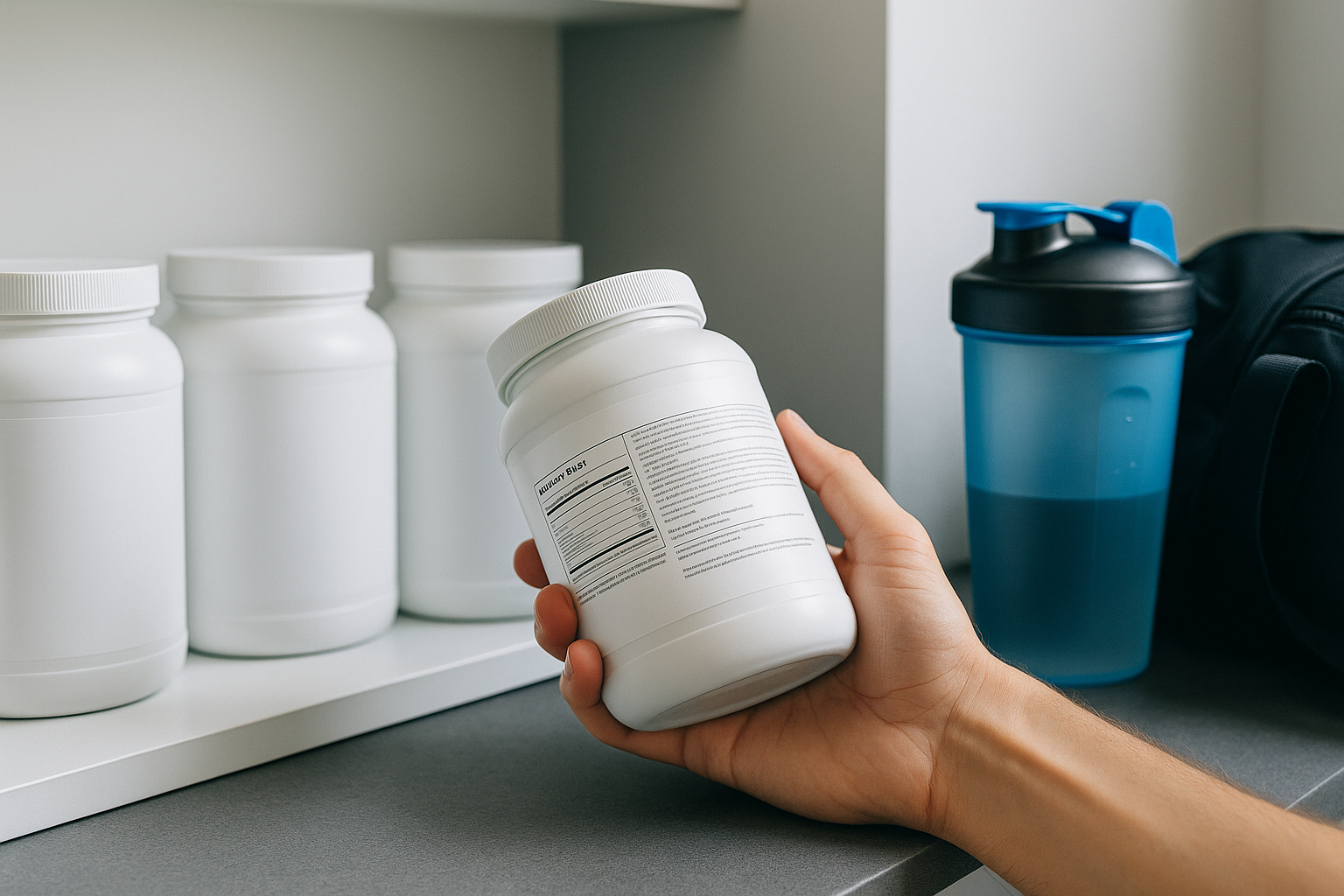
The most common reason a creatine routine fails is not that creatine does not work; it is that the protocol is inconsistent, underdosed, or built around myths. Most problems are fixable once you know what actually matters.
Mistake 1: taking it only on workout days. Creatine works best through saturation, so skipping rest days weakens your protocol.
Mistake 2: expecting a stimulant-like feeling. Creatine does not usually feel like caffeine. You judge it by better performance over time, not by a sharp buzz.
Mistake 3: buying fancy forms instead of plain monohydrate. Monohydrate remains the best-supported choice. More expensive forms often market better, not perform better.
Mistake 4: taking too much at once. Huge single doses do not create magical gains. They mostly create a better chance of stomach upset.
Mistake 5: quitting after one week. Without loading, creatine can take several weeks to fully show itself. Many users stop before the protocol has had time to work.
Now the myths.
- Myth: creatine is a steroid. False. Creatine is a naturally occurring compound involved in energy metabolism.
- Myth: creatine causes dehydration and cramps. The broad evidence does not support creatine as a dehydration or cramp-causing supplement in healthy users at standard doses.
- Myth: you must cycle creatine. False for most healthy users. There is no general need to cycle on and off if you tolerate it and want to maintain saturation.
- Myth: creatine only works for bodybuilders. False. It can help many athletes and active adults, especially where repeated high-intensity output matters.
- Myth: creatine always causes bloating. Not exactly. Some people notice water-weight gain, but true uncomfortable bloating is often a dose or mixing issue.
The 2021 JISSN misconceptions review is especially useful on these points. We also break down the biggest misunderstandings in creatine myths debunked, do you need to cycle creatine, and creatine not working.
The key reality is simple: plain monohydrate, correct dose, every day, enough patience. That beats supplement theatre nearly every time.
Best creatine form for a daily regimen: monohydrate vs gummies, capsules, and blends
The best form for a long-term creatine daily routine is still creatine monohydrate powder because it has the best evidence, the best value, and the easiest path to a full daily dose. Convenience formats can work, but they often cost more per gram and make exact dosing harder.
| Form | Main advantage | Main drawback | Best for |
|---|---|---|---|
| Monohydrate powder | Most studied, cheapest per gram, easy to dose 3 to 5 g | Needs mixing, some people dislike texture | Almost everyone |
| Micronized monohydrate | Mixes a bit easier | Often slightly pricier | People who hate grit |
| Capsules | Convenient, portable | Often many capsules needed to reach 5 g | Travel or no-mix users |
| Gummies | Tasty, easy habit adherence | Can be expensive and underdosed per serving | People who prioritise convenience over value |
| Pre-workout blends | Convenient if fully dosed | Frequently underdosed or hidden in blends | Users who read labels carefully |
Monohydrate also wins because the evidence base is centred on it. When a brand claims another form is superior, ask a simple question: superior by what evidence, at what dose, and compared directly to monohydrate? In many cases, the answer is more marketing than data.
For daily adherence, powder is usually easiest because one scoop can cover the full dose. Capsules may require several pills, and gummies may require multiple pieces to get enough creatine. That matters because a “convenient” format stops being convenient if you consistently underdose it.
Buying tip for Canadians: compare cost per effective daily serving, not just package price. Also look for clean labels and reputable manufacturing. If you want guidance, see best type of creatine, creatine powder vs capsules, creatine gummies vs powder, and best creatine monohydrate in Canada.
For almost all users, the practical answer is still the same in 2026: buy a reputable creatine monohydrate powder, take 3 to 5 grams daily, and spend the savings on quality food or coaching.
Bottom line: the ideal creatine regimen in one paragraph
The ideal daily creatine protocol is straightforward: take 3 to 5 grams of creatine monohydrate every day, including training days and rest days, and keep doing it for months, not just a week. If you want faster saturation, use 20 grams per day split into 4 doses for 5 to 7 days, then shift to 3 to 5 grams daily. Timing is secondary to consistency, monohydrate is the best-supported form, and most troubleshooting comes down to fixing dose size, routine design, or product choice.
If you want the shortest possible version, use this:
- Buy creatine monohydrate.
- Take 5 g daily, or 3 g if you are smaller and want the minimum effective routine.
- Take it with any meal or shake you rarely miss.
- Keep taking it on rest days.
- Give it several weeks and judge it by performance trends, not instant feelings.
That is the creatine daily routine for best results for most people. It is simple because it works.
For next steps, the most useful follow-up reads are how much creatine per day, when to take creatine, creatine loading phase, creatine on rest days, and is creatine safe.
Best practical protocol: 3 to 5 g creatine monohydrate daily, every day, for the long term.
Daily Creatine Protocol at a Glance
- 3-5 g/day Standard maintenance dose — Best fit for most adults using creatine monohydrate
- 20 g/day Classic loading dose — Usually split into 4 x 5 g servings
- 5-7 days Typical loading duration — Faster route to muscle saturation
- 4 weeks Approximate no-load timeline — A common rough timeline to approach saturation without loading
Frequently Asked Questions
What is the best daily creatine protocol?
The best daily creatine protocol for most people is 3 to 5 grams of creatine monohydrate every day, including rest days. If you want faster saturation, use 20 grams per day split into 4 doses for 5 to 7 days, then continue with 3 to 5 grams daily.
Should I take creatine every day or only on workout days?
You should take creatine every day, not only on workout days. Creatine works by increasing and maintaining muscle creatine stores over time, so rest-day dosing is part of an effective creatine regimen rather than an optional extra.
How do I take creatine daily for best results?
Take creatine daily by picking a repeatable habit, such as breakfast or your post-workout shake, and using 3 to 5 grams of creatine monohydrate every day. The best routine is the one you can follow consistently for weeks and months.
Is a loading phase necessary in a creatine schedule?
No, a loading phase is not necessary for creatine to work. Loading simply gets muscle stores up faster, while taking 3 to 5 grams daily without loading still works well if you are willing to wait a few weeks longer.
When is the best time to take creatine in a daily routine?
The best time to take creatine is the time you will remember consistently. Before workouts, after workouts, in the morning, and with meals can all work because long-term saturation matters more than exact timing.
Can I take creatine on rest days?
Yes, you should take creatine on rest days if you want the best results. Rest-day use helps maintain higher muscle creatine stores, which is the whole point of a proper daily creatine routine.
How much creatine should I take based on body weight?
Most people do well with 3 to 5 grams per day, while smaller adults often do fine at 3 grams and larger or more muscular athletes often prefer 5 grams. A classic loading approach is about 0.3 g/kg/day for 5 to 7 days before switching to maintenance.
Can I mix creatine with protein powder or coffee?
Yes, you can usually mix creatine with protein powder or coffee without a problem. The more important issue is whether the combination helps you take your full dose consistently and whether you tolerate it comfortably.
What happens if I miss a day of creatine?
Missing one day of creatine is usually not a big deal because muscle stores do not vanish overnight. Simply resume your normal daily dose the next day rather than overcorrecting with a large catch-up dose.
What form of creatine is best for a daily regimen?
Creatine monohydrate is the best form for a daily regimen because it is the most studied, most effective, and most cost-effective option. Other formats like gummies and capsules can work, but they are often less economical or less convenient to dose accurately.