Creatine on a Plant-Based Diet: Why Vegans Benefit Most
By The Creatine Canada Research Team — Evidence-based supplement analysts
Yes — creatine on a plant-based diet is usually a smart, evidence-based choice because vegans and many vegetarians start with lower dietary creatine intake and often lower muscle creatine stores than meat-eaters. That lower baseline means plant-based athletes and lifters can respond especially well to creatine monohydrate for strength, power, lean mass, and possibly some cognitive benefits.
Evidence-based · Cites 4 sources · Editorial standards
Key Takeaways
- If you eat fully plant-based, 3 to 5 g of creatine monohydrate daily is the simplest effective protocol.
- Vegans and vegetarians often have lower baseline creatine stores because creatine is naturally concentrated in meat and fish, not plants.
- A loading phase of 20 g/day split into 4 doses for 5 to 7 days works faster, but it is optional.
- Timing matters far less than consistency; take creatine every day, including rest days.
- Expect early scale weight changes from extra intracellular water, not body fat gain.
- Creatine monohydrate is the most studied, most reliable, and usually the best-value form for plant-based eaters.
- In Canada, look for a product with an NPN and, ideally, third-party testing if you compete.
Creatine on a plant-based diet: the direct answer most people need
Yes, creatine is one of the most logical supplements for people on a plant-based diet because plant foods provide essentially no meaningful creatine, while your muscles still use creatine every day to recycle ATP, the cell’s immediate energy currency. If you eat vegan, vegetarian, or mostly whole-food plant-based, supplementing with creatine monohydrate helps fill a real dietary gap rather than adding something redundant.
Creatine is a compound your body makes from amino acids, but endogenous production does not always fully replace what omnivores also get from meat and fish. That matters because muscle stores of creatine and phosphocreatine, the stored high-energy form that rapidly helps regenerate ATP during hard efforts, influence performance in short, intense exercise. The 2017 ISSN position stand concluded that creatine monohydrate is the most effective ergogenic nutritional supplement currently available for increasing high-intensity exercise capacity and lean body mass during training. For plant-based eaters, the case is often even stronger because baseline stores tend to be lower.
In practical terms, creatine on a plant based diet is most useful if you:
- lift weights or do resistance training
- play sports with sprinting, jumping, or repeated hard efforts
- want to maintain muscle in a calorie deficit
- are older and want help preserving strength and function
- eat vegan or mostly plant-based and want a simple, low-effort performance edge
It is also worth saying what creatine is not. It is not a steroid, not a stimulant, and not a protein powder. It does not work like caffeine, and it does not build muscle by itself without training. Instead, it improves your capacity to perform hard work and recover between repeated high-intensity bouts, which can add up to better training quality over time. If you want a full primer, start with what creatine is and what it does.
For most people, the shortest useful answer is this: if you follow a vegan diet, vegetarian diet, or whole-food plant diet, taking 3 to 5 g of creatine monohydrate every day is a well-supported, low-cost move with a strong upside and a solid safety record in healthy people.
Why vegans and many vegetarians often benefit more than omnivores
Vegans often benefit most from creatine because they typically have lower dietary intake and lower baseline muscle creatine stores, which creates more room for improvement when they supplement. This is the central reason the phrase “creatine response vegan” shows up so often in search data: people are trying to understand why plant-based eaters may notice bigger changes.
Creatine occurs naturally in meaningful amounts in animal flesh, especially meat and fish, but not in plants. A whole-food plant diet can be excellent for overall health, fibre intake, and cardiometabolic markers, yet it does not naturally supply dietary creatine. Your liver, kidneys, and pancreas can synthesize creatine, but that internal production may still leave muscle stores lower than in habitual meat-eaters.
Lower baseline stores matter because creatine’s effects are partly saturation-dependent. When muscles hold less creatine to begin with, supplementation can produce a larger relative increase in intramuscular phosphocreatine. A larger increase in stored phosphocreatine can improve repeated sprint output, set-to-set performance, training volume, and over weeks to months, lean mass gains from resistance training.
This is one reason creatine for vegans and vegetarians is not just “allowed”; it is often especially rational. Some research has also suggested vegetarians may experience larger gains in some performance and cognitive outcomes than omnivores, though not every study shows a dramatic difference and individual response still varies.
There are several practical reasons your response may be strong on a plant-based diet:
- Lower starting stores: more room to saturate muscle.
- Lower habitual intake: supplementation replaces what diet does not provide.
- Hard-training lifestyle: many plant-based athletes already train seriously, so better training quality is noticeable.
- Weight-room carryover: even one extra rep or a small improvement in repeated effort can compound over months.
That does not mean every vegan will respond dramatically or that omnivores do not benefit. It means the average plant-based eater has a clearer nutritional reason to use it. For a focused companion read, see creatine for vegan athletes and creatine for vegetarians.
If you are asking whether creatine and dietary intake interact, the answer is yes: the less creatine you routinely get from food, the more likely supplementation is to matter.
How creatine actually works in a plant-based athlete or lifter
Creatine works by increasing the amount of phosphocreatine stored in muscle, which helps regenerate ATP faster during short, intense efforts like lifting, sprinting, jumping, and repeated intervals. That mechanism is the same whether you eat steak or tofu, but a plant based athlete creatine strategy can be especially effective because there is often more room to raise low stores.
Here is the simple physiology. ATP is the immediate fuel your muscles use to contract, but stored ATP lasts only seconds during all-out effort. Phosphocreatine donates a phosphate group to ADP to remake ATP quickly, allowing you to sustain power output a little longer and recover a little faster between bursts. More stored phosphocreatine means a better buffer for repeated high-output work.
From a training perspective, that can show up as:
- one more rep on hard sets
- slightly heavier loads for the same reps
- better repeated sprint ability
- less drop-off across intervals or sets
- more total quality work over a session
Over time, those small performance improvements can translate into more muscle and strength because training stimulus accumulates. Creatine also draws water into muscle cells, which increases intracellular hydration. That is one reason users often gain a small amount of body weight early on. This is not body fat gain; it is mostly more water stored in muscle tissue, and it often coincides with a fuller look. If this concerns you, read does creatine make you gain weight.
There is also ongoing interest in brain effects. The brain uses a creatine-phosphocreatine system too, so lower dietary intake may matter there as well. Evidence for cognition is promising but less settled than the evidence for strength and training performance. Mental fatigue, sleep deprivation, and some vegetarian populations are areas of interest, but claims should stay conservative until more data accumulates. A good overview is creatine and the brain.
For a strong evidence summary, see the ISSN position stand and Examine’s creatine evidence summary. The key point for creatine and whole food plant diet followers is straightforward: plant foods do not meaningfully provide creatine, but your muscles and brain still use the same energy system, so supplementation can close that gap.
Exactly how to take creatine on a vegan or whole-food plant diet
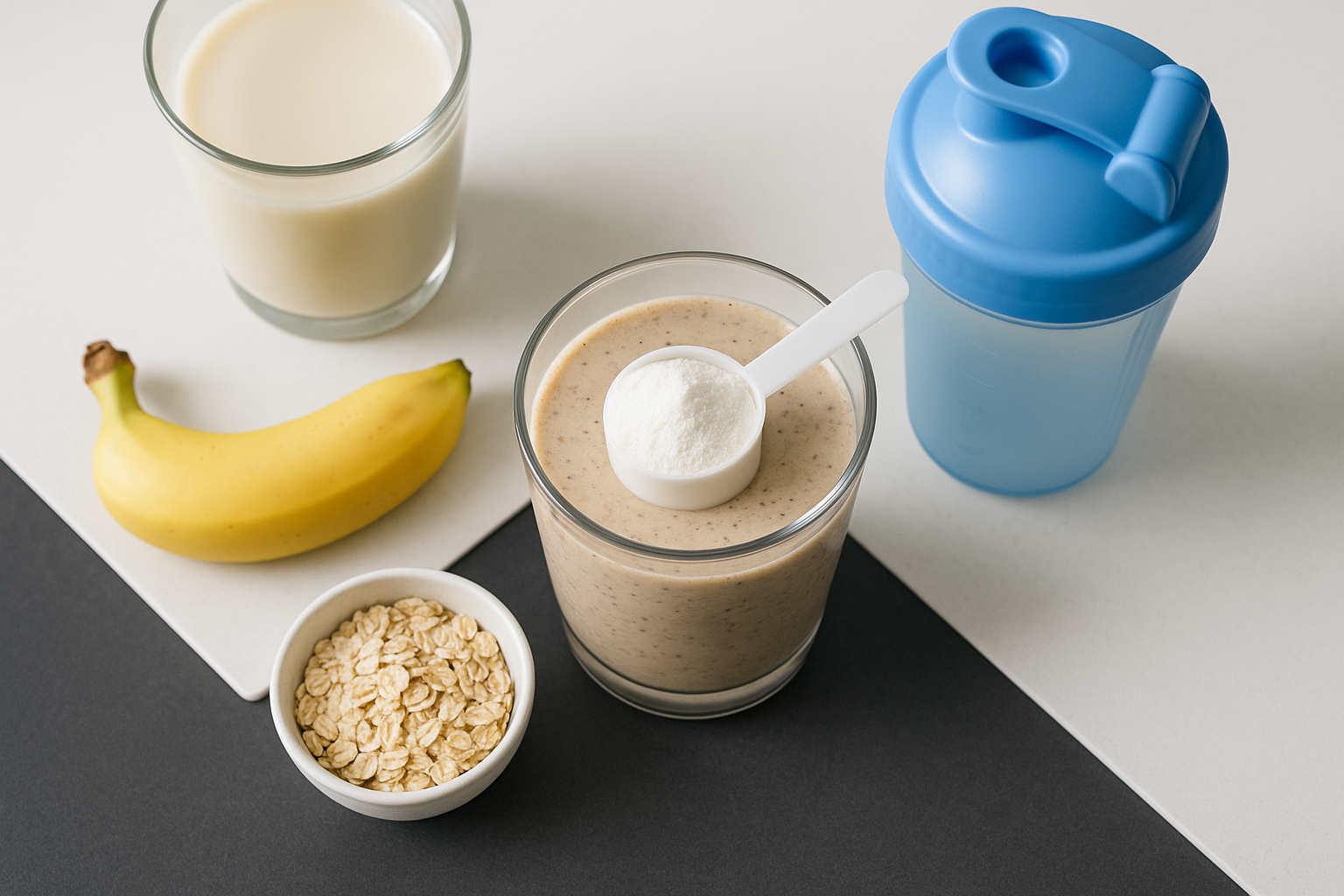
The best way to take creatine on a vegan diet is to use plain creatine monohydrate every day, with either a fast loading phase or a simple no-loading approach. Consistency matters much more than fancy timing, cycling, or stacking.
- Choose creatine monohydrate. It is the best-studied form, the reference form in most research, and usually the most cost-effective. If you want help comparing options, see our best creatine rankings and creatine brand reviews.
- Pick your protocol. Option A: take 3 to 5 g once daily. Option B: load with 20 g/day split into 4 doses of 5 g for 5 to 7 days, then continue with 3 to 5 g/day.
- Take it daily. Use it on training days and rest days. Missing the odd day is not a disaster, but regular use is what keeps muscle stores elevated.
- Mix it in a way you will stick to. Water, a protein shake, oatmeal, or a smoothie all work. Many plant-based users put it into a pea or soy protein shake after training, but this is mainly convenience.
- Drink to thirst and normal hydration habits. You do not need extreme water intake, but do not underdrink either. For more, see how much water you should drink with creatine.
- Track results for 4 to 8 weeks. Log body weight, gym performance, and how your working sets feel.
What should you expect? If you load, you may notice a small body-weight bump and better gym performance within 1 to 2 weeks. Without loading, noticeable effects usually emerge more gradually over about 3 to 4 weeks as muscles saturate. A more detailed timeline is covered in how long creatine takes to work.
Best mixing options for plant-based eaters include:
- water or warm water for simplicity
- a post-workout plant protein shake
- a fruit smoothie
- oats or overnight oats if you prefer food over shakes
What does not matter much? You do not need sugar, a special transporter blend, or a proprietary vegan formula. You do not need to cycle off. You do not need a “muscle-building stack” to make creatine work. If you want the complete daily walkthrough, visit how to take creatine.
Best creatine dose by body weight, training goal, and response
For most adults on a plant-based diet, 3 to 5 g of creatine monohydrate per day is the right maintenance dose, while a loading phase of 20 g/day for 5 to 7 days is the fastest way to saturate stores. Body weight can fine-tune the plan, but most people do very well with this standard range.
The broad evidence-based framework is simple: load if you want faster results, skip loading if you prefer convenience or better stomach comfort. After that, stay on a daily maintenance dose. Smaller individuals often do well at the lower end of the range, while larger athletes typically choose the upper end.
| Body weight | Goal | Loading option | Maintenance |
|---|---|---|---|
| Under 60 kg | General fitness, strength, muscle support | 20 g/day split into 4 x 5 g for 5 to 7 days, optional | 3 g/day |
| 60-90 kg | Most lifters and sport athletes | 20 g/day split into 4 x 5 g for 5 to 7 days, optional | 3-5 g/day |
| Over 90 kg | Larger athletes, higher lean mass | 20 g/day split into 4 x 5 g for 5 to 7 days, optional | 5 g/day |
| Any body weight | Prefer gradual saturation | No loading | 3-5 g/day every day |
Goal-specific adjustments are usually minor:
- Strength and hypertrophy: 3 to 5 g/day is ideal for most.
- Sprinting, team sports, CrossFit, HIIT: loading may be useful if you want benefits faster.
- Older adults: 3 to 5 g/day plus resistance training is a practical starting point.
- Cutting or maintaining lean mass: 3 to 5 g/day can help preserve training quality.
What about women, beginners, or people on a whole-food plant diet? The same dosing rules apply. Women do not need a “female dose,” and beginners do not need a lower dose because they are new. What matters is regular intake, not marketing. For a more detailed calculator approach, use our creatine dosage calculator or read how much creatine per day.
If you experience stomach upset, split your daily amount into smaller doses and take it with food. If you are tiny, very sensitive, or simply cautious, starting at 3 g/day is perfectly reasonable and still effective.
When to take it, how long it takes, and what results plant-based eaters notice first
The best time to take creatine on a plant-based diet is the time you will remember every day, because total daily intake and muscle saturation matter far more than exact timing. If you train, taking it near your workout is fine, but the advantage of pre- versus post-workout timing appears small compared with simply taking it consistently.
Most users fall into one of two timelines:
- With loading: muscle stores rise quickly, and you may notice effects within about 1 week.
- Without loading: saturation is slower, and clear effects often show up after roughly 3 to 4 weeks.
What are the first signs it is working? For creatine for plant eaters, the earliest clues are usually not dramatic visual changes. Instead, look for:
- slightly more reps at a given weight
- better repeat effort in sprints or circuits
- less drop-off across later sets
- a fuller muscular look
- a small increase on the scale from water held inside muscle
A realistic week-by-week expectation looks like this:
Week 1: if loading, some people notice a body-weight increase and better “pop” in training; if not loading, you may feel nothing yet.
Weeks 2 to 4: training quality often starts to improve, especially on repeated efforts and hard sets.
Weeks 4 to 8: differences in strength progression, rep performance, and muscle fullness become more obvious if training and protein intake are in order.
Weeks 8 to 12: the main payoff is cumulative: more quality training can mean more measurable lean mass and strength gain than training alone.
Can you take it with meals? Yes. Can you take it with coffee, protein, oats, or a smoothie? Yes. If you want deeper timing nuance, see when to take creatine, with or without food, and how to mix creatine.
One important caveat for endurance-focused plant-based athletes: creatine can still help if your sport includes surges, hills, sprint finishes, or strength work, but the small water-weight increase may not be ideal for every event phase. That is a trade-off issue, not a safety issue.
Who should consider creatine most on a plant-based diet
Creatine is especially worth considering for vegans, vegetarians, plant-based athletes, beginners starting resistance training, women, and older adults, because these groups either start with lower dietary intake, have clear performance upside, or both. The basic supplement is the same; the reason for using it can differ.
Beginners: If you are new to lifting on a vegan diet, creatine is one of the few supplements that reliably does what people hope supplements will do. It will not replace learning technique or progressive overload, but it can support better training quality from the start. Our creatine for beginners guide goes deeper.
Women: Women absolutely can and should consider creatine if it suits their goals. Creatine does not “bulk you up” by itself, and the same 3 to 5 g/day protocol applies. It may be particularly useful for performance, lean mass retention, and training output. For more, see creatine for women.
Older adults: Older adults on plant-based diets may find creatine especially attractive because age-related muscle loss, called sarcopenia, makes preserving strength and function more important. Creatine works best here when paired with resistance training, not as a stand-alone fix.
Sport athletes: Team-sport players, sprinters, CrossFit athletes, and strength athletes are classic good fits because their sports rely on repeated high-intensity output. The International Olympic Committee consensus on supplements recognizes creatine as one of the few supplements with strong evidence for certain performance uses.
People cutting fat: Creatine can help maintain training quality and lean mass while dieting, which is particularly useful if your calories are low and your sessions feel flat.
Whole-food plant eaters: Even if you avoid highly processed foods and already eat “clean,” a creatine and whole food plant diet approach still makes sense. Lentils, tofu, tempeh, oats, nuts, seeds, and fruit are excellent foods, but they do not replace dietary creatine.
Who may care less? If you do only low-intensity walking and no resistance or sprint-type work, creatine is still safe for many healthy adults, but the payoff may be modest. The strongest evidence remains in strength, power, repeated effort, lean mass, and some emerging cognitive contexts.
Safety, side effects, and how to buy a good vegan-friendly creatine in Canada
Creatine monohydrate is generally considered safe for healthy people at recommended doses, and the main side effects are usually mild and manageable, such as temporary water-weight gain or stomach upset from taking too much at once. The 2017 ISSN position stand and the 2021 JISSN review both support creatine’s strong safety profile in healthy populations, while noting that individual medical situations still matter.
The most common side effects are straightforward:
- Water-weight gain: typically from more water inside muscle, not fat gain.
- GI discomfort: more likely with large single doses, especially during loading.
- Occasional bloating complaints: often dose-related or due to poor mixing and large boluses.
Three practical fixes solve most issues:
- Use 3 to 5 g/day instead of aggressive loading if your stomach is sensitive.
- Split larger doses into smaller servings.
- Take it with food or a shake if plain water on an empty stomach bothers you.
Kidney fears are often overstated in healthy people. Creatine can raise blood creatinine, which is a breakdown marker often used on lab tests, but that does not automatically mean kidney damage. This confusion is one reason we recommend reading the creatinine confusion explained if you are worried. If you have kidney disease, significant renal concerns, or are on medications that affect kidney function, speak with a qualified clinician first.
In Canada, look for:
- Creatine monohydrate as the ingredient
- NPN, meaning Natural Product Number, which indicates a licensed natural health product under Health Canada rules
- Third-party testing such as NSF Certified for Sport or Informed Sport if you are drug-tested
- Minimal extras if you want the cleanest label and best value
Many products are inherently vegan because commercial creatine is synthesized rather than extracted from animal tissue, but flavour systems, capsules, and blend ingredients can still vary. For product selection help, browse our creatine product catalog and compare with best creatine rankings. For broader context, see common questions and misconceptions about creatine supplementation and the Mayo Clinic overview.
The biggest plant-based creatine mistakes and myths to ignore
The biggest mistakes with creatine on a plant based diet are choosing flashy forms over monohydrate, taking it inconsistently, quitting too early, and mistaking normal water retention for fat gain. Most creatine frustration comes from bad expectations or bad supplement marketing, not from creatine failing.
Myth 1: “A whole-food plant diet makes supplementation unnecessary.”
False. A whole-food plant diet can be excellent, but it does not provide meaningful dietary creatine. Food quality and creatine intake are separate issues.
Myth 2: “You need a special vegan creatine formula.”
Usually false. Standard creatine monohydrate is typically suitable for vegans, provided the finished product uses vegan-friendly flavouring or capsule materials if applicable.
Myth 3: “If I do not feel it in a few days, it is not working.”
False. Creatine is not a stimulant. Without loading, benefits can take around 3 to 4 weeks to become noticeable.
Myth 4: “Creatine makes you puffy and bloated.”
Overstated. Some users retain more water in muscle, which can increase scale weight, but the stereotype of obvious subcutaneous puffiness is exaggerated for most people at normal doses.
Myth 5: “You need to cycle on and off.”
False for most healthy users. Cycling is not required to maintain effectiveness.
Myth 6: “More is better.”
False. Once stores are saturated, extra creatine does not mean extra results. It usually just means wasted powder or more GI risk.
Common beginner mistakes include:
- buying HCl, gummies, or blends before trying plain monohydrate
- using random teaspoon guesses instead of measuring properly
- skipping rest-day doses
- starting a loading phase and taking all 20 g at once
- expecting creatine to compensate for low protein or poor training
If you are struggling, the fix is usually simple: switch to monohydrate, take 3 to 5 g daily, and assess over 4 to 8 weeks while training properly. For more myth-busting, visit creatine myths debunked and creatine myths vs. facts. If you think you are not responding, our non-responder guide can help you troubleshoot.
Monohydrate vs other forms for vegans: what is actually worth buying
For vegans and vegetarians, creatine monohydrate is still the best form to buy because it has the strongest evidence, the lowest cost per effective dose, and no consistent proof that trendy alternatives outperform it. If your goal is results rather than novelty, monohydrate wins.
| Form | Best use case | Evidence quality | Bottom line for plant-based users |
|---|---|---|---|
| Creatine monohydrate | Nearly everyone | Strongest | Best first choice and usually best long-term choice |
| Micronized monohydrate | People who want easier mixing | Strong, because it is still monohydrate | Fine if price is close to regular monohydrate |
| Creatine HCl | Mostly marketing-driven purchases | Weaker | Not proven superior for results |
| Buffered or pH-altered forms | Marketing claims about better absorption | Weak | Usually not worth the premium |
| Gummies, chews, RTDs | Convenience-focused users | Varies by product | Can work, but often cost more per effective dose |
Plant-based shoppers often ask whether they need “vegan creatine.” The key distinction is not the creatine molecule itself so much as the full product. Most modern creatine is produced synthetically and is not harvested from animal tissue, but you should still check for:
- capsule shell source if buying capsules
- added flavourings or colours if you want a stricter standard
- NPN and quality testing if buying in Canada
What about branded high-end options? Some are excellent, but price alone does not make creatine better. Since the effective dose is small and the ingredient is simple, quality control and transparency matter more than “advanced” formulas. If you want a buyer’s framework, see how to choose creatine, best type of creatine, and third-party tested creatine in Canada.
The shortest recommendation remains the same: buy a plain, reputable creatine monohydrate, take 3 to 5 g daily, and spend the money you save on better food, coaching, or a gym membership.
Bottom line: should you take creatine on a plant-based diet?
Yes — if you eat plant-based and care about strength, muscle, repeated high-intensity performance, or preserving lean mass, creatine monohydrate is one of the most evidence-based supplements you can take. The reason is simple: plant foods do not supply meaningful creatine, so vegans and many vegetarians begin with a lower baseline and often have more to gain.
The practical recommendation is equally simple:
- Choose creatine monohydrate.
- Take 3 to 5 g every day.
- Use a 5 to 7 day loading phase at 20 g/day in 4 divided doses only if you want faster saturation.
- Keep taking it on rest days.
- Give it at least 4 weeks if you skip loading.
What should your expectations be? Expect better training capacity before you expect visible physique changes. Expect a possible small increase in body weight from extra water in muscle. Expect the best results when creatine is paired with resistance training, adequate protein, and a sensible calorie intake.
What should you not do? Do not overcomplicate it. You do not need a special gendered formula, an overpriced exotic form, a sugar spike, or a cycle. You do not need to abandon a whole-food plant diet to support your creatine needs; you just need to supplement intelligently.
If you want the simplest next step today, buy a reputable monohydrate product, measure 3 to 5 g, and add it to your normal routine. If you want a personalised amount, use our creatine dosage calculator. If you want to go deeper, the most relevant companion guides are how much creatine per day, the creatine loading phase, and is creatine safe.
For people following a vegan, vegetarian, or whole-food plant diet, creatine monohydrate is not a fringe supplement choice; it is one of the clearest examples of using supplementation to replace a nutrient-like performance compound that the diet itself barely provides.
Creatine on a Plant-Based Diet: The Numbers That Matter
- 3-5 g/day Standard daily maintenance dose — Effective for most vegan and vegetarian adults.
- 20 g/day Optional loading dose — Split into 4 doses for 5 to 7 days to saturate faster.
- 5-7 days Typical loading timeline — Fastest route to fuller muscle creatine stores.
- 3-4 weeks Typical no-loading timeline — How long daily dosing usually takes to noticeably work without loading.
Frequently Asked Questions
Should vegans take creatine?
Yes, many vegans should strongly consider creatine because plant foods provide virtually no meaningful dietary creatine and vegans often start with lower muscle creatine stores than meat-eaters. That lower baseline can make supplementation especially useful for strength, repeated high-intensity performance, lean mass support, and possibly some cognitive benefits.
Is creatine vegan?
Usually, yes, creatine is vegan because commercial creatine is generally made synthetically rather than extracted from animal tissue. The ingredient itself is often vegan-friendly, but you should still check capsules, flavour systems, and product certifications if you want a strictly vegan finished product.
Do vegetarians and vegans respond better to creatine?
Often, yes, vegetarians and especially vegans may respond better to creatine because they frequently begin with lower baseline creatine stores. That can allow a larger increase in muscle creatine after supplementation, though individual response still depends on training, muscle mass, dose, and consistency.
Can you get enough creatine from a whole-food plant diet?
No, a whole-food plant diet does not provide meaningful amounts of creatine because creatine is naturally concentrated in meat and fish, not plants. Your body does make some creatine on its own, but supplementation is the practical way to raise muscle stores if you do not eat animal foods.
What is the best creatine for plant-based athletes?
The best creatine for plant-based athletes is plain creatine monohydrate because it has the strongest evidence, the best value, and the most reliable dosing data. Fancy forms like HCl or buffered creatine have not consistently outperformed monohydrate in real-world results.
How much creatine should a vegan take per day?
Most vegans should take 3 to 5 g of creatine monohydrate per day. If you want faster saturation, you can optionally load with 20 g/day split into 4 doses for 5 to 7 days, then continue with 3 to 5 g/day.
When is the best time to take creatine on a vegan diet?
The best time to take creatine on a vegan diet is whenever you will remember it every day, because consistency matters more than timing. Taking it with a meal, shake, or around training is fine, but the main goal is daily intake and long-term saturation.
Does creatine make plant-based eaters gain weight?
Creatine can make plant-based eaters gain a small amount of body weight, but this is usually from extra water stored inside muscle rather than body fat. That early increase is a normal part of muscle creatine saturation and often comes with a fuller muscular look.
Is creatine safe for vegans and vegetarians?
Yes, creatine is generally considered safe for healthy vegans and vegetarians when used at recommended doses. The main issues are usually mild, such as stomach upset from large doses or normal water-weight gain, though anyone with kidney disease or specific medical concerns should speak with a clinician first.
Do I need to cycle creatine if I eat plant-based?
No, you do not need to cycle creatine if you eat plant-based. Daily use is the normal evidence-based approach, and there is no good reason most healthy users need on-and-off phases to keep it working.