Creatine and Perimenopause: Muscle, Energy, and Cognitive Support During the Transition
By The Creatine Canada Research Team — Evidence-based supplement analysts
Yes—creatine can be a useful, evidence-based supplement during perimenopause, especially for supporting muscle strength, training capacity, and possibly cognitive resilience, but it is not a cure for perimenopausal symptoms or a replacement for hormone therapy, sleep, nutrition, and resistance training. For most perimenopausal women, 3–5 g of creatine monohydrate daily is the practical starting point.
Evidence-based · Cites 4 sources · Editorial standards
Key Takeaways
- Creatine monohydrate is the best-studied form for perimenopausal women and the one most experts would choose first.
- A standard maintenance dose is 3–5 g daily; loading at 20 g daily split into 4 doses for 5–7 days is optional, not required.
- Creatine helps most when paired with resistance training, because it improves high-intensity energy availability inside muscle.
- Perimenopause may increase the value of creatine because declining oestrogen can coincide with reduced muscle mass, performance, and recovery.
- Expect water to shift into muscle in the first 1–2 weeks; that is not fat gain.
- Creatine does not directly raise oestrogen, and evidence for hot flashes, mood, or sleep is still limited compared with evidence for muscle performance.
- In Canada, look for a Natural Product Number (NPN), clear creatine monohydrate labelling, and ideally third-party testing.
Does creatine help in perimenopause? Yes—mainly for muscle, performance, and possibly brain energy
Yes, creatine can help during perimenopause, but the strongest evidence is for muscle strength, lean mass support, and exercise performance, not for relieving every perimenopausal symptom. If you are searching for whether creatine and perimenopause go together, the practical answer is that creatine is a sensible adjunct for women who want to better preserve muscle, train harder, and support healthy ageing through the menopause transition.
Perimenopause is the years-long transition before menopause when ovarian hormone output becomes more erratic. That hormonal variability can contribute to changes in body composition, recovery, sleep quality, energy, and sometimes cognition. Creatine does not fix the hormonal driver itself, but it supports one of the systems most affected by the transition: your ability to rapidly regenerate cellular energy for short, demanding efforts.
Creatine is a compound stored in muscle and other tissues as phosphocreatine, which is the immediate backup fuel used to quickly remake ATP, the cell’s main energy currency. When creatine stores are saturated, muscles can usually perform slightly more total work across repeated bouts of lifting, sprinting, and other high-intensity efforts. Over weeks and months, that small training advantage can translate into better strength and body-composition outcomes.
That matters in perimenopause because the transition often coincides with a lower margin for error. Many women notice that the same training that once maintained muscle now does less. Creatine is not magic, but it can make productive resistance training easier to sustain.
The evidence base also suggests that women may be an especially relevant audience for creatine across hormonal transitions, though the research is still smaller than the male sports-performance literature. The 2017 ISSN position stand concluded that creatine monohydrate is both effective and generally safe when used appropriately. For a wider beginner foundation, see our guides on how to take creatine and creatine for women.
So if your real question is, does creatine help perimenopause symptoms? the honest answer is: it can help some downstream consequences of the menopause transition, especially reduced strength, exercise capacity, and muscle retention; evidence for hot flashes, night sweats, or cycle irregularity is weak or absent.
Why creatine becomes more relevant during the menopause transition
Creatine becomes more relevant in perimenopause because this is the stage when many women begin to lose muscle, recover less easily, and feel a drop in physical robustness. The point is not that women suddenly become creatine-deficient, but that the transition raises the value of anything that helps preserve training quality and lean tissue.
Perimenopause often brings fluctuating and then declining oestrogen exposure over time. Oestrogen influences far more than reproduction: it affects muscle, connective tissue, inflammation, glucose handling, and the brain. As the hormonal environment changes, some women experience lower tolerance for high training volumes, greater soreness, more central fatigue, and a gradual drift toward lower lean mass and higher fat mass if training and protein intake are not adjusted.
Creatine does not act like hormone therapy. It does not replace oestrogen and it should not be framed as a hormone-balancing supplement. Instead, it works through cellular energetics. By increasing intramuscular phosphocreatine stores, creatine helps muscles recycle ATP faster during repeated contractions. In plain English, that means you may squeeze out another rep, maintain bar speed a bit better, or recover a little more effectively between high-effort bouts. Over time, those seemingly small improvements matter.
Creatine may also be relevant because women often start from slightly lower dietary creatine intake if they eat less red meat or follow more plant-forward diets. Vegetarian and mostly plant-based eaters sometimes respond especially well because baseline stores can be lower. If that sounds like you, our guides on foods high in creatine and is creatine vegan? add useful context.
There is also growing interest in creatine for the brain during hormonal transitions. Brain tissue uses creatine too, and some early literature has explored potential roles in mental fatigue, memory, and stress resilience. That is promising, but less settled than the performance data. A useful overview is our guide on creatine and the brain.
If you want the big-picture takeaway: creatine for perimenopausal women makes sense primarily as a muscle-and-performance support tool that may also offer wider healthy-aging benefits, especially when paired with resistance training.
The science: how creatine works, and what it does—not does not do—with oestrogen
Creatine helps perimenopausal women by improving the phosphocreatine energy system; it does not directly increase oestrogen. That distinction matters because many searches for creatine estrogen perimenopause assume creatine is a hormone supplement, when it is actually an energy substrate supplement.
Inside muscle, creatine is stored partly as phosphocreatine. During short, intense effort—like a heavy set of squats, a hard climb on a bike, or repeated intervals—ATP is used rapidly. Phosphocreatine donates a phosphate group to help remake ATP quickly, letting you sustain force output for a little longer. When you supplement consistently, total muscle creatine stores rise toward saturation, which improves your capacity for repeated high-intensity work.
Why does this matter in perimenopause? Because resistance training is the most reliable non-drug tool for preserving muscle and strength through the menopause transition, and creatine makes that training tool work better. The supplement is not the star; it is the multiplier.
What about oestrogen? The current evidence does not support saying that creatine raises oestrogen, fixes low oestrogen, or reverses the endocrine changes of perimenopause. A more accurate statement is that changing sex-hormone status may influence how relevant creatine is for women’s muscle and brain health, while creatine itself acts mainly through energy metabolism rather than through hormone replacement.
There are additional proposed mechanisms. Creatine may increase cell hydration inside muscle, which can support training adaptations. It may reduce the relative energy cost of repeated contractions. It may also have roles in brain energy buffering, especially during sleep loss, high cognitive demand, or other stressors. But those emerging mechanisms should be discussed carefully rather than oversold.
The best high-level scientific summaries remain the ISSN position stand and the 2021 JISSN paper on common creatine misconceptions. Both emphasise that creatine monohydrate is the most studied form and that many popular fears around kidney damage, dehydration, and cramping are not supported in healthy users.
So the mechanism is straightforward: creatine supports the energy systems that let you train and function better; any perimenopause benefit is largely downstream of better muscle energetics and possibly better brain energetics, not direct hormonal correction.
What benefits can perimenopausal women realistically expect?
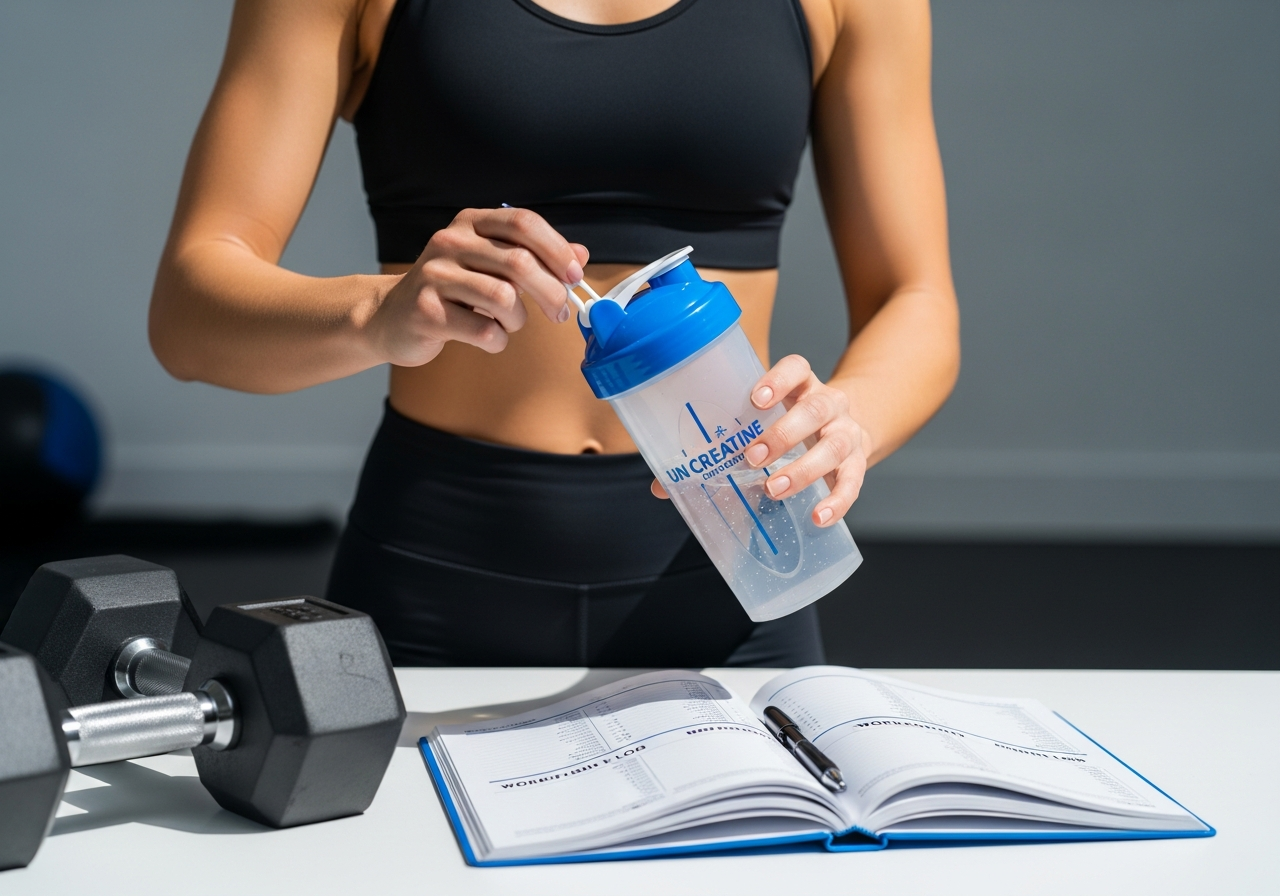
Perimenopausal women can realistically expect the most from creatine in four areas: strength, training capacity, muscle retention, and possibly mental energy. You should not expect it to reliably stop hot flashes, normalise periods, or replace medical care for severe symptoms.
1. Better strength and high-intensity performance. Creatine is consistently one of the most effective legal sports supplements for short-duration, repeated high-intensity effort. In practical terms, that can mean an extra rep here and there, slightly better sprint repeatability, or more total training volume over the week.
2. Better support for lean mass when lifting. Creatine works best alongside resistance training. If you are doing 2–4 lifting sessions per week and eating enough protein, creatine can help you preserve or build muscle more effectively than training alone.
3. Some early support for cognition and mental fatigue. This is the area people often care about when brain fog becomes part of the menopause transition. Creatine is biologically plausible here because the brain also uses phosphocreatine, but the evidence is more mixed and context-dependent than it is for muscle. It is reasonable to see this as a possible bonus, not a guarantee.
4. Better long-term resilience. Muscle is not only aesthetic tissue; it is metabolic reserve. Preserving strength and lean mass in your 40s and 50s supports function, bone-loading exercise, glucose handling, and independence later in life.
What benefits are less certain? Direct effects on mood, sleep, bone density, and vasomotor symptoms remain under-studied. Some women report feeling more energetic or mentally steadier, but anecdote is not the same as robust evidence.
One reason creatine gets misunderstood is that results are often subtle at first. You usually do not feel a stimulant-like surge. Instead, you notice that workouts feel more repeatable, muscles feel fuller, or your numbers stop sliding backward. If you want a realistic timeline, our guide on how long creatine takes to work is useful.
In short: creatine during the menopause transition is most likely to help the physical capacities that tend to decline when training, sleep, and hormones become harder to manage.
Exactly how to take creatine in perimenopause: a simple step-by-step plan
The simplest and best-supported way to take creatine in perimenopause is 3–5 g of creatine monohydrate every day, including rest days. You do not need an elaborate protocol, a women-specific blend, or a cycling schedule.
- Choose creatine monohydrate. This is the form with the strongest evidence, the best cost-effectiveness, and the most dependable dosing. Ignore marketing that claims HCl, gummies, or proprietary blends are inherently better.
- Pick your dose. Most women do well with 3–5 g daily. If you are smaller-bodied, 3 g is a reasonable floor. If you are larger-bodied, very active, or want the standard evidence-based dose, 5 g daily is fine.
- Decide whether to load. Loading means about 20 g per day split into 4 doses for 5–7 days, followed by a maintenance dose. Loading saturates stores faster, but it is optional. If you are prone to stomach upset, skip it.
- Take it daily. Consistency matters more than timing. Take it with breakfast, after training, or whenever you are most likely to remember.
- Mix it in water or a shake. It can go into plain water, protein shakes, smoothies, or yoghurt. There is no need to dry scoop.
- Train with intent. Creatine shines when combined with resistance training 2–4 times weekly. Prioritise compound lifts, progressive overload, and enough recovery.
- Track outcomes for 4–8 weeks. Watch strength, reps, workout quality, and body measurements rather than obsessing over scale weight alone.
If you want a more precise plan, use our creatine dosage calculator and then read how much creatine per day. For beginners, creatine for beginners covers the setup in more detail.
One practical tip for perimenopausal women: anchor creatine to an existing routine, such as your morning coffee ritual, breakfast, or post-workout shake. The best protocol is the one you can repeat for months, because muscle saturation is built by consistency rather than by perfect timing.
Creatine dose by body weight and goal: maintenance, loading, and realistic use cases
For most perimenopausal women, the right creatine dose is still the standard adult dose: 3–5 g per day of creatine monohydrate. Body weight can help fine-tune the decision, but you do not need to overcomplicate it.
| Body weight / goal | Suggested approach | Best for |
|---|---|---|
| Under 60 kg, general health or beginner lifting | 3 g daily | Simple maintenance with low risk of GI upset |
| 60–90 kg, resistance training or mixed fitness | 3–5 g daily | Most perimenopausal women |
| Over 90 kg or high training volume | 5 g daily | Strength, repeated-intensity sport, larger body size |
| Want fastest saturation | 20 g daily split into 4 doses for 5–7 days, then 3–5 g daily | Women who want results sooner and tolerate loading well |
| Sensitive stomach | 3 g daily, no loading, take with food | Minimising bloating or loose stool |
These are practical ranges, not rigid rules. The classic loading protocol is based on saturating muscle stores quickly, while daily maintenance without loading reaches saturation more gradually over a few weeks. Both methods work.
If your goal is strength and muscle retention, 3–5 g daily is usually enough. If your goal is performance in repeated hard efforts, the same dose applies, but loading may make the benefit noticeable sooner. If your goal is general healthy ageing support, a consistent 3 g daily may be entirely reasonable.
Do not chase mega-doses. More is not better once muscle stores are saturated, and higher intakes are more likely to cause stomach discomfort. The 2021 JISSN misconceptions paper makes the larger point clearly: popular fears are often overstated, but that does not mean you should take creatine recklessly.
If you want a deeper breakdown, see creatine maintenance dose and creatine loading phase. If you have chronic kidney disease, a complicated medical history, or are taking medications that warrant monitoring, speak with your clinician before supplementing.
When to take it, how long it takes to work, and what you should notice week by week
Creatine timing matters far less than daily consistency, and most perimenopausal women should expect noticeable effects over 2–4 weeks without loading or within about 1 week with loading. The biggest mistake is quitting too early because you expected a pre-workout-style feeling.
When should you take creatine? Anytime you reliably remember. Some people prefer after training, some with breakfast, and some before bed. The evidence does not support a dramatic advantage to one exact time of day for most users. Our guide on when to take creatine goes deeper.
What to expect in week 1: If you load, you may notice fuller muscles and a slight increase in body weight from water being pulled into muscle tissue. If you do not load, you may notice little at first.
Weeks 2–4: Workouts often start to feel more repeatable. You may hold performance better across sets, maintain better output late in a session, or recover a little faster between hard efforts.
Weeks 4–8: This is when the training effect becomes easier to see. If you are lifting progressively, you may notice slightly better strength numbers, improved volume tolerance, or less backsliding during stressful weeks.
How to tell if it is working:
- You complete more reps at the same weight.
- You maintain power better across sets or intervals.
- Your muscles feel a bit fuller.
- Your scale weight rises slightly without an increase in body fat markers.
- Your training log trends upward instead of stalling.
Do not judge creatine by scale weight alone. A small early bump usually reflects intracellular water, not fat gain. If that worries you, read does creatine make you gain weight?.
If you are taking creatine during perimenopause for cognition as much as for gym performance, be patient and keep expectations modest. Mental benefits, where they occur, may be less dramatic and more situation-dependent than the muscular effects.
Is creatine safe in perimenopause? What side effects are real, and who should be cautious
Creatine is generally considered safe for healthy adults, including perimenopausal women, when taken in standard doses, but it can cause minor side effects and there are situations where medical guidance is sensible. The best-supported form for safety and efficacy is creatine monohydrate.
The 2017 ISSN position stand and the 2021 JISSN review both support creatine’s strong safety profile in healthy users. The Mayo Clinic overview similarly notes that creatine appears safe for many people when used appropriately, while recognising that individual medical context matters.
Common, usually manageable side effects:
- Mild stomach upset, especially with large single doses
- Loose stool if you take too much at once
- A small increase in body weight from water stored in muscle
- Transient bloated feeling, more often with loading than with maintenance dosing
What about kidneys? In healthy people, standard creatine use has not been shown to damage kidneys. The confusion often comes from creatinine, a breakdown product measured on blood tests, which can rise slightly when you supplement creatine without indicating kidney injury. That said, people with pre-existing kidney disease should not self-prescribe supplements casually.
Who should talk to a clinician first?
- Anyone with known kidney disease
- Anyone with significant liver disease or complex chronic illness
- Anyone taking medications that affect kidney function or fluid balance
- Anyone who is pregnant or breastfeeding, because that is a different evidence question than perimenopause
If you have sensitive digestion, start with 3 g daily, take it with food, and avoid loading. See our guides on creatine digestive side effects, is creatine safe, and creatine and kidneys for a fuller evidence review.
The key safety message is simple: creatine is not risk-free in the sense that anything can cause side effects, but for healthy perimenopausal women using standard doses of monohydrate, it has one of the better safety profiles in sports nutrition.
Common myths and mistakes: creatine is not a hormone fixer, fat gainer, or men-only supplement
The biggest mistakes with creatine in perimenopause are choosing the wrong expectations and believing outdated myths. Creatine is useful, but it is useful for specific reasons.
Myth 1: Creatine is only for young men trying to bulk. False. Creatine has broad relevance because phosphocreatine is a universal energy system. Women, older adults, and recreational exercisers can benefit just as much from the mechanism, even if their goals differ.
Myth 2: Creatine causes fat gain. False. Creatine can increase scale weight, especially early on, but that is usually water stored inside muscle. It does not inherently add body fat.
Myth 3: Creatine directly fixes perimenopause symptoms. False. Creatine does not replace hormone therapy, psychotherapy, sleep treatment, iron assessment, or medical evaluation for heavy bleeding, low mood, or severe vasomotor symptoms. It supports performance physiology; it is not a cure-all.
Myth 4: You must cycle creatine. False. Healthy users do not need to cycle on and off. Daily use is the standard approach.
Myth 5: Fancy forms are better than monohydrate. Usually false. Monohydrate remains the benchmark because it is the most studied and the most cost-effective.
Common real-world mistakes:
- Taking it only on workout days
- Switching brands or forms constantly
- Stopping after 7–10 days because you did not “feel” it
- Using a low-dose gummy or underdosed blend and assuming creatine does not work
- Ignoring resistance training and protein intake
One more nuance: if you are highly endurance-focused and worried about any extra water weight, the trade-off may be less attractive than it is for lifters. But even then, context matters. Not every athlete responds the same way.
For more myth-busting, see creatine myths debunked and creatine myths vs. facts. The short version is that creatine for perimenopausal women is neither a scam nor a miracle; it is a well-supported tool that works best when used for the right job.
How to choose the right creatine in Canada: monohydrate, NPNs, and label checks that matter
The best creatine to buy in Canada for perimenopause is usually a simple creatine monohydrate powder with transparent labelling, a Natural Product Number, and preferably third-party testing. You do not need a menopause-specific formula if the actual creatine dose is right.
In Canada, many supplements are sold as natural health products and may carry an NPN, or Natural Product Number, which is a Health Canada product licence identifier. An NPN is not a guarantee of superiority, but it is a useful sign that the product is being marketed within the Canadian regulatory framework. Our guide on is creatine approved in Canada explains this in detail.
| What to check | What you want to see | Why it matters |
|---|---|---|
| Creatine form | Creatine monohydrate | Most studied, best value, easiest evidence match |
| Dose per serving | 3–5 g clearly listed | Helps you hit evidence-based intake without guesswork |
| Ingredient list | Minimal extras | Reduces fillers, proprietary blends, and hidden underdosing |
| NPN | Present when applicable | Useful Canadian compliance signal |
| Quality assurance | Third-party testing or reputable manufacturing details | Improves confidence in purity and label accuracy |
| Format | Powder first, capsules if convenience matters | Powder is usually most economical and easiest to dose accurately |
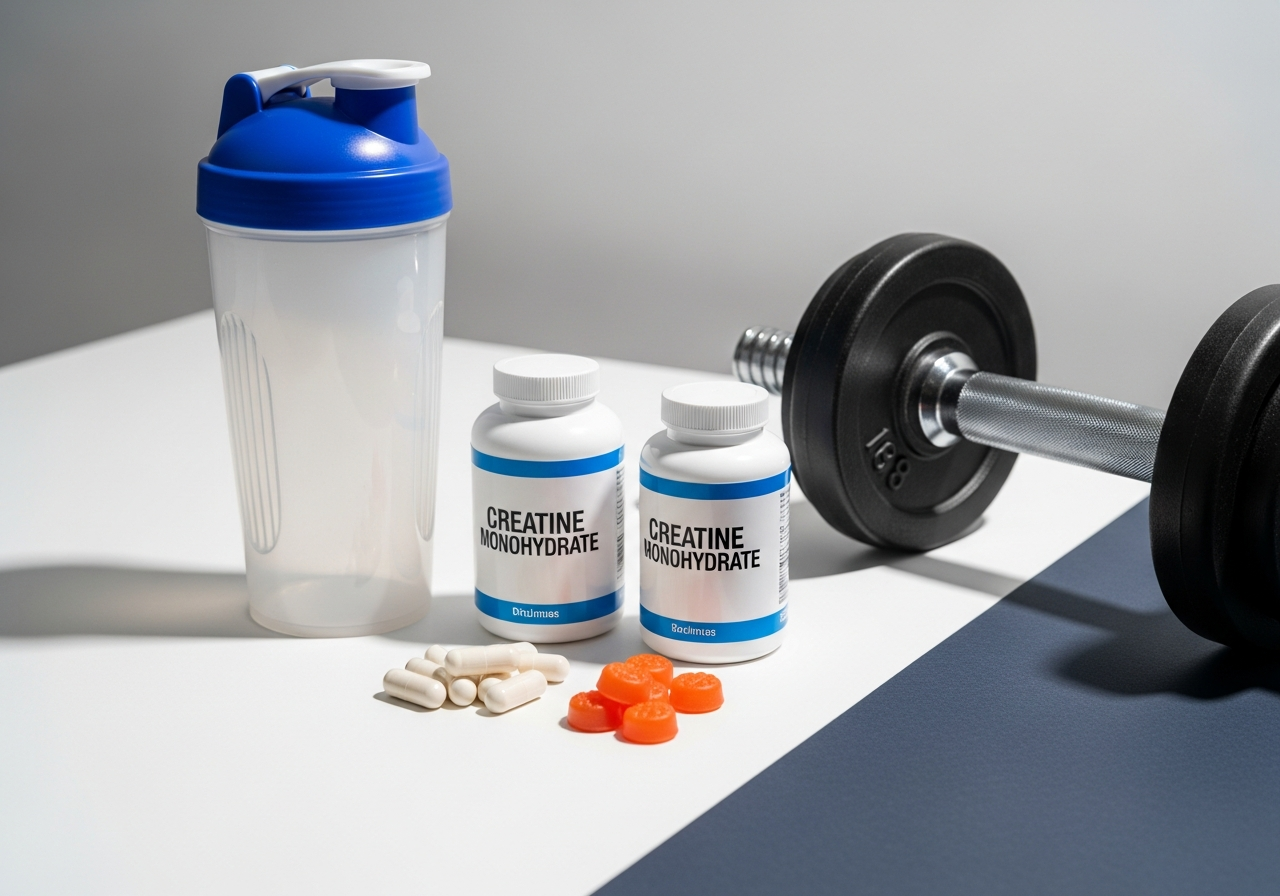
Micronized monohydrate can mix a bit more easily, but it is still monohydrate. That is a texture difference, not a radically different supplement. Capsules can work, but many women underestimate how many they need to reach a true 3–5 g dose. Gummies are convenient, yet some are underdosed or expensive for the amount of creatine provided.
For product selection help, browse our best creatine rankings, creatine brand reviews, and creatine product catalog. If you want the short buying rule: buy plain creatine monohydrate from a reputable Canadian seller, verify the dose on the label, and do not pay a premium for “women’s” marketing without a real formulation advantage.
Who should consider creatine in perimenopause, and what to pair it with for better results
Creatine is most worth considering in perimenopause if you lift weights, want to preserve muscle, eat little meat, feel your performance slipping, or are focused on healthy ageing. It is especially useful for women who want a low-complexity supplement with a strong evidence base.
Best-fit groups include:
- Beginners starting resistance training: Creatine can support the habit from day one and may improve early training quality.
- Experienced lifters: It helps retain momentum when recovery, sleep, or stress become less predictable.
- Plant-based or low-meat eaters: Lower habitual dietary creatine intake may make supplementation more relevant.
- Women over 40 focused on body composition: Preserving lean mass becomes increasingly valuable.
- Recreational athletes: Especially those doing repeated sprints, HIIT, team sport, or strength-based training.
What should you pair it with? Creatine works best in a basic evidence-based stack:
- Resistance training: 2–4 sessions weekly with progressive overload
- Protein: Enough daily protein to support muscle repair and growth
- Sleep: Because poor sleep can undermine the very adaptations you are trying to protect
- Hydration: Not because creatine dehydrates you, but because good hydration supports training and tolerance
Creatine can also be mixed with protein powder without issue. If that suits your routine, see can you mix creatine with protein powder? Timing with food is flexible too; with or without food is mostly a preference and digestion question.
Who may not need it? If you never do high-intensity or resistance exercise and have no interest in starting, the upside is smaller. There may still be a cognitive or healthy-ageing case, but the strongest value proposition is still exercise-related.
Bottom line: creatine for perimenopausal women is most compelling when the goal is to protect muscle and performance through a stage of life that often makes both harder to maintain.
Bottom line: a smart adjunct, not a miracle fix
Creatine is a smart, evidence-based supplement for many women in perimenopause because it helps support muscle energy, resistance-training quality, and long-term strength retention. If you want the shortest practical answer, take 3–5 g of creatine monohydrate daily, keep lifting, and judge success by performance and body-composition trends over 4–8 weeks.
The strongest case for creatine during menopause transition is physical, not hormonal. It does not directly raise oestrogen, and the evidence is not strong enough to market it as a treatment for hot flashes, night sweats, or cycle disruption. But it can absolutely be part of a high-quality strategy to handle the downstream effects of the transition more effectively.
If you are tired of conflicting advice, here is the no-nonsense hierarchy:
- Prioritise resistance training.
- Eat enough protein.
- Address sleep and recovery.
- Use creatine monohydrate consistently.
- Talk to a clinician if symptoms are severe or your medical history is complicated.
That hierarchy matters because supplements should support fundamentals, not distract from them. Creatine earns its place because it is well-studied, affordable, practical, and mechanistically sound.
If you want the next steps, start with our dosage calculator, compare options in the best creatine rankings, and read creatine and menopause for the later-stage transition. The best version of this supplement is the boring version: plain monohydrate, daily use, no hype, and a realistic understanding of what it can and cannot do.
Creatine and Perimenopause: The Numbers That Matter
- 3–5 g/day Standard maintenance dose — The practical daily range for most perimenopausal women using creatine monohydrate.
- 20 g/day Optional loading dose — Usually split into 4 doses for 5–7 days to saturate stores faster.
- 5–7 days Typical loading period — After loading, shift to a 3–5 g daily maintenance intake.
- 2–4 weeks Usual time to notice effects without loading — Performance and training-capacity changes often become clearer after saturation builds.
Frequently Asked Questions
Does creatine help perimenopause symptoms?
Creatine can help some consequences of perimenopause, especially reduced strength, lower training capacity, and difficulty maintaining muscle, but it is not a proven treatment for all perimenopausal symptoms. Evidence is strongest for exercise performance and lean-mass support, while evidence for hot flashes, mood, or sleep is much less established.
Can perimenopausal women take creatine every day?
Yes, most healthy perimenopausal women can take creatine every day, and daily use is the standard way to keep muscle stores saturated. A typical maintenance dose is 3–5 g of creatine monohydrate daily, including on rest days, unless a clinician has told you to avoid it for medical reasons.
Does creatine increase oestrogen in perimenopause?
No, creatine does not directly increase oestrogen. Creatine works mainly by supporting phosphocreatine and ATP regeneration in muscle and other tissues, so any benefit during perimenopause is more about energy metabolism and training support than about hormone replacement.
What is the best creatine for perimenopausal women?
The best creatine for perimenopausal women is usually plain creatine monohydrate. It is the most studied, the most cost-effective, and the form most consistently supported by sports-nutrition bodies and clinical reviews.
Will creatine make me gain weight during perimenopause?
Creatine can increase body weight slightly, especially early on, but that is usually water held inside muscle rather than fat gain. For women in perimenopause, that distinction matters because the supplement may improve muscle fullness and training quality without inherently increasing body fat.
How long does creatine take to work for perimenopausal women?
Creatine usually takes about 2–4 weeks to become noticeable without a loading phase, or about 5–7 days if you use a standard loading protocol. The first changes are often subtle, such as better repeat performance in workouts or slightly fuller muscles, rather than an immediate dramatic feeling.
Is creatine safe during the menopause transition?
Creatine is generally considered safe during the menopause transition for healthy adults when taken in standard doses, especially as creatine monohydrate. Women with kidney disease, major chronic illness, or medication concerns should speak with a clinician before starting.
Should I take creatine if I do not lift weights?
You can take creatine without lifting, but the clearest benefits are seen when creatine is paired with resistance training or other repeated high-intensity exercise. If you do not train, there may still be interest for cognition or healthy ageing, but the evidence and practical payoff are less robust.
Can creatine help with perimenopause brain fog?
Creatine may help with mental energy or cognitive resilience in some contexts, but it is not a guaranteed fix for perimenopause brain fog. The rationale is biologically plausible because the brain uses creatine too, yet evidence remains less consistent than it is for muscle performance.
Do I need a women’s or menopause-specific creatine formula?
No, you usually do not need a women’s or menopause-specific creatine formula if the product already provides an effective dose of creatine monohydrate. Many specialty formulas mainly add marketing, flavouring, or small extras without improving the core evidence-based creatine benefit.