Creatine and Multiple Sclerosis: Fatigue, Strength, and What the Evidence Says
By The Creatine Canada Research Team — Evidence-based supplement analysts
Creatine and multiple sclerosis is not a proven treatment for MS fatigue or disease progression, and current human evidence does not show a clear, reliable benefit for most people with MS. That said, creatine monohydrate is biologically plausible, generally well-studied for safety in healthy adults, and may still be worth discussing with your neurologist if your goal is supporting resistance training, muscle function, or overall nutrition rather than expecting it to treat MS itself.
Evidence-based · Cites 4 sources · Editorial standards
Key Takeaways
- Creatine does not currently have strong clinical evidence for improving multiple sclerosis symptoms in a consistent, meaningful way.
- The main reason creatine is discussed in MS is energy metabolism: it helps regenerate ATP, the cell’s immediate energy currency, through phosphocreatine.
- If an MS patient tries creatine, the evidence-based default is creatine monohydrate at 3-5 g daily, not expensive alternative forms.
- A loading phase of 20 g/day split into 4 doses for 5-7 days can saturate muscles faster, but it is optional and more likely to cause stomach upset.
- Creatine is best viewed as a training-support supplement, not a therapy for MS fatigue, relapses, mobility loss, or neuroprotection.
- People with kidney disease, unexplained kidney issues, or complex medical histories should not start creatine without physician clearance.
- In Canada, look for a Natural Product Number and preferably third-party testing when buying creatine monohydrate.
Does creatine help multiple sclerosis? The short answer is: not reliably, based on current evidence
Creatine and multiple sclerosis is an understandable topic of interest, but the direct answer is that creatine has not been proven to reliably improve MS fatigue, strength, mobility, or disease progression in the clinical literature available so far. People search for creatine multiple sclerosis, does creatine help MS, and creatine for MS patients because creatine is one of the best-supported sports supplements overall, yet that broader evidence base does not automatically carry over to MS-specific outcomes.
Creatine is a naturally occurring compound stored mainly in muscle as phosphocreatine, a high-energy molecule that helps rapidly regenerate ATP, the body’s immediate fuel for short bursts of work. In healthy adults and many athletic populations, creatine monohydrate consistently improves high-intensity performance, strength, and lean mass when taken correctly. The 2017 ISSN position stand concluded that creatine monohydrate is the most effective ergogenic, meaning performance-supporting, nutritional supplement currently available for increasing high-intensity exercise capacity and lean body mass during training.
That established sports evidence matters, but MS is different. Multiple sclerosis is a neurological disease involving immune-mediated damage to the central nervous system, including myelin and nerve pathways. Fatigue in MS is also different from ordinary gym fatigue. It can involve central fatigue, impaired neural signalling, heat sensitivity, sleep disruption, deconditioning, depression, medication effects, and secondary weakness. A supplement that helps muscle ATP recycling does not necessarily fix those broader drivers.
The practical takeaway is simple: if you have MS, creatine should be framed as a possible adjunct to training and nutrition, not as a treatment for the disease or a dependable solution for MS symptoms. If your goal is to support a supervised resistance-training plan, preserve muscle during inactivity, or improve workout quality, creatine may still be reasonable to discuss. If your goal is to reduce relapses, reverse disability, or meaningfully treat MS fatigue on its own, the evidence does not support that expectation.
For readers who are new to the supplement itself, our guides on what creatine is and creatine for beginners explain the fundamentals before you decide whether it fits your situation.
Why creatine was ever considered for MS in the first place
Creatine was studied in multiple sclerosis because the theory makes sense, even if the real-world results have been underwhelming. The core idea is that MS can impair energy production and muscle function, and creatine helps buffer cellular energy through the phosphocreatine system.
Here is the mechanism in plain English. ATP, or adenosine triphosphate, is the molecule cells use for immediate energy. During intense muscle contraction, ATP is used quickly and needs to be regenerated. Phosphocreatine donates a phosphate group to help restore ATP rapidly. This matters most in short, repeated efforts such as standing up, climbing stairs, lifting, sprinting, or repeated contractions during rehab exercises.
That mechanism creates two reasons creatine looked promising for MS:
- Muscle-energy support: if weakness or deconditioning is limiting exercise tolerance, better phosphocreatine availability could improve repeated effort capacity.
- Potential neuroprotection theory: because the brain also uses creatine-related energy pathways, researchers have explored whether creatine might help in neurological disorders where cells are under energetic stress.
Those ideas are not fringe. They are exactly why creatine has also been explored beyond bodybuilding, including in brain health, rehab, and ageing. But biological plausibility is not the same as proven patient benefit. A supplement can make perfect mechanistic sense and still fail to move the outcomes that matter most in people with a complex disease.
In MS, the problem is that symptoms often come from more than one bottleneck at once. A person may have reduced activity, altered gait, nerve conduction problems, spasticity, poor sleep, medication-related fatigue, and depression together. Even if creatine improves muscle phosphocreatine stores, that may not be enough to create a large, noticeable improvement in creatine MS fatigue or overall day-to-day function.
This is also why exercise itself remains central. If creatine has any realistic role for MS patients, it is most likely as a support to a structured programme of resistance training, physiotherapy, or carefully progressed conditioning, not as a stand-alone fix. If you want the broader performance context, see our guides on creatine benefits and how creatine powers muscles.
What the research actually shows on creatine for MS fatigue, strength, and symptoms
The evidence on creatine for MS patients is limited, mixed, and not strong enough to recommend it as a standard MS symptom treatment. That is the fairest summary if you are asking does creatine help MS or creatine MS symptoms.
The broad creatine literature is excellent for sport and resistance training, but MS-specific trials have generally not shown consistent, clinically meaningful benefits. The recurring issue is that the expected improvements in fatigue, muscle performance, body composition, or functional outcomes either do not appear clearly or are too inconsistent to support a confident recommendation. That is why major mainstream creatine guidance focuses on sports performance, muscle mass, and some emerging non-sport applications, not MS care.
For context, the 2021 JISSN review on common questions and misconceptions about creatine reinforces that creatine is one of the most studied supplements available, but it also shows the importance of separating strong evidence from speculative use. Multiple sclerosis falls into the latter category at present. Likewise, Examine’s creatine evidence summary is useful because it distinguishes well-supported athletic effects from areas where results are limited or preliminary.
That does not mean creatine is useless in every person with MS. It means any benefit is uncertain and should be interpreted cautiously. Some individuals may still feel better supported during resistance training or rehab, especially if they are starting from low muscle creatine stores, eating little dietary creatine, or becoming more active after a period of inactivity. But those are individual possibilities, not a clinically established MS benefit.
When reading claims online, use this filter:
- Strong evidence: creatine monohydrate improves high-intensity exercise capacity and supports gains in strength and lean mass during training in many healthy populations.
- Weaker evidence: creatine may help some non-athletic or clinical groups under certain conditions, but effects vary by condition.
- Not established for MS: treating MS fatigue, preventing progression, improving relapse rates, or acting as disease-modifying therapy.
If you want to set realistic expectations, the safest mindset is: creatine might support training quality, but current evidence does not show that it meaningfully changes the course of multiple sclerosis itself.
Who with MS might reasonably consider creatine, and who should pause first
Creatine may be reasonable for some people with MS who want training support, but it is not a fit-for-everyone supplement and should be screened more carefully in a medical population than in a healthy gym user. The right question is not just creatine for MS patients; it is which MS patient, for what goal, and with what medical oversight.
People with MS who might reasonably discuss creatine with their care team include:
- Beginners starting resistance training: especially if weakness, detraining, or low confidence is limiting progress.
- Women with MS: creatine is not a “male” supplement, and women can use the same evidence-based dosing strategy. See our guide on creatine for women.
- Older adults with MS: where preserving muscle, function, and training quality may matter as much as symptom management. Our guide on creatine for older adults covers that broader context.
- Vegetarians or people eating very little red meat or fish: dietary creatine intake is lower, which may increase the chance of noticing training-related benefits.
- Rehab-focused patients: if a physiotherapist or exercise professional is using repeated-effort strength work where phosphocreatine support could be relevant.
People who should pause and get medical clearance first include:
- Anyone with known kidney disease, reduced kidney function, or a history of unexplained abnormal kidney labs.
- Anyone whose clinician is actively monitoring creatinine-based kidney markers, because supplemental creatine can complicate interpretation without necessarily indicating harm.
- People with major swallowing issues or significant gastrointestinal sensitivity, because powder tolerance and fluid intake may need adjustment.
- People who are pregnant or breastfeeding, because this is a specialised medical decision.
- Anyone with rapid unexplained weight changes, severe fluid-balance issues, or multiple interacting medications.
The practical rule is simple: if you have MS and your goal is stronger workouts, more productive rehab sessions, or better support for muscle maintenance, creatine can be a reasonable conversation. If your goal is to directly treat fatigue, brain fog, relapses, or disease progression, creatine should not be presented as a reliable evidence-based answer.
A cautious step-by-step plan for trying creatine if you have MS
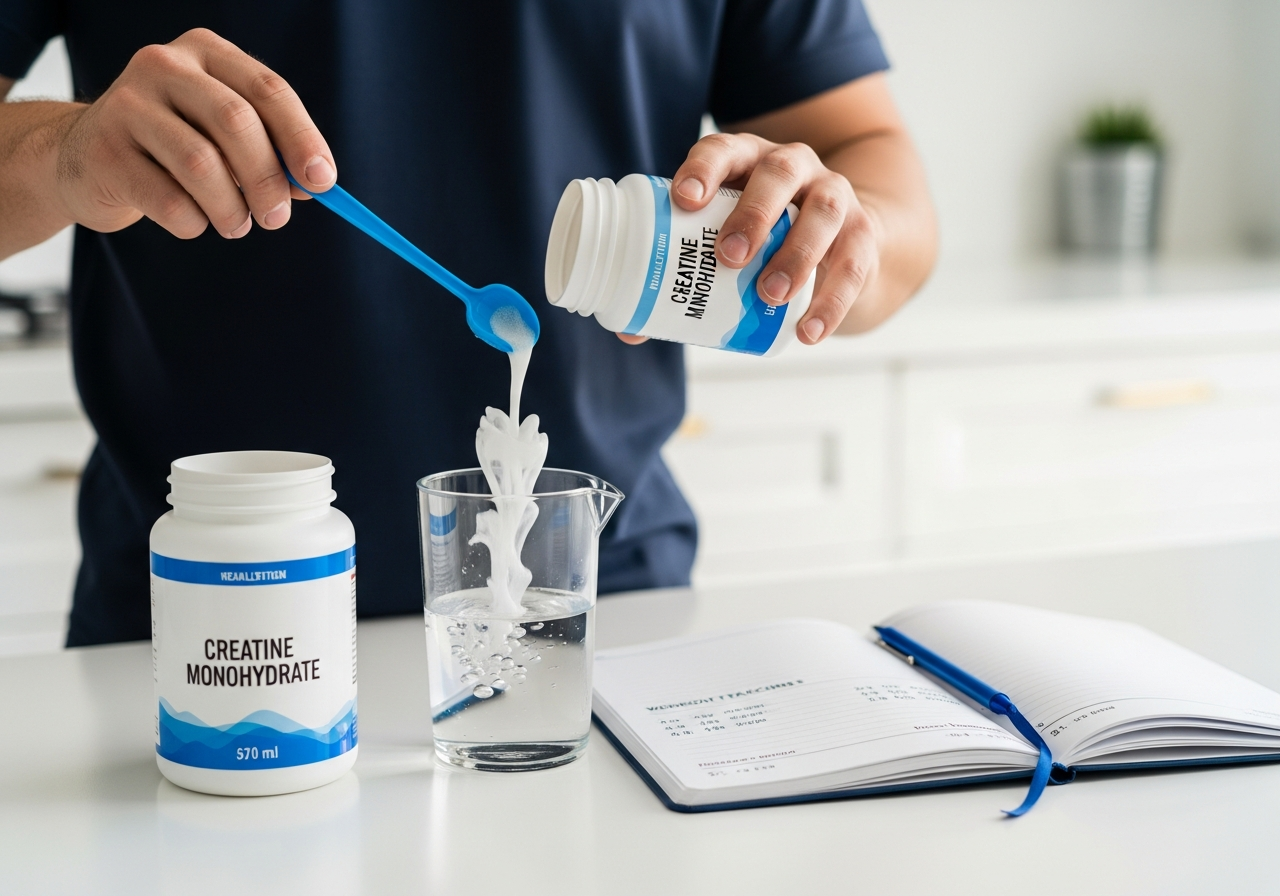
If you have multiple sclerosis and want to try creatine, the safest and most useful approach is a simple, conservative trial with one variable changed at a time. That means using plain creatine monohydrate, taking a standard dose consistently, and tracking outcomes that actually matter to you.
- Get clinician clearance first. This matters most if you have kidney concerns, complex medications, fluctuating lab work, or significant disability.
- Choose plain creatine monohydrate. Monohydrate is the most studied, most evidence-based, and usually the most cost-effective form. You can browse options in our creatine product catalog or compare labels in our creatine brand reviews.
- Start with 3 g daily for the first week. This lower-entry dose helps check tolerance.
- Increase to 3-5 g daily if tolerated. Most adults do well at 5 g daily, but smaller individuals may prefer 3 g.
- Take it every day, including rest days. Creatine works by saturation over time, not by a one-time stimulant-like effect. See why rest-day dosing matters.
- Mix it in water or another drink and take it with a meal if your stomach is sensitive. Our guide on how to mix creatine can help.
- Run the trial for 6-8 weeks. Without loading, muscle saturation takes several weeks.
- Track 3-5 relevant outcomes weekly. Good examples are gym performance, sit-to-stand reps, stair tolerance, grip strength, walking endurance, perceived exertion, and body weight.
- Do not judge it only by “fatigue.” MS fatigue is complex and may not change even if training performance improves slightly.
- Stop and reassess if you get persistent GI upset, troubling swelling, or any medical concern.
A practical note: the best-case scenario in MS is usually modest. You are looking for small improvements in training quality, repeated effort, or muscle maintenance, not a dramatic change in neurological symptoms. If nothing meaningful changes after a fair trial, that is useful information too.
For personalised dosing help, our creatine dosage calculator and guide on how to take creatine can help you set up the basics correctly.
The right creatine dose for MS patients: by body weight, goal, and tolerance
The evidence-based dose for someone with MS who chooses to use creatine is usually the same as for the general population: 3-5 g of creatine monohydrate per day. There is no special MS-specific dose that has been proven superior.
Two dosing strategies are commonly used. The first is a standard daily dose with no loading. The second is a loading phase that saturates muscle stores faster. Loading is optional, not required.
| Goal | Body weight | Suggested dose | When it makes sense |
|---|---|---|---|
| Conservative start | Under 60 kg | 3 g/day | Good for smaller adults or anyone worried about stomach upset |
| Standard maintenance | 60-90 kg | 3-5 g/day | Best default for most adults with MS |
| Standard maintenance | Over 90 kg | 5 g/day | Reasonable simple target for larger adults |
| Faster saturation | Any body weight | 20 g/day for 5-7 days, split into 4 x 5 g doses, then 3-5 g/day | Only if you want faster saturation and tolerate it well |
For people who prefer a formula approach, loading is often described as about 0.3 g/kg/day for 5-7 days, followed by a maintenance dose of about 0.03 g/kg/day. In practice, though, the simple real-world protocol of 3-5 g daily works well for most users. Our guide on how much creatine per day explains the broader logic, and this loading guide covers when faster saturation is worth it.
If you have MS-related GI sensitivity, start low. A useful progression is 3 g/day for 7 days, then 4 g/day for 7 days, then 5 g/day if desired. Split doses can also help.
What not to do:
- Do not take huge “therapeutic” doses because you saw a neurological claim online.
- Do not keep increasing the dose if you feel nothing after a week; creatine is not meant to work like caffeine.
- Do not assume pricier forms need lower doses and work better; that is mostly marketing.
The simplest correct answer for creatine and multiple sclerosis dosing is this: start with plain monohydrate, take 3-5 g daily, stay consistent, and judge it over weeks, not days.
When to take it, how long it takes, and what results are realistic in MS
Creatine timing matters far less than daily consistency, and realistic results in multiple sclerosis are usually subtle rather than dramatic. If you are asking creatine MS fatigue, the most honest answer is that you may notice nothing in fatigue at all, even if your training performance improves slightly.
Here is the practical timeline:
- With loading: muscle stores usually rise faster over about 5-7 days.
- Without loading: it often takes roughly 3-4 weeks to approach saturation.
- Meaningful evaluation window: give it 6-8 weeks, especially if you are also starting or progressing an exercise plan.
As for time of day, take it whenever you are most likely to remember it. Some people prefer post-workout with a meal or shake simply because that improves adherence. Others take it at breakfast. The best schedule is the one you will follow daily. Our guide on when to take creatine covers the timing evidence in more depth.
What you might realistically notice if creatine is helping:
- Slightly better tolerance for repeated sets or short efforts in the gym
- A small improvement in reps completed at a given weight
- Marginally easier sit-to-stands, step-ups, or stair repeats
- A small increase in scale weight from intracellular water, meaning water stored inside muscle
What you should not expect from creatine alone:
- A rapid drop in neurologic fatigue
- Noticeable improvement in relapses or MRI findings
- A cure for weakness caused mainly by impaired nerve conduction
- Big endurance gains in walking or daily function without concurrent training
One useful tip is to define success before you start. Pick two objective markers and one subjective marker. For example: leg press reps, timed sit-to-stand, and perceived effort during physiotherapy. That way you are testing something measurable, not just hoping to “feel better.”
If you want a more general expectation guide, see how long creatine takes to work and what scale-weight changes mean.
Safety, side effects, kidney questions, and when MS patients should be careful
Creatine monohydrate is generally considered safe for healthy adults at recommended doses, but safety in a person with multiple sclerosis still needs individual medical context. That is because MS patients may have more medications, more lab monitoring, and more reasons for symptoms to be misread.
The broad safety base for creatine is strong. The ISSN position stand and subsequent reviews have repeatedly concluded that recommended creatine monohydrate use is safe for healthy individuals, and common online fears are often overstated. The Mayo Clinic’s creatine overview also notes that creatine can be safe when used appropriately, while still advising caution in certain medical situations.
Common side effects are usually manageable and dose-related:
- Water weight gain: often a small increase early on because creatine pulls water into muscle cells.
- Stomach upset or loose stools: more likely with loading or large single doses.
- Bloating sensation: often improved by smaller doses, full dissolution, and taking it with food.
The biggest area of confusion is kidneys. Creatine itself is not the same as kidney damage, but supplementation can increase creatinine, a breakdown product often used in blood tests as a kidney marker. That can make labs look different even when the kidneys are fine. In someone with MS who already has medical follow-up, that is exactly why it is wise to tell your clinician you are taking creatine before lab work. If kidney disease already exists, medical supervision is non-negotiable. For more context, see our kidney guide and creatine vs creatinine.
Hydration is another practical point. Creatine does not dehydrate you by itself, but taking it with adequate fluids is sensible, especially if heat sensitivity or bladder-management issues are part of your MS picture. Our guide on how much water to drink with creatine can help you keep this simple.
Bottom line: creatine is usually low risk when used correctly, but for MS patients the right standard is not “safe enough for gym bros.” It is “appropriate for my actual medical situation.”
Common mistakes and myths about creatine and MS, debunked
Most confusion about creatine and multiple sclerosis comes from taking solid general creatine facts and stretching them into claims the MS evidence does not support. The biggest myth is that because creatine helps muscles produce energy, it must therefore treat MS fatigue. That leap is not justified.
Here are the most common myths and the reality behind them:
- Myth: Creatine treats MS fatigue.
Reality: MS fatigue has many causes, and current human evidence does not show creatine reliably improves it. - Myth: If creatine helps healthy athletes, it must help neurological disease too.
Reality: Disease mechanisms are more complex, and successful sports supplements often do not translate cleanly to clinical populations. - Myth: You need a special “brain” or “neurological” creatine formula.
Reality: creatine monohydrate remains the reference form; premium-sounding alternatives usually lack better evidence. - Myth: Water weight means harm or inflammation.
Reality: early weight gain is typically intracellular water in muscle, not fat gain or a sign of worsening disease. - Myth: Creatine is hard on the kidneys in everyone.
Reality: recommended-dose monohydrate is generally safe in healthy adults, but pre-existing kidney issues warrant medical clearance. - Myth: If it works, you should feel it immediately.
Reality: creatine works by gradual saturation, so effects, when they occur, usually show up over weeks.
The most common user mistakes are just as important:
- Buying a flashy blend instead of plain monohydrate
- Taking it inconsistently
- Expecting it to replace exercise or rehab
- Using a loading phase despite a sensitive stomach
- Judging success only by “energy” rather than performance or function
If you want a deeper myth breakdown, our creatine myths debunked page and creatine myths vs facts guide cover the broader misconceptions in more detail.
A good rule of thumb: when a claim about creatine and MS sounds dramatic, therapeutic, or curative, it is probably overselling the evidence.
Best type of creatine for MS patients, plus what to look for in Canada
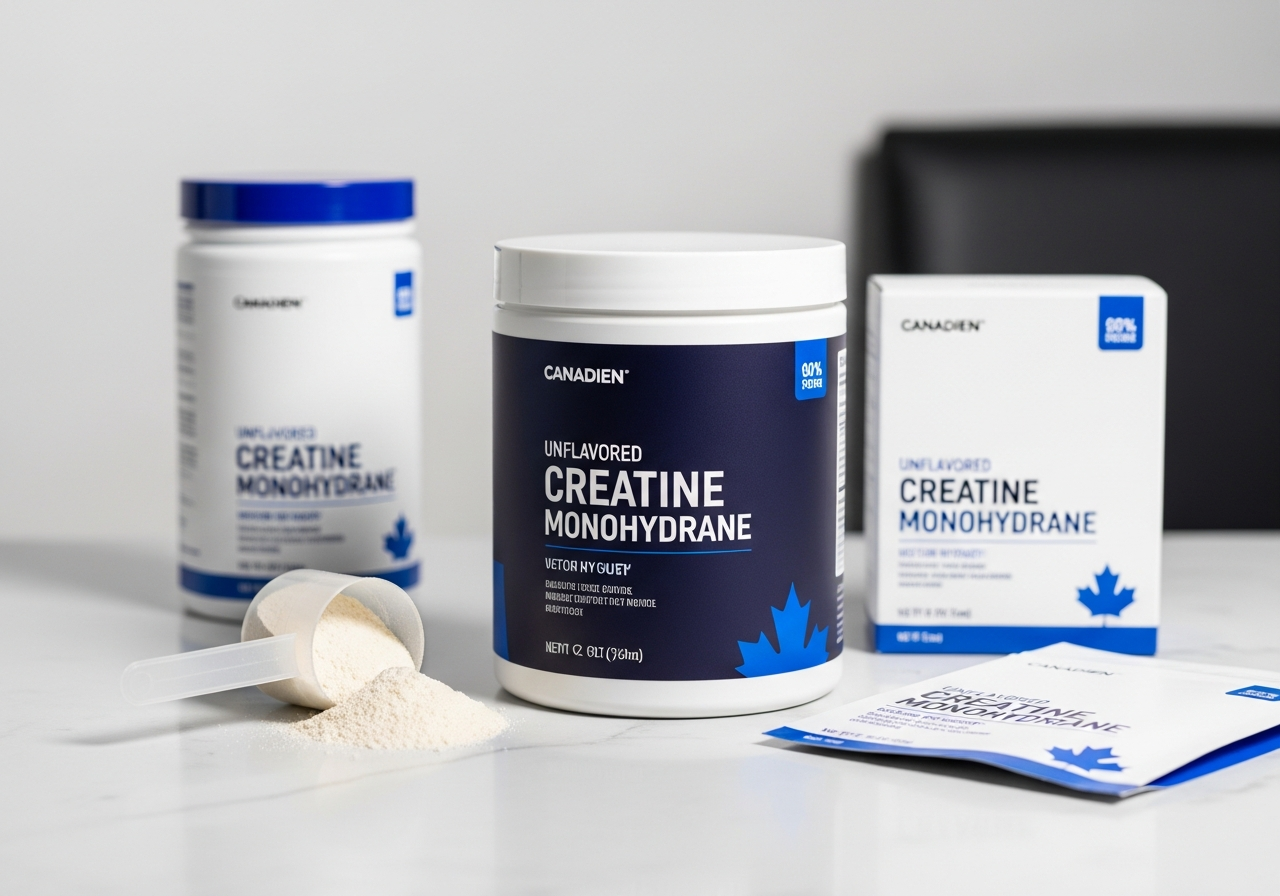
The best creatine for a person with multiple sclerosis is almost always plain creatine monohydrate from a reputable brand with clear dosing, minimal extra ingredients, and Canadian-compliant labelling. You do not need a disease-specific formula, and you usually do not need the most expensive product on the shelf.
Monohydrate remains the best choice because it has the largest evidence base, the best cost-to-benefit ratio, and the most predictable dosing. The International Olympic Committee’s consensus on supplements supports creatine as one of the few supplements with strong evidence in performance settings, but that support is for mainstream creatine use, not for proprietary “advanced” forms that promise better absorption without better proof.
| Form | Best for | Evidence level | Bottom line |
|---|---|---|---|
| Creatine monohydrate | Almost everyone | Strongest | First choice for efficacy, cost, and research support |
| Micronized monohydrate | People who want easier mixing | Strong, as monohydrate | Fine option if texture matters |
| HCl | People drawn to smaller servings | Weaker | No consistent proof it outperforms monohydrate |
| Gummies, liquids, blends | Convenience seekers | Variable | Often pricier and less practical for evidence-based dosing |
In Canada, check for:
- NPN: a Natural Product Number indicates the product is licensed by Health Canada as a natural health product.
- Third-party testing: useful for identity and purity reassurance.
- Simple ingredient list: ideally just creatine monohydrate.
- Dose transparency: clearly states grams per scoop, not just “proprietary blend.”
If you want help choosing, see our best creatine rankings, best monohydrate in Canada, and Canadian supplement regulations guide.
For most MS patients, the ideal buying strategy is boring on purpose: a plain, licensed, reputable monohydrate powder you can afford to take consistently for at least 6-8 weeks.
Bottom line: where creatine fits, and where it does not, in multiple sclerosis
Creatine and multiple sclerosis is a nuanced topic, but the bottom line is straightforward: creatine is not an evidence-based treatment for MS fatigue, relapses, progression, or core neurological symptoms, yet it may still have a sensible supporting role for some people with MS who are focused on resistance training, rehab, or muscle maintenance.
If you want the shortest possible practical answer, use this checklist:
- Expect modest or no symptom benefit.
- Use plain creatine monohydrate, not fancy alternatives.
- Take 3-5 g daily, consistently, for 6-8 weeks.
- Pair it with exercise or rehab if your clinician approves.
- Track objective outcomes, not just fatigue.
- Get medical clearance if you have kidney issues or complex monitoring.
This framing respects both sides of the evidence. On one side, creatine is among the most studied and most useful performance supplements in the world. On the other side, that strong reputation should not be exaggerated into promises for MS that the research does not support.
For many readers, the best next step is not buying creatine immediately. It is clarifying your goal. If your real goal is preserving muscle, getting more from strength training, or supporting a supervised return to exercise, creatine may be worth discussing. If your real goal is fixing MS fatigue or changing disease course, your energy is better spent working with your neurologist and rehab team on the broader causes and evidence-based treatment options.
And if you do decide to use it, keep the standard simple: safe, plain monohydrate, sensible dosing, realistic expectations, and regular communication with your healthcare team.
Creatine and Multiple Sclerosis: The Numbers That Actually Matter
- 3-5 g/day Standard creatine monohydrate maintenance dose — Best evidence-based default for adults who choose to supplement
- 20 g/day Typical loading dose — Usually split into 4 doses for 5-7 days, then reduced to maintenance
- 5-7 days How long a loading phase usually lasts — Optional; saturates muscle faster but can increase GI side effects
- 6-8 weeks Reasonable MS self-trial window — Long enough to judge training support if no loading phase is used
Frequently Asked Questions
Does creatine help MS fatigue?
Not reliably, based on the current evidence. Creatine may support muscle energy metabolism, but MS fatigue is driven by many factors beyond muscle ATP supply, and clinical studies have not established creatine as a dependable treatment for MS fatigue.
Is creatine safe for MS patients?
Creatine is often safe at standard doses, but MS patients should not treat that as automatic clearance. If you have kidney disease, abnormal labs, complex medications, or ongoing medical monitoring, you should discuss creatine with your clinician before starting.
What type of creatine is best for someone with multiple sclerosis?
Creatine monohydrate is the best choice for someone with multiple sclerosis. It has the strongest overall evidence base, the clearest dosing data, and usually the best value, while alternative forms have not shown consistent superiority.
What dose of creatine should an MS patient take?
Most adults who choose to use creatine do well with 3-5 g of creatine monohydrate daily. A loading phase of 20 g/day split into 4 doses for 5-7 days is optional, but many people with MS will prefer the gentler no-loading approach.
Can creatine reduce MS symptoms overall?
Creatine has not been proven to reduce MS symptoms overall in a consistent or clinically meaningful way. It is better viewed as a possible training-support supplement than as a treatment for the disease itself.
How long does creatine take to work for someone with MS?
Creatine usually takes days to weeks to build up in muscle, not hours. With loading, saturation happens faster over roughly 5-7 days; without loading, it often takes about 3-4 weeks, and a fair trial is usually 6-8 weeks.
Can people with MS take creatine without working out?
Yes, people with MS can take creatine without working out, but the likelihood of noticing a benefit is lower. Creatine is most useful when it supports repeated muscular effort, strength training, or rehab rather than acting as a stand-alone symptom treatment.
Does creatine make MS patients gain weight?
Creatine can cause a small increase in body weight, especially early on, but this is usually water stored inside muscle rather than fat gain. For some MS patients that is neutral; for others with mobility or transfer concerns, it is worth discussing beforehand.
Should MS patients avoid creatine if they have kidney concerns?
Yes, anyone with MS who has known kidney disease or unresolved kidney concerns should avoid self-prescribing creatine until cleared by a physician. Creatine can also affect creatinine readings, which may complicate lab interpretation during medical follow-up.
Is there any point trying creatine for MS if the evidence is weak?
There can be, but only with realistic expectations. If your goal is better support for resistance training, rehab, or muscle maintenance, a supervised trial of plain creatine monohydrate may be reasonable even though evidence for direct MS symptom relief is not strong.