BulkSupplements Creatine Review: Cheapest Pure Creatine in Canada?
By The Creatine Canada Research Team — Evidence-based supplement analysts
BulkSupplements Creatine is usually a good buy if your top priority is cheap, plain creatine monohydrate, but it is not automatically the best creatine choice for every Canadian. The powder itself fits the evidence-based sweet spot of pure monohydrate, yet Canadian buyers should weigh value per gram, labelling, third-party testing, import friction, and whether a Canada-friendly option offers better trust for a similar all-in cost.
Evidence-based · Cites 4 sources · Editorial standards
Key Takeaways
- Yes, BulkSupplements creatine can be a solid budget option because creatine monohydrate is the gold-standard form and plain formulas are often all you need.
- The real question for Canadians is not just price on the bag; it is landed cost, shipping speed, duties risk, and whether the product is labelled appropriately for Canada.
- Pure creatine monohydrate works by raising muscle phosphocreatine stores, which helps regenerate ATP during short, hard efforts.
- A maintenance dose of 3 to 5 g daily is the standard evidence-based protocol; loading at about 20 g daily for 5 to 7 days is optional, not required.
- If BulkSupplements creatine causes stomach upset, the fix is usually smaller split doses, better mixing, and avoiding oversized scoops.
- For tested athletes and cautious buyers, documented third-party testing and clear Canadian compliance can matter more than saving a few cents per serving.
- If you want the cheapest pure creatine monohydrate bulk, compare cost per gram and trust signals, not marketing terms like advanced absorption or ultra-premium blends.
Direct verdict: is BulkSupplements creatine good, and is it worth buying in Canada?
Yes, BulkSupplements creatine is generally a good product if you want plain creatine monohydrate at a low upfront price, but Canadian buyers should judge it on total value and trust, not the sticker price alone.
For the primary question behind most BulkSupplements creatine review searches, the simple answer is this: if the product is genuinely plain creatine monohydrate with no unnecessary extras, it can work just as well physiologically as any other plain monohydrate powder. Creatine is one of the rare supplements where the form matters more than flashy branding, and monohydrate remains the benchmark supported by decades of evidence. The 2017 International Society of Sports Nutrition position stand concluded that creatine monohydrate is the most effective ergogenic nutritional supplement currently available for increasing high-intensity exercise capacity and lean mass during training.
That matters because is BulkSupplements creatine good is really two different questions:
- Does creatine monohydrate work? Yes, strongly supported.
- Is this specific seller the best option for a Canadian buyer? Sometimes, but not always.
Where BulkSupplements tends to appeal is simplicity. A bare-bones pouch or bag of unflavoured powder is exactly what many informed buyers want. If your only criterion is getting pure creatine monohydrate bulk at a low cost per serving, that can be attractive. But when buying from Canada, you also have to care about practical issues: shipping times, exchange rate, possible import headaches, the presence or absence of a Canadian Natural Product Number, and how clearly the product states testing or quality controls.
In practice, BulkSupplements creatine is best for price-driven shoppers who are comfortable comparing labels carefully and handling a more utilitarian product format. It is less ideal for buyers who want the most Canada-friendly experience, easy local returns, or the strongest verification signals for sport. If you want more context on how this stacks up against other options, our best creatine rankings and creatine brand reviews are the best next stops.
The bottom line is straightforward: BulkSupplements creatine monohydrate can be effective and economical, but for Canadians the smartest buy is the option with the best combination of monohydrate purity, total delivered cost, and quality assurance.
What you are actually buying: bulk powder, not magic creatine
BulkSupplements creatine is typically just creatine monohydrate powder, which is exactly what most people should want because the evidence supports the ingredient, not marketing add-ons.
Many creatine reviews get distracted by packaging style, grit, flavour, or hype words like pharmaceutical-grade, ultra-micronized, advanced uptake, or patented transport matrix. Those details can matter a little for convenience, but they do not change the core physiology much. If the ingredient panel says only creatine monohydrate, you are buying the same basic molecule studied across the vast majority of creatine research.
Creatine monohydrate is a compound your body stores mostly in muscle. Part of that storage is in the form of phosphocreatine, which is creatine bound to a phosphate group that helps rapidly regenerate ATP, the cell’s immediate energy currency, during short, explosive work. That is why creatine is most useful for lifting, sprinting, jumping, repeated intervals, and training volume, rather than long steady aerobic work.
So what should you look for in a product like this?
- Ingredient simplicity: ideally just creatine monohydrate.
- Dose clarity: the serving should make it easy to hit 3 to 5 g daily.
- Powder handling: some gritty settling is normal and not a sign of low quality.
- Testing transparency: a brand should clearly explain purity or contaminant testing.
- Storage quality: a proper moisture-resistant pouch or container helps prevent clumping.
A plain bulk powder format has advantages. It is usually cheaper per gram than capsules, gummies, or flavoured blends. It is also easy to mix into water, juice, or a protein shake. If you want a practical walkthrough, see How to Take Creatine and the creatine dosage calculator.
A plain bulk format also has trade-offs. You may need a scale or careful scoop measurement, solubility may be average rather than silky smooth, and the packaging may feel less premium than mainstream retail tubs. None of those are deal-breakers if the powder is clean and accurately dosed.
The key idea is this: the best bulk creatine review is not the one that praises branding, but the one that checks whether the product delivers simple, pure monohydrate reliably, affordably, and with enough quality evidence to trust it.
Why any good creatine works: the mechanism behind strength, power, and size
BulkSupplements creatine works for the same reason any good creatine monohydrate works: it increases muscle creatine and phosphocreatine stores, which helps you regenerate ATP faster during hard efforts.
This mechanism matters because it explains why one plain monohydrate powder can perform just as well as a more expensive one. During intense exercise, your muscles burn through ATP very quickly. ATP is the direct energy source for muscular contraction, but the supply available at any moment is small. Phosphocreatine acts as a rapid reserve system: it donates a phosphate to help rebuild ATP during repeated high-output efforts.
When you supplement with creatine monohydrate consistently, your muscles gradually become more saturated with creatine. Higher muscle creatine storage can support:
- More reps at a given weight
- Better repeated sprint or interval performance
- Higher training quality across sets
- Greater long-term strength and lean mass gains when combined with resistance training
The 2017 ISSN position stand and the 2021 JISSN review on common creatine questions both reinforce that monohydrate remains the best-supported form for performance, body composition, and safety. For an accessible evidence summary, Examine also notes that creatine reliably improves high-intensity performance and often supports strength and lean mass gains over time when training is in place. See Kreider et al. (2017), ISSN Position Stand and Examine.com’s creatine evidence summary.
Creatine does not directly build muscle the way a drug would. Instead, it improves the energy environment in which hard training happens. Over weeks and months, that often means you accumulate more high-quality training work, recover better between bouts, and create a stronger stimulus for adaptation. Some people also notice an early increase in body weight from more water stored inside muscle cells, which can make muscles look fuller. That intracellular water is not fat gain.
This is why bulk supplements creatine purity matters more than trendy form names. If a product gives you well-made monohydrate at the right daily dose, it already matches what most of the literature uses. If you want the deep science background, our guides on what creatine is, creatine and ATP, and creatine benefits expand on the mechanism.
The short version is simple: creatine helps you train harder and recover energy faster in short, intense efforts, and that is the main reason it can improve results over time.
BulkSupplements creatine in Canada: where the deal can get better or worse
For Canadian buyers, BulkSupplements creatine is only a bargain if the final delivered cost and compliance picture still make sense after shipping, exchange, and import considerations.
This is the section most generic US reviews miss. A product can look cheap on an American listing and stop being cheap once a Canadian buyer adds currency conversion, shipping charges, possible brokerage or duty-related friction, and longer delivery times. The smartest way to assess bulk supplements creatine Canada availability is not to ask whether it is sold online, but whether the all-in purchase remains competitive against Canadian alternatives.
There is also the issue of Canadian supplement oversight. In Canada, many natural health products carry an NPN, or Natural Product Number, which indicates the product has been licensed by Health Canada for sale under its approved conditions. Not every cross-border listing will present Canadian-style labelling the way a domestic buyer expects. That does not automatically mean the creatine is bad, but it does mean you should be more careful.
Here is a practical Canadian buyer checklist:
- Check the ingredient line: it should say creatine monohydrate and little else.
- Calculate total cost in Canadian dollars: include shipping before comparing.
- Look for Canadian-friendly labelling: NPN presence can add confidence for domestic compliance.
- Review quality claims: third-party testing, lot testing, or contaminant screening matter.
- Think about returns and support: domestic brands are often easier to deal with if something goes wrong.
For athletes in tested sport, certification can matter even more. The International Olympic Committee’s supplement consensus stresses that contamination risk is a real concern in sport, even when the intended ingredient itself is permitted. If you compete, third-party screening can be worth paying for. See the IOC consensus on dietary supplements.
If your priority is simply finding the best-value option available locally, compare BulkSupplements against products in our creatine product catalog and guides like best creatine rankings. If your priority is education on Canadian rules, our page on is creatine approved in Canada is the right complement.
In Canada, the cheapest creatine is not always the cheapest bag; it is the product with the lowest cost per gram after delivery, paired with enough quality assurance that you would actually trust taking it daily.
Exactly how to take BulkSupplements creatine for best results
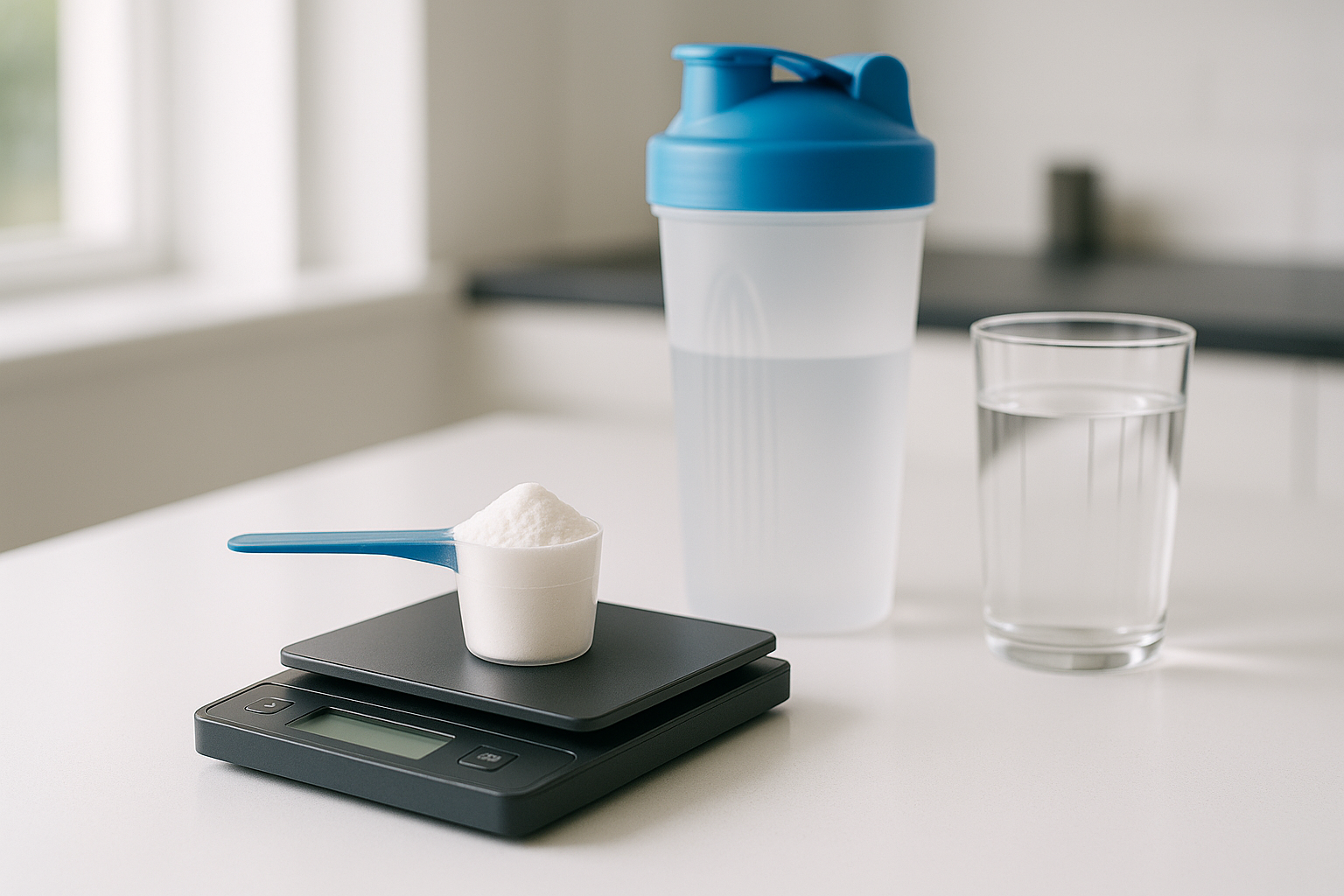
The best way to take BulkSupplements creatine is 3 to 5 g daily, every day, with enough fluid to make it comfortable, and with consistency prioritized over timing.
If you buy a plain bulk powder, your results will depend far more on accurate dosing and daily adherence than on any advanced timing trick. Creatine is not a stimulant. You do not need to feel it kicking in before your workout. The goal is to increase muscle creatine stores over time, which means daily intake is what matters most.
- Measure your dose. Use the included scoop only if it clearly corresponds to grams; a small kitchen scale is better. If you are unsure, use our creatine dosage calculator or read how to measure creatine.
- Start with 3 to 5 g daily. This is the standard maintenance range for most adults.
- Mix it well. Stir into water, juice, or a shake. Some settling at the bottom is normal.
- Take it once daily. Post-workout, with breakfast, or whenever you reliably remember it.
- Keep taking it on rest days. Saturation depends on consistency, not training-day use only.
You can also use a loading phase if you want faster saturation. A standard approach is about 20 g per day divided into four 5 g servings for 5 to 7 days, followed by 3 to 5 g daily after that. Loading is optional. It gets you to full stores faster, but it is not superior in the long run.
What should you expect?
- With loading: noticeable scale changes and fuller muscles can happen within about a week.
- Without loading: benefits usually build gradually over roughly 3 to 4 weeks.
- By weeks 4 to 8: many lifters notice better reps, slightly better repeat efforts, and improved training quality.
If you train in the morning, evening, or not at all on some days, the main principle does not change. For more nuance, see when to take creatine, creatine on rest days, and how long creatine takes to work.
The best routine is the one you can repeat every day for months, because creatine works through saturation, not through a one-time pre-workout effect.
Dosing by body weight and goal: beginner, muscle gain, sport, and healthy aging
For most people using BulkSupplements creatine, 3 to 5 g daily is enough, but larger bodies, higher lean mass, or aggressive loading goals can justify aiming toward the top of that range.
The evidence-based default is still simple: 3 to 5 g of creatine monohydrate per day. The reason this range works is that it is usually enough to maintain elevated muscle creatine stores in adults once saturation has been reached. Heavier or more muscular people often do fine at 5 g daily, while smaller adults may be perfectly served by 3 g daily.
| Body weight / goal | Simple daily dose | When to use it |
|---|---|---|
| Smaller adult, general fitness | 3 g/day | Good starting point if you want simplicity and minimal stomach risk |
| Average adult, strength or hypertrophy | 5 g/day | Best default for most lifters and active adults |
| Larger or very muscular adult | 5 g/day | Reasonable practical ceiling for standard maintenance |
| Fast saturation goal | 20 g/day for 5-7 days, split into 4 doses, then 3-5 g/day | Useful if you want results sooner and tolerate larger total intake well |
| Older adult using resistance training | 3-5 g/day | Common evidence-based range for supporting training and lean mass |
Here is how that looks in practice:
- Beginner lifter: 5 g daily with any meal or shake.
- Woman starting creatine: 3 to 5 g daily; women do not need a special pink creatine dose.
- Older adult: 3 to 5 g daily, ideally paired with resistance training.
- Team-sport athlete: 5 g daily, or a short loading phase before a training block if tolerated.
- Vegetarian or vegan: 5 g daily can be especially worthwhile because baseline dietary creatine intake is often lower.
For many people, loading is more about impatience than necessity. If you are happy to wait a few weeks, daily maintenance alone works. If you are prone to digestive upset, skipping the loading phase is often smarter. Our in-depth guides on how much creatine per day, the creatine loading phase, and creatine for women go further.
Do not overcomplicate dosing: the right BulkSupplements creatine dose is usually just a properly measured 3 to 5 g per day, taken consistently.
Timing, results, and how to tell if BulkSupplements creatine is working
Creatine timing matters far less than daily consistency, and the easiest way to tell it is working is by improved training output over several weeks, not by an instant buzz.
This is one of the most common disappointments for first-time users: they take creatine once or twice and expect a stimulant-like effect. That is not how it works. Creatine does not act like caffeine. It gradually increases muscle creatine stores until you are more saturated, and then your hard training tends to feel more productive.
Here is a realistic timeline:
- Days 1 to 7 with loading: possible increase in body weight from intracellular water and a fuller muscle look.
- Weeks 1 to 3 without loading: usually little dramatic feeling, but saturation is building.
- Weeks 3 to 6: many users notice better repeat efforts, an extra rep here and there, and slightly better recovery between sets.
- Weeks 6 to 12: training adaptations often become more noticeable if your program and diet are solid.
Signs it may be working include:
- you maintain power better across repeated sets
- you add small rep or load improvements more often
- your muscles look a bit fuller
- your body weight rises modestly without obvious fat gain
Signs it may not seem to be working, even though the product is fine:
- you skip doses often
- you only take it pre-workout
- your training intensity is too low to notice the benefit
- you are under-eating or under-recovering
The 2021 JISSN review on creatine misconceptions is useful here because it addresses the gap between expectations and physiology: creatine supports the systems that drive hard performance, but it is not an acute stimulant and it does not override poor training habits. Read Antonio et al. (2021) for that context.
If you are comparing BulkSupplements creatine monohydrate review notes across stores, be careful with anecdotal comments like “felt nothing.” Feeling nothing immediately is normal. What matters is whether performance trends improve with time. If you want help setting expectations, see realistic creatine results and creatine not working?
The clearest proof a creatine product is doing its job is not a sensation but a gradual improvement in training quality and muscle fullness over several weeks.
Who BulkSupplements creatine is for, and who should choose a different option
BulkSupplements creatine is best for budget-conscious buyers who want no-frills monohydrate, while athletes needing maximum certification assurance or Canadians wanting the smoothest local buying experience may prefer another brand.
A good creatine product is not defined only by chemistry. It also has to fit the user. Bulk powder formats suit some people very well and frustrate others.
Good fit for:
- Beginners: if you want one proven supplement and do not care about flavour systems.
- Experienced lifters: if you know monohydrate is enough and want cost efficiency.
- Women: if you want plain creatine without gendered marketing nonsense.
- Older adults: if you will use it consistently alongside resistance training.
- Vegetarians and vegans: if you want an evidence-based supplement with potentially greater upside due to lower dietary creatine intake.
Potentially poor fit for:
- Tested athletes: if the product lacks the certification or documentation you personally require.
- Canadians wanting easy local support: if domestic shipping and returns matter a lot to you.
- Anyone sensitive to messy powders: if you prefer capsules, sticks, or a tub over a pouch.
- People with medical complexity: if you need clinician input first on kidney disease, relevant medications, or other conditions.
Women often search separately because marketing has confused the category. Creatine is not just for men or bodybuilders. It can support strength, training quality, and lean mass retention in women as well. Older adults can also benefit, especially when creatine is paired with resistance training, because the goal is not just performance but preserving muscle function with age.
For sport-specific users, remember the fit question can be strategic. A sprinter, hockey player, powerlifter, or CrossFit athlete may value creatine highly. A marathon runner or climber might still use it, but may care more about even small weight changes. If that is you, compare use cases in creatine for athletes, creatine for older adults, and creatine for beginners.
The best creatine brand is the one that matches both the science and your real-world needs; BulkSupplements can be a strong fit, but only if low-frills bulk powder is actually what you want.
Safety, side effects, and purity: what matters more than fancy branding
Creatine monohydrate is well-supported for safety in healthy people at standard doses, and the biggest product-level concern is not the ingredient itself but whether the brand gives you enough confidence in purity and quality control.
According to the 2017 ISSN position stand and the 2021 JISSN misconceptions paper, creatine monohydrate has a strong safety record when used appropriately in healthy individuals. The most common issues are practical, not dangerous: stomach upset, loose stools when too much is taken at once, mild temporary weight gain from water retention in muscle, and occasional complaints about bloating. The Mayo Clinic summary is more conservative in tone, but still presents creatine as generally safe for many people when used as directed.
Typical side effects and fixes:
- Stomach upset: split the dose, take it with food, or avoid loading.
- Loose stools: stop taking oversized single servings; 10 g at once is more likely to irritate than 5 g.
- Clumping in the bag: usually moisture exposure, not spoilage.
- Scale weight increase: often intracellular water, not fat gain.
What about purity? This is where a bulk supplements creatine purity review should focus. Ask:
- Does the brand state what the raw material is?
- Is there any mention of independent testing or contaminant screening?
- Are lot numbers, manufacturing details, or certificates easy to find?
- Does the seller have a reputation for accurate labelling?
For competitive athletes, contamination matters because banned substances can enter supplements through poor manufacturing controls even when they are not intended ingredients. The IOC consensus emphasises this risk clearly. For general consumers, heavy metal and contaminant control are still reasonable concerns, especially when buying large quantities intended for daily use over months.
If you have kidney disease, are pregnant, are breastfeeding, or take medications where clinician oversight is relevant, do not treat online reviews as medical clearance. Start with a healthcare professional and, if needed, our primers on is creatine safe, creatine and kidneys, and creatine digestive side effects.
The evidence says creatine itself is usually the easy part; choosing a product with sufficient purity and quality assurance is the harder, smarter buying decision.
Common BulkSupplements creatine mistakes and myths, debunked quickly
The most common creatine problems come from poor dosing, bad expectations, or internet myths, not from creatine monohydrate itself.
Because BulkSupplements is usually sold in a simple bulk format, user error can be more common than with pre-portioned products. Here are the main mistakes to avoid.
- Eyeballing the scoop. A heaped scoop can overshoot your target dose and cause stomach issues. Measure accurately.
- Taking it only on workout days. Creatine works through saturation, so rest-day use matters.
- Expecting a stimulant effect. No energy rush is normal.
- Confusing water weight with fat gain. Early weight gain is often fluid inside muscle.
- Switching forms unnecessarily. Monohydrate remains the most studied and most cost-effective form.
- Blaming normal settling on low quality. Creatine often does not dissolve perfectly; that is normal.
Now the big myths:
- “Bulk creatine is weaker than premium tub creatine.” False if both are genuine monohydrate at the same dose.
- “You must cycle creatine.” False for most healthy users; cycling is not required.
- “Creatine damages healthy kidneys.” The evidence does not support that claim in healthy people using recommended doses.
- “Creatine is a steroid.” False; it is a naturally occurring compound involved in energy metabolism.
- “Women should avoid creatine because it causes bulking.” False; it does not work that way.
The 2021 JISSN paper is especially valuable here because it directly addresses misconceptions that refuse to die online. It is one of the best references if you want science-backed answers without hype. If you want a deeper myth roundup, visit creatine myths debunked and creatine myths vs facts.
One final practical point: if your BulkSupplements pouch clumps, do not assume the creatine has “gone bad.” Creatine powder can attract moisture and form lumps. If it still looks normal, has been stored dry, and remains within shelf-life expectations, clumping alone is not proof of spoilage. Our guides on does creatine expire and why creatine clumps explain what to watch for.
The fastest way to get good results from cheap bulk creatine is to ignore supplement folklore and follow the boring basics accurately.
BulkSupplements vs other creatine options: the only buying framework that matters
The smartest way to compare BulkSupplements creatine is by cost per gram, monohydrate purity, testing transparency, and Canadian buying friction, because those variables actually affect value.
Most creatine comparison content gets seduced by branding language. In reality, the best buying framework is brutally simple.
| Criterion | Why it matters | What to look for |
|---|---|---|
| Form | Monohydrate has the strongest evidence base | Plain creatine monohydrate |
| Dose accuracy | You need a reliable 3-5 g daily | Clear serving size and easy measuring |
| Cost per gram | This is the fairest value metric | Total delivered price divided by total grams |
| Testing transparency | Supports purity and contaminant confidence | Third-party testing or clear quality controls |
| Canadian fit | Affects final price and convenience | Domestic availability, clear labelling, easier shipping |
| Format convenience | Compliance matters more than aesthetics | Pouch, tub, capsules, or sticks based on preference |
Using that framework, BulkSupplements often scores well on raw simplicity and sometimes on price. It may score less strongly if shipping or import friction raises the real cost, or if another brand gives you stronger trust signals in Canada for a similar final spend.
If you are choosing between BulkSupplements and a domestic product, ask yourself:
- Is the cost per gram still clearly better after shipping?
- Does the competing brand show better testing or certification?
- Will I actually use a pouch format consistently?
- Am I comfortable without local compliance cues I normally expect?
This is also where expensive specialty forms often lose. HCl, buffered creatine, gummies, and trendy blends can all have convenience advantages, but they usually lose on evidence-per-dollar versus monohydrate powder. If your goal is pure creatine monohydrate bulk, a plain powder is still hard to beat.
For head-to-head shopping help, see best type of creatine, monohydrate vs HCL, and cheapest creatine in Canada. If you want brand-specific alternatives, our creatine brand reviews cover more Canada-relevant comparisons.
The best creatine purchase is usually the boring one: plain monohydrate, fair price per gram, good testing, and a buying experience you trust enough to repeat.
Bottom line: should Canadians buy BulkSupplements creatine?
Canadians should buy BulkSupplements creatine if they want no-frills creatine monohydrate and the final delivered cost is clearly better than domestic alternatives, but they should skip it if testing confidence, Canadian compliance, or easy local support matters more.
That is the fairest conclusion after stripping away both hype and snobbery. BulkSupplements is not magical, and that is partly the point. A plain monohydrate powder does not need to be magical to work. When the ingredient is legitimate, creatine monohydrate remains one of the most effective, most studied, and most cost-efficient sports supplements available.
So, is this the cheapest pure creatine in Canada? Sometimes it may be close, but there is no universal answer because shipping, exchange, stock availability, marketplace markups, and domestic promos can all change the math quickly. The right move is to compare cost per gram after delivery, then layer in your non-negotiables: quality signals, third-party testing, Canadian-friendly labelling, and how much hassle you are willing to tolerate.
If you are a general gym-goer who wants bulk powder and a low-frills approach, BulkSupplements creatine can be perfectly reasonable. If you are a tested athlete, a first-time buyer who values hand-holding, or a Canadian who prefers local compliance and support, another option may be the better buy even if the bag itself looks slightly pricier.
A final rule to remember: if two products are both genuine plain creatine monohydrate and both are trustworthy, the one with the lower all-in cost per gram usually wins. If trust is not equal, the cheaper product is not automatically better.
Next steps:
- Use our creatine dosage calculator to set your dose.
- Compare current options in the creatine product catalog.
- Review our best creatine rankings if you want a faster shortlist.
Final verdict: BulkSupplements creatine is a credible budget-style monohydrate option, but for Canadians the best purchase is the one that balances purity, price per gram, and buying confidence rather than chasing the lowest headline price.
BulkSupplements Creatine Review: the numbers that actually matter
- 3-5 g/day Standard maintenance dose — The mainstream evidence-based daily range for most adults using creatine monohydrate.
- 20 g/day Typical loading protocol — Usually split into 4 doses for 5-7 days if you want faster saturation.
- 5-7 days Time to load faster — A loading phase can raise muscle creatine stores quickly, but it is optional.
- 3-4 weeks Time without loading — Daily maintenance alone generally reaches effective saturation more gradually.
Frequently Asked Questions
Is BulkSupplements creatine good quality?
BulkSupplements creatine can be good quality if it is plain creatine monohydrate and the seller provides credible quality-control information. The key is not the brand name alone but whether the product is accurately labelled, properly handled, and supported by clear purity or testing signals.
Does BulkSupplements creatine work as well as expensive brands?
Yes, BulkSupplements creatine can work as well as more expensive brands if both products are genuine creatine monohydrate taken at the same dose. Creatine performance depends mainly on the monohydrate ingredient and consistent daily intake, not on premium packaging or marketing language.
Is BulkSupplements creatine available in Canada?
Yes, Canadian buyers can often find BulkSupplements creatine through online marketplaces or cross-border channels, but availability and total cost can vary. For Canadians, the important question is whether the delivered price, shipping speed, and labelling confidence beat domestic options.
How much BulkSupplements creatine should I take per day?
Most people should take 3 to 5 g of BulkSupplements creatine per day. A loading phase of about 20 g daily split into 4 doses for 5 to 7 days is optional if you want faster saturation, but long-term results are still strong without loading.
Can I take BulkSupplements creatine every day?
Yes, you should take creatine every day if your goal is to keep muscle creatine stores elevated. Creatine works through saturation over time, so taking it only on workout days is less effective than a simple daily routine.
Does BulkSupplements creatine cause bloating or weight gain?
BulkSupplements creatine can cause a modest early increase in body weight, but that is usually water stored inside muscle rather than fat gain. Some people describe this as bloating, though true stomach bloating is more often linked to taking too much at once or poor mixing habits.
Is BulkSupplements creatine safe for women?
Yes, creatine monohydrate is generally considered appropriate for women under the same standard dosing principles used for men. Women do not need a different form or a special lower pink-marketed formula; 3 to 5 g daily is still the usual evidence-based range.
What is the best way to mix BulkSupplements creatine?
The best way to mix BulkSupplements creatine is into water, juice, or a protein shake and drink it soon after stirring or shaking. Some settling is normal with creatine monohydrate, so you may need to swirl the last bit at the bottom.
Is BulkSupplements creatine third-party tested?
You should verify any current testing claim directly on the product listing or brand materials rather than assuming it applies universally. For creatine, third-party testing matters because it supports confidence in purity and reduces concern about contamination or inaccurate labelling.
What should Canadians look for before buying BulkSupplements creatine?
Canadians should look at total delivered cost, ingredient simplicity, quality-control transparency, and whether the product feels compliant and trustworthy for the local market. A cheaper bag is not automatically a better buy if shipping, exchange, or weaker trust signals erase the savings.