Allmax Creatine Review: Quality, Purity, and Is It Third-Party Tested?
By The Creatine Canada Research Team — Evidence-based supplement analysts
Yes—Allmax Creatine is generally a good creatine monohydrate product for Canadian buyers because it uses the most evidence-backed form, is widely available, and typically delivers what matters most: plain creatine monohydrate at an effective daily dose. The bigger question is not whether Allmax “works”, but whether its purity, testing, price per gram, and label transparency are better than competing options for your needs.
Evidence-based · Cites 4 sources · Editorial standards
Key Takeaways
- Allmax Creatine is a straightforward creatine monohydrate product, which is the form with the strongest evidence for strength, power, and lean mass gains.
- Micronized creatine can mix a bit easier, but micronization does not make creatine inherently more effective than regular monohydrate at the same dose.
- For most adults, 3-5 g daily is the right maintenance dose; loading at 20 g daily split into 4 doses for 5-7 days only speeds saturation.
- The most important buying checks are ingredient simplicity, third-party testing or transparent quality controls, Health Canada/NPN compliance in Canada, and cost per gram.
- Allmax is a reasonable choice if price and availability are good, but it is not automatically superior to other pure monohydrate products like PVL or other tested Canadian options.
- If Allmax causes stomach upset, the usual fix is not changing brands first—it is lowering single-dose size, taking it with food, or skipping the loading phase.
- For drug-tested athletes, independent sport-certification matters more than brand popularity; do not assume every creatine tub is screened for banned substances unless that is stated.
Allmax creatine review verdict: good product, but not automatically the best buy
Allmax Creatine is a solid, mainstream creatine monohydrate option, but the real verdict depends on its testing transparency, price per gram, and whether you need athlete-grade certification.
If you are searching for an honest Allmax creatine review, the short answer is that Allmax generally checks the most important box first: it uses creatine monohydrate, the form with the best evidence for increasing muscle creatine stores, improving repeated high-intensity performance, and supporting gains in lean mass when paired with training. According to the 2017 ISSN position stand, creatine monohydrate remains the most effective ergogenic nutritional supplement currently available for increasing high-intensity exercise capacity and lean body mass during training.
That matters because many creatine reviews get distracted by branding, flavour, or hype around “advanced” forms. In practice, the first question is simple: does the product provide plain creatine monohydrate in a dose you can use consistently? If yes, it is already on solid footing.
Where a buying decision gets more nuanced is quality assurance. A good creatine product should ideally offer:
- A single active ingredient: creatine monohydrate.
- Clear serving information: usually 5 g or a scoop size that gets you there accurately.
- Canadian compliance: if sold as a Natural Health Product, you should look for an NPN, which is a Natural Product Number issued by Health Canada.
- Reasonable purity confidence: either brand-level testing disclosure, reputable manufacturing standards, or third-party certification where relevant.
- Competitive value: creatine is a commodity ingredient, so price per gram often matters more than clever marketing.
For Canadian shoppers comparing options, Allmax is best viewed as a reputable commercial brand rather than a uniquely superior form of creatine. If the Allmax tub you are considering is plain monohydrate, accurately dosed, fresh, and competitively priced, it should work just as well physiologically as other well-made monohydrate powders. If another brand offers stronger certification, a better cost per gram, or clearer label transparency, that may be the smarter buy.
If you want a broader benchmark before choosing, compare it against our best creatine rankings and browse more creatine brand reviews to see how it stacks up in the Canadian market.
What Allmax micronized creatine actually is, and what “micronized” does not mean
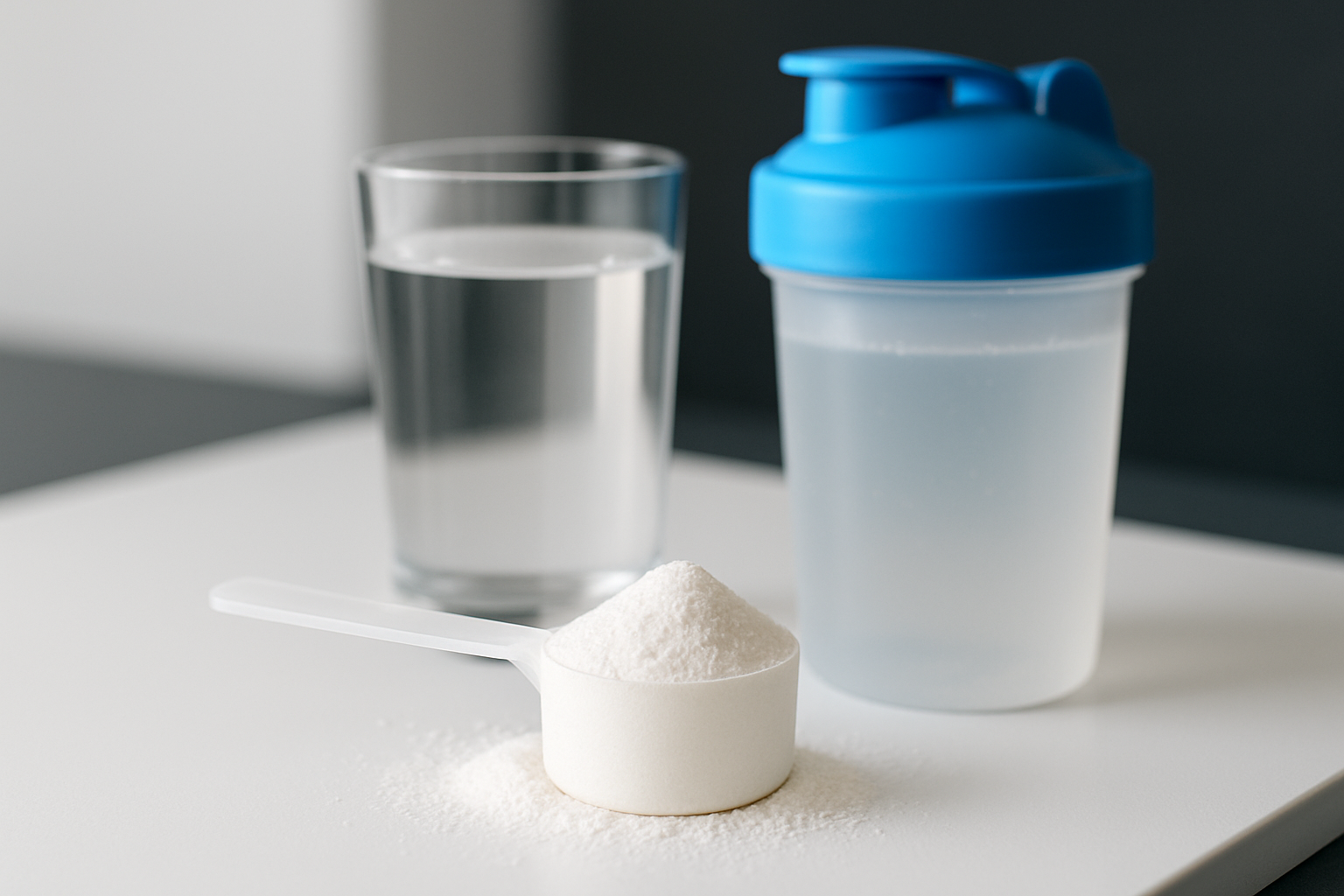
Allmax micronized creatine is still just creatine monohydrate; “micronized” means the powder particles are smaller, not that the molecule is more potent.
This is the key point in any Allmax micronized creatine review. Micronization reduces particle size, which can improve how easily the powder disperses in liquid and may slightly improve mouthfeel. Smaller particles can mean fewer gritty clumps at the bottom of your shaker. What micronization does not do is transform creatine into a superior muscle-building ingredient.
Creatine works because it increases intramuscular phosphocreatine, which is stored creatine bound to phosphate inside your muscle. Phosphocreatine helps rapidly regenerate ATP, or adenosine triphosphate, the immediate energy currency your muscle uses during short, hard efforts like a heavy set of squats, a sprint, or repeated shifts in hockey. If you saturate muscle stores, performance benefits follow. That mechanism is about stored creatine in muscle, not fancy powder texture.
The 2021 JISSN review on common creatine misconceptions noted that creatine monohydrate is still the reference form against which other versions are compared. Brands may market micronized, buffered, hydrochloride, or other forms as more advanced, but the burden of proof remains on those alternatives. For most people, standard monohydrate works extremely well.
So when evaluating Allmax creatine monohydrate review claims, separate these ideas:
- Micronized: may mix easier and feel smoother.
- Monohydrate: the evidence-backed creatine form.
- Purity/testing: a quality-control question, not a micronization question.
- Results: depend on dose consistency and muscle saturation, not whether the powder looks ultra-fine.
For some users, micronized powder is genuinely helpful because it is easier to take daily without texture complaints. That can improve adherence, and adherence matters. But if another brand sells plain monohydrate with a similar purity standard and a better price, you should not expect Allmax micronized creatine to produce bigger strength gains simply because the powder is finer.
If you are new to the form differences, read creatine product catalog options alongside our guides on micronized creatine and why monohydrate still wins.
Why Allmax creatine works: the real mechanism and realistic results timeline
Allmax creatine works for the same reason any effective creatine monohydrate works: it raises muscle creatine and phosphocreatine stores, which improves rapid ATP regeneration during intense exercise.
This mechanism is simple but powerful. During very hard efforts, your muscles burn through ATP quickly. Phosphocreatine donates a phosphate group to help regenerate ATP fast enough to sustain power output for a few more seconds or across repeated bouts. Over time, that can mean one extra rep, slightly better sprint repeatability, a bit more training volume, or less drop-off between explosive efforts. Those small session-by-session gains compound into more strength and muscle over weeks and months.
The ISSN position stand and the Examine creatine evidence summary both support this core performance effect most strongly for resistance training, sprinting, repeated high-intensity efforts, and lean mass support. Creatine is not a stimulant, so you should not expect a dramatic “feel” on day one like caffeine. Its main job is tissue saturation.
Here is a realistic timeline for a beginner taking Allmax or any similar monohydrate product correctly:
- Days 1-7 with loading: faster saturation, possible 0.5 to 1.5 kg increase in body weight from increased intracellular water, which is water stored inside muscle cells rather than body fat.
- Weeks 2-4: better training performance may become noticeable, especially in repeated sets, short sprints, or harder sessions.
- Weeks 4-8: strength progress and training volume benefits become easier to spot if programming and nutrition are in place.
- After 8+ weeks: the biggest visible benefit is often better accumulated training output rather than a direct acute “boost.”
How do you know it is working? The best signs are subtle but objective:
- Your body weight rises slightly without looking softer.
- Your last sets hold up better.
- Your repeated sprint or interval quality drops off less.
- Your lifts progress a bit faster over a training block.
If you want a detailed expectation guide, see how long creatine takes to work and our realistic creatine results resource. Creatine is one of the best-supported supplements in sports nutrition, but it still obeys the basics: it helps you train better; it does not replace training, protein, sleep, or calories.
Allmax creatine purity and quality: what you can verify, and what you should not assume
Allmax creatine may be a quality product, but you should verify purity and testing from the specific label and seller listing rather than assume every tub has the same third-party credentials.
This is where many buyers ask, is Allmax creatine good or is Allmax creatine third-party tested? Those are different questions. A product can be “good” because it is plain monohydrate from a reputable brand and still not carry the same independent certification as a product screened for sport use.
When you assess Allmax creatine purity and Allmax creatine quality, use this checklist:
- Ingredient panel: ideally just creatine monohydrate, with no unnecessary fillers in an unflavoured product.
- NPN in Canada: an NPN indicates the product is licensed as a Natural Health Product under Health Canada rules.
- Lot information and expiry: quality brands make traceability easier.
- Manufacturing claims: GMP-style manufacturing claims can be helpful, though they are not the same as sport certification.
- Third-party testing language: look for explicit wording if you care about banned-substance screening or independent purity verification.
Why this matters: creatine itself is well studied and generally safe for healthy people when used appropriately, but supplements vary in manufacturing oversight. The International Olympic Committee consensus on dietary supplements emphasizes that contamination risk is a real issue across the supplement category, especially for competitive athletes subject to anti-doping rules.
In plain language, there are three levels of confidence:
- Basic confidence: reputable brand, plain monohydrate, proper Canadian labelling.
- Higher confidence: disclosed quality systems and transparent sourcing.
- Highest athlete-specific confidence: recognised third-party certification for banned-substance testing.
For the average gym-goer, level one or two may be perfectly acceptable. For a tested athlete, level three is often worth paying for. Do not use marketing adjectives like “pharmaceutical grade”, “micronized”, or “pure” as substitutes for evidence. If a listing does not clearly state what testing has been done, treat that as unknown rather than positive.
For a deeper framework, see our guides on how to choose creatine, third-party tested creatine in Canada, and how creatine quality is tested.
How to take Allmax creatine properly: the exact step-by-step protocol
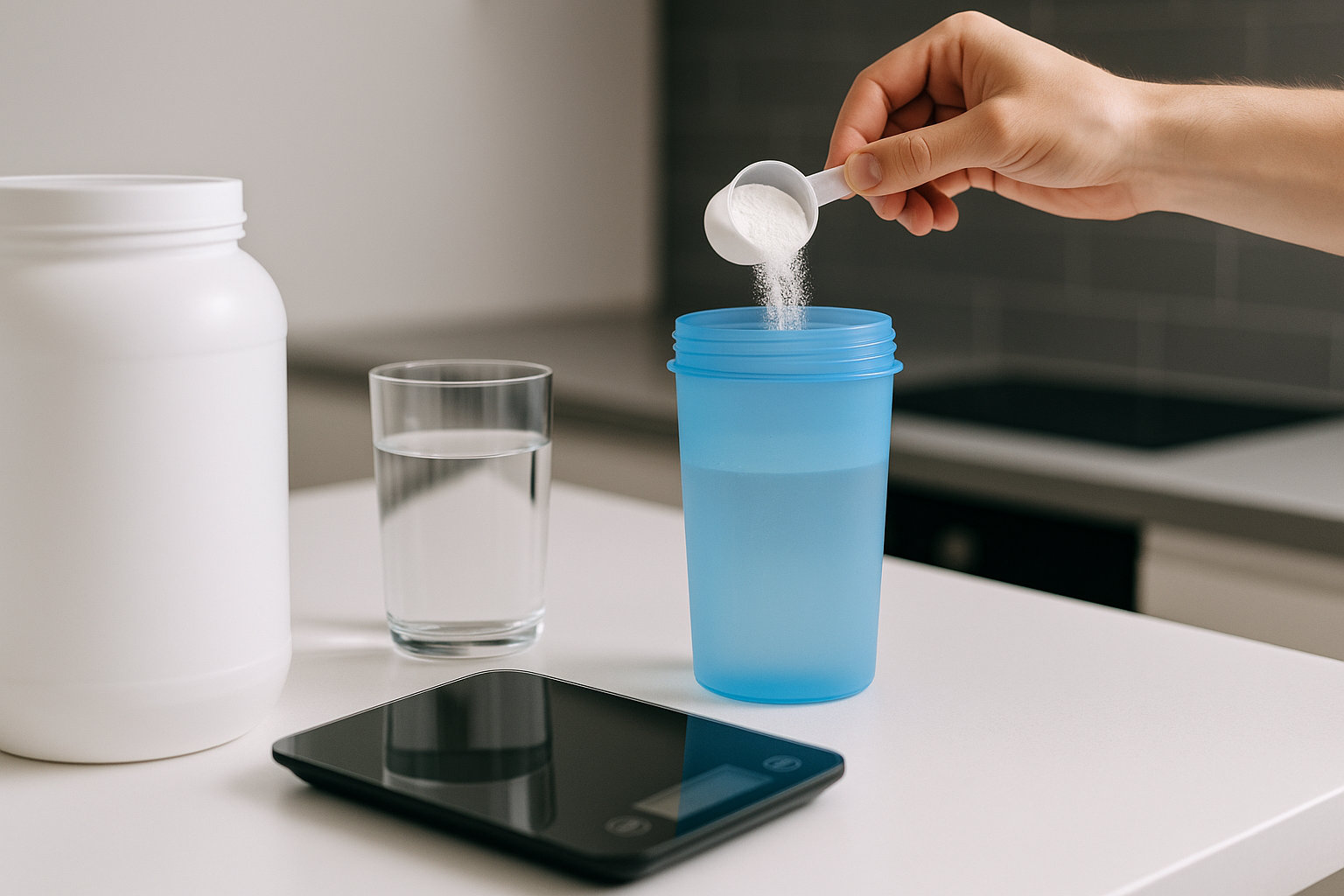
The best way to take Allmax creatine is 3-5 g daily every day, mixed in water or another drink, with loading optional if you want faster saturation.
If your goal is strength, muscle gain, or repeated-effort performance, do not overcomplicate it. The research-backed protocol for creatine monohydrate is well established. The 2017 ISSN position stand supports either a loading protocol of roughly 20 g per day split into 4 doses for 5-7 days, followed by maintenance of 3-5 g daily, or simply taking 3-5 g daily from the start.
Use this simple step-by-step plan:
- Check the scoop and serving size. Do not assume one scoop always equals exactly 5 g unless the label confirms it. If accuracy matters, use a small kitchen scale.
- Choose your protocol. Take 3-5 g daily for simplicity, or load with 20 g daily split into 4 x 5 g doses for 5-7 days if you want faster results.
- Mix it in enough liquid. Use at least a full glass of water. Warm water may help dissolving, but temperature does not change effectiveness.
- Take it at a time you will remember. Post-workout, with breakfast, or with a daily protein shake are all fine.
- Continue on rest days. Saturation depends on consistency, not workout-day timing alone.
- Store it dry and sealed. Moisture can cause clumping, even when the product is still usable.
Here is what a beginner week can look like:
- Option A, no loading: 5 g once daily, every day.
- Option B, loading: 5 g at breakfast, lunch, post-workout, and dinner for 5-7 days, then 3-5 g once daily.
Common troubleshooting is straightforward:
- Stomach upset: split the dose, take with food, or avoid loading.
- Powder settles: stir again and drink; suspended crystals do not mean it failed.
- Missed a day: do not double up; just resume normal intake.
If you want a personalised plan, use our creatine dosage calculator. You can also read more in how to take creatine, creatine loading phase, and how to mix creatine.
Best dose by body weight, goal, and user type: beginner, woman, older adult, or athlete
Most people do well on 3-5 g of Allmax creatine per day, but larger athletes, vegetarians, and some high-volume trainees may benefit from the top end of that range or a body-weight-based approach.
The standard maintenance recommendation of 3-5 g daily works because it is enough to maintain elevated muscle creatine stores for most adults once saturation is reached. A more individualised approach often uses about 0.03 g per kg of body weight per day for maintenance. That lands very close to familiar real-world doses.
| Body weight | Approx. maintenance dose | Practical daily target | Loading option |
|---|---|---|---|
| 50 kg | 1.5 g | 3 g | 20 g/day split for 5-7 days if faster saturation is desired |
| 60 kg | 1.8 g | 3 g | 20 g/day split for 5-7 days if faster saturation is desired |
| 75 kg | 2.25 g | 3-5 g | 20 g/day split for 5-7 days if faster saturation is desired |
| 90 kg | 2.7 g | 5 g | 20 g/day split for 5-7 days if faster saturation is desired |
| 110 kg | 3.3 g | 5 g | 20 g/day split for 5-7 days if faster saturation is desired |
How this applies to different users:
- Beginners: 3-5 g daily is enough. Do not worry about cycling.
- Women: the same creatine works at the same dose range. Creatine does not “bulk women up” by itself; it supports better training and muscle retention. See creatine for women.
- Older adults: 3-5 g daily is commonly used, especially alongside resistance training to support muscle function and healthy aging. See creatine for older adults.
- Athletes in repeated sprint or power sports: 5 g daily is a practical default, with loading if rapid saturation matters in-season.
- Vegetarians or vegans: plant-based eaters may respond especially well because baseline muscle creatine stores can be lower. See is creatine vegan.
If your goal is maximum simplicity, choose 5 g once daily. If your goal is avoiding stomach upset, choose 3 g daily or divide 5 g into smaller servings. If your goal is fastest uptake before a training block, use a loading phase first. Consistency beats fine-tuning.
For exact calculations, use the creatine dosage calculator and our dose guide on how much creatine per day.
When to take Allmax creatine, what to mix it with, and what timing really matters
The best time to take Allmax creatine is the time you will reliably remember every day, because total daily intake matters far more than pre- versus post-workout timing.
This is one of the easiest ways creatine marketing gets overcomplicated. Creatine is not a pre-workout stimulant and does not need to “kick in” during the session you drink it. Its main effect comes from building and maintaining muscle saturation over time. That is why the timing debate matters less than many people think.
Practical timing hierarchy:
- Daily consistency is most important.
- Enough dose is next.
- Workout adjacency is optional and mostly about habit.
Good options include:
- With breakfast if morning routine is your most consistent habit.
- Post-workout with whey protein if you already make a shake.
- With lunch or dinner if food helps digestion.
- On rest days at the same time as usual to keep the habit automatic.
What can you mix it with? Nearly anything practical:
- Water: simplest and perfectly effective.
- Protein shake: convenient and commonly well tolerated.
- Juice or sports drink: fine if preferred, though not required for benefits.
- Coffee: generally fine for most people; the old cancellation myth is overstated. See creatine and caffeine.
What actually helps absorption? The biggest factor is taking enough over time. Insulin can modestly support creatine uptake, so taking it with a meal or shake is reasonable, but this is a small optimisation, not a necessity. Do not buy sugary products solely because they claim to “force creatine into muscle.”
Two sensible stacking ideas:
- Creatine + whey protein: easy post-workout pairing.
- Creatine + a meal: good for people prone to mild GI issues.
Two unnecessary complications:
- Waiting for the “anabolic window.”
- Switching brands because one mixes slightly better.
For more detail, read when to take creatine, with or without food, and mixing creatine with protein powder.
Who Allmax creatine is for, and who should be more selective
Allmax creatine is a sensible fit for most healthy adults who want proven performance support, but competitive athletes and people with medical conditions should apply stricter screening criteria.
Creatine monohydrate is one of the few supplements with broad usefulness across different groups. The 2021 JISSN paper on common misconceptions notes that creatine has been studied extensively across sexes, age groups, and training levels. That does not mean every person needs the same product standard, though.
Allmax is likely a good fit for:
- Beginners starting resistance training: simple, proven, and easy to use.
- Recreational lifters: especially if budget, convenience, and local Canadian availability matter.
- Women: same effective ingredient, same evidence-backed dosing logic.
- Older adults: particularly when combined with strength training.
- Team-sport athletes: hockey, soccer, football, lacrosse, and basketball players often benefit from repeated-effort support.
- Plant-based eaters: may respond very well due to lower baseline dietary creatine intake.
You should be more selective if you are:
- A drug-tested athlete: choose a product with clear sport-safe certification whenever possible, not just a well-known brand name.
- Highly sensitive to GI side effects: you may prefer smaller servings, micronized texture, or a no-loading approach.
- Managing kidney disease, taking relevant medications, or under physician care for a chronic medical condition: discuss supplementation with your clinician first.
It is also worth being honest about goals. If you do only steady-state endurance training and actively avoid even small water-weight shifts, creatine may be less compelling, though there are still contexts where it helps. If you lift, sprint, jump, play stop-start sport, or want better training quality, it is one of the strongest evidence-based options available.
For Canadians shopping category-wide, compare Allmax against other products in the creatine product catalog and our brand reviews. If you are specifically new to supplementation, start with creatine for beginners. If safety is your main concern, read is creatine safe and who should not take creatine.
Safety, side effects, and myths: kidneys, bloating, hair loss, and “water weight”
Creatine monohydrate is well supported as safe for healthy people at recommended doses, and the most common side effects are mild digestive issues or temporary scale-weight increase from water inside muscle.
The 2017 ISSN position stand and the 2021 JISSN misconceptions paper both support the safety of creatine supplementation in healthy individuals when used appropriately. The Mayo Clinic also notes that creatine appears to be generally safe for many people when taken as directed. The main issue is not hidden danger in standard doses; it is misunderstanding what normal effects mean.
Most common side effects:
- Small weight increase: often from increased intracellular water, not body fat.
- Stomach upset or loose stool: more likely with large single doses or aggressive loading.
- Perceived bloating: often a dosing or expectation issue rather than a harmful reaction.
Myths worth debunking directly:
“Creatine is bad for your kidneys.” In healthy people, research does not support the claim that recommended creatine supplementation damages kidneys. Confusion often comes from creatinine, a breakdown product measured on blood tests, which can rise without indicating kidney injury. That said, people with existing kidney disease should not self-prescribe without medical input.
“Creatine makes you fat.” Creatine can increase body weight, especially early on, but this is usually water retained within muscle and, over time, sometimes more lean mass from improved training capacity.
“Creatine causes severe bloating.” Creatine monohydrate can cause some users to feel puffy, especially during loading, but many avoid this entirely by taking 3-5 g daily without loading.
“Creatine causes hair loss.” Evidence for a direct real-world hair-loss effect remains weak and inconclusive; this claim is far stronger on social media than in the full body of evidence.
“You must cycle creatine.” No; cycling is not required for efficacy or safety in healthy users.
If you run into issues, the fixes are usually simple: lower the dose per serving, take it with food, drink enough fluid, and stop chasing fast saturation if your gut dislikes loading. For deeper dives, see creatine myths debunked, kidney concerns explained, bloating explained, and hair loss evidence.
Allmax vs PVL creatine and other Canadian options: what actually separates them
Allmax vs PVL creatine is usually not a question of muscle-building effectiveness, because both are monohydrate products; the real differences are testing, transparency, mixability, price, and trust signals for Canadian buyers.
If two products both provide plain creatine monohydrate at an accurate dose, the physiological result should be very similar. That means the buying comparison should focus on quality assurance and value, not on promises of “better absorption” unless there is a clear, meaningful reason to believe them.
| Buying factor | Allmax Creatine | PVL or similar Canadian competitor | Why it matters |
|---|---|---|---|
| Creatine form | Usually monohydrate | Usually monohydrate | Monohydrate is the gold-standard form |
| Micronized texture | Often a selling point | Varies by product | Mostly affects mixability, not results |
| Testing transparency | Check label/listing carefully | Varies by brand | Important for purity confidence |
| Sport certification | Must be confirmed, never assumed | Must be confirmed, never assumed | Critical for tested athletes |
| Canadian availability | Widely available | Often widely available | Useful for re-order consistency |
| Value per gram | Varies by tub size and sales | Varies by tub size and sales | One of the most practical deciding factors |
How to decide between Allmax and PVL:
- Confirm identical core ingredient. If both are plain monohydrate, move to step two.
- Check cost per gram. A flashy container should not hide a worse value.
- Check certification needs. Tested athletes should prioritise explicit banned-substance screening.
- Check Canadian label compliance. Look for the NPN and proper importer/manufacturer details where applicable.
- Choose the tub you will actually re-buy consistently.
In other words, Allmax creatine Canada shoppers should not ask only “is Allmax creatine good?” They should ask, “Is this specific Allmax listing the best combination of purity confidence, convenience, and value available to me right now?”
For side-by-side brand context, see PVL creatine review, best creatine monohydrate in Canada, cheapest creatine in Canada, and buying creatine online in Canada.
Buying Allmax creatine in Canada: label checks, NPNs, and smart shopping rules
When buying Allmax creatine in Canada, prioritise authorised sellers, Health Canada-compliant labelling, lot and expiry details, and a price comparison by grams rather than by tub size alone.
Canadian buyers have a few advantages: creatine is widely available, and legitimate products sold here typically carry Canadian-compliant packaging if they are distributed properly. Still, marketplace listings, imports, and third-party resellers can muddy the picture.
Use this Canadian buying checklist:
- Look for an NPN. NPN stands for Natural Product Number, which indicates the product has been licensed by Health Canada as a Natural Health Product.
- Check seller legitimacy. Prefer established Canadian retailers, direct brand channels, or well-vetted supplement stores.
- Check the exact ingredient name. You want creatine monohydrate, not a proprietary blend hiding a small dose.
- Check grams per container. Compare how many true 5 g servings you get.
- Check shipping economics. A cheap tub can become a bad deal after freight, especially in remote regions.
- Check storage condition. Avoid damaged seals or heavily moisture-exposed tubs.
One overlooked point: a lower sticker price is not always better value if the serving is undersized, the scoop is inaccurate, or the listing is vague about the exact product version. For plain creatine, cost per gram is the cleanest metric.
Another important point for Canadian sport users: Health Canada compliance and athlete anti-doping screening are not the same thing. An NPN is helpful and relevant, but it does not replace certification designed to reduce banned-substance risk.
If you are comparing formats, unflavoured powder is usually the simplest and best value. Capsules are convenient but often much more expensive per effective dose, and gummies frequently provide too little creatine for the cost.
Useful next reads include is creatine approved in Canada, Canadian supplement regulations, where to buy creatine in Canada, and creatine cost per gram. If you want alternatives before purchasing, browse the creatine product catalog.
Bottom line: should you buy Allmax creatine?
Yes, Allmax creatine is a good buy if it is plain creatine monohydrate, competitively priced, and meets your confidence standard for testing and Canadian label compliance.
Here is the honest final take. Allmax does not need to be magical to be worth buying. If it gives you the gold-standard ingredient in a simple formula, mixes well enough that you take it daily, and comes from a legitimate Canadian retail channel, it will likely do the job very well. For most gym-goers, that is enough.
But a strong Allmax creatine review should also say what it is not. It is not inherently more muscle-building than another equally well-made creatine monohydrate. It is not automatically the best option just because it is micronized. And it is not automatically appropriate for drug-tested athletes unless independent sport testing is clearly confirmed.
Buy Allmax if:
- You want a familiar, straightforward monohydrate product.
- The price per gram is good.
- You prefer a micronized texture.
- You can verify the seller and label details easily.
Look elsewhere if:
- You need explicit third-party sport certification.
- A competitor offers stronger transparency or better value.
- You want the simplest possible unflavoured product and another brand does that more clearly.
If you are still deciding, this is the practical rule: choose the creatine you trust enough to take every day for months, not the one with the most dramatic claims. Creatine works through saturation and consistency. Brand matters less than ingredient form, dose accuracy, quality control, and repeat-buy affordability.
For the next step, compare your top options in our best creatine rankings, use the creatine dosage calculator to set your dose, and explore more creatine brand reviews before ordering.
Allmax Creatine Review: The numbers that matter most
- 3-5 g/day standard maintenance dose — The mainstream evidence-based daily dose for most adults once using creatine monohydrate consistently.
- 20 g/day typical loading dose — Usually split into 4 doses of 5 g for 5-7 days to saturate muscle faster.
- 5-7 days loading timeline — How long a standard loading phase usually lasts before switching to maintenance.
- 4-8 weeks common window to notice training benefits — Especially if you skip loading and rely on gradual saturation with daily use.
Frequently Asked Questions
Is Allmax creatine good?
Yes, Allmax creatine is generally a good option if it is plain creatine monohydrate from a legitimate seller at a fair price. What matters most is that it delivers the evidence-backed form of creatine, has clear Canadian labelling, and ideally provides transparent quality controls rather than relying on marketing alone.
Is Allmax micronized creatine better than regular creatine monohydrate?
No, Allmax micronized creatine is not inherently more effective than regular creatine monohydrate at the same dose. Micronization mainly improves particle size, which can help mixing and texture, but the muscle saturation and performance benefits still come from the same creatine monohydrate molecule.
Is Allmax creatine third-party tested?
Maybe, but you should verify that from the exact product label or official brand documentation rather than assume it. A product can be high quality without carrying athlete-focused third-party sport certification, so check whether the brand states independent purity testing, banned-substance screening, or both.
How much Allmax creatine should I take per day?
Most adults should take 3-5 g of Allmax creatine per day. You can also use a loading phase of 20 g daily split into 4 servings for 5-7 days if you want faster saturation, but it is optional and not required for long-term results.
How long does Allmax creatine take to work?
Allmax creatine usually starts working as your muscle creatine stores rise, which takes about 5-7 days with loading or roughly 3-4 weeks with 3-5 g daily and no loading. Most people notice the benefits first in training performance, recovery between hard efforts, or a small increase in scale weight from water stored in muscle.
Does Allmax creatine cause bloating?
It can, but severe bloating is not inevitable and is often exaggerated. Some people notice temporary fullness or a slight water-weight increase, especially during loading, while many reduce or avoid this by taking 3-5 g daily, splitting doses, or taking creatine with food.
Is Allmax creatine safe for women?
Yes, Allmax creatine is generally used the same way by women as by men because the ingredient is the same and the evidence base applies across sexes. Women do not need a special “female” creatine formula; they usually just need the right daily dose and realistic expectations about water weight and training support.
Allmax vs PVL creatine: which is better?
Neither is automatically better for results if both products are plain creatine monohydrate at an accurate dose. The smarter comparison is price per gram, testing transparency, sport-certification status if relevant, mixability, and how easy each product is to buy reliably in Canada.
Can I buy Allmax creatine in Canada easily?
Yes, Allmax creatine is widely available in Canada through many supplement retailers and online stores. Still, you should check for a proper Canadian label, an NPN where applicable, lot and expiry information, and a reputable seller rather than buying solely on the lowest marketplace price.
Do I need to cycle Allmax creatine?
No, you do not need to cycle Allmax creatine. Creatine monohydrate is typically taken continuously at 3-5 g daily to maintain muscle saturation, and cycling is not required for effectiveness in healthy users.