What Is Creatine Made Of? Ingredients, Amino Acids, and How It's Produced
By The Creatine Canada Research Team — Evidence-based supplement analysts
Creatine is made of three amino acids: arginine, glycine, and methionine. In your body, those amino acids are combined mainly in the kidneys and liver to make creatine naturally, while the creatine powder sold in supplements is usually a lab-made form called creatine monohydrate, not ground meat, steroids, or protein.
Evidence-based · Cites 4 sources · Editorial standards
Key Takeaways
- Creatine is made from the amino acids arginine, glycine, and methionine.
- Your body makes about 1-2 g of creatine per day, mainly in the kidneys and liver.
- Supplement creatine is usually synthetic creatine monohydrate, not made from meat.
- Creatine works by increasing muscle phosphocreatine, which helps regenerate ATP during hard efforts.
- The most evidence-based dose is 3-5 g daily, with an optional 20 g/day loading phase for 5-7 days.
- Creatine monohydrate is the most studied, most cost-effective, and best-supported form.
- In Canada, look for clear ingredient labels, an NPN when applicable, and third-party testing.
What creatine is made of, in one clear answer
Creatine is made of three amino acids: arginine, glycine, and methionine. That is the direct answer to “what is creatine made of” and “what is creatine made from”.
In human physiology, creatine is a naturally occurring compound your body produces from those amino acid building blocks. The first step happens mainly in the kidneys, where arginine and glycine are combined to form guanidinoacetate. The second step happens mainly in the liver, where a methyl group donated by methionine is added to convert guanidinoacetate into creatine. Once made, creatine travels through the blood and is stored mostly in skeletal muscle, with smaller amounts in the brain and other tissues.
That matters because creatine is not a protein, even though amino acids are involved in making it. It is also not an anabolic steroid, hormone, or stimulant. Creatine is a nitrogen-containing compound that helps your muscles rapidly recycle energy. If you want the full beginner breakdown, see what creatine is and what it does.
Many people also ask whether creatine is made from meat. The honest answer is nuanced: natural dietary creatine is found in animal foods such as meat and fish, but nearly all supplement creatine powder is industrially synthesised rather than extracted from meat. That is why standard creatine monohydrate products are typically suitable for vegetarians and vegans, assuming the capsule shell or flavour system is also plant-based. For more on food sources, see foods high in creatine and for the plant-based angle see is creatine vegan.
The 2017 International Society of Sports Nutrition position stand concluded that creatine monohydrate is the most effective ergogenic nutritional supplement currently available for increasing high-intensity exercise capacity and lean mass during training, which is one reason this simple compound is so widely used by lifters, team-sport athletes, and older adults alike. You can read that source directly at JISSN.
The amino acids behind creatine, and how your body makes it
Creatine amino acids are arginine, glycine, and methionine, and your body combines them through a two-step biosynthesis process. That is the scientific core behind the question “what are creatine ingredients” at the biological level.
Here is the simple version of the pathway:
- Step 1: In the kidneys, arginine and glycine combine to form guanidinoacetate, an intermediate compound.
- Step 2: In the liver, guanidinoacetate receives a methyl group from methionine and becomes creatine.
- Step 3: Creatine enters the bloodstream and is transported into muscle cells by a specific creatine transporter.
- Step 4: Inside muscle, some creatine is converted into phosphocreatine, which is stored ready for rapid energy use.
A healthy adult typically makes about 1-2 grams of creatine per day endogenously, meaning inside the body. A similar amount may come from food in omnivorous diets, while vegetarians and vegans usually consume less preformed creatine from diet and therefore may start with lower muscle creatine stores. Lower starting stores often mean a more noticeable response to supplementation.
This is also why creatine is not classified as an essential nutrient. Your body can make it on its own. But “can make it” does not mean “already saturated”. Supplementing can increase the total creatine pool in muscle beyond usual baseline dietary levels, especially if intake from meat or fish is low.
One practical implication is that if you eat little or no animal protein, you may feel the benefits faster or more clearly. That does not mean meat eaters do not benefit; it simply means their baseline creatine stores may already be somewhat higher. For more on who tends to respond best, see creatine for vegetarians and creatine for beginners.
As Antonio et al. explained in their 2021 review of common creatine questions and misconceptions, creatine is one of the most studied dietary supplements in sport and health, and many popular fears around its origin and classification are based on confusion between creatine, creatinine, protein, and steroids. Their review is here: JISSN creatine misconceptions review.
Is creatine made from meat? Usually no — here is where supplement creatine actually comes from
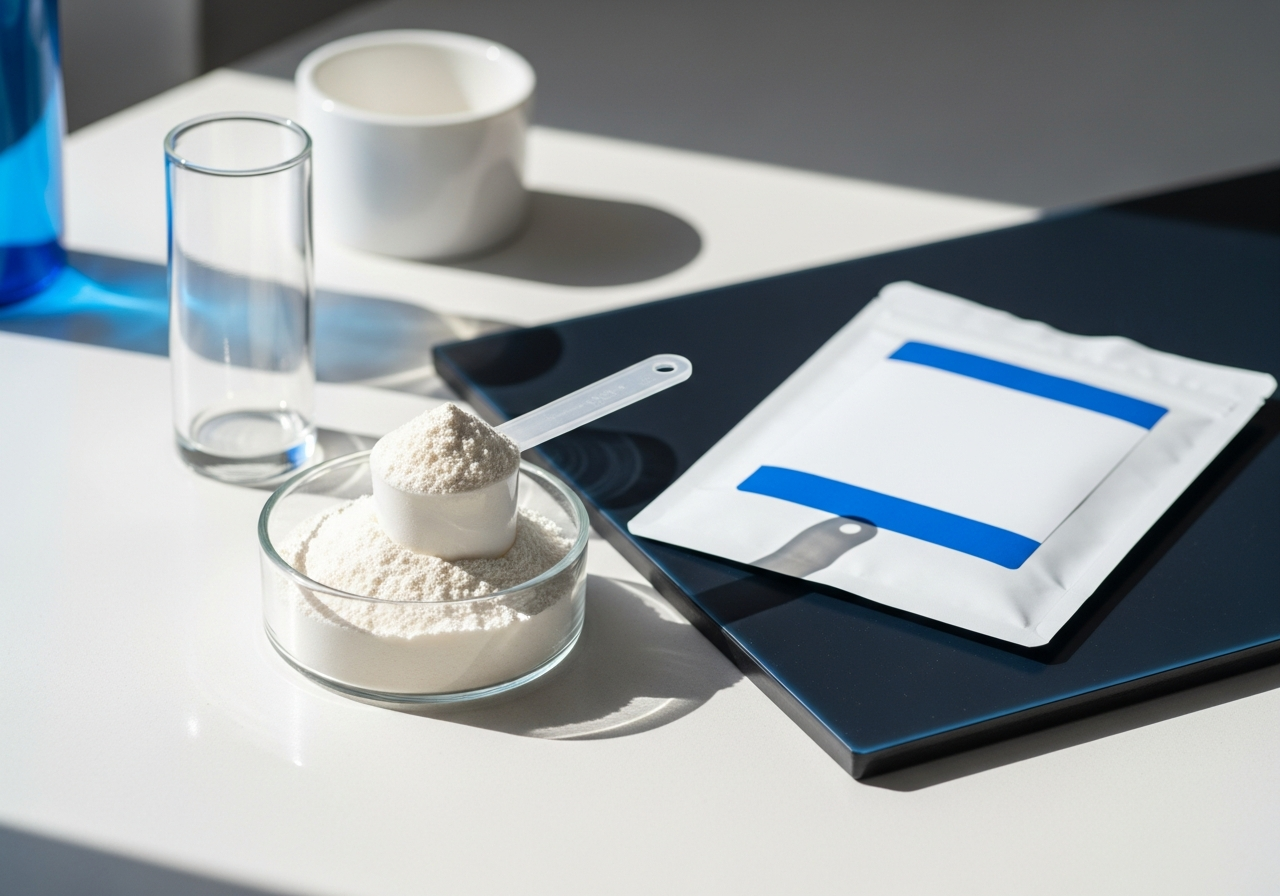
Supplement creatine is usually synthetically manufactured, not extracted from steak, beef, or fish. That is the short answer to “is creatine made from meat”.
People ask this because creatine occurs naturally in animal foods. Red meat and fish contain creatine in their muscle tissue, so it is true that dietary creatine often comes from animal products. But the white powder sold as creatine monohydrate is generally produced through industrial chemical synthesis, then purified, dried, and tested before packaging. Manufacturers do this because extracting creatine from meat at scale would be inefficient, expensive, and harder to standardise.
From a consumer point of view, this means most plain creatine monohydrate powders contain a very short ingredient list, often just one ingredient: creatine monohydrate. If it is flavoured, the additional ingredients usually come from taste systems rather than from the creatine itself, such as citric acid, natural flavours, sweeteners, or anti-caking agents.
That leads to an important distinction:
- What creatine is biologically made of: arginine, glycine, and methionine.
- What supplement creatine is commercially made from: industrial precursor chemicals that are synthesised into creatine, then usually sold as creatine monohydrate.
- What creatine products contain besides creatine: possibly nothing else, or extra flavouring and formulation ingredients.
For most buyers, the key point is not the exact factory chemistry but whether the finished product is pure, accurately dosed, and free from unnecessary fillers. In Canada, it is smart to look for transparent labels, batch or lot information, and ideally third-party testing. If a supplement is regulated as a Natural Health Product, you may also see an NPN, which means Natural Product Number, on the label. For product comparisons, see our best creatine rankings, creatine brand reviews, and creatine product catalog.
Beginners often overthink whether “synthetic” means unsafe. In this case, synthetic simply means the creatine was manufactured rather than carved out of food. Safety depends far more on purity, dose, and quality control than on whether the molecule came from a factory or a fillet.
How creatine works once you take it: phosphocreatine, ATP, and better repeated effort
Creatine works by increasing muscle phosphocreatine stores, which helps your body regenerate ATP faster during short, hard efforts. ATP, or adenosine triphosphate, is the immediate energy currency your muscle fibres use to contract.
During maximal or near-maximal exercise, ATP is spent very quickly. Your phosphocreatine system acts like a rapid backup battery. Phosphocreatine donates a phosphate group to help rebuild ATP, allowing you to sustain force output for a little longer or recover a little faster between repeated high-intensity bouts. That is why creatine consistently helps in activities such as:
- Heavy sets of lifting
- Sprinting
- Jumping and repeated accelerations
- Team-sport efforts with frequent bursts
- High-intensity interval work
Creatine does not act like caffeine. You will not feel a jolt. Instead, its effect is cumulative: as your muscles become more saturated with creatine, your capacity for repeated high-output work improves. Over time, that can translate into better training quality, slightly more total volume, and ultimately more strength and lean mass gains when paired with resistance training.
There are also cell-level effects beyond ATP regeneration. Creatine can increase intracellular water within muscle cells, which may support training performance and cellular signalling related to muscle growth. That is one reason the scale may go up early in supplementation. This is usually water in muscle, not body fat. If you want that explained in depth, see does creatine make you gain weight.
The evidence is strongest for high-intensity performance and lean mass support. Evidence for endurance, cognition, and recovery is promising in some contexts but more context-dependent. The International Olympic Committee consensus on dietary supplements recognises creatine as one of the more evidence-based performance supplements for specific use cases in sport. You can read that consensus here: IOC consensus on dietary supplements.
If you are wondering whether this matters outside bodybuilding, it does. Older adults, recreational gym-goers, and athletes in sports requiring repeated bursts can all benefit, provided the training and expectations match what creatine actually does.
How creatine is made commercially, and what that means for ingredient labels
Commercial creatine is generally made by synthesising the creatine molecule in a controlled manufacturing process, then combining it with water to form creatine monohydrate, the standard supplemental form. That is the practical answer to “how is creatine made”.
You do not need to memorise the industrial chemistry to shop well, but you should know what to expect on a label. A plain powder product should ideally list only one medicinal or active ingredient: creatine monohydrate. “Micronised” creatine simply means the powder particles were made smaller to improve mixability; it does not change the core molecule or make it a different form.
Flavoured products can still work perfectly well, but the label will often include non-medicinal ingredients such as:
- Natural or artificial flavours
- Citric or malic acid
- Sweeteners like sucralose or stevia
- Silicon dioxide or similar anti-caking agents
- Colouring agents
These are formulation ingredients, not the substance that gives creatine its effect. If you want the purest and simplest option, plain unflavoured creatine monohydrate is usually the cleanest choice.
In Canada, product quality matters because not all supplement companies are equally transparent. Sensible buying criteria include:
- Choose creatine monohydrate first unless you have a specific reason otherwise.
- Check the serving size in grams, not just “1 scoop”.
- Look for a short ingredient list if you want minimal additives.
- Prefer brands that disclose testing or quality standards.
- If applicable, look for a visible NPN on Canadian packaging.
Many consumers get distracted by marketing names for alternate forms such as HCl, buffered creatine, or creatine ethyl ester. The research still supports monohydrate as the best-studied and most cost-effective option for most people. For direct comparisons, see best type of creatine and why monohydrate still wins.
A helpful rule is simple: buy the form with the strongest evidence, not the flashiest branding. In practice, that almost always means a reputable creatine monohydrate powder.
Exactly how to take creatine if you are starting today
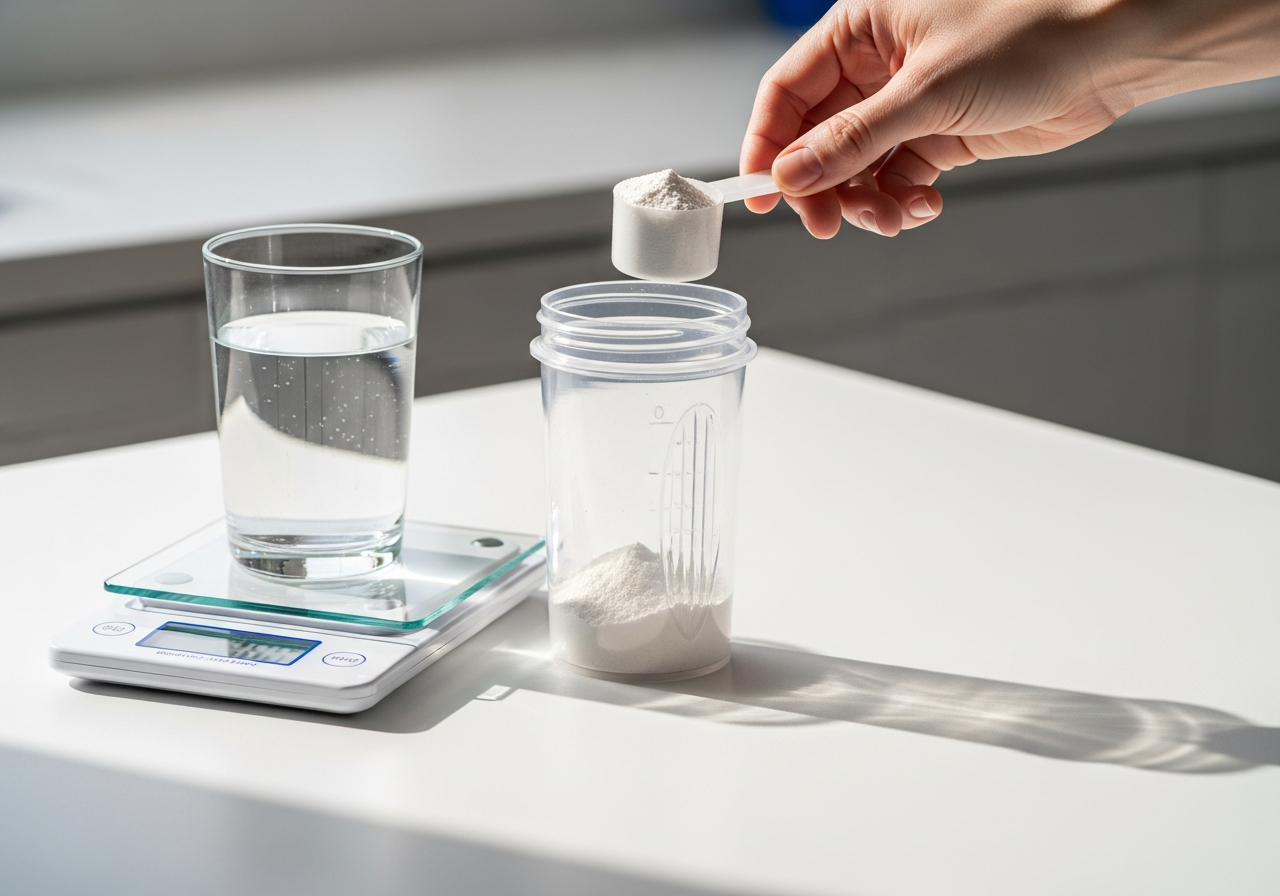
The simplest way to start creatine is to take 3-5 grams of creatine monohydrate once daily, every day, with any meal or drink you can stick to consistently. If you want faster saturation, use a loading phase of 20 grams per day split into 4 doses for 5-7 days, then switch to 3-5 grams daily.
Here is the beginner-friendly step-by-step plan:
- Pick the form: Buy plain creatine monohydrate powder.
- Measure the dose: Use a scale if possible, or the scoop provided, but verify how many grams it actually holds.
- Choose your schedule: Either take 3-5 g daily from day one, or load with 20 g/day split into 4 x 5 g doses for 5-7 days.
- Mix it: Stir into water, a shake, or juice. It does not need a fancy transport system.
- Take it daily: Training day or rest day, consistency matters more than timing.
- Keep going: Most people assess results after 2-4 weeks, not after two doses.
What should you expect? With loading, some people notice fuller muscles, a small increase on the scale, and slightly better gym performance within about a week. Without loading, benefits often become more noticeable after roughly 3-4 weeks as muscle stores gradually rise. For more detailed timing, see how long creatine takes to work.
What if you miss a day? Usually, very little happens. Just resume your normal dose the next day. You do not need to double up. If you want a more personalised number, use our creatine dosage calculator or read how much creatine per day.
Two practical tips prevent most problems. First, do not dry scoop it; it is unnecessary and can irritate your throat. Second, if 5 grams at once upsets your stomach, split it into smaller doses or take it with food. If you want mixing advice, see how to mix creatine and how to take creatine.
Creatine dose by body weight and goal: practical numbers that work
Most adults do well with 3-5 grams of creatine monohydrate per day, but body size and training goals can justify small adjustments. The goal is to reach and maintain muscle saturation, not to chase mega-doses.
The classic loading protocol is 0.3 g/kg/day for 5-7 days, followed by a maintenance dose of about 0.03 g/kg/day. For everyday use, many people simply use a flat 3-5 g daily because it is convenient and effective.
| Body weight | Loading dose for 5-7 days | Maintenance dose | Best for |
|---|---|---|---|
| 60 kg | ~18 g/day split into 4 doses | 3 g/day | Smaller athletes, general fitness |
| 75 kg | ~22.5 g/day split into 4-5 doses | 3-5 g/day | Most recreational lifters |
| 90 kg | ~27 g/day split into 5 doses | 5 g/day | Larger athletes, higher lean mass |
| 110 kg | ~33 g/day split into 5-6 doses | 5-7 g/day | Very large or muscular individuals |
For most goals, these simple rules work:
- Strength and muscle gain: 3-5 g daily, or load first if you want faster results.
- Team sports and sprint performance: loading can be useful when the timeline matters.
- Older adults: 3-5 g daily alongside resistance training is a practical evidence-based starting point.
- Vegetarians and vegans: 3-5 g daily often works very well because baseline stores may be lower.
More is not automatically better. Taking 10 or 20 grams every day long-term does not usually provide extra benefit once stores are saturated, and it raises the chance of stomach upset. If you are unsure, start at 3 grams daily for a week, then move to 5 grams if you tolerate it well.
Daily maintenance matters more than exact minute-by-minute timing. For timing specifics, see when to take creatine and for loading details see creatine loading phase.
Who creatine is for: beginners, women, older adults, athletes, and plant-based eaters
Creatine is useful for far more than bodybuilders; it is one of the few supplements that consistently benefits beginners, women, older adults, and many athletes when the goal involves strength, power, muscle retention, or repeated high-intensity effort.
Beginners often do very well because creatine is easy to use, affordable, and well studied. You do not need an advanced programme to benefit, but you do need some form of progressive training if your goal is strength or muscle gain.
Women can use the same creatine monohydrate and broadly the same dosing principles as men. Creatine does not “bulk women up” by itself; it supports training quality and may increase intracellular water and lean mass over time, especially when paired with resistance work. If that is your concern, read creatine for women.
Older adults may benefit from creatine when combined with resistance training because preserving muscle mass, strength, and function becomes increasingly important with age. Some emerging areas such as cognition and healthy ageing are promising, but the strongest evidence remains around muscle and performance-related outcomes.
Athletes in sprinting, powerlifting, football, hockey, rugby, CrossFit, and other stop-start sports often benefit the most because creatine helps repeated high-power output. Endurance athletes may also use it strategically, but the trade-off of mild body-mass gain matters more in events where every kilogram counts.
Vegetarians and vegans are a particularly relevant group because they usually consume less preformed creatine from food. Lower baseline stores often make supplementation more noticeable.
Who should be more cautious? People with pre-existing kidney disease, those under medical evaluation for renal issues, or anyone told by a clinician to restrict supplements should check first. That is not because creatine has been shown to damage healthy kidneys at standard doses, but because existing medical conditions change the risk conversation. For deeper safety coverage, see is creatine safe and who should not take creatine.
The best candidate for creatine is not a “hardcore athlete”. It is simply someone who wants a well-supported supplement that can improve training capacity over time.
Safety, side effects, and the biggest myths about creatine ingredients
Creatine monohydrate is widely considered safe for healthy adults at recommended doses, and the most common side effects are mild digestive upset or temporary water-weight gain, not organ damage. That is the evidence-based answer most readers need first.
The 2017 ISSN position stand and the 2021 JISSN misconceptions paper both support creatine’s strong safety profile in healthy populations when used appropriately. Common concerns deserve direct answers:
- “Is creatine a steroid?” No. Creatine is not a steroid, hormone, or testosterone booster. It is a naturally occurring compound involved in cellular energy.
- “Does creatine damage kidneys?” In healthy individuals using standard doses, evidence does not support the claim that creatine harms kidney function. However, creatine can raise creatinine on bloodwork, which can confuse interpretation because creatinine is a breakdown marker, not the same thing as creatine.
- “Does creatine cause dehydration or cramps?” Evidence does not support the old claim that creatine inherently causes dehydration or cramps when fluid intake is normal.
- “Does creatine cause bloating?” Some people notice a fuller feeling or transient stomach discomfort, especially during loading, but this is often manageable by splitting doses.
- “Does creatine cause fat gain?” No. Early weight gain is typically water held inside muscle tissue, not body fat.
Most side-effect troubleshooting is simple:
- Use creatine monohydrate from a reputable brand.
- Take 3-5 g instead of large random scoops.
- Split doses if your stomach is sensitive.
- Take it with food if needed.
- Stay normally hydrated; do not panic-drink extreme amounts.
If you want the myth-by-myth version, see creatine myths debunked, does creatine cause bloating, and is creatine bad for your kidneys.
The main safety mistake is not creatine itself. It is buying poor-quality products, taking inconsistent doses, or expecting effects that the evidence does not actually support.
What to look for on a creatine label in Canada
If you are buying creatine in Canada, the best choice for most people is a plain, reputable creatine monohydrate product with transparent dosing, minimal ingredients, and visible quality signals such as third-party testing or an NPN where applicable.
Here is a practical comparison of what matters when you shop:
| Buying factor | What to look for | Why it matters |
|---|---|---|
| Form | Creatine monohydrate | Most studied and usually best value |
| Ingredient list | One ingredient if unflavoured | Less chance of unnecessary fillers |
| Dose clarity | Serving shown in grams | Helps you actually hit 3-5 g/day |
| Quality assurance | Third-party testing or strong brand transparency | Supports purity and label accuracy |
| Canadian compliance | NPN if applicable | Shows Natural Health Product registration status |
| Format | Powder over capsules for value | Capsules often cost more per gram |
Do not confuse marketing with superiority. Words like “buffered”, “ultra-pure”, “anabolic”, or “advanced transport matrix” are often less meaningful than a plain label that simply says creatine monohydrate and the grams per serving.
If you dislike powders, capsules and gummies exist, but you should still check whether they deliver an evidence-based daily amount without making you swallow a pile of pills or overpay for convenience. Powder remains the most practical format for most Canadians.
Before buying, ask four quick questions:
- Is it creatine monohydrate?
- How many grams do I get per serving?
- Are there extra ingredients I actually want?
- Does the brand show credible quality control?
If you want help narrowing options, start with our best creatine monohydrate in Canada, where to buy creatine in Canada, and Canadian supplement regulations guides.
For this topic specifically, the label takeaway is simple: the active ingredient you want is creatine monohydrate, and the core molecule is the same creatine compound your body naturally makes from amino acids.
Common mistakes to avoid, and the real bottom line on what creatine is made of
The biggest mistake people make with creatine is confusing three different questions: what creatine is biologically made of, what a supplement is commercially made from, and what extra ingredients are in a finished product. Once you separate those, the topic becomes straightforward.
Here are the most common mistakes:
- Mistake 1: Thinking creatine is a protein or amino acid itself. It is made from amino acids, but it is not a protein.
- Mistake 2: Assuming supplement creatine is made from meat. Natural food creatine comes from animal tissue, but supplement powder is usually synthesised.
- Mistake 3: Believing fancy forms must work better than monohydrate. The evidence still favours monohydrate for most people.
- Mistake 4: Taking random scoop sizes instead of measured grams.
- Mistake 5: Stopping after a few days because you did not “feel” anything. Creatine is a saturation supplement, not a stimulant.
- Mistake 6: Overreacting to small scale increases that are mostly water in muscle.
So, what is creatine made of? At the biological level, creatine is made from arginine, glycine, and methionine. At the supplement level, creatine powder is usually a synthetically manufactured form called creatine monohydrate. At the product level, the ingredient label may contain only creatine monohydrate or may include flavouring ingredients too.
If your goal is results, the practical action plan is simple:
- Buy plain creatine monohydrate from a reputable brand.
- Take 3-5 g daily.
- Use a loading phase only if you want faster saturation.
- Keep expectations realistic: better repeated effort, gradual strength support, and possible early water-weight gain.
- Stay consistent for at least 3-4 weeks before judging it.
If you want to continue learning, the best next reads are what is creatine, how much creatine per day, how to take creatine, and is creatine safe.
The bottom line is refreshingly unglamorous: creatine is a simple, well-studied compound your body already makes from three amino acids, and the plain monohydrate version is still the benchmark supplement form in 2026.
Creatine at a glance: what it is made of and how to use it
- 3 Amino acids make creatine — Arginine, glycine, and methionine
- 1-2 g/day Creatine your body typically makes — Mainly in the kidneys and liver
- 3-5 g/day Standard maintenance dose — The evidence-based daily range for most adults
- 20 g/day Classic loading dose — Usually split into 4 doses for 5-7 days
Frequently Asked Questions
What is creatine made of exactly?
Creatine is made of the amino acids arginine, glycine, and methionine. In your body, those amino acids are combined through a two-step process involving the kidneys and liver, and the finished creatine is then stored mostly in muscle tissue to support rapid energy production.
What is creatine made from in supplements?
Supplement creatine is usually made through chemical synthesis, not extracted from meat. The final product is most often creatine monohydrate, which is the most studied and commonly recommended form because it is effective, stable, and usually the best value.
Is creatine made from meat?
No, most creatine supplements are not made from meat. Although creatine naturally occurs in animal foods like meat and fish, commercial creatine powder is generally synthesised in manufacturing facilities and then purified before being sold.
What are creatine ingredients on a label?
On a plain unflavoured product, the ingredient list is often just creatine monohydrate. On flavoured products, you may also see ingredients like citric acid, natural flavours, sweeteners, or anti-caking agents, but those extras are not what make creatine work.
Is creatine an amino acid or a protein?
Creatine is neither an amino acid nor a protein. Creatine is a separate compound made from three amino acids, and its main role is helping recycle ATP for short, intense muscular effort rather than providing dietary protein.
How is creatine made in the body?
Your body makes creatine by first combining arginine and glycine to form guanidinoacetate, then adding a methyl group derived from methionine to create creatine. This process happens mainly in the kidneys and liver before creatine is transported to muscle.
How is creatine made commercially?
Commercial creatine is generally made by synthesising the creatine molecule and then producing it in the monohydrate form used in supplements. For consumers, the important point is that reputable products should provide clear dosing, high purity, and strong quality control.
Is creatine vegan if it is not made from meat?
Yes, most plain creatine monohydrate powders are considered vegan because they are typically synthesised rather than sourced from animal tissue. You still need to check the full product label, though, because capsules, flavour systems, or added ingredients may not always be vegan.
Does the source of creatine affect how well it works?
For most users, the source matters far less than the form, purity, and dose. A reputable creatine monohydrate product taken consistently at 3-5 grams per day will usually matter more for results than whether the brand uses flashy marketing around sourcing.
What is the best type of creatine to buy?
Creatine monohydrate is the best type for most people because it has the strongest evidence base, the best track record for safety, and usually the lowest cost per effective dose. Newer forms may be marketed aggressively, but monohydrate remains the benchmark in 2026.