Creatine for Women and Weight Management: Muscle, Fat, and the Scale
By The Creatine Canada Research Team — Evidence-based supplement analysts
Creatine can help women with weight management, but not by directly burning fat. It works mainly by helping you maintain or build lean muscle, train harder, and improve body composition over time, even if the scale goes up a little at first from extra water stored inside muscle.
Evidence-based · Cites 4 sources · Editorial standards
Key Takeaways
- Creatine is better for body composition than for rapid scale weight loss.
- A standard maintenance dose for most women is 3-5 g of creatine monohydrate daily.
- Early weight gain from creatine is usually intracellular water in muscle, not body fat.
- Creatine works best alongside resistance training and adequate protein during a calorie deficit.
- Loading with 20 g/day for 5-7 days is optional; daily use without loading still works.
- Women cutting calories, beginners, vegetarians, and older adults often benefit most.
- Choose plain creatine monohydrate with a Natural Product Number and preferably third-party testing in Canada.
Yes, creatine can support women’s weight management, but the real win is body composition
Creatine for women and weight management is most useful for improving body composition, meaning a better ratio of lean mass to fat mass, rather than causing direct fat loss on its own. If your goal is to look leaner, feel stronger, and preserve muscle while dieting, creatine is one of the most evidence-based supplements you can use.
The key point is simple: creatine does not meaningfully increase fat gain, and it is not a stimulant or fat burner. Instead, it increases muscle creatine stores, which helps regenerate ATP, the body’s immediate energy currency for short, hard efforts like lifting, sprinting, jumping, and repeated high-intensity work. When training quality improves, women can often keep more strength and muscle during a calorie deficit, and that matters because muscle retention is a major part of successful long-term weight management.
This is why many women searching for creatine women weight loss or creatine and female fat loss feel confused. Creatine may make the scale rise slightly at first, but that early increase is usually water drawn into muscle tissue, not fat tissue. In practical terms, you may weigh a bit more while actually looking firmer, performing better, and maintaining a higher lean mass. For more on that scale effect, see does creatine make you gain weight.
The strongest evidence supports creatine monohydrate as the best-studied, most effective, and most cost-effective form. The 2017 ISSN position stand concluded that creatine monohydrate is the most effective ergogenic nutritional supplement currently available for increasing high-intensity exercise capacity and lean body mass. You can read that position stand directly at JISSN.
For women, the most realistic expectation is this:
- Not a dramatic drop in body weight from the supplement alone
- Yes to better training output, muscle retention, and often a leaner look over weeks to months
- Possibly a small early bump in scale weight from muscle water
If your goal is “toning,” creatine helps by supporting the two things that actually create that look: enough muscle and low enough body fat. It does not make women bulky by itself, and it does not override your calorie balance.
How creatine helps women lose fat without being a fat burner
Creatine helps women with fat loss indirectly by supporting harder training, better lean-mass retention, and often more favourable body recomposition during a cut. That is why creatine for women body composition is a much more accurate phrase than calling it a weight-loss supplement.
Mechanistically, creatine increases intramuscular phosphocreatine, a stored form of creatine that donates phosphate to help regenerate ATP during short bursts of effort. More available phosphocreatine means you can often squeeze out another rep, hold output across sets, or maintain training quality deeper into a session. Over time, that higher-quality training can translate into more strength and more lean tissue retention.
That matters in a calorie deficit because dieting alone often reduces both fat mass and lean mass. Losing some lean mass lowers performance and can make the body look softer rather than tighter. Creatine helps shift that outcome. Women using creatine while resistance training may maintain more muscle, and in some cases gain a little, even while trying to reduce fat mass.
Creatine also draws water into muscle cells, not under the skin in some unique “puffy” way. This intracellular water can make muscles feel fuller and may contribute to cell-swelling signals associated with an anabolic, or muscle-supportive, environment. That does not mean it melts fat; it means it helps create better conditions for performance and lean mass support.
The 2021 review on common creatine questions and misconceptions in the Journal of the International Society of Sports Nutrition reinforced that creatine is widely misunderstood, especially around water retention and safety. The practical takeaway is that women often mistake a small fluid shift for “weight gain,” when what is really happening is improved muscle creatine storage.
For women aiming at creatine for toning, the actual pathway looks like this:
- Take creatine consistently.
- Train with progressive resistance.
- Retain more strength and training volume in a deficit.
- Preserve or build more lean mass.
- Look leaner at the same body weight, or similar on the scale while body shape improves.
If you want a broader primer on the mechanism, see what is creatine and creatine for body recomposition. That is the real context for creatine and female fat loss: not magic fat burning, but better physiology for keeping muscle while reducing fat.
Creatine, women, and the scale: why body weight can rise before your physique improves
Creatine can raise body weight slightly in the first days or weeks, but that increase is usually water stored inside muscle, not body fat. This is the single most important thing women need to understand when using creatine for weight management.
Here is why the scale can be misleading. Creatine increases the amount of creatine and phosphocreatine stored in muscle. Those molecules attract water into the muscle cell, so total body weight may rise modestly as muscles become more hydrated. This is not the same as gaining adipose tissue, and it often happens well before any visible change in muscle size.
For women focused on creatine women and the scale or creatine women body weight, the best approach is to stop using scale weight as the only scoreboard. A better system includes:
- Waist measurement once weekly
- Progress photos every 2 weeks in the same lighting
- Gym performance markers such as reps, loads, or sprint repeatability
- How clothes fit through the waist, hips, shoulders, and thighs
- Average morning body weight across 7 days, not one-day spikes
A realistic first-month pattern for some women looks like this:
- Week 1: no obvious change, or a small uptick if loading
- Week 2: workouts feel a bit stronger or less flat
- Weeks 3-4: better rep performance, fuller muscles, possible stable waist despite slightly higher scale weight
If your waist is stable or shrinking, your lifts are improving, and you feel better in training, a small increase in body weight is usually not a problem. In many cases, it is a sign that the supplement is doing exactly what it should do.
Women in aesthetic sports or anyone emotionally tied to the scale should be especially deliberate here. If seeing a temporary bump will derail adherence, start with 3 g/day and skip loading. That slower approach usually reduces the abruptness of early water shifts. Our guides on does creatine cause bloating and creatine and weight management can help set expectations.
The core message is this: creatine can make scale weight and body composition move in opposite directions in the short term. That sounds counterintuitive, but it is often the exact reason the supplement is valuable during a cut.
The best creatine dose for women depends more on consistency than size
The best creatine dose for most women is 3-5 g of creatine monohydrate per day, taken every day, whether you train or not. That dose is enough for most women to reach and maintain near-saturated muscle creatine stores over time.
There are two proven ways to start:
- Maintenance-only approach: 3-5 g daily, reaching saturation gradually over about 3-4 weeks
- Loading approach: about 20 g daily split into 4 doses for 5-7 days, then 3-5 g daily to maintain
Loading is optional. It works faster, but some women notice more temporary water-weight change or digestive discomfort with larger doses. If your priority is easier adherence and less abrupt change on the scale, start with 3 g/day and stay there.
Body weight can help fine-tune the dose, though it is not mandatory. A simple practical framework is below:
| Body weight | General goal | Suggested daily dose | Notes |
|---|---|---|---|
| Under 60 kg | General fitness, physique | 3 g/day | Usually sufficient for full benefits with time |
| 60-80 kg | Strength, recomposition, fat loss support | 3-5 g/day | Most women fit here |
| Over 80 kg | Heavier training, larger lean mass | 5 g/day | Useful if training hard consistently |
| Any body weight | Fast saturation | 20 g/day for 5-7 days, then 3-5 g/day | Split into 4 doses of about 5 g |
If you want a more tailored starting point, use our creatine dosage calculator or read how much creatine per day.
For women cutting calories, there is rarely a reason to exceed 5 g/day of monohydrate unless a sports dietitian or clinician gives you a specific protocol. More is not automatically better. The goal is to saturate muscle stores, not chase a sensation.
One more practical note: many gummy, capsule, or blend products underdose creatine per serving. If the label gives you only 1-2 g per serving, you may need several servings to reach an evidence-based dose. For value and dose accuracy, plain powder is usually easiest.
Exactly how to use creatine during a fat-loss phase or recomposition plan
To use creatine for women weight management, take 3-5 g of creatine monohydrate daily and pair it with resistance training, enough protein, and a sensible calorie deficit. The supplement is not the main driver; it is the support tool that helps protect performance and muscle while you do the real work.
Here is the simplest step-by-step plan:
- Choose plain creatine monohydrate. Unflavoured powder is usually cheapest and easiest to dose accurately.
- Take 3-5 g once daily. Pick a time you can stick to, such as after training or with breakfast on rest days.
- Train with resistance 2-5 times per week. Focus on progressive overload: more reps, more load, or more high-quality work over time.
- Keep protein adequate. Creatine does not replace protein; it supports the training response to it.
- Run a moderate calorie deficit if fat loss is the goal. Creatine will not cause fat loss without overall energy control.
- Track waist, photos, and gym performance. Do not rely only on the scale.
- Stay consistent for at least 4-8 weeks. Creatine’s value is cumulative.
What to expect week by week:
- Days 1-7: possibly nothing obvious, especially without loading
- Weeks 2-4: better training quality, less drop-off between sets, slightly fuller muscles
- Weeks 4-8: better strength maintenance or progress while dieting
- Months 2-3: more visible body-composition payoff if training and nutrition are in place
This is especially useful for women in a cut, post-holiday reset, wedding prep, postpartum return to training, or perimenopause and menopause phases where preserving muscle becomes more important. If your goal is body recomposition rather than aggressive weight loss, creatine often fits even better.
For full setup guides, see how to take creatine, creatine in a caloric deficit, and does creatine help you lose fat.
The women who get the best results usually do the boring things very well: daily dose, hard training, adequate recovery, and patience long enough for body composition to change.
Timing, food, and hydration: what actually matters and what mostly doesn’t
Creatine timing matters far less than taking it consistently every day. For most women, the best time to take creatine is simply the time you are least likely to forget it.
Unlike a stimulant, creatine does not need to be taken right before a workout to “kick in.” Its benefits depend on gradually saturating muscle stores. That means the total daily dose is the main variable that matters, not the exact minute you take it.
Good practical options include:
- Mixed into water after training
- Added to a protein shake
- Taken with breakfast on non-training days
- Included in a daily routine such as lunch or dinner
Taking creatine with food is optional, but many women find it gentler on the stomach. If you get mild nausea or stomach upset on an empty stomach, take it with a meal or split the dose.
Hydration matters, but the advice is often exaggerated. Creatine does not dehydrate you, and it is not a diuretic. The 2021 JISSN review addressed this misconception directly. What is true is that because creatine changes water distribution toward muscle tissue, good day-to-day hydration habits are sensible. You do not need to force gallons of water, but you should drink normally and a bit more if you train hard, sweat a lot, or are starting a loading phase. Our guide on how much water should you drink with creatine covers this in more detail.
If you train fasted, creatine still works. If you mix it with protein, coffee, milk, or juice, it still works. The big questions are adherence and tolerance. If one method helps you stay consistent, that is the right method for you.
For deeper timing details, read when to take creatine and should you take creatine with or without food.
The short version is refreshingly simple:
- Best time: whenever you will remember it
- Best pairing: any routine you can repeat daily
- Best hydration strategy: drink normally and pay attention to thirst, training load, and sweat loss
Which women benefit most from creatine for weight control and body composition
Creatine is useful for many women, but it is especially helpful for women trying to preserve or build lean mass while managing body weight. If your goal involves looking firmer, stronger, or more athletic, creatine is often a better fit than many trendy “fat-burning” products.
Women who often benefit most include:
- Beginners starting resistance training: early gains in training quality can make the learning phase more productive
- Women in a calorie deficit: creatine helps support strength and lean-mass retention while cutting
- Vegetarians and vegans: lower dietary creatine intake may make supplementation especially worthwhile; see is creatine vegan
- Women over 40: preserving muscle becomes more important with age; see creatine for older adults
- Athletes and highly active women: repeated high-intensity efforts benefit most from better phosphocreatine availability
- Women in perimenopause or menopause: creatine may support muscle and training capacity during a phase when body composition often shifts unfavourably
Women in endurance-heavy sports can still benefit, but the trade-off depends on the sport. A sprinter, CrossFit athlete, hockey player, or strength trainee is usually a clearer match than a climber or marathon runner who is highly sensitive to any scale increase. Even then, context matters: a runner doing intervals and strength work may still find creatine beneficial.
Creatine is also relevant for women who say they want to be “toned.” In reality, toning means enough muscle plus low enough fat to reveal it. Creatine supports the muscle side of that equation. It will not spot-reduce fat, flatten your stomach by itself, or replace calorie control.
If you do not lift yet, you can still take creatine, but its value is greatest when paired with training. If you are sedentary and only want scale loss, creatine is probably not your first priority. Start with movement, nutrition quality, sleep, and consistency. Then add creatine when your routine gives it something to amplify.
This is why creatine for women body composition tends to outperform creatine for weight control women as a framing. Weight is only one output. Physique, strength, function, and lean mass are often the better outcomes to chase.
Safety, side effects, and the women who should get medical advice first
Creatine monohydrate is one of the most studied sports supplements, and for healthy adults it has a strong safety record at standard doses. The ISSN position stand and the IOC consensus on supplements both recognise creatine as evidence-based and appropriate in sports-nutrition practice when used properly.
The most common side effects are practical rather than dangerous:
- Temporary water-weight increase
- Mild stomach upset, especially with large single doses
- Occasional bloating complaints, usually improved by smaller doses or skipping loading
What creatine does not reliably support in healthy users is the common internet list of horror stories. It is not a steroid. It does not inherently damage kidneys in healthy people at standard doses. It does not directly cause fat gain. It does not dehydrate you. For myth-by-myth breakdowns, see creatine myths debunked and is creatine safe.
That said, some women should get personalised medical advice before starting:
- Anyone with known kidney disease
- Anyone advised to restrict protein or certain supplements by a physician
- Anyone taking medications where kidney monitoring matters
- Women who are pregnant, trying to conceive, or breastfeeding, because guidance should be individualised even though research interest is growing
- Anyone with a complex medical history or unexplained swelling, gastrointestinal issues, or abnormal lab work
One frequent confusion point is creatinine, a breakdown product measured on blood tests. Creatine supplementation can sometimes affect creatinine readings without indicating kidney damage, which is why context matters. If you use creatine and get blood work, tell your clinician.
If you experience side effects, the fixes are usually straightforward:
- Reduce from 5 g to 3 g daily
- Split the dose into 2 smaller servings
- Take it with food
- Use plain monohydrate rather than a multi-ingredient blend
- Check that you are measuring grams accurately
The Mayo Clinic overview is a useful plain-language resource for consumers at Mayo Clinic. The best evidence still supports creatine as a low-risk, high-value supplement for healthy women using sensible doses.
Myths that keep women from using creatine, and what the evidence really says
The biggest myths about creatine for women are that it causes fat gain, makes women bulky, and only helps men. None of those claims reflect the best current evidence.
Myth 1: “Creatine will make me gain fat.”
False. Creatine has no calories and does not directly increase fat mass. If body weight rises early, it is usually water inside muscle.
Myth 2: “Creatine will make me bulky.”
False in the way most women mean it. Women do not accidentally build large amounts of muscle from adding 3-5 g/day of creatine. Significant hypertrophy still requires months or years of hard training, sufficient food, and genetics that support it.
Myth 3: “Creatine is just for men.”
False. Women use the same underlying phosphocreatine energy system as men, and women can benefit from the same basic mechanism: better training quality and lean-mass support.
Myth 4: “Creatine is a weight-loss supplement.”
Also false. This one sounds positive, but it is still misleading. Creatine helps most with body composition and training performance, not direct scale loss.
Myth 5: “You need fancy women’s creatine formulas.”
Usually false. Most “for women” branding does not beat plain creatine monohydrate. Sometimes it just adds flavouring, collagen, or a pink label at a higher cost per gram.
Myth 6: “If I don’t feel anything, it isn’t working.”
False. Creatine is not like caffeine. Many women notice it through performance trends, improved muscle fullness, or better maintenance during a cut rather than a dramatic acute feeling.
These myths persist because creatine sits at the intersection of scale anxiety, gym culture, and supplement marketing. Women often get pushed toward “skinny” products and away from performance supplements, even when the evidence points the other way.
If your goal is a leaner, stronger look, the more accurate question is not “Will creatine make me heavier?” but “Will creatine help me hold onto muscle and train better while reducing fat?” In many cases, yes.
For a broader myth audit, see creatine for women, creatine myths vs. facts, and does creatine build muscle.
How to choose the right creatine in Canada without overpaying for marketing
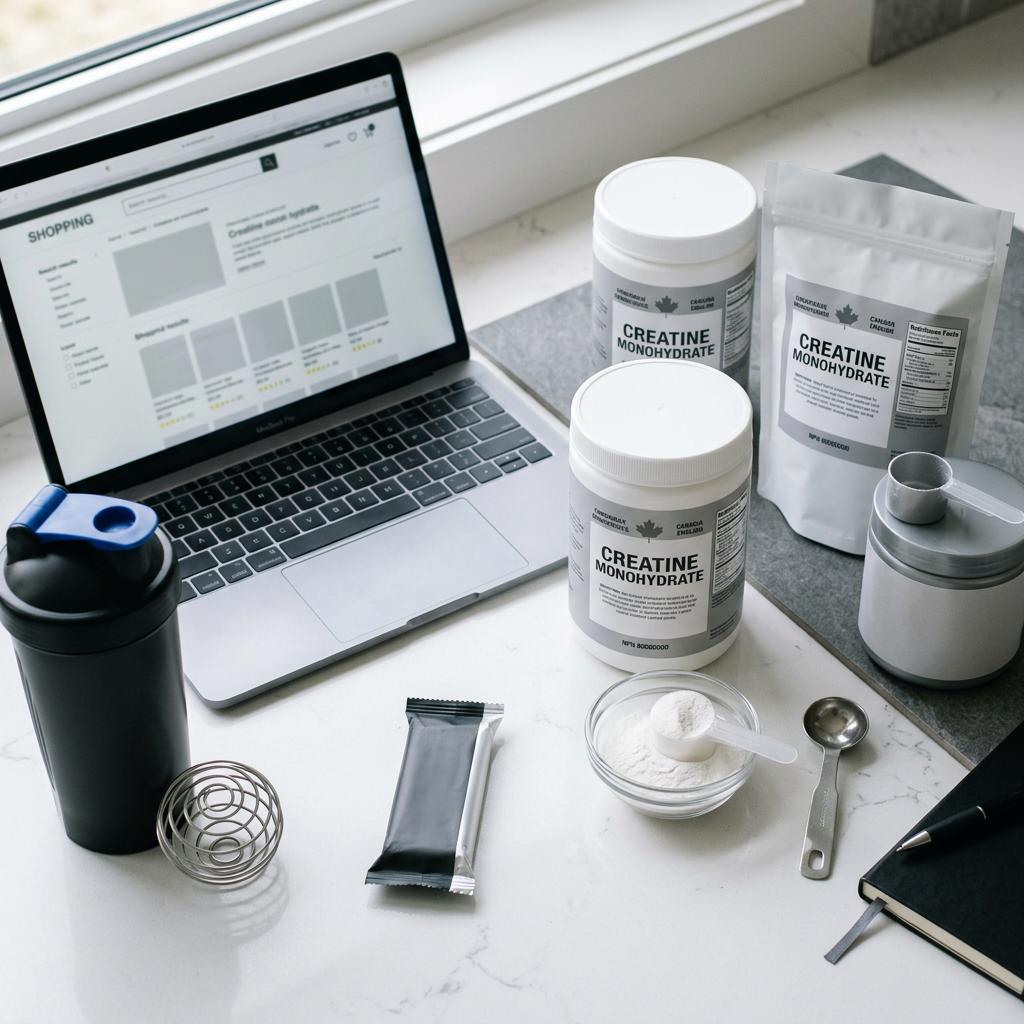
The best creatine for women and weight management in Canada is usually a plain, single-ingredient creatine monohydrate powder with a Natural Product Number, clear gram dosing, and preferably third-party testing. You do not need a “fat-loss creatine,” “lean creatine,” or “women’s sculpt blend” to get results.
When buying in Canada, check these basics:
- Form: creatine monohydrate
- Dose clarity: 3-5 g per serving or easy scoop math
- NPN: a Natural Product Number indicates the product is licensed by Health Canada
- Testing: third-party certification or transparent purity testing is a plus, especially for athletes
- Ingredient list: fewer extras is usually better if your goal is value and dose precision
Here is a simple comparison framework:
| Option | Best for | Pros | Cons |
|---|---|---|---|
| Unflavoured monohydrate powder | Most women | Best evidence, lowest cost per gram, easy 3-5 g dosing | Can feel gritty if not mixed well |
| Micronized monohydrate | Sensitive stomachs, smoother mixing | Same core ingredient, better mixability | Sometimes costs more |
| Capsules | Travel convenience | No mixing, precise servings | Often expensive and requires many capsules for full dose |
| Gummies | Taste and convenience | Easy to take | Often underdosed and costly per gram |
| Multi-ingredient “women’s blends” | Usually not necessary | May bundle other ingredients | Higher price, weaker dose transparency |
If you want a vetted starting point, browse our best creatine rankings, creatine brand reviews, and creatine product catalog. If you are comparing forms, best type of creatine and creatine monohydrate vs. HCL will save you money and confusion.
In Canada, smart buying usually looks boring: plain monohydrate, verified labelling, fair cost per gram, and a brand that does not hide the actual dose behind proprietary fluff.
Bottom line: should women use creatine for weight management?
Yes, women can absolutely use creatine for weight management, as long as they understand that the main benefit is better body composition, not instant weight loss. If you want to preserve muscle, perform better in the gym, and look leaner over time, creatine monohydrate is one of the best-supported supplements available.
The most practical recommendation is straightforward:
- Choose creatine monohydrate
- Take 3-5 g daily
- Use it every day, including rest days
- Pair it with resistance training, adequate protein, and a sensible calorie plan
- Judge success by waist, photos, strength, and fit, not only scale weight
If you are a beginner, creatine is still worth considering once you are training consistently. If you are dieting, it becomes even more useful because preserving lean mass is one of the hardest parts of fat loss. If you are over 40, vegetarian, vegan, or in a hormonally changing life stage, it may be especially valuable.
What should you expect? Not a miracle. Not overnight fat loss. Not bulk. Expect a small, evidence-based edge that compounds over time. That is often exactly what works best in real life.
If you want to go deeper after this guide, the next best reads are creatine for women, how long does creatine take to work, creatine maintenance dose, and realistic creatine results.
The clearest final answer is this: creatine helps women manage weight best by helping them keep or build the tissue that makes a lean physique possible. In other words, focus less on what the scale says next week and more on what your body composition looks like in eight to twelve weeks.
Creatine for Women and Weight Management: The Numbers That Matter
- 3-5 g/day Standard daily creatine dose for most women — Creatine monohydrate maintenance dose
- 20 g/day Optional loading dose — Typically split into 4 doses for 5-7 days
- 3-4 weeks Time to full saturation without loading — Daily maintenance-only approach
- 5-7 days Time to faster saturation with loading — Then continue 3-5 g/day
Frequently Asked Questions
Can creatine help women lose weight?
Creatine can help women lose fat more effectively, but it does not directly cause weight loss on its own. Its main value is helping you maintain muscle and training performance during a calorie deficit, which can improve body composition even if total scale weight changes slowly.
Does creatine make women gain weight?
Creatine can make women gain a small amount of body weight at first, but that is usually water stored inside muscle, not body fat. This early change is one reason the scale can be misleading when your actual body composition is improving.
Is creatine good for women trying to get toned?
Yes, creatine is useful for women trying to look toned because it supports the muscle side of body composition. “Toning” comes from having enough lean mass and low enough body fat, and creatine helps by improving training quality and muscle retention.
What is the best creatine dose for women for weight management?
The best dose for most women is 3-5 g of creatine monohydrate daily. If you want faster saturation you can use about 20 g/day split into 4 doses for 5-7 days, but loading is optional and not required for results.
Should women take creatine while in a calorie deficit?
Yes, women can benefit from taking creatine during a calorie deficit because it helps preserve strength and lean mass. That matters during dieting, since losing muscle along with fat can make your physique and performance worse even when body weight drops.
Will creatine make my stomach look bloated?
Creatine does not usually cause the kind of under-the-skin bloating many women worry about. Most of the extra water associated with creatine is stored inside muscle cells, though some people do feel mild digestive fullness if they take too much at once.
Do women need a special creatine product made for females?
No, women do not need a special creatine formula. Plain creatine monohydrate is the most studied and cost-effective option, and many women-specific products simply add branding, flavouring, or extra ingredients without improving the core creatine benefit.
Can women take creatine every day?
Yes, women should take creatine every day if they want consistent results. Creatine works by keeping muscle stores topped up over time, so rest-day use matters just as much as workout-day use.
How long does creatine take to work for women?
Creatine usually starts working as muscle stores build, with full effects often taking about 3-4 weeks at 3-5 g/day without loading. With a loading phase, benefits may show up sooner, often within 5-7 days.
Is creatine safe for women?
Creatine is generally considered safe for healthy women when used at standard doses. Women with kidney disease, complex medical conditions, or pregnancy and breastfeeding questions should get personalised medical advice before starting.