Creatine for Strength: How It Boosts Force, Power, and 1RM
By The Creatine Canada Research Team — Evidence-based supplement analysts
Yes—creatine for strength works, and it is one of the most reliable supplements for increasing force output, repeated high-intensity performance, and, over time, 1RM strength when paired with progressive training. In practical terms, daily creatine monohydrate helps you produce a bit more high-power work in the gym, which compounds into measurable strength gains over weeks and months.
Evidence-based · Cites 4 sources · Editorial standards
Key Takeaways
- Creatine monohydrate is the best-studied and most cost-effective form for strength gains.
- For most adults, 3-5 g per day is enough to support strength once muscle stores are saturated.
- A loading phase of 20 g per day split into 4 doses for 5-7 days speeds up results but is not required.
- Creatine helps max strength by increasing phosphocreatine stores, which speeds ATP regeneration during hard sets.
- Timing matters far less than daily consistency; take it every day, including rest days.
- Small scale-weight increases early on are usually intracellular water in muscle, not fat gain.
- If creatine seems not to work, the usual problems are underdosing, inconsistency, poor training, or unrealistic timelines.
Does creatine increase strength? Yes—and the best evidence says it helps you lift more over time
Yes, creatine increases strength for many lifters, especially when it is combined with resistance training. The short version is simple: creatine helps your muscles regenerate energy faster during hard efforts, which can let you squeeze out an extra rep, maintain bar speed better across sets, and accumulate more high-quality training over time.
That matters because strength is not built by one magical workout. Strength improves when you repeatedly expose muscle and the nervous system to heavy, progressive training. Creatine does not replace training, food, sleep, or programming, but it can make each training week slightly more productive. That is why the answer to “does creatine increase strength” is usually yes in the real world, not because creatine instantly raises your 1 rep max overnight, but because it improves the conditions that drive strength adaptation.
The most relevant form here is creatine monohydrate, the plain, standard form used in most of the research. The 2017 ISSN position stand concluded that creatine monohydrate is the most effective ergogenic nutritional supplement currently available for increasing high-intensity exercise capacity and lean mass during training. For strength athletes, that high-intensity capacity is the key point.
What should you realistically expect? Most people notice the earliest effects in training quality first, not in mirror changes. You may recover slightly better between heavy sets, feel less drop-off across repeated efforts, or complete more total work at a given load. Over several weeks, that can translate into stronger sets of 3, 5, or 8, and then into improved 1RM performance.
Creatine strength gains are usually meaningful but not dramatic in isolation. Think of creatine as a force multiplier for a good lifting plan rather than a substitute for one. If your training is progressive, your protein intake is adequate, and you take creatine daily, it is one of the very few supplements with a genuinely strong evidence base for max strength and power development.
If you want the broader fundamentals first, see what creatine is and our creatine for beginners guide.
How creatine boosts force, power, and 1RM: the ATP and phosphocreatine mechanism that actually matters
Creatine helps strength because it raises muscle phosphocreatine stores, and phosphocreatine is the fast backup system your body uses to regenerate ATP during short, hard efforts. ATP, or adenosine triphosphate, is the immediate energy currency your muscles spend when you explode out of the hole in a squat, grind a heavy bench press, or accelerate a deadlift from the floor.
Your ATP supply is tiny and turns over quickly. During maximal or near-maximal efforts, the body relies heavily on phosphocreatine to donate a phosphate group and rapidly restore ATP. More stored phosphocreatine means you can maintain high-power output a little longer and restore high-energy capacity a little faster between efforts. In the gym, that can show up as:
- one more rep before failure on heavy work sets,
- slightly better bar speed on repeated singles or doubles,
- less performance drop-off across short rest intervals,
- better quality sprint, jump, or explosive accessory work.
This is why creatine is especially relevant for max strength, power, and repeated high-intensity efforts. It is not mainly a steady-state endurance supplement. The strongest evidence applies to activities that rely on short bursts of force production.
Creatine may also support strength indirectly through training volume and recovery inside the session. If you can perform more total quality reps at a given percentage of 1RM, that increases the stimulus for strength and hypertrophy over time. Some lifters also experience better cell hydration, meaning more water stored inside muscle cells. That does not automatically mean more force on day one, but it can create a more favourable training environment.
The Examine.com creatine evidence summary and the ISSN position stand both reflect the same broad conclusion: creatine works best for high-intensity, repeated-effort performance. That is exactly why it is so useful in powerlifting, Olympic lifting support work, sprinting, football, rugby, CrossFit, and general strength-focused training.
So if you are asking about creatine and 1 rep max, the mechanism is indirect but powerful: creatine does not magically switch on a bigger lift, but by improving repeated high-force performance and training quality, it helps build the capacity that raises 1RM over time.
What strength gains to expect from creatine—and how long it usually takes to notice them
Creatine can improve strength, but the timeline depends on whether you load, how hard you train, and how close you already are to your ceiling. Most people who take creatine for strength should expect faster improvements in training quality first, then measurable strength gains over the following weeks.
With a loading phase of 20 g per day split into 4 doses for 5-7 days, muscle stores rise quickly, so some lifters feel a difference in repeated hard sets within about a week. Without loading, taking 3-5 g per day usually saturates muscles more gradually over roughly 3-4 weeks. That is why two people can both say they are “taking creatine” but report different timelines.
Here is a realistic week-by-week expectation:
- Week 1 with loading: scale weight may rise slightly from water pulled into muscle; hard sets may feel a bit more repeatable.
- Weeks 2-4: better training density becomes more noticeable, especially on compound lifts, repeated sprint work, or short-rest sessions.
- Weeks 4-8: strength progress may start to separate from your previous trend if programming and recovery are in place.
- After 8+ weeks: the biggest payoff is often cumulative—more quality reps, better retained output, and improved readiness for heavy work.
Creatine strength gains are usually easier to detect in the following situations:
- you are doing compound lifts with multiple hard work sets,
- your rest periods are moderate rather than very long,
- you train explosive work or repeated efforts,
- you previously had relatively low creatine stores, as is common in some vegetarians or people with low dietary meat intake.
How do you know it is working? Use objective markers. Track rep performance at fixed loads, total volume at a target RPE, or bar speed if you use velocity tools. If your squat at 140 kg moves for 5 stronger reps instead of 4, or your third bench triple looks more like your first, that is the kind of change creatine often supports.
If nothing changes after a month, do not assume creatine is useless. First check dose accuracy, daily adherence, whether you are taking it on rest days, and whether your program is actually progressive. For a fuller timeline, read how long creatine takes to work.
How much creatine for strength: exact dosing for loading, maintenance, body weight, and goal
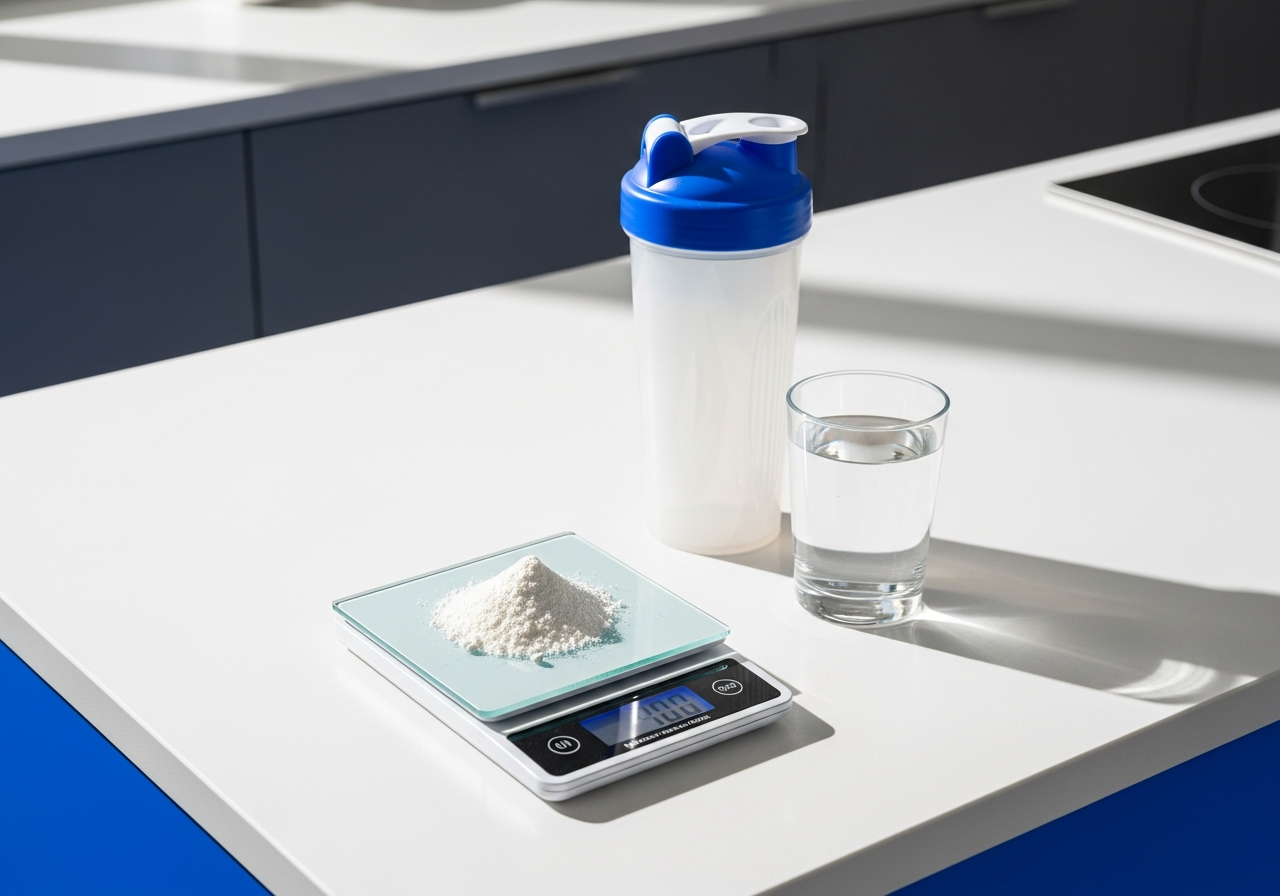
For strength, the standard creatine dose is either 3-5 g daily with no loading, or about 20 g daily split into 4 doses for 5-7 days followed by 3-5 g daily. Those are the evidence-based dosing strategies most lifters should use.
The simplest plan is this: take 5 g of creatine monohydrate every day, including rest days. That works well for most adults and is easy to sustain. If you want faster saturation, use a loading phase first.
| Goal | Loading phase | Maintenance dose | Best for |
|---|---|---|---|
| Fastest strength support | 20 g/day for 5-7 days, split into 4 x 5 g | 3-5 g/day | Lifters who want quicker saturation |
| Simple daily routine | None | 3-5 g/day | Most beginners and general gym-goers |
| Larger body size or very high lean mass | Optional | 5 g/day, sometimes toward the upper end | Bigger strength athletes |
| Body-weight based approach | 0.3 g/kg/day for 5-7 days | 0.03 g/kg/day | People who prefer more precise dosing |
Body-weight examples using the standard body-mass formula:
- 60 kg athlete: loading about 18 g/day; maintenance about 1.8 g/day, though in practice 3 g/day is commonly used.
- 75 kg athlete: loading about 22.5 g/day; maintenance about 2.25 g/day, though 3-5 g/day remains standard.
- 90 kg athlete: loading about 27 g/day; maintenance about 2.7 g/day, though many simply use 5 g/day.
- 110 kg athlete: loading about 33 g/day; maintenance about 3.3 g/day, and 5 g/day is often practical.
In everyday coaching terms, body-weight formulas are useful, but they are not mandatory. For most people chasing creatine for max strength, the practical answer is still 5 g per day. It is cheap, researched, and easy to comply with.
Two important cautions: first, more is not better once stores are saturated. Second, digestive discomfort is more likely when people slam large single doses. Split loading doses through the day, and take powder mixed in enough fluid. If you want a personalised estimate, use our creatine dosage calculator or read how much creatine per day.
The best way to take creatine for strength: a simple step-by-step plan you can start today
The best way to take creatine for strength is to use creatine monohydrate daily, hit the correct dose, and stay consistent for weeks rather than obsessing over tiny timing details. If you want the highest chance of success, follow a simple routine you can repeat without fail.
- Buy plain creatine monohydrate. Choose a reputable product with clear gram dosing. In Canada, look for an NPN, which is a Natural Product Number showing the product is licensed by Health Canada, and ideally third-party testing as well.
- Decide whether to load. If you want faster saturation, take 5 g four times per day for 5-7 days. If you prefer simplicity, skip loading and go straight to 3-5 g daily.
- Take it every day. Training days and rest days both count. Muscle saturation is built by consistency, not just workout use.
- Mix it in water or a shake. A shaker bottle, protein shake, juice, or even coffee can work if the total daily dose is accurate. If clumping bothers you, use warm liquid or micronized powder.
- Pair it with a progressive strength plan. Creatine is most useful when you are chasing overload through heavier loads, more reps, or more high-quality volume.
- Track performance. Log top sets, back-off volume, or bar speed. The effect is easier to see on paper than by feel alone.
- Stay patient. Judge creatine over weeks, not one session.
A few practical combinations work well:
- 5 g with breakfast every day if you want a habit-based system.
- 5 g post-workout with protein if that makes adherence easier.
- Loading doses at breakfast, lunch, pre-workout, and dinner to reduce stomach upset.
The best routine is the one you actually maintain. The 2021 JISSN paper on common questions and misconceptions about creatine reinforces that many debated details matter less than people think. Consistency is the big lever.
If you want more practical mixing guidance, see how to take creatine, how to mix creatine, and whether to take creatine on rest days.
Creatine timing for max strength: before or after workouts matters far less than daily saturation
For max strength, creatine timing is a minor detail compared with total daily intake and muscle saturation. You do not need to take creatine at a precise minute before lifting for it to work.
This point confuses a lot of people because creatine gets grouped with pre-workouts. But creatine is not an acute stimulant. It does not need to “kick in” during today’s session. Its main job is to build and maintain higher intramuscular creatine and phosphocreatine stores over time. Once those stores are elevated, your muscles are better prepared for repeated hard efforts whenever you train.
So when should you take it? Any time you reliably remember. Common options include:
- Post-workout: popular because it is easy to pair with a shake and create a routine.
- Pre-workout: fine if it helps you remember.
- With a meal: often easiest on the stomach and easiest to maintain on rest days.
- Split doses: useful during loading or if larger single doses bother digestion.
There is some interest in whether taking creatine near training could offer a small advantage, but the evidence is not strong enough to say timing meaningfully changes strength outcomes when total daily intake is already correct. Put differently: a lifter taking 5 g every day at lunch will usually do better than a lifter who only remembers a “perfect” post-workout dose three times per week.
On meet week or testing week, do not change your protocol dramatically. Continue your normal maintenance dose. Creatine is not a last-minute peak tool; it is a saturation tool. If you are already saturated, you stay the course. If you are not saturated, one single pre-lift scoop will not suddenly maximize your 1RM.
For deeper detail, see when to take creatine and taking creatine before bed. The practical rule is simple: pick a time you can repeat daily, because saturation drives strength benefits, not clock-watching.
Who benefits most from creatine for strength: beginners, women, older adults, and serious lifters
Creatine for strength is useful for most healthy adults who do resistance training, but some groups may notice the benefits more clearly than others. The supplement is not only for bodybuilders or elite powerlifters.
Beginners can benefit because they are still building basic strength skill and capacity. Creatine will not replace learning technique, but it can support more productive training from the start. New lifters often do best with a simple 3-5 g daily plan and objective logging.
Intermediate and advanced lifters may appreciate creatine even more because small improvements in repeated output matter when progress is slower. If you are already fairly strong, adding one quality rep at 80-85% or preserving bar speed across multiple heavy singles is valuable.
Women can absolutely use creatine for strength. Creatine is not a male-only supplement, and it does not “bulk” women in a special or unnatural way. The mechanism is the same: improved phosphocreatine availability and training quality. Women who want more detail should read creatine for women.
Older adults may also benefit, particularly when creatine is paired with resistance training. Strength preservation becomes increasingly important with age, and the evidence base around creatine plus training in older populations is one reason it gets so much attention beyond bodybuilding. If that is your focus, see creatine for older adults.
Vegetarians and people with lower dietary creatine intake may respond well because baseline muscle creatine stores can be lower. That does not mean meat-eaters will not benefit; it means the margin for improvement can be larger when starting stores are lower.
Athletes in sprint, field, court, collision, and strength sports often fit the ideal profile because they rely on short-duration, high-power efforts. The International Olympic Committee consensus on dietary supplements recognises creatine as one of the few supplements with strong support for certain performance uses.
The main people who need added caution are those with medical conditions, especially kidney-related concerns, or those taking medications that warrant a physician’s input. For healthy lifters, though, creatine remains one of the most broadly useful options for strength development.
Safety, side effects, and scale weight: what creatine does, what it does not do, and when to be cautious
Creatine monohydrate is generally considered safe for healthy people at standard doses, and the most common side effects are mild and manageable rather than dangerous. The two things lifters notice most often are temporary digestive upset from poor dosing and a small increase in body weight from water retention inside muscle.
That scale increase deserves context. Early weight gain with creatine is usually intramuscular water, meaning water stored inside muscle cells, not body-fat gain. For a strength athlete, that is not necessarily a negative. In fact, fuller muscle creatine and water stores are part of how creatine supports performance. If you are worried about this, read does creatine make you gain weight and does creatine cause bloating.
Common side effects and fixes:
- Stomach upset or loose stool: usually caused by taking too much at once; split the dose and take it with fluid or food.
- Gritty texture or poor dissolving: use micronized powder, more liquid, or warmer water.
- Worry about kidneys: healthy people generally tolerate creatine well, but people with kidney disease or relevant medical issues should speak with a physician first.
One frequent point of confusion is creatinine, a breakdown product measured in blood tests. Creatine supplementation can raise creatinine somewhat without meaning kidney damage is occurring. That is one reason context matters in lab interpretation. If you want the deep dive, see is creatine bad for your kidneys and creatine vs creatinine.
The ISSN position stand and the 2021 JISSN review both address long-running myths around cramps, dehydration, and kidney harm. The broad takeaway is that creatine has a strong safety profile in healthy populations when used appropriately. Still, “safe for most” does not mean “right for everyone,” so medical context matters.
If you have persistent GI symptoms, unusual swelling, or a medical history that complicates supplement use, pause and get individual advice rather than guessing.
Why creatine sometimes seems not to work: the biggest mistakes and myths holding back strength gains
When people say creatine did nothing for their strength, the problem is usually not that creatine is ineffective—it is that their use, expectations, or training setup did not match how creatine actually works. In most cases, the issue is fixable.
Mistake 1: expecting a stimulant-like effect. Creatine is not caffeine. You should not expect a dramatic buzz or instant PR from a single scoop. The real effect is cumulative saturation and better repeated high-intensity output over time.
Mistake 2: not taking it daily. Three workout-day doses per week are not the same as consistent daily saturation. Rest days matter.
Mistake 3: underdosing. Tiny proprietary-blend doses, half scoops, or guessing with a heaped teaspoon can leave you below a useful intake. Measure grams accurately if possible.
Mistake 4: using a weak training stimulus. If your program lacks progressive overload, sufficient volume, or enough heavy work, creatine has little to amplify. Supplements cannot rescue poor programming.
Mistake 5: judging too early. Without loading, it often takes 3-4 weeks to fully saturate muscle stores. Declaring failure after five days is premature.
Now for the myths:
- “Creatine is a steroid.” False. Creatine is a naturally occurring compound involved in energy metabolism, not an anabolic steroid. See is creatine a steroid.
- “You need to cycle creatine.” False for most people. Ongoing daily use is standard. See do you need to cycle creatine.
- “Other forms are clearly better than monohydrate.” Usually false. Marketing is stronger than evidence here. Monohydrate remains the benchmark.
- “Creatine only helps bodybuilders.” False. It is highly relevant to anyone doing repeated high-intensity work, including strength sport athletes and older adults training for function.
If you suspect you are a poor responder, first make sure the basics are solid for 6-8 weeks. Then review creatine non-responders and our creatine myths debunked page. Most “non-response” cases turn out to be incomplete saturation, inaccurate dosing, or benefits too subtle to notice without a training log.
Best creatine for strength in Canada: what to buy, what to ignore, and how to judge quality
The best creatine for strength is plain creatine monohydrate from a reputable brand with transparent dosing and good quality control. In Canada, product quality cues such as an NPN and credible third-party testing matter more than fancy claims on the label.
Why monohydrate? It is the most studied form, the reference form used in the majority of performance research, and usually the best value per gram. Other forms such as HCL, buffered creatine, ethyl ester, nitrate, or gummies can be convenient in specific cases, but they have not displaced monohydrate as the evidence leader for strength.
| Form | Evidence for strength | Typical value | Bottom line |
|---|---|---|---|
| Creatine monohydrate | Strongest | Usually best | First choice for almost everyone |
| Micronized monohydrate | Same active ingredient | Good | Useful if you want easier mixing |
| Creatine HCL | Less extensive | Usually pricier | No clear strength advantage over monohydrate |
| Buffered/alkaline forms | Weak comparative advantage | Often poor | Marketing exceeds evidence |
| Gummies/capsules | Can work if dose is adequate | Often less economical | Convenience option, not performance upgrade |
When buying in Canada, check for:
- NPN: a Health Canada-issued Natural Product Number indicating the product is licensed.
- Clear ingredient list: ideally just creatine monohydrate if you want maximum simplicity.
- Dose transparency: exact grams per serving, not vague blends.
- Third-party testing: helpful for added confidence in purity and label accuracy.
- Cost per 5 g serving: the fairest way to compare value.
If you are shopping now, compare our best creatine rankings, browse creatine brand reviews, or search the creatine product catalog. You may also want our guides on best creatine monohydrate in Canada and Canadian supplement regulations.
The rule of thumb is boring but effective: choose a trustworthy monohydrate, dose it correctly, and save your money for food, coaching, and better training consistency.
Bottom line: how to use creatine for max strength, force, and a better 1RM
Creatine for strength is one of the clearest yes answers in sports nutrition: it can help increase force output, support repeated high-intensity performance, and improve the training quality that leads to bigger 1RM numbers over time. If your goal is max strength, creatine monohydrate deserves consideration before nearly any more exotic supplement.
The simplest winning formula is this:
- Buy creatine monohydrate from a reputable Canadian brand.
- Take 3-5 g every day, or load with 20 g per day split into 4 doses for 5-7 days if you want quicker saturation.
- Keep taking it on rest days.
- Pair it with a progressive strength program built around compound lifts and sufficient recovery.
- Track your sets, reps, load, and body weight for at least 4-8 weeks before judging results.
If you are asking “how much creatine for strength,” the practical answer for most lifters is 5 g daily. If you are asking “does creatine increase strength,” the evidence-based answer is yes, especially through better repeated high-intensity performance and cumulative training adaptation. And if you are asking about “creatine and 1 rep max,” the honest answer is that creatine supports the process that raises 1RM rather than acting like a same-day PR switch.
There is nuance, of course. Creatine will not fix bad sleep, low protein intake, inconsistent training, or poor programming. Some people notice the effect more than others. But across the big picture of safety, evidence, cost, and practical usefulness, creatine monohydrate remains one of the smartest, least flashy ways to support strength progress.
For your next step, use the creatine dosage calculator, read whether to do a loading phase, or compare products in our best creatine rankings.
Creatine for Strength: the numbers that matter most
- 3-5 g/day Standard maintenance dose — Enough for most adults once muscles are saturated.
- 20 g/day Typical loading dose — Usually split into 4 doses for 5-7 days.
- 5-7 days Fast saturation window — Loading speeds up the timeline to noticeable training effects.
- 3-4 weeks No-loading saturation timeline — Daily 3-5 g works more gradually but still effectively.
Frequently Asked Questions
Does creatine increase strength or just water weight?
Creatine increases strength potential and also commonly increases water stored inside muscle. The water effect often happens first, but that does not mean the supplement is “just water weight.” By raising phosphocreatine stores, creatine helps support repeated high-intensity performance and better training quality, which is how strength gains accumulate over time.
How much creatine should I take for strength gains?
For strength gains, most people should take 3-5 g of creatine monohydrate per day. If you want faster saturation, use 20 g per day split into 4 doses for 5-7 days, then continue with 3-5 g daily. For simplicity and adherence, many lifters just take 5 g every day.
Is creatine good for 1 rep max strength?
Yes, creatine is good for 1 rep max strength because it supports the training adaptations that raise 1RM. It does this mainly by improving phosphocreatine availability, which helps you sustain high output across hard sets and repeated efforts. The biggest 1RM benefit is usually seen over weeks of proper training, not from a single dose.
How long does creatine take to work for strength?
Creatine can start affecting training performance within about a week if you use a loading phase, or in roughly 3-4 weeks if you take a standard daily dose without loading. Most people notice improved repeated effort capacity before they notice a clear jump in max strength. Judge it over several training weeks, not one workout.
Should I take creatine before or after lifting for max strength?
For max strength, taking creatine before or after lifting is much less important than taking it every day. Creatine works by saturating muscle stores over time, so the best timing is whichever time helps you stay consistent. Pre-workout, post-workout, or with a meal are all reasonable options.
What is the best type of creatine for strength?
The best type of creatine for strength is creatine monohydrate. It is the most studied form, the form used in the strongest performance research, and usually the most affordable per effective dose. Other forms may be marketed as superior, but monohydrate remains the evidence-based first choice.
Can beginners take creatine for strength?
Yes, beginners can take creatine for strength, and many do well with it. It will not replace learning technique or following a sensible program, but it can support better training quality from the start. A simple 3-5 g daily routine is usually the easiest approach for new lifters.
Do women get strength benefits from creatine too?
Yes, women get strength benefits from creatine too. The mechanism is the same as in men: increased phosphocreatine availability helps support high-intensity performance and better training output. Creatine does not have a special “bulking” effect in women; any body-weight change is usually water in muscle, not fat.
Do I need to cycle creatine when training for strength?
No, most people do not need to cycle creatine when training for strength. Daily use is the standard approach because the goal is to maintain saturated muscle stores over time. Unless a healthcare professional gives you a reason to stop, there is usually no performance benefit to unnecessary on-off cycling.
Why am I not noticing creatine strength gains?
If you are not noticing creatine strength gains, the most likely reasons are inconsistent daily use, underdosing, judging too early, or running a training plan that is not progressive enough. Creatine amplifies quality training; it does not replace it. Give it at least 4-8 weeks with proper dosing and objective performance tracking.