Creatine for Office Workers: Why Desk Workers May Benefit From Daily Supplementation
By The Creatine Canada Research Team — Evidence-based supplement analysts
Yes—creatine can be a smart daily supplement for office workers, even if you sit most of the day, because it supports short-burst exercise performance, strength training progress, lean mass retention, and possibly cognitive resilience when sleep, stress, or low dietary creatine intake are issues. For most desk workers, 3–5 g of creatine monohydrate daily is the evidence-based starting point.
Evidence-based · Cites 4 sources · Editorial standards
Key Takeaways
- Office workers can benefit from creatine even if they are not athletes, especially if they lift, do HIIT, are over 40, eat little red meat, or feel mentally drained.
- Creatine works by increasing stored phosphocreatine, which helps regenerate ATP, the cell’s immediate energy currency, during hard muscular effort.
- The simplest effective protocol is 3–5 g of creatine monohydrate every day, including rest days.
- A loading phase of 20 g/day split into 4 doses for 5–7 days works faster, but it is optional.
- Desk workers should expect subtle results first: better workout output, slightly fuller muscles, and sometimes 0.5–2 kg of scale weight from intracellular water.
- Creatine is one of the most studied sports supplements and is considered safe for healthy people when used at recommended doses.
- In Canada, choose plain creatine monohydrate with a Natural Product Number when applicable and preferably third-party testing or strong brand transparency.
Yes, creatine can make sense for office workers—even if your job is sedentary
Yes, creatine for office workers is often worthwhile because the supplement does not only matter for bodybuilders; it helps anyone who wants better high-intensity exercise performance, improved training quality, and support for maintaining lean mass despite a desk-heavy lifestyle. If you have an office job, sit all day, and still want to feel stronger in the gym, preserve muscle as you age, or get more from short workouts, creatine is one of the few supplements with decades of solid evidence behind it.
Creatine is a naturally occurring compound stored mostly in muscle, where it helps replenish adenosine triphosphate, or ATP, the body’s fastest energy source. That matters for desk workers because many professionals try to fit exercise into tight windows before work, after work, or at lunch. Creatine does not replace movement, sleep, or a good diet, but it can help you get more from the 30–45 minutes you do manage to train.
For people who sit all day, the practical case for creatine is straightforward:
- It supports resistance training and repeated hard efforts. That includes lifting, sprint intervals, circuits, and sports.
- It may help preserve or build lean mass when combined with training, which matters because sedentary work tends to reduce daily movement.
- It may be especially useful for low-meat eaters, vegetarians, and vegans because dietary creatine intake is lower.
- It can be useful for older working professionals because maintaining strength and muscle becomes more important with age.
What creatine does not do is magically offset a sedentary lifestyle on its own. If you never train, never walk, and never address long sitting time, creatine is not a substitute. But if you are an office worker trying to stay fit around a desk job, it is one of the best-supported supplements you can add.
If you are totally new to the topic, start with our creatine dosage calculator and beginner-friendly guides on creatine product catalog options. For a wider foundation, see related reading on what creatine is and taking creatine without working out.
How creatine helps desk workers: more ATP, better training output, and a muscle-preserving edge
Creatine helps desk workers by increasing phosphocreatine stores, which lets muscle regenerate ATP faster during short, hard efforts like lifting sets, hill sprints, rowing intervals, and repeated bodyweight circuits. Phosphocreatine is the stored high-energy form of creatine inside muscle, and its main job is to rapidly donate a phosphate group to rebuild ATP when demand spikes.
That mechanism matters because office workers often face a double problem: long sedentary hours reduce overall movement, and limited schedule flexibility makes each workout count more. When muscle phosphocreatine stores are higher, you can often squeeze out an extra rep, sustain power a bit longer, or recover slightly better between efforts. Over weeks and months, that small edge compounds into better strength and muscle gains.
The 2017 ISSN position stand concluded that creatine monohydrate is the most effective nutritional supplement currently available for increasing high-intensity exercise capacity and lean body mass during training. That does not mean every office worker becomes noticeably stronger overnight, but it does mean the mechanism and performance application are well established. See Kreider et al. (2017), ISSN Position Stand.
Why this is particularly relevant for people with desk jobs:
- Short workouts benefit most from efficiency. If you only train three times per week, even modest improvements in volume or power matter.
- Muscle retention matters during busy periods. Travel, deadlines, and inconsistent training can otherwise lead to backsliding.
- Dietary creatine can be low. People who eat little meat or fish often start with lower stores and may notice more benefit.
- Aging and inactivity work against muscle. Office workers in their 40s, 50s, and beyond often need more deliberate strategies to protect strength.
There is also growing interest in creatine and cognition, especially under sleep loss, stress, or high mental demand, but this evidence is still less settled than the performance evidence. The strongest, most bankable reason for a busy office worker to take creatine remains better support for training performance and lean mass. If you want the brain-specific evidence, our guide on creatine and cognition covers what is established versus emerging.
Who should consider creatine most if they have an office job
Creatine is most worth considering for office workers who train hard, want to preserve muscle, or likely have lower baseline creatine stores. In practice, that includes far more people than just gym enthusiasts.
Creatine for working professionals makes the most sense if you fit one or more of these groups:
- Beginners starting strength training. New lifters often get excellent value from creatine because it supports progressive overload from day one.
- Busy office workers doing short gym sessions. If you have 30-minute workouts and need them to count, creatine can help support better performance across sets.
- Women who want strength and body composition support without “bulking”. Creatine does not cause steroid-like muscle gain; it helps training quality and lean mass over time. For more, see creatine for women.
- Older adults and professionals over 40. Creatine becomes more relevant as age-related muscle loss, called sarcopenia, gradually increases.
- Vegetarians and vegans. Because creatine is found mainly in animal foods, plant-based eaters often have lower muscle creatine stores and may respond well.
- Recreational athletes with sedentary jobs. Hockey players, runners doing sprint work, CrossFit participants, and weekend warriors can all benefit.
Creatine may be less compelling if you are fully sedentary and have no plan to exercise. Even then, some people take it for potential support related to muscle maintenance or cognition, but that is a more nuanced decision than the classic gym-use case. For that audience, it is best framed as a supplement that may complement a broader plan, not a shortcut.
For office workers, the best question is not “Do I deserve creatine if I am not an athlete?” The better question is “Do I want better results from the training I can realistically do around my desk job?” If the answer is yes, creatine is often appropriate.
If you are unsure whether you personally are a good candidate, compare your situation with the guides on creatine for beginners, creatine for older adults, and who should not take creatine.
The simplest step-by-step creatine plan for busy office workers
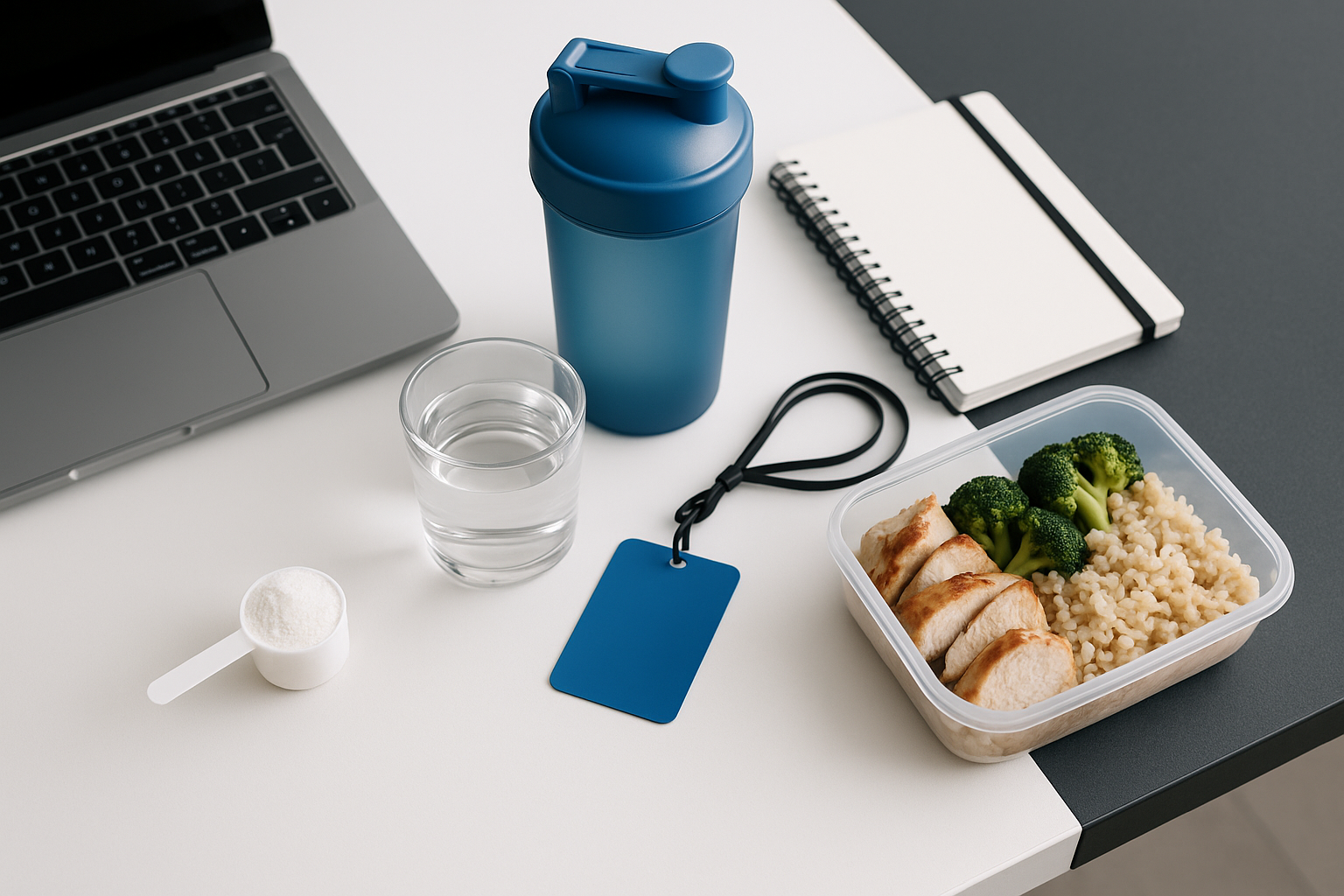
The best creatine plan for busy office workers is to take 3–5 g of creatine monohydrate every day at a time you will consistently remember. Compliance matters more than fancy timing.
- Choose creatine monohydrate. It is the most studied, most cost-effective, and most consistently recommended form. If you are comparing options, start with our best creatine rankings and creatine brand reviews.
- Pick your daily dose. Most healthy adults do well with 3–5 g/day. Larger individuals and harder trainers often choose 5 g/day.
- Decide whether to load. If you want faster saturation, take 20 g/day split into 4 doses of 5 g for 5–7 days, then drop to 3–5 g/day. If you prefer simplicity, skip loading and just take 3–5 g/day; saturation will simply take longer.
- Attach it to a daily habit. Breakfast, your post-workout shake, your lunch, or the water bottle on your desk all work. For many desk workers, the best protocol is the one tied to the first meal or coffee routine.
- Drink normally. You do not need absurd amounts of water, but you should maintain sensible hydration, especially if you train or use caffeine heavily. More detail is in how much water to drink with creatine.
- Take it every day, including weekends and rest days. Creatine works by keeping muscle stores elevated, not by acting like a stimulant before one workout.
- Stay with it for at least 4–8 weeks. Judge it by training performance, workout quality, muscle fullness, and long-term progress, not by one scoop.
A practical office-worker routine might look like this:
- Morning lifter: 5 g with breakfast before commuting.
- Lunchtime trainee: 5 g in a shaker after your session at work.
- After-work exerciser: 5 g with your post-gym protein shake.
- Non-gym day: 5 g with lunch at your desk.
If you miss a day, do not panic and do not double the next day. Just resume your normal dose. If you want a complete routine, read how to take creatine and creatine on rest days.
Exact dosing for desk workers by body weight, training goal, and urgency
Most office workers do not need a complicated protocol: 3–5 g/day of creatine monohydrate is the standard maintenance dose, while a loading phase of 20 g/day for 5–7 days gets you saturated faster. The key is matching the dose to your body size, goal, and tolerance.
| Body weight / goal | Daily maintenance | Optional loading phase | Best for |
|---|---|---|---|
| Under 60 kg | 3 g/day | 20 g/day split into 4 x 5 g for 5–7 days | Smaller adults, general fitness |
| 60–90 kg | 3–5 g/day | 20 g/day split into 4 x 5 g for 5–7 days | Most office workers |
| Over 90 kg | 5 g/day | 20 g/day split into 4 x 5 g for 5–7 days | Larger lifters, team-sport athletes |
| Fastest results desired | 3–5 g/day after loading | 20 g/day split into 4 doses for 5–7 days | People starting a training block now |
| Sensitive stomach / simple routine | 3–5 g/day | Skip loading | Beginners who want zero fuss |
Here is the practical interpretation:
- For general health-conscious office workers who lift 2–4 times weekly: 3–5 g/day is ideal.
- For sedentary people just starting a gym routine: 3 g/day is fine, especially if smaller-bodied.
- For bigger or more muscular desk workers: 5 g/day is the safer default.
- For people in a hurry: loading works, but it is not more effective long term; it only shortens the time to saturation.
Without loading, it typically takes roughly 3–4 weeks to fully elevate muscle stores. With loading, many people are effectively saturated within about a week. That timeline is covered in more detail in how long creatine takes to work and the creatine loading phase.
If you want a more personalised estimate, use our creatine dosage calculator. And if you are wondering whether a higher dose is better, the answer for most office workers is no. Taking more than needed generally raises the chance of stomach upset, without creating better long-term results.
When to take creatine with a desk job, and what results to expect week by week
The best time for office workers to take creatine is whenever they will remember it daily, because timing matters far less than consistency. Creatine is not a pre-workout stimulant; it works by gradually increasing muscle creatine stores over time.
If you train before work, after work, or at lunch, it is perfectly reasonable to take creatine near that session, especially if that makes adherence easier. Some people mix it into a protein shake, while others stir it into water at their desk. If you want the timing debate in full, see when to take creatine.
What to expect as a desk worker:
- Week 1 with loading: You may notice mild scale weight gain, fuller muscles, and sometimes improved gym feel. The weight gain is usually intracellular water, meaning water held inside muscle cells, not fat gain.
- Weeks 2–4 without loading: This is when many people begin noticing better reps, slightly improved recovery between hard sets, and more consistent performance.
- Weeks 4–8: The real value becomes clearer through training logs: an extra rep here, a heavier dumbbell there, or more total work completed in the same session.
- Months 2–3: If training and protein intake are solid, you may see more visible body composition benefits because creatine has helped support better workouts over time.
For office workers, the best proof that creatine is “working” is not a dramatic feeling after one dose. The best proof is:
- better training consistency
- slightly improved performance on repeat efforts
- steadier strength progression
- muscles feeling a bit fuller
- less frustration from underperforming in short sessions
Take creatine on rest days too. Your Saturday rest day and your Tuesday deadline-heavy non-training day still count because your goal is to keep stores topped up. Missing one day is not a disaster, but regularly skipping weekends slows progress.
If the scale jumps early, that is expected and often misunderstood. Our guides on creatine and weight gain and realistic creatine results explain how to interpret the first month properly.
Can creatine help office workers with focus, mental fatigue, or brain fog?
Creatine may help some office workers with mental fatigue or cognitive performance in specific situations, but the evidence is less definitive than it is for strength and exercise performance. That is the honest answer.
The reason this question keeps coming up is biologically plausible. Creatine is involved in cellular energy buffering not only in muscle, but also in the brain. In theory, higher creatine availability may help support brain energy demands during stress, sleep deprivation, or mentally demanding tasks. This is why creatine is increasingly discussed beyond the gym.
However, nuance matters. The strongest creatine evidence is still for high-intensity exercise, repeated efforts, and lean mass support. Cognitive effects appear more variable and may depend on the person, the task, baseline diet, and context. For example, people under sleep stress, older adults, and those with lower dietary creatine intake may be more likely to notice something than a well-rested young adult eating a meat-rich diet.
The 2021 review on common creatine questions and misconceptions notes that creatine has potential applications beyond performance, but it does not justify overselling it as a universal nootropic. See Antonio et al. (2021). Examine’s evidence summary also presents cognition as promising but more mixed than the exercise literature: Examine.com — Creatine evidence summary.
For a desk worker, the practical takeaway is simple:
- Take creatine first for training and muscle-related reasons.
- View any focus or mental-energy benefits as a possible bonus, not a guarantee.
- Do not expect it to replace sleep, movement breaks, nutrition, or caffeine management.
If your real issue is afternoon brain fog, the most powerful first moves are still better sleep, a lunchtime walk, adequate protein, hydration, and structured movement during the workday. Creatine may complement that, especially if you also train, but it should not be the centrepiece of your cognitive strategy. For a deeper review, see creatine and the brain and creatine and mood.
Safety, side effects, and who should be careful before taking creatine
Creatine monohydrate is considered safe for healthy people at recommended doses, but some users get minor side effects and a few groups should speak with a clinician first. That is the balanced, evidence-based position.
The ISSN position stand and subsequent reviews have consistently concluded that creatine monohydrate is safe and effective when used appropriately. The Mayo Clinic likewise notes creatine appears safe when used for up to several years in healthy people at recommended doses. See Mayo Clinic — Creatine.
Common, usually manageable side effects include:
- Mild stomach upset if you take too much at once
- Temporary water-weight gain, often around 0.5–2 kg early on
- Bloating sensations in some users, especially during loading
- Grittiness or poor mixability, which is a texture issue rather than a safety issue
Most problems improve by switching to 3–5 g/day, splitting doses, taking it with food, or using micronized powder. For troubleshooting, see creatine digestive side effects and does creatine cause bloating.
You should be more cautious and consider medical advice first if you:
- have known kidney disease or significant kidney impairment
- have a complex medical condition or are taking multiple medications
- are pregnant or breastfeeding
- have been told to follow a medically supervised fluid or kidney protocol
One office-worker-specific point: creatine can raise blood creatinine, which is a breakdown marker often used in kidney bloodwork. That does not automatically mean kidney damage. It can simply reflect more creatine availability. This confusion is common enough that we cover it in is creatine bad for your kidneys and creatine vs. creatinine.
If you are a healthy adult with a desk job and no relevant medical contraindications, creatine is generally one of the lower-risk supplements on the market when compared with many stimulant-heavy products.
Common office-worker mistakes: what creatine does not do, and the myths to ignore
The biggest mistake office workers make with creatine is expecting it to compensate for total inactivity, poor diet, and zero resistance training. Creatine helps most when it amplifies a decent plan; it is not a workaround for having no plan.
Here are the myths and mistakes that most often derail results:
- “I sit all day, so creatine is pointless.” False. A sedentary job and a physically active life outside work can coexist. Creatine supports the training you do around the desk job.
- “Creatine is only for bodybuilders.” False. Recreational lifters, women, older adults, team-sport athletes, and busy professionals can all use it.
- “It will make me fat.” False. Early weight gain is usually water drawn into muscle, not fat tissue.
- “I only need it on workout days.” False. Daily intake is how you maintain saturation.
- “More is better.” False. Above standard dosing, you usually just increase the chance of GI upset.
- “It damages healthy kidneys.” The evidence does not support that claim in healthy users at recommended doses, though pre-existing kidney disease deserves medical guidance.
- “I need a fancy version like HCL, gummies, or a proprietary blend.” Usually false. Plain monohydrate remains the benchmark for evidence and value.
Another common office-worker error is judging creatine by how energised you feel at your desk. Creatine is not caffeine. It is a saturation-based supplement. The right success metric is better training output, slightly better recovery between hard efforts, and stronger long-term progress.
If you are not noticing benefits, ask these questions:
- Am I taking it daily?
- Have I used it for at least 3–4 weeks without loading?
- Am I doing training that actually uses the phosphocreatine system?
- Am I eating enough protein and sleeping enough to recover?
- Am I expecting a stimulant-like feeling instead of performance changes?
For a full myth breakdown, visit creatine myths debunked, creatine not working?, and common beginner mistakes.
What office workers should actually buy in Canada: simple, tested, and cost-effective
The best creatine for office workers in Canada is usually plain creatine monohydrate powder from a reputable brand with transparent testing and clear labelling. You do not need a flashy formula to get evidence-based results.
When shopping in Canada, look for these features:
- Creatine monohydrate as the only medicinal or active ingredient.
- A clear dose per serving, ideally allowing 3–5 g easily.
- Health Canada-compliant labelling and, where applicable, a Natural Product Number, or NPN, which is the product licence number used for many natural health products sold legally in Canada.
- Third-party testing or credible purity claims, especially if you are a competitive athlete or simply want more assurance.
- Good cost per gram, since office workers usually do best with a boring, consistent daily product.
| Format | Pros | Cons | Best office-worker use case |
|---|---|---|---|
| Unflavoured monohydrate powder | Best value, easy to dose, strongest evidence | Can feel slightly gritty | Most people |
| Micronized monohydrate | Often mixes a bit better | Sometimes costs more | People bothered by texture |
| Capsules | Portable, convenient for commuting | More expensive, many capsules needed | Travel-heavy professionals |
| Gummies or blends | Convenient, flavoured | Often worse value and harder to dose accurately | Only if convenience outweighs cost |
If you are buying with a desk-worker mindset, prioritise convenience you will actually use. A simple tub kept near your coffee station or shaker bottle usually beats an expensive niche format.
To compare current options, browse our best creatine rankings, creatine product catalog, and creatine brand reviews. If you want deeper buying guidance, related reads include best creatine monohydrate in Canada, third-party tested creatine in Canada, and Canadian supplement regulations.
Bottom line: should desk workers take creatine?
Yes—creatine is often a very good fit for desk workers who want better returns from limited training time, support for strength and lean mass, and a simple supplement with unusually strong evidence behind it. For most healthy office workers, 3–5 g of creatine monohydrate daily is the right place to start.
The best case for creatine and desk jobs is not that it “fixes” sitting all day. It is that it helps close the gap between a sedentary work environment and an active, resilient body outside office hours. If you lift weights, do intervals, play sport, or simply want to avoid losing muscle as the years of desk work add up, creatine deserves serious consideration.
The right expectations are:
- not a stimulant hit
- not a fat-loss shortcut
- not an excuse to avoid movement
- but a real, measurable support for training quality and muscular performance
If you are an office worker deciding today, the practical play is simple:
- Buy plain creatine monohydrate.
- Take 3–5 g every day.
- Keep training 2–4 times weekly if possible.
- Walk more, break up sitting, and eat enough protein.
- Judge results over 4–8 weeks, not 4–8 hours.
That is the evidence-based answer to whether creatine for sedentary people, desk workers, and busy professionals is worth it: it can absolutely be worth it, provided there is at least some meaningful exercise or muscle-maintenance goal in the picture.
For next steps, use the creatine dosage calculator, then read how much creatine per day, is creatine safe?, and the complete creatine guide.
Creatine for Office Workers: The Numbers That Matter
- 3–5 g/day Standard daily maintenance dose — The evidence-based default for most healthy adults.
- 20 g/day Optional loading dose — Usually split into 4 doses for 5–7 days to saturate faster.
- 5–7 days Time to saturate with loading — Useful if you want faster performance benefits.
- 3–4 weeks Time to saturate without loading — Daily use still works; it just takes longer.
Frequently Asked Questions
Is creatine worth it for office workers who sit all day?
Yes, creatine can be worth it for office workers who sit all day if they also want better workout performance, support for lean mass, or a simple supplement with strong evidence. It will not cancel out a sedentary lifestyle by itself, but it can help desk workers get more from short gym sessions and maintain muscle more effectively over time.
Can sedentary people take creatine without working out?
Yes, sedentary people can take creatine without working out, but the clearest benefits are stronger when exercise is part of the picture. Without training, creatine may still increase creatine stores, but most noticeable results for strength, performance, and body composition come when it is paired with resistance training or repeated high-intensity exercise.
What does creatine do for people with office jobs?
Creatine helps people with office jobs by increasing phosphocreatine stores, which improves the body’s ability to rapidly regenerate ATP during hard muscular effort. In real life, that can mean better lifting performance, more productive short workouts, and better support for maintaining lean mass despite a sedentary workday.
Will creatine give desk workers more mental energy or focus?
Creatine may help some desk workers with mental fatigue, but that benefit is less certain than its physical-performance benefits. The evidence for cognition is promising in some situations, especially sleep deprivation or low dietary creatine intake, but creatine should not be marketed as a guaranteed focus supplement for every office worker.
How much creatine should an office worker take daily?
Most office workers should take 3–5 g of creatine monohydrate daily. Smaller adults may do well with 3 g/day, while larger individuals and regular lifters often use 5 g/day, and an optional loading phase of 20 g/day for 5–7 days can speed up saturation.
When should busy office workers take creatine?
Busy office workers should take creatine at whatever time they can stick to every day. Morning with breakfast, post-workout, or with lunch at your desk are all fine, because daily consistency matters more than perfect timing.
Does creatine make office workers gain weight?
Creatine can make office workers gain some scale weight early, but that is usually water stored inside muscle rather than fat gain. A typical early change is modest, often around 0.5–2 kg, especially if you use a loading phase.
Is creatine safe for working professionals in their 40s and 50s?
Yes, creatine is generally considered safe for healthy working professionals in their 40s and 50s at recommended doses, and it can be especially relevant for preserving strength and lean mass with age. Anyone with kidney disease, major medical conditions, or medication concerns should check with a clinician first.
What is the best creatine for desk workers in Canada?
The best creatine for desk workers in Canada is usually plain creatine monohydrate powder from a reputable brand with transparent quality standards. Health Canada-compliant labelling, sensible cost per gram, and third-party testing or strong purity disclosure are better priorities than flashy proprietary blends.
Do office workers need a creatine loading phase?
No, office workers do not need a creatine loading phase, because daily maintenance dosing still works. Loading simply speeds up saturation so results may appear sooner, while taking 3–5 g/day without loading is often easier and gentler on the stomach.