
Creatine for Obstacle Course Racing: Spartan, Tough Mudder, and OCR Performance
By The Creatine Canada Research Team — Evidence-based supplement analysts
Yes—creatine can help obstacle course racing performance, especially for Spartan Race, Tough Mudder, mud runs, and other OCR formats that demand repeated bursts of grip strength, carries, climbs, crawls, and uphill surges. It works best when the course rewards short high-intensity efforts and fatigue resistance more than pure lightness, and most athletes do well with 3 to 5 g of creatine monohydrate daily.
Evidence-based · Cites 4 sources · Editorial standards
Key Takeaways
- Creatine for obstacle course racing is most useful for repeated explosive efforts like walls, rope climbs, monkey bars, carries, and hill surges.
- The evidence-backed default is creatine monohydrate at 3 to 5 g per day, every day, not just on training days or race day.
- A loading phase of 20 g per day split into 4 doses for 5 to 7 days saturates muscles faster; skipping loading still works but takes roughly 3 to 4 weeks.
- Expect possible early body-mass gain from increased intracellular water, which can be helpful for power but may be a trade-off on long run-heavy courses.
- Creatine does not dehydrate you, is not a steroid, and is considered one of the most studied and generally safe sports supplements for healthy people.
- OCR athletes who benefit most include beginners building grip and obstacle strength, hybrid athletes, vegetarians or vegans, women, and masters athletes.
- For Canadian buyers, choose a simple creatine monohydrate product with an NPN, clear gram dosing, and ideally third-party testing.
Does creatine help in obstacle course racing? Yes—if your race includes repeated power, grip, and carry demands
Yes, creatine for obstacle course racing can improve the parts of OCR that rely on short, repeated high-intensity efforts: rope climbs, wall climbs, carries, monkey bars, stair bursts, hill attacks, sled-type training, and hard surges between obstacles. The key caveat is that creatine helps the most when your event looks like a mixed power-endurance challenge, not when success depends mainly on staying as light as possible for a very long, steady run.
Obstacle course racing is not just running. A Spartan Race, Tough Mudder, mud run, or adventure racing event repeatedly asks you to sprint, decelerate, jump, crawl, pull, hang, brace, and carry awkward loads under fatigue. Those efforts draw heavily on the phosphocreatine system, your muscles’ rapid energy reserve used to regenerate ATP, the immediate energy currency that powers maximal contractions. More stored creatine in muscle usually means better ability to repeat forceful efforts with less drop-off.
The strongest case for creatine OCR use is in athletes who:
- Lose obstacles because their grip or upper-body power fades late in a race
- Train with carries, hills, intervals, and strength work 2 or more times per week
- Race shorter or more obstacle-dense formats
- Need to improve training quality across many sessions, not just one event
- Eat little or no meat and therefore may start with lower baseline creatine stores
The trade-off is straightforward: creatine often increases body mass slightly at first because it pulls more water into muscle cells, not because it adds fat. For a very run-dominant event, that extra mass can be neutral or mildly negative for some athletes. For a technical OCR with lots of climbing, carrying, and upper-body work, it is often worth it.
The 2017 ISSN position stand concluded that creatine monohydrate is the most effective nutritional supplement currently available for increasing high-intensity exercise capacity and lean mass during training. That matters in OCR because better training quality is often where the real race-day benefit comes from.
If you are new to the topic, start with our creatine dosage calculator and the beginner primer on what creatine is. For most racers, the answer is simple: creatine is worth considering, but use it for the right race demands and with realistic expectations.
Why creatine works for Spartan Race, Tough Mudder, and mud run performance
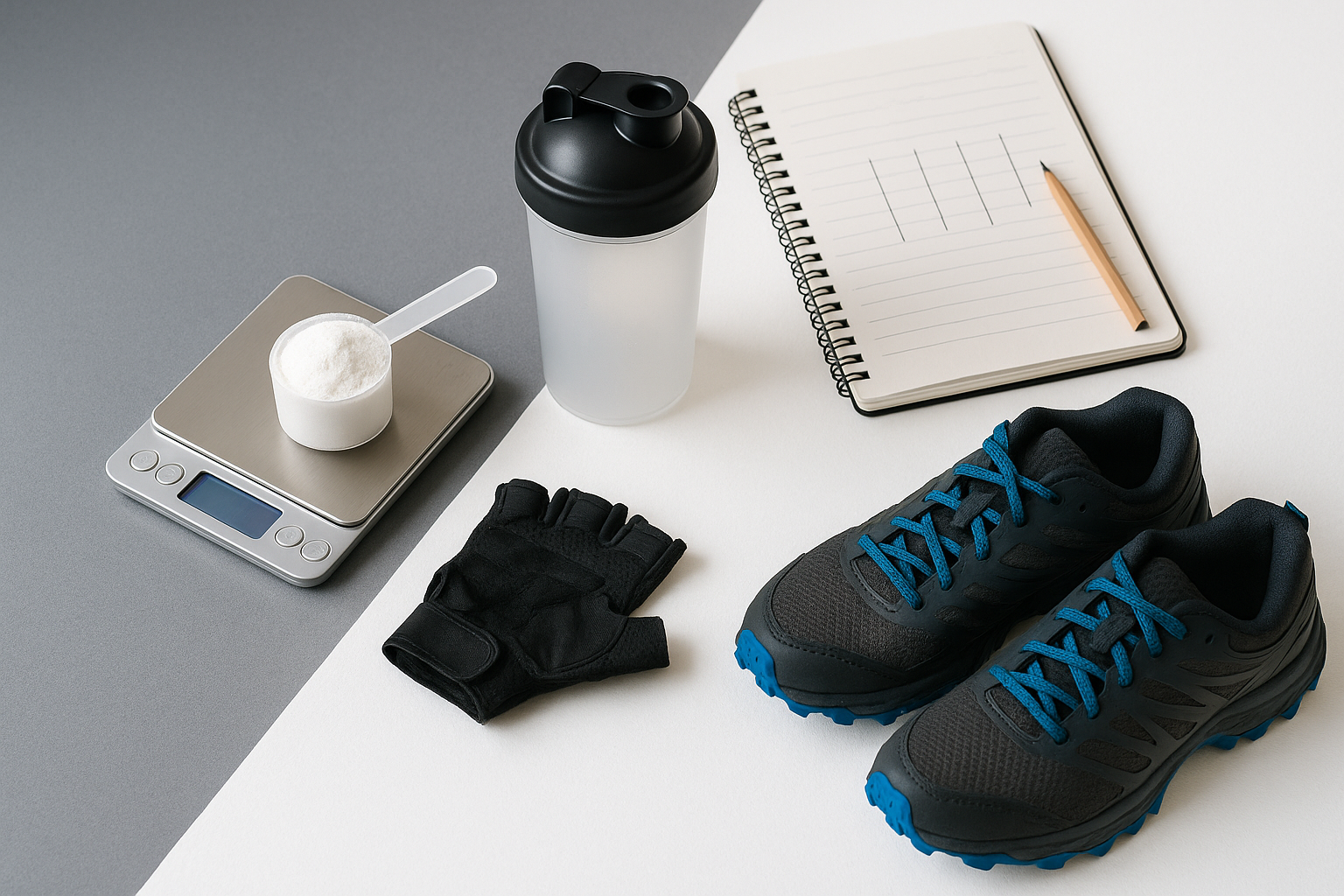
Creatine helps Spartan Race and Tough Mudder performance because OCR repeatedly alternates between running and near-maximal muscular tasks, and creatine improves your ability to produce quick energy during those demanding transitions. In plain terms, it helps you do hard things hard, again and again.
Inside muscle, creatine is stored partly as phosphocreatine, a high-energy compound that donates a phosphate group to rapidly remake ATP during intense effort. ATP supply drops fast during a rope climb, heavy carry, steep hill sprint, or explosive wall jump. Higher phosphocreatine availability can help you sustain force output for a few more seconds, recover faster between repeats, and reduce the sharp performance drop that happens when muscles are repeatedly taxed.
For OCR, that mechanism matters in several specific ways:
- Grip endurance under fatigue: Hanging, traversing, and pulling become easier to repeat when forearm and upper-body muscles can restore energy faster.
- Carrying efficiency: Bucket carries, sandbag carries, atlas-type lifts, and awkward implements rely on repeated bracing and force production, not just aerobic fitness.
- Hill and obstacle surges: OCR often includes short bursts above your steady pace; creatine supports that anaerobic contribution.
- Training adaptation: The more useful long-term benefit may be better lifting, sprint, interval, and obstacle-specific sessions over weeks of training.
Creatine is not a classic endurance supplement. It does not reliably raise VO2 max in the way people sometimes imagine, and it is not a magic fix for poor pacing or weak technical skills. If you lose time because your feet slip on carries, you cannot lock a J-hook on a rope, or you blow up from bad pacing in the first 3 km, creatine alone will not solve that.
Still, OCR is more like hybrid sport than pure distance running. The International Olympic Committee’s 2018 consensus on supplements recognised creatine as one of the few supplements with strong evidence for performance in high-intensity exercise, which is why it remains relevant for mixed-demand sports like obstacle racing. Examine’s evidence summary also consistently places creatine among the most reliable supplements for strength, power, and repeated-sprint-style output: Examine.com — Creatine evidence summary.
If you want the short version, creatine for obstacle racing is not about becoming a better jogger. It is about improving repeated force production and helping your training create a stronger, more resilient obstacle athlete.
When creatine is a clear win in OCR—and when the body-weight trade-off matters
Creatine is a clear win in OCR when the event is obstacle-dense, power-biased, hilly, or carry-heavy, and the trade-off matters more when the race is long, hot, and dominated by uninterrupted running. The right decision depends less on the brand on the label and more on your race profile.
Think about OCR formats on a spectrum. On one end are short-course or stadium-style efforts with lots of climbing, hanging, jumping, and repeated bursts. On the other end are long mountain-style courses where every extra kilogram must be carried over many kilometres. Creatine can help both, but the net benefit is usually larger on the power-heavy end.
Use this practical framework:
- Likely high benefit: Spartan Sprint, Stadion, short-course OCR, obstacle-heavy training races, Hyrox-style carry and station work, Tough Mudder formats with frequent upper-body challenges.
- Moderate benefit: Super-distance OCR, mixed terrain races with meaningful carries and climbs, adventure races with repeated technical efforts.
- More individual: Beast, ultra OCR, long mountain courses, or any race where your limiter is pure running economy and heat management.
The reason is simple. Creatine commonly causes a modest increase in body mass early on from intracellular water retention, meaning more water stored inside muscle cells. For many athletes that looks like 1 to 2 kg over the first week or two, though not everyone notices it. That is not fat gain, and it often accompanies better gym performance and fuller muscle tissue. But in a steep uphill race, even beneficial weight can still be weight.
That does not mean endurance-oriented OCR athletes should avoid creatine automatically. Many still come out ahead because stronger legs, hips, trunk, and grip reduce obstacle failures and improve training quality enough to outweigh the extra mass. The smarter question is: Where do you actually lose time?
If your limiter is failed obstacles, weak carries, fading grip, or slow recoveries between hard efforts, creatine is usually worth trying. If your limiter is overheating, poor fueling, or weak running durability over 3 hours, creatine is lower priority than race nutrition, pacing, and aerobic development.
For deeper context on endurance trade-offs, see creatine for endurance athletes and creatine for runners. OCR sits between those worlds, which is exactly why the answer is nuanced rather than one-size-fits-all.
How to take creatine for obstacle course racing: the exact step-by-step plan

The simplest effective OCR creatine plan is 3 to 5 g of creatine monohydrate every day, with or without food, and continued through training blocks, rest days, and race week. Consistency matters more than timing.
- Choose creatine monohydrate. Use plain creatine monohydrate powder unless you have a specific reason to prefer capsules. It is the most studied, the most cost-effective, and the form backed by the ISSN position stand.
- Pick your saturation strategy. If you want results faster, load with 20 g per day split into 4 doses of 5 g for 5 to 7 days, then drop to 3 to 5 g daily. If you want a gentler start, skip loading and just take 3 to 5 g daily; muscle saturation usually builds over about 3 to 4 weeks.
- Take it every day. Take creatine on lifting days, running days, rest days, and travel days. Muscle creatine stores stay elevated through regular daily intake, not because of a one-off pre-race dose.
- Mix it in a way you will actually stick to. Water, a shake, yogurt, or a post-workout drink all work. If grittiness bothers you, warm liquid can help dissolve it better. See how to mix creatine for easy options.
- Hydrate normally, not obsessively. Drink according to thirst and training conditions, and make sure your broader hydration plan matches your sweat losses. You do not need extreme water intake just because you started creatine.
- Track useful outcomes for 4 to 8 weeks. Watch your sandbag carry pace, rope climb repeatability, hang time, interval quality, and post-session recovery. Those are more informative than looking for a dramatic feeling after one scoop.
Here is a practical weekly expectation:
- Week 1 with loading: possible body-mass increase, slightly better gym reps or interval repeatability, sometimes mild stomach upset if doses are too large.
- Weeks 2 to 4: stronger training sessions, less drop-off on repeated hard efforts, better confidence on carries and upper-body stations.
- Weeks 4 to 8: the race-relevant benefit becomes clearer if you are training properly: better power maintenance, stronger grip endurance, and often better recovery between high-intensity sessions.
If you want a more personalised plan, use the creatine dosage calculator, then read how to take creatine and how long creatine takes to work. For obstacle racers, the best protocol is rarely fancy. It is boringly consistent daily use.
Best creatine dose for OCR by body weight, race goal, and season phase
The best creatine dose for obstacle racing is usually 3 to 5 g per day for maintenance, with optional loading at 20 g per day split into 4 doses for 5 to 7 days if you want faster saturation. Larger athletes and athletes with more muscle mass often sit near the top of that maintenance range.
Body weight is not the only variable, but it helps when making practical decisions. The older research-based loading formula of about 0.3 g per kg per day for 5 to 7 days and maintenance of roughly 0.03 g per kg per day lines up well with the simple real-world guidance below.
| Body weight | Maintenance dose | Optional loading phase | Best for |
|---|---|---|---|
| Under 60 kg | 3 g/day | 15 to 20 g/day for 5 to 7 days, split doses | Smaller athletes, run-biased OCR |
| 60 to 80 kg | 3 to 5 g/day | 20 g/day for 5 to 7 days, split doses | Most OCR athletes |
| 80 to 100 kg | 5 g/day | 20 g/day for 5 to 7 days, split doses | Strength-biased, carry-heavy racers |
| Over 100 kg | 5 g/day | 20 to 25 g/day for 5 to 7 days, split doses | Large athletes with high lean mass |
Now match that dose to your goal:
- Goal: improve obstacle strength and training quality. Use 5 g/day and consider loading.
- Goal: minimise early scale increase before a long race. Use 3 g/day without loading and start several weeks out.
- Goal: race in 1 to 2 weeks. Loading is the most reliable way to saturate quickly.
- Goal: maintain year-round readiness. Stay on 3 to 5 g/day continuously.
What about race week? If you are already saturated, do not change anything. Keep taking your normal daily dose. If you are starting from scratch two days before a Tough Mudder, do not expect miracles; creatine is not a stimulant and does not work like a pre-workout.
For precise dosing logic, read how much creatine per day, creatine maintenance dose, and creatine loading phase. If you are sensitive to stomach issues, smaller split doses and taking creatine with meals usually solve the problem.
Best timing for creatine, race day strategy, and what to stack with it
The best time to take creatine for OCR is the time you will remember to take it daily, because saturation matters far more than the clock. Morning, post-workout, with lunch, or before bed can all work if you stay consistent.
Creatine is not an acute performance booster in the same way caffeine can be. Once your muscles are saturated, the exact time of day has little practical importance for most athletes. Some people prefer post-workout because it fits their routine, while others take it with breakfast or in a protein shake. The biggest mistake is overthinking timing and then missing doses.
Race day strategy:
- If you have been taking creatine for weeks, simply take your normal daily dose at any convenient time.
- Do not “double up” on race morning expecting extra power; that does not create immediate benefit.
- If creatine bothers your stomach before hard efforts, take it after the race or later with food.
Useful stacks for obstacle racers:
- Protein powder: helpful if total daily protein is low or you struggle to recover from strength sessions. See creatine and protein powder.
- Caffeine: useful for alertness and perceived effort, and current evidence does not support the old blanket claim that caffeine cancels creatine. See creatine and caffeine.
- Electrolytes: useful in hot, long, muddy OCRs where sweat losses are meaningful; electrolytes solve a different problem than creatine.
What not to do:
- Do not rely on proprietary “OCR formulas” that hide the creatine dose.
- Do not replace your carbohydrate and fluid plan with creatine; race nutrition still matters more for longer events.
- Do not stop taking creatine on rest days. Muscle stores are maintained through steady daily intake, as covered in creatine on rest days.
If your question is specifically whether to take creatine before or after workouts, the practical answer is that either is fine as long as daily intake is covered. For a deeper breakdown, see when to take creatine. OCR athletes win more from consistency and smart training than from “perfect timing.”
Who should use creatine for obstacle racing: beginners, women, older athletes, and plant-based racers
Creatine can be useful for a wide range of OCR athletes, but it is especially worthwhile for beginners building strength, women improving power and recovery, older athletes preserving lean mass, and vegetarians or vegans who often have lower baseline creatine stores. In other words, it is not just for large male lifters.
Beginners: If you are new to obstacle course racing, creatine can support the training qualities that matter most early on: grip endurance, carry strength, hill repeatability, and confidence on upper-body obstacles. It does not replace practice, but it can make your strength and interval work more productive. Start simple with 3 to 5 g/day and read creatine for beginners.
Women: Women often avoid creatine because they fear “bulking,” but the likely early change is water in muscle, not fat gain. Many women find creatine helpful for strength, repeated efforts, and body composition support during training. The mechanism is the same as in men, and there is no evidence that women need a special “pink” creatine formula. See creatine for women.
Older and masters athletes: Creatine can be especially useful after 35 or 50 because preserving muscle, power, and training quality gets harder with age. OCR places a premium on not just endurance but also the ability to pull, carry, and absorb fatigue. That makes creatine a strong fit for masters racers. The Mayo Clinic notes creatine is generally safe when used appropriately, though medical conditions and medications can change the picture: Mayo Clinic — Creatine.
Vegetarian and vegan athletes: Because dietary creatine mainly comes from animal foods, plant-based athletes may have lower stores at baseline and can sometimes respond particularly well to supplementation. For OCR, that can translate into better repeated-power output and gym progress.
Who should pause and ask a professional first? Anyone with known kidney disease, significant medical conditions, pregnancy or breastfeeding considerations, or medication concerns should get personalised guidance. For a full safety review, see is creatine safe and who should not take creatine.
The takeaway is simple: creatine for adventure racing and OCR is mainstream, not niche. The right question is whether your training and race demands match its strengths.
Safety, side effects, hydration, and weight gain: what OCR athletes should realistically expect
Creatine is one of the most studied sports supplements and is generally considered safe for healthy people at standard doses, but OCR athletes should expect a few normal effects: possible early water-weight gain, occasional digestive upset if dosing is sloppy, and no meaningful increase in dehydration risk when hydration is otherwise adequate.
The 2021 JISSN review on common questions and misconceptions about creatine addressed several persistent myths directly, including the claims that creatine causes dehydration, cramps, kidney damage in healthy users, or automatic hair loss. The review concluded that many of these fears are not supported by the bulk of evidence: Antonio et al. (2021), JISSN.
Here is what is actually common:
- Water-weight gain: often shows up in the first 1 to 2 weeks, especially with loading. This is usually water inside muscle cells, not fat.
- Stomach upset: more likely if you take large single doses, dry scoop, or use too little fluid. Split doses usually fix it.
- No “energy buzz”: creatine is not a stimulant, so not feeling anything immediately does not mean it is not working.
For OCR athletes racing in heat or long mud runs, hydration questions are common. Creatine does not dehydrate you by pulling water away from the rest of the body in some dangerous way. You still need a sensible event-specific hydration and electrolyte plan, especially for hot races or long mountain events, but that is true whether or not you take creatine. See how much water should you drink with creatine and creatine and dehydration.
Two important medical notes:
- Creatine can raise creatinine on bloodwork in some people because creatinine is a normal breakdown product of creatine, and that can confuse kidney screening if context is ignored.
- If you have kidney disease, take nephrotoxic medications, or have been told to restrict supplements, get medical clearance first.
If body mass is a concern before a long OCR, start earlier, skip loading, and use 3 g/day. That gentler approach often gives you performance upside with less abrupt scale change. If digestion is the issue, read creatine digestive side effects and does creatine make you gain weight. Most side effects are manageable and dose-related, not a sign that creatine is inherently unsafe.
The biggest OCR creatine mistakes and myths, debunked
The biggest mistakes with creatine for obstacle course racing are using the wrong expectations, inconsistent dosing, chasing fancy forms, and fearing myths that have already been answered by better evidence. Most disappointments come from poor use, not poor science.
Myth 1: “Creatine is only for bodybuilders.”
False. Creatine supports the phosphocreatine energy system, which powers hard efforts in many sports. OCR, Spartan Race, and Tough Mudder all include repeated bursts, carries, and upper-body tasks that fit that physiology well.
Myth 2: “Creatine will make me slow because I gain weight.”
Incomplete. Some athletes do gain water weight, especially during loading, but the trade-off may still be positive if obstacle strength and repeated-effort ability improve more than running economy declines.
Myth 3: “You only need creatine on workout days.”
False. Daily use is how you keep muscle stores elevated. Stopping on off days makes no sense if saturation is the goal.
Myth 4: “HCL, gummies, or buffered creatine are better for OCR.”
Usually not. Monohydrate remains the best-supported and most cost-effective form. Newer forms may be more convenient for some users, but they have not consistently outperformed monohydrate in mainstream evidence.
Myth 5: “Take a huge dose before the race for an instant boost.”
False. Creatine is not like caffeine. Acute mega-dosing mostly increases your chances of stomach trouble.
Myth 6: “Creatine causes cramps and dehydration in muddy races.”
The evidence does not support that broad claim. Poor pacing, heat stress, sweat loss, and low sodium are much more plausible explanations in many race scenarios.
Common real-world mistakes:
- Starting creatine 24 hours before a race and expecting a noticeable effect
- Using a heaping scoop without knowing the actual grams
- Confusing normal intracellular water retention with fat gain
- Buying proprietary blends instead of plain creatine monohydrate
- Quitting after one week because you “didn’t feel it”
If this section sounds familiar, you may want the deeper myth breakdown at creatine myths debunked and creatine myths and facts. For OCR athletes, the smartest approach is unglamorous: monohydrate, proper dosing, patience, and using your obstacle training log rather than supplement marketing as your feedback system.
Best creatine to buy in Canada for OCR athletes: what matters and what does not
The best creatine for OCR athletes in Canada is usually a plain creatine monohydrate product with clear gram dosing, a Health Canada NPN where applicable, and preferably third-party testing if you compete seriously. You do not need a sport-specific “mud run” formula to get the benefit.
When shopping, ignore flashy claims about extreme absorption, pH buffering, or obstacle-specific performance unless the label still gives you enough actual creatine monohydrate at a reasonable cost per gram. Most of the time, the highest-value purchase is unflavoured monohydrate powder.
| What to check | Why it matters for OCR athletes | What to avoid |
|---|---|---|
| Creatine form: monohydrate | Most studied, best evidence, best value | Paying a premium for weakly supported alternatives |
| Serving size in grams | Lets you hit 3 to 5 g/day accurately | Proprietary blends or vague “performance matrix” labels |
| NPN or compliant Canadian labelling | Useful sign the product is sold within Canadian supplement rules | Grey-market imports with poor label transparency |
| Third-party testing | More important for tested or cautious athletes | Products with no purity or contamination assurances |
| Price per gram | The real value metric for daily use | Overpriced flavoured mini-tubs |
For tested competitors, third-party programs such as NSF Certified for Sport or Informed Sport can add confidence, though availability varies by brand. For general consumers, a reputable monohydrate from a trusted seller is usually sufficient. If you want comparisons, start with best creatine rankings, creatine brand reviews, and the creatine product catalog.
Canadian context matters because stock, shipping, and compliance can vary. If you buy online in Canada, check that the seller clearly lists the full supplement facts, serving size, and package size, and be cautious with marketplace listings that hide the source or look suspiciously cheap.
If you are wondering whether micronized is worth it, the answer is mostly about mixability and mouthfeel, not superior performance. If you are choosing between monohydrate and HCL, monohydrate still wins on evidence. For most obstacle racers, buying well is simple: plain, proven, fairly priced, and easy to take every day.
Bottom line: should obstacle racers take creatine?
Yes—most obstacle racers can reasonably consider creatine, and the best candidates are athletes who need more repeated power, stronger carries, better grip endurance, and higher-quality training across weeks and months. If your OCR success depends on climbing, hanging, carrying, sprinting, and recovering between efforts, creatine is more likely to help than hurt.
The ideal setup is straightforward:
- Choose creatine monohydrate
- Take 3 to 5 g daily
- Use an optional 20 g/day loading phase for 5 to 7 days if you want faster saturation
- Keep taking it on rest days and race week
- Judge it by training quality and obstacle performance, not by whether you feel a buzz
If you are preparing for a Spartan Race, Tough Mudder, mud run, or adventure racing event, creatine should sit behind training, sleep, hydration, and race fueling in your priority list—but ahead of most flashy supplements marketed to endurance or hybrid athletes. It is one of the few products with decades of meaningful evidence and a mechanism that directly matches several OCR demands.
The main caution is not safety panic; it is fit. If you are a very weight-sensitive runner tackling a long, hot, mountainous OCR where your primary limiter is sustained running economy, creatine becomes more individual. In that case, test it in training long before race day rather than guessing.
For everyone else, the practical recommendation is simple: use monohydrate, dose it properly, give it 4 to 8 weeks, and evaluate whether your carries feel stronger, your grip lasts longer, and your hard sessions degrade less. That is the real test of whether creatine for obstacle course racing is earning its place in your kit.
To build your plan, continue with how much creatine per day, how to take creatine, realistic creatine results, and creatine not working. OCR rewards preparation. Creatine works best as part of that preparation, not as a shortcut around it.
Creatine for OCR: the numbers that matter
- 3–5 g/day Standard maintenance dose — Best-practice daily intake for most obstacle racers using creatine monohydrate.
- 20 g/day Typical loading dose — Usually split into 4 doses for 5–7 days to saturate muscle faster.
- 5–7 days Fast saturation timeline — What most athletes need when using a full loading phase.
- 3–4 weeks Saturation without loading — Approximate timeline when taking a steady daily maintenance dose only.
Frequently Asked Questions
Should I take creatine for a Spartan Race?
Yes, creatine can be a good fit for a Spartan Race if your event includes repeated climbs, carries, hangs, and short hard surges. It is most useful when obstacle strength and repeated-effort fatigue are bigger limiters than pure long-distance running economy. Take 3 to 5 g of creatine monohydrate daily for several weeks before the race.
Is creatine good for Tough Mudder?
Yes, creatine can help Tough Mudder athletes by supporting repeated upper-body efforts, carries, crawling, and fatigue resistance between obstacles. It will not replace technique or teamwork, but it can improve the training quality that builds those capacities. Most people do well with creatine monohydrate at 3 to 5 g per day.
Does creatine help with rope climbs and monkey bars in OCR?
Yes, creatine can help with rope climbs and monkey bars by supporting repeated high-force contractions in the forearms, back, shoulders, and trunk. The benefit is not magical grip endurance from one dose; it comes from higher muscle creatine stores and better training output over time. If grip failure is your main OCR weakness, creatine is worth trying.
Will creatine make me heavier for obstacle racing?
Yes, creatine can make you slightly heavier at first, but that weight is usually water stored inside muscle cells rather than fat. For many OCR athletes, the trade-off is worthwhile because stronger carries, better grip, and improved repeated power outweigh the extra mass. If you are worried, skip loading and start with 3 g/day.
Can I take creatine before a mud run for an instant boost?
No, taking creatine right before a mud run does not create an instant performance boost the way caffeine might. Creatine works by increasing muscle stores over days to weeks, not by producing a same-day stimulant effect. If you already use it, take your normal daily dose; if you do not, race-day dosing alone will not do much.
What is the best type of creatine for obstacle course racing?
The best type of creatine for obstacle course racing is plain creatine monohydrate. It is the most studied form, the most cost-effective, and the form most consistently supported by sports nutrition position statements. Micronized monohydrate can improve mixability, but it does not clearly outperform regular monohydrate for results.
Do I need a loading phase for OCR creatine use?
No, you do not need a loading phase, but it is useful if you want faster saturation before a race or training block. Loading is typically 20 g per day split into 4 doses for 5 to 7 days, followed by 3 to 5 g daily. If you skip loading, daily use still works, but it usually takes about 3 to 4 weeks.
Is creatine good for adventure racing too?
Yes, creatine can help in adventure racing when the event includes repeated power efforts, technical carries, climbs, and upper-body demands. Its value becomes more individual as races get longer and more run- or paddle-dominant, because small body-mass increases may matter more. The best way to know is to test it in training, not on race week.
Can women use creatine for OCR?
Yes, women can absolutely use creatine for OCR, and the same evidence-based monohydrate dosing applies. Creatine does not inherently make women bulky; the early change many notice is water inside muscle cells, not fat gain. It can be especially useful for improving strength, repeated efforts, and training quality.
Is creatine banned in obstacle course racing competitions?
No, creatine is not banned in standard sport settings and is widely used by competitive athletes. The bigger concern is product quality, not legality, so tested athletes should prefer reputable brands and ideally third-party tested products. In Canada, choosing well-labelled products with an NPN can add another layer of confidence.