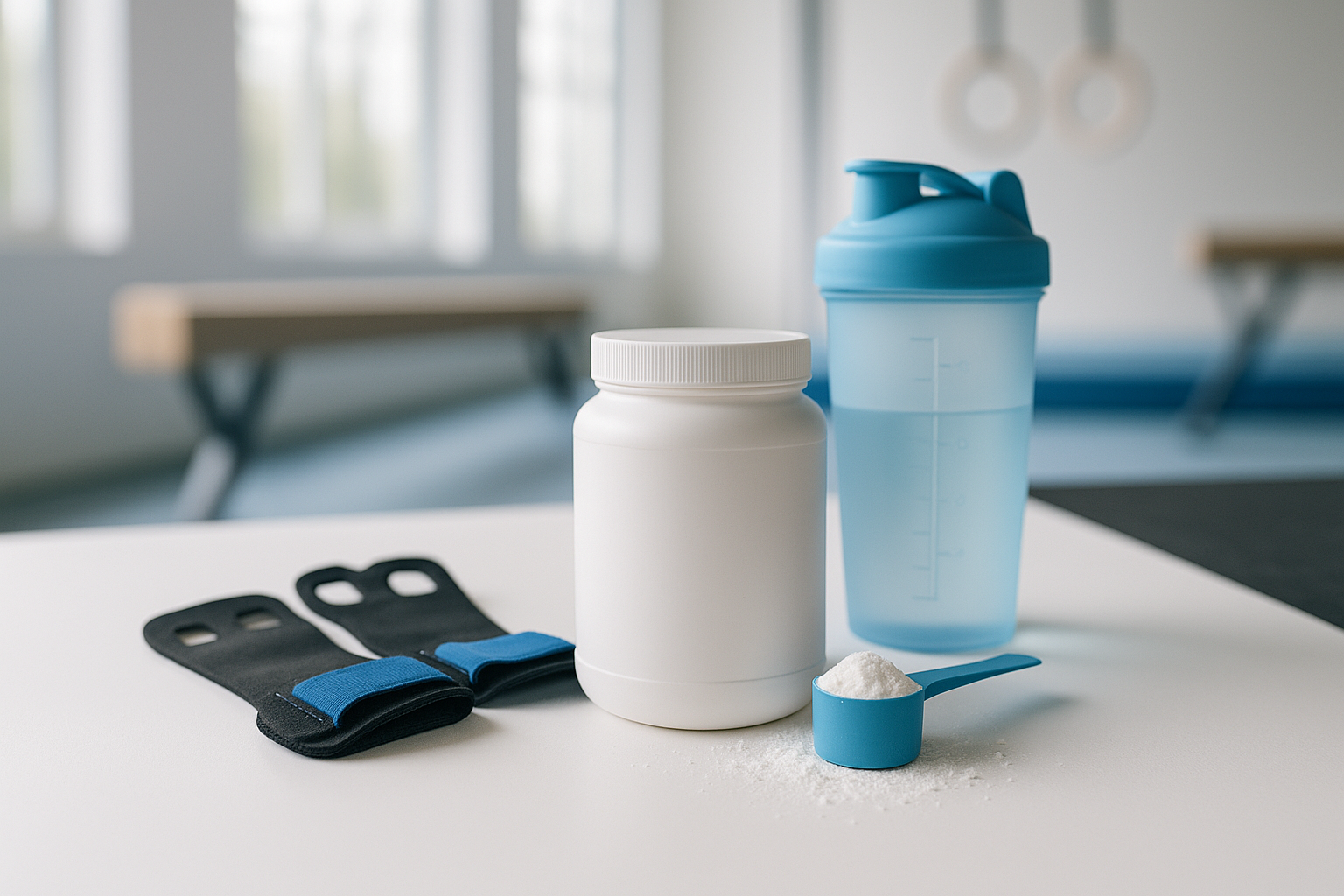
Creatine for Gymnastics: Explosive Power Without Adding Excess Mass
By The Creatine Canada Research Team — Evidence-based supplement analysts
Yes—creatine for gymnastics can improve explosive power, repeated high-intensity effort, and strength with only modest water-weight gain when dosed properly. For most gymnasts, 3 to 5 g of creatine monohydrate daily is the evidence-based sweet spot if the goal is better tumbling, vault power, ring strength endurance, and faster training recovery without chasing unnecessary mass.
Evidence-based · Cites 4 sources · Editorial standards
Key Takeaways
- Creatine helps gymnastics most in short, explosive efforts and repeated high-intensity training, not in flexibility or skill learning by itself.
- Creatine monohydrate is the best-studied, most cost-effective form for gymnasts and acrobatic athletes.
- A simple 3 to 5 g daily dose works for most gymnasts; loading is optional if faster saturation matters.
- Expect possible scale gain from intracellular water, usually not body fat, especially in the first 1 to 3 weeks.
- Timing matters far less than consistency; take it every day, including rest days.
- Gymnasts in strict weight-sensitive phases may prefer skipping a loading phase to minimize rapid water gain.
- Choose a Canadian product with an NPN and, for tested athletes, third-party sport certification when possible.
Does creatine help gymnastics? Yes—mainly for power, repeatability, and training output
Yes, creatine for gymnastics can help when the event or training demand is explosive, repeated, and high intensity. Gymnastics is not an endurance sport first; it is a repeated-power sport built on short bursts of maximal or near-maximal effort, rapid recovery between turns, and the ability to reproduce force under fatigue.
That profile is exactly where creatine tends to shine. The strongest evidence supports creatine for improving high-intensity exercise capacity, strength, lean mass accrual over time with training, and repeated sprint or repeated effort performance. The 2017 ISSN position stand concluded that creatine monohydrate is the most effective ergogenic nutritional supplement currently available for increasing high-intensity exercise capacity and lean body mass during training.
For gymnasts, that translates most directly to:
- Vault and tumbling: more explosive take-off power and better repeat quality across training sets.
- Floor routines: improved ability to maintain snap and amplitude as fatigue builds.
- Rings, pommel, parallel bars, and high bar: support for repeated power output and strength endurance in short work bouts.
- Acrobatic sports more broadly: benefits are most relevant to cheerleading, trampoline, acro, diving-style dryland, and other repeated explosive disciplines.
What creatine does not do is just as important. Creatine does not directly improve flexibility, artistry, rhythm, or technical skill acquisition. It also does not magically make a gymnast lighter, leaner, or more coordinated. It is a support tool that can raise the ceiling for training quality, which then helps performance if the athlete trains and recovers well.
The main trade-off for gymnasts is body mass. Some athletes notice a small early increase in body weight from water pulled into muscle cells, not from fat gain. In sports where power-to-weight ratio matters, that change can be helpful, neutral, or occasionally inconvenient depending on the event, body size, and timing in the season. That is why gymnasts and creatine are a better fit in some contexts than others: pre-season strength phases, tumbling-power blocks, and heavier training periods usually make more sense than a last-minute change before a weight-sensitive competition.
If you want the short answer, here it is again: creatine helps gymnastics most by improving short-burst power and the ability to repeat high-quality efforts in training, and it works best when you use a conservative dose rather than chasing a bulky loading approach.
How creatine works in a gymnast’s body: the phosphocreatine system in plain English
Creatine helps gymnasts because it supports the phosphocreatine energy system, the fastest system your muscles use to regenerate ATP, the immediate energy currency for explosive movement. In practice, that means better support for very short, intense efforts like a tumbling pass, a vault approach and block, or a hard strength sequence on rings.
Your muscles store creatine partly as phosphocreatine, which is creatine bound to a phosphate group. During a maximal effort, phosphocreatine donates that phosphate to help rapidly remake ATP. When ATP can be replenished a little faster, muscles can sustain force output a little better during those crucial few seconds.
That sounds subtle, but gymnastics is a sport of margins. A tiny improvement in peak force, repeated explosiveness, or fatigue resistance inside a training session can mean:
- more quality landings before form breaks down
- more stable power on later sets
- better consistency in repeated sprint-style approaches and rebounds
- slightly higher total training volume over weeks
Creatine may also support glycogen use, cellular hydration, and training adaptations over time. The cellular hydration point matters for gymnasts worried about “bloating.” Most creatine-related water is stored inside muscle, not as random subcutaneous puffiness. That is why many athletes look a bit fuller rather than simply softer. For some gymnasts this is visually neutral; for others it can even be desirable in strength phases.
The reason creatine tends to work best for artistic gymnastics and other acrobatic sports is that routines and training bouts repeatedly draw on high-power output. Even when a full routine lasts longer than a few seconds, the hardest technical elements are still highly dependent on fast ATP turnover. Recovery between attempts also matters. Better phosphocreatine availability can help an athlete maintain output over repeated sets, which is often where real training gains are made.
Creatine is not a stimulant. It does not work like caffeine, and you do not “feel” it like a pre-workout. Instead, creatine gradually increases muscle creatine stores until the muscle is more saturated. That process is called saturation, meaning your muscles are carrying a fuller reserve. Once saturation is reached, benefits show up as better repeatability, a bit more strength or power, and often improved progress in the gym over several weeks.
If you are new to the topic, our complete guide to what creatine is covers the basics, but the gymnastics-specific point is simple: creatine supports the exact energy system used in explosive acrobatic efforts, which is why it can be a legitimate tool for gymnasts rather than just a bodybuilding supplement.
Which gymnasts benefit most—and when the weight trade-off may matter
Creatine for gymnasts makes the most sense for athletes who need explosive power, repeated effort capacity, and higher-quality strength training, but it is not equally useful in every situation. The biggest variable is whether the likely performance gain outweighs any small increase in body mass.
Best-fit athletes usually include:
- Power-focused artistic gymnasts: especially athletes emphasizing vault, floor, rings, and tumbling.
- Acrobatic and trampoline athletes: where repeated explosive outputs and aerial amplitude matter.
- Gymnasts in strength-development blocks: off-season and pre-season are often the cleanest times to start.
- Vegetarian or vegan athletes: they often start with lower baseline muscle creatine stores and may respond especially well.
- Older masters gymnasts: creatine can support strength, recovery, and lean-mass retention alongside training.
It can be a more mixed decision for:
- Very light athletes in strict aesthetic or body-mass-sensitive phases
- Athletes making rapid body-composition changes before competition
- Beginners who have not yet stabilized training, food intake, and hydration
That does not mean beginners should avoid it. It means creatine works best once the basics are in place. A novice gymnast who sleeps poorly, under-eats protein, and trains inconsistently will not notice much from any supplement. But a beginner or intermediate athlete on a regular training schedule can absolutely use creatine safely and effectively.
For women, the evidence does not support the idea that creatine is “for men only.” Women use the same basic dosing range, and creatine does not masculinize the body or act like a steroid. If scale changes are emotionally or competitively sensitive, skipping the loading phase is usually the smartest approach. Our guide to creatine for women goes deeper on that concern.
For younger athletes, the decision should be supervised by a parent, coach, and ideally a qualified practitioner if the gymnast is a minor. The key question is not whether creatine is magical; it is whether the athlete is mature enough to use supplements correctly, stick to dose instructions, and avoid contaminated products. If you need more context, see creatine for teenagers.
A simple rule works well: the more your gymnastics performance depends on explosive repeat efforts and heavy training quality, the more likely creatine is worth considering. The closer you are to a body-mass-critical competition phase, the more cautious you should be about starting it for the first time.
Exact creatine dosing for gymnastics: daily grams, loading options, and body-weight examples
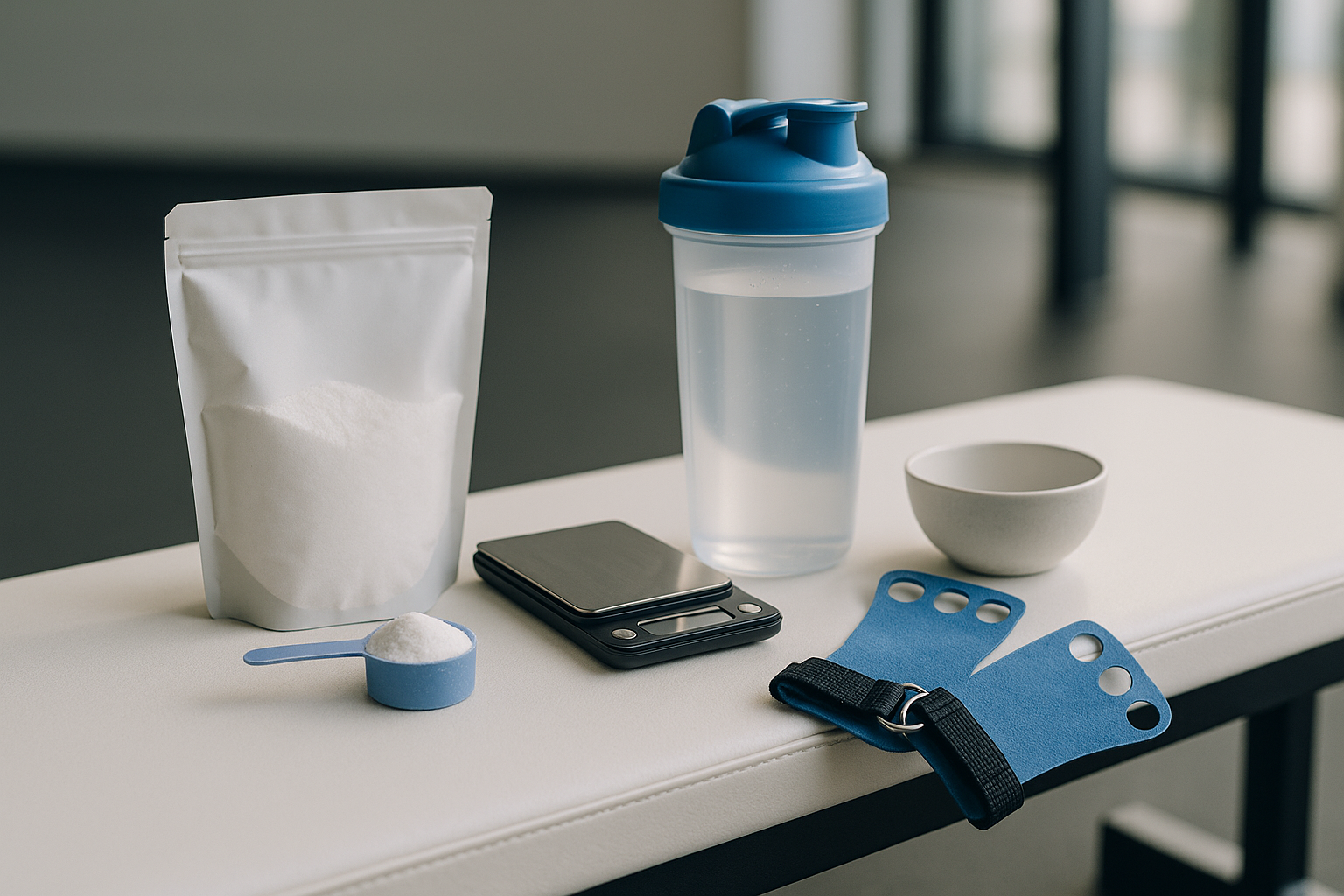
For most gymnasts, the best creatine dose is 3 to 5 g of creatine monohydrate per day, every day. That dose is enough to raise and maintain muscle creatine stores in most adults, and it is the easiest way to balance performance benefits with minimal fuss.
The two evidence-based ways to take creatine are:
- Standard approach: 3 to 5 g daily with no loading phase.
- Loading approach: about 20 g daily split into 4 doses of 5 g for 5 to 7 days, then 3 to 5 g daily.
For gymnastics, the standard approach is often the better fit because it avoids the faster initial water-weight jump that some athletes notice during loading. You still reach near-full saturation; it just takes longer, typically around 3 to 4 weeks instead of about 1 week.
| Gymnast profile | Goal | Recommended dose | Best approach |
|---|---|---|---|
| Smaller gymnast under ~60 kg | Steady power support, minimal scale fluctuation | 3 g/day | No loading |
| Most adult gymnasts ~60-90 kg | General power and training support | 3-5 g/day | No loading or optional loading |
| Larger athlete or heavy training phase | Faster saturation or higher total muscle mass support | 5 g/day maintenance | Optional loading, then 5 g/day |
| Athlete wanting benefits before a camp or block soon | Quicker saturation | 20 g/day for 5-7 days, then 3-5 g/day | Loading if tolerated |
Practical examples:
- A 52 kg women’s artistic gymnast worried about weight fluctuations could start with 3 g/day.
- A 68 kg male gymnast in a strength block could use 5 g/day.
- An 80 kg acrobatic athlete entering a high-volume training camp could choose a 5- to 7-day loading phase if faster results matter and stomach comfort is good.
To measure accurately, use a scale when possible rather than guessing with a heaped scoop. If you want help personalizing the dose, use our creatine dosage calculator or read how much creatine per day.
One important point: more is not better once your muscles are saturated. Taking 10 g a day long term does not reliably produce more gymnastics benefit than 3 to 5 g a day, but it can increase stomach upset and waste money.
The direct answer for creatine gymnastics dosing is this: take 3 to 5 g of creatine monohydrate daily, skip loading if you want to limit rapid water gain, and stay consistent for at least 4 weeks before judging results.
When to take creatine for gymnastics—and the simplest routine that actually works
The best time to take creatine for gymnastics is the time you will remember every day, because consistency matters much more than exact timing. Muscle creatine works through saturation over time, not through an acute pre-workout buzz.
That means you can take your daily dose:
- with breakfast
- before training
- after training
- with a post-workout shake
- with any regular meal on rest days
If you want a practical default, take it after training with food or protein simply because that is an easy habit for many athletes. But do not overthink this. Missing weeks matters; missing the “perfect” 30-minute window does not.
Here is the simplest step-by-step protocol for gymnasts:
- Choose creatine monohydrate. It is the gold-standard form and the one backed by the best evidence.
- Pick your dose. Use 3 g/day if you are smaller or weight-sensitive, 5 g/day if you are average-sized or larger.
- Mix it in water, juice, or a shake. It can also be added to protein powder. See how to mix creatine if texture annoys you.
- Take it daily. Training days and rest days both count.
- Stay normally hydrated. You do not need absurd amounts of water, but you should not be chronically under-hydrated. Our water guide covers this in detail.
- Give it time. Judge it after 3 to 4 weeks without loading, or after about 1 to 2 weeks if you loaded properly.
If you train twice a day, you still do not need two full doses. Creatine is not a stimulant. One total daily dose is enough.
If you forget a day, just resume the next day. Do not double up. Missing one day does not erase your saturation status, especially once you have been taking it for a while.
Some gymnasts ask whether they should take creatine before a meet. If you already use creatine consistently, keep your normal routine. If you have never used it before, meet week is usually a poor time to experiment. Try new supplements well before competition.
The practical answer is straightforward: take creatine daily at any convenient time, ideally linked to a meal or post-training habit, and worry far more about consistency than clock timing. For a deeper timing breakdown, see when to take creatine and whether to take creatine on rest days.
What results gymnasts can realistically expect, week by week
Creatine usually works gradually, and the first thing many gymnasts notice is not a dramatic feeling but better repeat quality in training. If you expect instant superhuman power from one scoop, you will probably think creatine is not working when in fact you simply have not reached saturation yet.
With a standard 3 to 5 g daily protocol and no loading, a realistic timeline looks like this:
- Week 1: often no obvious change, though some athletes notice a slight increase in body weight or muscle fullness.
- Weeks 2 to 3: some gymnasts start noticing better pop on repeated efforts, improved set-to-set consistency, or slightly less drop-off later in a session.
- Weeks 3 to 4: most responders should be near effective saturation, and performance benefits are more likely to be noticeable.
- Weeks 4 to 8: the bigger payoff often shows up as better progress in training loads, jump quality, power output, or the ability to tolerate more high-quality work.
If you load properly, that timeline compresses. Some effects may be noticeable within about a week, but again, that comes with a higher chance of quick water-weight gain or digestive discomfort.
How do you tell if creatine is helping gymnastics performance? Look for:
- more consistency across tumbling reps
- slightly better snap or amplitude on later attempts
- improved numbers in strength work such as weighted pulls, presses, or ring support variations
- less performance drop-off across repeated sets
- better ability to hit high-quality training volume
What you should not use as your only metric is the mirror. Creatine is not primarily a cosmetic supplement for gymnasts. Also, scale weight can mislead you. A small increase early on does not mean you gained fat. For a fuller explanation, read does creatine make you gain weight.
If nothing seems to happen after 4 to 6 weeks, the usual explanations are simple: inconsistent use, underdosing, inaccurate scooping, low training quality, unrealistic expectations, or being a lower responder because your baseline muscle stores were already fairly high. That does not mean creatine failed; it may mean the change is too subtle to notice without tracking.
The direct expectation-setting answer is this: creatine for gymnasts usually starts helping within 1 to 4 weeks depending on loading, and the clearest benefits are better repeated power and stronger training progress rather than an immediate dramatic sensation.
Will creatine make a gymnast bulky or heavy? Usually no—but scale changes are real
Creatine does not make most gymnasts “bulky” by itself, but it can increase body weight modestly because it draws more water into muscle cells. That distinction matters: water in muscle is not the same thing as gaining fat, and it is not the same thing as suddenly adding large amounts of muscle tissue.
This is the biggest concern around gymnasts and creatine, especially in women’s artistic gymnastics, dance-adjacent environments, or any setting where aesthetics and scale weight are emotionally loaded. The evidence-based answer is more balanced than the myths.
What to expect:
- Short term: some athletes gain a small amount of body weight in the first days or weeks, especially with loading.
- Cause: most of that early gain is intracellular water, meaning water held inside muscle tissue.
- Longer term: if training supports it, some athletes may gain more lean mass over time because creatine helps them train harder and recover better.
For gymnastics, whether that matters depends on the event and the athlete. A stronger, slightly heavier athlete may perform better on some power-oriented tasks. But a gymnast who is highly sensitive to body-mass changes before competition may reasonably prefer a slow-build protocol or may delay starting until an off-season phase.
Here is the practical strategy for minimizing “too much too soon”:
- Use 3 g/day instead of loading.
- Start in a training phase, not competition week.
- Track performance markers first, scale weight second.
- Reassess after 3 to 4 weeks.
Another common worry is bloating. True stomach bloat is often a dosing or mixing issue, not an unavoidable creatine effect. Large single doses can sit heavily in the gut. Splitting doses during a loading phase or simply using a lower daily amount solves this for many athletes. See why creatine causes bloating and digestive side effects explained.
The strongest myth to kill is this: creatine is not a shortcut to getting huge. It does not force hypertrophy in the absence of training and food support. Gymnasts who take conservative doses typically gain performance support far more reliably than they gain unwanted mass.
The short answer is clear: creatine for gymnastics does not inherently make you bulky, but it can raise body weight slightly from muscle water, which is why a low-dose no-loading strategy is usually best for weight-conscious gymnasts.
Safety, side effects, and drug testing: what gymnasts need to know before starting
Creatine monohydrate is generally considered safe for healthy people when used at recommended doses, and it is not a banned substance in sport. The 2021 JISSN review on common questions and misconceptions and the ISSN position stand both support creatine’s safety profile in healthy populations.
Common, manageable side effects include:
- Temporary water-weight gain
- Stomach upset if you take too much at once
- Occasional loose stools from large doses or poor mixing
These are usually solved by lowering the dose, splitting it, or switching to a plain monohydrate powder that dissolves better.
What the evidence does not support in healthy users at recommended doses:
- the claim that creatine damages healthy kidneys
- the claim that creatine causes dehydration
- the claim that creatine causes cramping as a standard effect
- the claim that creatine is a steroid
Creatine can raise creatinine on a blood test in some cases, which can confuse people because creatinine is a breakdown product often used as a kidney marker. That does not automatically mean kidney harm. If you have kidney disease, are under nephrology care, or take medications that affect kidney function, speak with your physician before using creatine. Our guide to creatine and kidneys explains the lab confusion in depth.
For tested gymnasts, the biggest real-world risk is not creatine itself but contaminated products. The International Olympic Committee consensus on supplements warns athletes that contamination and mislabelling are genuine concerns in the supplement market. Buy products that are straightforward, single-ingredient, and, when possible, independently certified for sport.
Also relevant in Canada: an NPN, or Natural Product Number, indicates the product has been licensed by Health Canada as a natural health product. An NPN is useful, but it is not the same thing as banned-substance testing. Competitive athletes may still prefer third-party programs such as NSF Certified for Sport or Informed Sport where available.
The bottom-line safety answer for gymnasts is simple: creatine monohydrate is one of the best-studied and safest sports supplements for healthy athletes, but competitive gymnasts should prioritize quality-controlled products and anyone with a medical condition should clear it with a clinician first.
The biggest creatine gymnastics mistakes and myths, debunked
Most problems athletes blame on creatine are actually problems with dosing, timing expectations, or misinformation. If creatine for gymnasts seems confusing, the easiest fix is to strip it down to the basics and ignore the supplement marketing noise.
Myth 1: Creatine is only for bodybuilders.
False. Creatine supports short-duration, high-intensity energy production, which makes it relevant to gymnastics, sprinting, jumping, cheer, and many other acrobatic sports.
Myth 2: Creatine will automatically make a gymnast too heavy.
False. Some gymnasts gain modest water weight, especially with loading, but many manage this well with a no-loading 3 to 5 g daily approach.
Myth 3: You need a fancy form like HCl, nitrate, or buffered creatine.
False for most people. Monohydrate remains the most studied and usually the best value. If you want the evidence-based winner, see best type of creatine and why monohydrate still wins.
Myth 4: You must cycle creatine.
False. There is no standard evidence-based requirement to cycle on and off if you tolerate it and want the benefits to continue. More here: do you need to cycle creatine.
Myth 5: If you do not feel anything, it is not working.
False. Creatine is not a stimulant. It often works quietly through better repeated effort and stronger training adaptation over time.
Myth 6: More creatine means more results.
False. Once muscle stores are saturated, extra daily grams offer little upside and more chance of GI discomfort.
The most common mistakes gymnasts make are:
- starting during competition week
- loading aggressively despite being weight-sensitive
- using inconsistent doses
- buying multi-ingredient blends instead of plain monohydrate
- expecting immediate skill improvements instead of better training support
If you want a clean beginner-friendly framework, use this one-sentence rule: buy plain creatine monohydrate, take 3 to 5 g daily, stay hydrated, and judge results by training quality after several weeks.
For a broader myth breakdown, see creatine myths debunked and creatine myths vs. facts. Those pages expand on hair loss fears, kidney myths, bloating, and whether creatine is “unnatural.”
How to choose creatine in Canada: the right form, labels, testing, and value
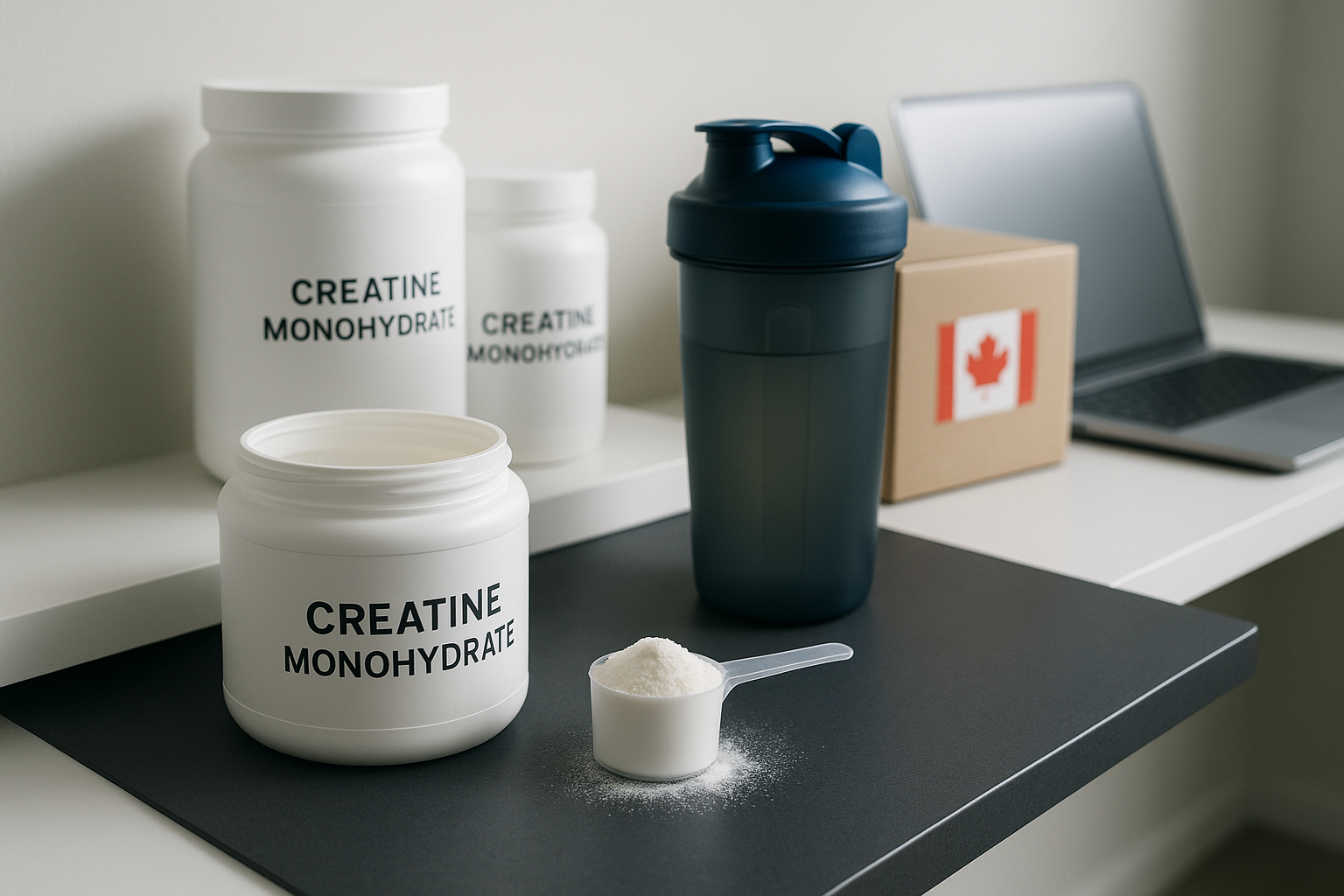
The best creatine for gymnastics in Canada is usually a plain, single-ingredient creatine monohydrate powder with clear dosing, a Health Canada NPN where applicable, and ideally third-party testing if you compete. You do not need a flashy formula to get results.
When comparing products, prioritize these features:
- Form: creatine monohydrate first.
- Ingredient list: ideally just creatine monohydrate, or a very simple flavoured formula.
- Dose transparency: clearly states grams per serving.
- NPN: useful sign of Canadian regulatory compliance.
- Third-party sport testing: extra reassurance for tested athletes.
- Cost per gram: more useful than tub price alone.
| Feature | What gymnasts should look for | Why it matters |
|---|---|---|
| Creatine form | Monohydrate | Best evidence, best value, reliable dosing |
| Serving size | 3 g to 5 g clearly stated | Makes daily use simple and accurate |
| Label simplicity | Single-ingredient preferred | Lower contamination and marketing noise risk |
| NPN | Present on Canadian natural health product label | Shows Health Canada licensing |
| Sport certification | Helpful for tested athletes | Reduces contamination risk |
| Price metric | Compare cost per gram | Stops you overpaying for branding |
If you are shopping now, our best creatine rankings, creatine brand reviews, and product catalog can help narrow options. Competitive athletes should also read third-party tested creatine in Canada and Canadian supplement regulations.
Flavoured creatine is fine if you prefer it and the dose is still clear, but plain unflavoured powder is often the cheapest and easiest format. Gummies and capsules can work, but they often cost more per gram and may require multiple units to reach an effective dose.
A final buying rule worth remembering: the best creatine for gymnasts is not the one with the most claims on the label. It is the one you will actually take consistently, at the right dose, with the lowest risk of contamination and the best value per effective gram.
Bottom line: when creatine is worth it for gymnastics, and the simplest starting plan
Creatine for gymnastics is worth considering if your performance depends on explosive power, repeated high-quality efforts, and productive strength training, and if you are willing to accept the possibility of a small amount of water-weight gain. For many gymnasts, that trade is favourable; for some in highly weight-sensitive phases, it may be a timing decision rather than a no-forever decision.
If you want the simplest evidence-based starting plan, do this:
- Buy plain creatine monohydrate.
- Take 3 g/day if you are smaller or very weight-conscious; 5 g/day if you are average-sized or larger.
- Skip loading unless you need faster saturation and can tolerate potential short-term water gain.
- Take it every day for at least 4 weeks.
- Track training metrics, not just body weight.
Good metrics include tumbling consistency, jump quality later in practice, strength numbers, and how well you hold output across repeated sets. If those move in the right direction with stable technique and recovery, creatine is likely doing its job.
Who should think twice? Athletes with kidney disease or significant medical conditions should speak with a clinician first. Athletes in the final days before an important competition should avoid starting anything new. Tested gymnasts should prioritize reputable, low-risk products.
So, does creatine help gymnastics? Yes—especially for artistic gymnastics, acrobatic sports, and power-based events where repeated explosive effort matters. The key is using it like a performance tool, not a magic powder: sensible dose, steady use, realistic expectations, and quality training.
If you want to go deeper next, the most useful follow-up guides are how to take creatine, how long creatine takes to work, whether creatine is safe, and creatine for competitive athletes.
Creatine for Gymnastics: The Numbers That Matter
- 3-5 g/day Best daily dose for most gymnasts — Creatine monohydrate maintenance range supported by mainstream sports nutrition guidance.
- 20 g/day Optional loading dose — Typically split into 4 x 5 g doses for 5-7 days if faster saturation is needed.
- 5-7 days Time to saturate with loading — Faster approach, but more likely to cause quick water-weight gain or stomach upset.
- 3-4 weeks Time to saturate without loading — Often the better option for weight-conscious gymnasts.
Frequently Asked Questions
Does creatine help gymnastics performance?
Yes, creatine can help gymnastics performance by improving explosive power, repeated high-intensity effort, and strength-training quality. It is most useful for events and practices that rely on short bursts of force, such as vault, tumbling, rings, and repeated acrobatic attempts, rather than for flexibility or artistry alone.
Is creatine good for artistic gymnastics?
Yes, creatine can be a good fit for artistic gymnastics when the athlete wants better power output and training repeatability. It is especially relevant for floor, vault, rings, and power-oriented preparation phases, although body-mass sensitivity means many artistic gymnasts should start with a low daily dose and skip loading.
Will creatine make a gymnast gain too much weight?
Usually no, but creatine can cause a modest increase in body weight from water stored inside muscle cells. For gymnasts who are worried about rapid scale changes, a no-loading approach of 3 to 5 g daily is the smartest strategy because it tends to reduce sudden water gain compared with a loading phase.
What is the best creatine dose for gymnasts?
The best creatine dose for most gymnasts is 3 to 5 g of creatine monohydrate per day. Smaller or more weight-conscious athletes often do well on 3 g daily, while larger athletes or those in heavier training blocks often choose 5 g daily.
Should gymnasts do a creatine loading phase?
Usually not unless faster saturation is important. A loading phase of about 20 g daily for 5 to 7 days works, but many gymnasts avoid it because it can increase the chance of quick water-weight gain and digestive discomfort.
When should a gymnast take creatine?
A gymnast should take creatine whenever it is easiest to remember every single day. Timing is much less important than consistency, so taking it with breakfast, after training, or with a regular meal all work well.
Is creatine safe for female gymnasts?
Yes, creatine is generally considered safe for healthy female gymnasts when used at recommended doses. It is not a steroid, does not inherently cause bulky unwanted muscle gain, and the main practical consideration is managing possible water-weight changes if the athlete is very body-mass sensitive.
Can teen gymnasts take creatine?
Teen gymnasts may use creatine, but the decision should be supervised and made carefully. The biggest issues are maturity, correct dosing, product quality, and making sure training, sleep, and overall nutrition are already in good shape before adding supplements.
What type of creatine is best for gymnastics?
Creatine monohydrate is the best type of creatine for gymnastics because it is the most studied, most reliable, and usually the most cost-effective form. Most alternative forms are marketed as superior, but the evidence still favours monohydrate.
Is creatine banned in gymnastics competition?
No, creatine is not banned in gymnastics competition. The real issue for competitive athletes is product contamination, so tested gymnasts should choose reputable products and, where possible, supplements with third-party sport certification.