
Creatine and the Keto Diet: Compatibility, Loading, and Carb-Free Timing
By The Creatine Canada Research Team — Evidence-based supplement analysts
Yes, you can take creatine on a keto diet, and you do not need carbs for it to work. Creatine monohydrate is keto-friendly, does not kick you out of ketosis, and still raises muscle creatine stores without carbohydrate loading, although taking it with a meal may be slightly easier on your stomach and may modestly help uptake.
Evidence-based · Cites 4 sources · Editorial standards
Key Takeaways
- Creatine monohydrate is fully compatible with keto and contains no meaningful carbs, sugar, or calories.
- You can load creatine on keto with 20 g/day split into 4 doses for 5-7 days, or skip loading and take 3-5 g/day.
- Carbs are not required for creatine absorption; daily consistency matters far more than timing with carbohydrates.
- Most keto users do best with 3-5 g/day, extra fluids, and attention to sodium, potassium, and magnesium.
- Expect faster gym performance benefits with loading and slower but similar long-term results without loading.
- Any early weight gain from creatine is usually increased intracellular water in muscle, not fat and not a sign ketosis has stopped.
- For Canadians, choose plain creatine monohydrate with a valid NPN and preferably third-party testing for purity.
Can You Take Creatine on Keto? Yes — and You Do Not Need Carbs
Yes, you can take creatine on a ketogenic diet, and you do not need to pair it with carbs for it to work. Creatine monohydrate is one of the simplest keto-friendly supplements because plain creatine contains no meaningful carbohydrate and does not inherently interfere with ketosis.
The most important concept is that creatine works by saturating your muscles over time, not by acting like a stimulant you feel immediately after one scoop. Saturation means gradually increasing the amount of stored creatine and phosphocreatine in muscle tissue. Phosphocreatine is the stored high-energy form of creatine that helps your body rapidly regenerate ATP, the immediate energy currency used for short, hard efforts like heavy lifts, sprints, jumps, and repeated intervals.
The research base on creatine is strong. The 2017 ISSN position stand concluded that creatine monohydrate is the most effective ergogenic nutritional supplement currently available for increasing high-intensity exercise capacity and lean mass during training. That conclusion is not limited to high-carb diets.
Why the carb question comes up: insulin can help shuttle creatine into muscle, and carbohydrate intake raises insulin. But that does not mean carbohydrate is required. In practice, normal creatine doses still raise muscle creatine stores without dedicated carb loading. For keto users, the real priorities are:
- Take enough: usually 3-5 g/day, every day.
- Take it consistently: muscle saturation matters more than the clock.
- Stay hydrated: keto already changes fluid and electrolyte balance.
- Choose plain monohydrate: avoid sugary blends marketed as “transport systems”.
If you are new to the supplement, start with a plain powder and follow a simple daily plan. Our creatine dosage calculator can help you choose a body-weight-appropriate dose, and if you want a broader primer, see creatine for beginners.
The direct answer is simple: creatine and keto are compatible, creatine does not require carbs, and most people on a ketogenic diet can use standard monohydrate dosing exactly as effectively as mixed-diet users.
How Creatine Works on a Ketogenic Diet: ATP, Phosphocreatine, and Why Keto Does Not Cancel It
Creatine still works on a ketogenic diet because its primary job is to support the phosphocreatine energy system, not carbohydrate metabolism. Keto changes your fuel mix for lower-intensity and longer-duration activity, but it does not eliminate your need for rapid ATP recycling during high-intensity efforts.
Here is the mechanism in plain English. Your muscles store a limited amount of ATP, and during explosive effort that ATP gets used in seconds. Phosphocreatine donates a phosphate group to help regenerate ATP quickly. More stored creatine generally means a larger phosphocreatine reserve, which can improve repeated bursts of effort, training quality, and over time the amount of work you can do in the gym.
That matters on keto because many people notice that very high-intensity work can feel harder, especially during the first few weeks of carb restriction. Creatine does not replace glycogen, but it can support the energy system most responsible for very short, intense efforts. In other words, creatine can complement keto by helping cover one of the areas where ketogenic diets sometimes feel least forgiving: repeated explosive output.
Creatine may also increase intracellular water inside muscle cells. This is not the same thing as gaining body fat or “holding water under the skin.” That fuller-muscle effect is one reason some people look and feel more muscular after a couple of weeks. If you want a fuller explanation of scale weight changes, read does creatine make you gain weight.
Another useful point for low-carb eaters: dietary creatine intake may already be lower in some people who are keto but not eating large amounts of red meat or fish, and it is often lower in vegetarians, who may respond especially well to supplementation. Examine’s evidence summary also notes that creatine is among the best-supported sports supplements overall, especially for strength and high-intensity performance: Examine.com — Creatine evidence summary.
The practical takeaway is that keto and creatine target different layers of energy metabolism. Keto mainly shifts your baseline fuel strategy toward fat and ketones, while creatine boosts your ability to recycle quick energy during short, hard efforts. Those are complementary, not contradictory, effects.
Do You Need Carbs for Creatine Absorption? No — Insulin Helps, but It Is Not Required
No, you do not need carbs for creatine absorption, and keto users can still fully benefit from creatine supplementation. Carbohydrates can increase insulin, and insulin can support creatine transport into muscle, but the effect is a matter of optimisation, not necessity.
This distinction matters because supplement marketing often exaggerates the need for sugary “delivery systems.” In reality, plain creatine monohydrate taken daily increases muscle creatine content effectively on its own. The 2021 JISSN review on common creatine questions and misconceptions makes clear that many popular claims around special forms, special timing, or unnecessary add-ons are overstated.
Think of uptake on a spectrum:
- Required: enough creatine, taken consistently.
- Helpful but optional: taking it with a mixed meal, protein, or a bit of insulin response.
- Mostly marketing: the claim that creatine is ineffective without sugar.
If you are strictly keto, you have several workable options:
- Take creatine with water at any time of day.
- Take it with a keto meal if that feels better on digestion.
- Mix it into a protein shake that fits your macros.
For many users, the best routine is simply the one they will actually follow every day. If you train in the morning, put 3-5 g in your post-workout shake. If you train at night, take it with dinner. If you often forget supplements, keep the tub next to your coffee maker or salt jar and build it into an existing habit.
There is also no good reason to chase expensive “keto creatine” products if all they offer is standard creatine with buzzwords. Plain monohydrate remains the evidence-based gold standard. If you want a deeper comparison of forms before buying, visit best creatine rankings or browse creatine brand reviews.
The bottom line is crisp: carbs can modestly assist creatine uptake, but they are not required, and creatine without carbs still works very well on a low-carb or ketogenic diet.
Keto and Creatine Loading: The Exact Doses, Timelines, and What to Expect
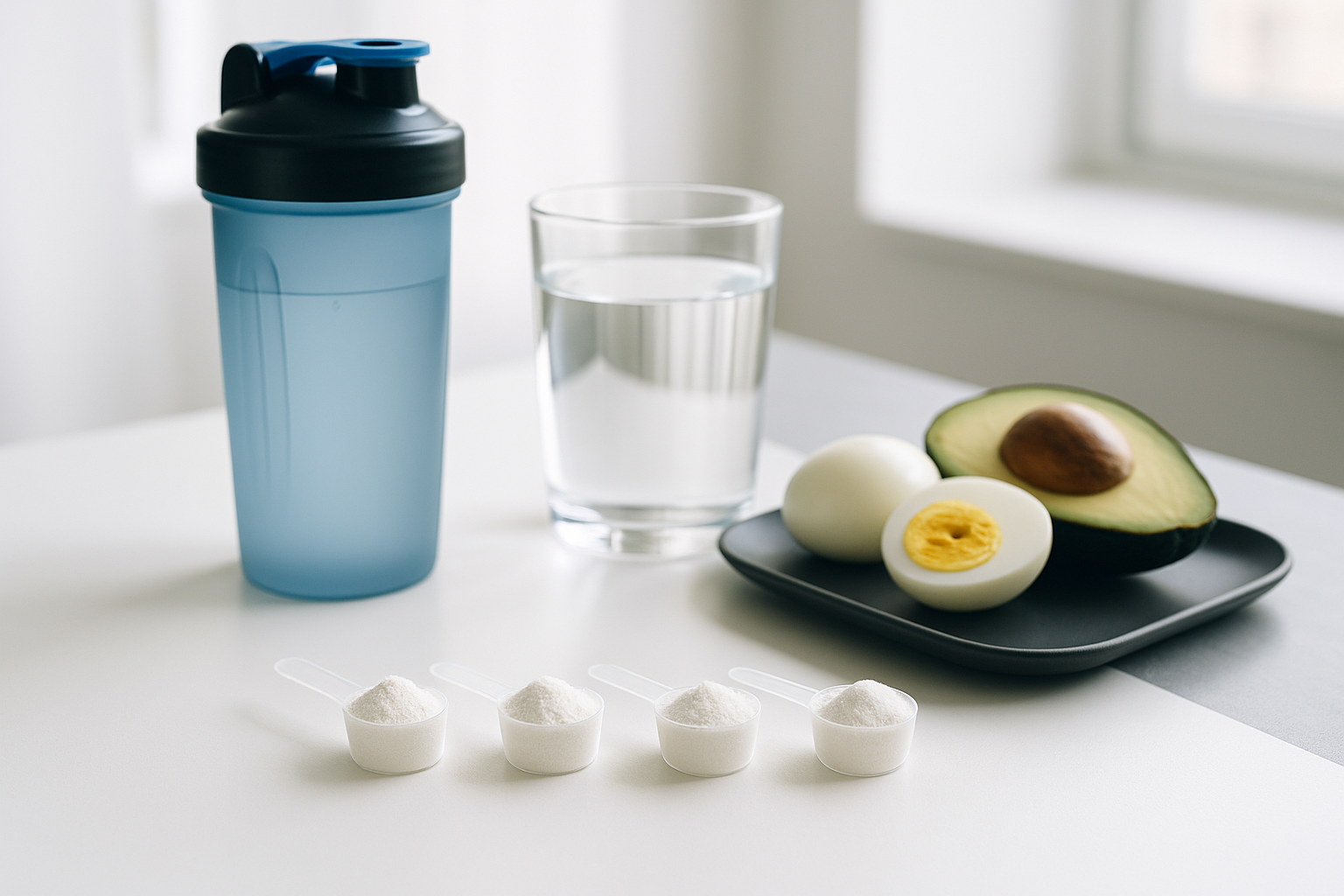
You can load creatine on keto exactly the same way you would on any other diet: about 20 g/day split into 4 doses for 5-7 days, followed by 3-5 g/day for maintenance. Loading is optional, not mandatory, and the long-term result is similar whether you load or not.
Loading simply saturates muscles faster. Without a loading phase, taking 3-5 g/day usually gets you to near-maximal muscle creatine saturation in about 3-4 weeks. With loading, many people notice benefits sooner, often within the first week or two.
| Goal | Protocol | Best for | What to expect |
|---|---|---|---|
| Fast saturation | 20 g/day for 5-7 days, split into 4 x 5 g doses; then 3-5 g/day | People who want quicker gym effects | Earlier body-weight increase and faster performance changes |
| Gentler start | 3-5 g/day from day one | Beginners or people prone to stomach upset | Same end point, slower timeline |
| Larger athletes | Use the higher end of maintenance, often 5 g/day | Heavier lifters and team-sport athletes | May help maintain saturation more reliably |
| Smaller athletes | Usually 3 g/day is sufficient | Lighter individuals with lower body mass | Often enough for maintenance with good compliance |
Practical body-weight examples:
- 60 kg person: 3 g/day is often enough for maintenance; loading can still be done as 4 x 5 g if desired.
- 75 kg person: 3-5 g/day is the standard sweet spot.
- 95 kg person: 5 g/day is usually the simpler maintenance target.
On keto, loading is sometimes less comfortable because the first week of creatine and the first weeks of keto can both involve fluid shifts. If you are new to both at once, consider a conservative approach: establish keto first for 1-2 weeks, then start creatine at 3-5 g/day. If you want faster saturation with fewer digestive complaints, a mini-loading approach of smaller split doses can also work well.
For more precision, see how much creatine per day and creatine loading phase.
The direct answer for “keto and creatine loading” is this: yes, you can load creatine while staying keto, but you do not need carb intake to do it effectively.
How to Take Creatine Without Carbs: A Simple Step-by-Step Keto Protocol
The easiest way to take creatine without carbs is to use 3-5 g of plain creatine monohydrate once daily, mixed in water or a keto-friendly drink, and to keep doing that every day. Consistency beats complicated timing.
- Choose plain creatine monohydrate. Look for a product with one active ingredient and no sugar fillers unless you specifically want flavouring.
- Measure the dose accurately. Use a scoop that states the grams clearly, or weigh it if you want precision.
- Mix with a carb-free liquid. Water is completely fine. Unsweetened electrolyte drinks, protein shakes, or coffee-adjacent routines can also work if they fit your stomach and schedule.
- Take it daily. Training days and rest days both count because saturation is the goal.
- Drink enough fluid and keep electrolytes in mind. Keto plus creatine is usually well tolerated, but inadequate sodium and fluid intake is a common reason people feel off.
Good keto-friendly mixing options include:
- Water
- Unsweetened whey isolate or low-carb protein shake
- Sugar-free flavoured electrolyte drink
- Greek-yogurt-based smoothie if it fits your macros
Less ideal options include very acidic premixes that sit around for hours, or products with unnecessary sugar if you are trying to maintain strict ketosis. Creatine is generally stable enough for normal use, but it is best not to mix it and leave it sitting all day.
If you get mild stomach upset, the fix is usually practical rather than dramatic:
- Reduce each single dose size.
- Take it with food.
- Use micronized monohydrate.
- Skip loading and use a straight maintenance dose.
Many people also ask whether creatine should be taken with or without food on keto. The honest answer is that either is fine. If your stomach is sensitive, taking it with a meal can help. If convenience matters most, take it whenever you reliably remember it. For more routine details, see how to take creatine and creatine with or without food.
If your goal is strict compliance, build creatine into your simplest daily behaviour. The best keto creatine protocol is the one you can repeat for months, not the one that looks perfect on paper for three days.
Best Timing for Creatine on Keto: Before Workout, After Workout, or Any Time?
The best time to take creatine on keto is the time you will take it every day, because daily saturation matters more than workout timing. If you prefer a routine, post-workout or with a regular meal are both sensible choices.
This is one of the easiest places to overcomplicate a simple supplement. Creatine is not a pre-workout stimulant, so you do not need to “feel” it during a session for it to be working. Its benefit comes from maintaining elevated muscle stores over time.
That said, some routines are more practical than others:
- Post-workout: easy to remember, often paired with protein, and convenient for lifters.
- With a meal: may be gentler on digestion and fits keto nicely.
- Same time daily: useful for rest-day consistency.
If you train fasted, you can still take creatine before or after training without carbs. If you do better taking supplements with food, wait until your first keto meal. There is no evidence that a keto athlete must consume carbs around creatine to make it effective. If you use caffeine, the practical issue is not cancellation but comfort and routine; both can coexist in a supplement plan when tolerated.
For a deeper breakdown, see when to take creatine and creatine on rest days.
What to expect by timeline:
- Days 1-7 with loading: possible slight body-weight increase, better workout fullness, sometimes subtle performance improvement.
- Weeks 2-4 without loading: strength endurance and repeated-effort benefits often become more noticeable.
- Weeks 4-12: the main payoff is better training quality, which can support more strength and lean-mass progress over time.
If you are using keto for fat loss, do not judge creatine by scale changes alone. A small early increase in water held inside muscle can happen even while body composition improves. That is not a sign the supplement failed or that ketosis stopped.
The direct answer is straightforward: take creatine whenever it best supports daily consistency, and on keto there is no special carb-timing rule you need to obey.
Who Benefits Most From Creatine on a Low-Carb or Ketogenic Diet?
Creatine on a low-carb or ketogenic diet is most useful for people who do strength training, sprinting, intervals, team sports, or repeated high-intensity efforts. It can also be worth considering for women, older adults, and some people dieting aggressively who want to preserve performance and lean mass.
Beginners often do very well with creatine because they are building training habits and can benefit from even modest improvements in workout quality. Beginners do not need fancy stacks; plain monohydrate at 3-5 g/day is enough.
Women can absolutely use creatine on keto. The evidence does not support the myth that creatine is “just for men” or that it causes unwanted bulk by itself. Women often care about water retention, but the relevant point is that creatine tends to increase water inside muscle, not body fat. Our guide on creatine for women goes deeper.
Older adults may benefit because creatine combined with resistance training can support strength and lean mass retention. This is relevant whether the eating pattern is keto, low-carb, or mixed. For adults over 50, preserving muscle is often more important than chasing rapid scale loss.
Athletes in stop-and-go sports such as hockey, soccer, basketball, CrossFit, and sprint-based sports often have the clearest use case. Keto can be workable in these sports for some people, but high-intensity performance demands remain. Creatine helps directly where explosive output matters most.
People cutting body fat may also find creatine especially helpful. Dieting can reduce training performance, and creatine may help defend power output and training volume during a calorie deficit. If that is your goal, see does creatine help you lose fat.
Who may care less? If your activity is mostly low-intensity steady-state walking and you do not perform any strength or explosive training, creatine may still be reasonable but its obvious benefits may be smaller.
The key point is not whether you are keto. The key point is whether your training and goals benefit from better high-intensity energy turnover, strength support, or lean-mass retention. For many active keto dieters, the answer is yes.
Side Effects on Keto: Water Weight, Cramps, Digestion, and Electrolytes Explained

The main creatine side effects on keto are usually mild and manageable, and they are more often about fluid shifts, digestion, or expectations than about true safety problems. The most common early change is a small increase in body weight from more water stored inside muscle.
This matters on keto because ketogenic diets also affect fluid balance, especially early on. Lower carbohydrate intake reduces glycogen, and glycogen normally holds water. Many people lose water quickly when starting keto, then see some water return after starting creatine. Those are separate processes, and that return does not mean you gained fat.
Common issues and fixes:
- Stomach upset or loose stools: usually caused by taking too much at once. Split the dose or use 3-5 g/day instead of loading.
- Feeling puffy: often transient and usually less dramatic than people fear. Muscle fullness is more typical than whole-body bloating.
- Cramps or headaches: often tied to hydration and electrolytes rather than creatine itself. Keto increases sodium needs for many people.
- Scale anxiety: judge progress by training, measurements, photos, and body composition trends, not one weigh-in.
Hydration and electrolyte basics matter more on keto than on higher-carb diets. If you feel flat, crampy, or headache-prone after starting creatine, first review your intake of:
- Sodium
- Potassium
- Magnesium
- Total fluids
The Mayo Clinic notes that creatine appears to be safe for many people when used appropriately, though anyone with underlying medical conditions should check with a healthcare professional: Mayo Clinic — Creatine.
If digestive issues persist, switch to a simpler product, confirm the serving size, and rule out sweeteners or add-ins as the culprit. Our guides on creatine digestive side effects and how much water with creatine can help troubleshoot.
The practical answer is this: creatine does not inherently dehydrate you or ruin keto, but keto users should respect hydration and electrolytes because both the diet and the supplement affect water handling in the body.
Myths Debunked: Creatine Does Not Break Ketosis, Need Sugar, or Turn Into Fat
Most myths about creatine and ketosis are false, and they usually come from confusing water balance, insulin, or supplement marketing with how creatine actually works. Plain creatine monohydrate does not break ketosis, does not require sugar to work, and does not directly cause fat gain.
Myth 1: Creatine kicks you out of ketosis.
False. Plain creatine monohydrate is not a carbohydrate. What can affect ketosis is a flavoured product loaded with sugars or maltodextrin, not the creatine molecule itself.
Myth 2: Creatine without carbs is useless.
False. Carbohydrates can support insulin-mediated uptake, but daily creatine supplementation still works without carb co-ingestion.
Myth 3: Creatine weight gain means body-fat gain.
False. Early changes are usually water retained within muscle cells. Over time, if creatine helps you train harder, it may also support lean mass gains, which is not the same as fat gain.
Myth 4: Keto users should avoid creatine because of kidneys.
Misleading. In healthy people, creatine is well studied and generally considered safe at standard doses. It can raise creatinine on a blood test because creatinine is a breakdown product, but that is not the same thing as causing kidney damage. If you have kidney disease or a medical condition, speak with your clinician before using it. For the full nuance, see is creatine bad for your kidneys.
Myth 5: You need a special low-carb creatine formula.
Usually false. Standard monohydrate is still the benchmark product. Expensive niche forms often have weaker evidence than the cheap classic.
If you want a broader myth-by-myth breakdown, visit creatine myths debunked or creatine myths and facts.
The best rule is simple: separate the molecule from the marketing. Creatine itself is keto friendly. Sugary blends, poorly labelled products, and exaggerated claims are the real problem, not creatine monohydrate.
Best Creatine for Keto in Canada: What to Buy, What to Avoid, and How to Read the Label
The best creatine for keto in Canada is usually plain creatine monohydrate with a valid Natural Product Number, or NPN, and ideally third-party testing. NPN stands for Natural Product Number, which shows a natural health product has been licensed by Health Canada for sale in Canada.
For keto users, the buying checklist is refreshingly simple:
- Form: creatine monohydrate first.
- Ingredients: ideally one ingredient, or at least no added sugars if you are keeping carbs very low.
- Dose transparency: grams of creatine monohydrate clearly stated per serving.
- Testing: third-party certification or a strong brand reputation for purity.
- Canadian compliance: valid NPN where applicable.
| Option | Best for keto? | Pros | Watch-outs |
|---|---|---|---|
| Plain monohydrate powder | Yes | Best evidence, lowest cost per gram, easy to dose | May taste gritty if not mixed well |
| Micronized monohydrate | Yes | Mixes more easily, same core ingredient | Sometimes costs more |
| Flavoured sugar-free creatine | Often yes | Better taste, easier adherence | Check sweeteners and serving size |
| Creatine gummies | Sometimes | Convenient | Often pricey and may include sugars |
| “Transport matrix” creatine blends | Usually no need | Marketing appeal | Often adds carbs and cost without better outcomes |
For athletes subject to testing, independent certification matters even more. The International Olympic Committee consensus on dietary supplements emphasises product quality and contamination risk as major real-world issues in supplement use.
If you are shopping now, browse our creatine product catalog, compare options in best creatine rankings, or review labels using creatine brand reviews. If you want the monohydrate-first case laid out in detail, see the related guide on why monohydrate still wins.
The direct answer is easy: for keto, buy plain monohydrate, avoid unnecessary carb-heavy blends, and in Canada favour clean labels, NPN-backed products, and trustworthy testing.
Bottom Line: The Smartest Way to Use Creatine on a Keto Diet
The smartest way to use creatine on a keto diet is to take plain creatine monohydrate every day, with or without food, without worrying about carbs. If you want speed, load with 20 g/day split into 4 doses for 5-7 days; if you want simplicity, take 3-5 g/day and let saturation build over a few weeks.
Here is the short version most people need:
- Creatine is keto friendly.
- Creatine does not require carbohydrates.
- Monohydrate is still the best-supported form.
- Consistency matters more than timing.
- Keto users should pay extra attention to fluids and electrolytes.
If you are deciding whether it is worth adding, ask one question: do you care about strength, repeated high-intensity performance, training quality, or preserving lean mass while dieting? If yes, creatine is one of the most evidence-based supplements you can use, even on a strict ketogenic diet.
What success looks like is also worth defining clearly. Creatine is “working” if over the next few weeks you notice some combination of better rep quality, slightly more training volume, less drop-off across hard sets, fuller muscles, or improved progress in the gym over time. It is not supposed to feel like a jolt of energy ten minutes after you drink it.
If you want to start today, keep it boring:
- Buy a plain monohydrate product.
- Take 3-5 g daily.
- Use loading only if you want faster saturation.
- Hydrate well and keep electrolytes in line.
- Stick with it for at least 3-4 weeks before judging.
For next steps, the most useful companion reads are how long creatine takes to work, whether creatine is safe, and best creatine monohydrate in Canada.
The final answer is unchanged from the start: yes, you can absolutely take creatine on keto, and for most active people it is one of the best low-carb-friendly supplements available.
Creatine on Keto: The Numbers That Matter
- 3-5 g/day Standard daily maintenance dose — Works well on keto with or without meals.
- 20 g/day Classic loading dose — Usually split into 4 doses for 5-7 days.
- 5-7 days Typical loading timeline — Faster muscle saturation than maintenance alone.
- 3-4 weeks Typical no-loading saturation window — Taking 3-5 g/day reaches a similar long-term result.
Frequently Asked Questions
Can you take creatine on keto?
Yes, you can take creatine on keto. Plain creatine monohydrate is keto friendly because it contains no meaningful carbs and does not inherently interfere with ketosis, so most people on a ketogenic diet can use the standard 3-5 g daily protocol.
Does creatine kick you out of ketosis?
No, plain creatine does not kick you out of ketosis. What could affect ketosis is a flavoured or blended product that adds sugar or maltodextrin, so the safest choice for strict keto is a plain or sugar-free creatine monohydrate product.
Do you need carbs to absorb creatine?
No, you do not need carbs to absorb creatine. Carbohydrates can increase insulin and may modestly support creatine uptake, but standard daily creatine supplementation still raises muscle creatine stores effectively without dedicated carbohydrate intake.
How do you load creatine on a ketogenic diet?
You load creatine on a ketogenic diet the same way as on any other diet: 20 g per day split into 4 doses for 5-7 days, then 3-5 g per day after that. You do not need to add carbs to the loading phase for it to work.
What is the best creatine dose on keto?
The best creatine dose on keto for most adults is 3-5 g per day of creatine monohydrate. Smaller individuals often do well at 3 g daily, while larger athletes usually use 5 g daily to maintain muscle saturation more reliably.
When should you take creatine on keto?
You should take creatine on keto whenever you are most likely to take it consistently. Post-workout and with a meal are both sensible options, but the biggest factor in results is daily use over time, not the exact minute you take it.
Can you take creatine without carbs before a workout?
Yes, you can take creatine without carbs before a workout. Creatine is not dependent on pre-workout carbohydrate intake, and if taking it before training fits your routine and stomach well, that approach is completely fine.
Will creatine cause water retention on keto?
Yes, creatine can cause some water retention, but it is usually water stored inside muscle rather than fat gain or random bloating. On keto this can feel confusing because keto itself changes fluid balance, so use gym performance and measurements, not just scale weight, to judge progress.
Is creatine monohydrate the best form for keto?
Yes, creatine monohydrate is still the best form for keto because it has the strongest evidence, the lowest usual cost per gram, and no need for added carb transport systems. Most alternative forms are marketed more aggressively than they are supported by better evidence.
What should keto users mix creatine with?
Keto users can mix creatine with water, a low-carb protein shake, or a sugar-free electrolyte drink. The best mixer is simply one that fits your macros, is easy on digestion, and helps you take your dose every day without fail.